VI
VI


General introduction to the museum
The Ton Duc Thang Museum is located at 5 Ton Duc Thang Street, Saigon Ward, Ho Chi Minh City, right in the central area along the Saigon River, a hub of important cultural and historical landmarks of the city. This is a specialized museum dedicated to Ton Duc Thang, who served as President of the Democratic Republic of Vietnam (1969-1976) and the Socialist Republic of Vietnam (1976-1980). Simultaneously, it is also a large-scale exhibition space showcasing history and industry in the city center.

The museum space as seen from outside on Ton Duc Thang Street.
The museum building was constructed in an earlier period and has recently undergone renovation, upgrading, and content reorganization. On the occasion of April 30, 2025, commemorating the 50th anniversary of the Liberation of Southern Vietnam and the reunification of the country, the museum was completed and put into operation with a new, more modern exhibition appearance, focusing on experiential space and storytelling through artifacts.

In the lobby on the ground floor, a portrait of President Ton Duc Thang is placed in the center.


In the period leading up to April 30th this year, the museum became a social media phenomenon, attracting significant attention from the community, especially young people. Many visited not only to sightsee but also to take photos and learn about history through a more visual and accessible approach than before.

Recently, the museum has attracted many visitors, especially young people, ahead of the April 30th holiday.
Portrait of the mechanic Ton Duc Thang and the development of the mechanical engineering industry.
The exhibition space on the first floor of the Ton Duc Thang Museum showcases images of Ton Duc Thang in his role as a mechanic, while also displaying content related to industrial and mechanical activities.


This section showcases the portrait of the mechanic Ton Duc Thang and the development of the mechanical engineering industry.
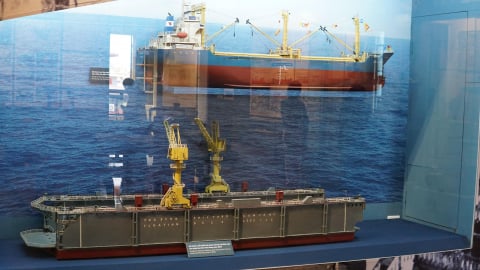
The space focuses on machinery, equipment, mechanical tools, and documents related to industrial production, reflecting the technical working environment of the early period. The exhibits are organized with a combination of artifacts, images, and documents, aiming to give viewers an overview before accessing more in-depth content on the upper floors.

The Gaz-69 car, the same type used by President Ton Duc Thang during his official trips, was transferred to the Ton Duc Thang Museum by the Presidential Palace Historical Site in March 1999.
The life and revolutionary activities of Ton Duc Thang
The second floor of the Ton Duc Thang Museum focuses on providing a deeper insight into the life and revolutionary activities of President Ton Duc Thang. Here, the exhibits are organized according to specific historical periods, helping viewers to better follow the formation of his ideology, work ethic, and struggles within the context of Vietnamese and international society.


The second floor space is decorated according to specific historical periods in the life of President Ton Duc Thang.
During this period, Ton Duc Thang's participation in the workers' movement and the struggle at the Ba Son shipyard (1925) was a crucial turning point, as he became directly involved with the Saigon workers' movement. His participation in and support of the strike at the Ba Son shipyard not only demonstrated class solidarity but also marked a clear transformation from a patriotic worker into a revolutionary fighter. This event contributed to shaping his ideology of class struggle and his long-term political career path.


His participation in the workers' movement and the struggle at the Ba Son shipyard (1925) was a significant turning point in his life.
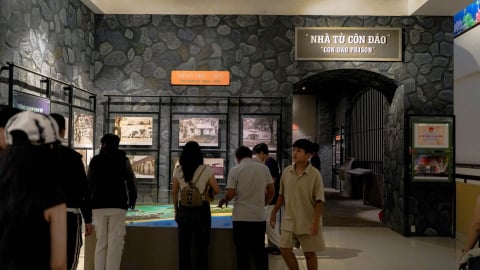
The long period of imprisonment in Con Dao prison (1912-1925) was a great test, but also a period of forging Ton Duc Thang's unwavering will and revolutionary spirit. Despite being imprisoned in harsh conditions, he maintained his fighting spirit and became a symbol of steadfast loyalty. This experience profoundly influenced his personality and worldview after his return to revolutionary activities.


The 15 years Ton Duc Thang was imprisoned in Con Dao prison.
The system of artifacts, documentary images, and historical excerpts is selectively arranged, emphasizing important milestones in his career as a worker, his participation in the revolutionary movement, and his leadership role in different historical periods. The display on this floor emphasizes chronological coherence, making it easy for viewers to access and visualize the development of each stage.


Artifacts related to the life and family of President Ton Duc Thang are displayed in the area dedicated to his childhood.
The final stage and the highest leadership role of Ton Duc Thang
On the third floor of the museum, the exhibits focus on the final years and the period when President Ton Duc Thang held the highest leadership position. This includes several significant events associated with his life and career.

The exhibition space on the 3rd floor showcases Ton Duc Thang's role as President of Vietnam.
Becoming President of the Democratic Republic of Vietnam (1969) was the most important milestone in the final stage of Ton Duc Thang's political career. After the death of President Ho Chi Minh, he was entrusted with the responsibility of leading the State, demonstrating the great trust of the Party and the people. This event marked his symbolic leadership role during the resistance war against the US and the process of national reunification.

Ton Duc Thang became President of the Democratic Republic of Vietnam from 1969 to 1976.


The Lenin International Peace Prize (1955) was international recognition of Ton Duc Thang's contributions to the revolutionary movement and the struggle for peace. This event not only affirmed his prestige on the international stage but also reflected the image of a Vietnamese revolutionary with a wide-ranging influence in the world peace movement.


The third floor is also associated with the image of Ton Duc Thang during the period after the reunification of the country (1975-1980), when he continued to hold a leadership role in the State, contributing to the stability and building the first foundations of a unified Vietnam.
These events are highlighted on the third floor's exhibition as a concluding period of Ton Duc Thang's revolutionary life, clearly portraying his role in modern Vietnamese history, emphasizing the spiritual legacy he left behind, and concluding the tour in a solemn and historically significant manner.


Ton Duc Thang continued to hold the position of President of Vietnam in the period after the reunification of the country.
The exhibition space of the Ton Duc Thang Museum is organized as a unified whole, coherently recreating the journey of President Ton Duc Thang's life and career, while reflecting the historical values associated with each stage of his activities. Each exhibition space contributes to highlighting an aspect of his personality and career, creating a seamless and in-depth visitor experience.


Foreign tourists visit the Ton Duc Thang Museum.
Concluding the tour, the museum left an impression of an enduring spiritual heritage, closely linked to the patriotism, simplicity, and lifelong dedication of President Ton Duc Thang.