VI
VI


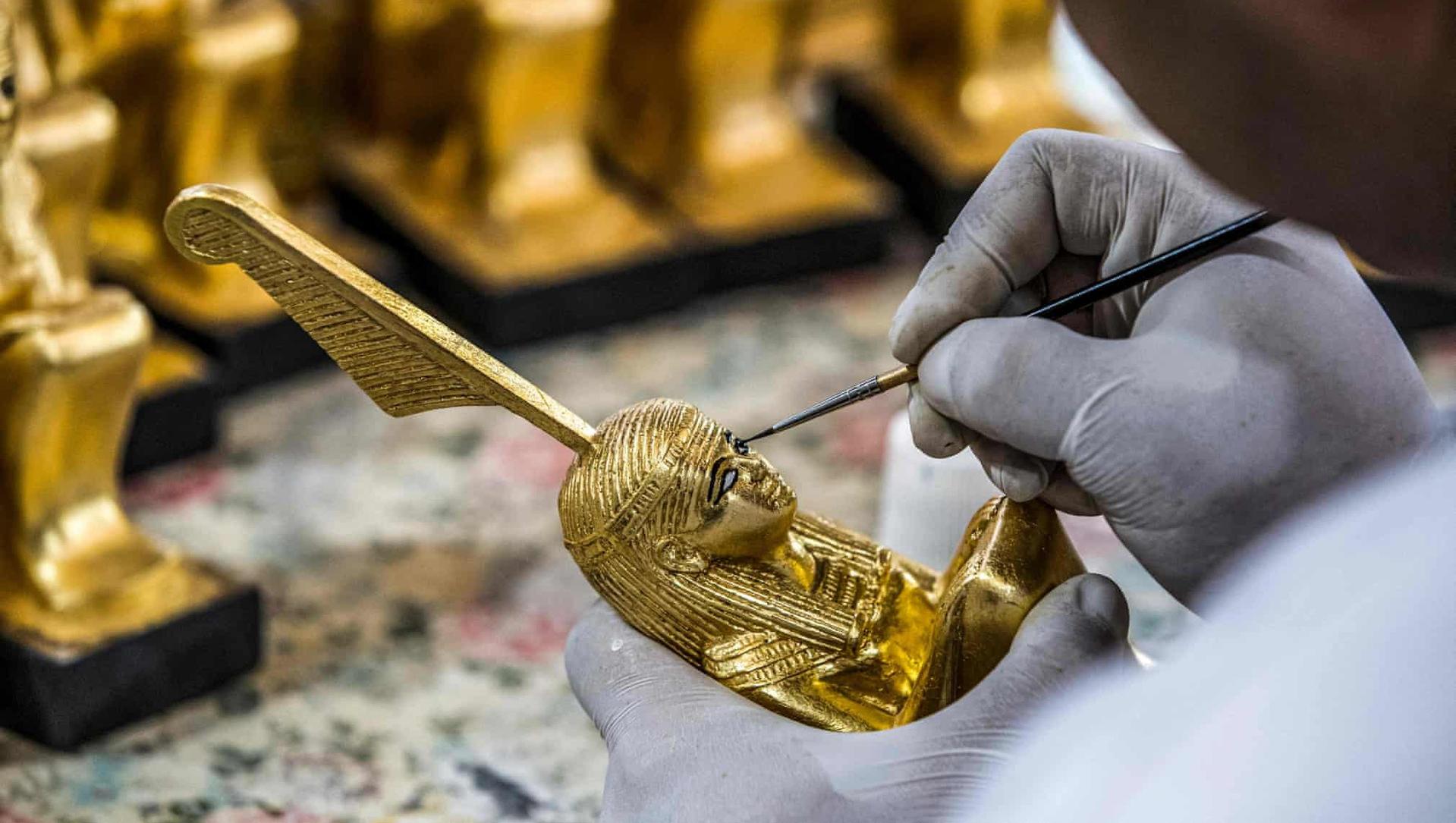
The Egyptian government's Konouz (meaning "Treasure" in Arabic) factory is located in Obour, east of Cairo. The factory grounds cover an area of 10,000 square meters.2Here, artisans focus on producing thousands of replicas of ancient artifacts from various materials such as plaster, wood, stone, ceramics, gold, etc.
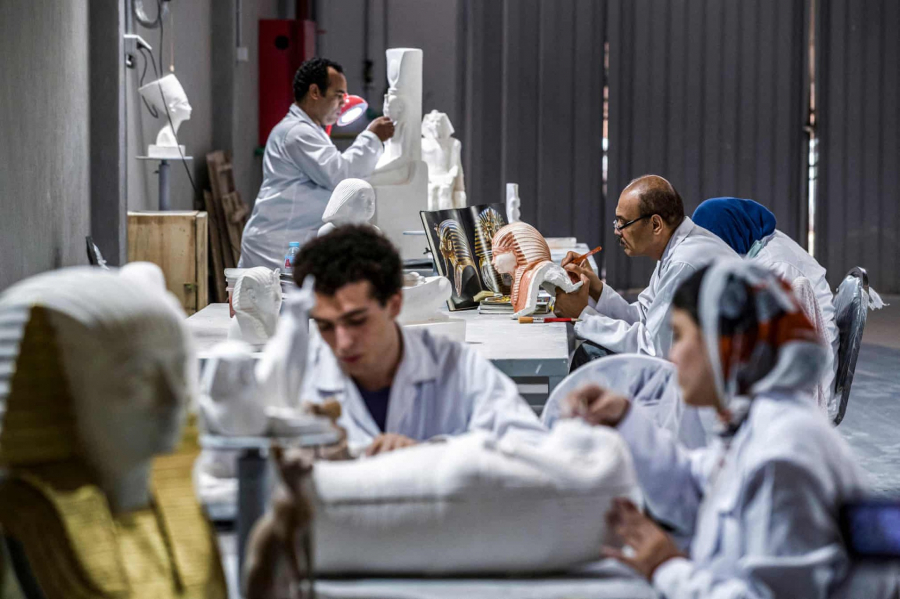
The Konouz factory produces replicas of ancient Egyptian artifacts.
For years, Egypt's souvenir market has been dominated by cheap Chinese imports. The government is now seeking ways to meet the demand for higher-quality products from tourists.
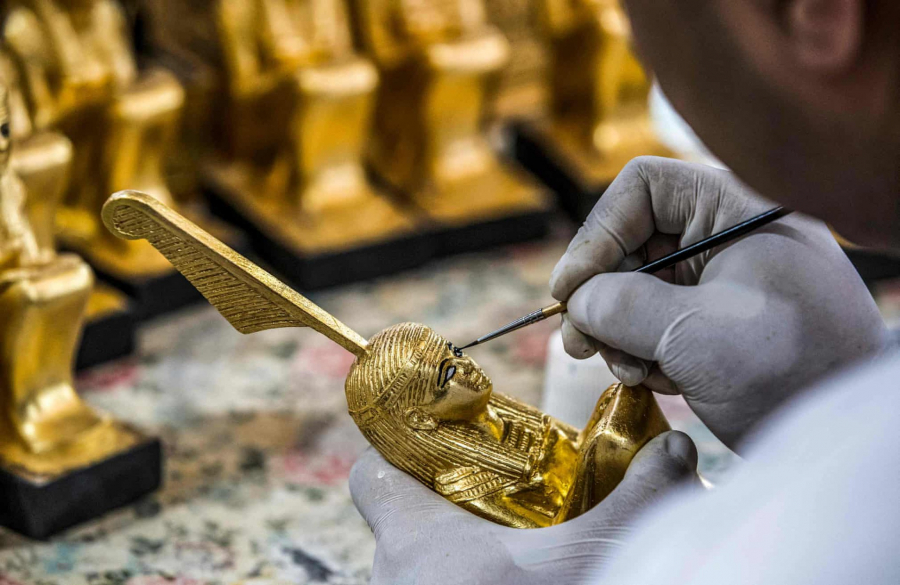
A technician is crafting a replica of an ancient Egyptian statue.
The Konouz factory produces furniture, statues, and paintings depicting the four main periods of Egyptian heritage: Pharaonic, Greco-Roman, Coptic, and Islamic. Replicas are made to a 1:1 scale or in miniature form and are distributed with official certificates of authenticity issued by the government.

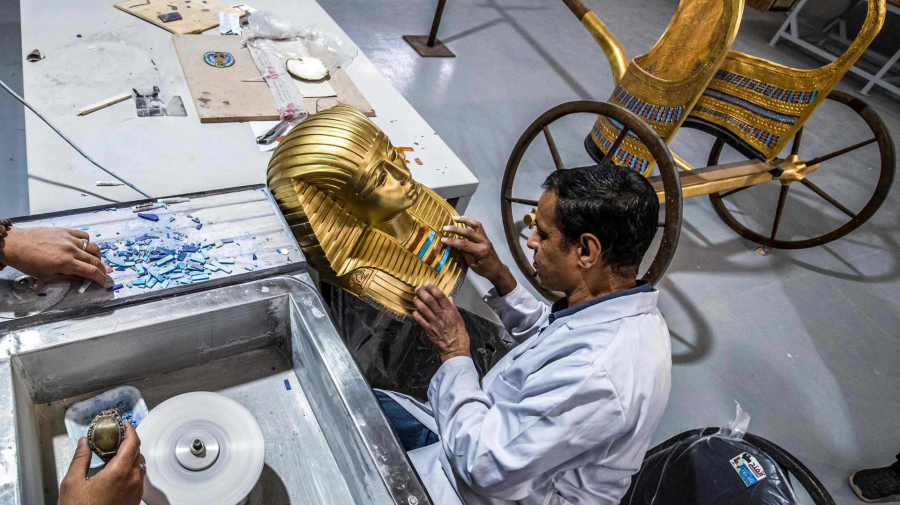
When circulated, the copies will be accompanied by an official certificate of authenticity issued by the Government.
The factory was run by a retired general. He oversaw about 150 workers, including painters, cabinetmakers, sculptors, and designers.
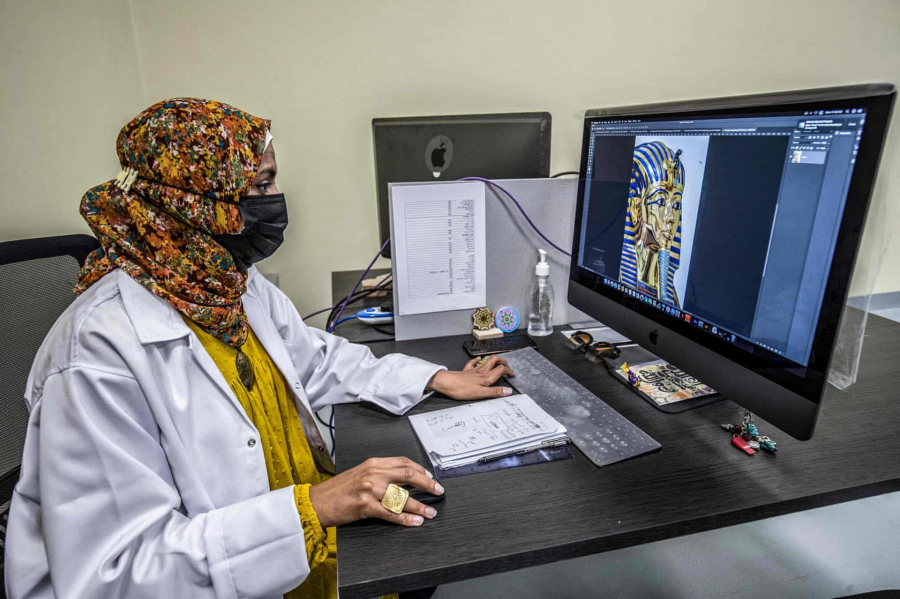
A graphic designer is editing a computerized image of a mask of Pharaoh Tutankhamun.
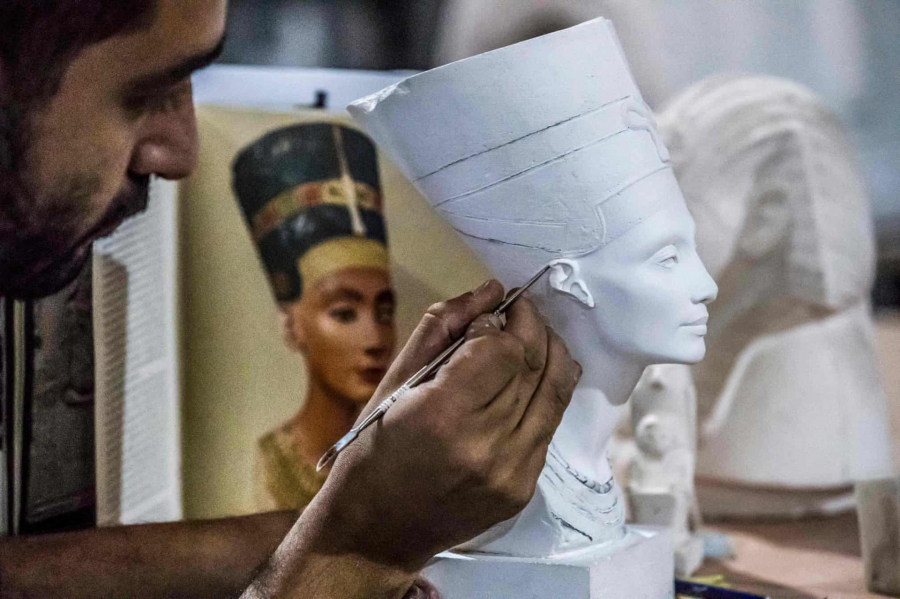
Technicians are crafting a replica bust of Queen Nefertiti.
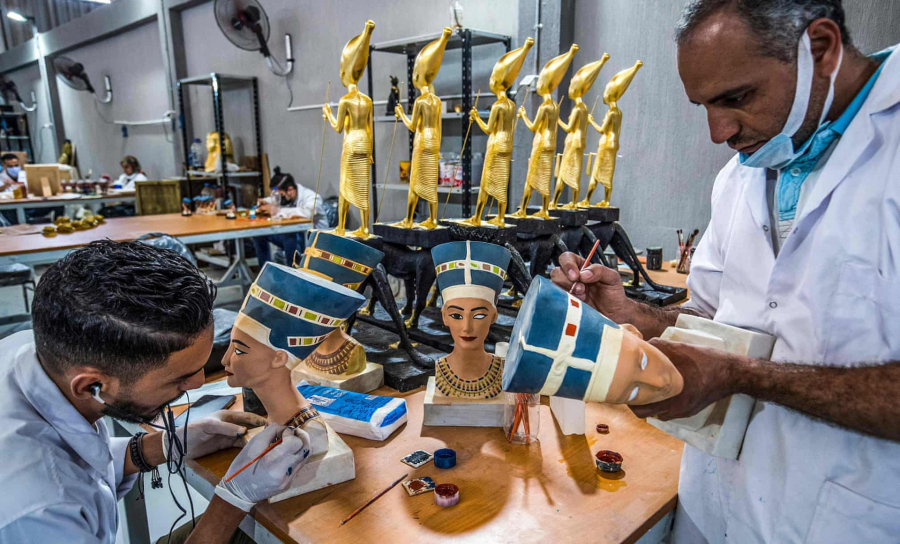
The process of painting the copies.
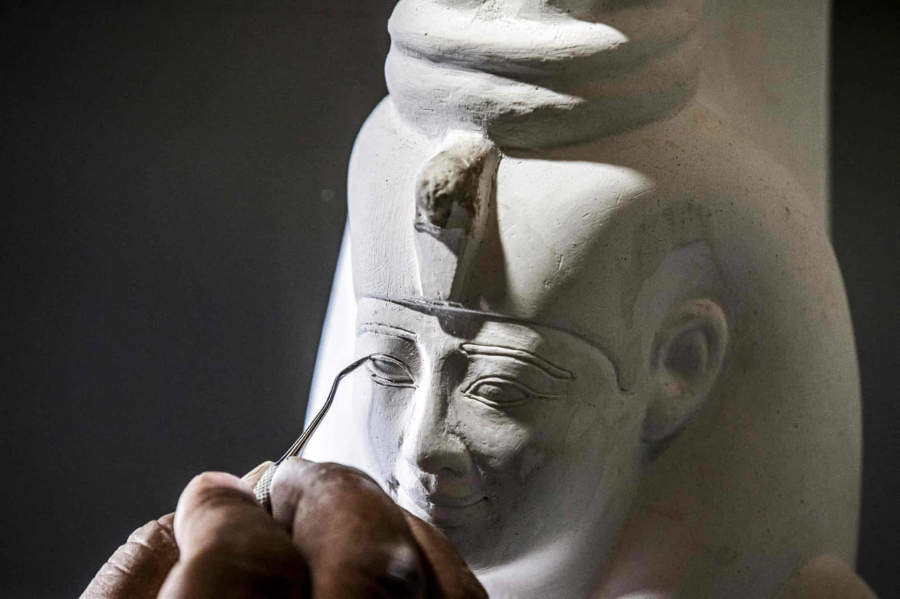
A technician is crafting a replica of an ancient statue.
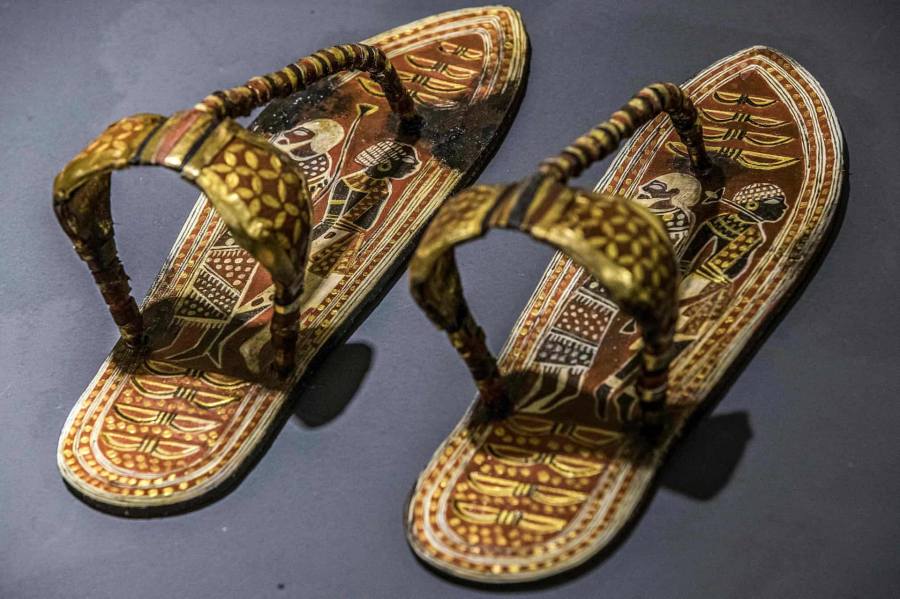
A replica of the sandals found at Tutankhamun's tomb was manufactured at the Konouz factory.
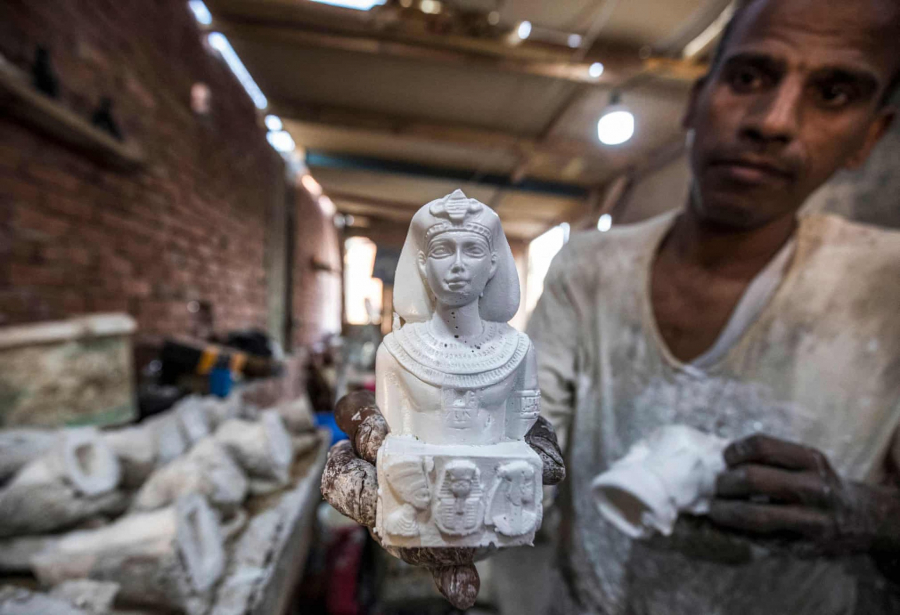
A replica after the manufacturing process.
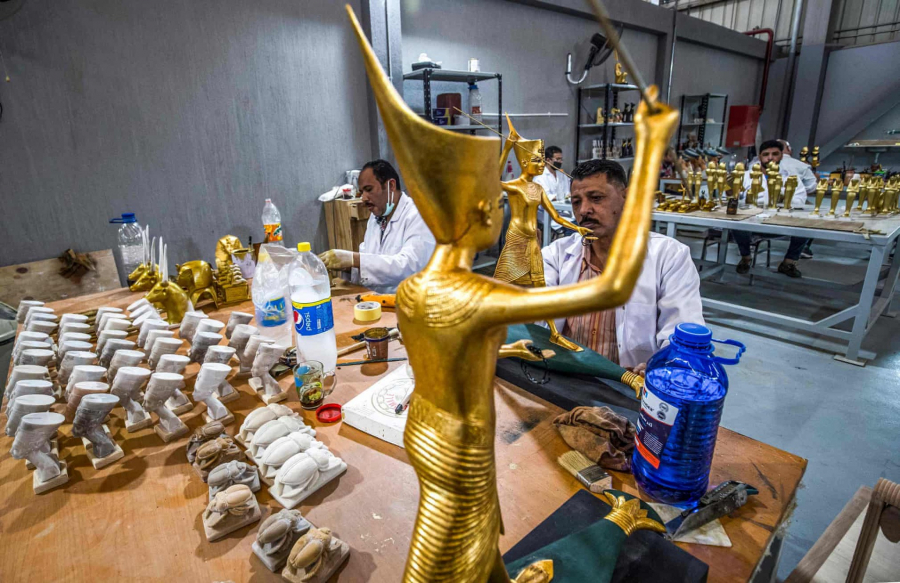
The technician paints the replicas of the ancient artifacts.
In 2015, the Egyptian Ministry of Industry banned the import of popular art goods and products, including models of Egyptian antiquities. This move was intended to protect the domestic handicraft industry from competition with cheaper imported products.
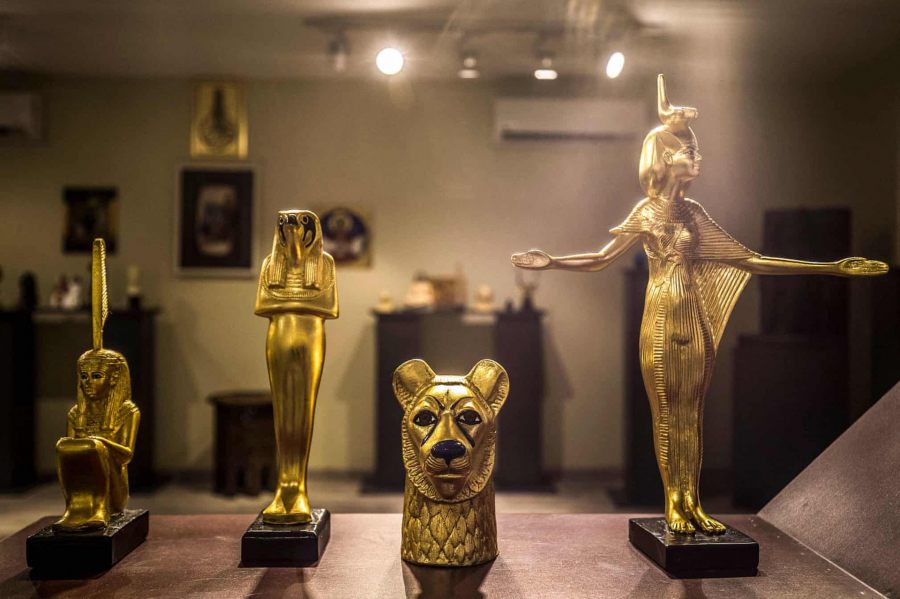
These are the completed copies.
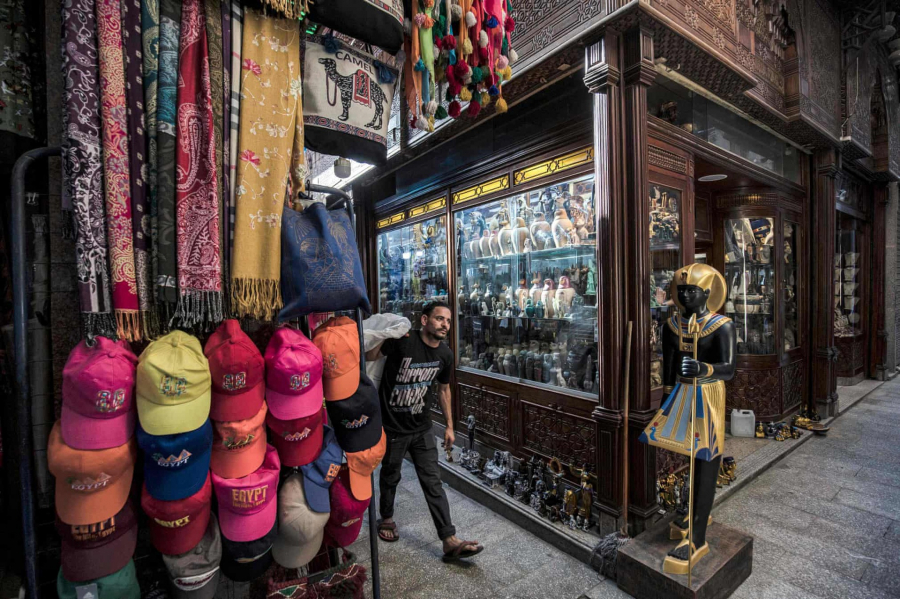
A shop selling replicas of ancient Egyptian statues.
Also recently, Tourism Minister Khaled el-Enani welcomed the recovery in tourist numbers to Egypt. There have been around 500,000 tourists per month since the beginning of April, more than double the number in January and a significant increase from the average of 200,000 tourists per month in 2020.