VI
VI


Born and raised in Hue – the former capital of the Nguyen Dynasty – illustrator Dang Huu Thanh, pen name Pho Ngan (溥彥), began his drawing career quite early, but only started pursuing the art of classical style in 2020. Currently living in Da Nang, he continues to pursue his passion for recreating history through art, especially the Nguyen Dynasty period (1802-1945).
"My hometown and childhood are closely linked to Hue, so the culture of the Nguyen Dynasty has always been my greatest source of inspiration and passion," he shared, even though during his work he continues to research and learn about other dynasties such as the Ly, Tran, and Le dynasties.
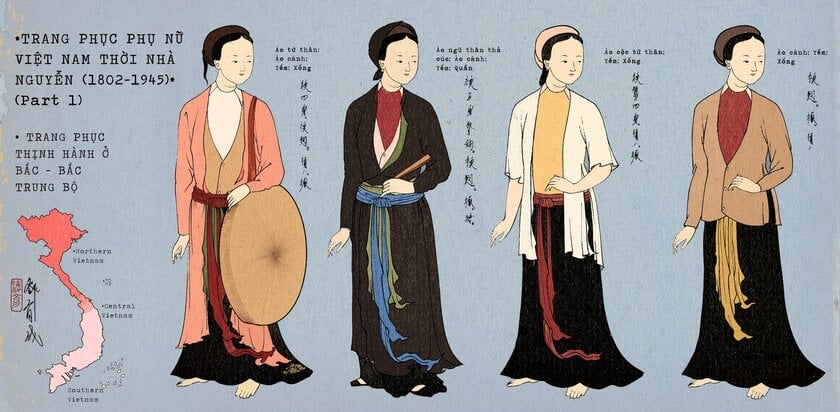
Artist Dang Huu Thanh has been researching and sketching various types of costumes from the Nguyen Dynasty from 2020 to the present.
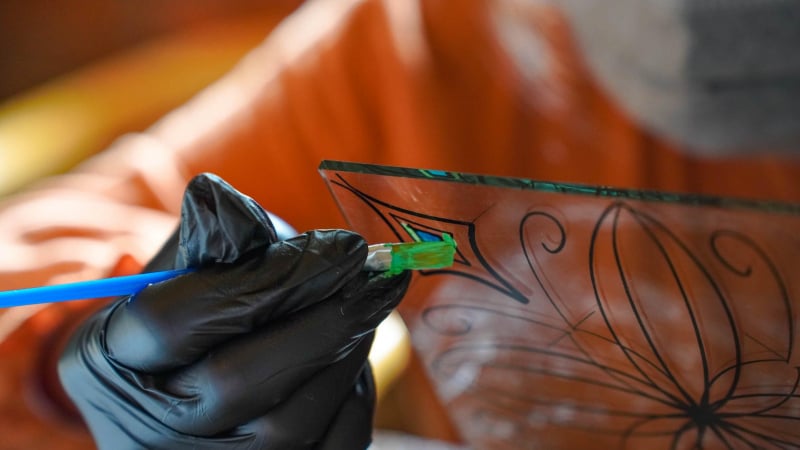
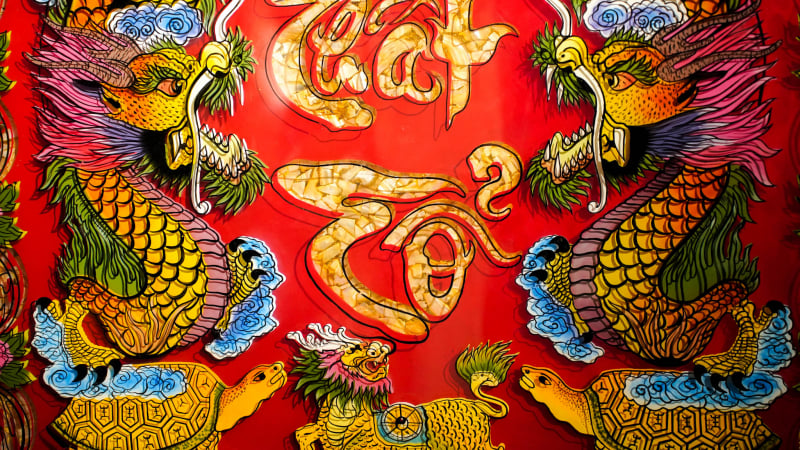
The project aims to recreate Vietnamese clothing from the Nguyen Dynasty.
Since the beginning of 2024, Dang Huu Thanh has embarked on a long-term project: recreating Vietnamese clothing from the Nguyen Dynasty based on personal research, with the goal of releasing more paintings and content related to culture, customs, and history. "Each work usually takes from a few days to a week to complete, but for topics with scarce source material, the time can extend to several weeks," he shared.
The series of sketches depicting Vietnamese clothing during the Nguyen Dynasty by artist Dang Huu Thanh recreates a diverse range of costumes, from court to folk attire, clearly showing social stratification and ceremonial characteristics.
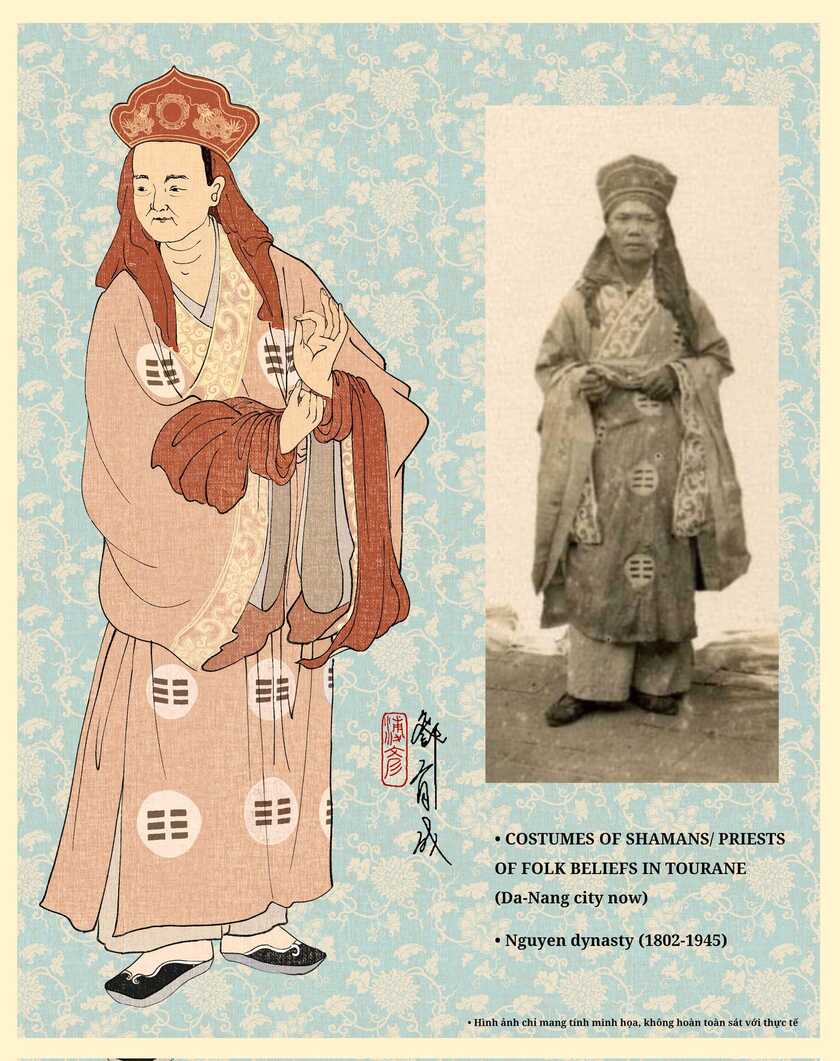
Traditional attire of shamans/spirit priests in Da Nang
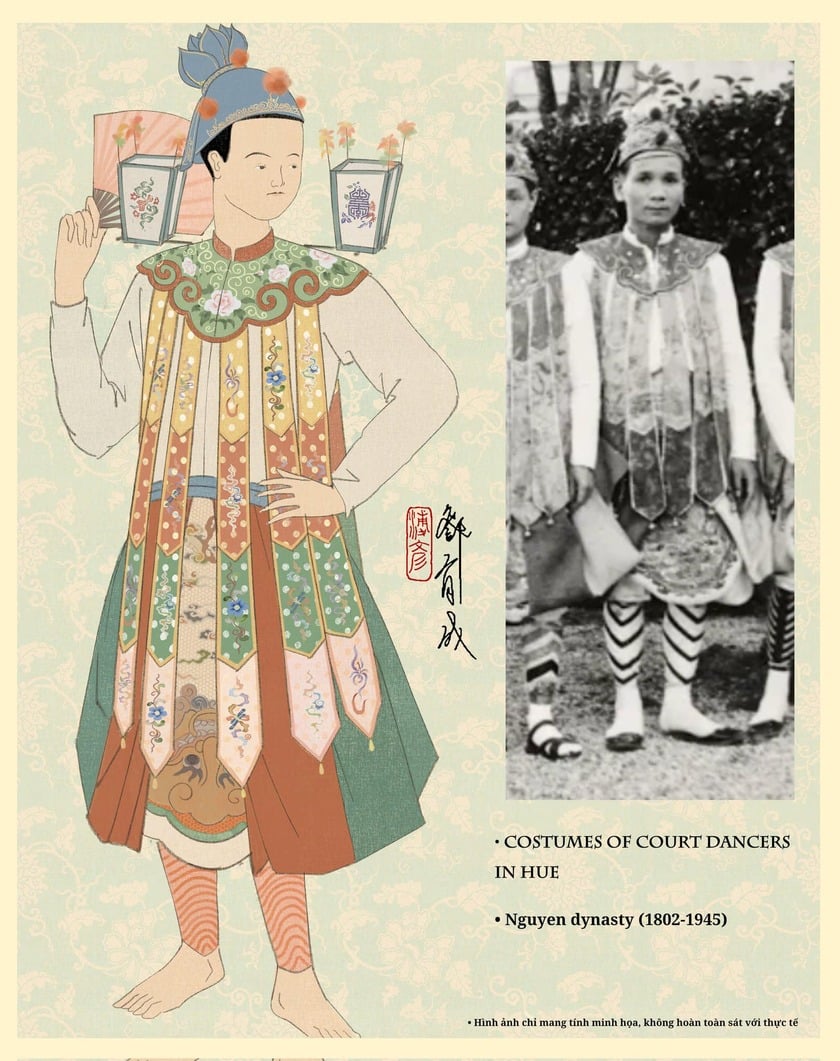
Hue court dancer costumes
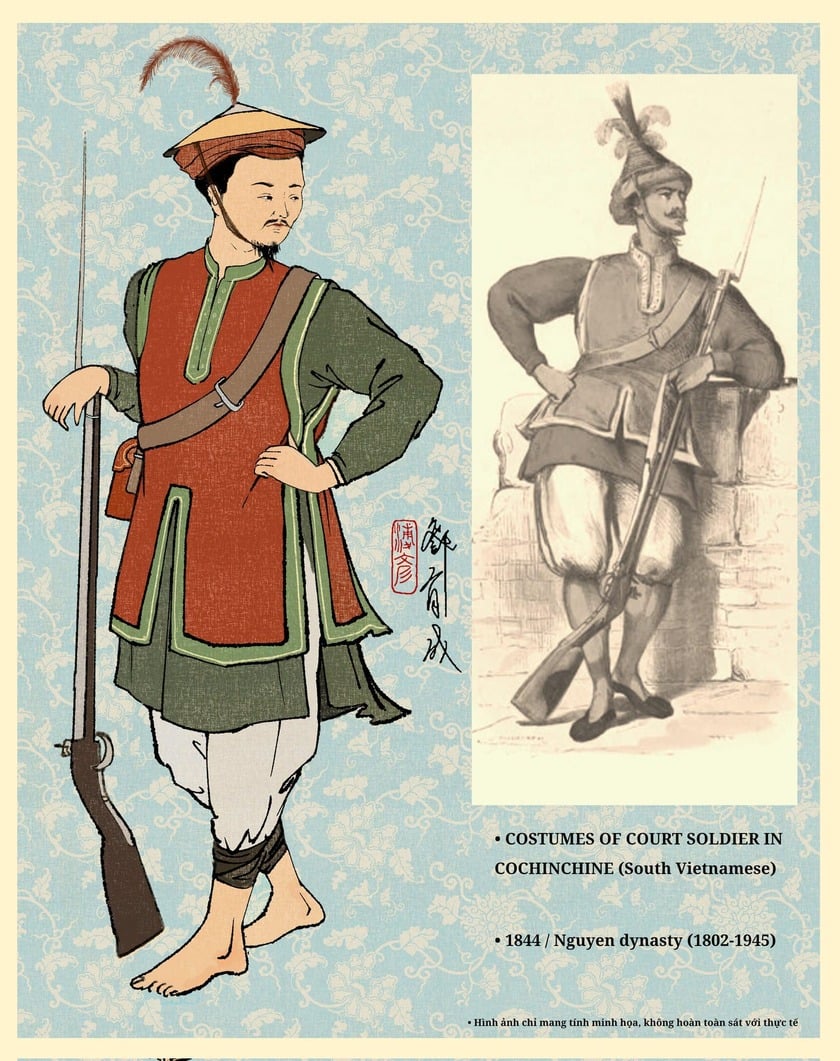
Southern Vietnamese soldier's uniform
Under the Nguyen dynasty, clothing was not merely a means of covering the body but also a clear symbol of power, rank, and ceremony. Amidst the dazzling colors of the imperial palace, each outfit was a unique "language," strictly regulated in terms of material, patterns, and colors.
For women of the royal family, the square-necked, wide-sleeved, long-bodied, intricately decorated dress (áo nhật bình) was a symbol of status. The colors and patterns varied depending on rank: the empress wore a dress embroidered with gold thread depicting phoenixes, cranes, pheasants, and elaborate designs of the eight treasures and mountains and water waves; princesses and concubines each wore a different color, reflecting the hierarchical structure of the court.

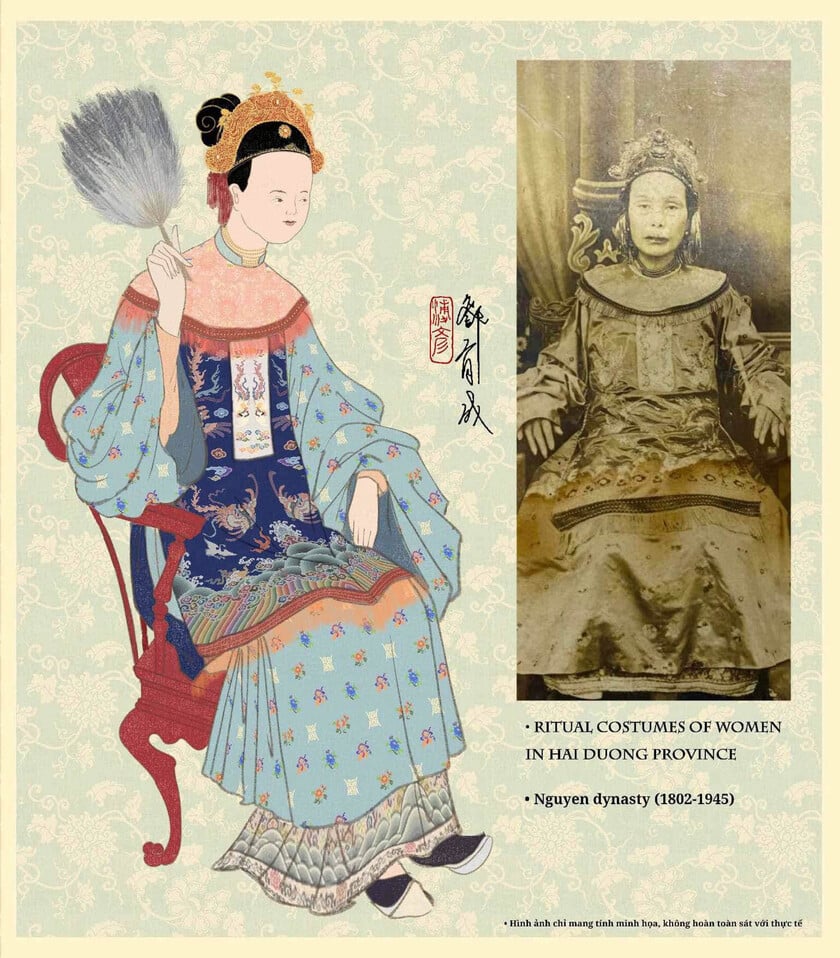
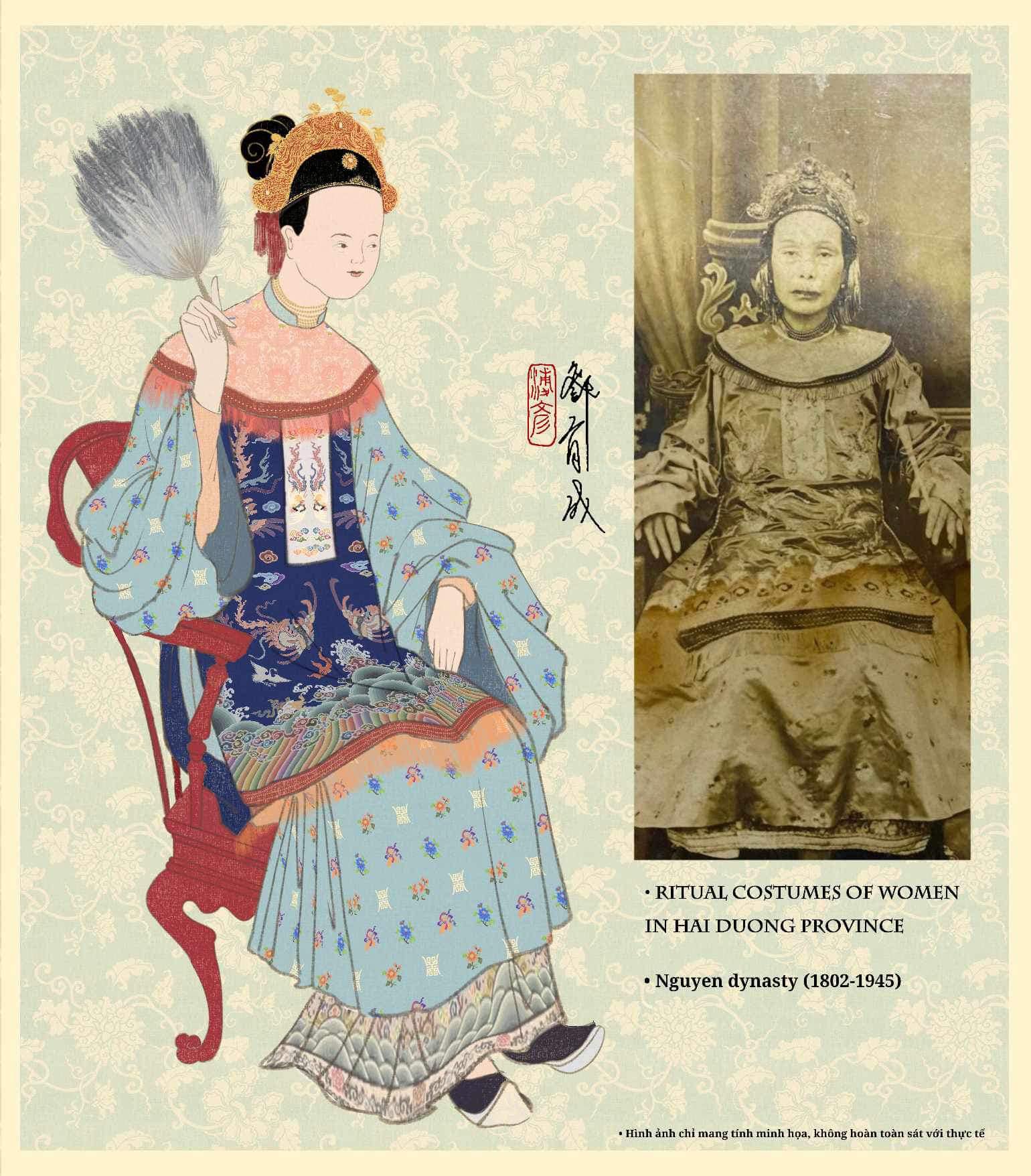
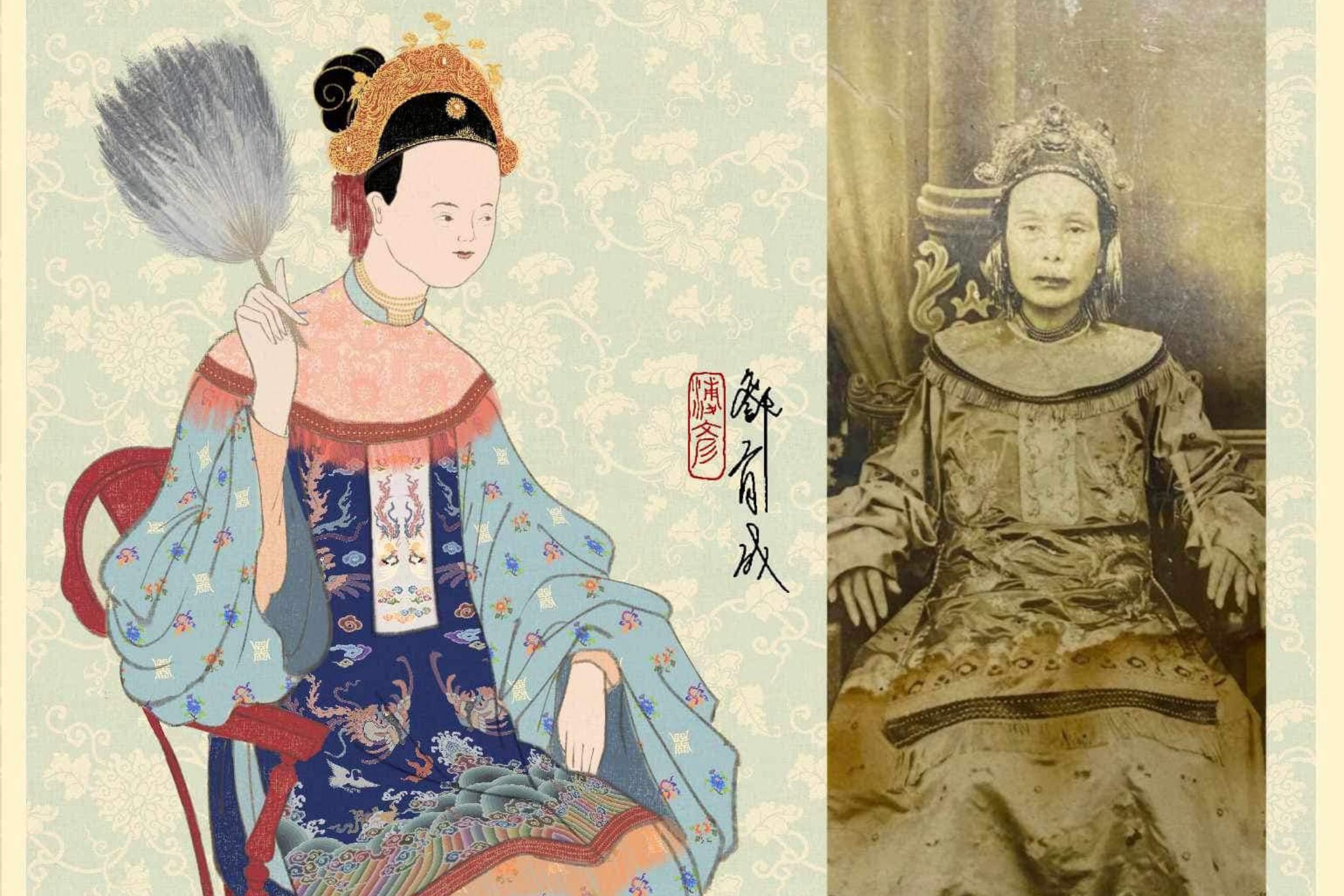
Attire for ladies/madams of Hai Duong province
Similarly, the emperor's ceremonial robe – the dragon robe – was the pinnacle of power. The robe was woven with gold brocade, embroidered with five-clawed dragons winding through clouds, symbolizing supreme authority. Princes and officials also wore ceremonial robes, but the number of dragon claws, colors, and patterns were adjusted to avoid overshadowing the emperor's power.
During ceremonies, weddings, or banquets, the image of men in long-sleeved, wide-hemmed robes, with hems measured in "tấc" (a unit of measurement), creates a sense of formality while remaining relevant to everyday life. In daily life, various types of clothing such as five-panel robes, four-panel robes, the "áo bà ba" (a type of blouse), the "áo cánh" (a type of winged blouse), the "áo lá" (leaf-shaped blouse), and the "áo vạt hò" (a type of robe with flaps) are ubiquitous.
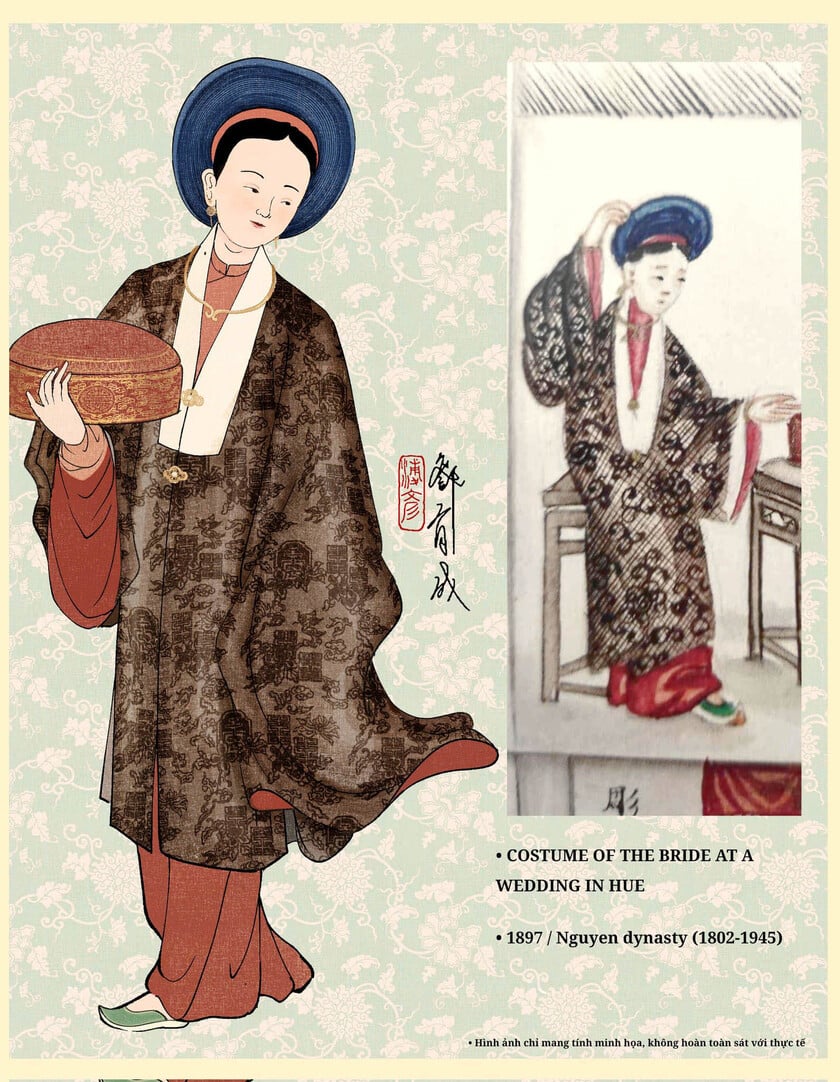
The bride's attire is based on the illustrations from "Luc Van Tien: The Fairy Tale" by court artist Le Duc Trach, 1897.
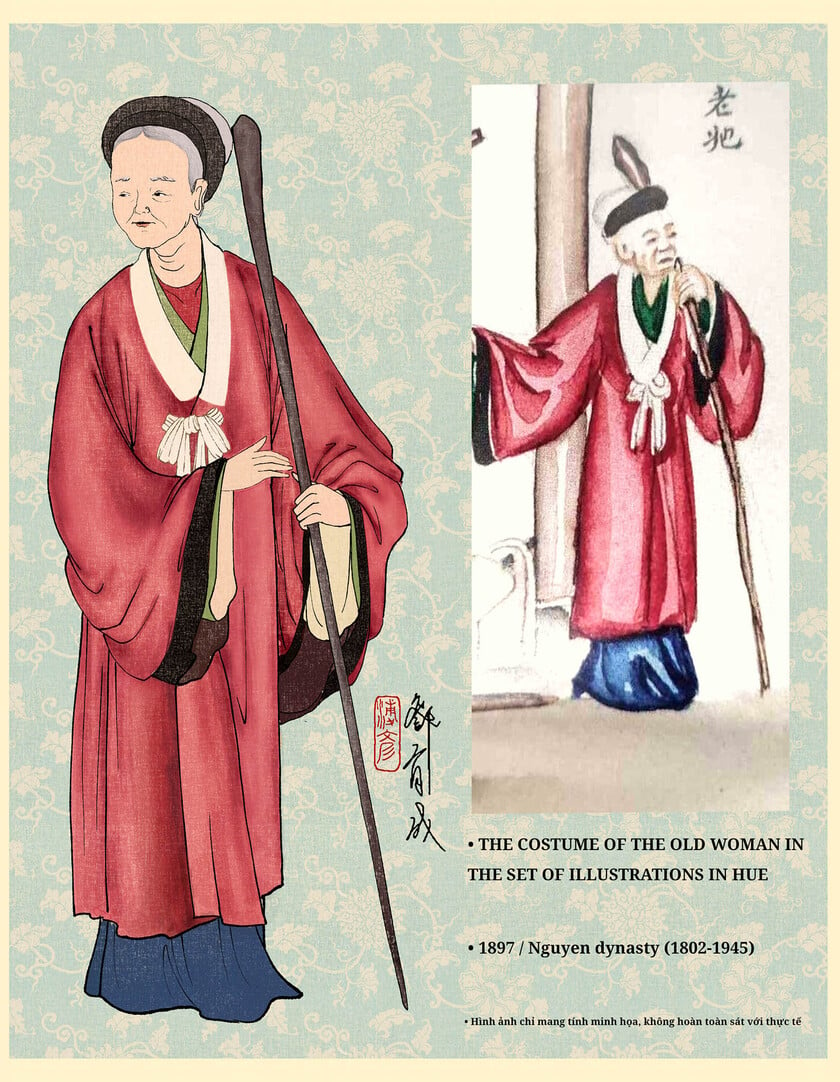
The attire of the elderly woman weaving fabric is illustrated in a painting by the court painter Le Duc Trach in Hue.
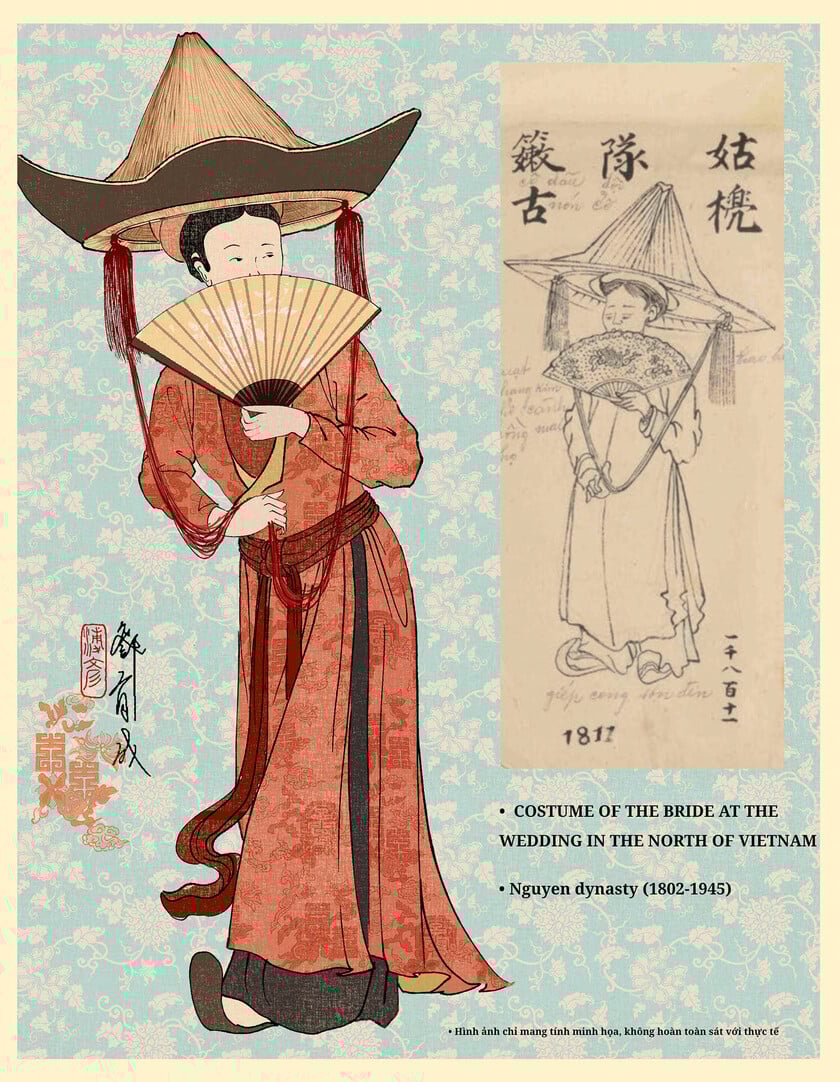
The bride's attire at a wedding in Northern Vietnam.
Completing the look were exquisite headscarves and headdresses. Men wore turbans or winged hats, while royal women and noble ladies displayed their elegance with phoenix-shaped headdresses and gold hairpins. During major festivals, the imperial court donned crowns and robes accompanied by jade belts, ivory badges (or ivory, wood, or jade tokens), and embroidered shoes. Each detail reflected the majesty and sophistication preserved over centuries.
Attire for ladies/madams of Hai Duong province
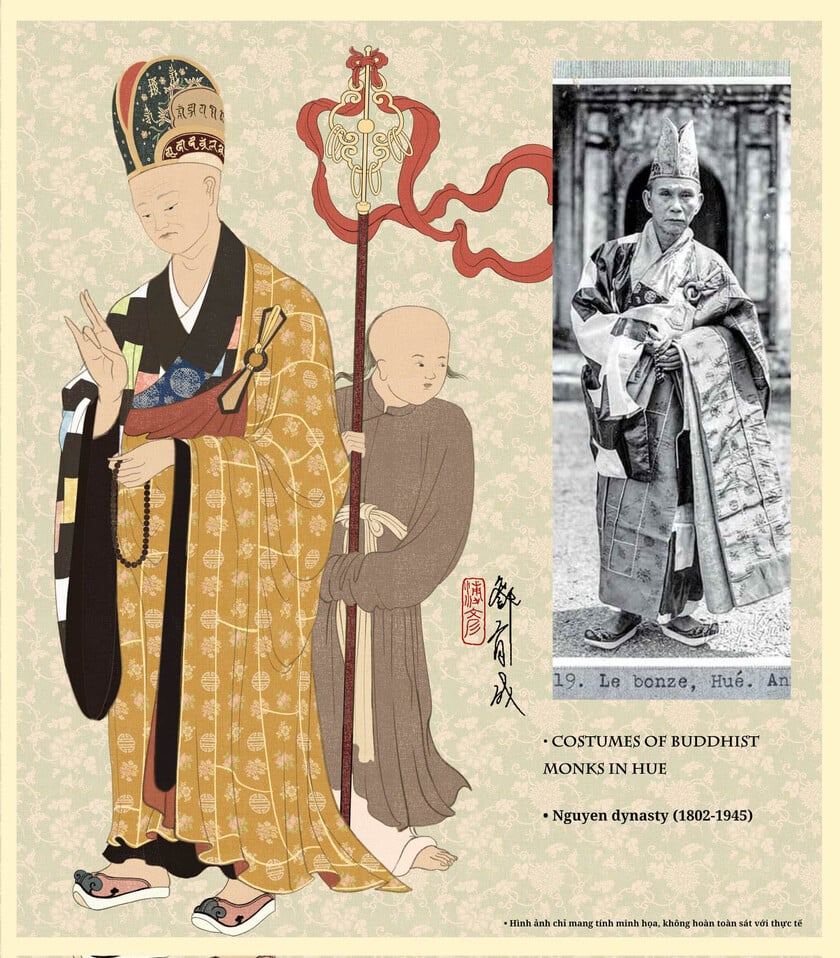
Hue Buddhist monk attire
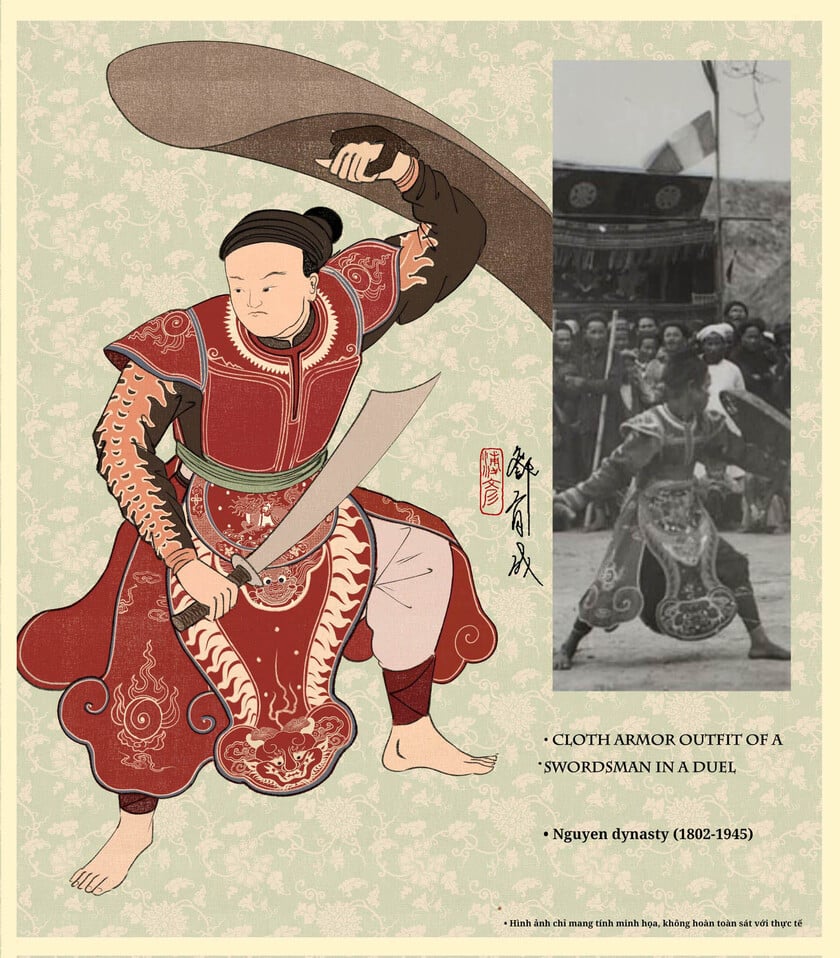
Costumes of martial artists in traditional wood-fighting attire at a festival in Thai Binh province, 1928.
Under Emperor Minh Mạng, clothing was reformed to unify and express national identity, while the reign of Emperor Khải Định witnessed an exchange with Western culture. "Nguyen Dynasty clothing was not only for distinguishing social classes, but also a part of cultural heritage," Thành observed.
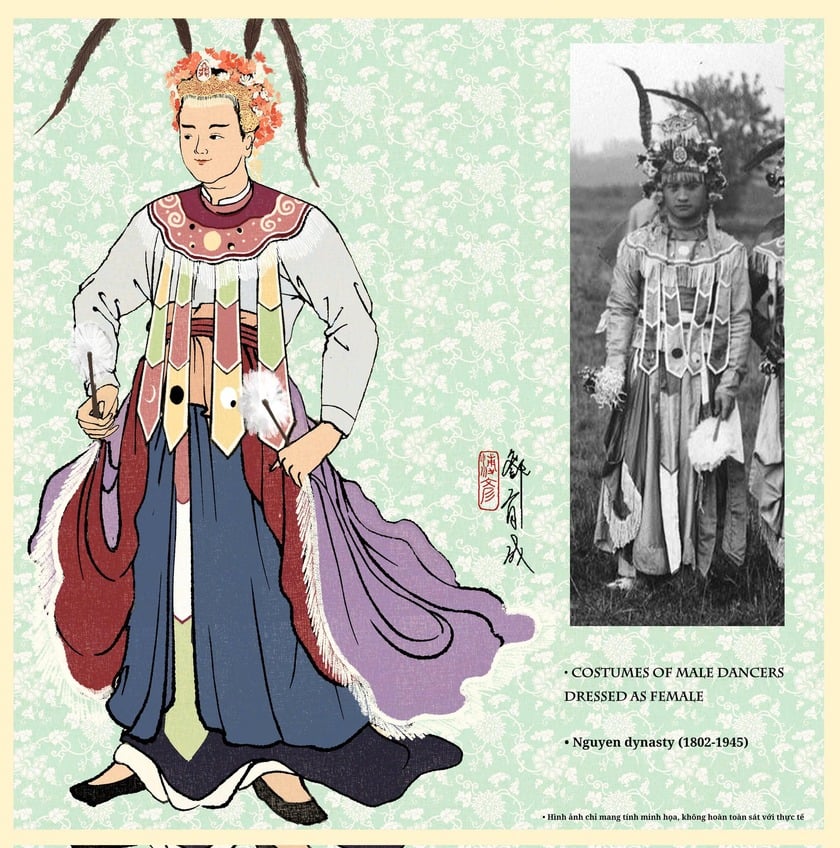
Male dancer costumes at the 1931 Paris Colonial Fair.
The journey to find the documents was arduous.
Most of the information and images used for illustration were obtained by Thanh through traditional clothing communities such as Dai Viet Co Phong and Viet Phuc Hoi, as well as international auction houses like Millon, Invaluable, Balclis, and Sotheby's – which regularly update and display Vietnamese artifacts and paintings abroad. In addition, he accessed resources from major libraries such as Gallica, Weltmuseum Wien, and Quai Branly. Friends and colleagues in the field of traditional clothing research were also important sources of support.
"The most difficult part is always finding and verifying the source material. Many sources are fragmented, inconsistent, and even contain variations or inaccuracies," he said. Therefore, the screening process to ensure accuracy requires a lot of time and effort.
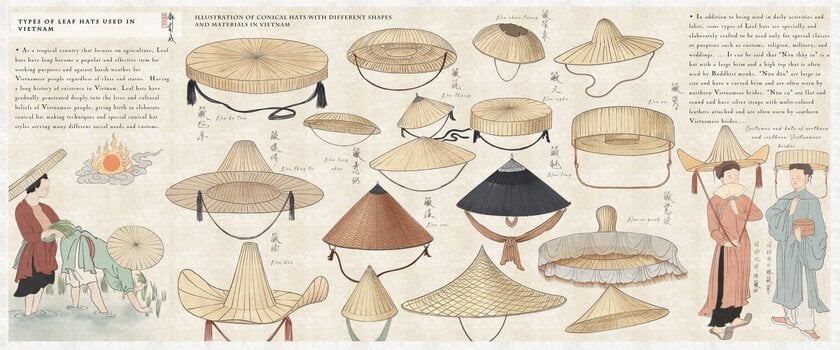
Many types of conical hats with different shapes and materials are found in Vietnam.
With the goal of recreating clothing in as much detail and as closely as possible to actual documents and artifacts, however, the lack or ambiguity of available documentation is unavoidable. In such cases, the artist flexibly utilizes other cultural resources, such as traditional patterns or similar clothing styles, to supplement and replace them. "This approach not only makes the artwork more engaging but also provides viewers with new cultural knowledge," shared artist Dang Huu Thanh.
From court attire to mythology, military, and ancient Vietnamese customs.
The collection of clothing illustrations is just one part of a series of cultural projects that Thanh is undertaking. He has previously illustrated various forms of military uniforms from the Nguyen Dynasty, from guards, tea-serving soldiers, musicians, cavalry, court ceremonial guards to folk ceremonial guards. In addition, he possesses a collection of illustrations of mythical creatures, demons, and ghosts in Vietnamese culture, depicting diverse forms and types. Currently, he is collaborating with Saola Book to publish "Miscellaneous Records of Demons and Spirits" - a book illustrating and researching anecdotes of demons and supernatural stories in Vietnamese literature.
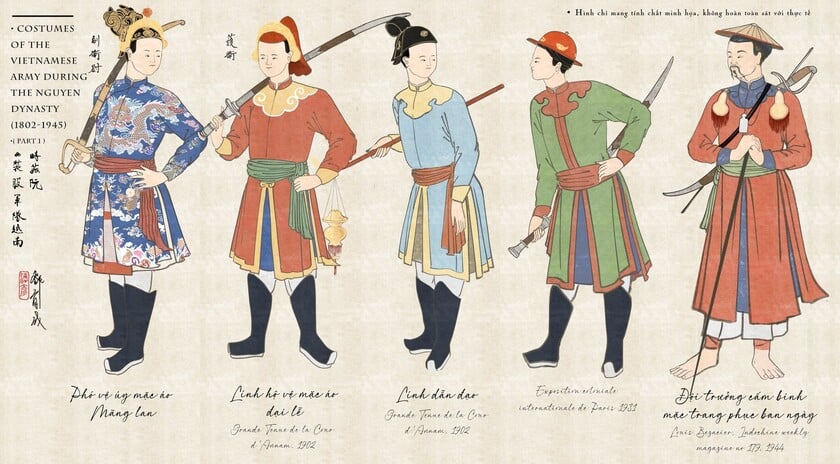
This set of illustrations depicts the uniforms of Vietnamese soldiers during the Nguyen Dynasty (1802-1945).
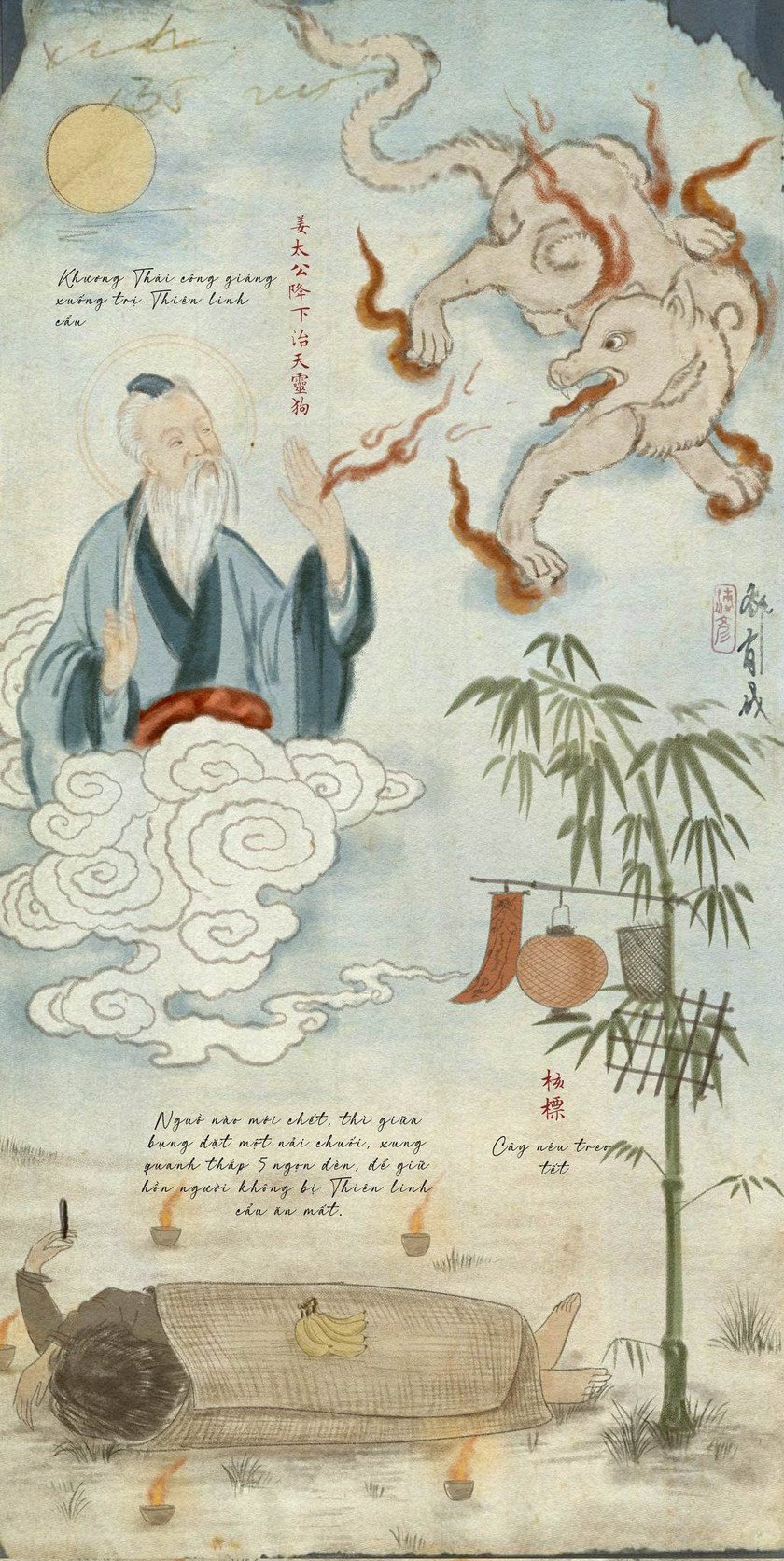
Heavenly Spirit Dog
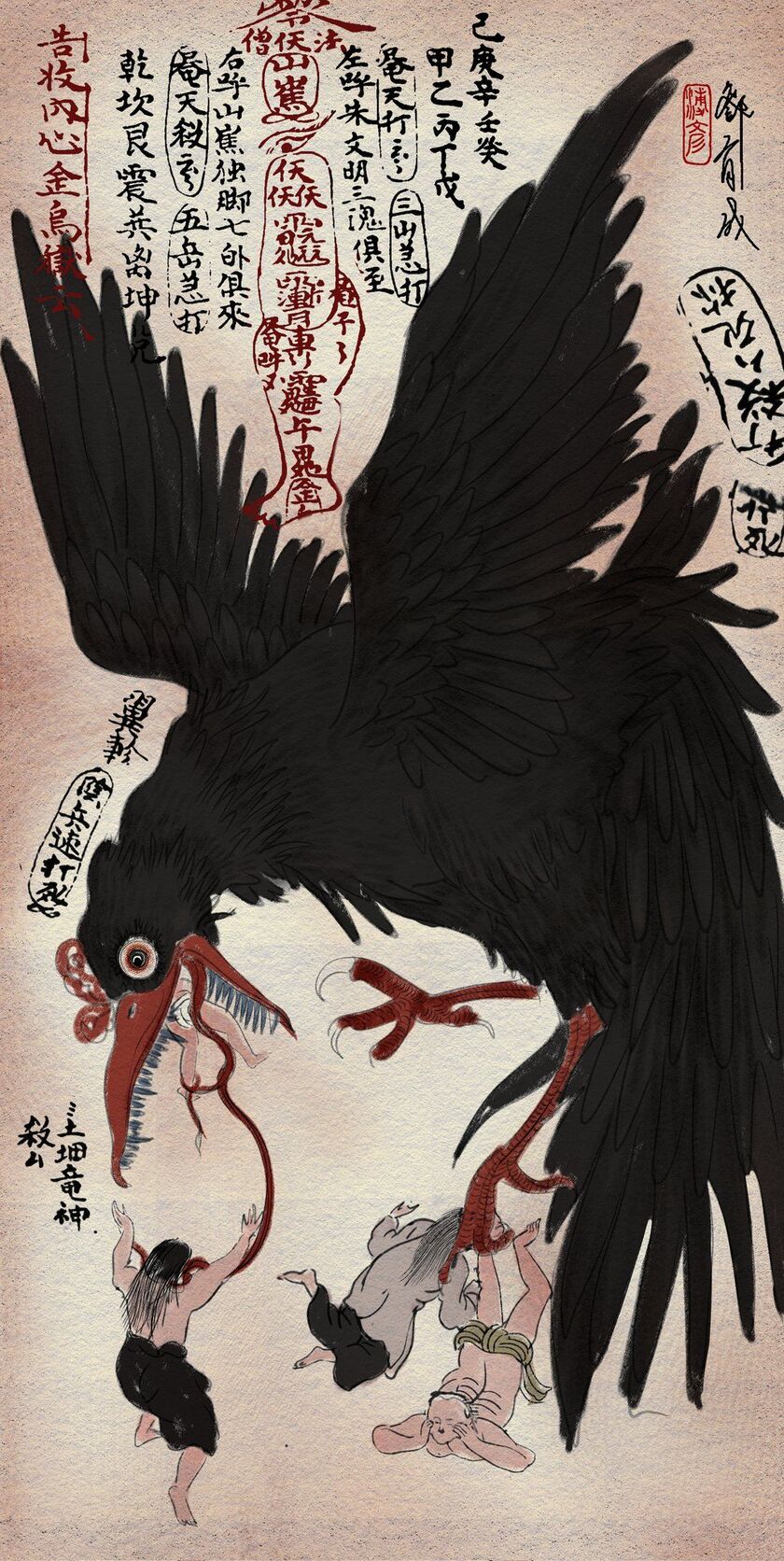
Insect
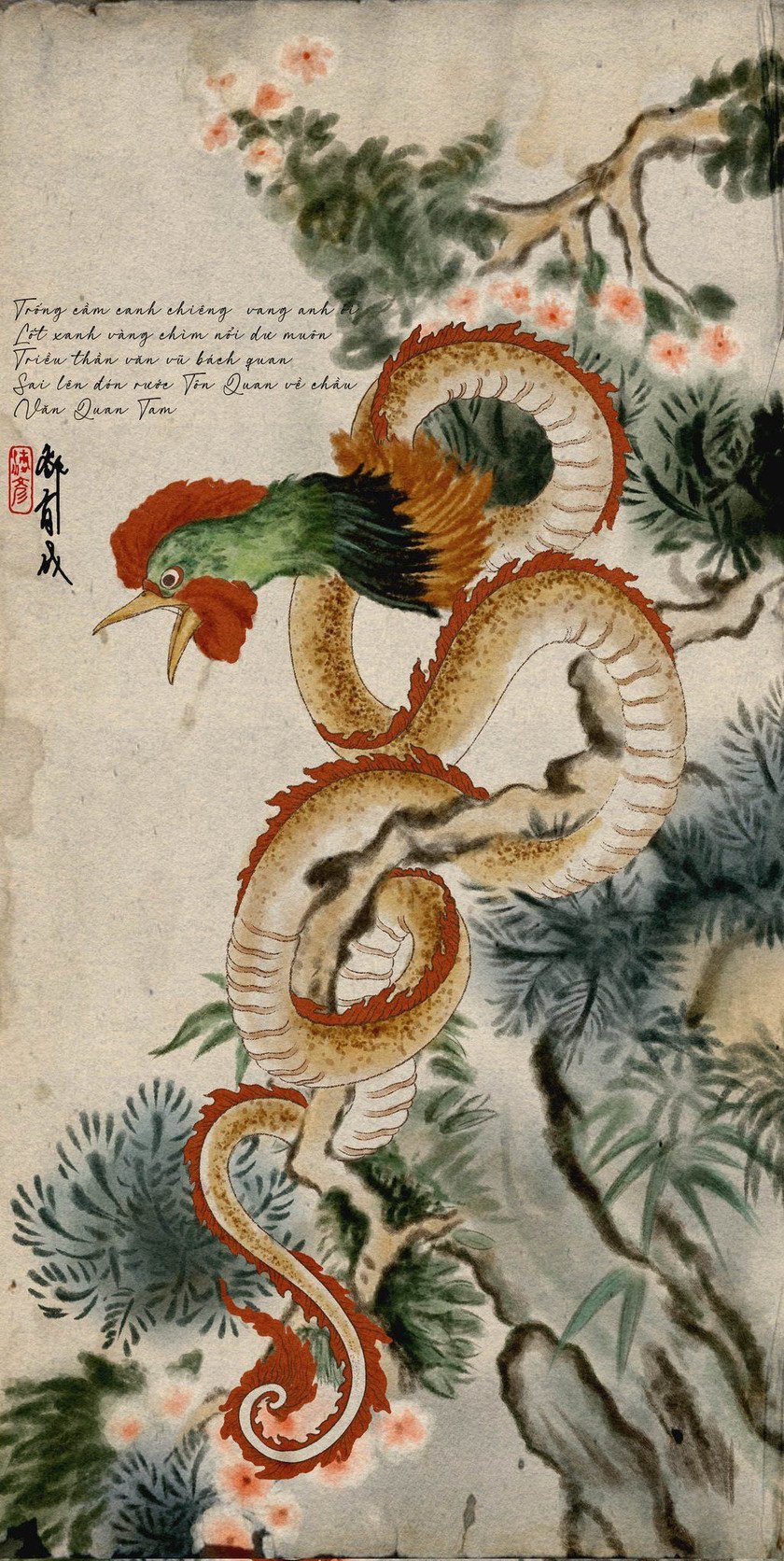
Chicken head
Through these projects, Dang Huu Thanh hopes to contribute valuable materials for research and teaching, while also igniting a passion for learning about traditional culture among young people. "I hope my paintings will help people better appreciate the aesthetics and spirit of ancient Vietnamese people," he expressed.