VI
VI


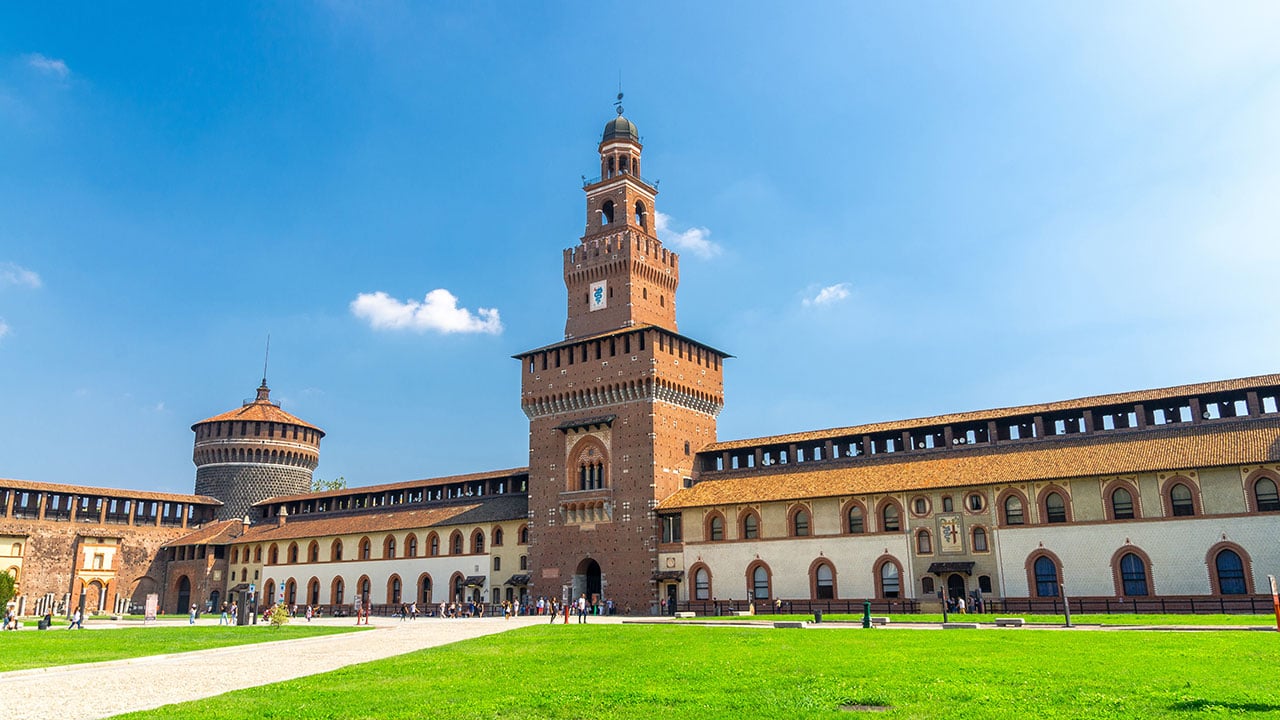
When visiting Milan, the Fashion Capital of the World, besides famous landmarks such as the Teatro alla Scala Opera House, the renowned La Galleria shopping mall, the Douma Cathedral, or the beautiful Lake Como, those who love the architecture and history of the capital city of Lombardy in northern Italy cannot miss a special place: Sforzesco Castle (Castello Sforzesco di Milano).
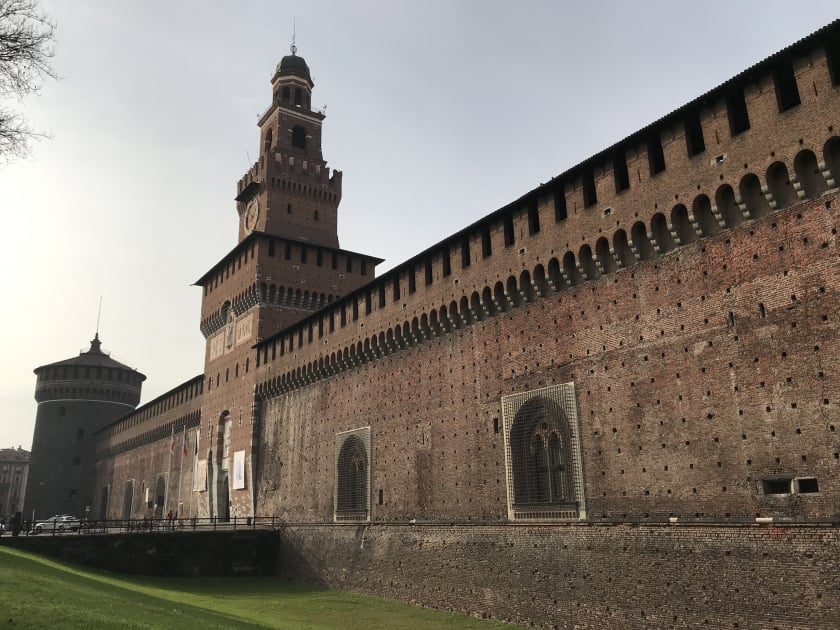
The Sforzesco Castle (Castello Sforzesco di Milano) stands tall against the test of time.
Castello Sforzesco, located within Parco Sempione – the largest park in Milan – is one of Milan's most important architectural landmarks, a testament to the city's history. The entire castle resembles the estate of a Grand Duke, surrounded by imposing city walls.
Built in the 14th century by Count Sforza as a castle, it later became the residence of the Sforza family, witnessing the entire process from the family's golden age to its decline. Designed as a fortress, the castle was besieged, destroyed, and then rebuilt during Milan's turbulent periods. For a time, this defensive fortress was called Porta Giovia. After a series of historical events, it was renovated in 1450 when Francesco Sforza came to power, under his orders.
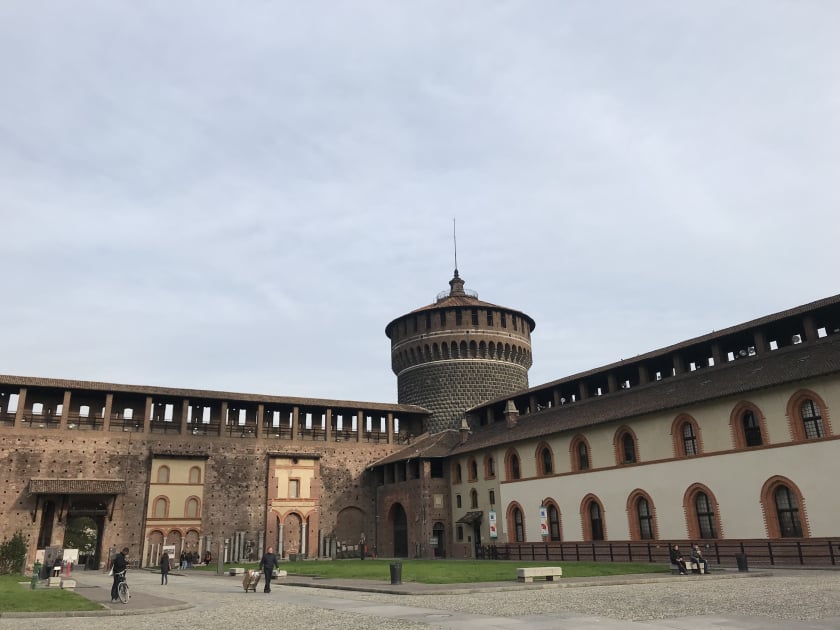
The watchtowers guarding the castle grounds, towering majestically, have stood firm against the ravages of time for seven centuries.
From afar, we could see the two towers, Torrione Dei Carmini and Torrione Di Santo Spirito, reaching a height of 230 feet (70 meters), with their strategically placed watchtowers protecting the castle's interior. They stood tall and majestic, enduring the test of time for seven centuries. The fortress walls were almost perfectly preserved, their base surrounded by a wide moat covered in lush green grass – a quintessential example of an ancient fortress with high walls and a deep moat, ideal for strong defense and swift counterattacks.

The castle now houses museums run by the Milanese city government, including the Museum of Ancient Art with works by Michelangelo, while the Trivulziana Library contains Leonardo da Vinci's original Codex Trivulzianus manuscript. The Musical Instruments Museum, the Museum of Antique Furniture and Wood Sculpture, and the Applied Arts Collection all feature centuries-old Italian artifacts… The back entrance is the Peace Gate, named after the ruler Francisco.
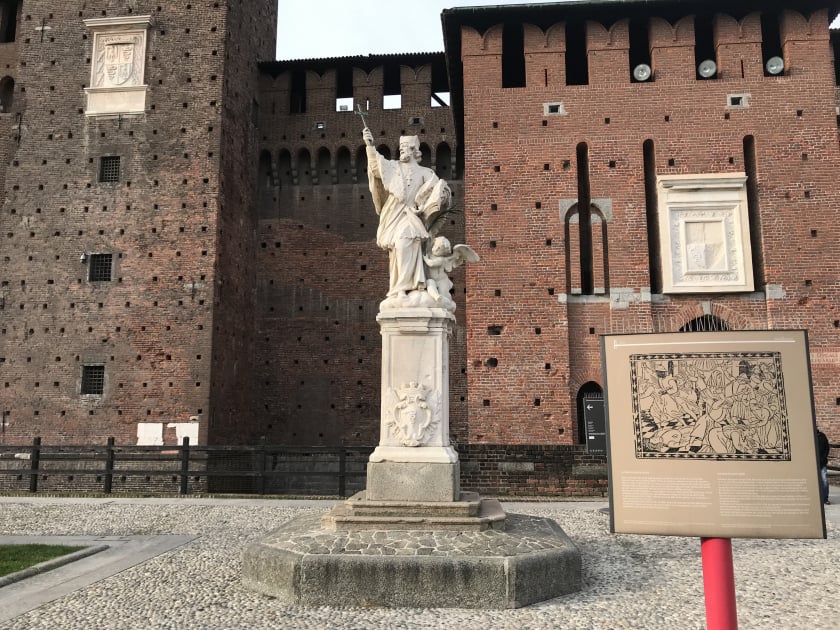
This place contains many valuable works of art.
The most popular destination for most visitors is the World Musical Instruments Museum, which houses a vast collection of the world's most amazing and famous musical instruments. It's arguably the largest museum preserving thousands of ancient instruments. Here, we were able to see these wonderful instruments firsthand and directly experience the rich and fascinating sounds of ancient and medieval society.
Michelangelo's final achievement, the Pietà Rondanini (1564), can be found at the Pietà Rondanini Museum. This museum opened in 2015 in the "Spanish Hospital" located within the castle and is dedicated solely to displaying this masterpiece.
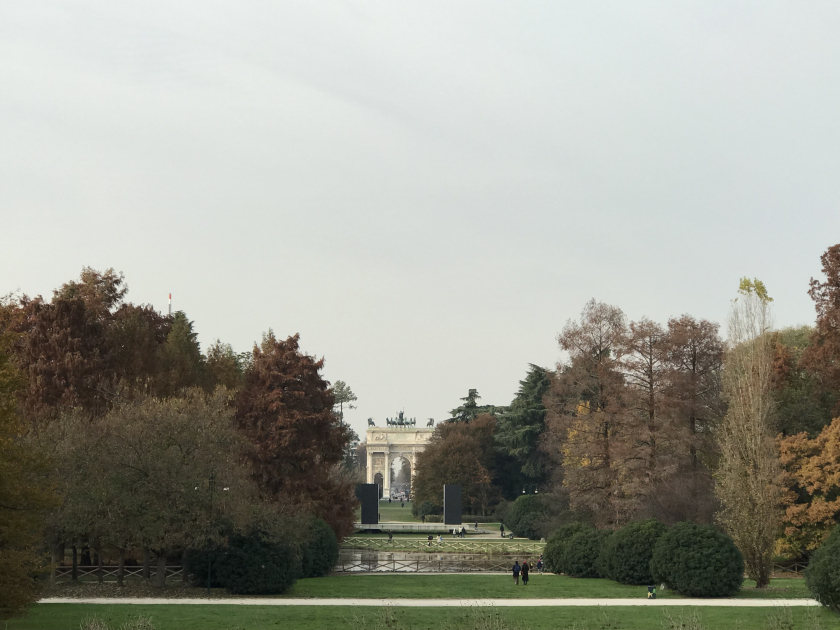
The park is spacious and beautiful, with rows of unusual, healthy temperate trees laden with flowers and foliage.
Stepping out of the subway station, the Sforza Castle Museum looked quite deserted from the outside. However, upon entering, we were all surprised by its vastness. Perhaps it's because Italy has a large land area, faces the boundless Mediterranean Sea, and its people have historically been tall and robust, so any architectural structure we saw was enormous and imposing. Even ordinary houses have doorways three or four times the height of an average person. Is it perhaps this open-minded, expansive, and liberal thinking that allows the soul to feel less confined, and a perspective that transcends limitations and time?
After spending hours marveling at the overwhelming richness of Italian history and culture within the castle, we strolled to the back of the fortress, where a spacious and charming park with lush, unusual temperate trees bursting with color and blossoms filled the air, immersing our minds in the tranquil atmosphere of ancient Rome…