VI
VI


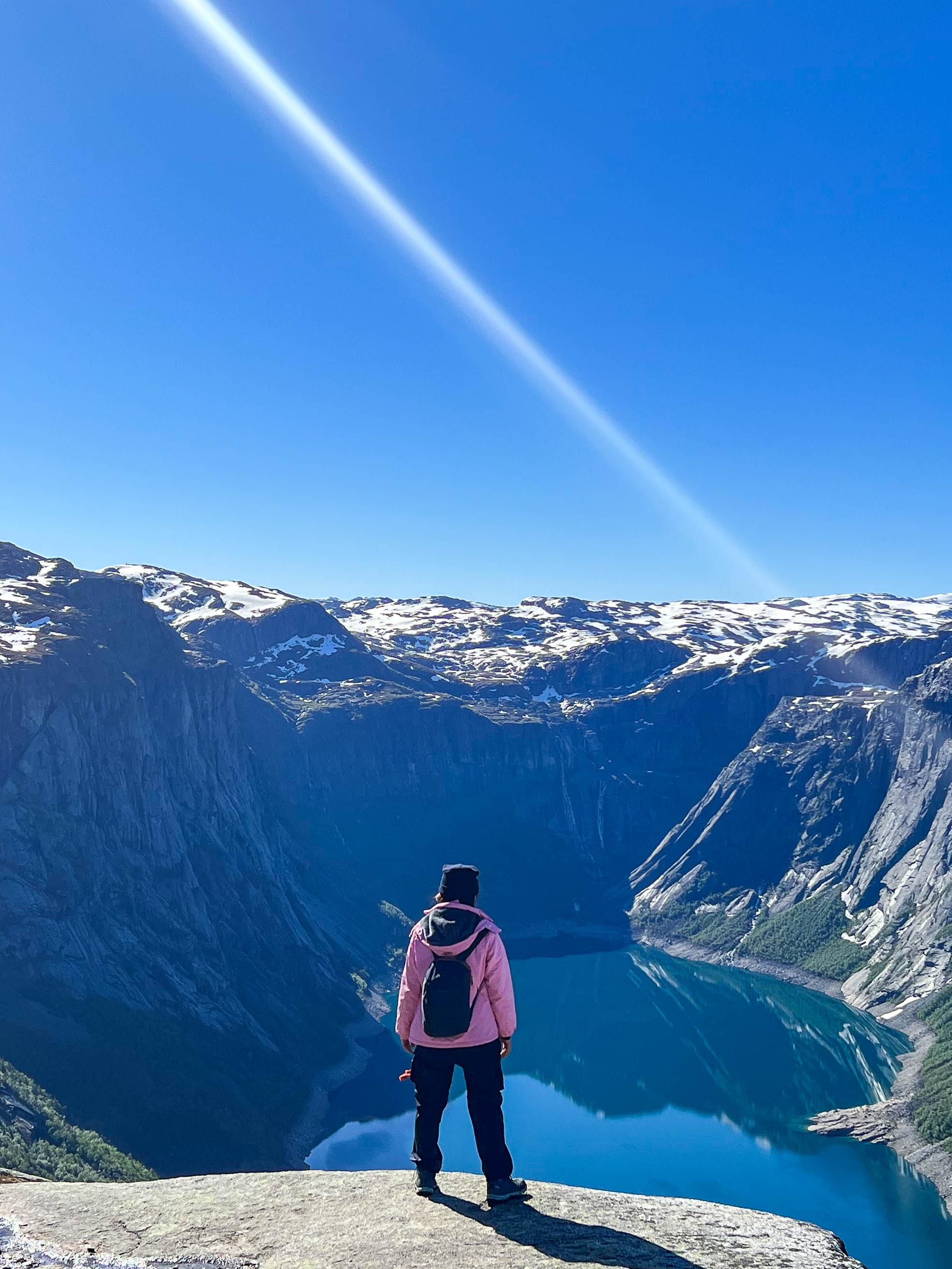
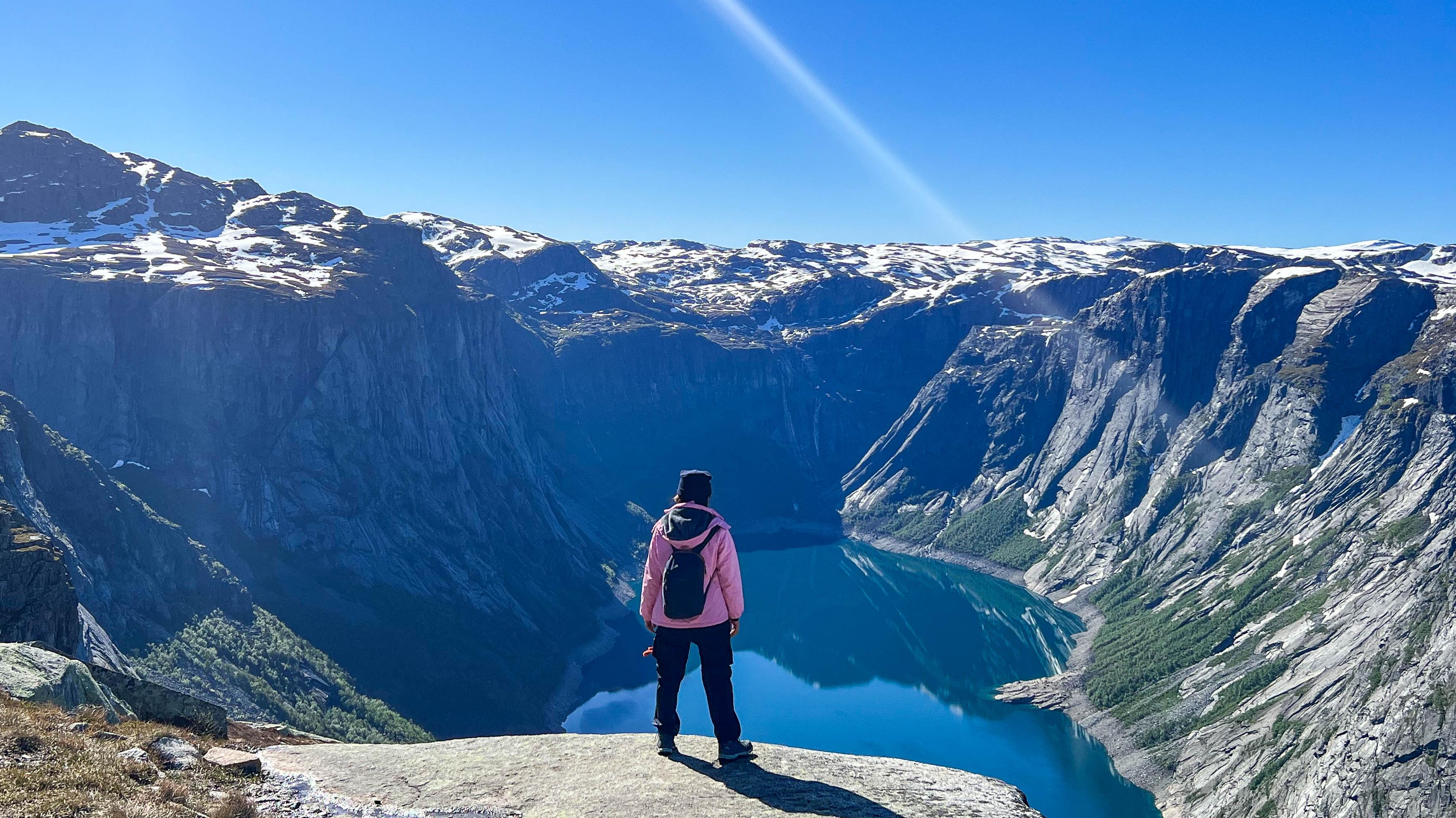
Trolltunga, also known as "Devil's Tongue," is located at an altitude of approximately 1,180 meters above sea level in the Vestland region of southwestern Norway and is one of the country's most spectacular destinations. With its massive rock formation jutting out from the cliff near Lake Ringedalsvatnet like a tongue hanging over a deep abyss, Trolltunga not only captivates viewers with its unique location but also offers an intense sense of accomplishment to anyone who loves hiking, trekking, and exploration.
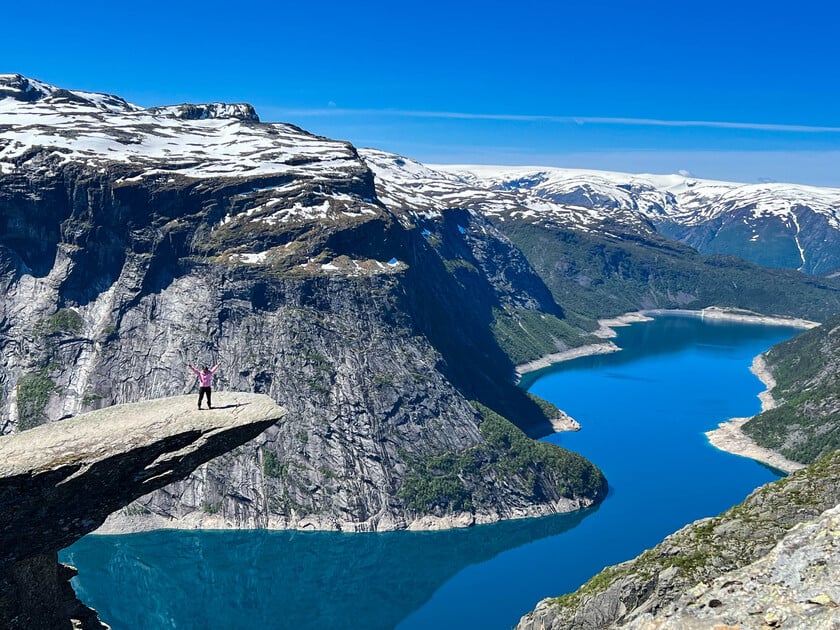
Trolltunga has a shape like a tongue suspended in mid-air.
Recounting her journey to conquer Trolltunga, Linh Nguyen still vividly remembers the feeling of that day, a sunny late June day in western Norway. “The day before, the sky was gloomy and rainy, which made me a little worried. But the next morning, the sky seemed to open its arms to welcome nature lovers like me…,” she began, reminiscing about her trekking trip to one of the most majestic and pristine places in Northern Europe.
From dreams to reality
Norway has long been on my wishlist. Not because of its modern cities or architectural marvels, but because of its pristine and majestic nature: deep fjords, snow-capped mountain ranges, and lakes as blue as mirrors reflecting the sky.
And then, this summer, I fulfilled that wishlist. I set foot in the town of Odda, the most popular stop for those wanting to trek up to Trolltunga. Odda is nestled between mountain ranges and melting glacial lakes, with a cool climate and air so clear it feels like every molecule has been filtered. In the afternoon, I took a stroll to get acquainted with the local life, taking deep breaths as if recharging for the next day's journey.
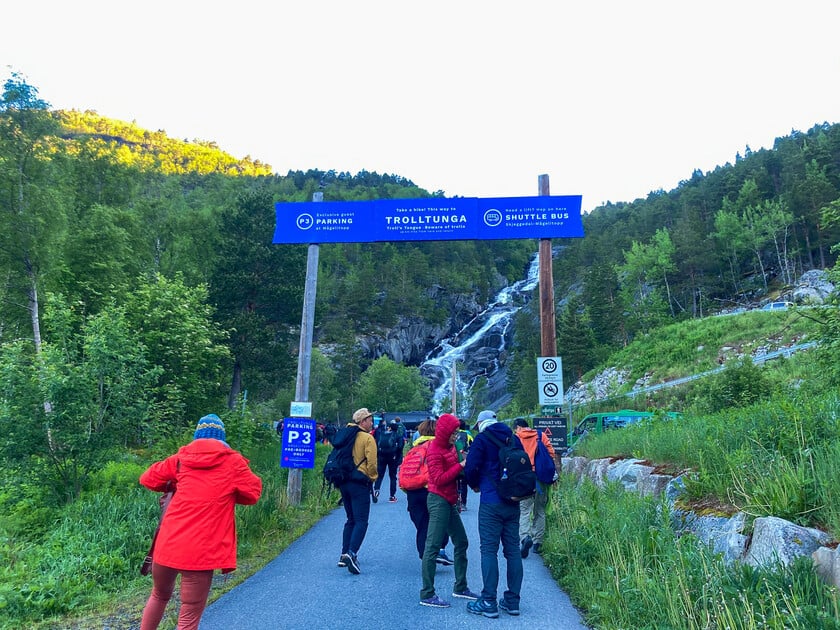
P3 Mågelitopp - the starting point of the trekking route to Trolltunga's Tongue.
We set off at 7 a.m. the next day, while the mist still hung low over the mountain trail. After taking a bus to P2 Skjeggedal, we continued by shuttle bus to the starting point P3 Mågelitopp. Starting from P2, the journey to Trolltunga is 28 km round trip, taking 10 to 12 hours depending on fitness level; but from P3, as I chose, it's reduced to about 20 km – saving us the initial steep, zigzag climb. I had prepared thoroughly, from clothing and hiking boots to snacks, water, and an offline navigation map, as there was absolutely no cell phone signal along this route.
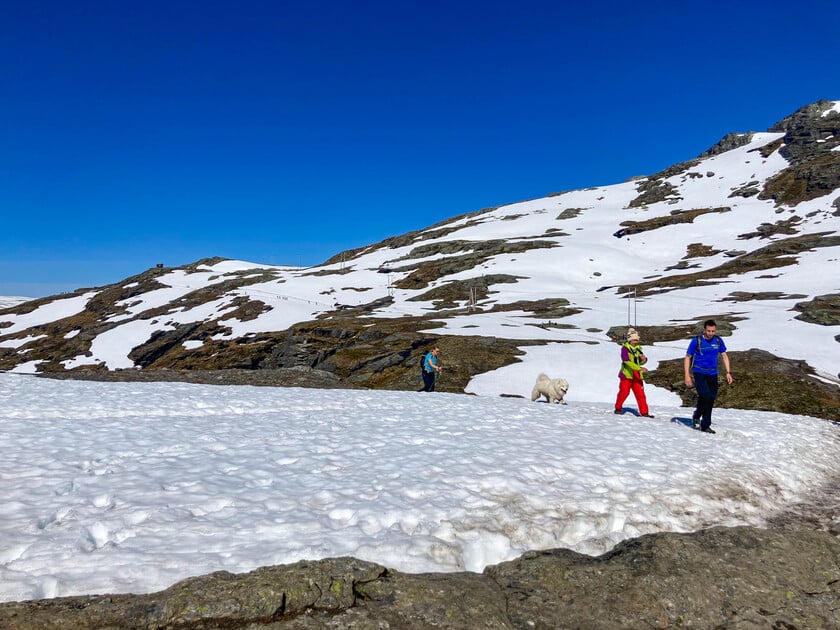
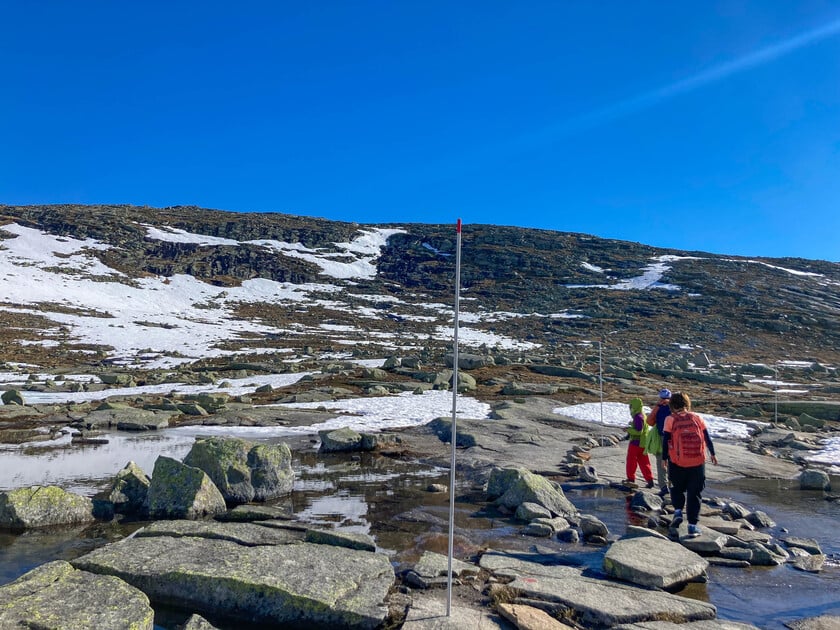
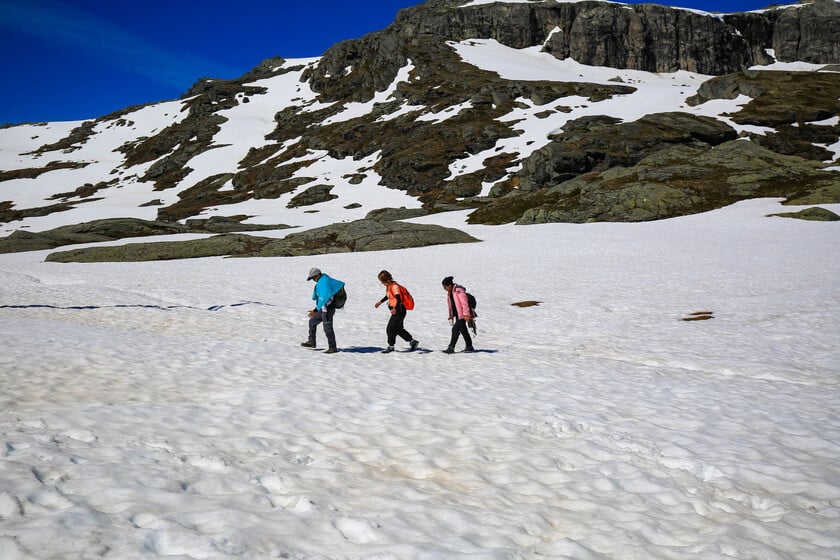
The trekking route to Devil's Tongue isn't overly difficult, but it still requires stamina and physical fitness to overcome the more than 20 km distance.
The first kilometer was fairly flat, and I took my first steps as if I were strolling. But the next two kilometers were a real challenge: the steep slope and high stone steps made me start to lose my breath. I was overconfident and hadn't trained before the trip, so after a while I was exhausted, and at one point I had to ask someone in the group to help me up because my legs were so tired.

Fortunately, the terrain became more manageable later on, consisting of gentle slopes, alternating dirt and snow paths. Occasionally, I stopped to drink water and admire the scenery. The landscape along the way resembled a changing natural painting with distinct patches of white and green. From the low, green trees at the beginning, the landscape gradually transformed into a thick layer of white snow covering the entire area, culminating in the azure sky reflected on the surface of Lake Ringedalsvatnet in the distance.
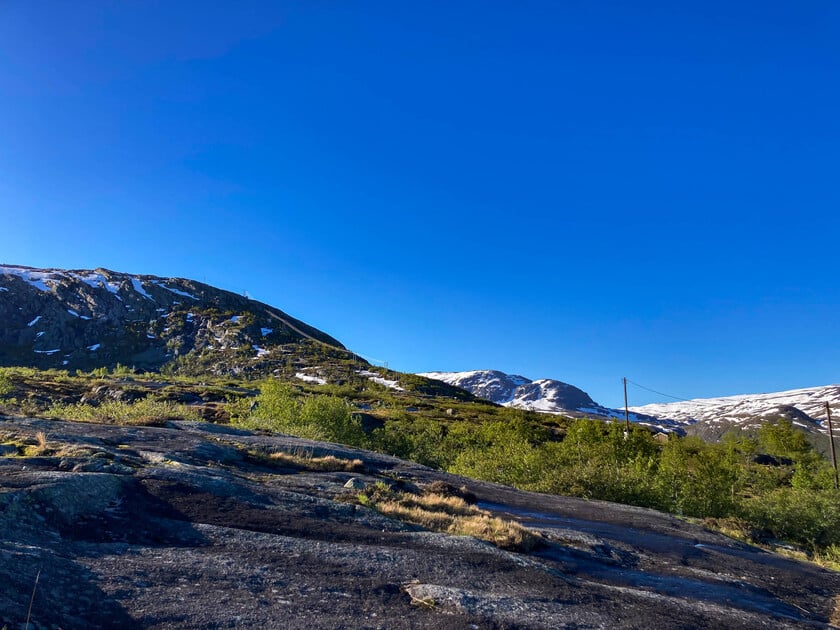
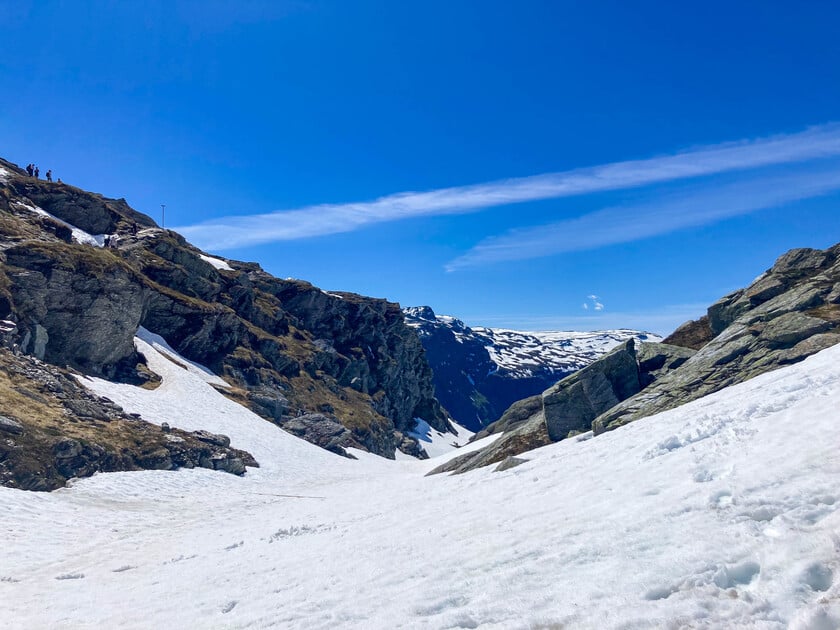
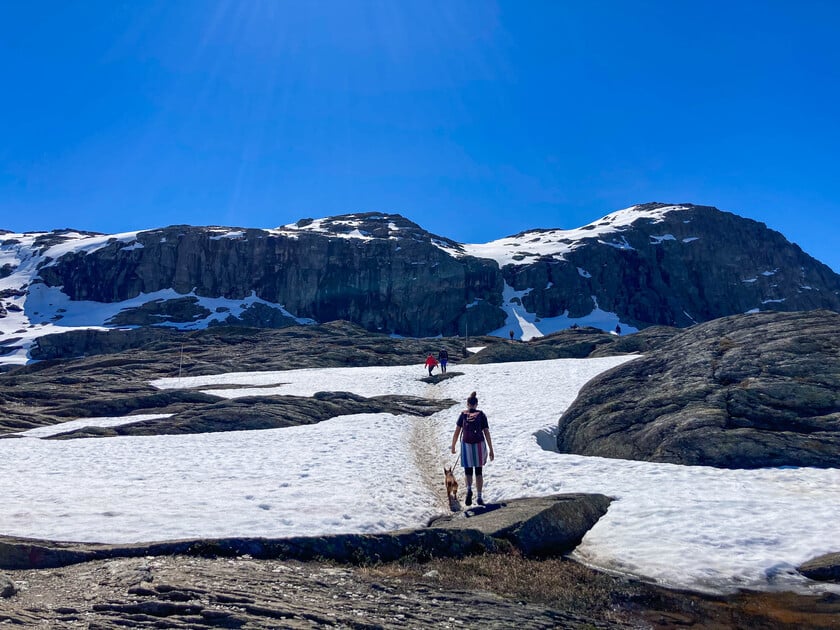
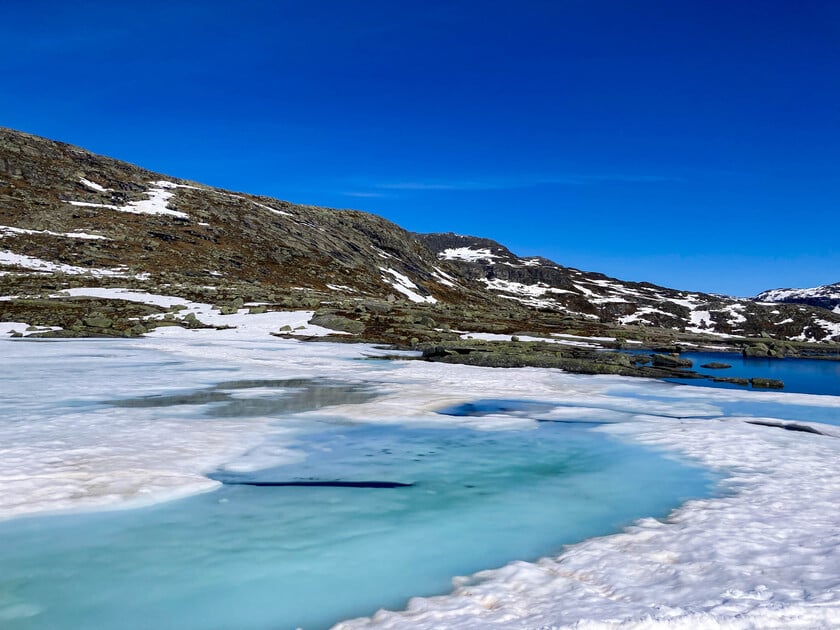
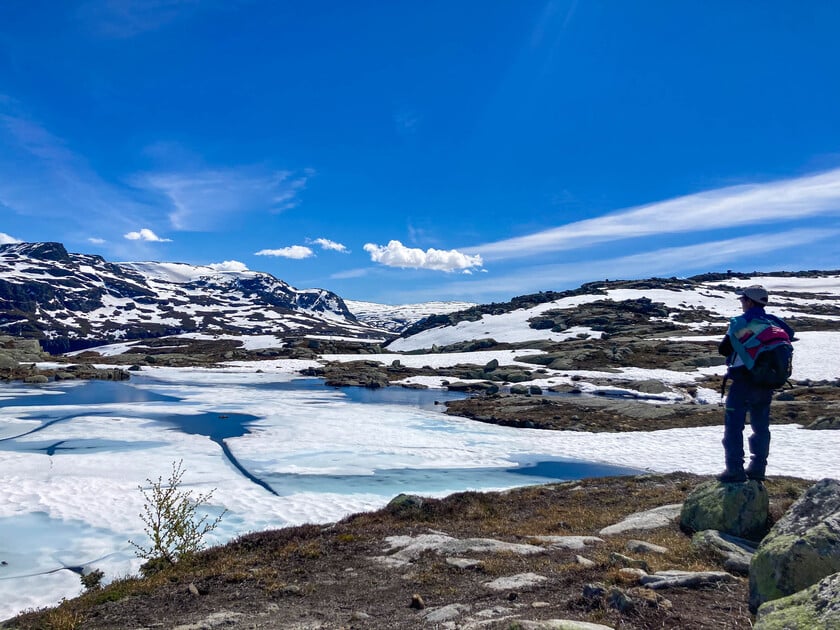
The scenery along the trekking route changes from the green of low bushes to the white of snow to the deep blue of water and sky.
Perched precariously in mid-air on the edge of Northern Europe
After nearly six hours of continuous travel, Trolltunga appeared before me, cold, desolate, and spectacular. The rocky outcrop jutted out into the void like the tongue of a sleeping giant. Below lay a chasm more than 700 meters deep, and in the distance, the tranquil Ringedalsvatnet lake lay like a turquoise mirror.
From a distance, Devil's Tongue is just a slender rock formation jutting out into the air. But as I got closer, I realized it was wide enough for me to jump, sit, lie down, and strike all sorts of poses for photos. A couple even chose this spot for a marriage proposal, witnessed by hundreds of other climbers like myself.
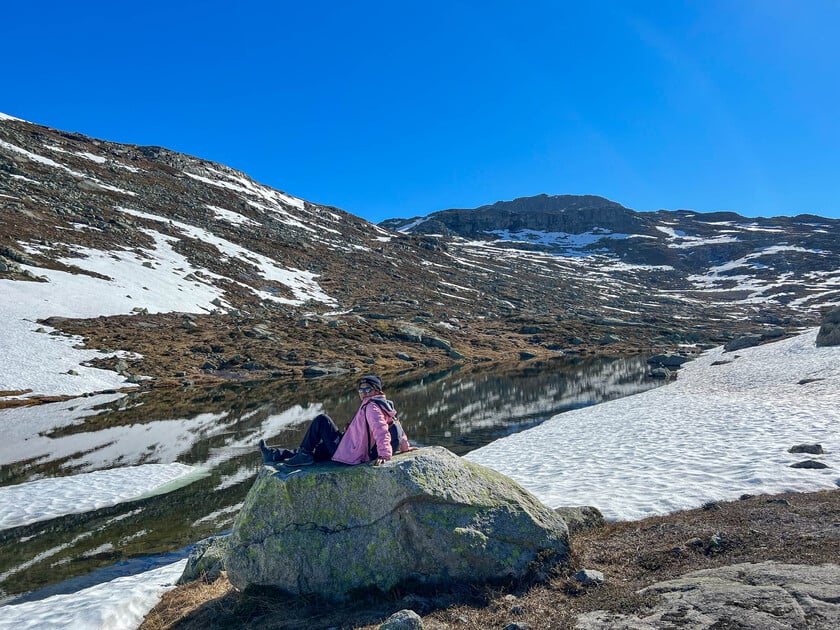
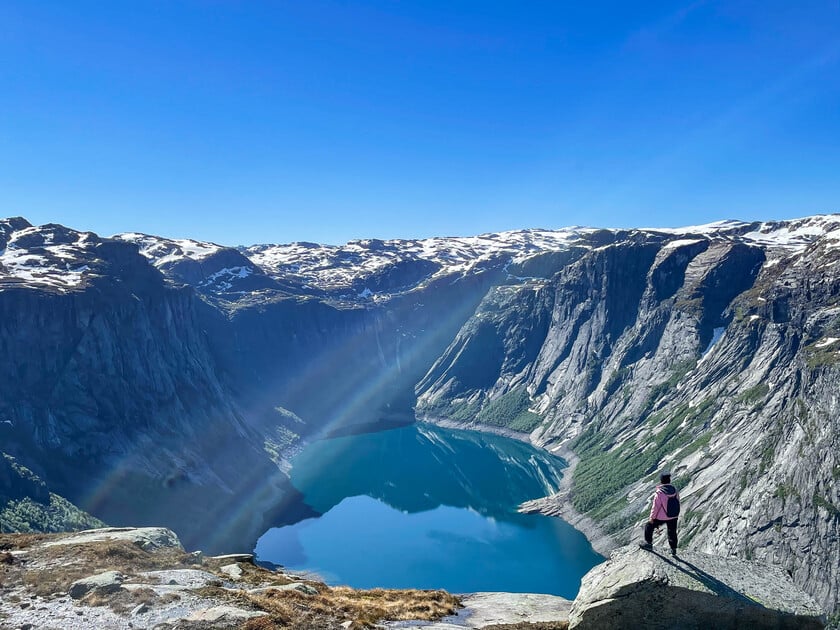
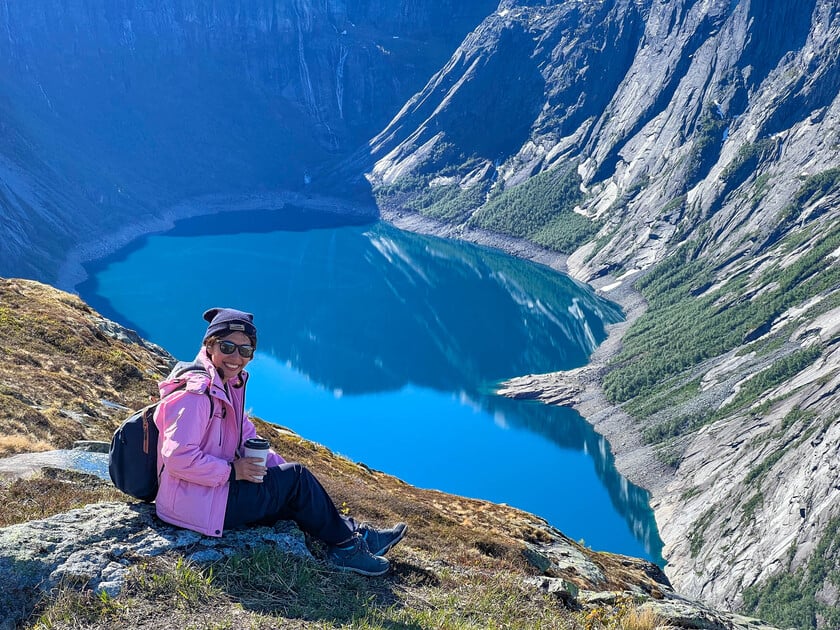
Sitting on Trolltunga's Tongue overlooking Ringedalsvatnet Lake.
Standing on the edge of the cliff, I felt a mixture of trepidation and exhilaration: a deep abyss below, mountains and a lake behind, and wind whipping against my face. I was alone in this world, experiencing absolute peace amidst pristine nature.
In that moment, I felt both small and strong. Everything I had overcome—the times I wanted to give up, the aching knees, the steep slopes—all led to this place. I understood why people say Trolltunga isn't a destination for those seeking a beautiful photo, but a well-deserved reward for those who dare to push their limits.
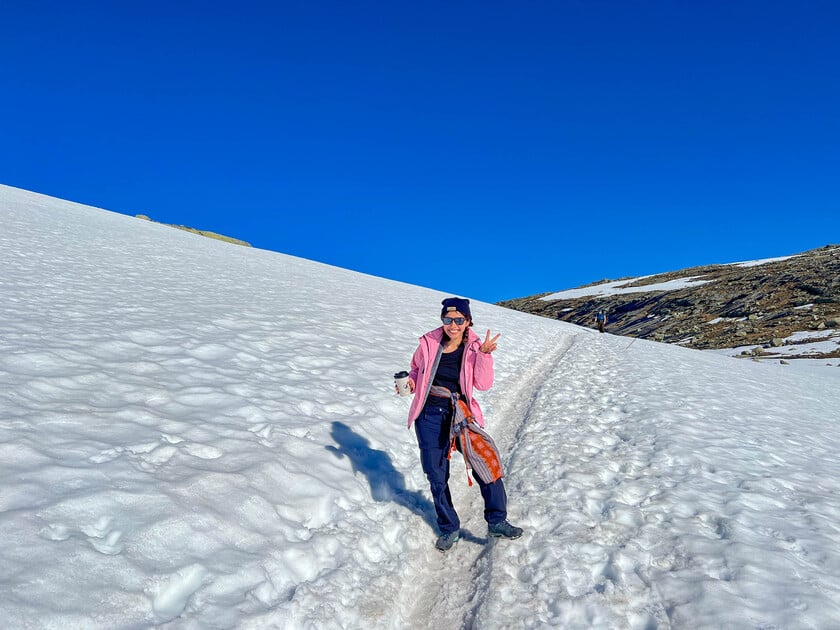
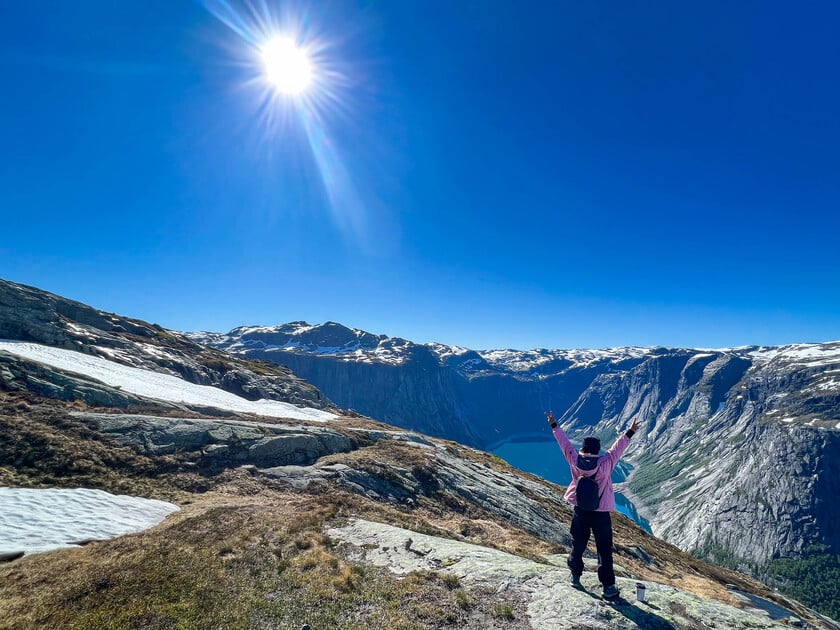
The breathtaking view from Trolltunga is a well-deserved reward for the effort of the more than 10-hour trek.
Choose the right time and prepare thoroughly.
The best time to visit Trolltunga is from mid-June to mid-September, when the snow melts, the trekking routes are fully open, and the weather is favorable. However, the climate in the Norwegian mountains is unpredictable. A single day can bring sunshine, rain, fog, and wind, so waterproof, layered clothing that adapts to temperature changes is essential.
Currently, there are three parking areas to access Trolltunga: P1 (Tyssedal), P2 (Skjeggedal), and P3 (Mågelitopp). To save energy, you can reserve a spot at P3 – the highest point – which shortens the walk by about 8 km. However, spaces here are limited and usually fill up quickly, so you need to book a month in advance. There are no shops or rest stops along the approximately 20 km round trip trekking route, with an average hiking time of 8-12 hours depending on fitness level. Each person must bring their own water, food, raincoat, map, power bank, and basic medical supplies for the entire trip. Those with little experience are encouraged to join a guided tour with a local guide.
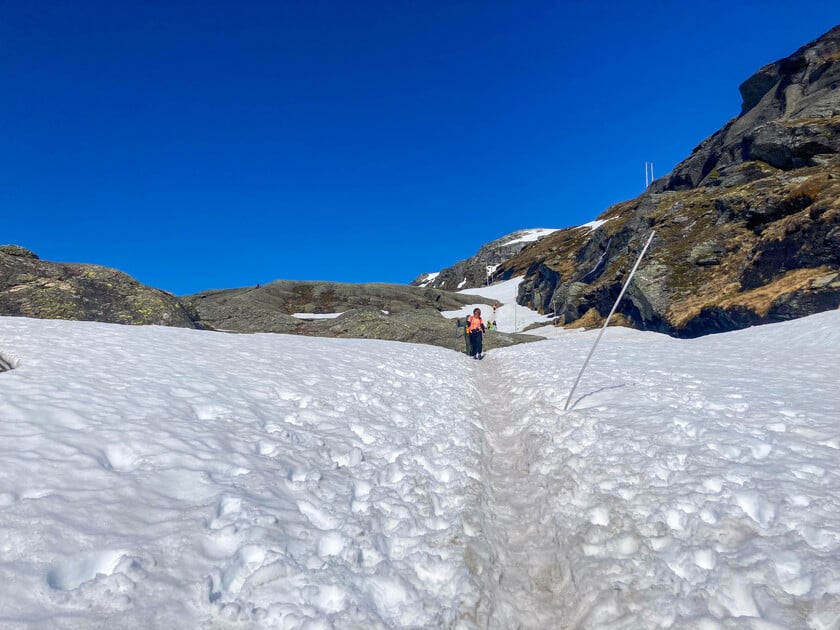
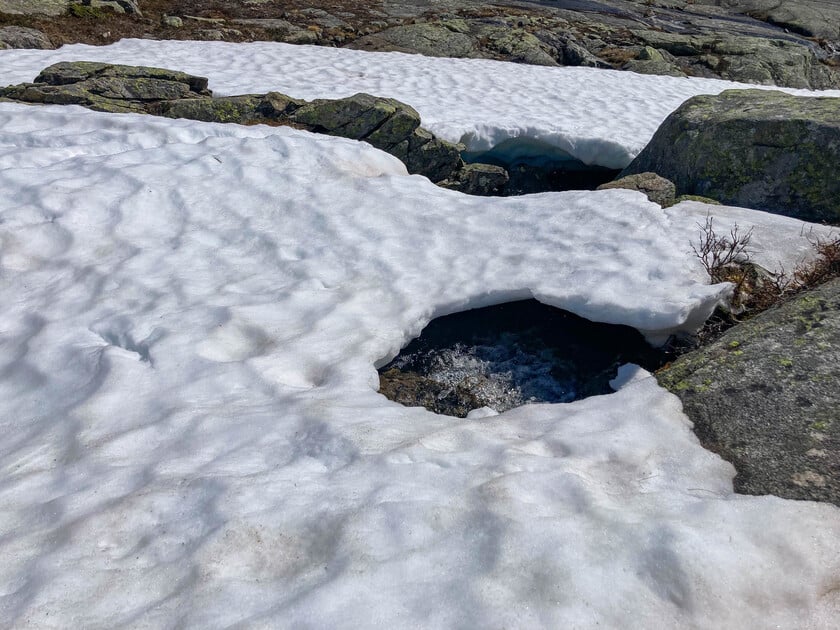
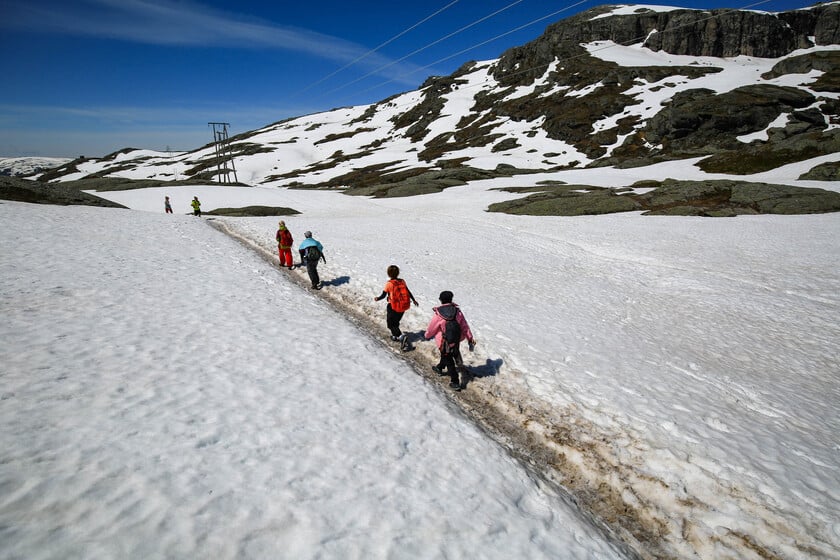
The trekking route is long and there are no shops or restaurants serving food and drinks, so travelers need to prepare in advance for the entire journey.
An important note: don't compromise safety for a stunning photo. Even though millions of tourists have stood on Trolltunga, accidents can still happen if you're not careful. On windy, rainy, or slippery days, prioritize maintaining distance and choosing a safe shooting angle.
I ended the day exhausted but deeply moved. Trolltunga is not an easy destination, but that's precisely why every step on the journey was so valuable. Trolltunga is more than just a tourist spot; for me, it's a place to test my courage, perseverance, and desire to touch the absolute beauty of nature. And if anyone were to ask where I felt both small and strong at the same time, I wouldn't hesitate to say: Trolltunga – the edge of the world, where I stood, breathed, and overcame myself.