VI
VI


An ideal, unspoiled destination.
Cu Lao Cau – also known as Hon Cau or Hon Cau – is a small rocky island in Tuy Phong district, Binh Thuan province. Located about 100 km from Phan Thiet and about 10 km from Lien Huong town on the mainland, the small island, measuring approximately 1.5 km x 0.8 km, is almost entirely covered with thorny bushes and scattered rocks of various sizes.
The overnight bus from Saigon to Lien Huong brought our group to Lien Huong pier just as dawn was breaking. We had breakfast right at the pier, transferred our luggage and fresh water onto the speedboat, and then we were ready to leave the mainland for the island. Since the island is uninhabited, if you plan to stay overnight, you need to prepare fresh water for cooking and showering, all of which must be purchased from Lien Huong and brought along.
Cau Island is about 10 km from the mainland, far enough to offer the necessary tranquility, yet close enough to allow for a quick return to the mainland. After just over half an hour, the boat slowed down and approached Tien Beach, allowing us to disembark.
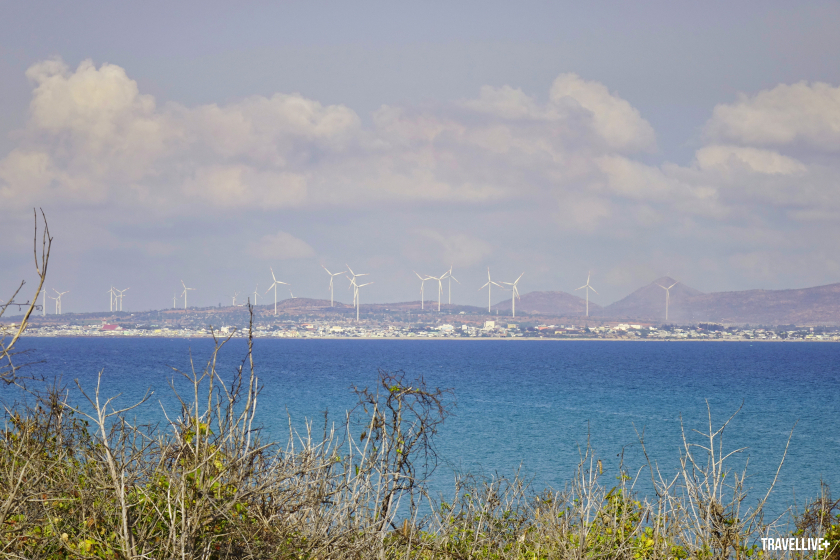
The Tuy Phong wind farm is visible very close up on the western side of the island.
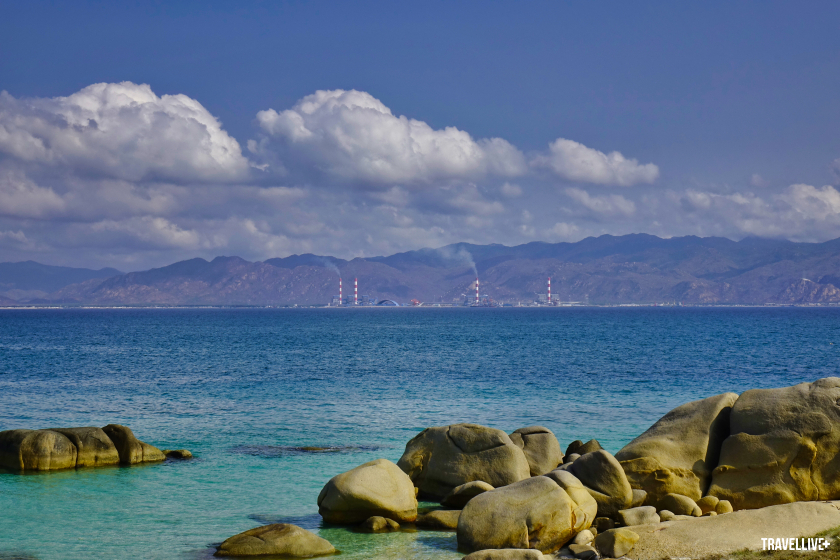
The Vinh Tan thermal power plant, located slightly to the north, is spewing smoke into the sky.
Cau Island has a coral and turtle conservation area. There are no permanent residents on the island, only a border guard post located on the north side. The first thing every visitor must do upon arriving is to go to the border guard post and present their group's roster. The soldiers there are mostly young and very friendly; they are happy to let visitors charge their phones.
On the northwest side of the island, there is a coral reef at the bottom of the sea. If requested, canoes will take visitors out to the reef to view the coral. However, the sea here is quite deep, and the canoes do not have glass bottoms; if you want to see the coral, you have to go underwater.

Also in the Mieu Beach area in the northwest of the island is the Nam Hai Temple - dedicated to the Whale God - which fishermen often visit to pray for safe voyages and bountiful catches. The annual Nam Hai Temple festival on the island is quite large, organized by local fishermen on the 15th day of the fourth lunar month, but on other days, few people visit.
Because the northern part of Cau Island is a coral and turtle conservation area, and the eastern part is all cliffs, camping and swimming are only possible in the western and southern areas of the island. It's a rocky island, with almost no large trees, only jagged rocks of various sizes and tangled thorny bushes. However, these scattered rocks are actually attractive spots for taking Instagram-worthy photos.
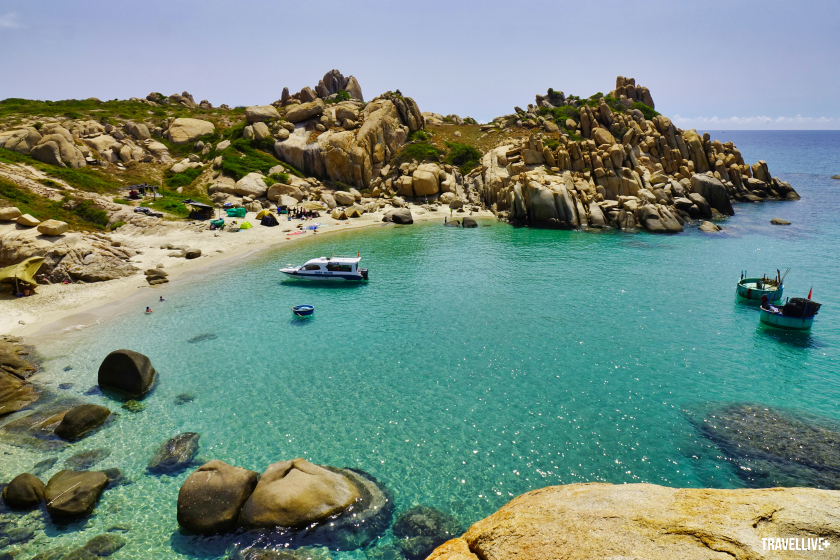
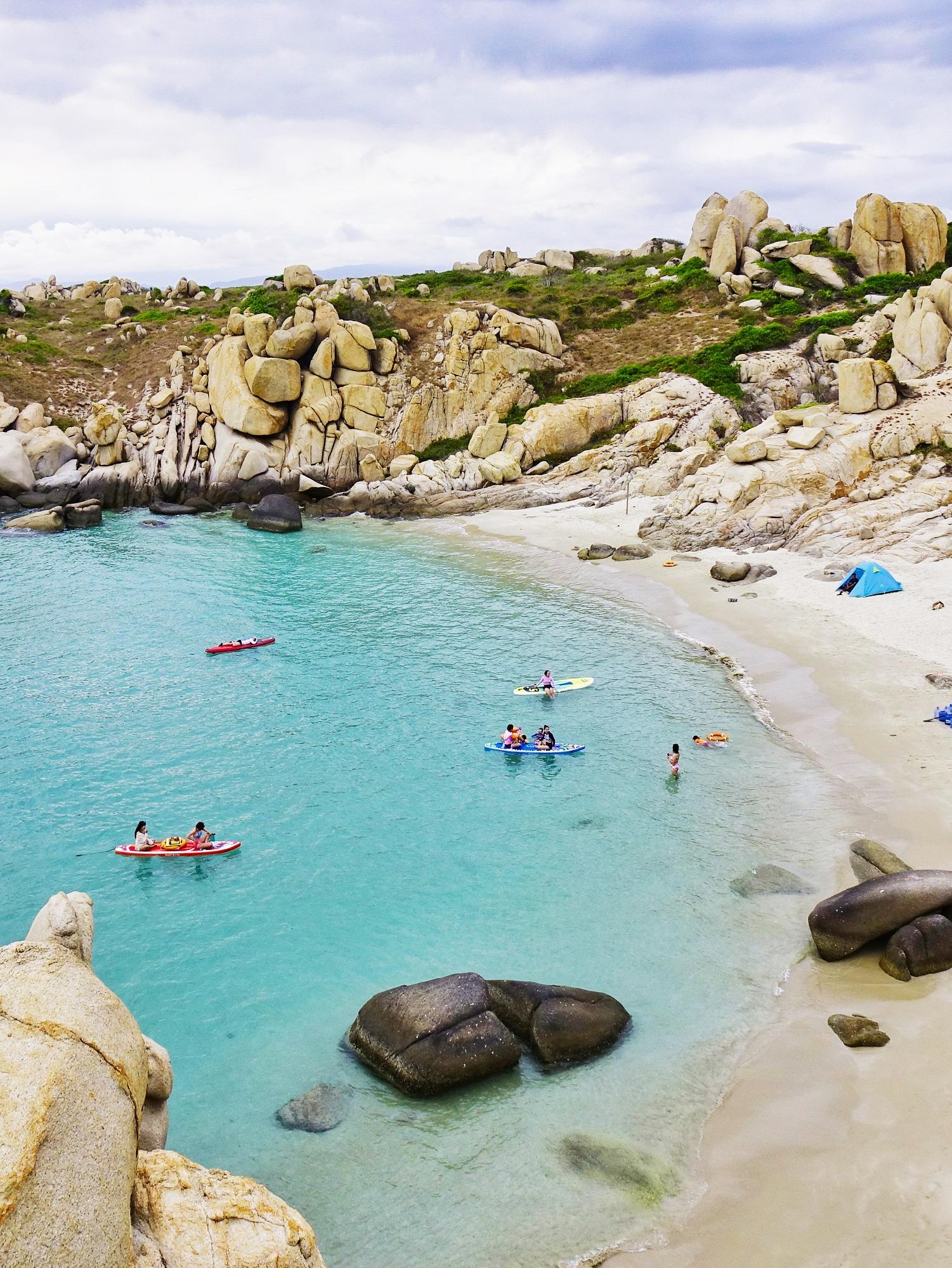
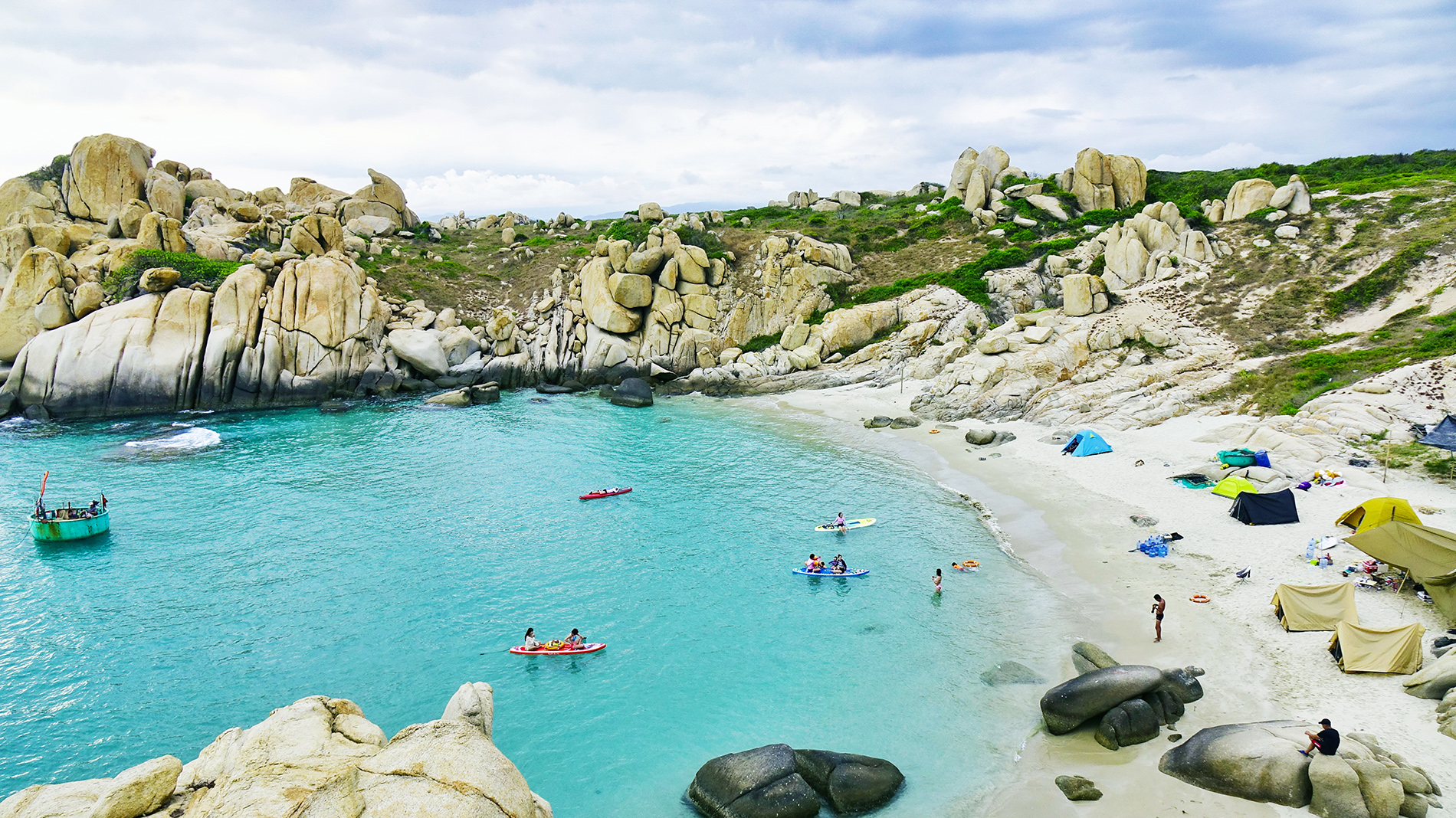
Bai Tien beach is hidden away in the southern part of the island.
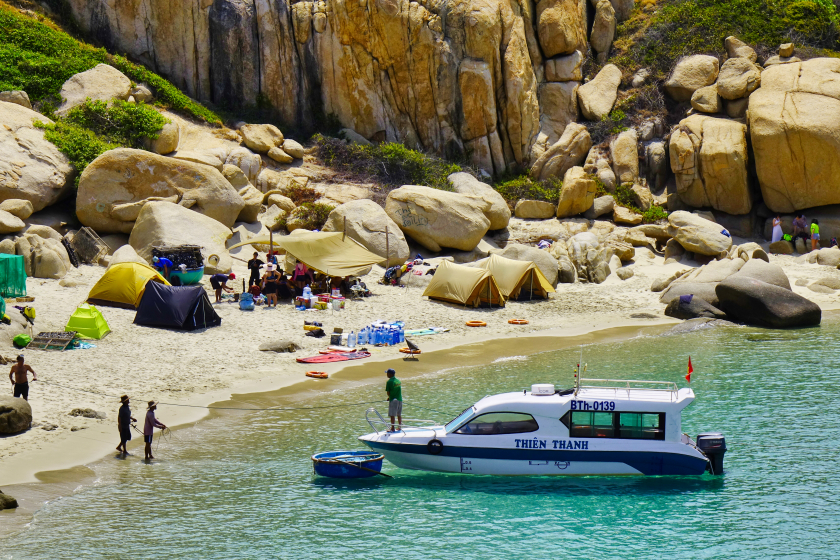
Tents were quickly set up to provide shelter from the sun.
We gathered our luggage and quickly set up our tents at Tien Beach – a beautiful, crescent-shaped sandy beach on the southern coast of the island. The crystal-clear blue water reflected the sandy bottom, sheltered by two jutting mountain peaks. This beach was therefore perfect for swimming and stand-up paddleboarding.
A paradise for SUP enthusiasts.
After completing the necessary paperwork at the border guard station, packing our bags, setting up our tents, and taking some photos with the rocks under the blazing sun, it was time to head to the sea. The water here was crystal clear, revealing the sandy bottom with schools of small fish swimming around, and seashells scattered in the sand.
While the group swam and paddled SUPs, the support team prepared lunch using a rented cooking set from Lien Huong and pre-prepared food. After lunch, no one could sleep because of the heat, so everyone took shelter in the rocks to rest for a while before rushing back into the sea, staying until late afternoon.
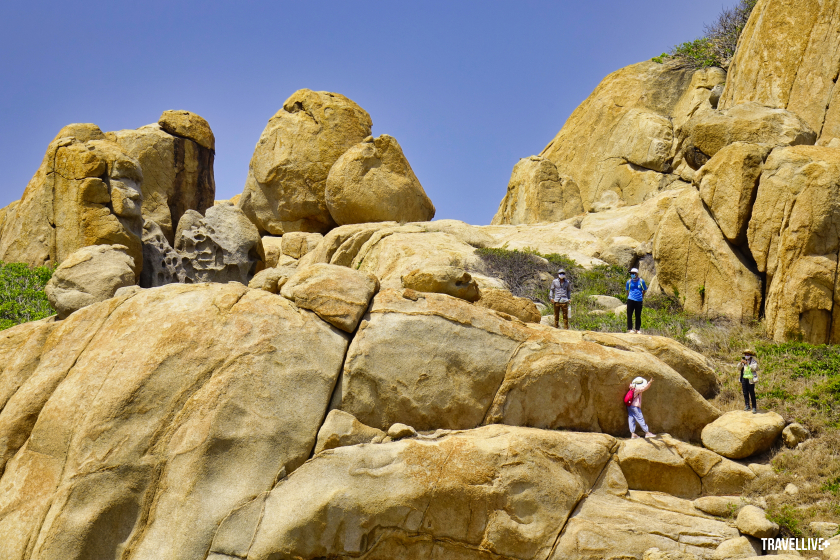
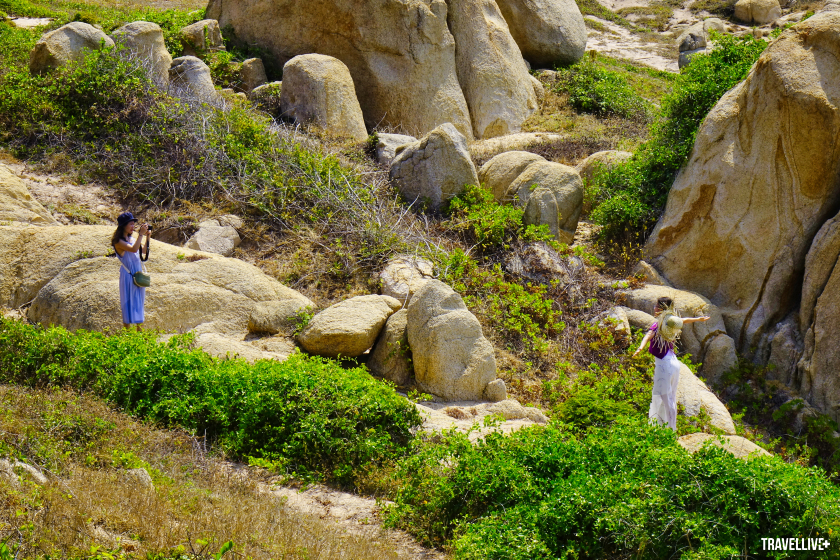
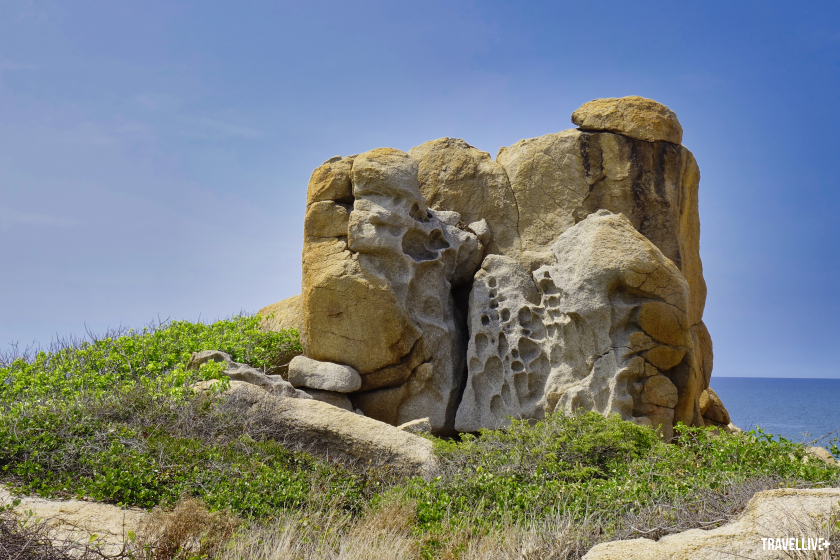
The island is covered only in rocks and thorny bushes; the rock formations with their natural markings are also very beautiful.
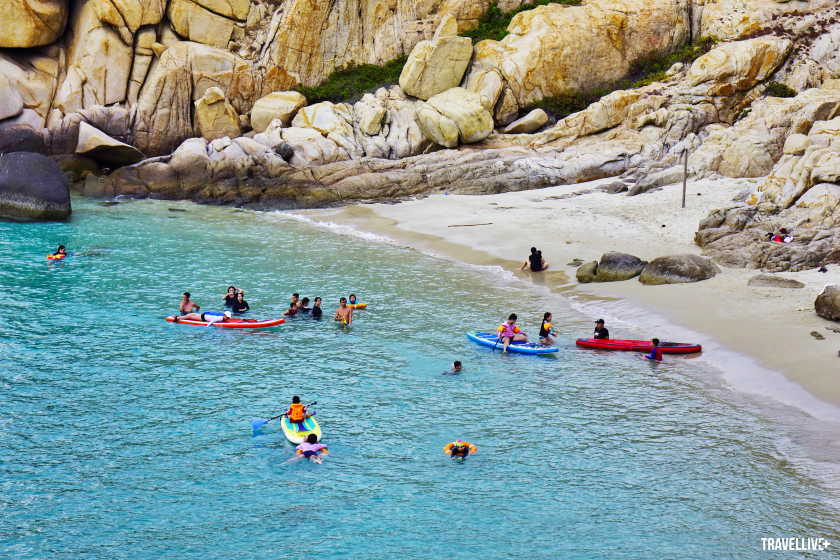
Drifting on the sea with a "platter" of fruit and soft drinks.
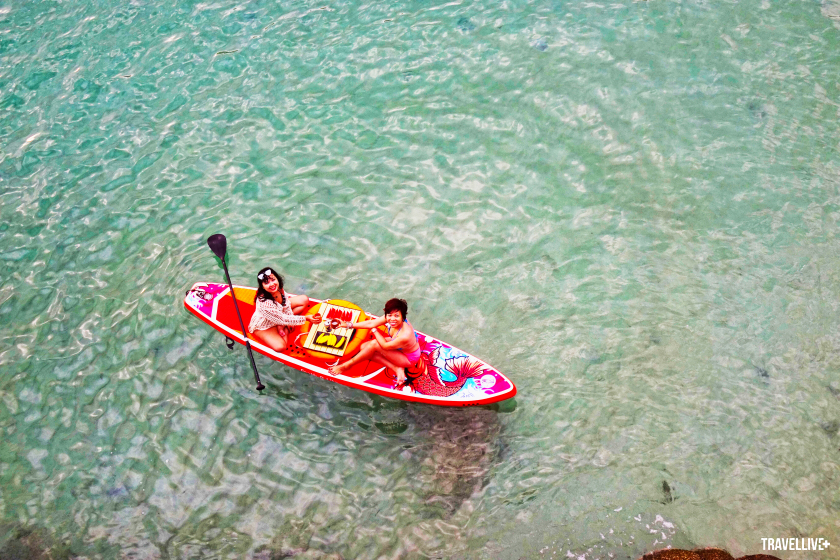
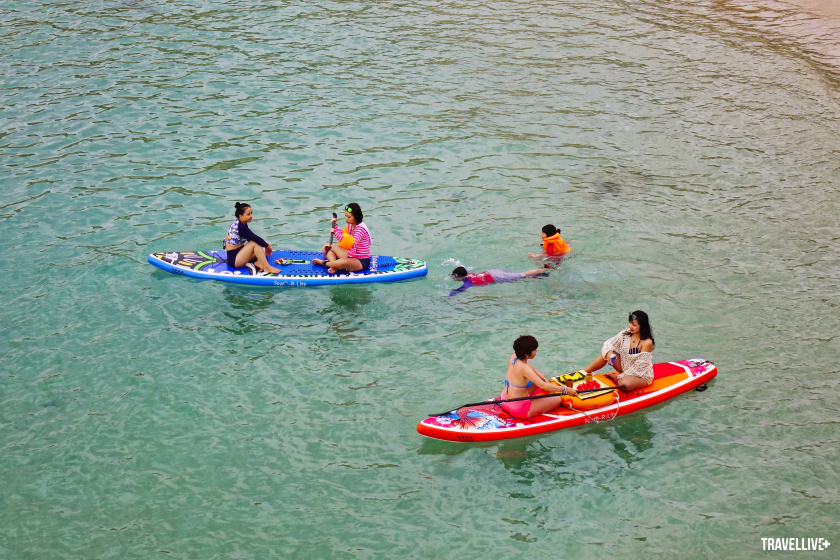
We spent almost the entire afternoon in the sea, using our SUP boards as makeshift tables for fruit and drinks, floating on the water and enjoying the view. When the sun set behind the western mountains, everyone came ashore to shower with fresh water and then rushed to prepare by stringing up lights and cooking dinner to chill under the starry sky. The SUPs were then stacked on top of each other to form a long table for the food; mostly fresh seafood bought from the fishermen's boats docked at Tien Beach.
The days were very hot due to the sun and lack of shade, but the evenings were quite cool. The sky was full of stars, a cool sea breeze blew gently, and the pleasant dinner flowed smoothly. After a day of playing in the waves, everyone had a very good night's sleep in their tents, amidst the gentle, continuous sound of the waves.
As dawn broke, we quickly had breakfast and lingered to play a little longer before the sun rose too high. By over 9 a.m., the sun was getting intense, and we had already packed up our tents and luggage. The trash was collected into large bags to be taken back to the mainland for disposal. The canoe arrived just in time to take our group back to the mainland.
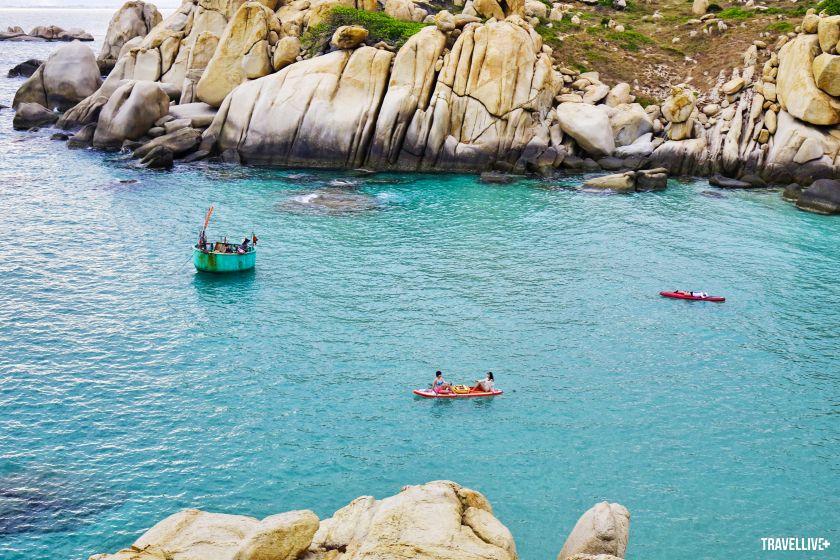
Goodbye Cau Island
Aside from a slight inconvenience due to the lack of modern amenities, the lucky visitor will be rewarded with almost an entire pristine and beautiful beach. Cau Island remains a worthy destination for those seeking a weekend full of "vitamin Sea," away from the crowds and hustle and bustle, while still offering plenty of opportunities to explore coral reefs and marine life.