VI
VI


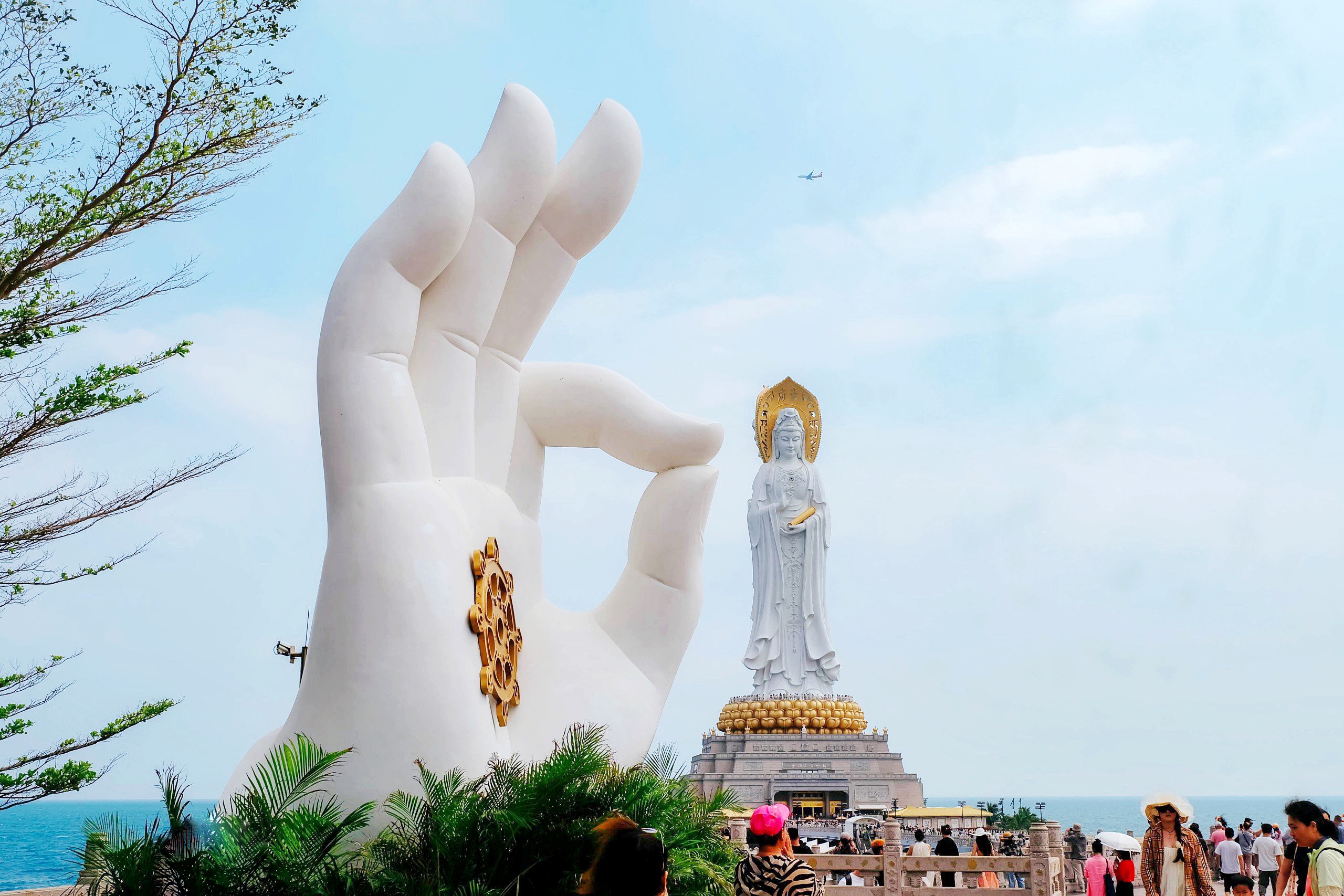
The statue of Guanyin of the South Sea is located in the "Buddhist Cultural Park," within the Nanshan Cultural Tourism Zone, 20 km west of Sanya City, Hainan Province, China.
At 108 meters tall, the statue of Guanyin Bodhisattva in Nanhai is considered the tallest in the world to date, 15 meters taller than the Statue of Liberty in the United States. It is a landmark structure in Sanya, similar to Tiananmen Square in Beijing or the Statue of Liberty in the United States.
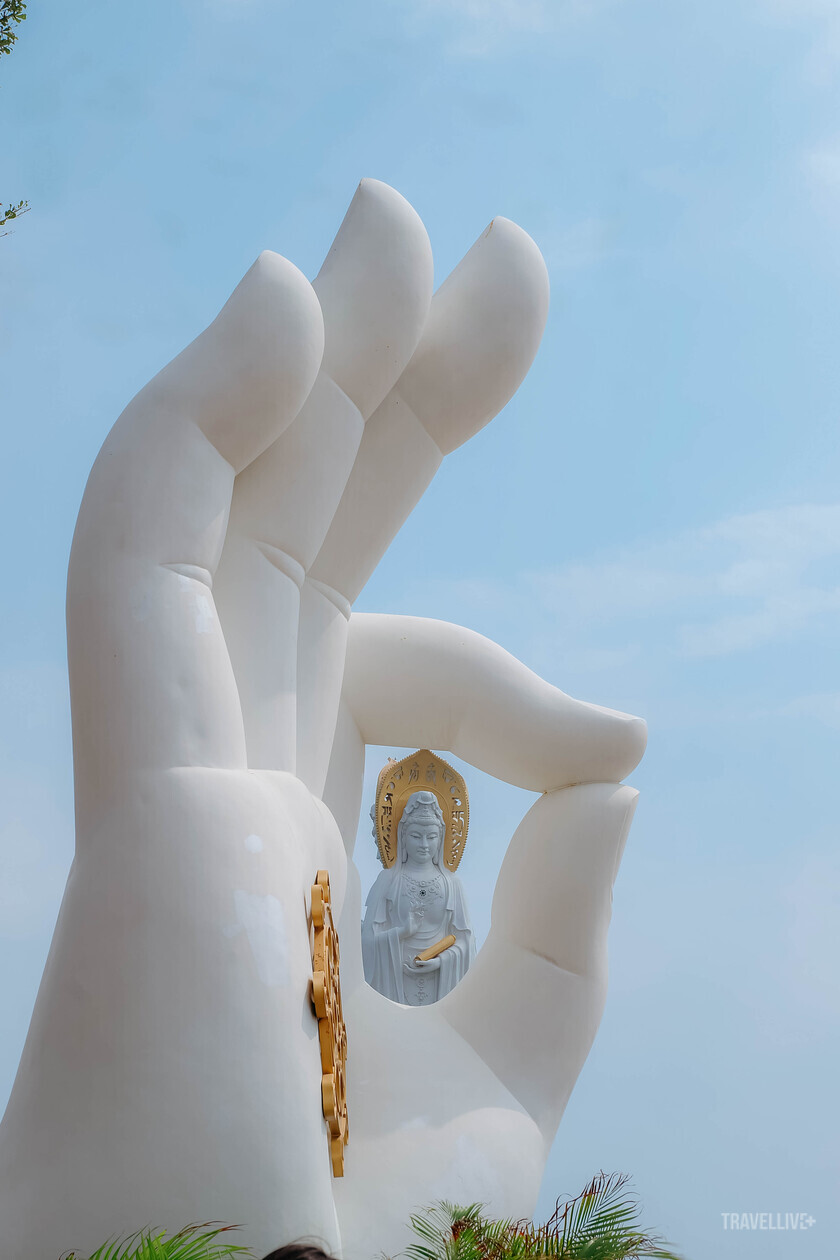
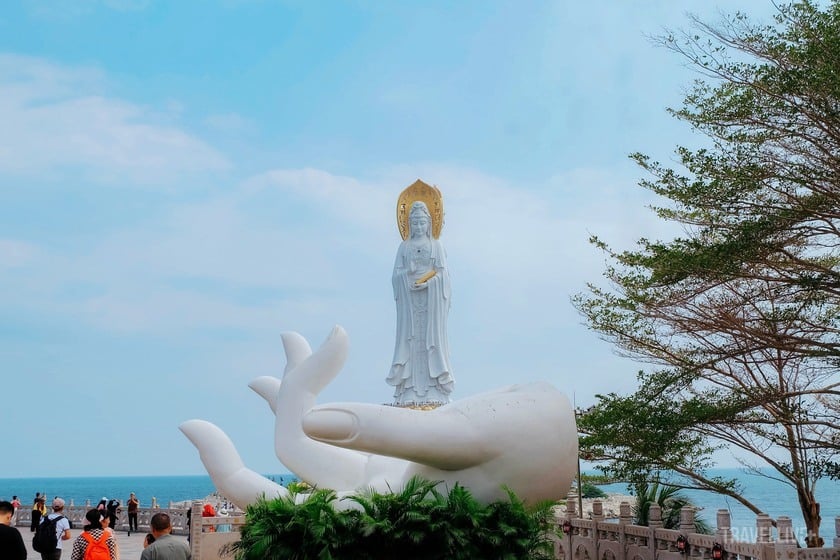
The mudra symbol represents peace and fraternity.
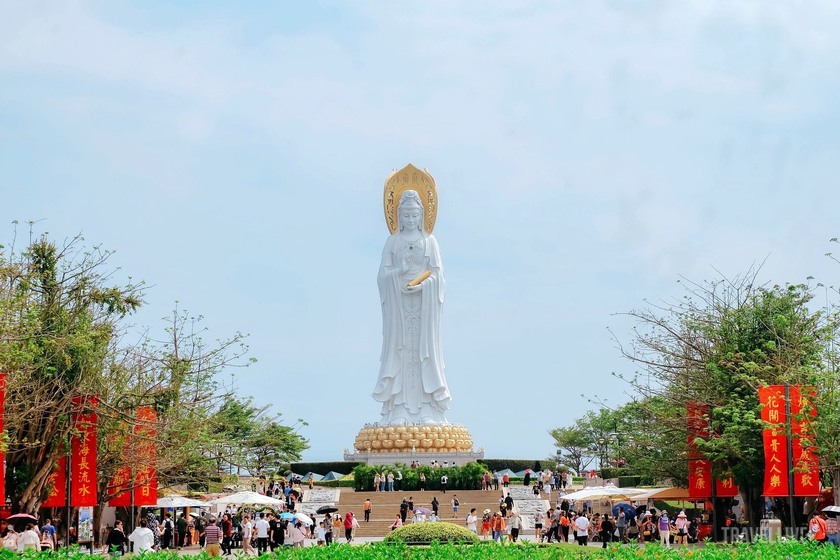
The world's largest statue of Guanyin floating on the sea, and a 5A-rated tourist attraction in China.
The statue of Avalokiteshvara has three faces. One face holds a lotus flower, symbolizing the wisdom and enlightenment of Avalokiteshvara; another holds a scripture, symbolizing the liberation of Avalokiteshvara, meaning complete freedom from all suffering and bondage; and the third holds a string of Buddhist beads, symbolizing the virtues of the Dharmakaya. Viewed from the front, each side features a statue of Avalokiteshvara in a dignified posture.

The base of the Avalokiteshvara statue is a lotus pedestal with 108 petals, 10 meters high, with 4 tiers, each tier having 27 identical lotus blossoms, for a total of 100 blossoms. Below the lotus pedestal is the Vajra Platform, inside which is the Yuantong Palace covering an area of 15,000 square meters.2The statue is connected by the 280-meter-long Puji Bridge, along with the 60,000-square-meter Guanyin Square.2and amusement parks on either side of the square. All of these combine to form the scenic "Guanyin Pure Garden," covering a total area of nearly 300,000 square meters.2Seen from afar, Avalokiteshvara stands on a lotus throne, her robes fluttering as if descending into the sea to save all beings. This not only aligns with Buddhist teachings but also possesses artistic beauty.
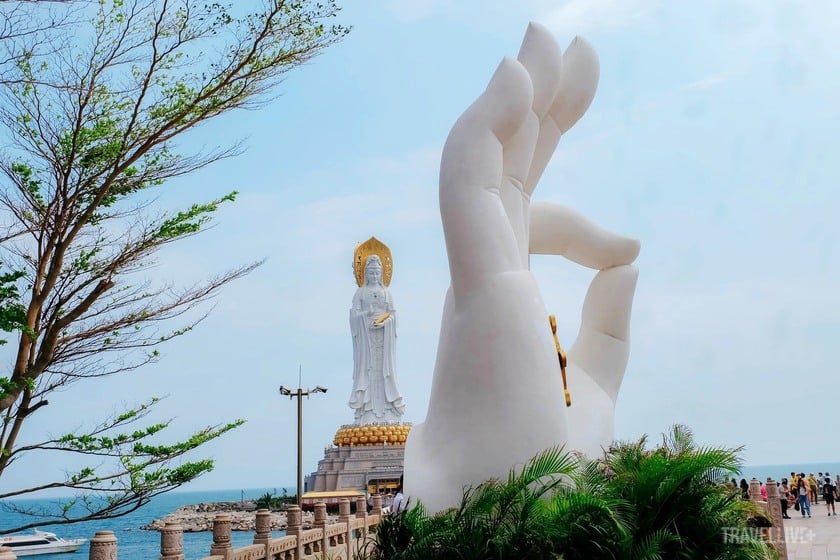
The majestic statue of the Bodhisattva Avalokiteshvara stands majestically on the sea, with three faces pointing in three directions.
The Nanhai Guanyin statue is one of the four great Guanyin statues in China, which include: the Donghai Guanyin statue on Mount Putuo, Zhejiang – the tallest standing outdoor Guanyin statue in China; the Xiqiao Mountain Guanyin statue in Foshan, Guangdong – the tallest seated bronze Guanyin statue in China; the Nanhai Guanyin statue at Qishan Lake, Xingtai, Hebei Province – made of white marble and 50 meters high, overlooking the lake and the sea; and the Nanhai Guanyin statue at Nanshan Temple, Sanya, Hainan – the largest Guanyin statue at sea in the world.
The cultural structures at the temple all carry profound philosophical meanings; visiting them can enlighten the mind and educate one's life. It can elevate human thought, purify the soul, and make people feel happy.
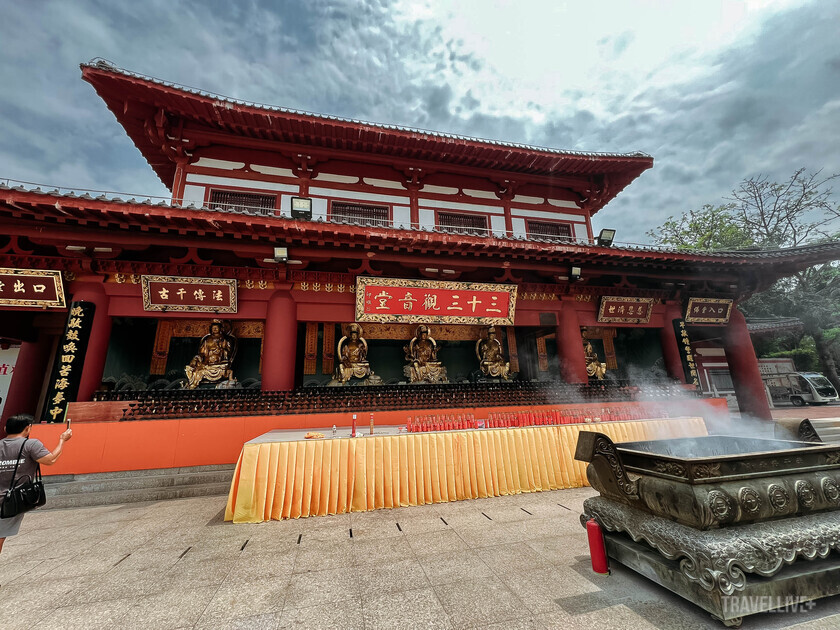
Main hall with 33 statues of Avalokitesvara
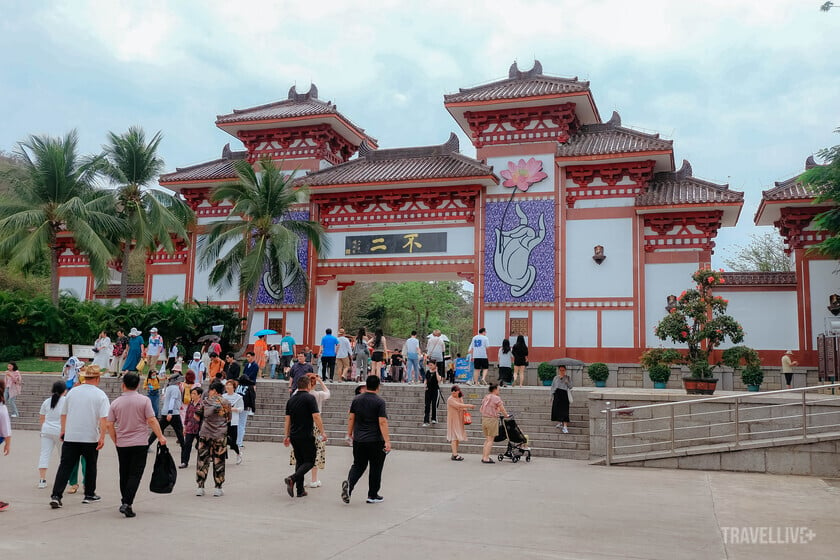
The entrance gate features distinctive Tang Dynasty architecture.
Besides the main attraction, the giant three-faced statue, the Nam Son Cultural Tourism Area also features the Blessing and Longevity Park and the Cultural Park. All boast beautiful natural scenery, with small hills covered in greenery above and a long beach below. Located with its back against Nam Son mountain and facing the sea, the air here is always fresh, a testament to the saying: "Blessings as vast as the East Sea, longevity as enduring as Nam Son."
When traveling in Hainan, China, the Nanhai Guanyin statue is definitely a must-see. If you have plenty of time, you can stay overnight at the tourist area, enjoy light vegetarian meals, stroll through the grounds of Nanshan Temple, or simply relax and admire the surrounding scenery after a busy day at work.
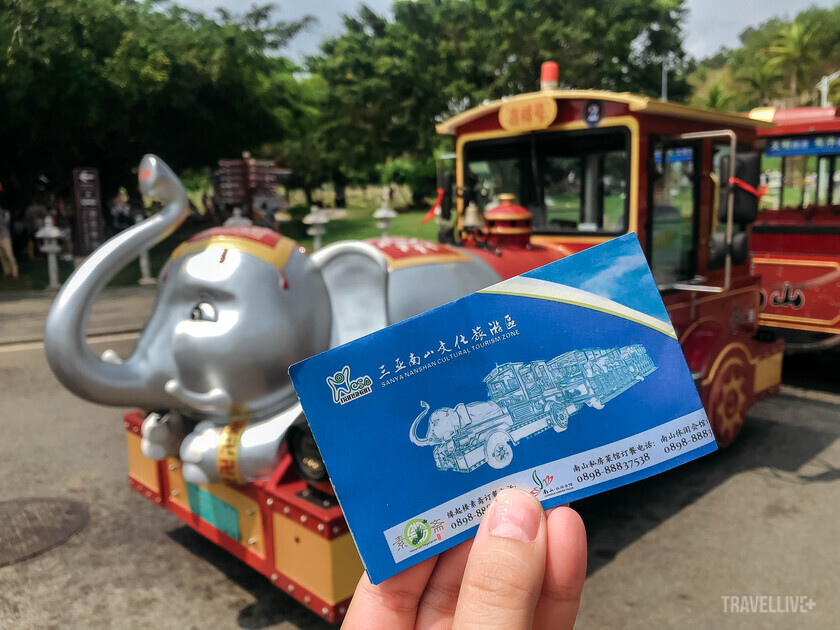
The train takes visitors on a tour of the park grounds.
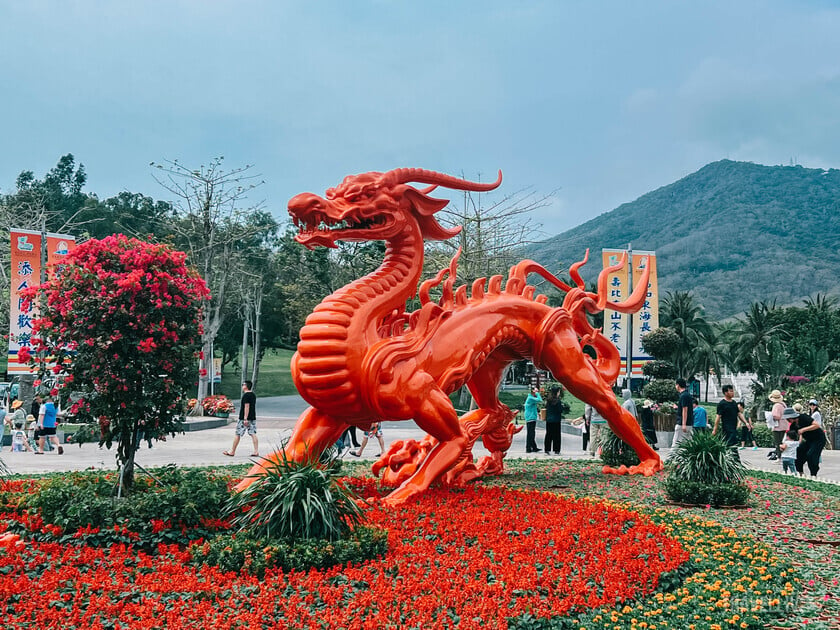
The majestic dragon symbol
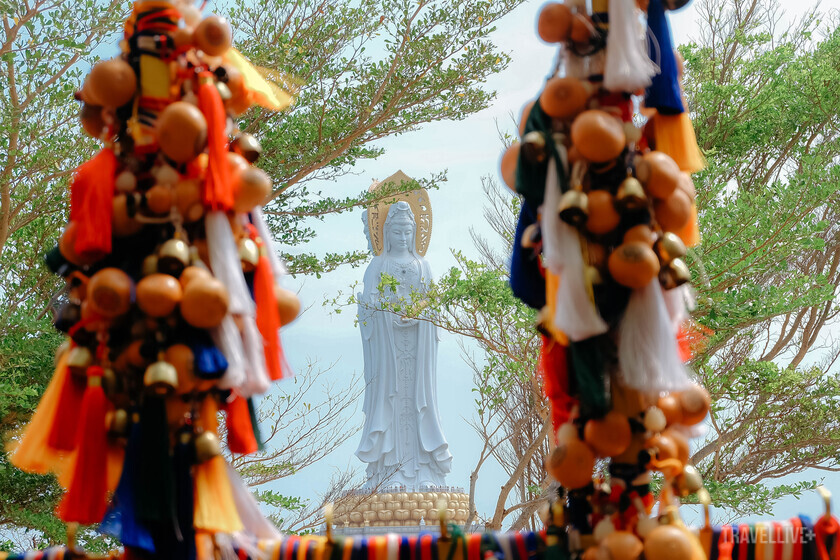
May peace and good health be preserved here by many people through these small gourd-shaped vases.
Visiting information:
- Opening hours: 8 AM - 6 PM.
- Entrance ticket to the Nam Son Pagoda cultural and tourist area:
Peak season (October 1st - April 30th): 129 RMB/adult ~ 450,000 VND.
Off-peak season (May 1st - September 30th): 108 RMB/adult ~ 380,000 VND.
- The train fare for a trip from the entrance gate or for the entire journey is approximately 30 RMB (~110,000 VND). The distance from the Buddha statue to the gate is quite far, so it's recommended to take the electric tram from the statue to the gate, which costs around 10 RMB (~40,000 VND) per person.