VI
VI


"She came back to raise the child with her."
Let me go explore the beautiful landscapes of Cao Bang."
The folk verse above, whose origins are unknown, partly evokes the majestic and beautiful landscape of the Northeast region of Vietnam. When people think of Cao Bang, they often associate it with the Pac Bo Cave historical site, Karl Marx Mountain, Lenin Stream where President Ho Chi Minh lived and worked during the pre-revolutionary years, or Ban Gioc Waterfall – one of the most beautiful waterfalls in the world, or Nguom Ngao "tiger eye" cave, and the famous Trung Khanh chestnuts… But there is another route, peaceful and beautiful, almost untouched by tourism, that has recently become popular among travelers seeking to enjoy the scenery of clouds drifting, winds blowing through high mountains and vast lakes, and breathe in the pure air. The Tra Linh to Thong Nong route, winding through vast grasslands and streams with water reaching halfway up the wheels, is equally beautiful, magnificent, enchanting, and captivating.
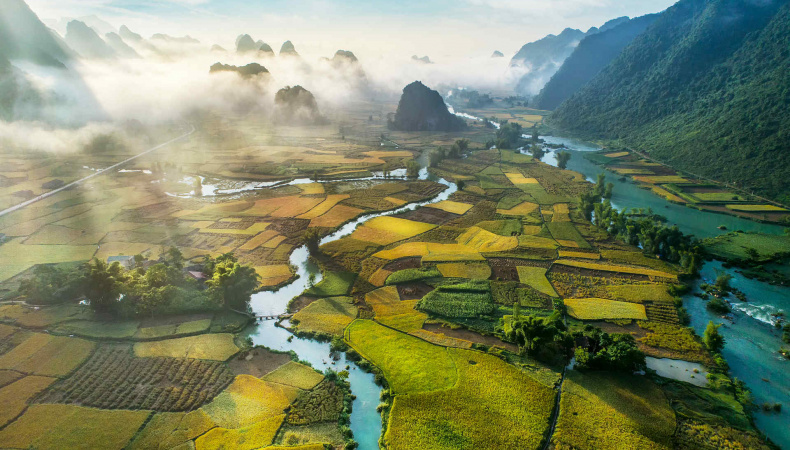
Cao Bang, a land with much untapped potential.
Our journey began in Hanoi early in the morning, passing through Bac Ninh, Thai Nguyen, Bac Kan… after a journey of nearly 300km, we arrived in Cao Bang. This highland city on the gentle Bang River is transforming day by day, becoming more prosperous and significantly different compared to seven years ago when I first visited.

As late autumn transitioned into winter, the weather was beautiful. After a delicious lunch featuring Cao Bang's famous local specialty, stir-fried young wasps with bamboo shoots, we left the city and drove over the Ma Phuc pass into Quang Hoa district. The car stopped in a vast grassland with tranquil lakes reflecting the nearby bamboo groves and the surrounding limestone mountains. Herds of buffalo, cows, and horses grazed peacefully, drinking water, while women and young shepherds gathered in groups, chatting and playing. The scene, which seemed so distant, from 20 or 30 years ago when we were children herding buffalo in a Northern Vietnamese village, suddenly flooded back with memories. Everyone was curious and delighted when my friends brought out a drone and busily set it up, excitedly controlling it to fly around and capture some of the beautiful, peaceful scenery – "like a conical hat" – of this place.
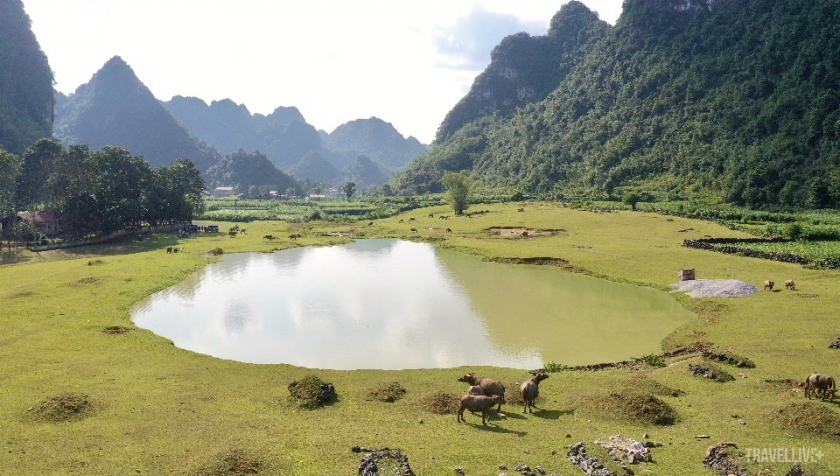
The peaceful Trà Lĩnh grassland
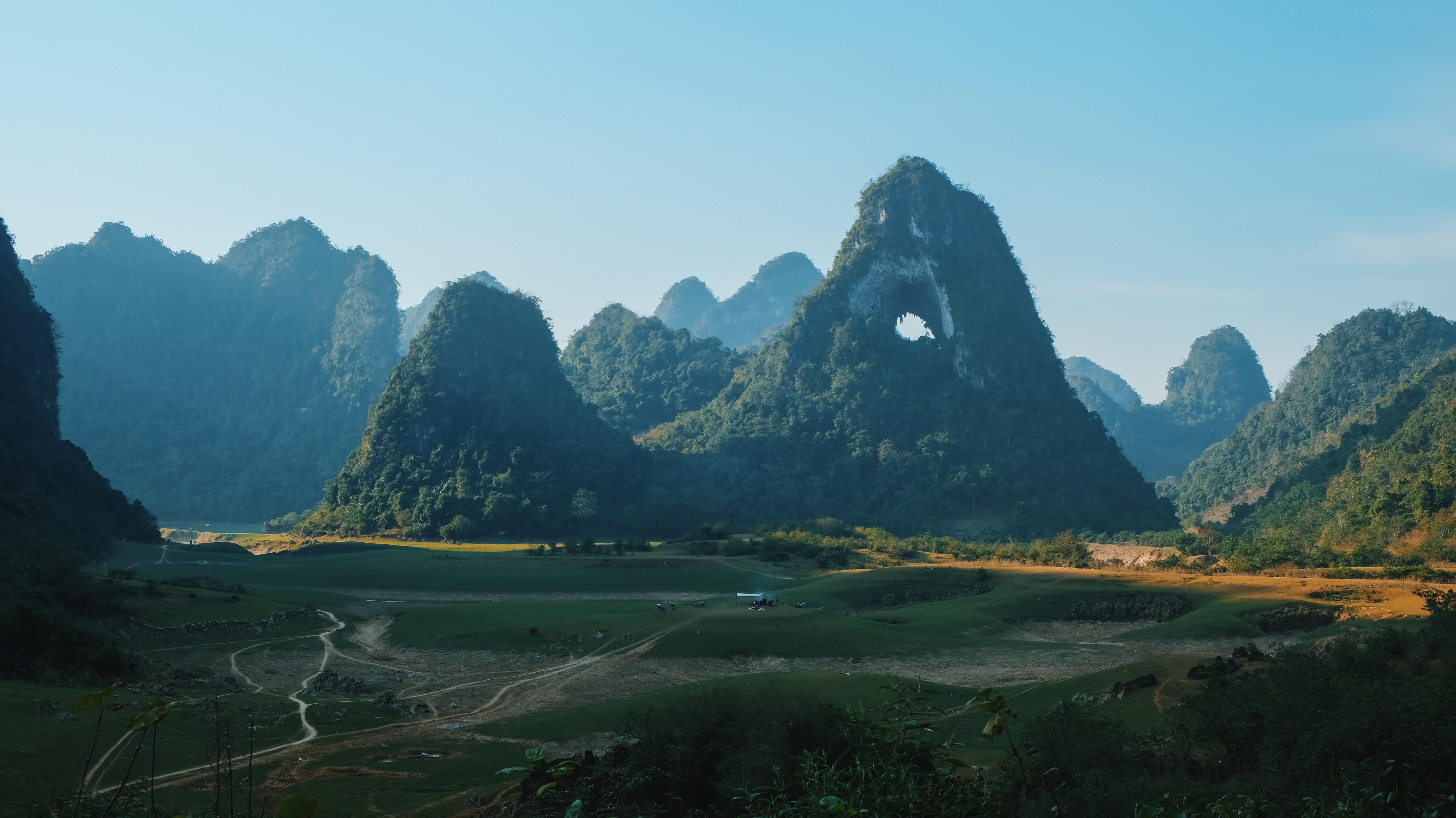
The place I'm most looking forward to visiting is the "Thung Mountain." Backpackers have given it a beautiful, almost mystical, name: Cao Bang's Valley of Love. International scientists, when researching to complete the Global Geopark dossier, used a whole range of dreamy associations to call this place "Mountain Angel Eye."
Mount Thung (Phja Piót in the Tay language) is located in Quoc Toan commune, Tra Linh district, within the Thang Hen lake complex of the fascinating "Cao Bang Landscape" Geopark. Spanning 3,000 square kilometers and encompassing six districts, it is the long-standing home of nine ethnic groups in this picturesque region. Amidst the towering mountains lies a very special peak. Geologists explain that the mountain's "Eye of the God" is actually a circular cave, over 50 meters in diameter, situated at an altitude of approximately 50 meters above the lake surface. The cave developed within limestone terrain at a general altitude of 650-700 meters, encompassing tower-shaped and cone-shaped mountain ranges interspersed with dozens of large and small lakes, together creating the mystical Thang Hen lake system. The unique feature of this lake system is its interconnectedness through surface or underground streams. Therefore, the water levels of the lakes can change seasonally, sometimes very suddenly. Amazed, astonished, and delighted to discover such a unique and fascinating landscape, our entire group lingered, wanting to admire it, take more photos, and record a few more videos, reluctant to leave even as the sun was setting.
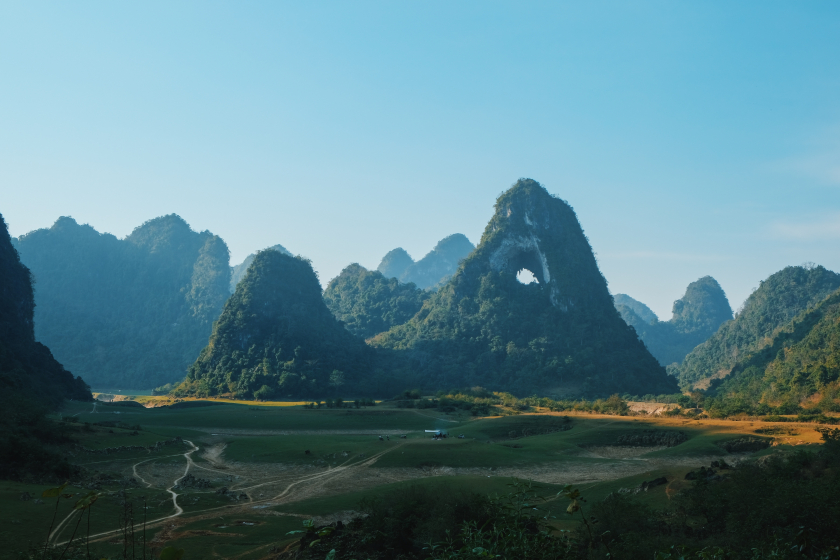
Mount Eye of God, a popular tourist destination in Cao Bang (Source: Unsplash)
The next morning, while the dew still shimmered on the grass, we traveled along the Bang River towards Thong Nong district. The winding roads along the mountain slopes were covered in a lush green carpet of trees and grass. Every time we encountered a beautiful scene along the way, our local friend would remind us to slow down or stop the car completely so that the whole group could admire and record the breathtaking scenery, "the green mountains and clear waters like a painted picture." The car passed a long stream, which was full due to the rainy season. To facilitate traffic, large concrete slabs had been laid across the streambed like a small spillway, making it easier to navigate without affecting the stream's flow. Each member of the group rolled up their trousers and waded back and forth, enjoying the beautiful scenery on both sides of the stream, watching the locals fetch water and wash clothes by the stream, listening to the murmuring sound of the stream, and feeling the cool water flowing from the source on their hands and feet—it felt as if all our senses were awakened.
Crossing the large stream at low tide, we continued running through the gently beautiful, dreamy valleys in the light rain of late autumn, occasionally stopping to admire the small streams of white water cascading from the cliffs or picking clusters of ripe, fragrant wild guavas hanging near the path.
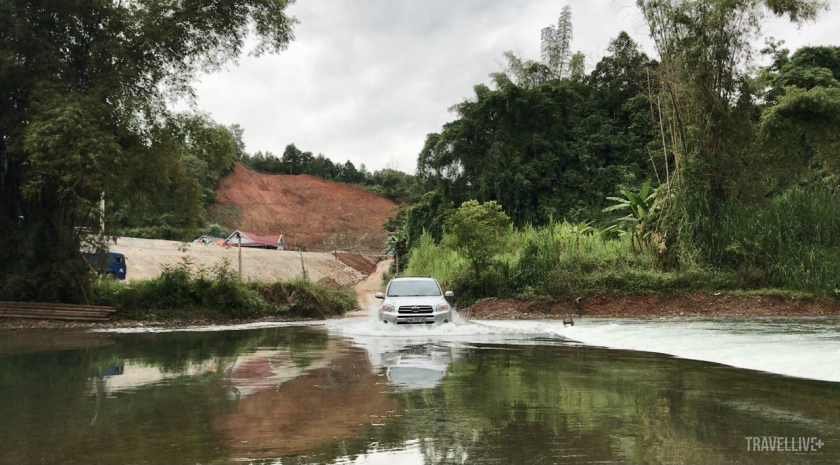
Driving across the stream in Thong Nong.
The Thong Nong grassland appeared like a scene from the Mongolian plains I'd once seen on YouTube. My friends and I set out our drones, enjoying the mesmerizing footage captured by the drones. I wandered through the valley, admiring the majestic mountain ranges reflected in the clear, peaceful lake, and the tall, healthy green wild trees in the early winter. Beneath the dense thickets of grass, groups of wild pigs – probably raised by the local residents – grazed, showing off their agility, small size, and sturdy build. Passing by the water's edge near the large lake, flocks of ducks swam playfully, some even plunging their heads down and raising their tail feathers to search for snails. Seeing the red umbrella fully opened and propped up against the raft, shielding the camera, my younger friend in the group gently nudged my shoulder: "Please be quiet, I'm recording the sound of the rain."
Goodbye Cao Bang, with eyes filled with beautiful scenery, lungs filled with pure fresh air, and legs feeling stronger after traversing the forest trails… we secretly promised ourselves to return soon to the beautiful and peaceful land of Cao Bang.
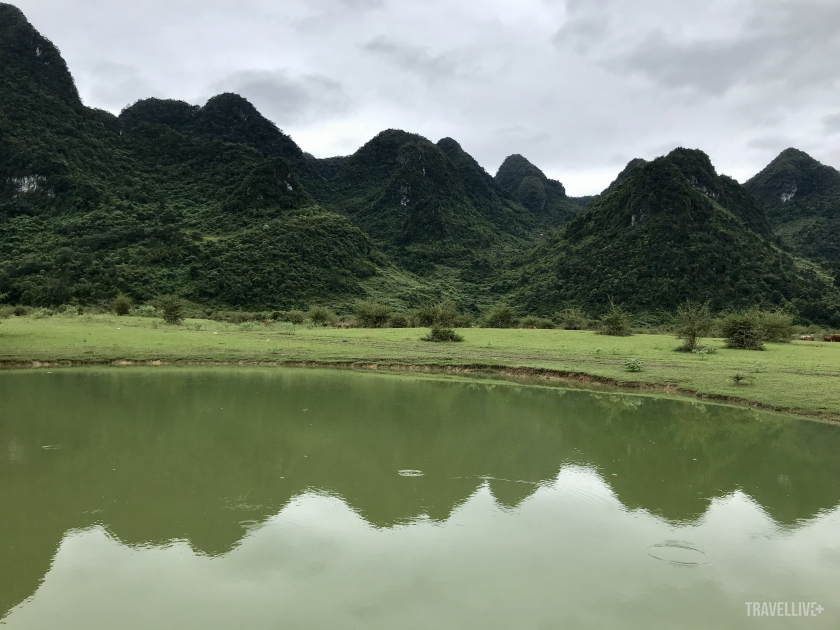
Lush green meadows in Thong Nong.
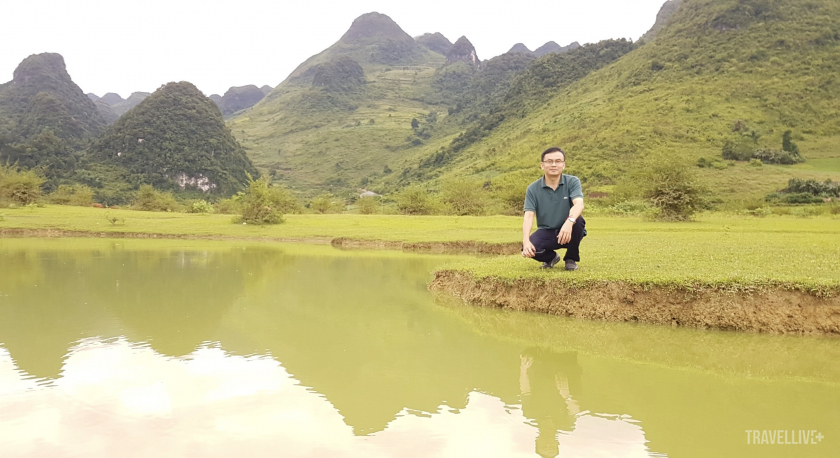
The author of this article is from Thong Nong.