VI
VI


Before the 1960s, the only way to reach the four mountainous districts of Ha Giang was by following narrow trails, suitable for both people and horses, along the rocky mountain slopes. Behind the Quan Ba Sky Gate, over 80,000 people suffered from poverty and backwardness, living in isolation from the outside world. Transportation relied primarily on horses and human labor.
The burden of the musical performance weighs heavily on one's shoulders and on one's entire life.
Footprints on the earth are imprinted on a journey of thousands of miles...
"Living on rocks, dying buried in rocks," the people of the ethnic groups here still yearn for a trade route connecting the rocky plateau. That route would not only bring the light of civilization to the people but also eliminate the isolation that had served as the basis for the dark schemes and actions of the tyrannical chieftains and landlords who had oppressed the region for so many years.
The aspiration to "mend the sky with stones"
After the Dien Bien Phu victory in 1954, Ha Giang province had only one motorized route, National Highway 2, from Ha Giang town to Tuyen Quang; the rest were footpaths and horse-drawn cart roads. On March 29, 1959, the Executive Committee of the Ha Giang Provincial Party Committee (3rd term) met and passed a resolution proposing to the Central Committee and the Viet Bac Autonomous Region to open a road to Dong Van. With the approval of the Central Committee and the Autonomous Region, after a period of preparation, on September 10, 1959, in Ha Giang town, the Ministry of Transport, the Central Committee of the Vietnam Youth Union, and Ha Giang province held a groundbreaking ceremony for the Happiness Road.
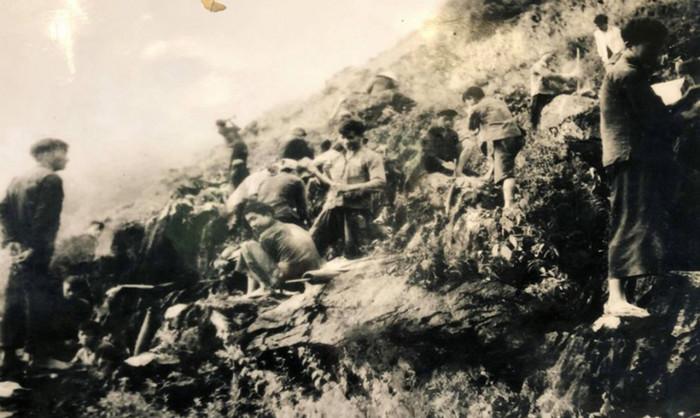
Overcoming the hardships of the remote and dangerous jungle, thousands of young volunteers contributed to building the Happiness Road in the northeastern region of Vietnam.
Anyone who has the opportunity to visit Ha Giang and stops at the Ma Pi Leng Pass will see a stone plaque clearly inscribed: The construction of the Happiness Road began on September 10, 1959, and was completed on June 15, 1965. For six long years, more than 1,300 young men and women volunteers, along with over 1,000 ethnic minority laborers, contributed over 2 million man-days of labor, chiseling and excavating nearly 3 million cubic meters of rock to create the shape of a road amidst the undulating clouds and mountains of the border region.

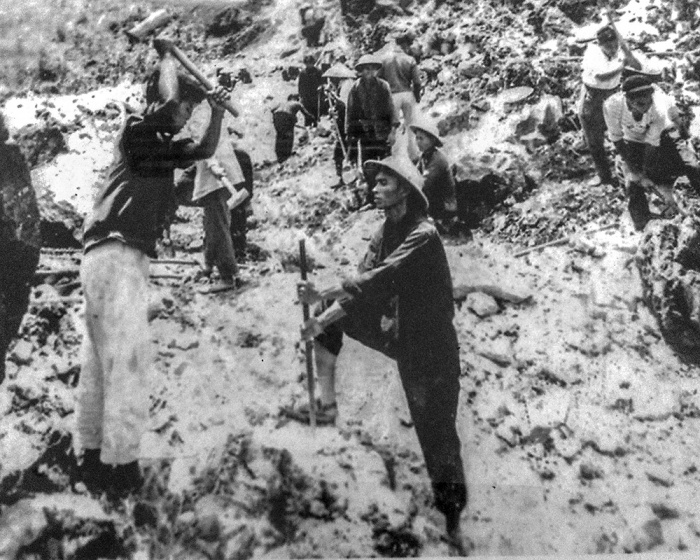
If the Ho Chi Minh Trail is a symbol of courage and profound patriotism, then the Happiness Road is a symbol of national unity, an ideal, and a testament to the bravery of Vietnamese youth.
Despite overwhelming difficulties and shortages of all kinds, the thousands of people participating in building the Happiness Road, fueled by the fervent revolutionary spirit of youth, did not shy away from hardship and sacrifice, determined to stay in the mountains and on the road, working diligently. With extremely rudimentary tools—just hoes, shovels, sledgehammers, crowbars, wheelbarrows, etc.—working under incredibly difficult conditions, lacking food, salt, and water; struggling with the harsh climate of the highlands, scorching hot summers and biting cold winters, sometimes with temperatures dropping below zero and water freezing on the rocks… thousands of people toiled to chisel the rocks and build the road.
Specifically for the Ma Pi Leng Pass, the construction crew had to hang themselves from the top using ropes, clinging to the sheer cliff face to drill holes and break up every inch of rock. The construction took 11 months to complete. During the construction of the Happiness Road, 14 young volunteers sacrificed their lives. The graves of these martyrs are located at the Youth Volunteer Martyrs Cemetery in Yen Minh District, Ha Giang Province.
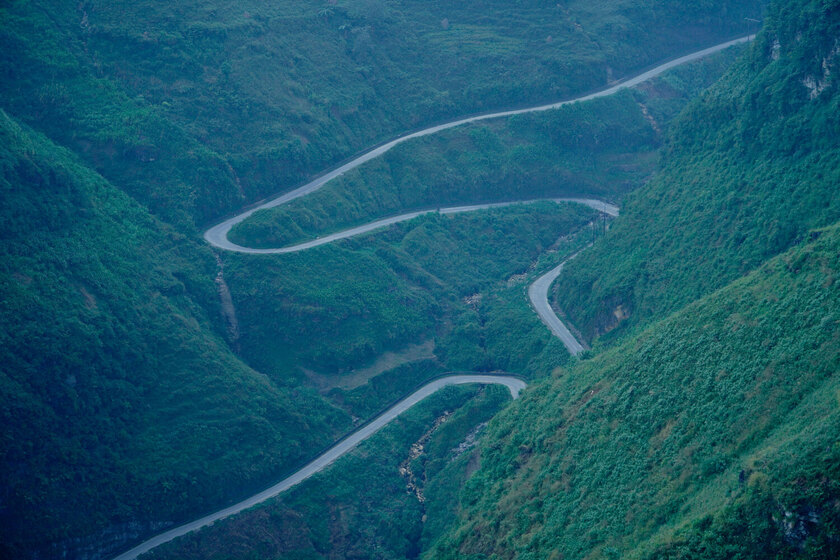
Construction of the Happiness Road began on September 10, 1959, and was completed on June 15, 1965.
The sacrifices and hardships of over 1,500 volunteer youth from 8 provinces, along with ethnic minority laborers from Ha Giang province, have brought about a transformed life for the people of the rocky plateau. The wide Happiness Road, bustling with convoys of vehicles traveling back and forth, education reaching the mountains, green shoots and blossoming flowers… illuminate the entire rocky plateau.
Awakening a border region
For those who love Ha Giang, the Happiness Road is a very special journey, because to complete it you have to cross towering mountain passes such as Bac Sum, Cong Troi, Can Ty, Mau Due, and ascend to Lung Cu amidst the clouds. And especially, you have to overcome the famous Ma Pi Leng pass.
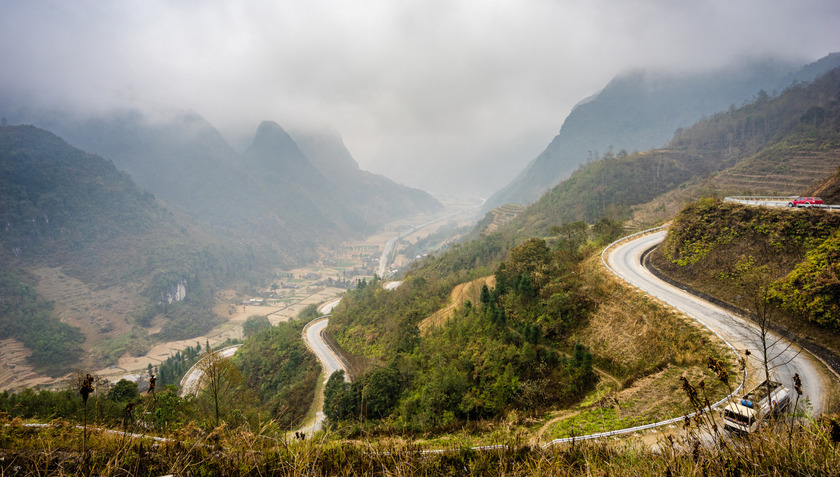
The Happiness Road in Ha Giang has almost become a legend of the 20th century – a place where people often say "even stones can bloom into flowers."
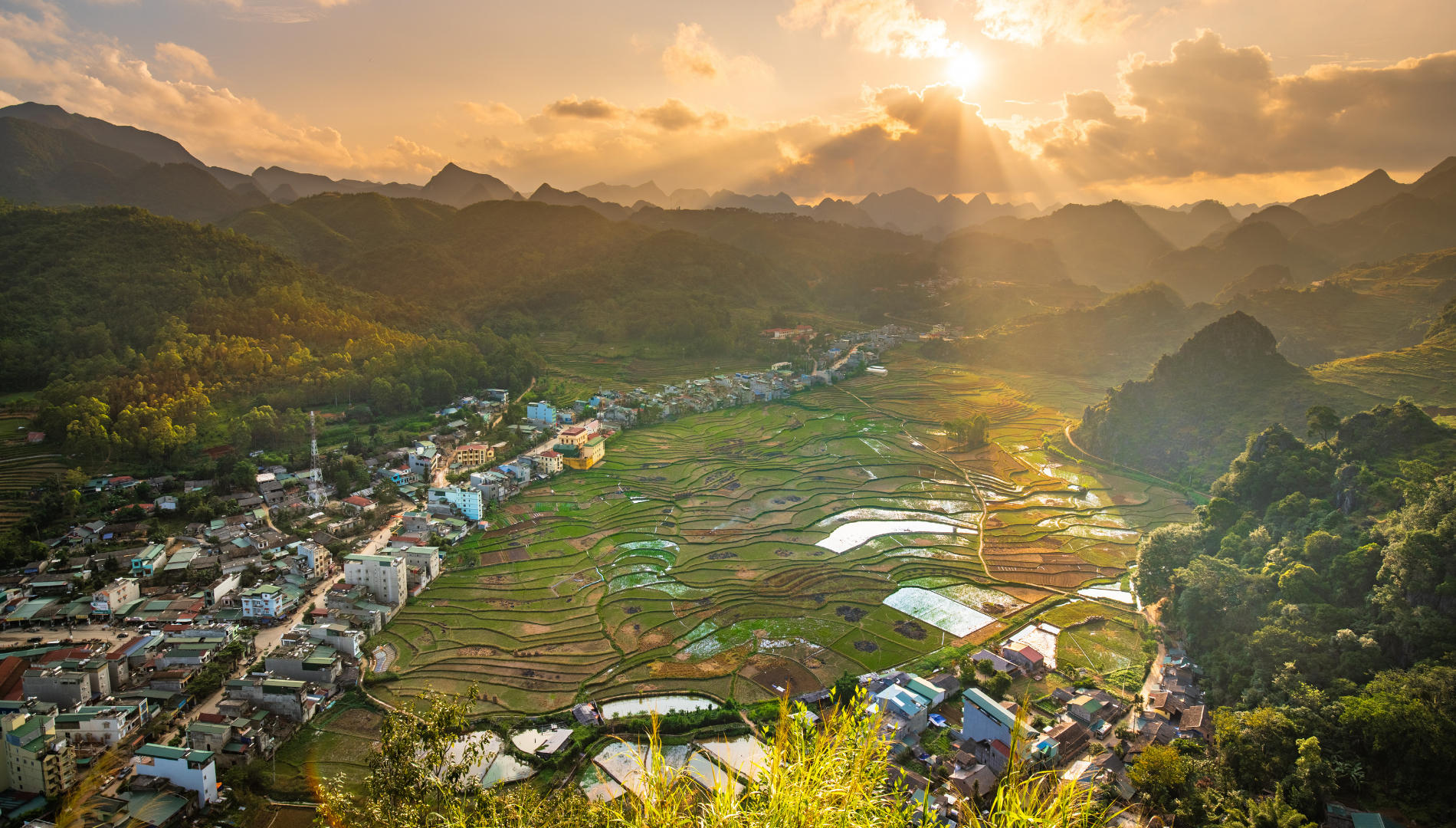
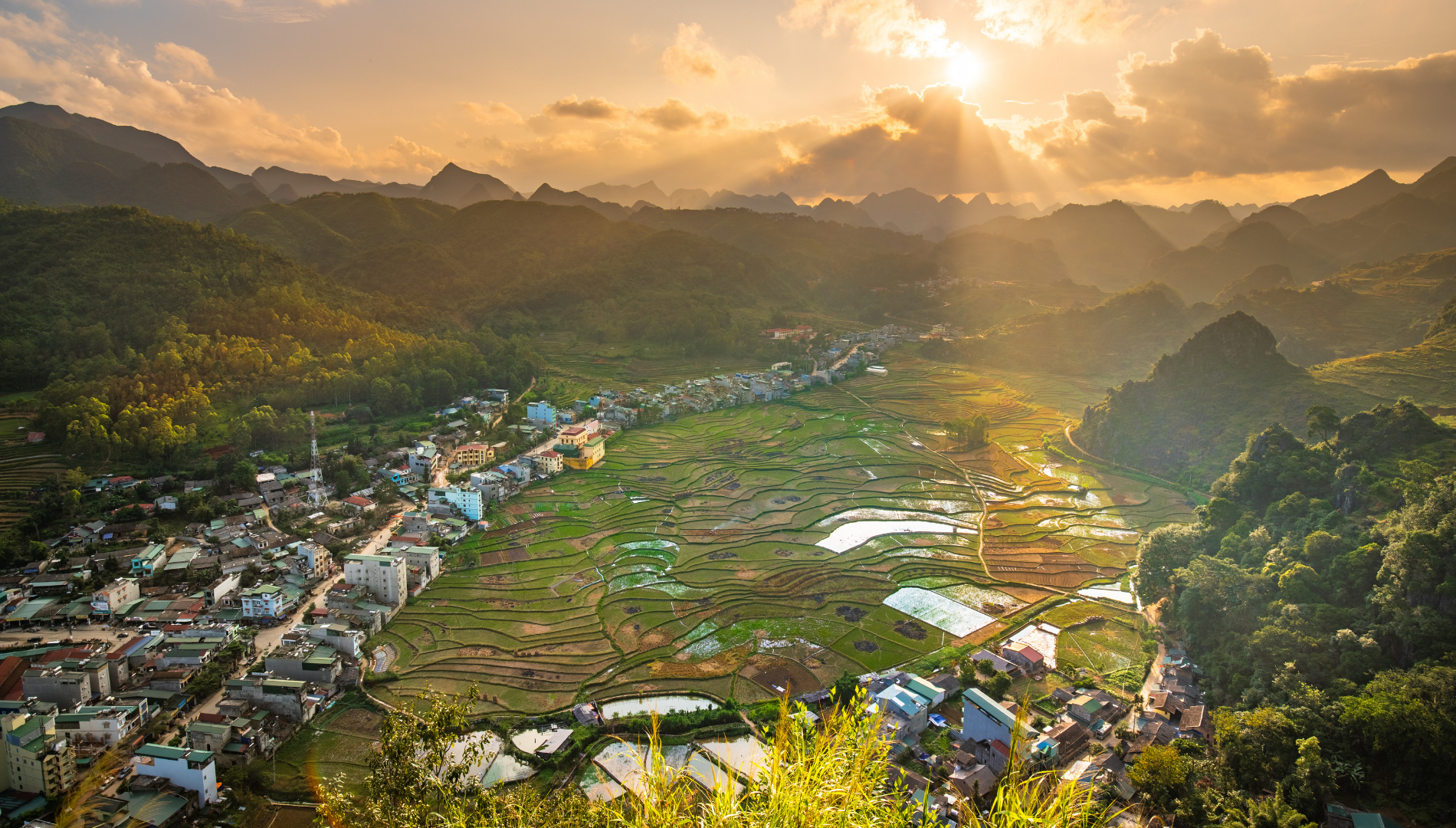
Leaving behind the peaceful city of Ha Giang with its Km 0 marker on National Highway 2, we embarked on the Happiness Road through the rocky plateau. After 20 km of relatively flat terrain, the majestic Quan Ba Heaven's Gate Pass beckoned with its steep slope, forcing the vehicle to crawl in first or second gear. Standing on Quan Ba Heaven's Gate, the town of Tam Son unfolded, stretching across the valley. Multi-story houses and villas rose up densely, extending to the foot of the mountains. A mountain town that is just as beautiful and prosperous as those in the lowlands. Amidst the rolling mountains lies the Quan Ba Twin Mountains, a magnificent gift from nature to Tam Son and the rocky plateau. Quan Ba, in ancient times, was actually the Fairy Twin Mountains, with two peaks resembling the breasts of a young woman, standing out in the vast, flat, and fertile Tam Son plain.
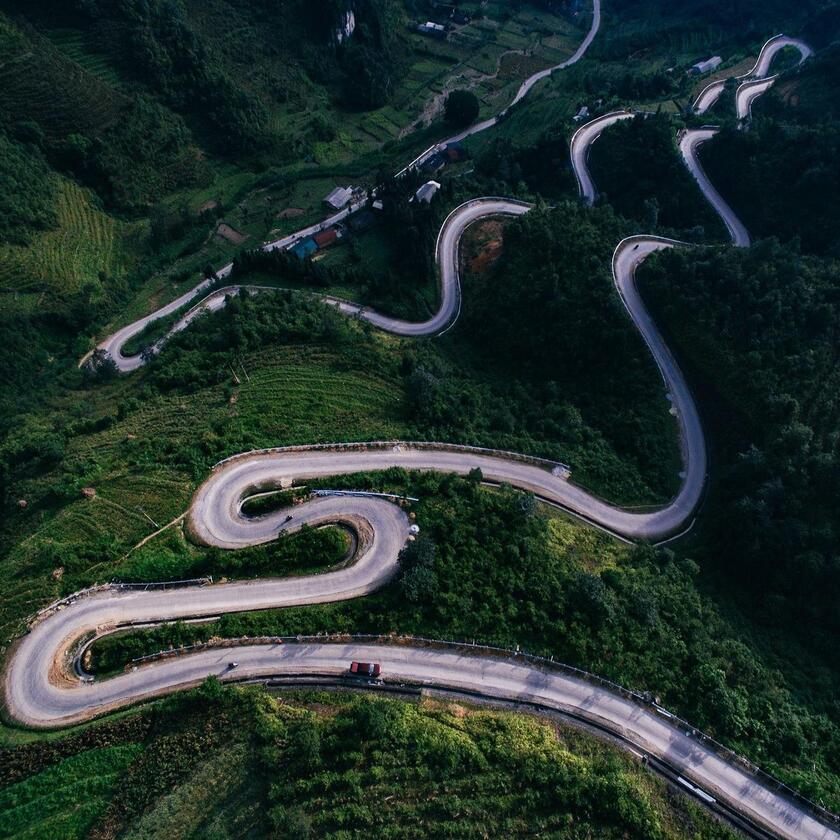
Today, Happiness Road is one of the most magnificent roads in Vietnam, connected to many famous tourist destinations.
Traveling along steep mountain passes and treacherous hairpin bends, one is always greeted by the serene and breathtaking beauty of the rocky mountains, leaving everyone in awe. Situated right next to National Highway 4C, Pho Cao boasts the distinctive charm of its houses with golden earthen walls glistening in the sunlight.
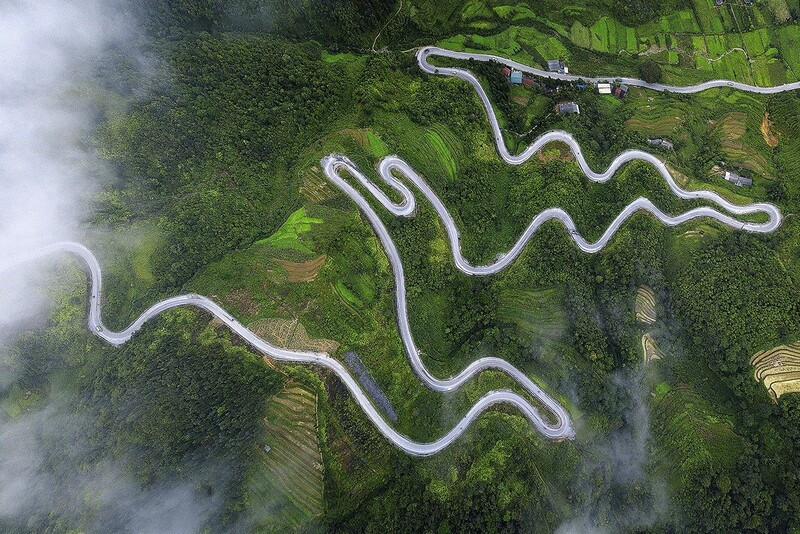
At any time of year, this route always offers visitors wonderful experiences.
It's no exaggeration to say Ha Giang is pristine, with its lush green mountains stretching endlessly, seemingly reaching the highest clouds. Peaks of varying heights obscure the horizon, undulating like a shark's teeth embracing the valleys below, where tiny houses stand before this "giant" of nature. The winding curves of the Bac Sum pass allow the gaze to extend further and higher, capturing as much of the majestic, endless green as possible.
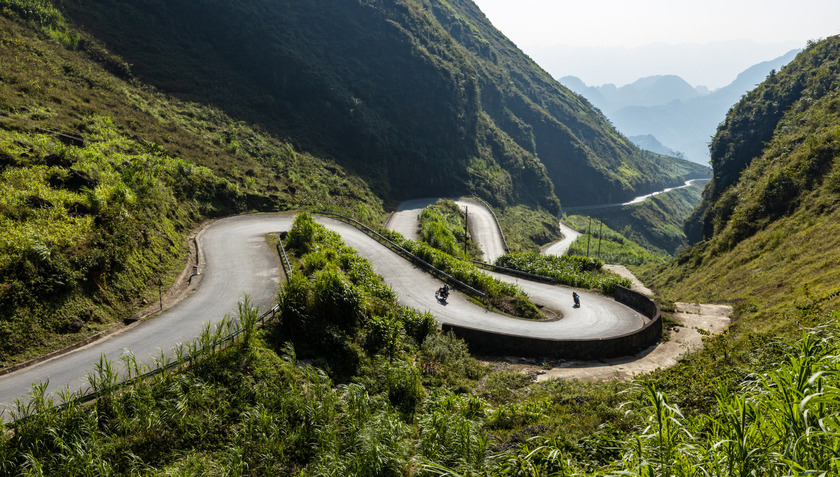
In every season, the beautiful scenery along the road always amazes and delights tourists.
After 60 years of construction, the road has transformed the lives of people in the Ha Giang rocky plateau region by more than 100 times compared to the period before its construction. It broke the deadlock, opening up a path for economic development and trade for tens of thousands of ethnic minority people in this rocky plateau area.
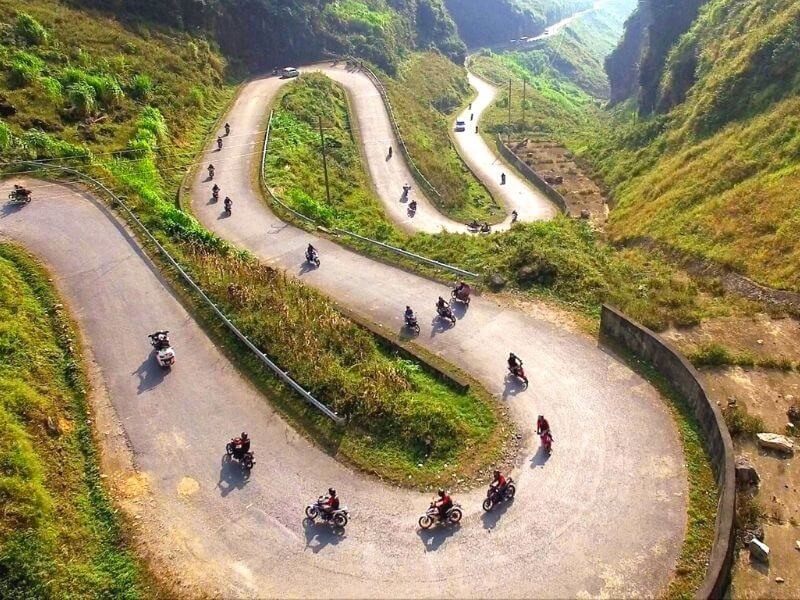
The Ha Giang Happiness Road seems to always please its visitors, with its beauty changing with the seasons.
The Happiness Road is a vital artery connecting trade and socio-economic development for the ethnic communities of Ha Giang province and the Northwest and Northeast regions. Today, it is also an attractive tourist destination, showcasing the essence, beauty, and grandeur of the northernmost part of the country. To conclude, I would like to borrow the lyrics of the song "Spring Road" by composer Nguyen Trung Thuong: “Every drop of sweat soaks into the mountain rocks, the Heavenly Gate stands proudly, bearing the image of the mother of the plateau. The ancient Ma Pi Leng, the ancient mountains and rocks, have now become great roads, roads to the north, roads to the west – roads reflecting the Party's will and the people's hearts, roads that President Ho Chi Minh led us to spring.”