VI
VI


Dieu Ly, a tourist participating in the Everest Base Camp trekking route (Nepal), shared her experience visiting Tengboche Monastery. In mid-October 2022, during her trip to Nepal and the Everest Base Camp trekking experience, Dieu Ly happened to visit this place. According to Dieu Ly, it was around 5 pm and the scenery inside the monastery was incredibly beautiful.
"The afternoon sun was setting, the distant mountains still glowed softly with the snow covering them, some monks were playing football in the monastery courtyard, others were sitting in a corner meditating; it was truly peaceful," Dieu Ly recalled.
Tengboche Monastery from a tourist's perspective.
The following morning, Diệu Ly returned to Tengboche Monastery early in the morning. She described the scene of the sunrise illuminating the monastery, bringing a sense of peaceful life. The chilly weather seemed to drape a thin layer of mist over the morning sunlight.
"My nose was aching from difficulty breathing, and I could see smoke coming out. My limbs were stiff, but the scenery was so peaceful that perhaps 'my breath became nothingness' - I just felt peaceful, and no longer felt any fear," Dieu Ly shared about her experience visiting Tengboche Monastery early in the morning.
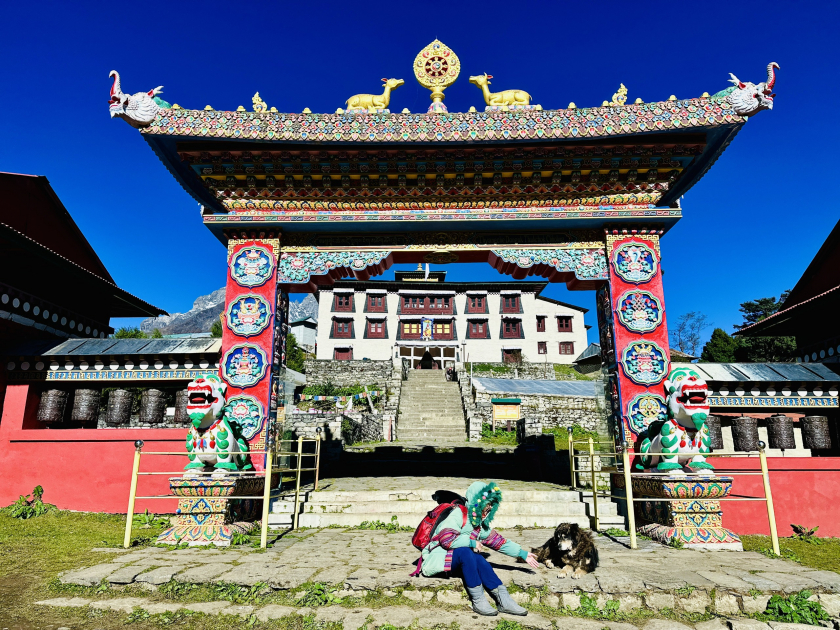
Entrance gate to Tengboche Monastery.
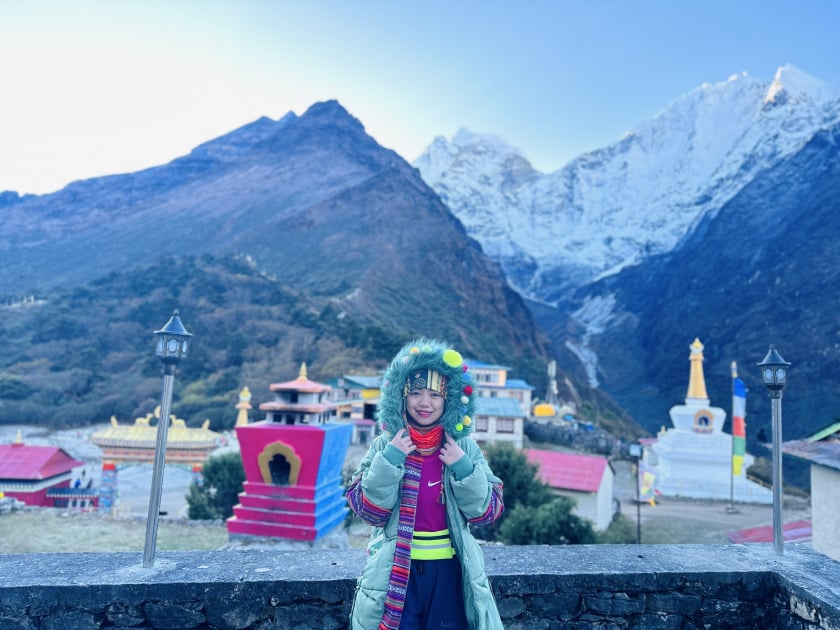
Tengboche Monastery is nestled deep within the mountains and forests.
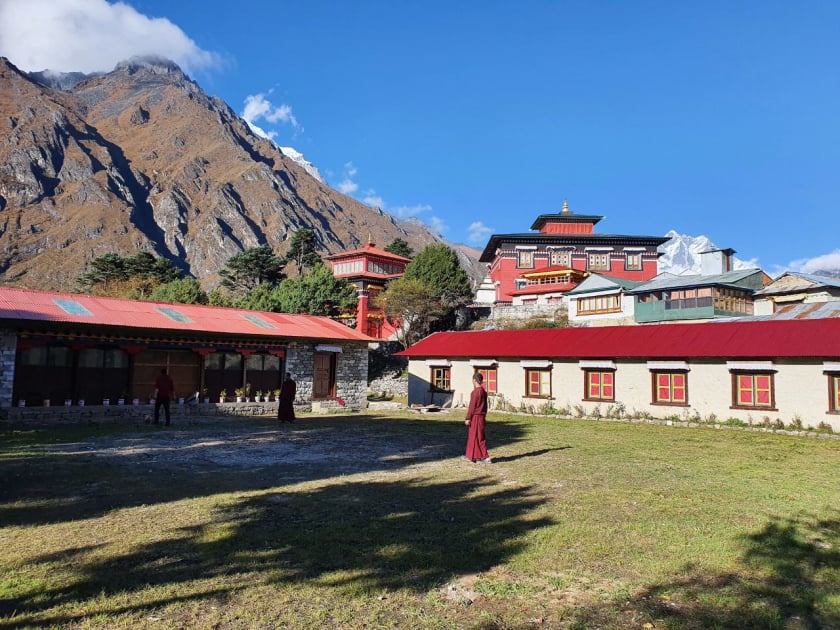
Inside Tengboche Monastery.
From this traveler's perspective, the journey to Tengboche wasn't overly difficult, but it did require stamina and a positive attitude. She explained that, as a traveler from Vietnam, the climate, altitude, and food were things that made it a bit challenging for her to adapt. As someone working in media and business, Ly also loves experiential travel, reconnecting with nature, and learning about the unique cultures of different regions both domestically and internationally. Therefore, it didn't take her too long to adjust and get used to the harsh climate in Nepal.
"Initially, I didn't remember that my trekking route would pass by Tengboche Monastery. At first, I simply thought I would just pass by a monastery, but I didn't realize that Tengboche was the most famous monastery there, and I had the opportunity to sit and listen to the monks chanting mantras. It was truly a fortunate coincidence," said Dieu Ly.
According to Dieu Ly's observations, the monastery's architecture is strongly influenced by Tantric Buddhism, with striking red and white colors against the surrounding mountains, complemented by multicolored patterns that create a world of vibrant colors and intense energy. These colors also give her a feeling of tranquility and peace in the present moment.

"The atmosphere outside is very peaceful, but inside the main hall – where the Lamas and monks sit and chant mantras – it is incredibly majestic and solemn," Dieu Ly said.
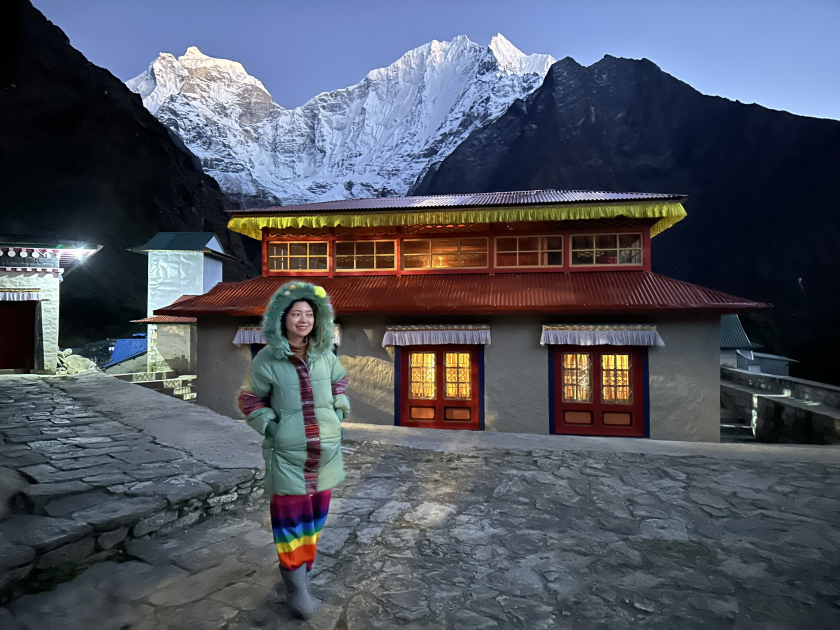
It was getting dark at Tengboche Monastery.
While visiting Tengboche Monastery, Dieu Ly was captivated by its imposing presence amidst the surrounding mountains and the vast sky. Meanwhile, the people seemed small and insignificant, yet they remained strong and resilient, moving forward.
"I really love this feeling, because it reminds me to live humbly, learn more, and share more," Dieu Ly said.
Regarding the auditory experience, when Dieu Ly sat listening to the Lamas and Venerable Masters chanting mantras, she closed her eyes and felt the sensations. The sound of the prayers combined with the ritual objects such as the Vajra, Vajra Bell, and Dharma Conch (Dharma Shell) felt both novel and familiar to Ly.
"Don't just focus on taking pictures outside the monastery; you can boldly step into the main hall and offer prayers of love to those around you. Listening to the chanting and mantras, and learning about the sacred objects is also very interesting. And please note that you are only allowed to take photos/videos in designated areas. Oh, and remember to dress warmly to avoid catching a cold," Dieu Ly said, offering advice to tourists visiting Tengboche.
Life inside Tengboche Monastery
Speaking to Travellive, Chamba Sherpa, a monk at Tengboche Monastery, shared that although it's a sparsely populated area, the monastery is still very busy with daily and monthly prayer services. Monk Chamba began his monastic life in Tengboche in 2003. Five years later, he was sent to study at a college in southern India. The abbot spent another 11 years earning his master's degree and taught for two years at Khumjung School. In 2021, Monk Chamba returned to Tengboche and assumed the role of abbot.
"Life here is somewhat difficult because there are no convenient roads or hospitals, and even the surrounding communities are very far apart," shared Abbot Chamba.
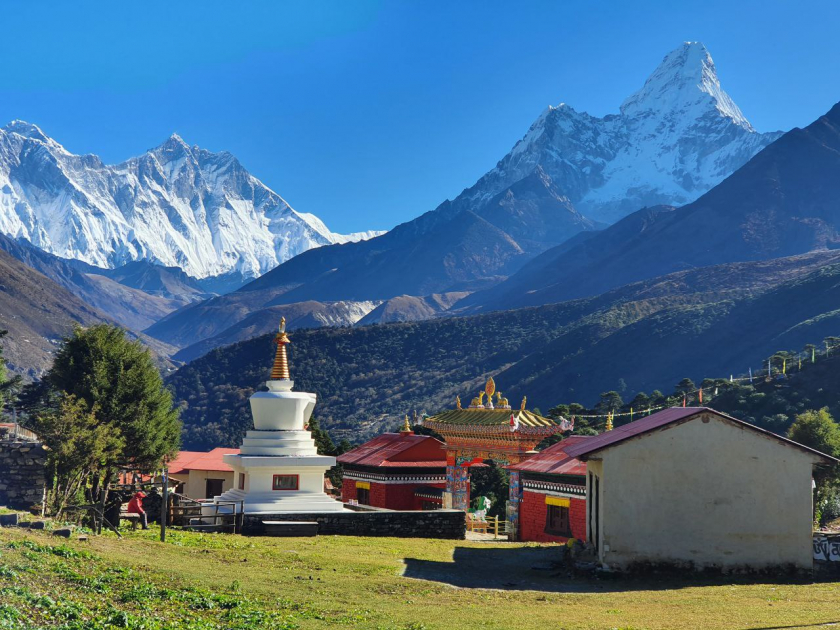
The interior architecture of Tengboche Monastery.
Every day, the monks here regularly perform rituals in both the morning and afternoon. The ceremony, called Puja, involves all the monks in the monastery meditating and chanting Tantric mantras. According to Master Chamba, the Puja ritual has many versions adapted to different religions. At this monastery, the Puja is when the monks chant prayers to the Bodhisattva, seeking world peace and inner tranquility. Throughout the ceremony, the monks perform actions such as chanting mantras, reading scriptures, meditating, kneeling, and offering gifts.
"Monks often offer flowers to the Bodhisattva with the meaning that all things are impermanent, beautiful flowers will eventually wither," said Master Chamba.
In addition, during the Puja ceremony, monks use candle offerings to symbolize light and enlightened knowledge. Chamba explained that these daily religious practices help Buddhists focus on Buddhist teachings and gradually open their hearts to the Buddha's teachings. Most Buddhists carry prayer beads with them so they can meditate anywhere, anytime.
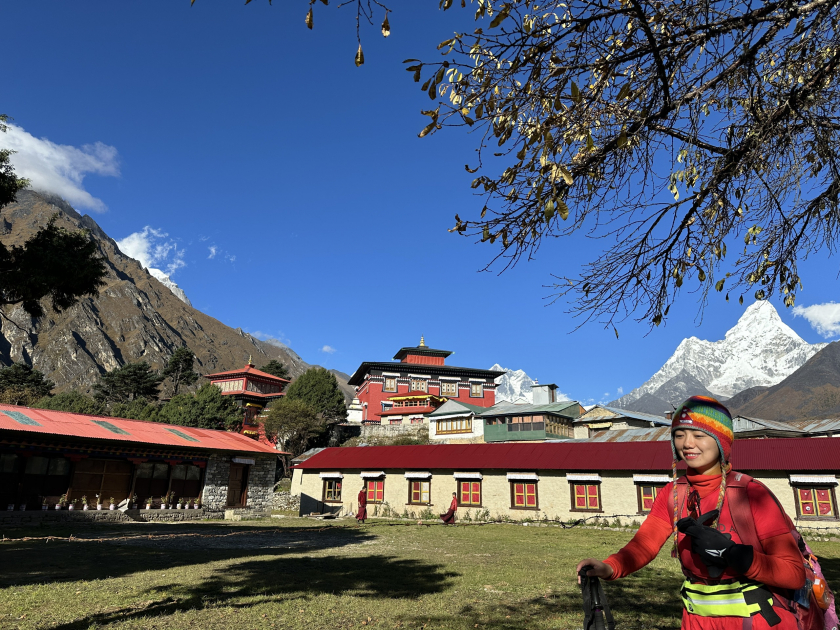
The monastery grounds are spacious.
"Even without Buddhists, the Puja ceremony continues as usual. However, in winter, the monks only perform the ceremony in the morning," said Chamba.
However, during religious ceremonies or while the monks are meditating, visitors are not allowed to take photos or videos. Abbot Chamba explains that such actions would prevent the monks from concentrating on their practice. In particular, at Tengboche, there is a room containing the ancient mummified remains of a Lama. Visitors are permitted to visit this area with permission from the head monk. Naturally, photography and filming are not allowed.
"I really appreciate the tourists who visit the monastery. Because I get to hear their stories from all over the world, some even from other monasteries, and I can have discussions about Buddhism with them. I can answer most of their questions, but sometimes I can't give them an answer," Chamba told Travellive.