VI
VI


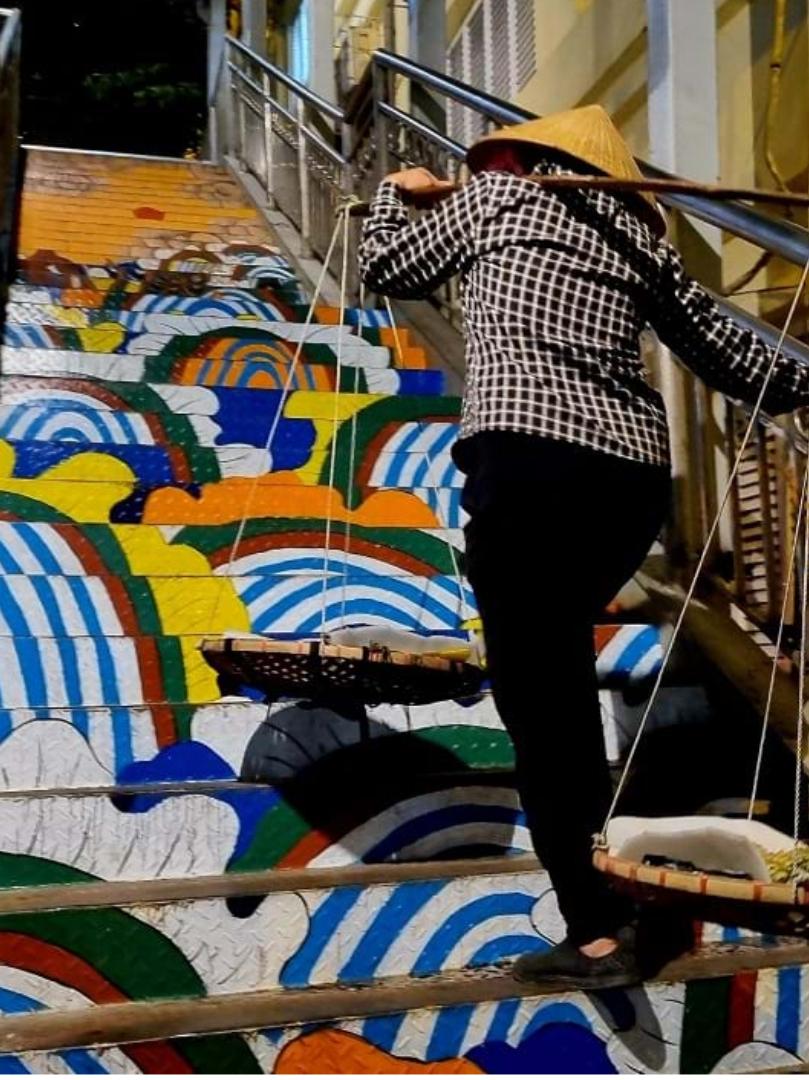
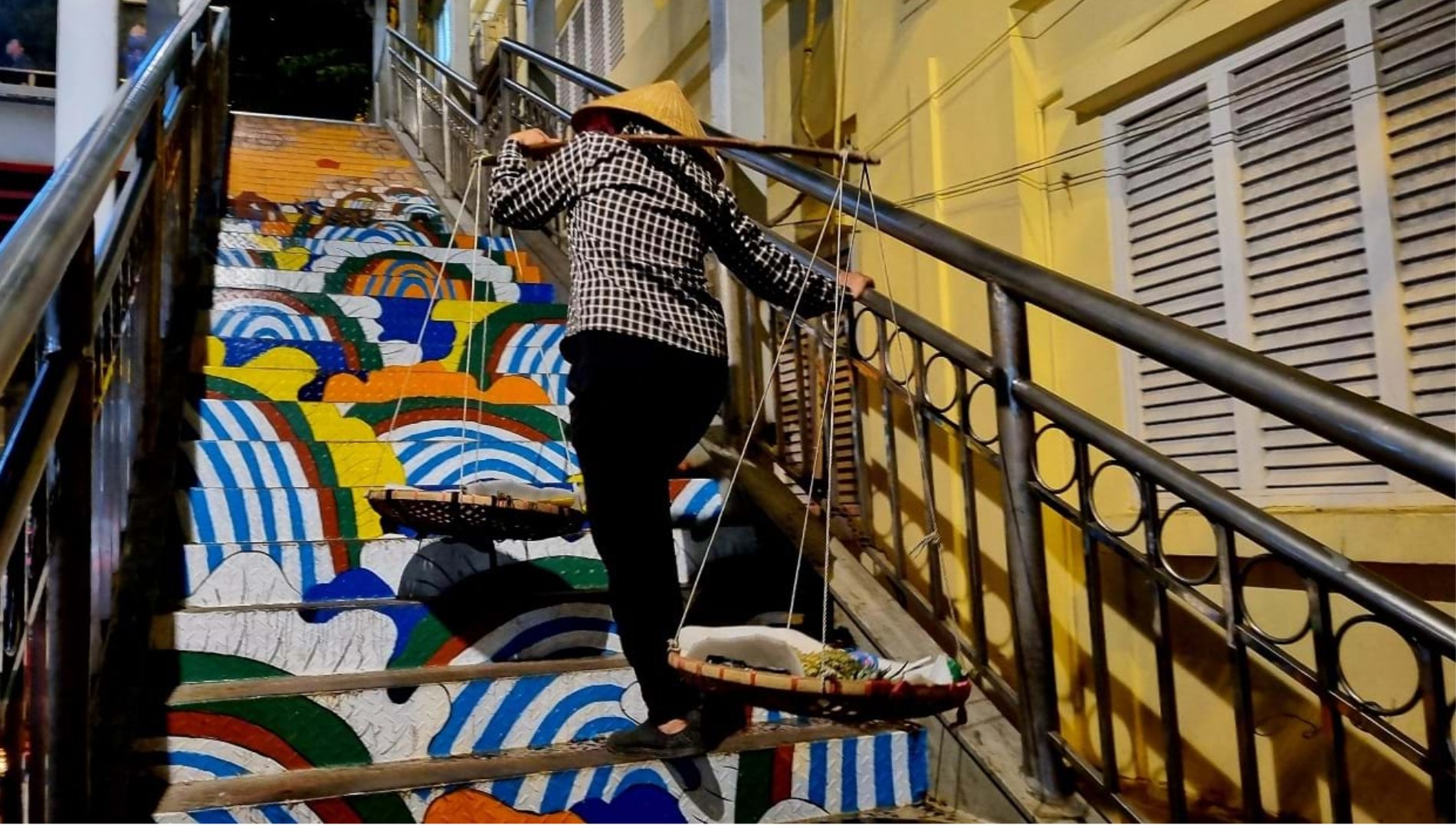
This public art project has given a "new look" to the pedestrian bridge spanning Tran Nhat Duat Street in Hoan Kiem District, Hanoi. The bridge, built and put into use in 2014, has now become a unique and attractive art space thanks to the collaboration of a talented group of artists including Vu Xuan Dong, Le Dang Ninh, Can Van An, and curator Nguyen The Son.

The art installations on the bridge not only bring a novel beauty but also transform this public space into an attractive destination where residents and tourists can enjoy and explore art in a fresh and creative way. The sophisticated combination of art and public space has created an engaging cultural experience, contributing to enriching the artistic life of the capital city.
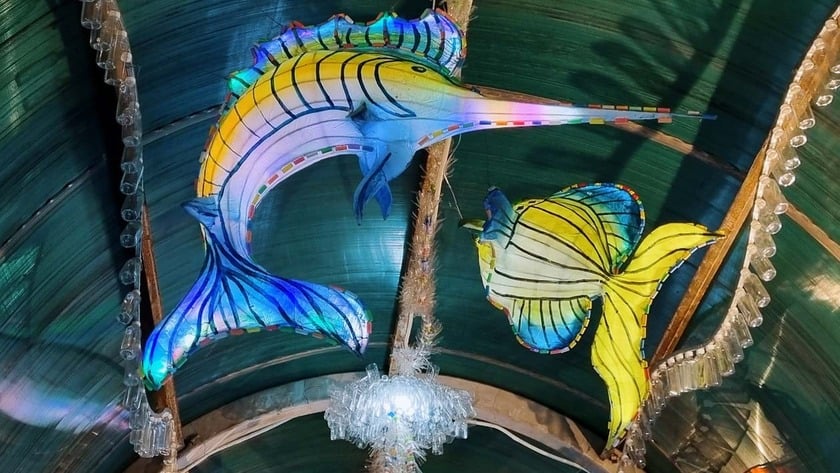
The public art project on the Tran Nhat Duat pedestrian bridge, connecting with the Phuc Tan public art project, has officially been launched, creating the first walking tour in Hanoi to visit public art spaces.
The pedestrian bridge on Tran Nhat Duat Street is a pedestrian walkway connecting the Old Quarter and the Phuc Tan area of Thanh Yen border gate, in Hoan Kiem District, Hanoi.
With the theme "Water," the interactive installations, strategically placed across the unique terrain of the pedestrian bridge, transform the area into a mesmerizing collection of light installations.

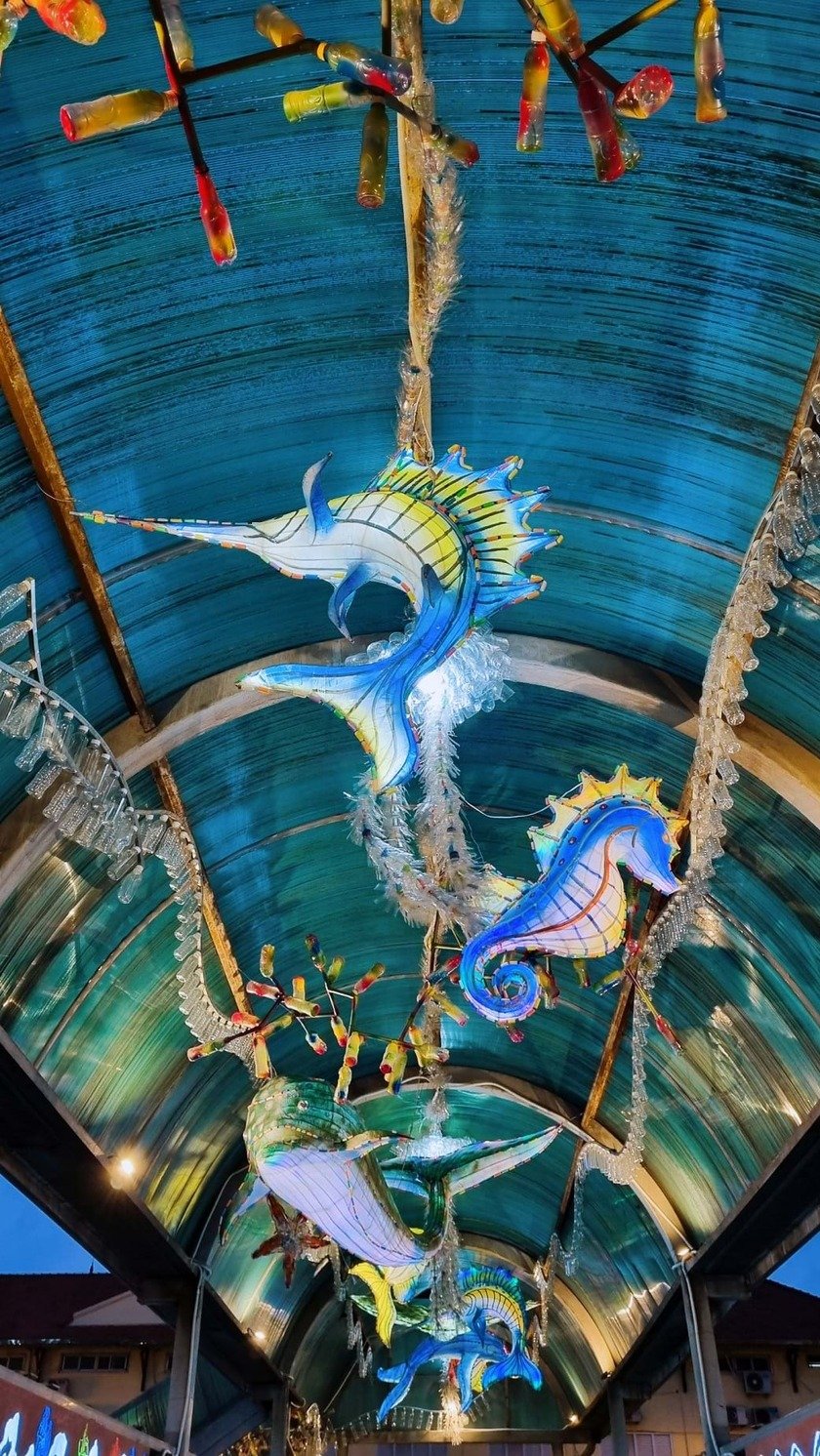
This pedestrian bridge has become more cheerful and vibrant, and is further illuminated in the evening by the light of public art installations, some of which are made from recycled materials.
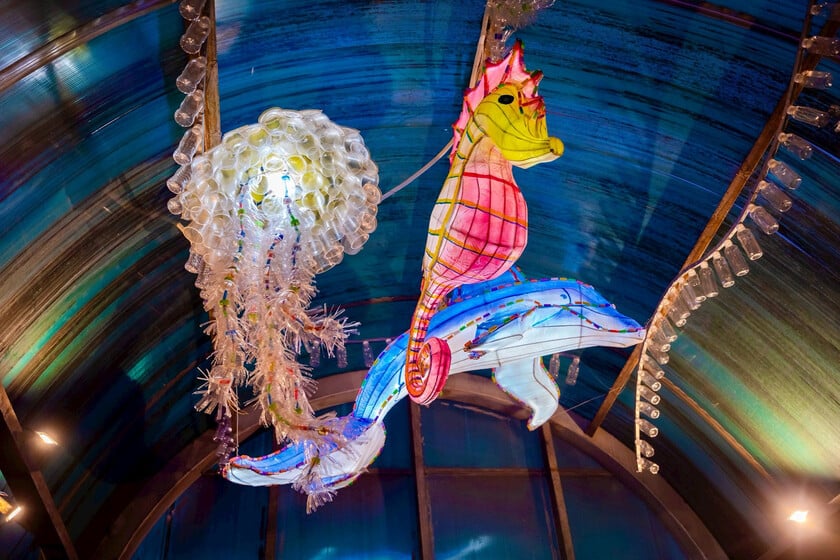
The artwork "Aquarium" by artist Vu Xuan Dong evokes the feeling of being lost in a magical and captivating underwater tunnel, with sparkling reflected light creating a wondrous space.
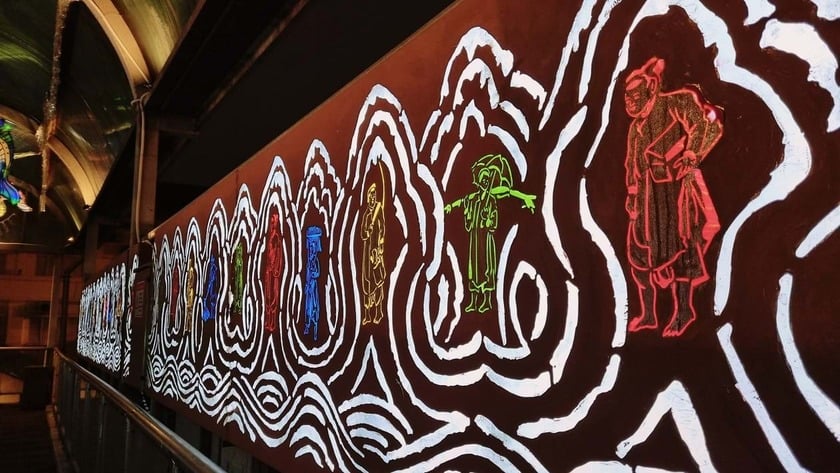
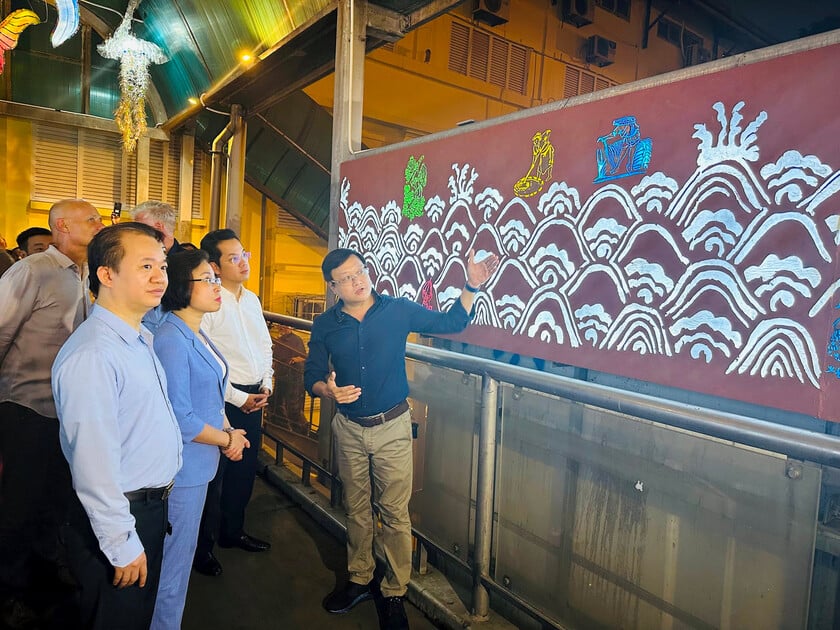
Along the bridge's walkway, the light installation titled "Waves" by artist Le Dang Ninh evokes memories of the Red River's waves carrying silt throughout history. The light creates the moving image of the waves, transporting viewers into a nostalgic and profound space.
Interspersed among the waves are hand-painted woodblock prints depicting laborers from various trades around Hanoi in the early 19th century, based on Henri Oger's research on "The Techniques of the Annamese People." These images come alive under multicolored LED lights, creating the feeling of a vibrant historical painting in a modern space. This harmonious blend of art and history has transformed the Tran Nhat Duat pedestrian bridge into a creative and captivating public art space.
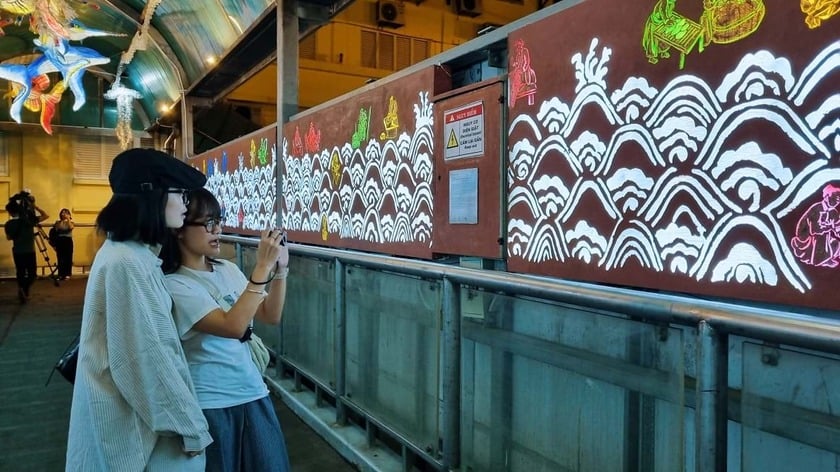
The Tran Nhat Duat pedestrian bridge attracts a large number of visitors.
More specifically, these models, made from recycled plastic bottles, cups, straws, and nylon, are arranged and illuminated by a system of spotlights along both sides of the bridge arches, as well as an internal LED lighting system, creating the illusion that marine life is swimming and gliding in a continuous current along the length of the bridge, intertwining, dancing, and showing off their forms as if in an ocean festival.
When these three art venues and spaces are connected, they form an engaging walking art tour, attracting a large number of visitors and tourists. This art tour not only stimulates economic and cultural development but also contributes to enhancing the cultural and spiritual life of the local people.
This project also plays a crucial role in promoting the habit of walking to explore cultural and artistic heritage in urban areas. This is a habit that has been gradually re-emerging in recent years, providing opportunities for residents and tourists to access and enjoy art more easily. The subtle combination of art and public space not only creates novel experiences but also encourages a healthy lifestyle and community cohesion.