VI
VI


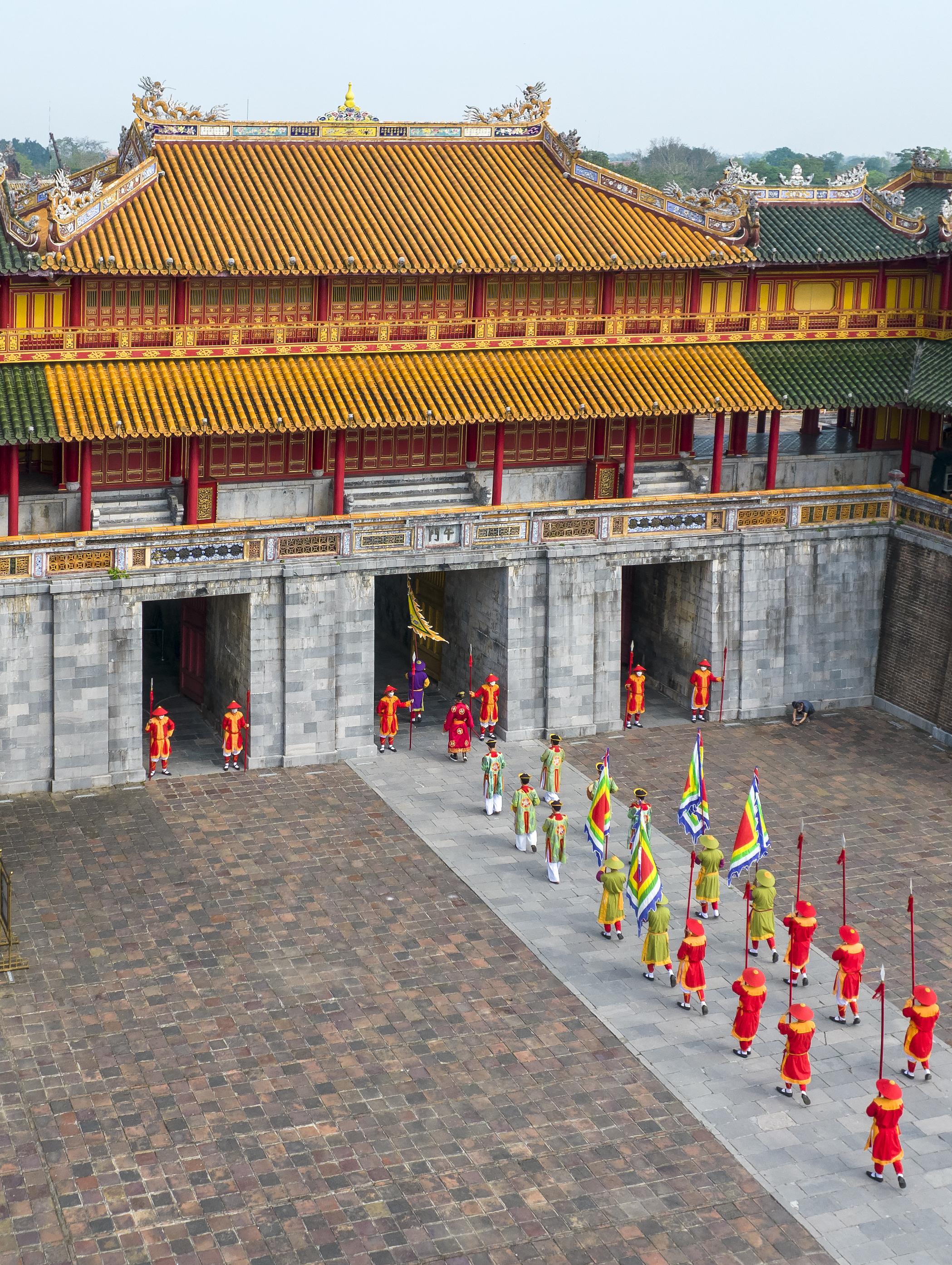

The Changing of the Guard ceremony at the Imperial Citadel in Hue is one of the court rituals of the Nguyen Dynasty, which has been restored by the Hue Imperial Citadel Relics Conservation Center since 2013. Previously, the ceremony took place from 7 PM to 8 PM daily; but for the past three years, this ritual has been moved to the morning, starting at 8:30 AM daily.
Currently, the changing of the guard ceremony is performed free of charge daily at Ngo Mon Gate, along with other rituals.Hue Royal Court Art ProgramOther facilities to serve tourists visiting the heritage site.
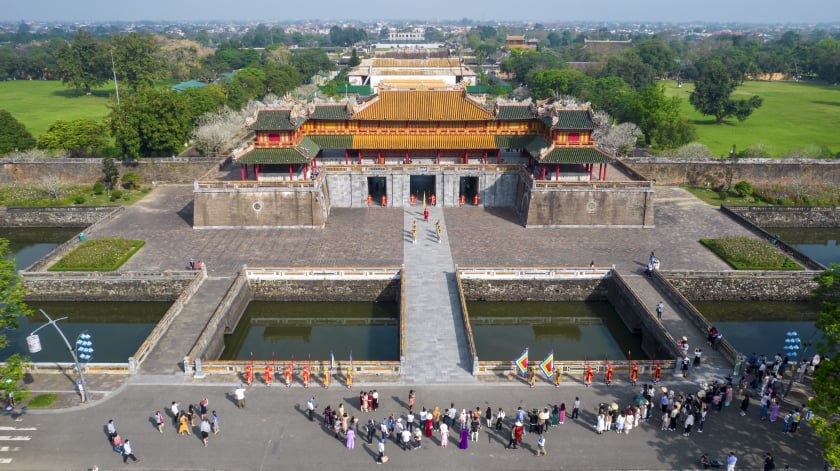
Photo: Le Huy Hoang Hai
According to Meritorious Artist Tran Dai Dung, former Deputy Director of the Hue Royal Traditional Arts Theatre, the reconstruction of the Changing of the Guard ceremony aims to preserve the intangible cultural values of Hue's heritage, based on depictions of the life and work of the Imperial Guard soldiers under the Nguyen dynasty.

During the Nguyen Dynasty, the Imperial City always had two forces of soldiers on guard and patrol duty. At the appointed time, the groups of soldiers would perform a changing of the guard ceremony, taking turns to complete their duties for the day.
According to the bookImperial Decree of the Great Nam Code of Laws and RegulationsThe guard duty and rotation were strictly regulated: “Any palace guard or gate guard at the Forbidden City and Imperial City gates who, when it is their turn to guard, fails to do so (when their shift has ended) and arbitrarily replaces themselves, including the person replacing them, shall be punished with 60 strokes of the cane. Anyone who impersonates a palace guard or gate guard and arbitrarily replaces themselves, including the person replacing them, shall be punished with 100 strokes of the cane. If the person is an official, the punishment shall be increased by one degree [...]".
In the reenacted Changing of the Guard ceremony, the lineup includes a large orchestra, horns, ceremonial flags, and soldiers wearing conical hats, camouflage uniforms, leg wraps, and carrying spears… All groups of soldiers follow the orders of the military officer to perform the changing of the guard ritual, beginning when the changing of the guard horn sounds.

A team participating in the Changing of the Guard ceremony consists of a captain, a military officer, and 12 imperial guards. In addition, because it is a reenactment of the ceremony, there is also a small orchestra of 7 people accompanying them.

The military officer stood before the orchestra and the royal guards. All followed the officer's commands to perform the rituals.
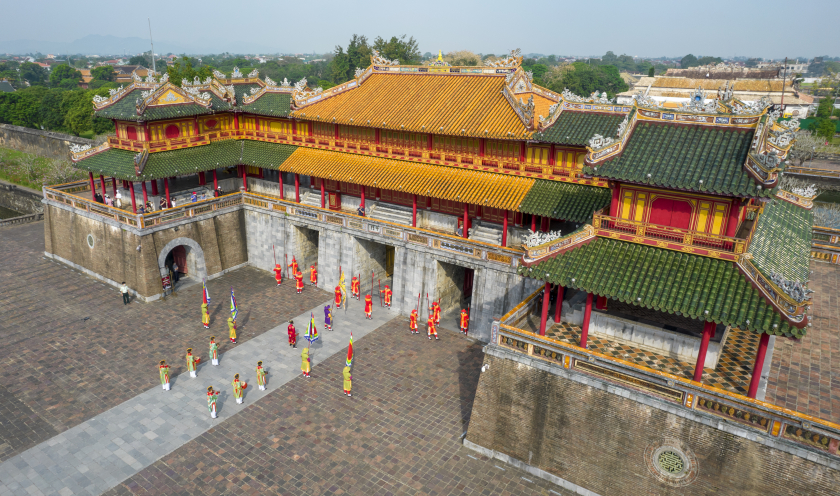
The ceremony begins at 8:30 AM daily, starting from Ngo Mon Gate, after which the procession passes by the Ngu Phung Pavilion.
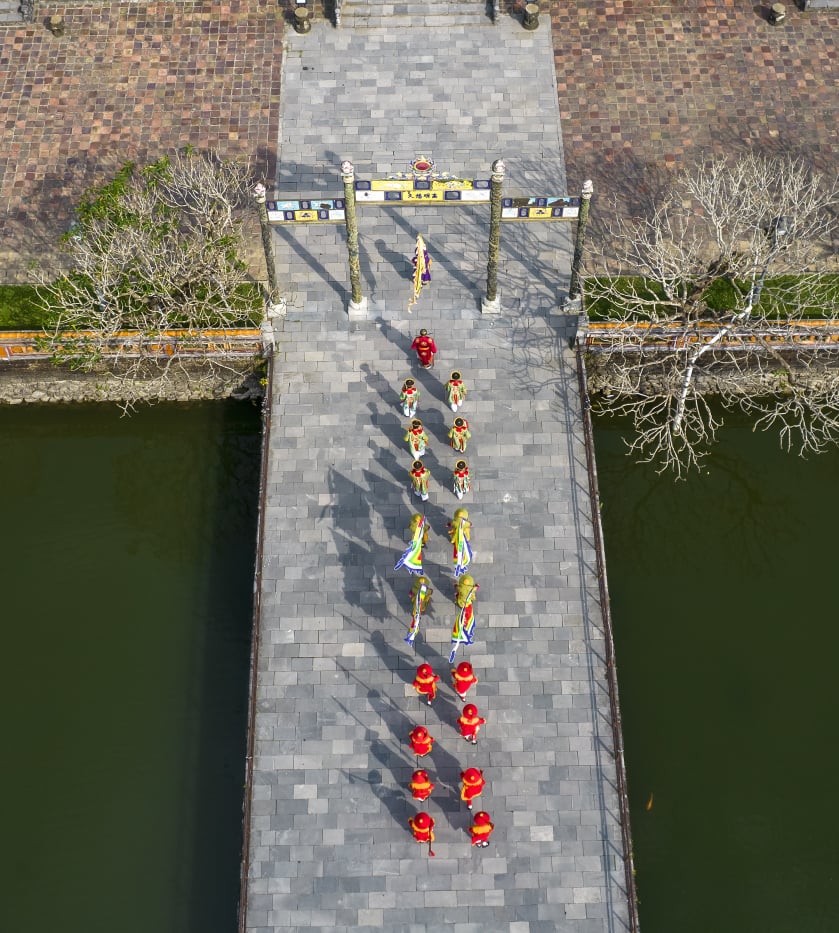
Next, the team went behind the Thai Hoa Palace, walked in a circle, then returned to Duyet Thi Duong and finished there at 9 am.

The band played the song "Dang Dan Cung" (the national anthem of the Nguyen Dynasty) throughout the changing of the guard ceremony.
Learn more about the changing of the guard ceremony during the Nguyen Dynasty in the short video below: