I still vividly remember the feeling I had when I first saw the snow-capped mountains from the window of the Qinghai-Tibet train. It was a powerful emotion, a mixture of joy, pride, and humility, standing before the majestic and sublime beauty of the white mountains, the gateway to the sacred land of Tibet, after so many days of longing.
On the Qinghai-Tibet train
Our group consisted of 10 people, most of whom had never met before deciding to form a group to travel to Tibet a few months ago. The allure of a shared destination quickly connected the members of the group, who ranged in age from their 70s to their 90s. After just two days of wandering from Saigon to Chengdu, Sichuan, everyone had become close friends.
At the end of the second day of our 11-day journey, we left Chengdu and began our journey towards the land of the Lamas on the train connecting Qinghai and Tibet. I chose this route because I wanted to experience one of the most beautiful railway routes in the world, even though it took quite a long time to travel. The route is located at an average altitude of 3,000 meters above sea level and has 550 kilometers of track crossing a region of permanent snow and ice. Besides, traveling by train would help us adapt to the change in altitude and thin air instead of suddenly landing in Lhasa by air.
The train boarding procedure at Chengdu station was more complicated than we expected. It took the whole group more than two hours to complete the ticket transfer (booked online), security check, health declaration, and find the waiting room. The journey from Chengdu to Lhasa is nearly 2,500 km and takes 36 hours, during which our group spent almost 20 hours snacking and chatting about all sorts of topics. The next day at noon, we changed trains at Delingha station. The new train was designed like an airplane cabin, with an automatic oxygen supply system to protect passengers when traveling through high-altitude areas (the highest point being 5,072 m).
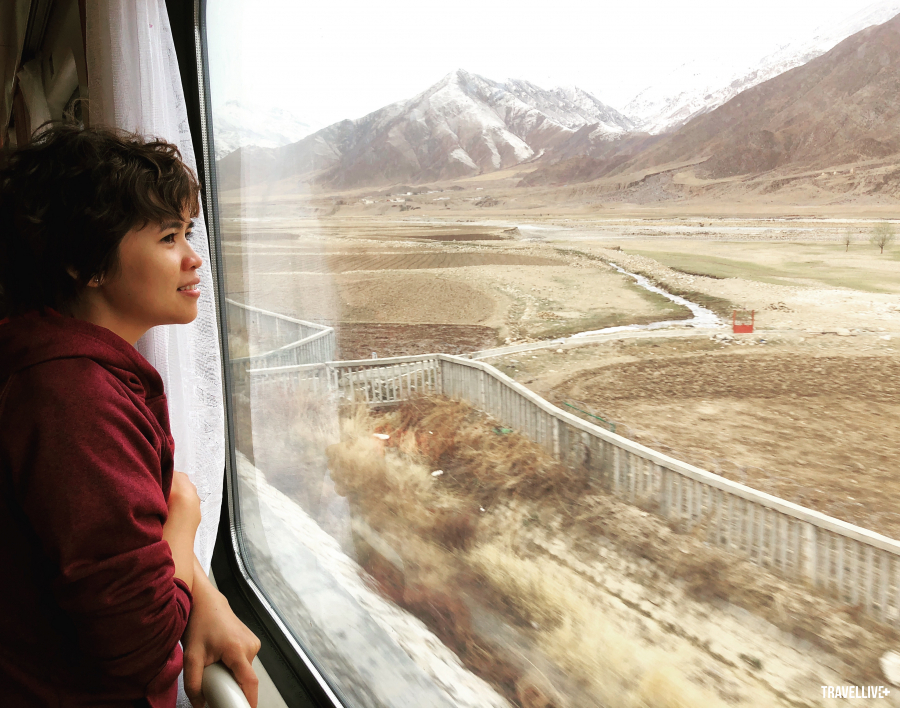
From here, the journey became much more exciting with vast grasslands and turquoise lakes stretching out outside the window. The nomadic stables still seemed to retain the warmth from their stoves fueled by dried dung, while yaks, sheep, and goats grazed leisurely on the scorched hills. We threw open the windows and glued our eyes to the "screen" slowly displaying "films" of a lonely, wild highland region. Occasionally, the screen would go dark as the train passed through tunnels, only to suddenly light up again with glimpses of snow-capped mountain peaks.
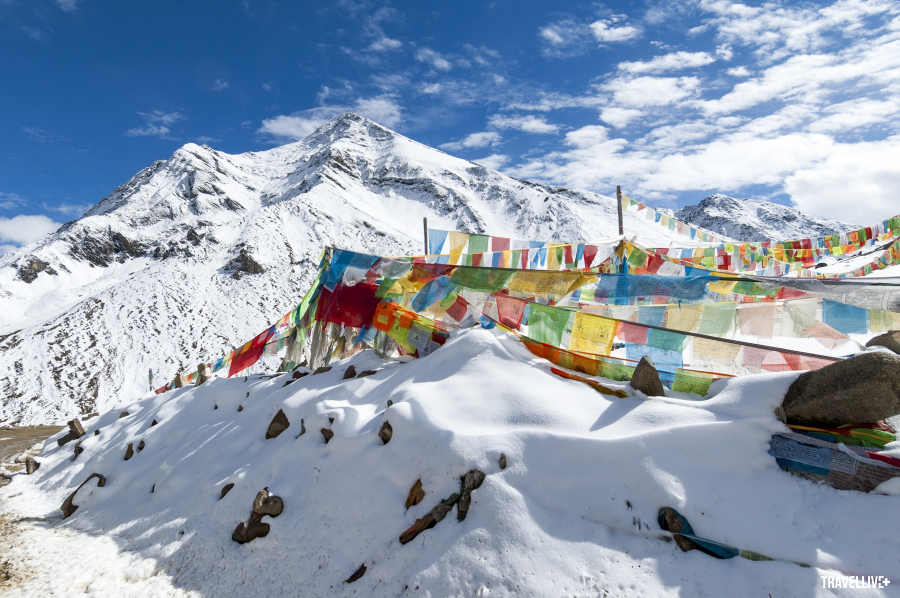
Towards the end of the afternoon, the entire train erupted in excitement as we were greeted by endless, continuous mountain ranges of snow. Everyone left their seats to head to the aisle, where the view was widest. I shouted into the camera, overwhelmed with emotion and joy. The Snow Mountains were here! Tibet was almost here! That night, heavy snow fell on the plateau, forming a hazy layer on the windows. But by midnight, the sky had cleared, revealing a brilliant, magical starry sky. I don't know if I missed the eternal ice and snow, but that no longer mattered. My memory was already filled with these eternally beautiful images!
Endless snow-capped mountains
My first impression as the train slowly approached Lhasa station was difficult to describe. Before me was a multi-layered picture: below were the well-maintained streets, followed by the concrete structures of high-rise apartment buildings, and above, a vast expanse of clouds and snow. And the sky was incredibly clear and blue. The clouds, snow-capped mountains, and blue sky formed an exceptionally pristine backdrop amidst the bustling city.
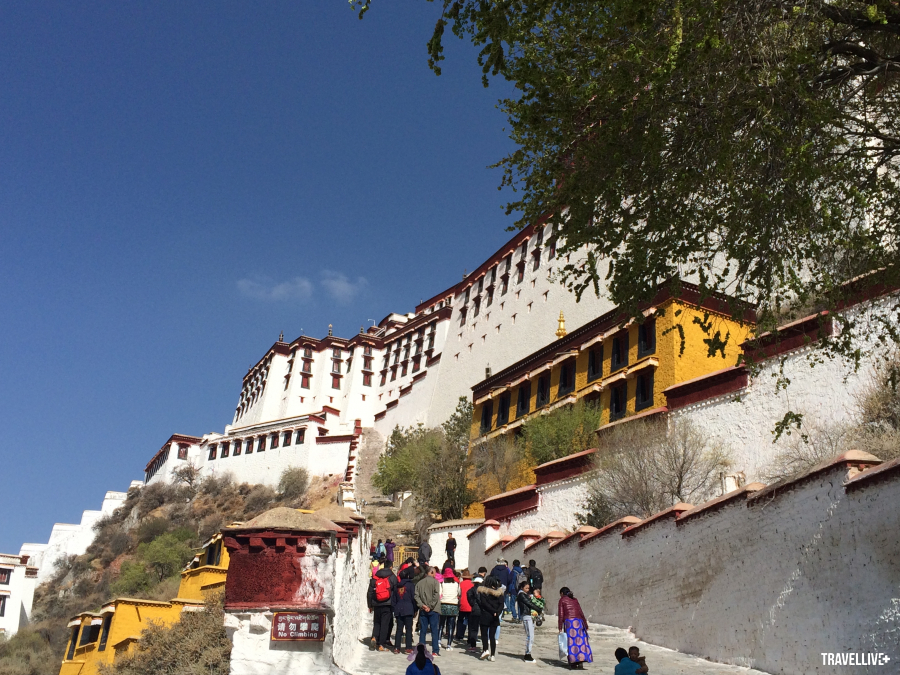
The most magical thing about the land known as the roof of the world is that you can gaze in every direction, and the final destination is always a snow-capped mountain peak. There are no limits to your vision, no limits to your faith! You can admire the snow-capped mountains from anywhere: from the pedestrian streets in the center of Lhasa, a cafe on the fourth floor, the corridors of the Potala Palace, the balconies of monasteries, along the roadsides, or behind the lakes.
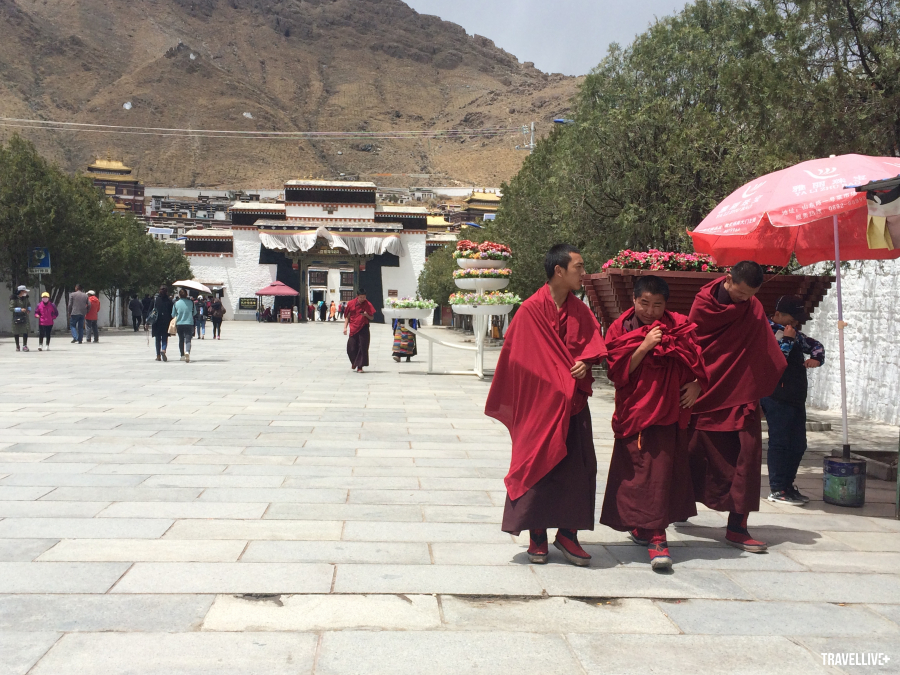
Tibet is captivating enough for travelers seeking spiritual tourism or exploring its magnificent nature and unique culture. Our nearly 10-day journey, guided by a Tibetan man, from the capital Lhasa to Gyantse, Shigatse, and back to Lhasa, combined both types of tourism. In fact, it's difficult to separate them, as most aspects of Tibetan culture and history are intertwined with Buddhism. And it's not just Buddhist architectural structures like the Potala Palace, Jokhang Temple, and the Sera, Gandan, and Tashilunpo monasteries; the most beautiful natural landscapes of this land also reflect Buddhist influence through the names of its sacred mountains and holy lakes.
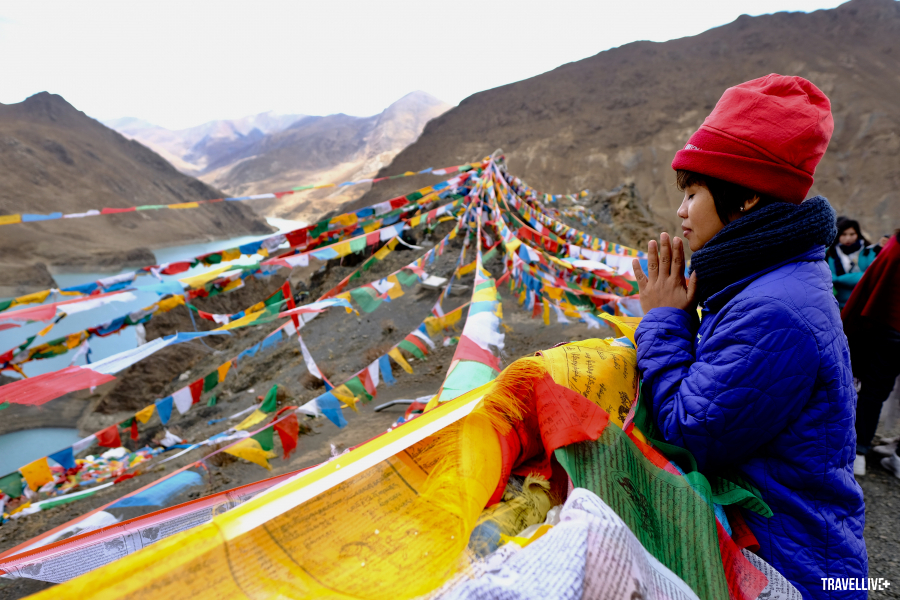
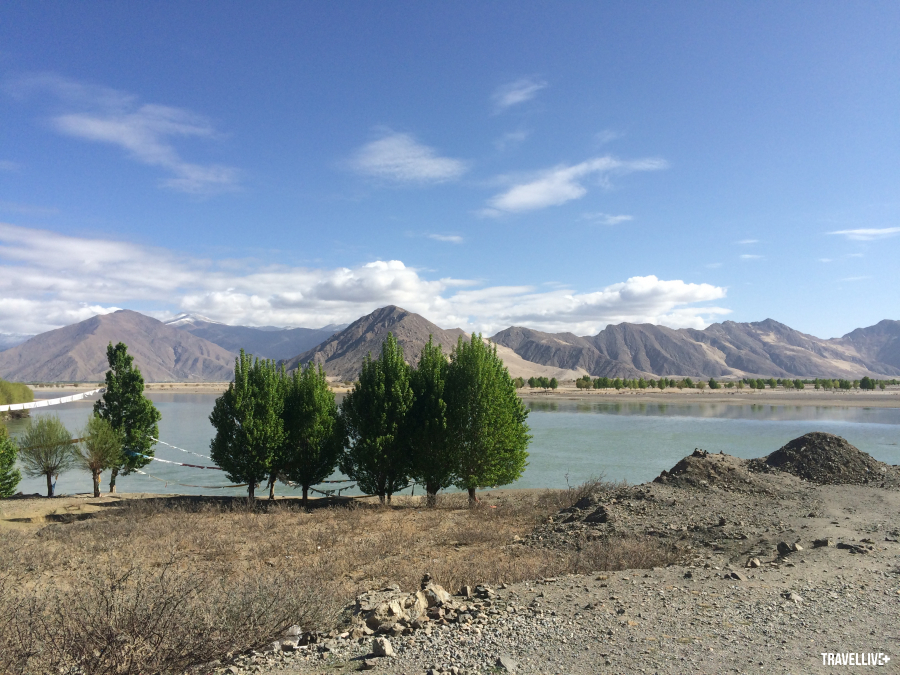
Every place I visited on my journey left me with beautiful emotions, in many different ways. It could be the heavenly scenery of the turquoise Yamdrok Lake against a backdrop of blue sky and white clouds; the almost absolute tranquility of a morning on the frozen Namtso Lake; or the sound of wind chimes echoing from the summit of Tashilunpo Monastery, reminding me of a moment of peaceful reality. I didn't have the opportunity to make a pilgrimage to Kailash – the most sacred mountain range of the Tibetans – but once you set foot in this land, breathing in the clear air still tinged with the scent of snow and ice, you'll find that every breath, every blade of grass and every tree branch is imbued with sacredness.
On the Tibetan rooftop
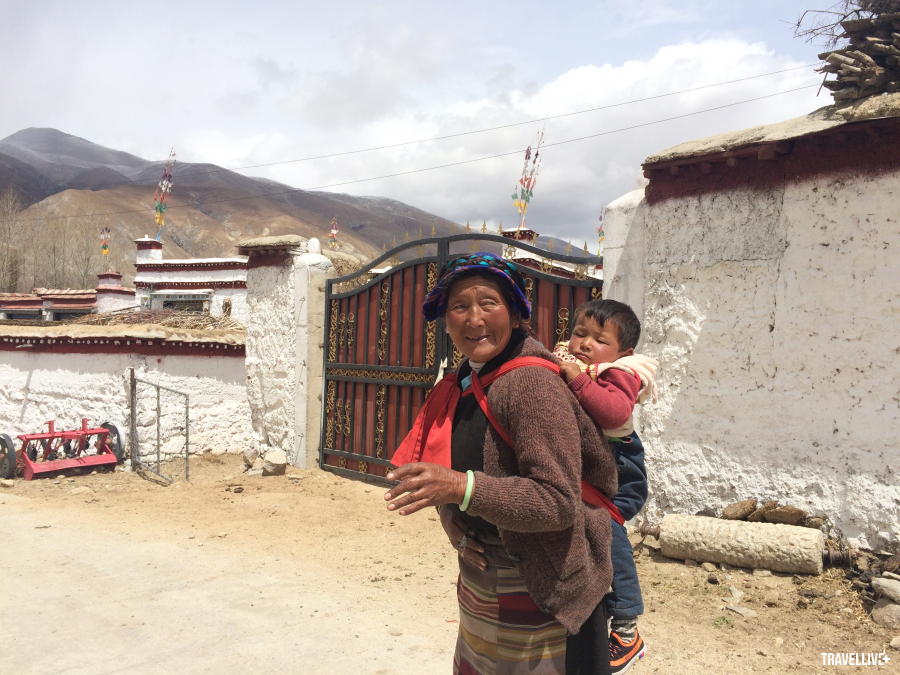
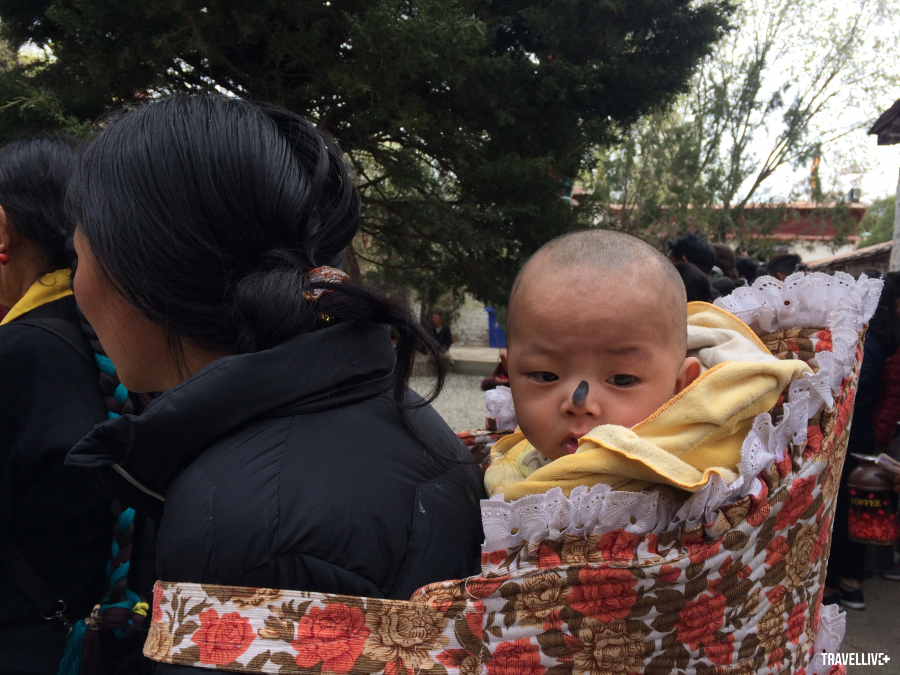
The United Nations Population Fund (UNFPA) estimated the population of Tibet in 2014 to be over 3 million people (not including millions more living in exile around the world), of which about 78% are Tibetan Buddhists. It is estimated that about one in five Tibetans is a monk or nun. On the way from Gyangtse to Namtso, our group stopped for lunch in a traditional Tibetan house. The small village, nestled beside a river and against a mountainside, has only about 300 inhabitants who make their living by growing barley and raising livestock.
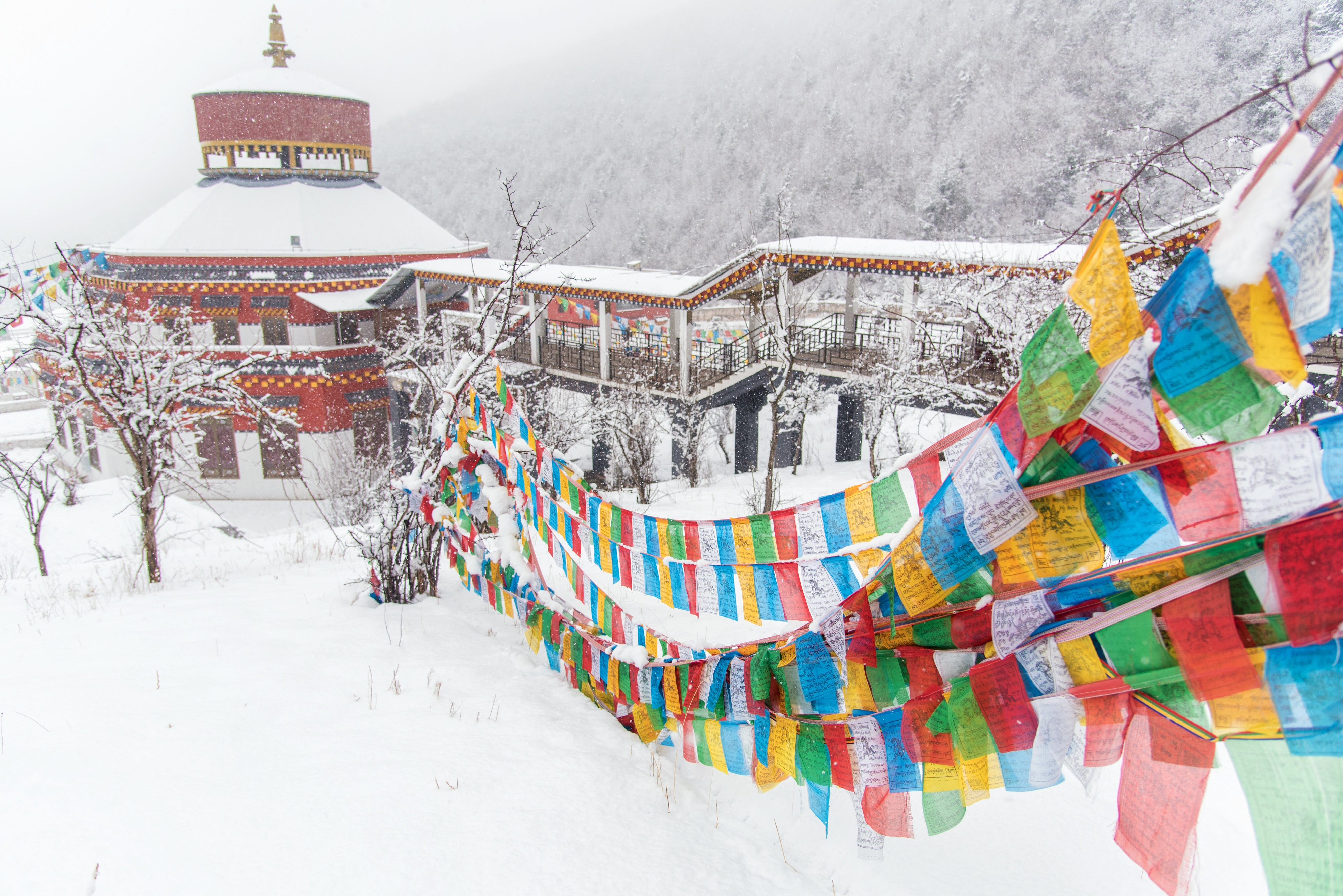
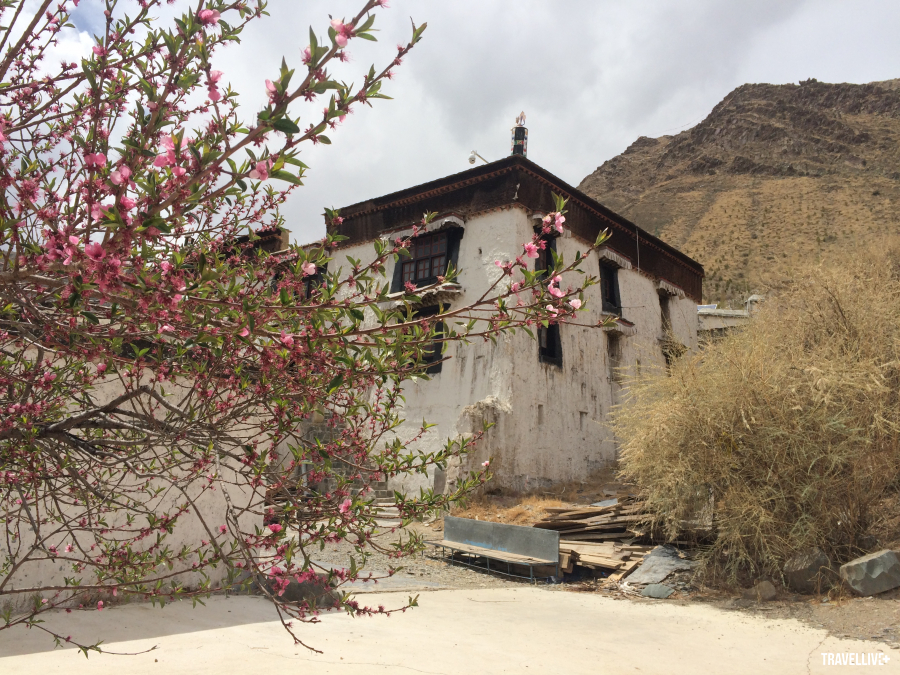
The houses in the village are all built of stone, spacious and quite well-maintained. Inside the large courtyard is a covered area and a shed for caring for calves. The ground floor of the house is used for storing farming tools and harvest produce, while the kitchen and living space are on the second floor. Tibetans build flat-roofed houses with thick walls to retain heat and easily dry fuel from cow dung. On the roofs, five-colored Lungta flags – symbols of blessings, good fortune, and prayers – are hung on small bamboo branches, arranged in bundles or strung in long, colorful ribbons. (According to Tibetan belief, the five colors on the flags represent the five elements of the universe: water, air and wind, space and sky, fire, and earth.)
On the first page of Lonely Planet – Tibet, the 14th Dalai Lama wrote: "Go to Tibet, visit as many places as possible, and then tell the world about it." By telling you this story, I feel I have fulfilled a part of my vow to the Himalayas.
Additional information:
Visa:You need a Chinese visa and a travel permit to enter Tibet.
Trip:There are two common ways to get to Tibet: by train or by plane. The Qinghai-Tibet railway is a popular choice for backpackers, offering scenic views along the way and allowing you to gradually acclimate to the thin air at high altitudes, but it is more time-consuming and expensive.
If traveling by air, you can book tickets in advance with Vietnam Airlines, China Southern, or China Eastern… Tourists should take a midday flight from Chengdu to Lhasa to admire the beautiful scenery of Tibet as the plane descends.
Means of transportation:Book a private vehicle and Tibetan guide from the tour company for transportation within the Lhasa area and other cities.
Money:Tibet uses the Chinese yuan.
Cuisine:Some of the signature Tibetan delicacies include yak hot pot, grilled lamb ribs, steamed shiitake mushrooms, and yogurt and butter tea made from yak butter.
Appropriate attire:Wear thick, warm clothing and layer even in summer because the weather in Tibet changes very unpredictably within a single day and varies with altitude.
Cost of the trip:Over 50 million VND per person for an 11-day, 10-night trip.
Trip timing and weather:In late April and early May, Tibet is preparing for spring, with warm sunshine but still experiencing snowfall in the evenings and heavy rain in areas outside Lhasa. Snowfall is particularly heavy around Lake Namtso. The best time to visit Tibet is from April to September.
Other points to note:Always carry your passport and travel documents, and do not take pictures of Chinese police or military personnel.

 VI
VI