VI
VI


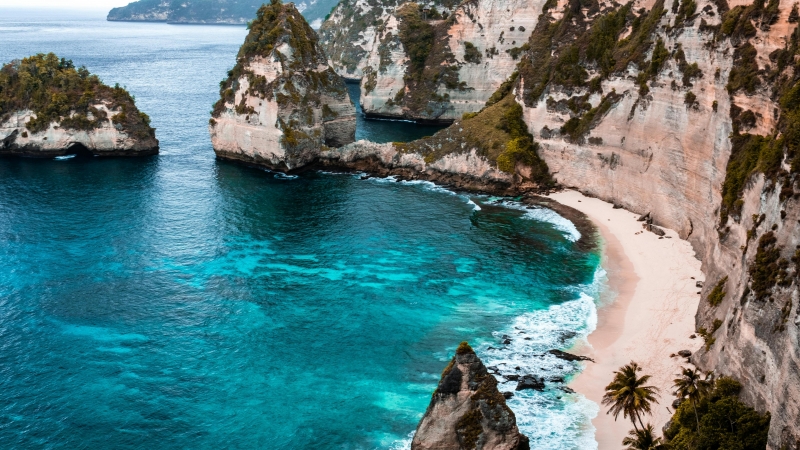
Religion plays a significant role in the lives of the people on the paradise island of Bali. The majority, an estimated 70% of the population, are Hindu. Bali is known as the "land of a thousand temples," with over 20,000 temples scattered across the island. Hinduism is not just a religion, but a way of life for the Balinese. They believe that everything around them has a soul, from rocks and trees to people. More than just an island, Bali is truly a vibrant tropical paradise rich in culture.
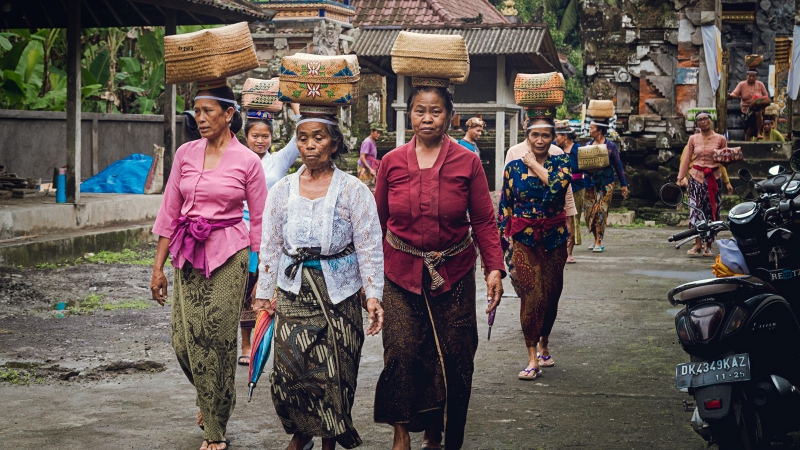
Galungan - Bali's largest religious festival.
Galungan is the most important religious festival for Hindus (Indians). This festival is celebrated twice a year according to a specific calendar called Pawukon, which has 210 days.
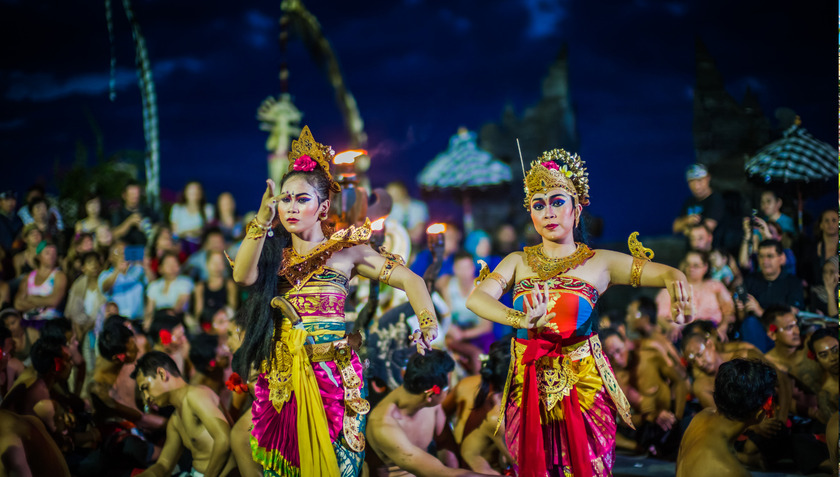
The Galungan Festival is one of the famous traditional festivals in Bali.
Therefore, the festival's date is not fixed according to the Gregorian calendar each year. The festival is held continuously for 10 days on the island of Bali to show respect to the gods and ancestors, and to commemorate the departed souls. Additionally, the festival is also held to commemorate the victory of a Balinese king over Adharma.
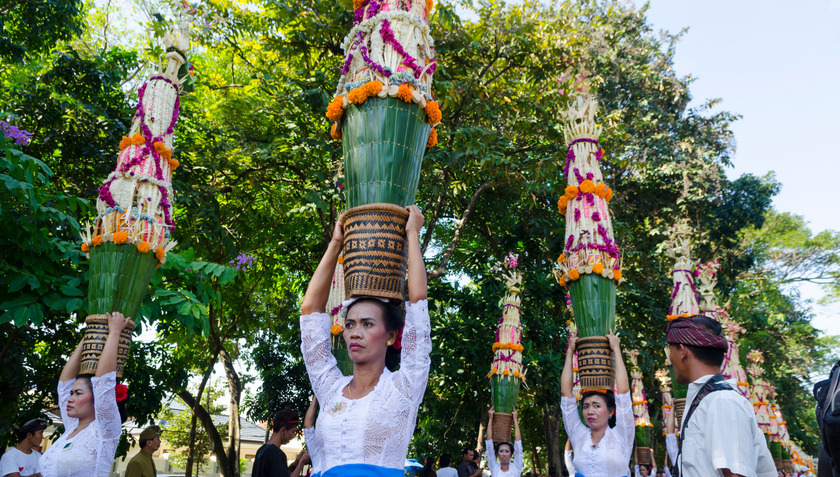
The Galungan Festival is also considered a day when the Balinese gods descend to visit temples and families on earth.
The Galungan Festival is similar to the Mid-Autumn Festival and the Vu Lan Festival in many Asian countries, including Vietnam. People on the island of Bali believe that during the festival, the gods and the spirits of their deceased relatives also come to participate with everyone.
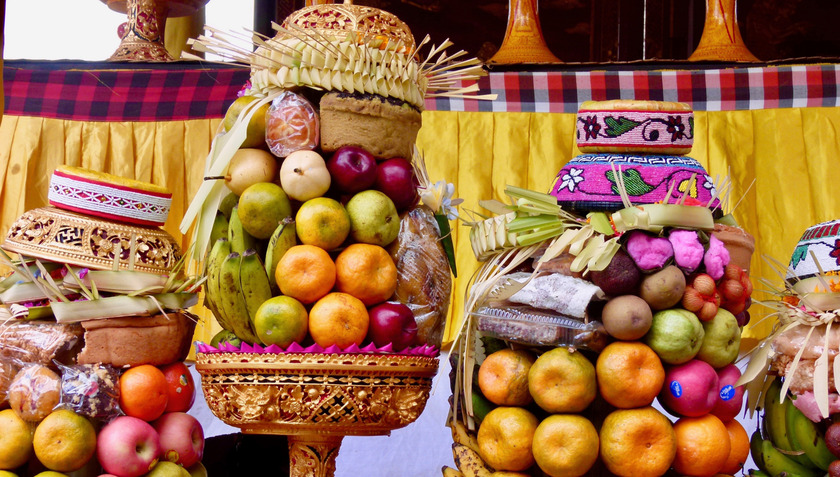
Therefore, people often eat indoors and avoid crowded areas to escape the crowds and noise.
During the festival, tall bamboo poles adorned with vibrant fabrics and young coconut leaves line both sides of the streets. People parade with trays overflowing with offerings to the gods. Long lines of people create a lively and bustling atmosphere. In addition, many other Hindu religious rituals are performed.

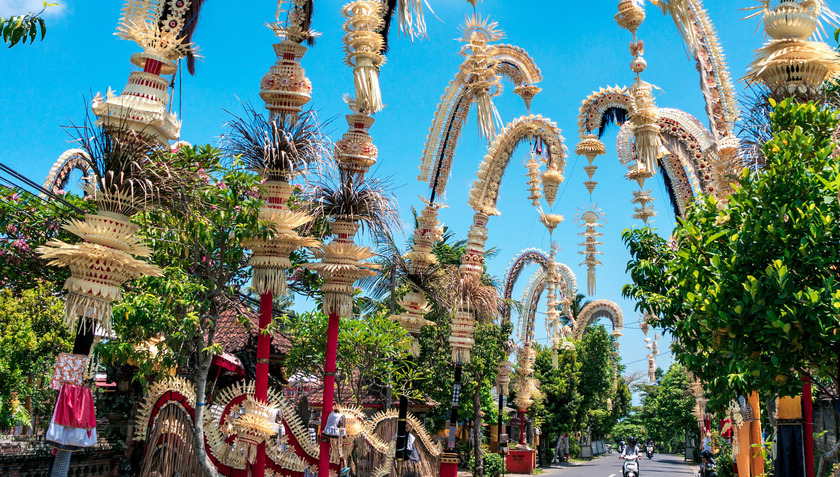
Balinese deities are invited to attend religious ceremonies and rituals through certain ceremonies.
Furthermore, before the festival, people prepare offerings for the main ceremony, such as green bananas cooked in earthenware pots, jaja – the colorful traditional fried rice cakes of Balinese people, and slaughter pigs or chickens for a feast at home to worship their ancestors. Then, women carry the offerings on their heads while men carry palm leaves, parading with trays of offerings to the deities at the temples, giving thanks for blessings and praying for the souls of the deceased to ascend to heaven. Long lines of people participate, creating a lively and bustling atmosphere. In addition, many other Hindu religious rituals are performed.
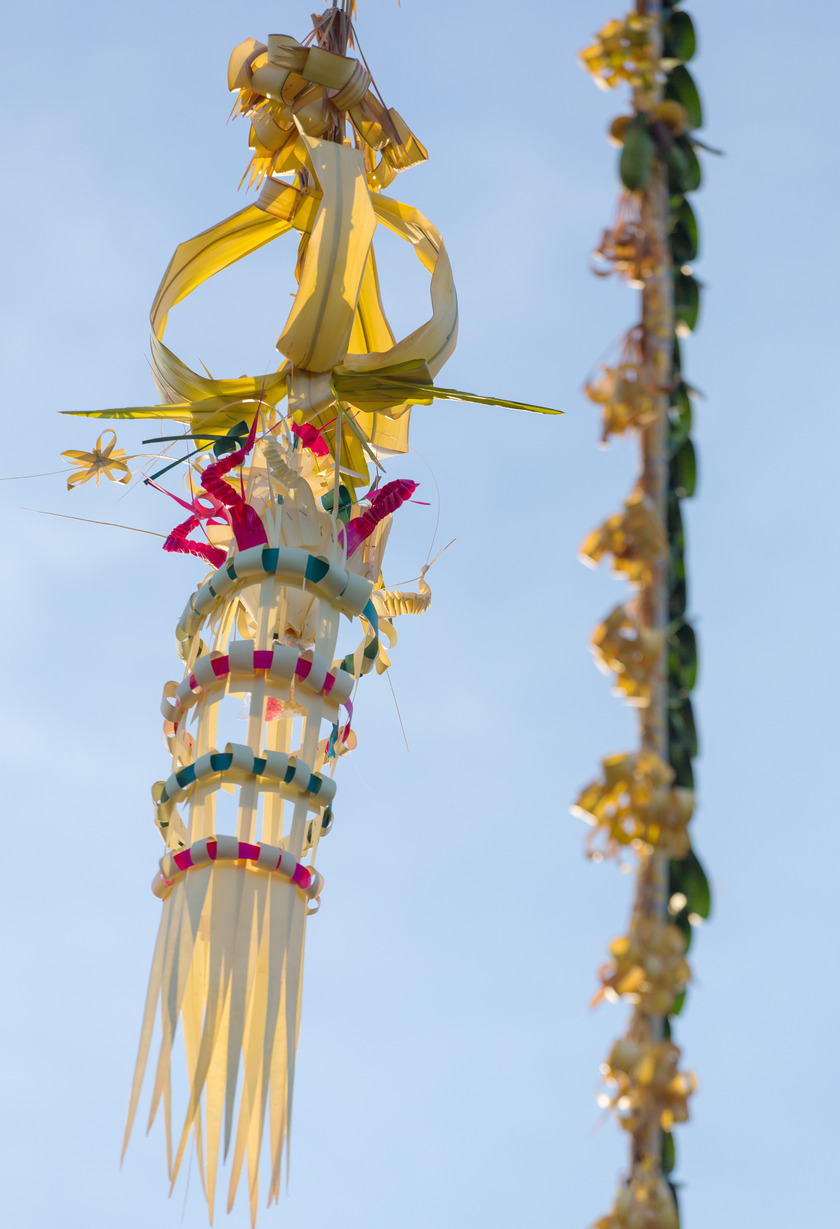
After the Galungan festival concludes, the people of Bali typically hold ceremonies and other activities to celebrate Kuningan Day, the day when the Balinese gods return to heaven.
People participating in the festival will wear their most beautiful and splendid costumes. This is also an opportunity for those who live far from home to return and gather with their families, and to visit the graves of their ancestors. People also go to temples and pagodas to worship and offer gifts to the gods and ancestors.
The ancient temple is full of sacredness.
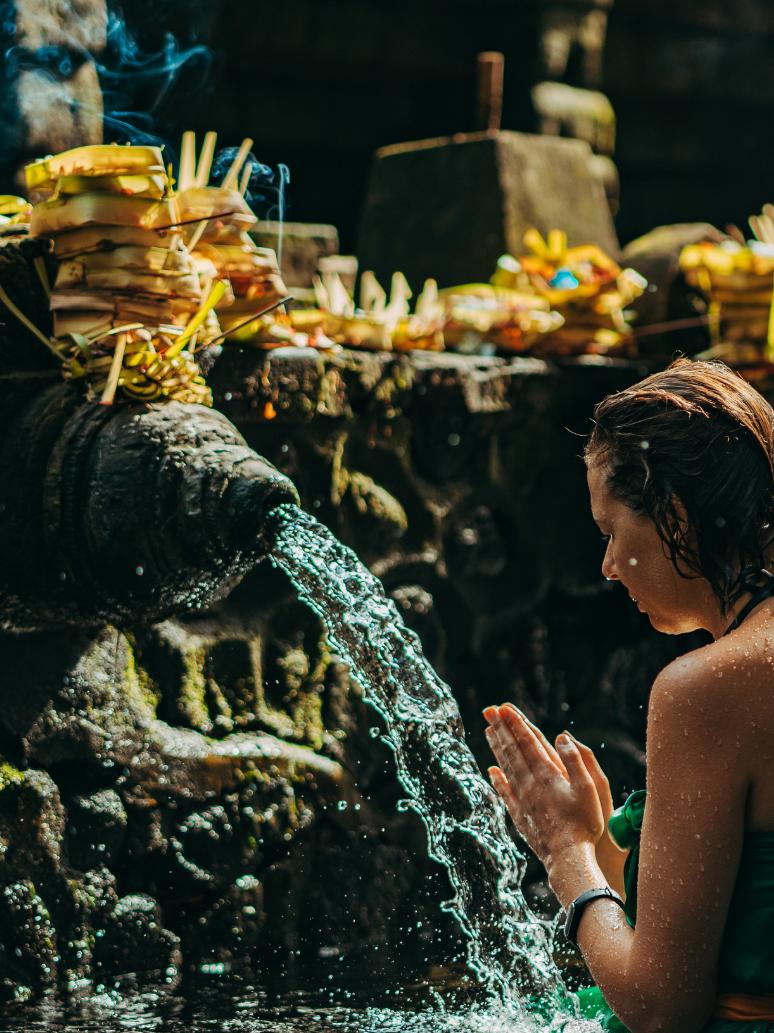
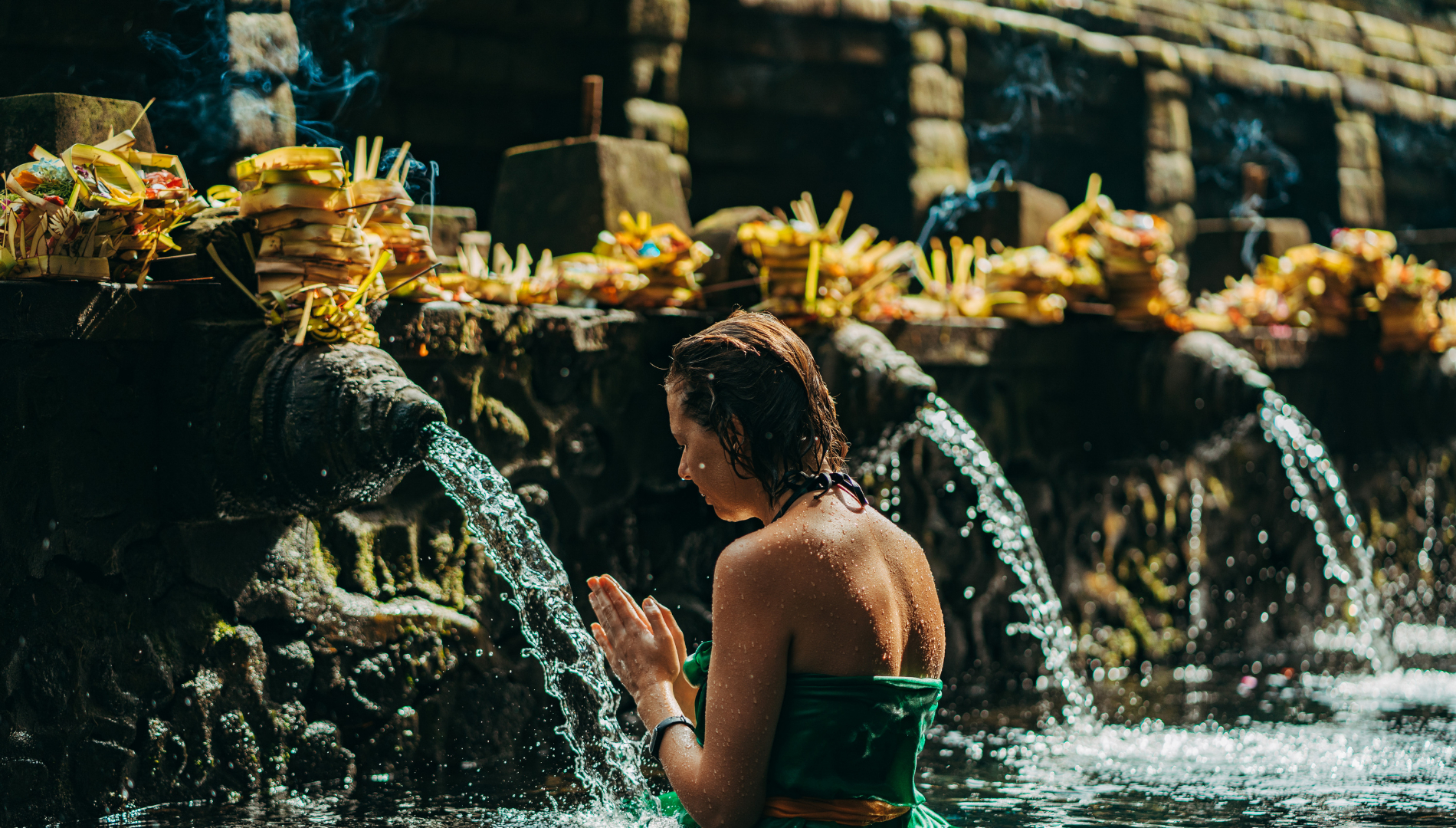
Tirta Empul is one of the most famous water temples in Bali, Indonesia. It features the sacred Amritha springs, believed to cleanse the souls of those who believe in the divine. Every year, many tourists visit the temple to participate in the purification ritual with these cool, pure, and sacred waters.
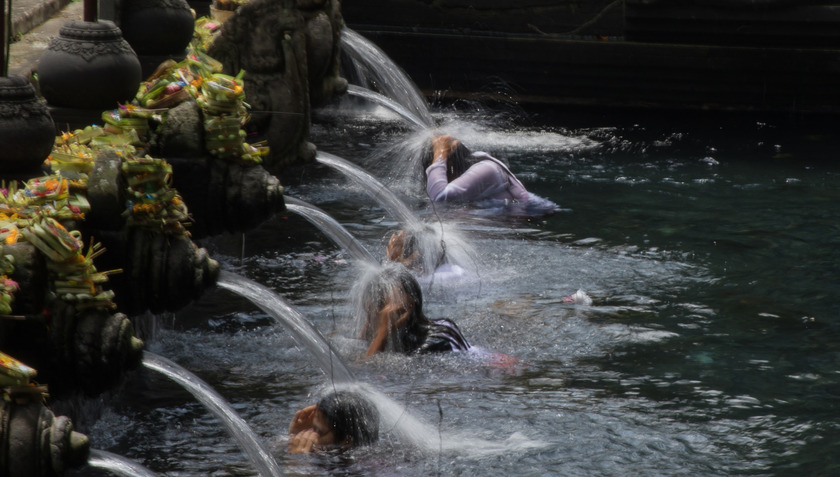
The temple has several sacred springs believed to have been created by the god Indra, and the blessed water is said to purify those who bathe there.
Tirta Empul is one of the most famous water temples in Bali, Indonesia. It features the sacred Amritha springs, believed to cleanse the souls of those who believe in the divine. Every year, many tourists visit the temple to participate in the purification ritual with these cool, pure, and sacred waters.
Besides the purification rituals, if you're lucky, you can also participate in the Day of Virtue's Victory over Evil at Tirta Empul Temple. This event is held on the anniversary of King Mayadenawa's death, a 210-day cycle based on the traditional Balinese calendar. When the god Bratara Indra awoke and saw his warriors poisoned to death, he used his power to create a sacred spring with holy water that saved the entire army. This spring was later called "Tirta Empul," and the people built a temple there. As for the king, after his plan failed, he was turned into a rock and killed by an arrow shot through him by Indra.
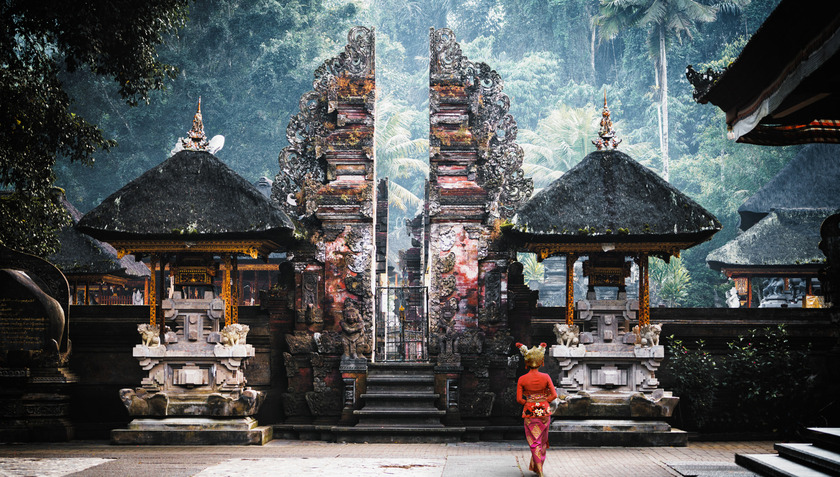
The Tirta Empul temple is dedicated to Vishnu, the Hindu god of water. In the Balinese language, Tirta Empul loosely translates to "water gushing from the earth."
Tirta Empul Temple consists of four areas: the central courtyard, Jaba Tengah, Jeroan, and the Koi pond. If you enter through the second gate, you will be able to admire the giant stone statues, painted in a smooth yellow color, known as the temple guardians.
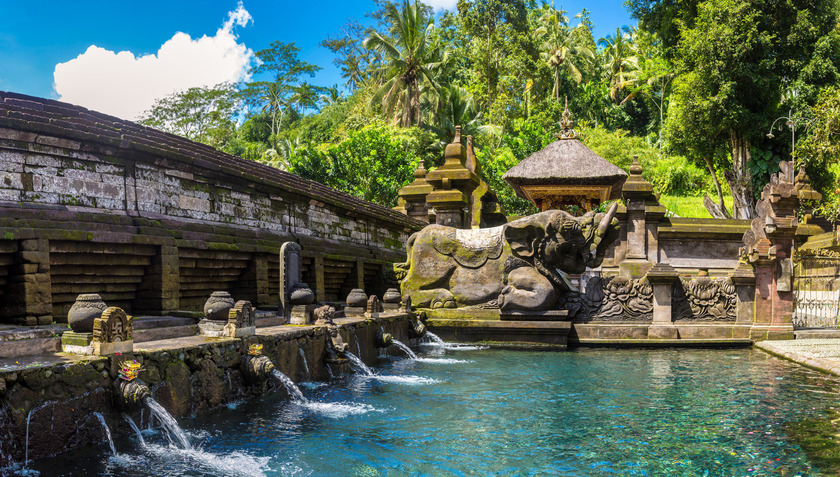
The Tirta Empul temple was founded in 926 AD and is still in regular use today.
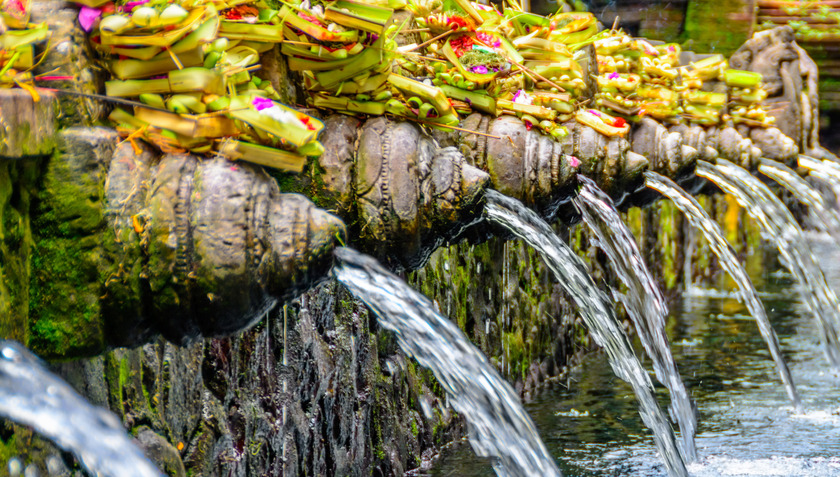
Although this is a sacred place of worship for the locals, visitors from all over the world are welcome to come and experience its beauty.
In the main area of Tirta Empul, Jaba Tengah, there are 30 fountains and 2 purification pools where the "Melukat" ritual is performed. This is a purification ceremony where everyone waits beside the fountains, allowing water from 28 of them to flow down over their heads in turn. The last two fountains are used to purify the dead, so they are not used.
It can be said that faith in deities, in goodness and the sacred, has shaped the famous Tirta Empul temple in Bali, Indonesia. While there, don't forget to participate in the purification ritual under the cool, pure Amritha stream; this experience will help tourists better understand the religious culture of the people of Bali and Indonesia.