VI
VI



With the peak summer travel season approaching, millions of passengers are preparing to fly, and many are still unaware that from July 1st, 2026, a new regulation regarding power banks will officially come into effect on all flights in Vietnam.


On June 24, 2026, the Civil Aviation Authority of Vietnam issued a directive on ensuring the safe transportation of power banks in passenger baggage. The core content is that each passenger is not allowed to carry more than two power banks, and all of these devices must be placed in carry-on baggage and are not permitted in checked baggage.
For power banks using lithium-metal batteries, the lithium content must not exceed 2g. For the more common lithium-ion battery types, the maximum allowable rated capacity is 100 Wh – equivalent to approximately 27,000 mAh for a 3.7V battery, which is higher than most conventional power banks currently on the market.
However, there is an exception: if the power bank has an energy capacity of between 100 Wh and 160 Wh, passengers can still bring it on board, but it must be approved by the airline operating the flight before departure.
This means passengers need to proactively contact the airline in advance and cannot bring items on board without written confirmation or official notification.

Many passengers have a habit of plugging in their power banks as soon as they sit down on the plane for convenience. From July 1st, this practice is strictly prohibited. The Civil Aviation Authority of Vietnam requires passengers not to recharge their power banks during the flight, nor to use them to charge other devices during the flight. More importantly, power banks must be removed from their bags and placed in an easily visible location so that the flight crew can identify them in case of an emergency.
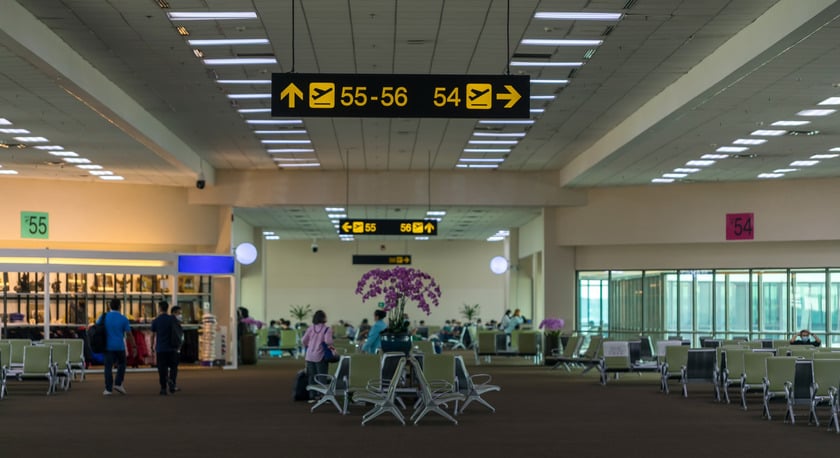
From July 1st, each passenger is not allowed to carry more than two power banks.
The reason for these regulations is not cumbersome administrative procedures. Lithium batteries—the type found in most power banks—pose a risk of overheating, catching fire, or exploding if short-circuited, damaged, or exposed to high temperatures. On an airplane, any battery-related incident can have far more serious consequences than on the ground.
To prevent the risk of short circuits, a leading cause of incidents involving lithium batteries in luggage, the Civil Aviation Authority requires each power bank to be individually protected. Passengers can keep the device in its original manufacturer's retail packaging, or apply electrical tape to the exposed terminals, or place each one in a separate plastic bag or dedicated protective pouch. Crucially, the charging terminals must not come into contact with metal objects or other equipment in the luggage.
The Vietnam Civil Aviation Authority also requested airlines to proactively communicate this regulation widely to passengers, especially during the initial implementation phase. However, the ultimate responsibility for compliance rests with each individual passenger.
Those who fail to comply may be asked to leave the device behind before boarding, or may be denied boarding if the device seriously violates technical specifications.
Before the flight, passengers should check the specifications printed on the power bank, especially the Wh or mAh rating, to determine if their device requires prior permission.
This regulation is not new compared to international standards of the International Civil Aviation Organization (ICAO) and the International Air Transport Association (IATA), but this is the first time Vietnam has officially issued a clear and consistent directive applicable across its entire domestic and international aviation system.