VI
VI


It wasn't easy at all, because every time I started thinking about places I wanted to visit, fear would overwhelm me. I was afraid of many things: being scammed, losing my way, getting lost, and most of all... loneliness. However, in some ways, my determination and passion for seeing new places overcame my fear – a passion that I would secretly pursue whenever I had free time at work, browsing websites with information and images about those places to read, to fuel my feelings, and to nurture it until I could actually set foot there. Those days were truly exciting; I felt my neurons buzzing constantly, and my mind was always ready to leave the next day.
The first days in Chennai
My first destination was India, a country always a hot topic in the media, with both good and bad aspects; a country that most people are hesitant to visit. However, it also has regions with breathtaking and majestic scenery, such as Ladakh, the "Little Tibet," "the land of high passes." I imagined myself standing on the world's highest pass, Khardungla, at an altitude of 5,359 meters above sea level, spreading my arms wide to bask in the clearest sunshine—a feeling of adventure and freedom. How wonderful…!
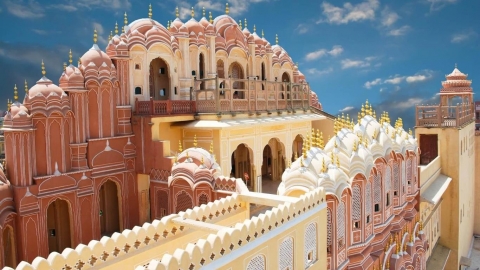
My excitement overcame my skepticism about India, and I booked a solo flight across the country. My plan was to travel from Chennai, northward, through major cities and popular tourist destinations like Hampi and Mumbai, to cities in Rajasthan, passing by famous castles and palaces from the golden age of the Mughal Empire, which spanned much of Punjab in Pakistan and extended into India, leaving behind many wonders considered masterpieces such as the Red Fort in New Delhi or the Taj Mahal in Agra, the "tomb of eternal love".
One day in early August, I arrived in Chennai, a city in the southern Indian state of Tamil Nadu. Things were anything but rosy. From the moment I set foot in the city, I felt things were quite challenging. Despite being one of India's four major hubs, Chennai wasn't a tourist city. The road from the airport to my accommodation was a long one, filled with images of slums crammed together alongside high-rise buildings, poor people sleeping barefoot in tattered, dirty clothes on the roadside. Nearby were huge piles of garbage emitting a strong, foul odor, cows roaming the streets in the distance, and crows everywhere. The sound of the crows cawing gave me a creepy feeling. Upon arriving at the hotel, unable to process the experience, I quickly fell asleep to forget what I had just seen.
The next morning, the first thing I had to do after waking up was buy a SIM card – something not as easy as in Vietnam or other Southeast Asian countries. In India, you need to register and go through a complicated form-filling process. Luckily, before the trip, I had prepared two 3x4 passport photos, a photocopy of my passport, and had the address of an Indian friend living in Chennai to vouch for me, so everything went smoothly. The second thing was exchanging money. My friend in Chennai (Rahul) recommended a place in Chennai with a pretty good exchange rate. My friend in Chennai came to pick me up afterward. We met on Facebook when I posted in a group asking for travel information in India, and he was very enthusiastic in helping me answer my questions. Without Rahul's information, my immigration process and procedures would have been much more difficult. That was also my first lesson when traveling alone: "Do thorough research and find a reliable contact in the place you're going to."
Rahul drove me to his house, and for the first time I experienced a meal with an Indian family. Most Indians are vegetarian, but many also eat meat, especially those in the cities. I was treated to two quite famous South Indian dishes: chicken Biriyani and Thali, a dish with a lot of sauce. Indian food is also a huge challenge for first-time travelers. After several days in India, I found the food in South India much easier to eat. The sauces were milder in flavor and less spicy than in North India. Therefore, I found it quite easy to adapt to those dishes. However, at first, I was still a little hesitant and couldn't eat much.

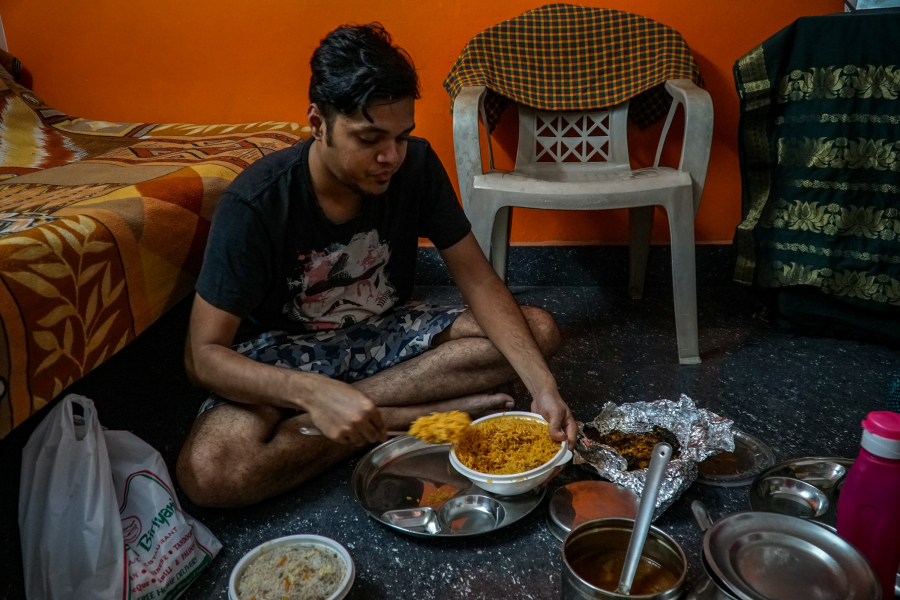
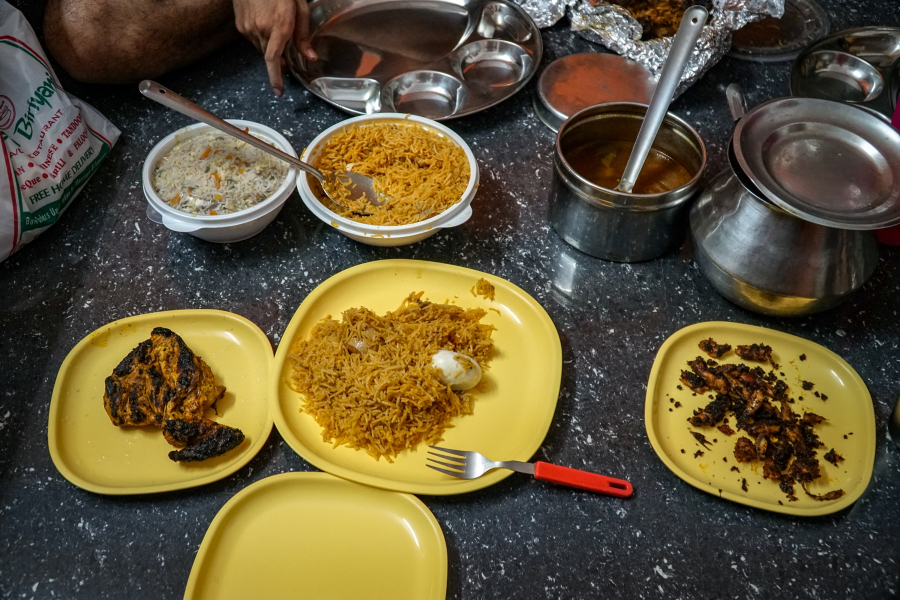
Rahul took me around the city, explaining Indian clothing traditions and local spiritual stories, such as how they consider cows sacred animals and let them roam freely. Regarding crows, they believe that because crows peck at corpses, the souls of the deceased enter the crows. Therefore, crows are not considered bad omens. I remember reading somewhere about the Tibetan practice of "sky burial," and then I realized that it is my own thoughts that hold me back. I must learn to accept the thoughts and beliefs of the different lands I visit. Only then can I open my heart and enjoy that land. This was my second lesson.
Visit Hampi and listen to the rocks tell stories in silence.
That evening, I went to Chennai train station and took the overnight train to Bangalore, a major city considered the IT hub of India. Since Bangalore was just a transit city, I wanted to rest at my hostel there and take some time to process what I had gathered on my first day in the country, both mentally and emotionally.
The hostel I stayed at in Bangalore was a type of accommodation with many dorm rooms. A room could have 4-6 beds, one person per bed, which was a bit inconvenient, but the cost was quite cheap, suitable for backpackers. This hostel had a common room, so I had the opportunity to chat with other young backpackers from different countries. There, I happened to meet a Nepalese girl named Sanna; she had traveled a lot and was very relaxed. We hit it off immediately, and since Sanna didn't have any plans for the future, we decided to go to Hampi together, a popular tourist destination in India. I realized that if you're bold and talk to other solo travelers like yourself, there's nothing to feel lonely about. It's easy to find companions on your journey.
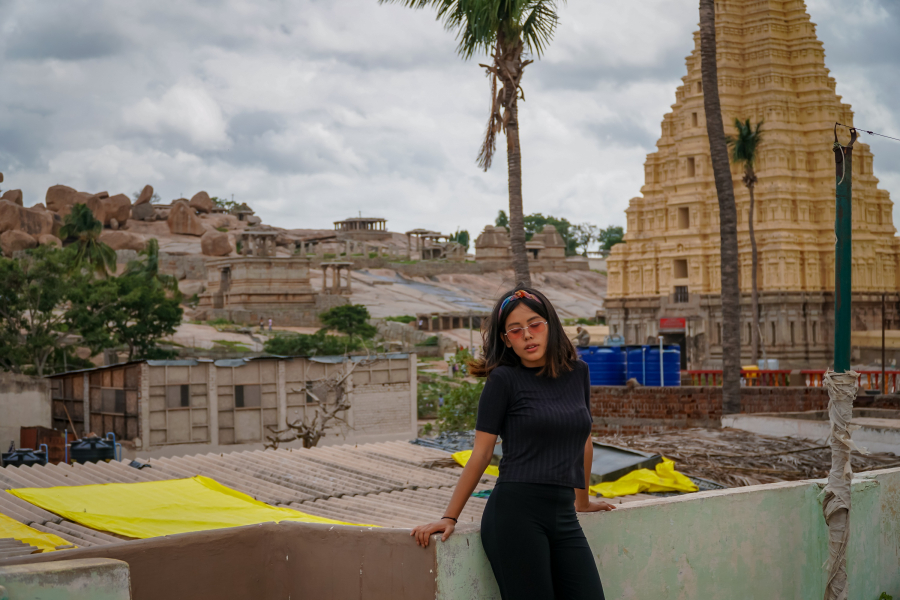
Sansa, my new companion.
Having Sanna with me made my journey much more enjoyable. Hampi, in my opinion, is perhaps one of the most amazing places in India, despite being a UNESCO World Heritage site, it's still relatively unknown. For history and architecture enthusiasts, Hampi is probably a dream destination because it retains many ancient structures from the Vijayanagar Empire, which ruled South India for over 200 years. The temples here have quite distinctive shapes and sculptures. Not to mention, the entire village of Hampi is surrounded by strangely shaped rock formations of varying sizes. I've never set foot in a place with so many rock formations, and I could clearly feel the essence of an ancient empire still existing here.
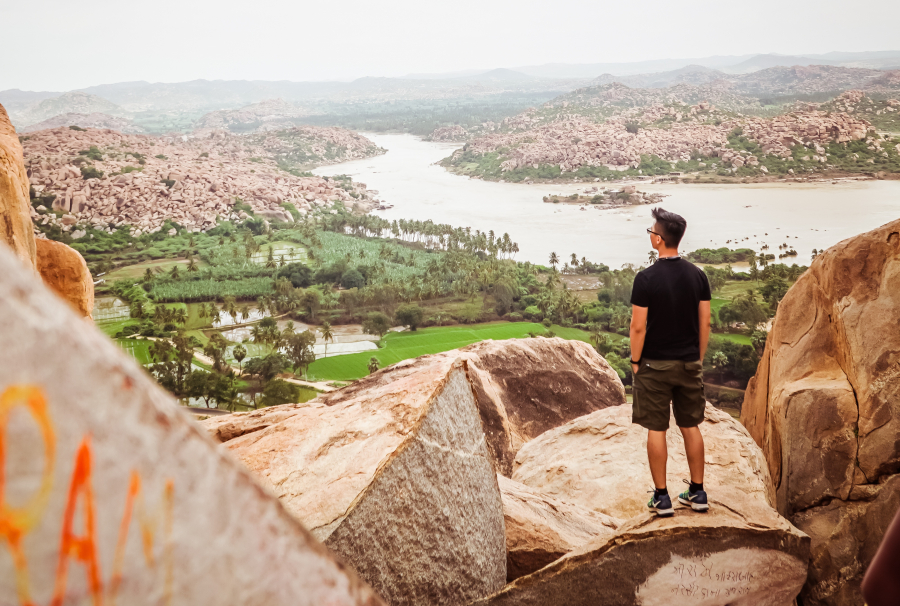
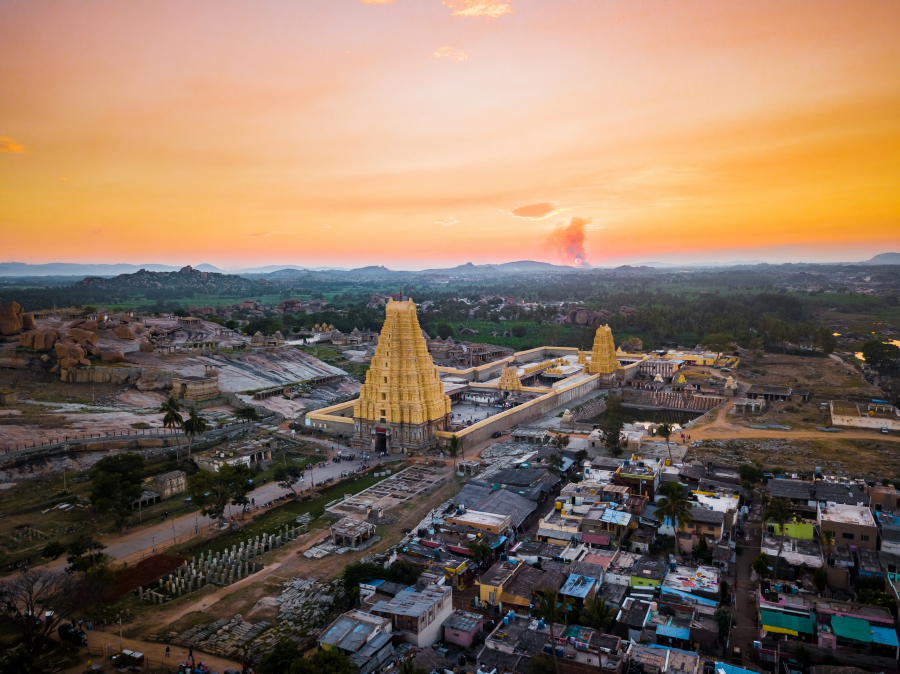
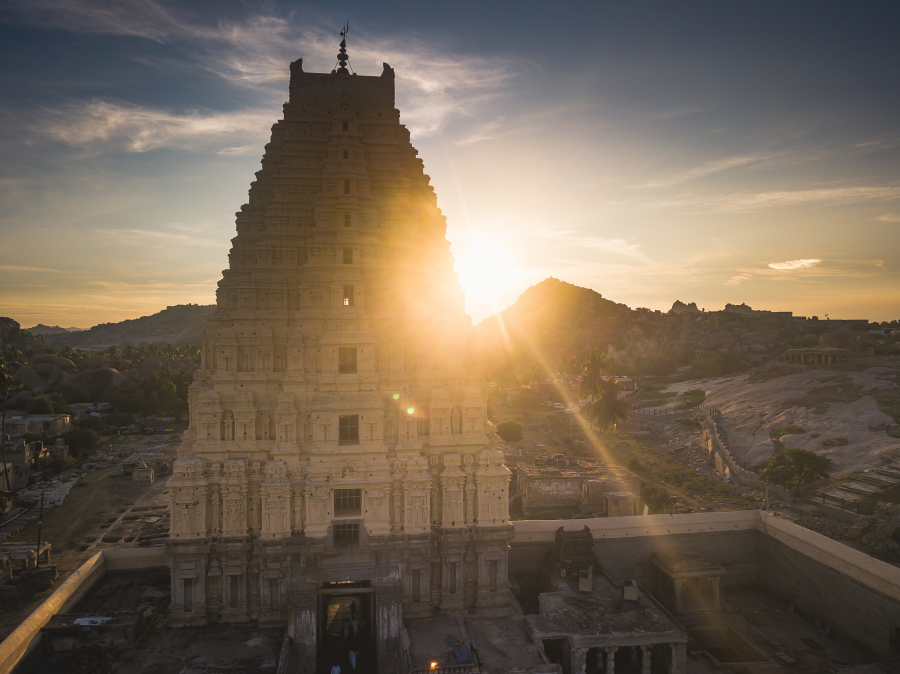
Passing through Hampi village, you'll find yourself surrounded by a cluster of temples, so we chose to visit only a few of the most prominent ones. First was the Virupaksha temple, located near the center and also the largest. I was immediately overwhelmed by the distinctive architecture of the South Indian dynasty; the carvings on the walls were still very clear and exquisite. Although surrounded by many ruined temples, Virupaksha remained intact. Therefore, Virupaksha serves as the main temple for the local people to worship. Most of the surrounding temples were destroyed by invasions during the Islamic empire and are no longer in use.
The second temple we visited was Vittala, one of the most important temples of the Vijayanagar dynasty, and arguably the most impressive temple in Hampi in terms of architecture and scale. The temple was built in the typical South Indian Dravidian architectural style, with incredibly meticulous and careful carvings. At each entrance and on the pillars inside the temple, you can find a very Instagrammable spot.
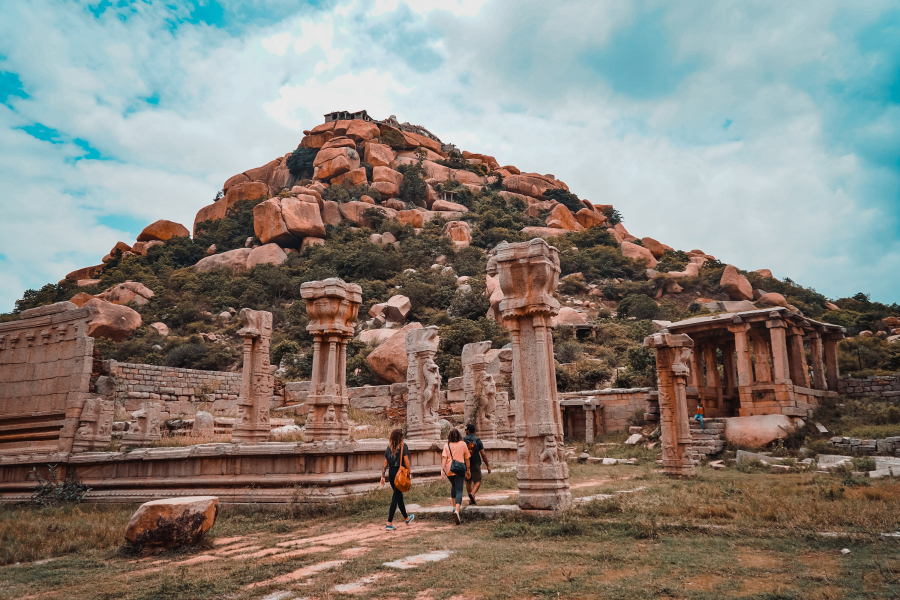
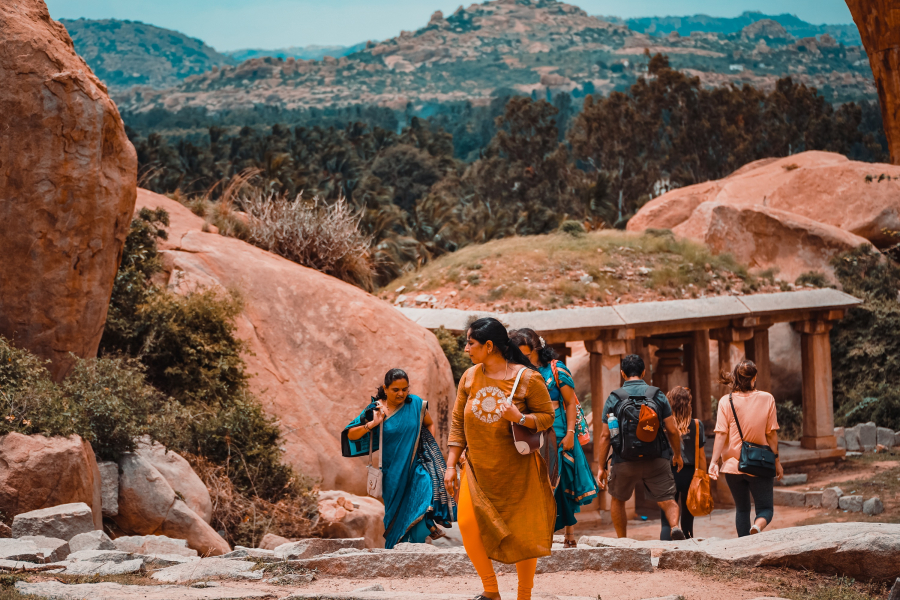
We chose to watch the sunset at the Malyavanta temple, about 7km from the city center. Next to it was a series of rocks perched on a fairly high mound, giving us a direct view of the horizon, with beautiful rock formations in the distance. The longer I stayed here, the more grateful I felt for nature creating such a wonderful place.
Hampi easily took up three days of our time. For the following days, Sanna and I rented a motorbike for 200 Rupees (approximately 75,000 VND) and explored the village and further afield, visiting the Hanuman Temple. Legend says this is the birthplace of Hanuman, a famous and influential deity in Hinduism. Queen's Bath, with its architecture reminiscent of the Roman Baths in England, and several sunrise viewing spots like Matanga Hill and the Lotus Mahal were among my favorite destinations.
My summer was wonderful. To this day, I still feel that the decision to travel alone was really not a bad one. I gained the necessary flexibility to always be open to new opportunities and unexpected travel companions. I gained the necessary initiative to know when to go and when to rest, without being overly dependent on others. I gained more knowledge by taking the time to prepare and read more about the places I visited. Along with that, I broke down my own doubts and accepted the differences in the various places I visited – something I would have found very difficult if I had only seen them through films.