VI
VI


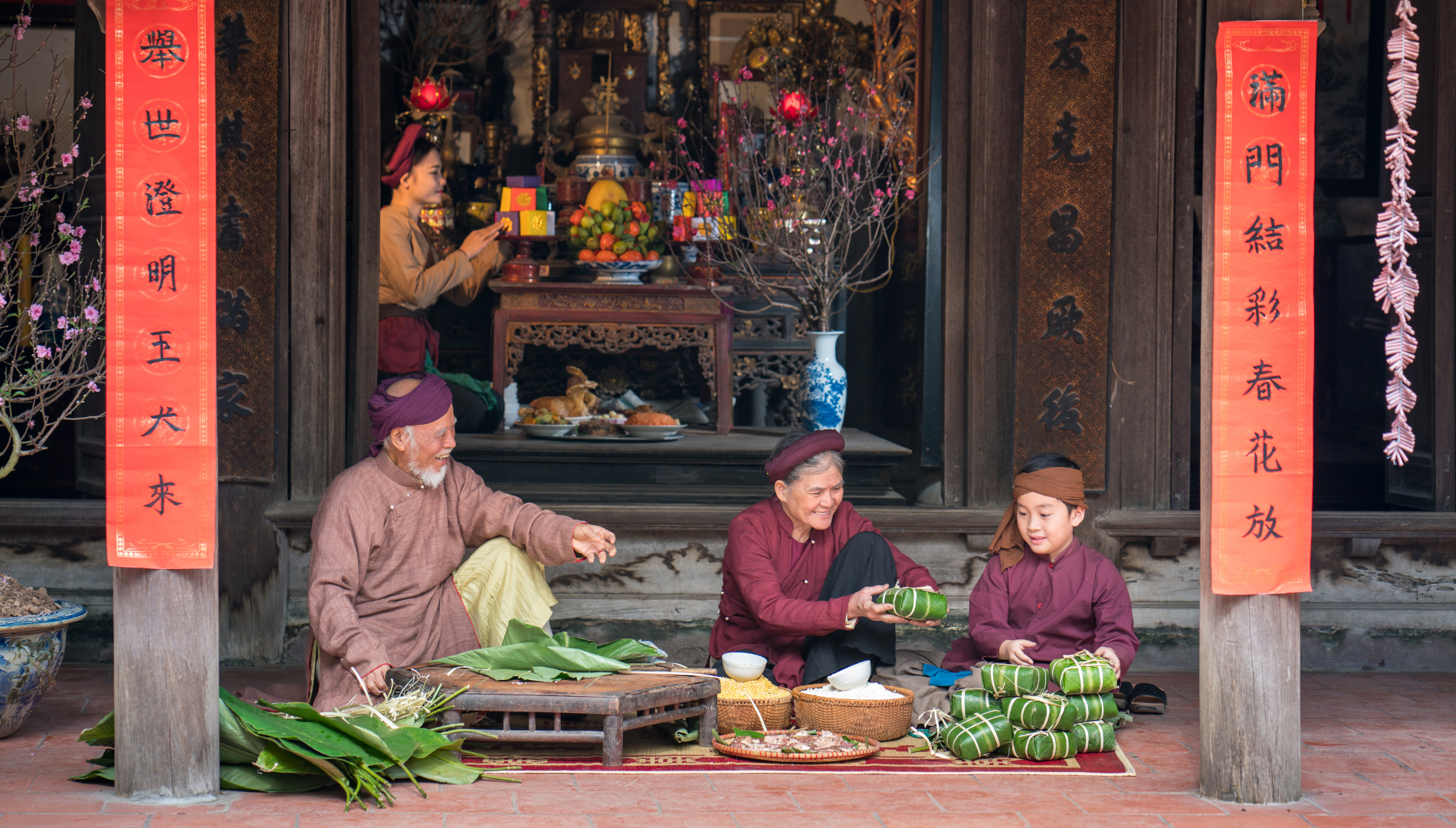
During the traditional Lunar New Year, banh chung (sticky rice cake) is a harmonious combination of simple ingredients closely associated with rice farming. In Vietnam, the green banh chung is a culinary delight, a blend of sticky rice, mung beans, and fatty pork.
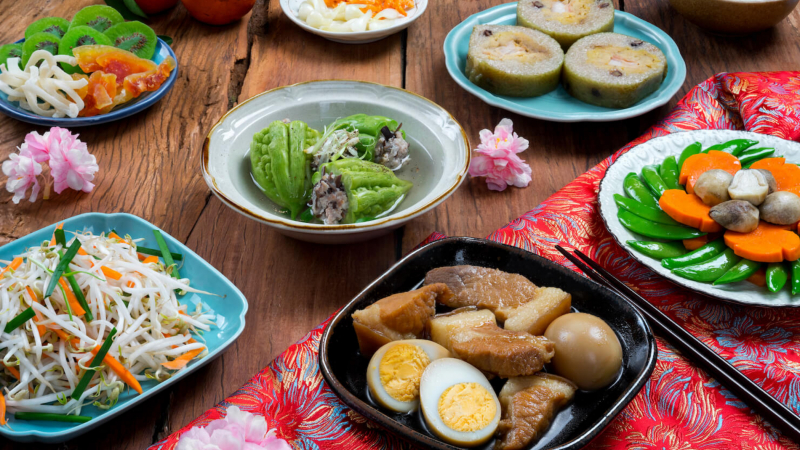
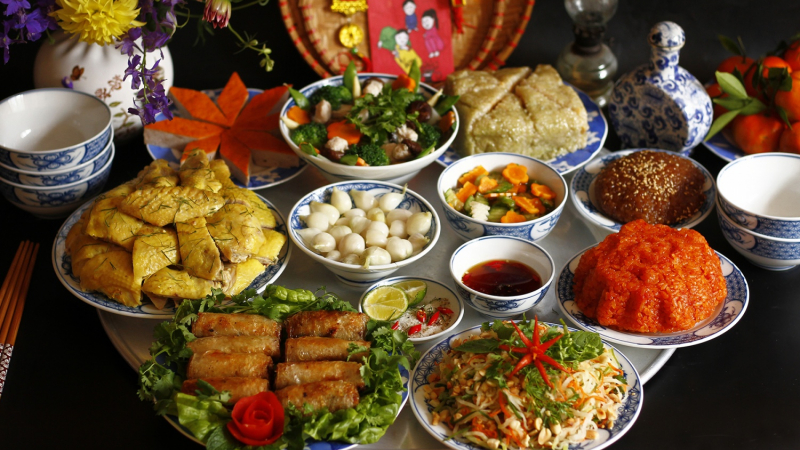
All of these elements combine to create a traditional Vietnamese dish rich in national identity. However, wrapping so many banh chung (traditional Vietnamese rice cakes) to offer to the ancestral altar causes many families a headache with the amount of leftover banh chung after Tet.
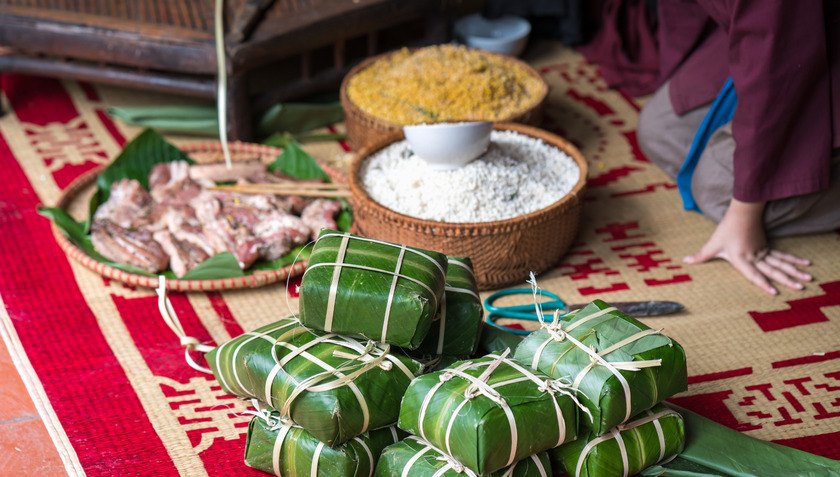
Banh chung and banh tet are indispensable delicacies during the Vietnamese Lunar New Year. However, if not stored properly, these cakes can easily spoil and become moldy.
Therefore, after each Lunar New Year, "What to do with the leftover banh chung?" becomes a major question for home cooks. Not to mention that eating banh chung every day makes many families tired of it, resulting in dozens of leftover banh chung.
Preserving sticky rice cakes after Tet (Lunar New Year)
After Tet (Lunar New Year), many families have a lot of leftover banh chung (traditional Vietnamese rice cakes). If left outside, they won't last long. With humid weather, the cakes easily get moldy and spoil, making them wasteful to throw away. Many people often store whole banh chung in the freezer for a while, then thaw them for a few hours or microwave them until soft before frying.
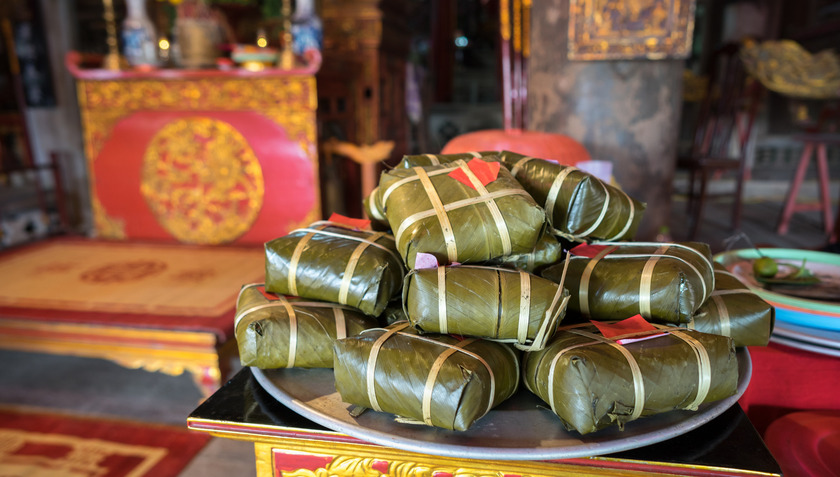
Generally, if you store the cake in a cool, dry place away from direct sunlight, it will last for 2-3 days.
This preservation method takes quite a long time, and when you cut the cake, the rice grains often become loose. Therefore, it's best to cut the rice cake into small pieces, peel off the leaves, wrap them in plastic wrap, and store them in the freezer. When you want to eat them, take out a few pieces, peel off the plastic wrap, heat them in the microwave, fry them evenly, and you don't have to wait for the whole cake to thaw.
If the inside of the banh chung (Vietnamese sticky rice cake) turns sour, discolored, or has a strange smell, people should not eat it to avoid health problems. Properly preserving banh chung after Tet not only retains its delicious flavor but also avoids food waste.
Fried sticky rice cake
This is the most "classic" way to prepare banh chung (Vietnamese sticky rice cake). Banh chung that has been stored for a long time is no longer as soft and delicious as when freshly boiled; it becomes firmer, but tastes much better when fried.
With its attractive golden-crispy outer layer and a soft, delicious interior softened by the heat, the rice cake becomes even more appealing, especially when people are no longer "tired" of the rich dishes of Tet. Even the way of frying the rice cake has sparked interesting debate.
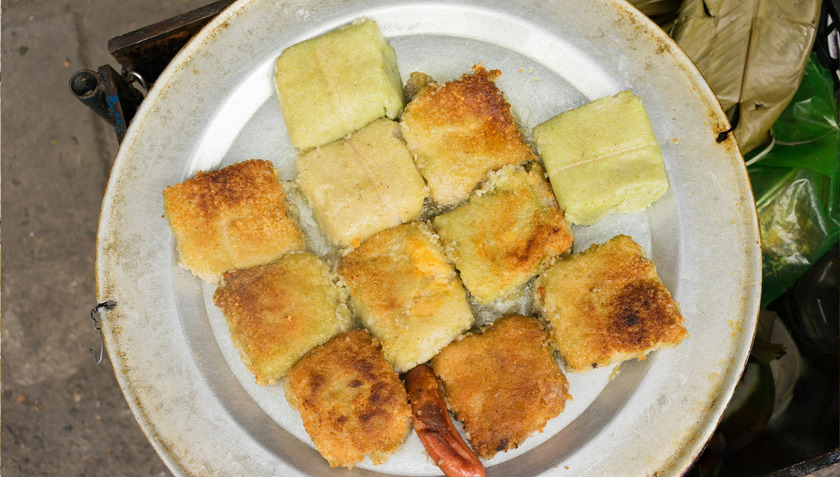
How to re-prepare traditional banh chung (Vietnamese sticky rice cake) in a delicious way.
Some people prefer to fry the entire 1/8 of the rice cake intact, suitable for those who are afraid of excessive oil and only want to fry it to create a thin, crispy outer layer before enjoying the soft inner part. Others prefer to mash the rice cake while frying until it's completely broken down and spread into a thin layer, with the filling and crust blending together smoothly, resulting in a cake that is both crispy and flavorful, rich and very appealing.

Another popular version of fried banh chung (Vietnamese sticky rice cake) involves slicing the cake into thin pieces and frying them until golden brown on both sides.
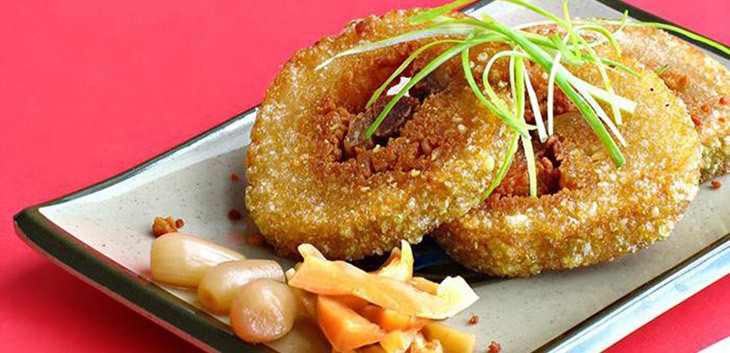
When the rice cake is soft, put it in a pan and mash it with a ladle. Cook over medium-low heat, shaping it into a round ball as you fry.
A skilled person can use thin strips of bamboo to cut the cake into perfectly thin slices, only about 1cm thick. This makes it look nice and eliminates the need to wash away the sticky rice clinging to the knife blade. This type of cake is just right, not too greasy, with a better balance of crispiness and softness, and is also easier to eat.
Kimbap (Vietnamese sticky rice cake)
Kimbap made with banh chung (Vietnamese sticky rice cake) is also an effective way to use up leftover banh chung after Tet (Vietnamese Lunar New Year). Besides, this "refrigerator scrap" version also contributes to a crispy, chewy, and unique flavor.
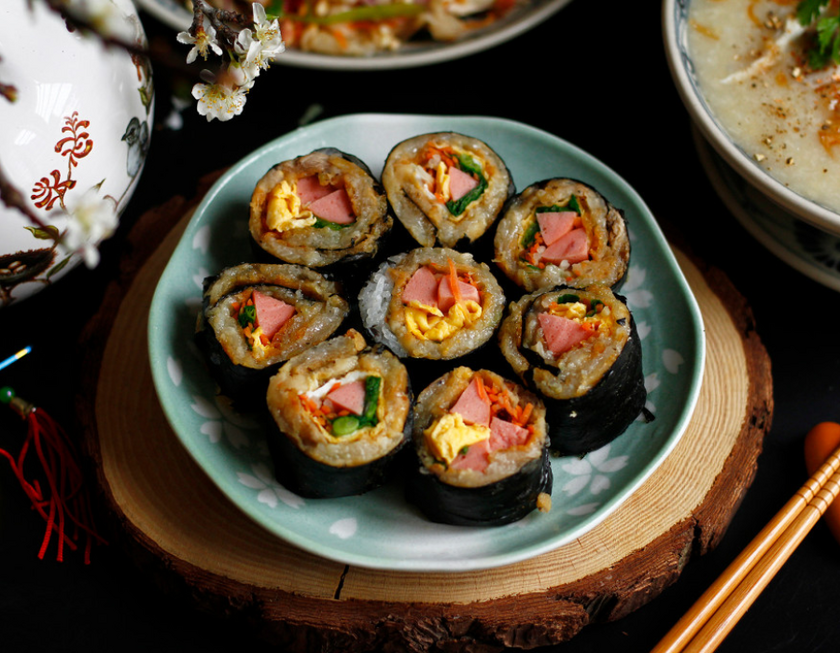
Kimbap, also known as sticky rice cake kimbap, is a unique dish made with simple ingredients such as sticky rice cake, pork sausage, ham, cucumber, etc.
The steps to make this dish are very simple. You just need to thinly slice the sticky rice cake (bánh chưng), mash it thoroughly, and fry it in water until the surface is slightly dry, then turn off the heat. Next, place a sheet of seaweed on a flat surface, spread the sticky rice cake evenly, and add your fillings (either pre-made or leftover from Tet, such as ham, sliced sausage, vegetables, fried egg, etc.) and roll it up tightly.
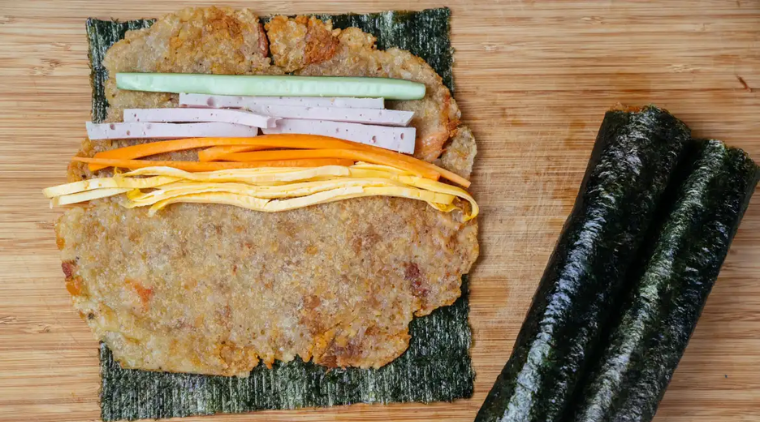
If you're tired of boiled or fried sticky rice cakes during Tet, try this sticky rice cake kimbap recipe!
Finally, using a sharp knife dipped in hot water or lightly greased with oil, cut the kimbap into bite-sized pieces. Enjoy with mayonnaise mixed with chili sauce or ketchup, according to your preference.
Fried sticky rice cake with water
Crispy fried sticky rice cake (bánh chưng rán), a culinary trend that emerged a few years ago, still retains its appeal to many people, although it's not as popular as it once was. The preparation is quite simple, not requiring too much skill or complicated ingredients. First, you need a cooled sticky rice cake. Instead of enjoying it the traditional way, try a variation: cut the sticky rice cake into smaller, bite-sized pieces.
The method is quite simple. First, cut the banh chung (Vietnamese sticky rice cake) into small pieces. Then, boil water in a pan, add the banh chung and use a ladle or spoon to mash it, then simmer over low heat until the water completely evaporates and both sides of the cake turn golden brown. Pour onto a plate and enjoy.
This method has the advantage of not using oil or grease, which is beneficial for health. However, many people who have tried it share that this method makes the banh chung (Vietnamese sticky rice cake) soggy, mushy, and bland, no longer as delicious as when it was first made, and of course, "far inferior" to a banh chung fried in oil.
Grilled sticky rice cake
Grilled sticky rice cake (Bánh chưng nướng) is an unusual way to use up leftover sticky rice cakes after Tet (Lunar New Year). The recipe is also quite simple.
First, crack one egg, season with fish sauce and seasoning powder, and whisk well. Then, take each slice of sticky rice cake, roll it in flour, and then dip it into the egg mixture.
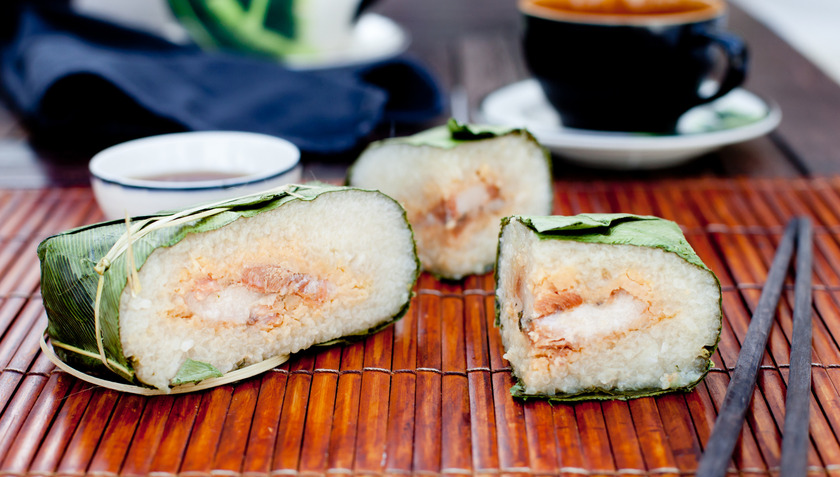
Grilled sticky rice cake (Bánh chưng nướng) is simple to prepare but the result is very delicious and visually appealing.
Similarly, you do the same with the pork sausage. Then, place the sausage on the sticky rice cake, sprinkle with pepper, and bake in the oven at 200°C for about 25 minutes. After about 25 minutes, take it out, brush with butter, and bake for another 15 minutes. Once the oven stops, transfer to a plate and serve with chili sauce, soy sauce, or pickled shallot fish sauce.
Making porridge from sticky rice cakes.
This is considered a unique and creative idea by young people that has gone viral on social media. The dish sounds quite strange, but leftover sticky rice cakes can absolutely be used to make porridge. Besides, the ingredients for this dish are incredibly quick, convenient, and simple.
Put the leftover glutinous rice cake into a pot of boiling water. You can cut the cake into smaller pieces to help it dissolve faster. When the cake is softer, use a spoon to stir and mash it into the water. Then, add a little salt, seasoning powder, or fish sauce to taste.
Next, add the finely chopped filling (this filling can be adjusted depending on what you have in your refrigerator, such as pork sausage, ham, chicken, etc.) and seasoning to taste.
Rice porridge with sticky rice cakes is not only a solution for leftover sticky rice cakes but also a warm and delicious dish for the whole family to enjoy during gatherings. Besides that, this dish can also be eaten with pickled onions, pickled cucumbers, shredded pork floss, etc.