VI
VI



California, a jewel of America with its idyllic Pacific coast, majestic sequoia forests, and renowned Silicon Valley, is at a significant crossroads in its already vibrant tourism landscape.


Following a strong recovery after the COVID-19 pandemic, the number of tourists visiting the state is projected to decline for the first time. According to NBC News, the underlying cause of this shift is believed to be a direct consequence of tariff policies, controversial statements, and escalating diplomatic tensions under current President Donald Trump, causing a sharp drop in international visitor numbers to the United States in general and California in particular in 2025.
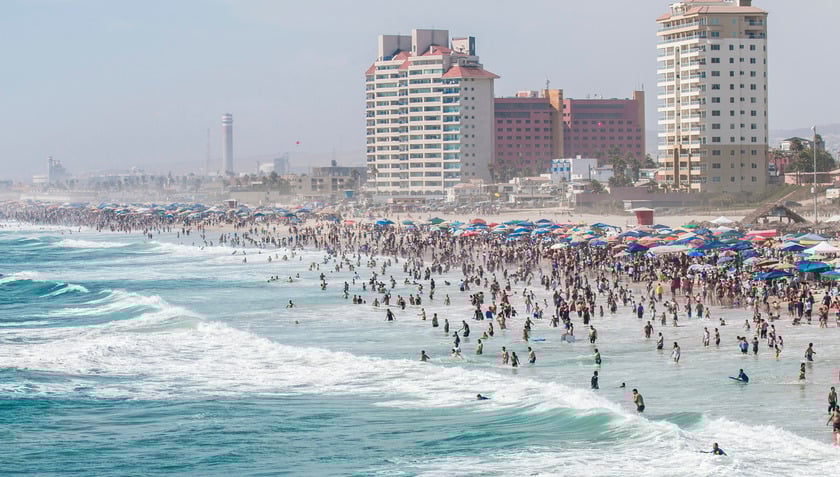
California is forecasting a decline in tourists for the first time in five years – a consequence of President Trump's controversial statements and policies.
The non-profit organization Visit California, a strategic partner of the state's tourism office, has released rather bleak forecasts. According to their projections, the total number of visitors to California this year is expected to decrease by 0.7% compared to 2024. Even more concerning, the number of international visitors is predicted to decline by as much as 9.2%, a sign of weakening California's appeal to travelers worldwide.
Caroline Beteta, CEO of Visit California, expressed her concern, stating: "California's tourism industry – a reliable and stable growth engine for decades – is now facing predictions of contraction by 2025." This statement serves as a wake-up call regarding the challenges facing the state's tourism industry.


The tourism industry here is world-renowned and generates significant profits.
A detailed report from Visit California has highlighted key factors contributing to the significant decline in international tourist numbers. Besides inflation caused by higher tariffs, another crucial factor is the growing negative sentiment toward the United States internationally, stemming from President Trump's tough trade policies and controversial statements. In this context, domestic US tourism is expected to remain stable; however, this is unlikely to offset the shortfall from international markets.

A report by Visit California points to reasons for the decline in international tourists including inflation caused by higher tariffs, along with negative sentiment toward the United States following several trade policies and statements by President Trump.
Notably, the sharpest declines are predicted to come from two close neighboring countries, Canada and Mexico – traditional tourism markets that have previously contributed more visitors and revenue to California than any other country. According to state statistics, last year, approximately 1.8 million Canadian tourists visited California, generating an estimated $3.72 billion in revenue. However, this year, that number is projected to decrease by nearly 20%, a worrying decline for the state's tourism industry.

The sharpest declines are predicted to come from Canadian and Mexican tourists – countries that previously had more visitors and spent more money in California than any other nation.
In light of this situation, according to The San Francisco Standard, the California state government is making every effort to restore the number of tourists from Canada. Measures being implemented include partnering with Expedia to offer attractive discounts and launching a new promotional video titled "California Loves Canada" to strengthen and improve relations with the people of Canada. In addition, the state also expects to welcome more tourists from emerging markets such as India and Japan this year, as an effort to diversify its visitor sources.
However, according to NBC News analysis, President Donald Trump's trade policies and somewhat hostile tone towards many countries around the world are creating a noticeable backlash from international travelers. This shift in attitude is not just an emotional issue but could also lead to practical decisions in choosing travel destinations.

California is making every effort to attract tourists from Canada back, offering discounts on Expedia.
These changes risk causing significant economic impacts for California in particular and the United States in general. One forecast from a Wall Street firm even suggests that total US tourism revenue could fall by as much as $90 billion this year, combining the impact of reduced tourist numbers and boycotts of American goods in response to the Trump administration's policies.
Notably, tourism from Canada recorded the largest decline, perhaps partly due to controversial statements by President Trump, including the suggestion that the northern neighbor could become the "51st state" of the US, in addition to restrictive trade policies that have caused considerable friction between the two countries.

The state expects to welcome more tourists from India and Japan this year.
Not only Canada, but also Western Europe, another important market for the U.S., is experiencing a decline in tourist numbers. According to data from the National Office of Travel and Tourism, a unit of the U.S. Department of Commerce, even countries considered to have the most stable tourist numbers, such as the United Kingdom and Germany, have chosen not to travel to the U.S. In fact, numbers from these countries fell by as much as 29% in March alone, one of the highest declines recorded outside of the pandemic, indicating a worrying shift in European tourists' attitudes toward traveling to the United States under the Trump administration.