VI
VI


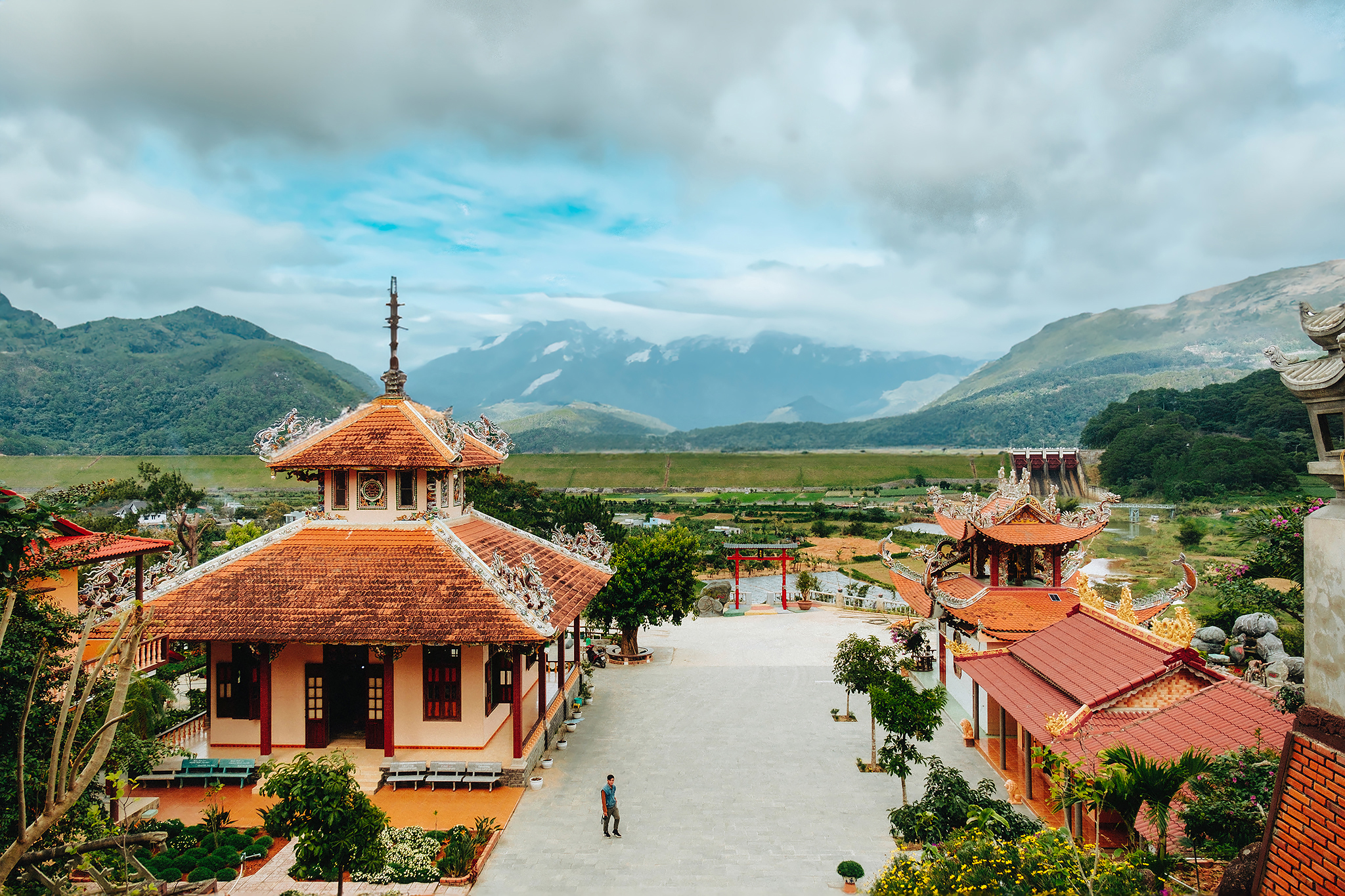

In 1923, the Giac Nguyen Tu Pagoda, also known as Ba Xam Pagoda, was built on a hill in D'Ran town, Don Duong district, Lam Dong province. Initially, the pagoda was just a small hermitage with a thatched roof and earthen walls.
In its early days, Giac Nguyen Pagoda was considered an ancient temple, with a structure strongly reflecting traditional Vietnamese art. In 1925, the pagoda was rebuilt with a spacious brick and tile roof, and the main hall had nine pillars, so it was also known as the Nine-Pillar Pagoda. The pagoda was granted a royal decree in 1939.
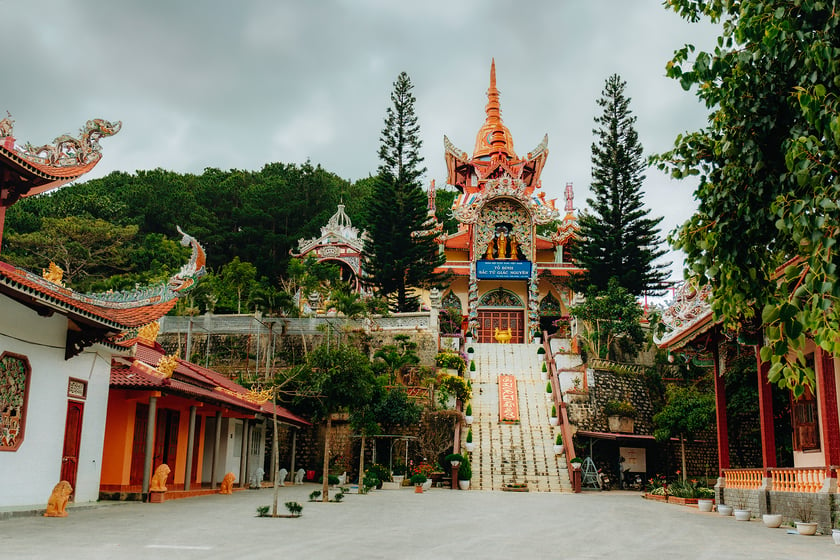
In 1923, the Giac Nguyen Tu Pagoda, also known as Ba Xam Pagoda, was built on a hill in the town of D'Ran, Don Duong district, Lam Dong province.
In 1976, Venerable Thich Phap Chieu from Binh Dinh province took over as abbot and oversaw the repair, renovation, and construction of the Trung Pagoda, Thuong Hall, and many other auxiliary structures on the large hill opposite the Da Nhim hydroelectric power plant in D'Ran town. The pagoda also received Buddha relics gifted by the Thai royal family in 1999.
The temple gate is located right on the main road, making it convenient to get to. Nguyen Tan Sang (25 years old, Ho Chi Minh City), a freelance photographer, shared after visiting: "Getting to the temple isn't too difficult, because it's located on a main road, so you can get there by motorbike or car following a map when you happen to pass through Don Duong."
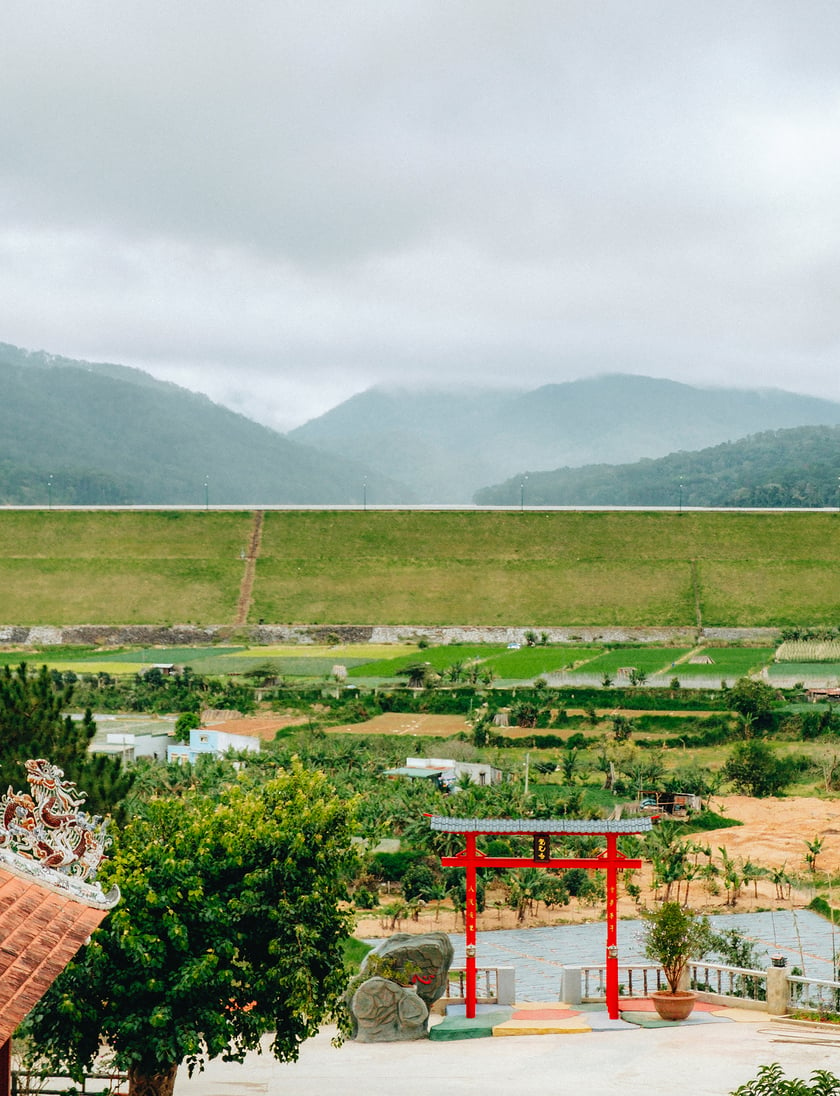
A spacious courtyard is located within the temple grounds.
Climbing up the steep slope shaded by lush green trees, you'll reach a spacious courtyard. On one side is the Trung Temple, and on the other is the main hall. In front of the main hall stands a statue of Avalokiteshvara Bodhisattva on a high lotus pedestal.

“With its advantageous natural setting, situated on a hill overlooking the Da Nhim hydroelectric lake, one of the first hydroelectric dams built in the South, and associated with the legend of K'Lang and Ha Biang's love, surrounded by the peaceful scenery of the town with small houses nestled among hills and gardens, Giac Nguyen Pagoda is likened to a 'royal garden' of Buddhism in the folk world,” Sang said.
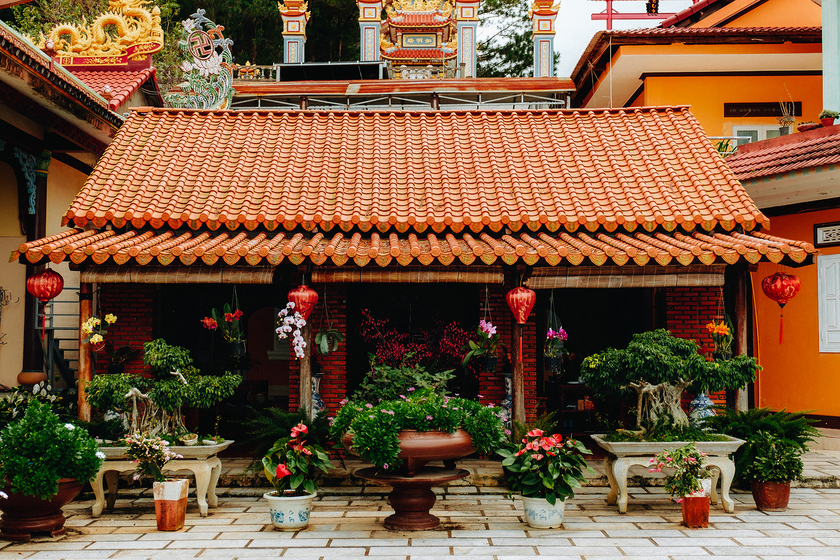
In its early days, Giac Nguyen Pagoda was considered an ancient temple, with a structure strongly reflecting traditional Vietnamese art.
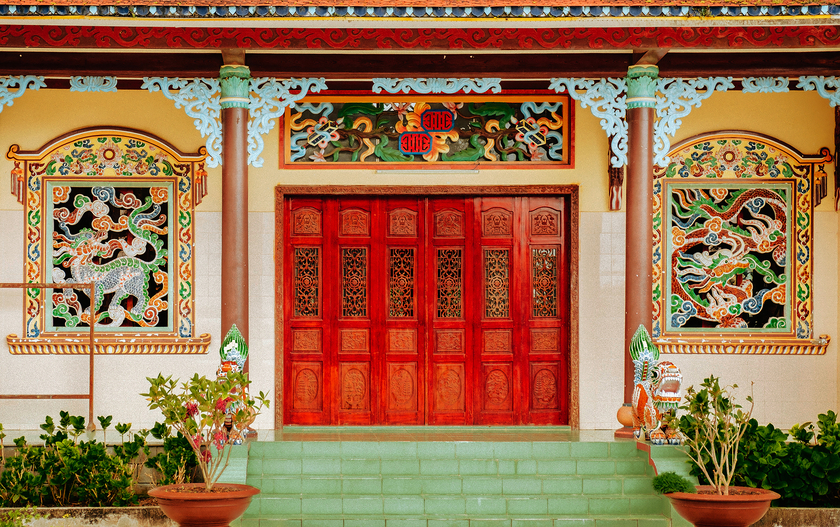
After numerous renovations, the temple is considered to be a harmonious blend of Buddhist aesthetics in particular, and architecture in general, from many places across Vietnam and Asia.
After numerous renovations, the pagoda is considered a blend of Buddhist aesthetics, and architecture in general, from many places in Vietnam and Asia. All the shrines within the grounds of Sac Tu Giac Nguyen Tu are elaborately constructed and meticulously sculpted. The pagoda's curved roofs, adorned with elegant and lively carvings of dragons, unicorns, lotus flowers, and chrysanthemums, are characteristic features of Vietnamese art and aesthetics.
From the spacious courtyard, looking up the high steps, one can see the Upper Hall, built in the overall architectural style of the buildings at Giac Nguyen Temple, with beautiful decorative patterns. To the side of the Upper Hall is a small path shaded by lush green bamboo trees, leading to the stupa and the seat of the thousand-armed Buddha statue.
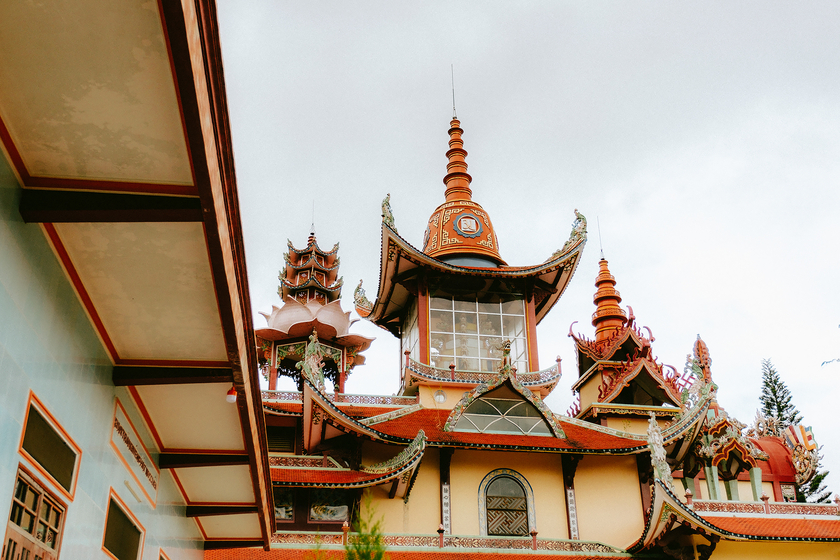
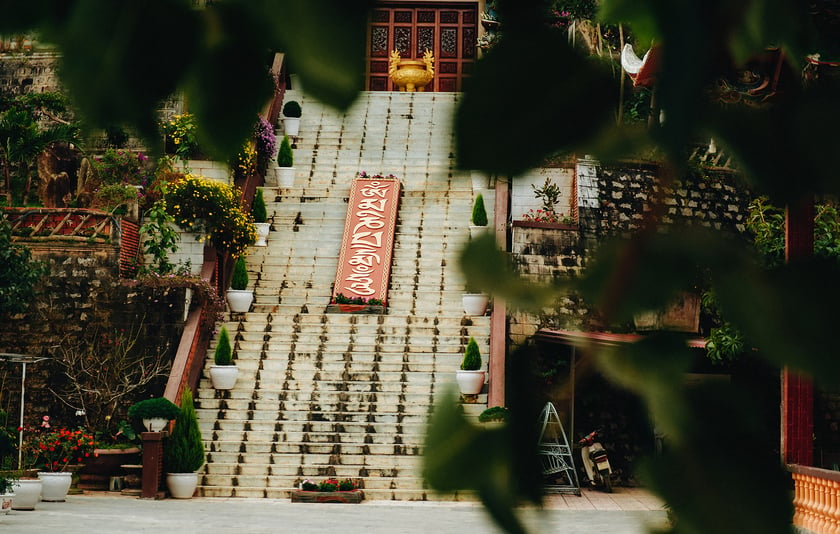
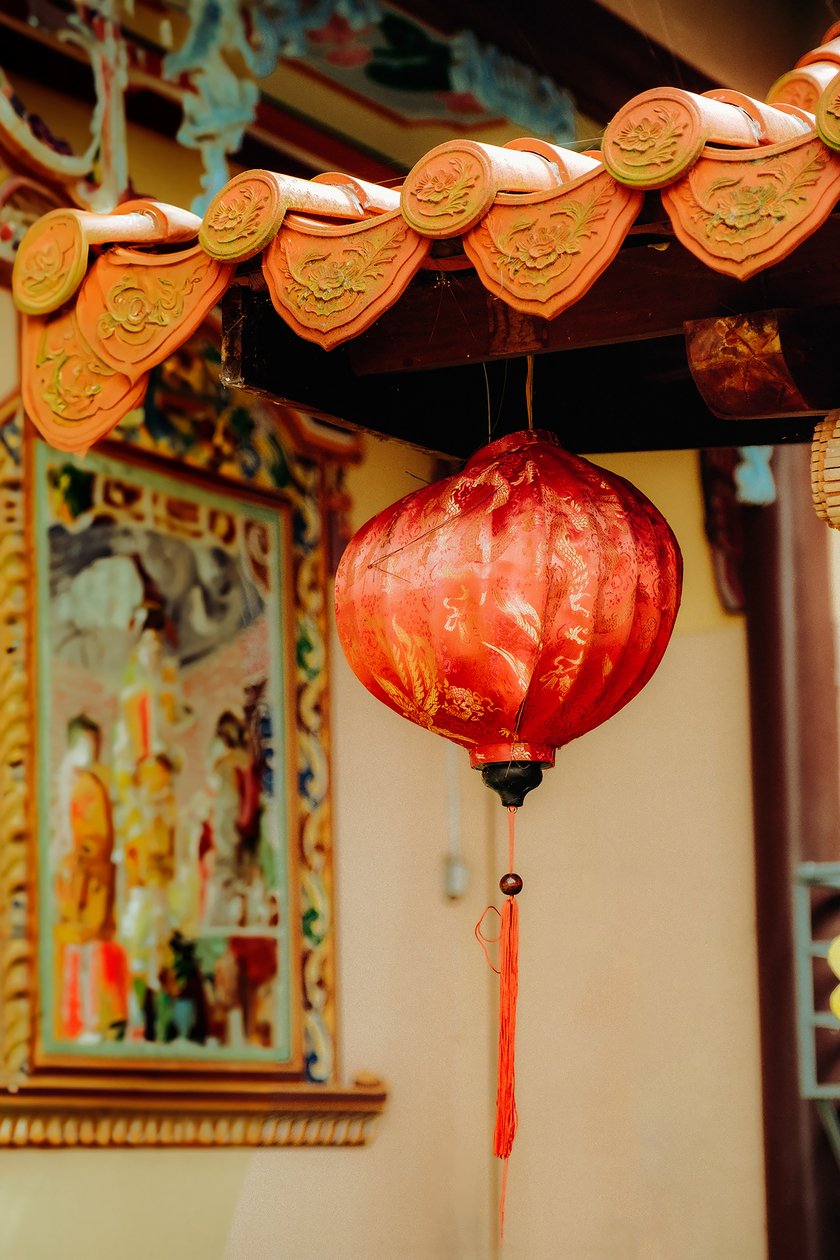
Elegant and vivid carvings, a characteristic feature of Vietnamese art and fine arts.
Adding to the peaceful and serene atmosphere are the vibrant colors of flowers and the shade of ancient trees. The temple also boasts a majestic Juniper Bonsai (a species on the list of endangered species) with a lifespan of over 1600 years.
Standing in the courtyard, one can take in the picturesque view of the Da Nhim hydroelectric dam. Before this scene, resembling a beautiful landscape painting, anyone who comes here is bound to marvel at the artistry of human hands and the skillful arrangement of nature.
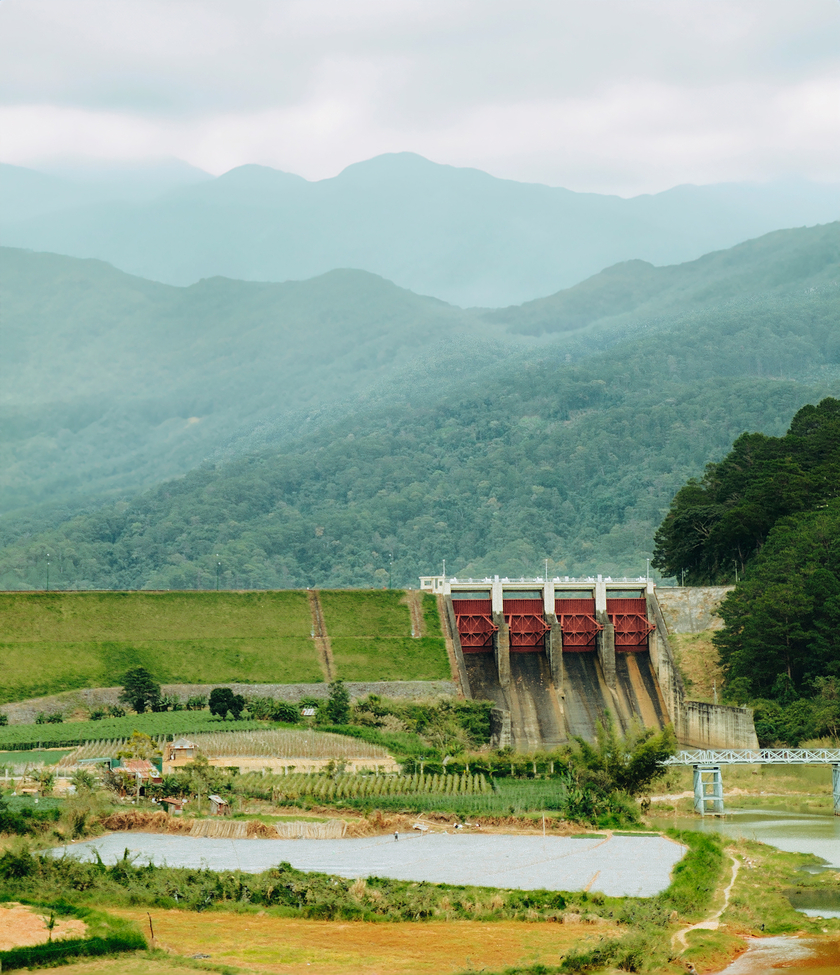
The Da Nhim hydroelectric dam is quite beautiful and impressive because it reminds Sang of scenes he's seen in movies.
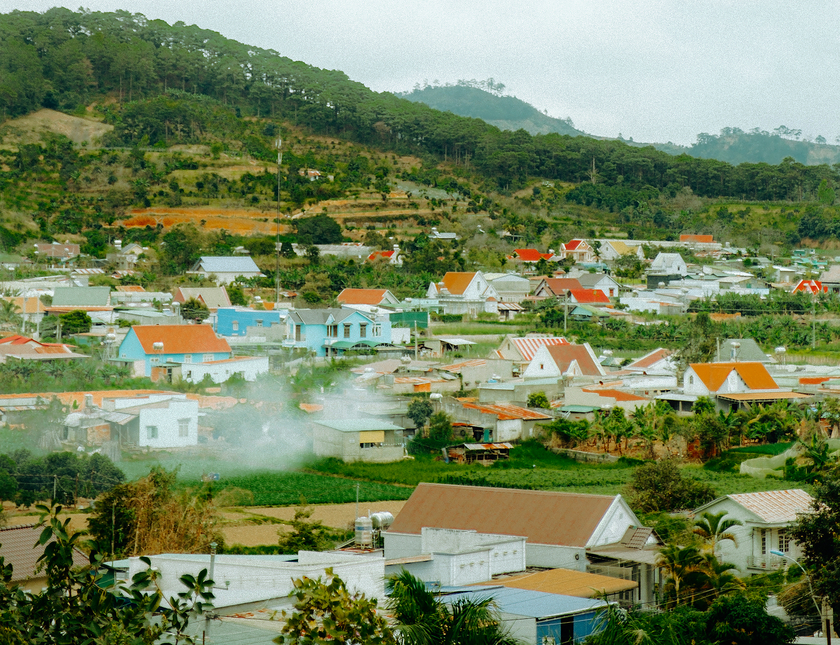
Images of houses and gardens lining the streets of D'Ran town.
“For me, the Da Nhim hydroelectric dam is quite beautiful and impressive because it reminds me of scenes I’ve seen in movies. Next, the images of houses and gardens in the town of D’Ran spread out before my eyes. Standing in the temple courtyard and taking in all those images gives me a feeling of peace and tranquility; I really want to ‘go back to my hometown to raise fish and grow more vegetables,’” Sang shared.
This place is visited by locals for annual worship, and the temple also serves as a refuge and place of spiritual practice for many local children.
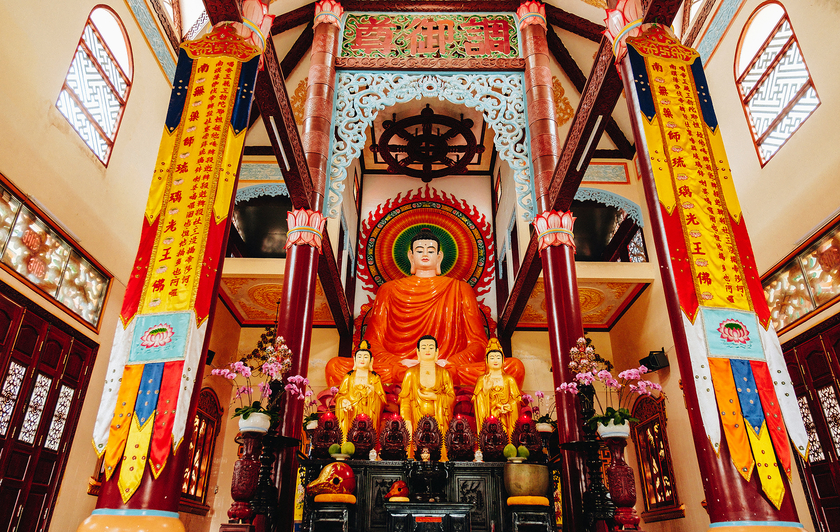
This is a suitable place for sightseeing and meditation.
According to Mr. Sang, this is a suitable place for sightseeing and meditation. Therefore, when visiting the temple, people should choose elegant and respectful clothing and speak softly to suit the serene atmosphere of this sacred place.
"If you're looking for a tranquil place, to immerse yourself in nature with trees, mountains, and fresh air to relax, then Giac Nguyen Tu Pagoda, a temple with imperial decrees, is a fortunate choice," Sang added.