VI
VI



The inspiration comes from the simple life and food of the local people.
A Bản restaurant, the brainchild of a group of three friends who have worked together for many years, holds many meaningful stories. Born and raised in a village, the two sisters, Co-founders Pham Kieu Duyen and Chef Pham Viet, nurtured a great love for ethnic cuisine from a young age, and aspired to realize their dream of "bringing the remote village to the heart of the city." Meanwhile, Co-founder Helen Huyen Vu harbors a desire to introduce delicious dishes to the world and rekindle pride with a fresh perspective on ethnic cuisine – a modern take on traditional dishes.
Sharing with Travellive, Ms. Duyen said: “I was born and raised in Son La, nurtured by the culture and cuisine of the Thai ethnic group. Later, when I had the opportunity to learn more about the culinary culture of the Tay, Muong, and Mong ethnic groups, I found them incredibly rich and unique. It's a natural cultural aspect of everyday life, with the delicious flavors of ingredients from the mountains and forests creating simple yet incredibly unique dishes.”
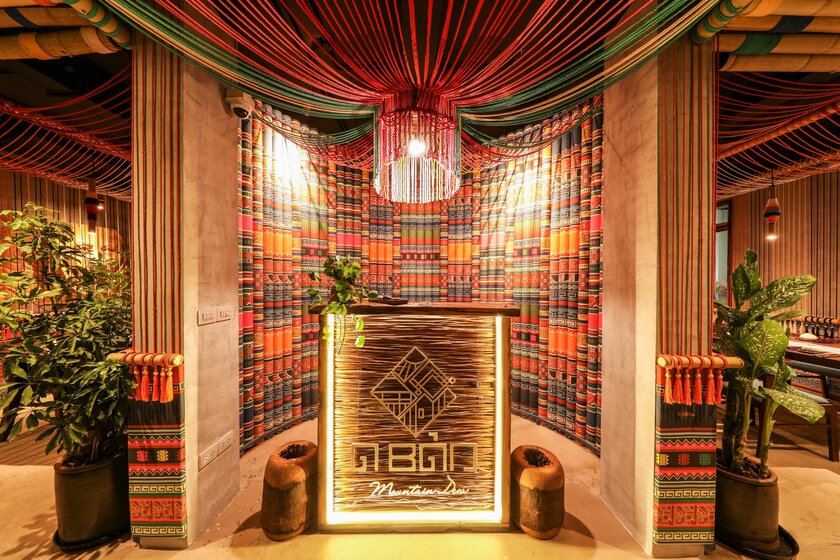
A Bản Restaurant is the brainchild of a group of three friends who have been together for many years.
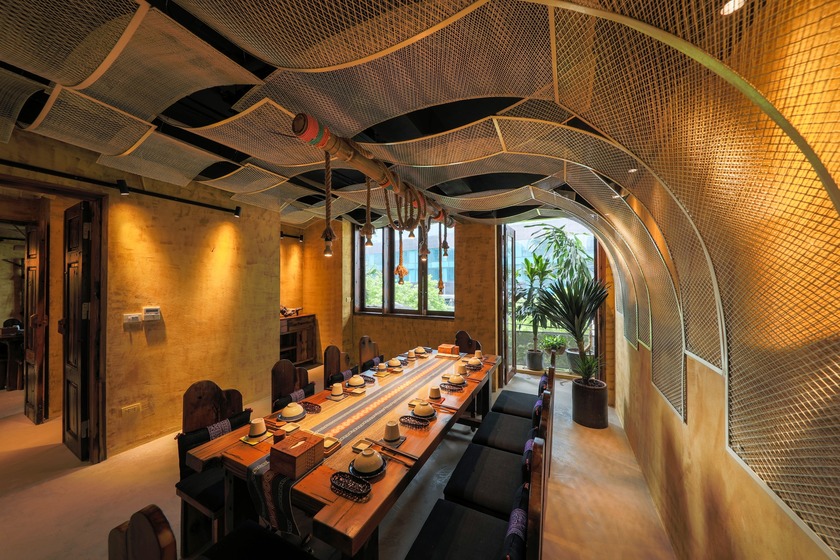
A Bản Restaurant was created as a way to bring remote villages closer to the heart of the city through the call of authentic, simple, and rustic cuisine.
With the desire to preserve and introduce the culinary culture of ethnic minorities, A Ban restaurant was created as a way to bring remote villages to the heart of the city through the sincere, simple, and rustic call of cuisine. “More than just ‘eating and drinking to your heart's content,’ A Ban is a harmonious journey of taste and culture. We bring in a whole source of ingredients and the cultural heritage of the villages, embodying them in each dish. We adapt and combine them to create A Ban with a style that we would dare call 'innovative ethnic cuisine,'” Ms. Huyen shared.
Unique architecture: a "miniature Northwest Vietnam" in the heart of the capital city.
Inspired by the homes of the local people, the materials and details of their villages are emphasized and brought back. Using pink Pù Luông stone slabs arranged in the Hmong style, the distinctive wooden door leads to the surprising and delightful interior space of A Bản restaurant. Entering through the gate, you hear the gentle sound of a waterfall, and walk along a winding slope like a path into a village to enter a cool, shady courtyard, feeling as if you're living in the refreshing summer days of the mountains.
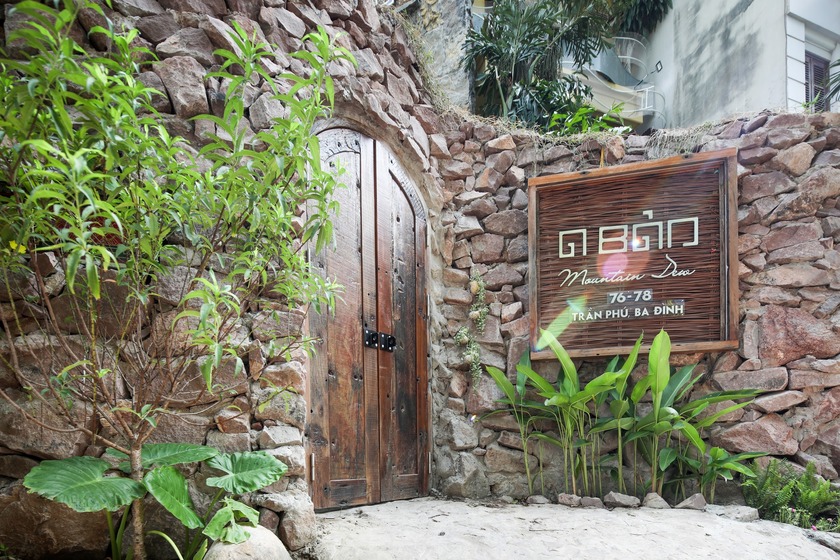
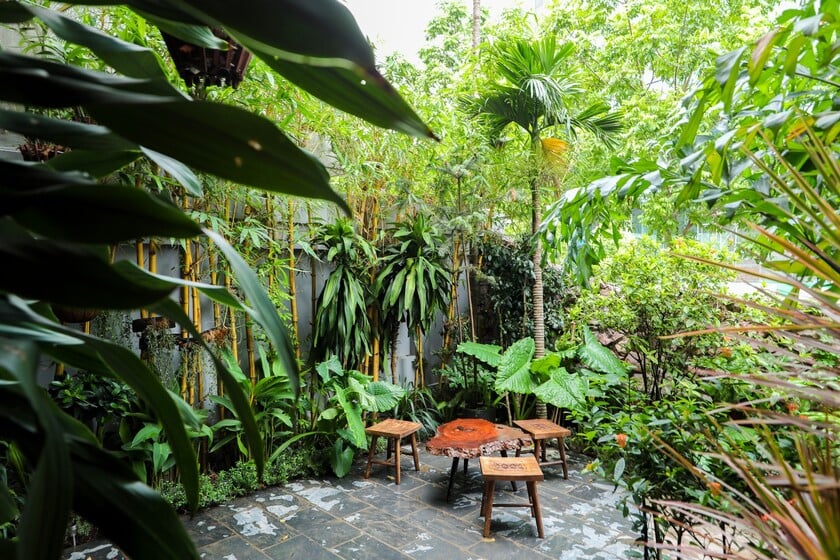
Entering through the gate, you hear the gentle sound of the waterfall, and walk along the winding slope, like a path leading into a village, to enter a cool, shady courtyard, feeling as if you're living in the refreshing summer days of the mountains and forests.
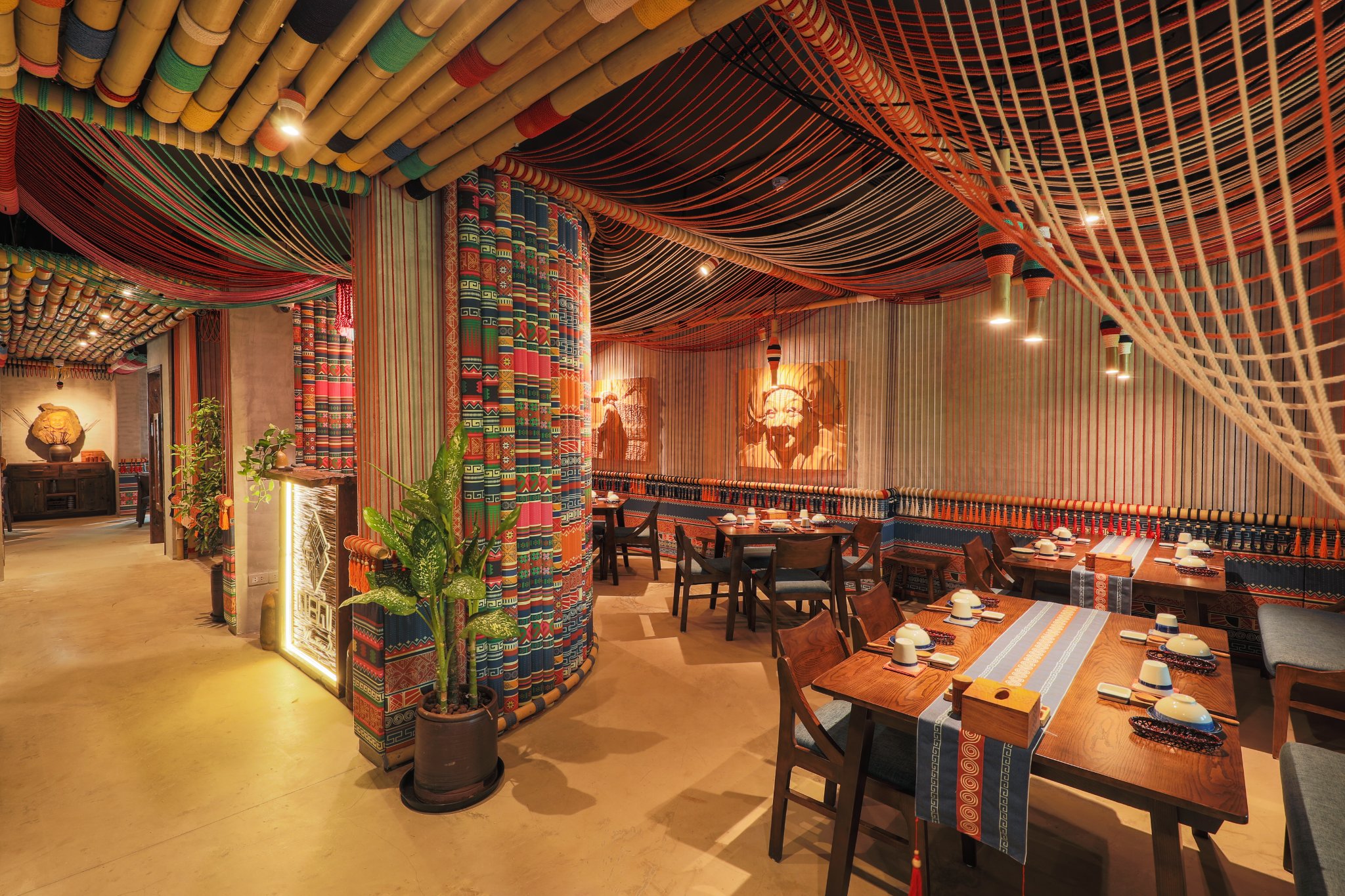
Dubbed a "miniature Northwest Vietnam," A Ban restaurant captivates diners from the moment they step inside with its exquisite architecture reflecting the highland culture, such as dining tables made from boat wood, handcrafted indigo-dyed curtains of the Thai ethnic group, and wooden cushions covered with cotton fabric. The cultural life of the highlands is vividly and authentically recreated in every corner of the restaurant.
“The cultural nuances of the highlands are harmoniously combined with typical architectural features of the ethnic minorities and contemporary art. A Bản selects, transforms, and incorporates these elements to present itself as a restaurant deeply rooted in ethnic culture but also extremely modern and contemporary. Furthermore, every corner of A Bản is meticulously cared for; each utensil is custom-made, the brocade fabrics and wool are hand-woven, and the looms are original creations of the ethnic minorities. Everything carries our heartfelt sentiment and our respect for the colors of ethnic culture,” Ms. Huyền said.

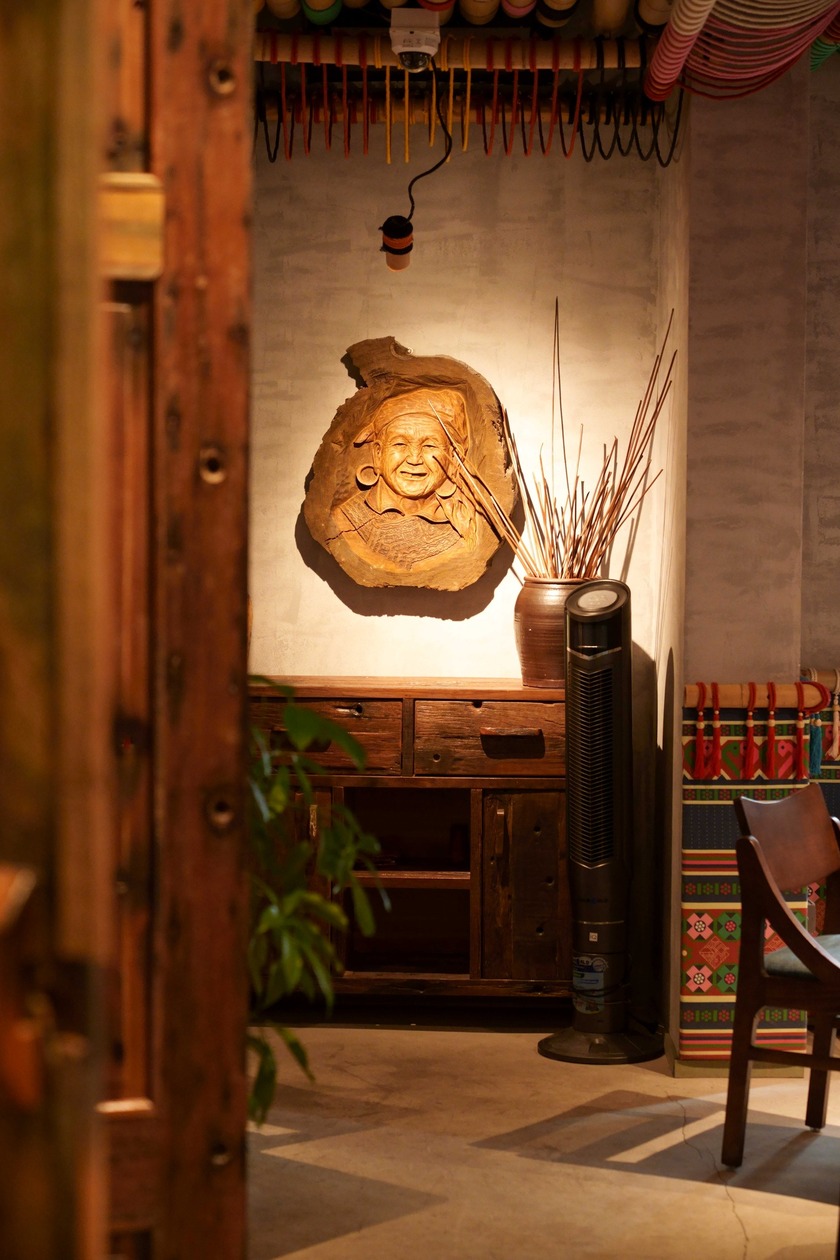
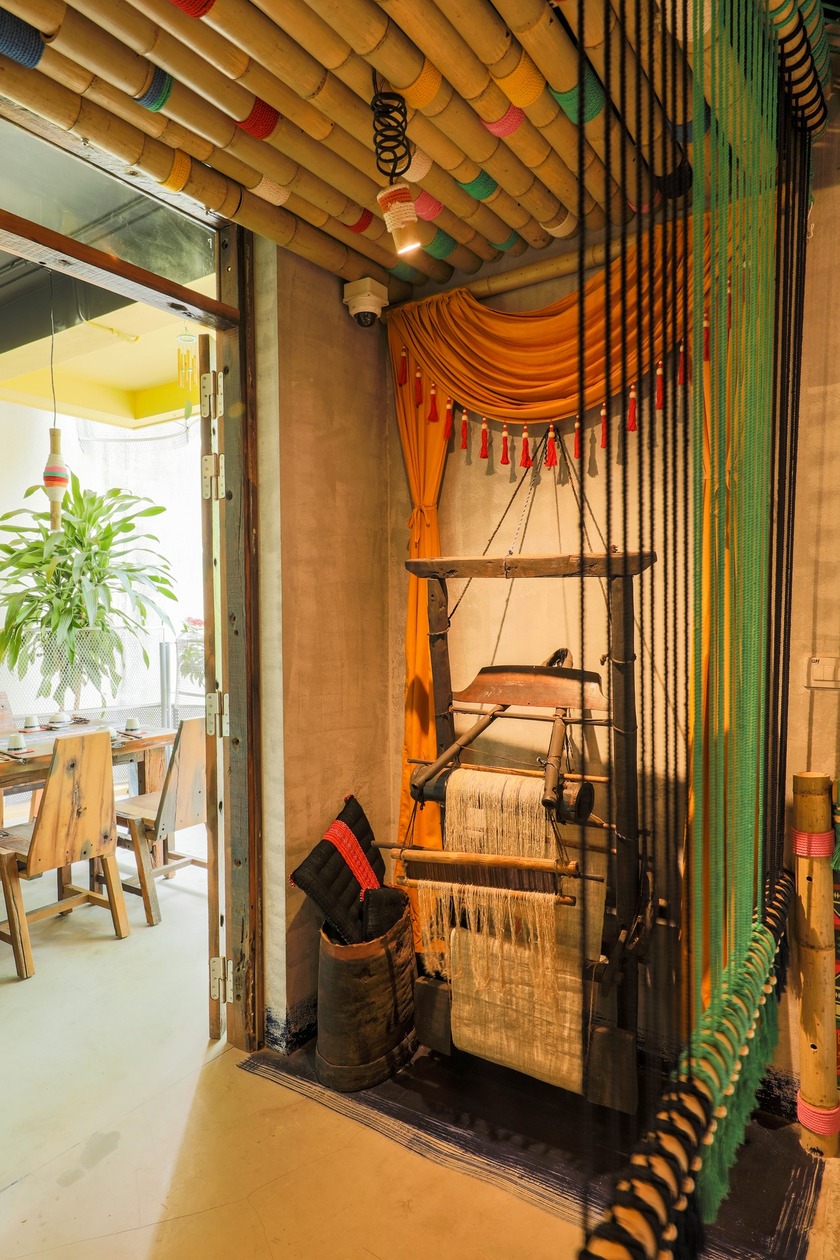
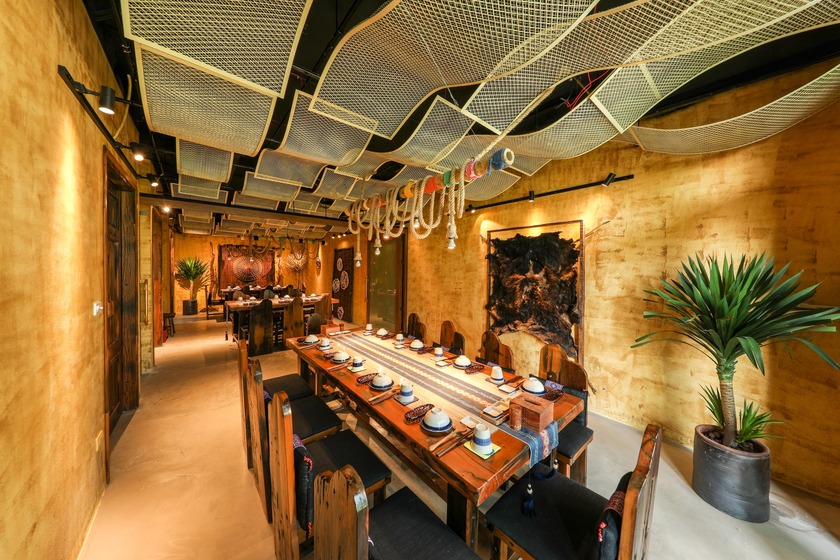
Often described as a "miniature Northwest Vietnam," A Ban restaurant captivates diners from the moment they step inside with its exquisite architecture reflecting the unique style of the highlands.
The restaurant's unique ambiance will take diners through a range of experiences. If the first floor is "Joyful Return to the Village," the second floor is "In the Weaving Field," then the third floor will be "Immersed in the Clouds."
With the theme "Joyful Return to the Village," the entire first floor of A Ban showcases the delightful characteristics of a traditional village. It evokes nostalgic memories for diners, reminding them of a charming, pristine village, yet also awestruck by the majestic beauty of the highlands.
Traditional brocade weaving is a distinctive cultural feature of ethnic minorities, with rich and widespread applications in daily life. At A Ban, the second floor is recreated with the grand artwork: "Behind the Loom," a beautiful and colorful cultural painting. The entire space is woven from wool, carpets, and threads. Brocade fabrics are printed and woven to decorate the walls. Thousands of colorful threads are braided together to cover the ceiling or create a symbolic separation between people and the sculpted reliefs. These graceful threads separate the spaces while simultaneously evoking the feeling of life unfolding right beyond the sparse fence. All of this weaves together beautiful, vibrant, and fascinating colors of life.
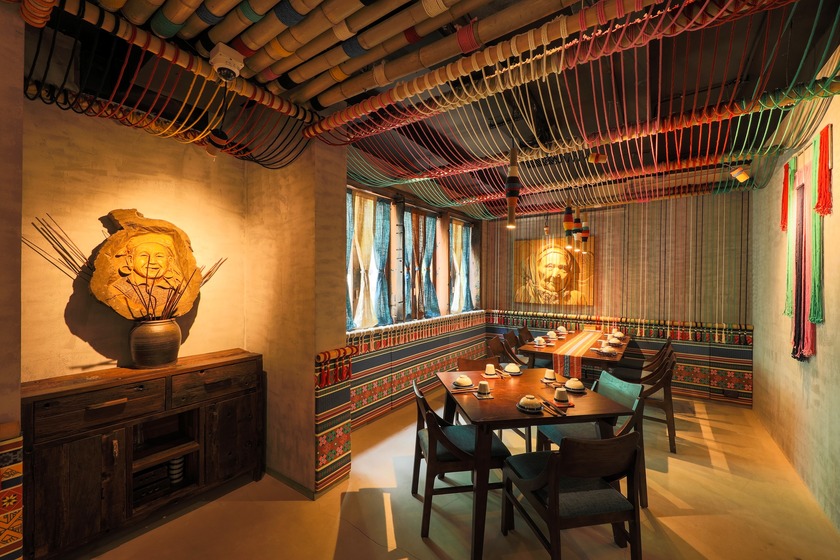
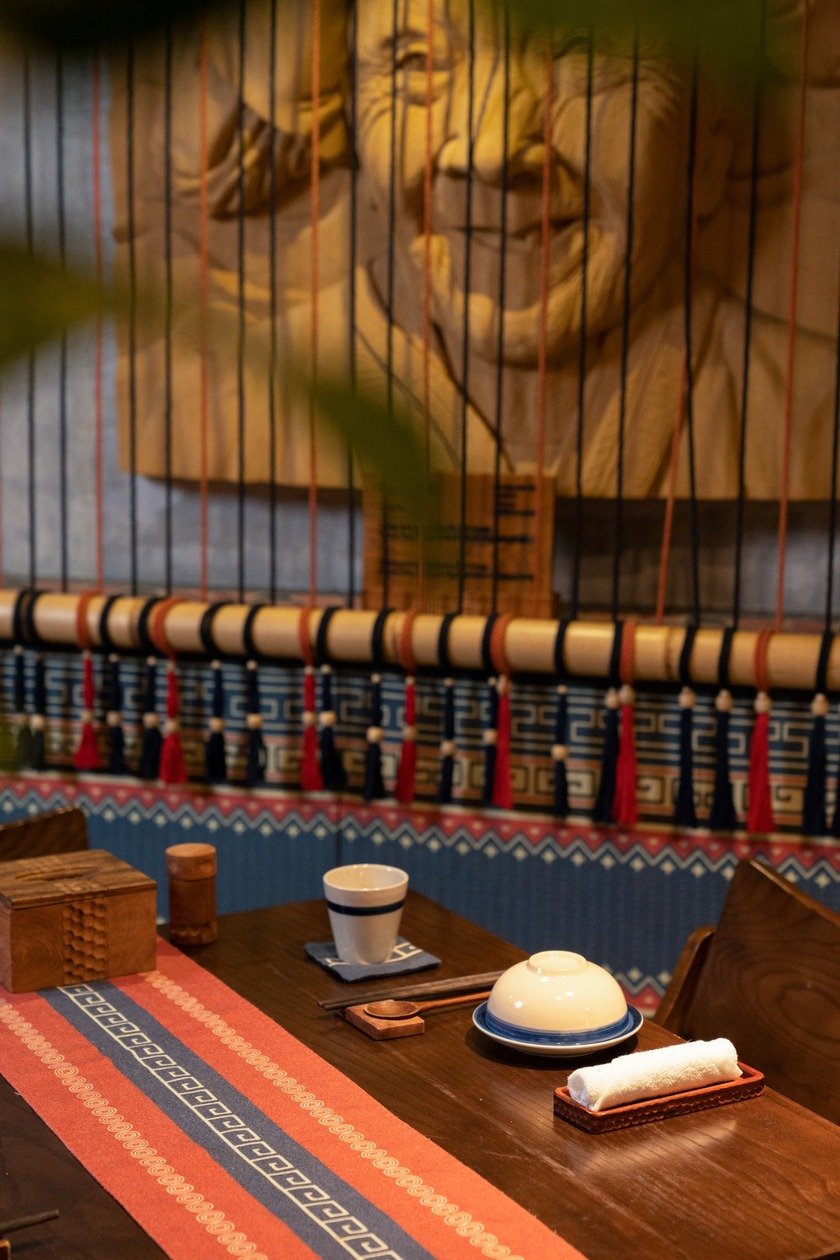
The restaurant's unique ambiance will take diners through a range of experiences. If the first floor is "Joyful Return to the Village," the second floor is "In the Weaving Field," then the third floor will be "Immersed in the Clouds."
The third floor of A Ban, themed "Immersed in Clouds," is a VIP area comprising four rooms named after the four great mountain passes, symbolizing different scenic areas: Khau Pha, Pha Din, O Quy Ho, and Ma Pi Leng. Upon reaching the staircase, clusters of clouds drift lazily across the ceiling, creating the illusion of standing on a pristine, towering mountain peak. The spiral shape represents the unpredictable air currents, the clear yet hazy mist of the early morning fog, and the high-altitude clouds.
Proud to bring mountain cuisine to Hanoi.
A Bản's menu is built and developed based on the cuisine of four ethnic groups: Thai, Mong, Muong, and Tay. It still includes traditional dishes such as: Pa Pỉnh tộp (grilled carp), Lạp (buffalo skin salad), Cáy pỉnh (grilled chicken); Thắng cố (a type of stew); Cơm lam (bamboo rice), Xôi ngũ sắc (five-colored sticky rice), Khau nhục (braised pork belly)... But alongside these, it is also modernized with fusion dishes, combining traditional ingredients with modern cooking methods or high-end ingredients to create dishes that offer new and unique experiences for diners, such as: Cơm lam with truffle mushroom sauce; Bamboo worm pizza; Salmon marinated in hawthorn and cham chéo sauce; Wagyu beef with mac mật sauce…
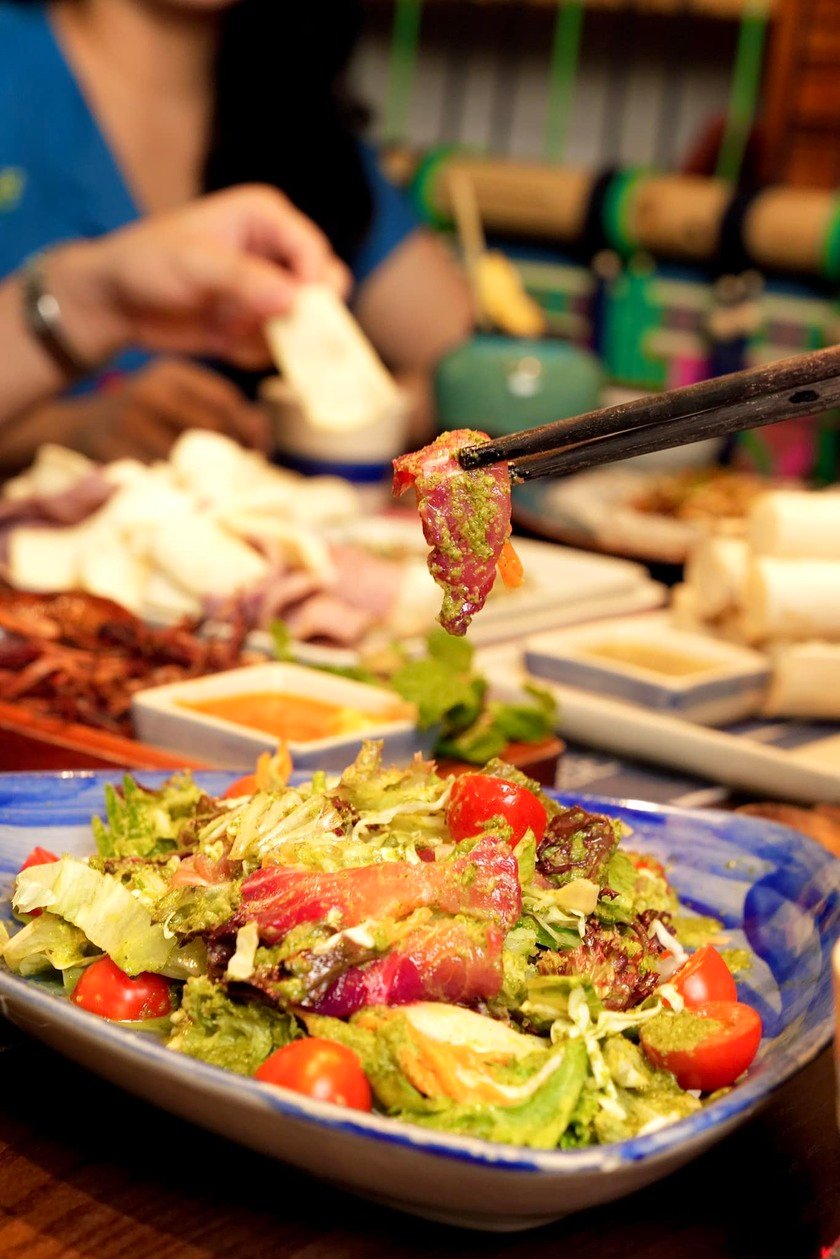
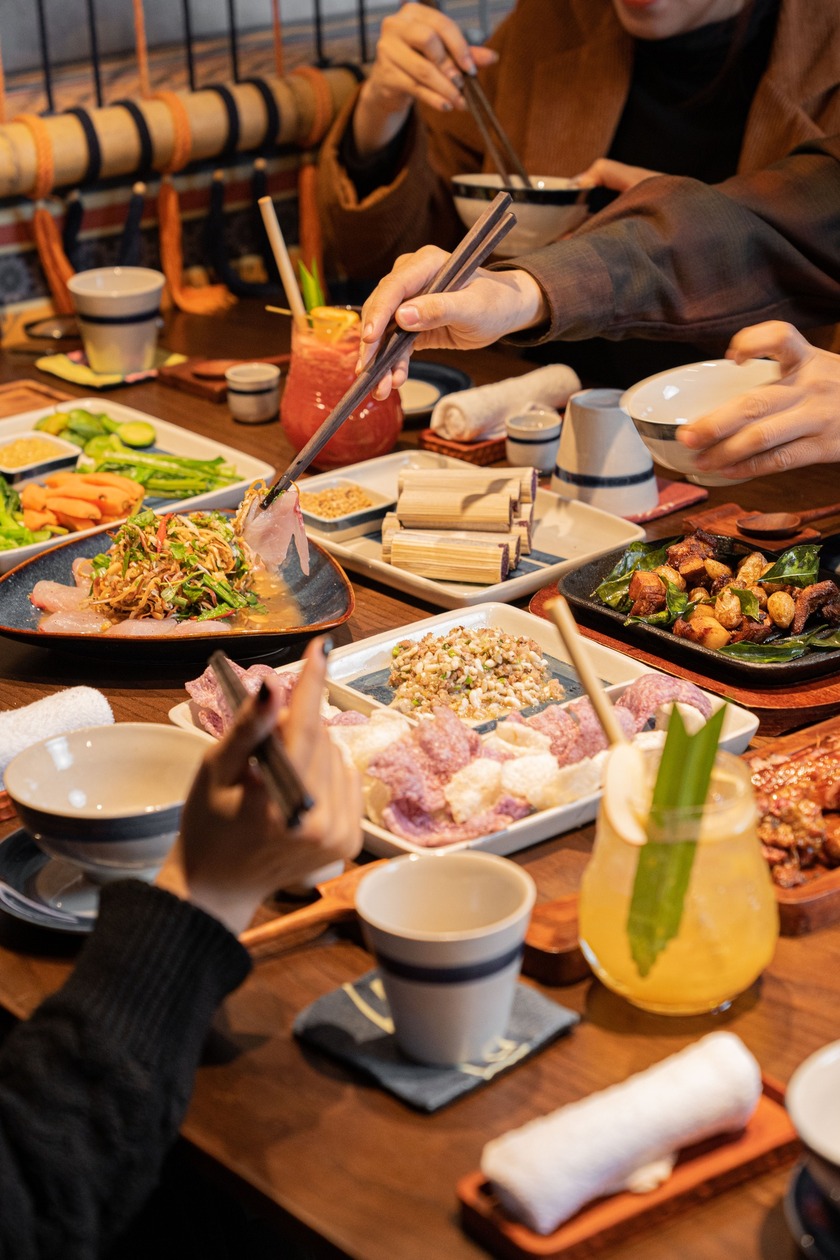
To create dishes with unforgettable flavors after just one taste, the restaurant meticulously prepares its ingredients, sourcing them directly from local villages. “In our traditional dishes, we always prioritize using local ingredients such as mắc khén (a type of spice), sour bamboo shoots from Sơn La, dổi seeds from Điện Biên, mắc mật (a type of spice), trám đen (a type of black olive), cơm lam (bamboo-cooked rice), fragrant pumpkin from Cao Bằng, upland sticky rice, five-colored sticky rice, bánh khoái (a type of cake), đậu dị (a type of bean) from Mường Khương, stream fish, and pickled cassava leaves from Hòa Bình… All these ingredients are carefully selected to ensure the flavor and quality of our dishes,” said Việt, Head Chef at A Bản.
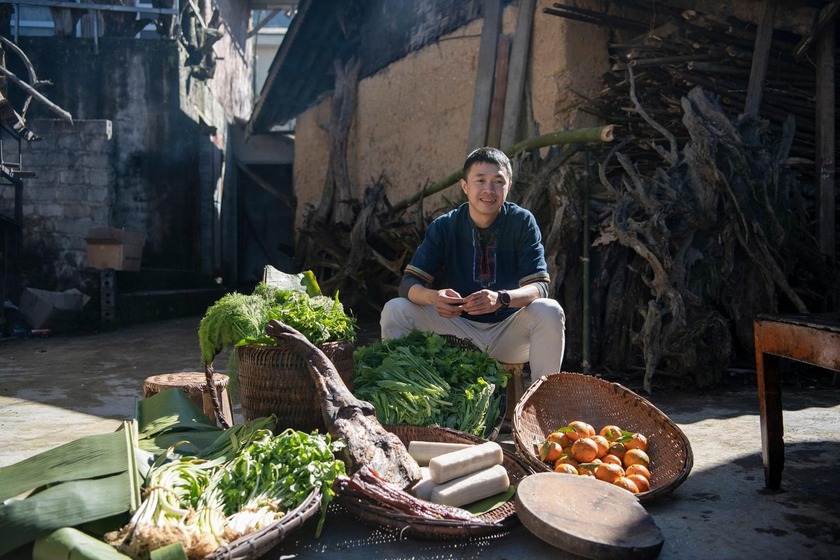
All ingredients are carefully selected to ensure the flavor and quality of the dishes.
The culinary culture of the local people is incredibly rich and diverse, not only unique in its dishes but also in its beverages, which are prepared in a very appealing way. In A Ban, based on traditional wines and ingredients, with the added aroma of seasonal produce, they create drinks with their own distinctive characteristics. The wines are fermented from mountain and forest products such as leaf yeast and corn yeast, combined with honey and various berries to create truly special drinks.
Many diners, upon hearing about an ethnic restaurant, might think the dishes might not suit their taste, be difficult to eat, or be too rustic to serve high-end clients. To adapt mountain cuisine to suit a wider range of palates, Mr. Viet explains: “A Ban uses characteristic ingredients, emphasizing the flavors of the season. Combining the freshness of seasonal produce with creative variations in cooking techniques, we aim to recreate the familiar yet refreshing feeling of the mountains and forests, of journeys, and of the unique regional characteristics in each ingredient, aroma, and experience. It's a novel and unique approach, yet still complete.”
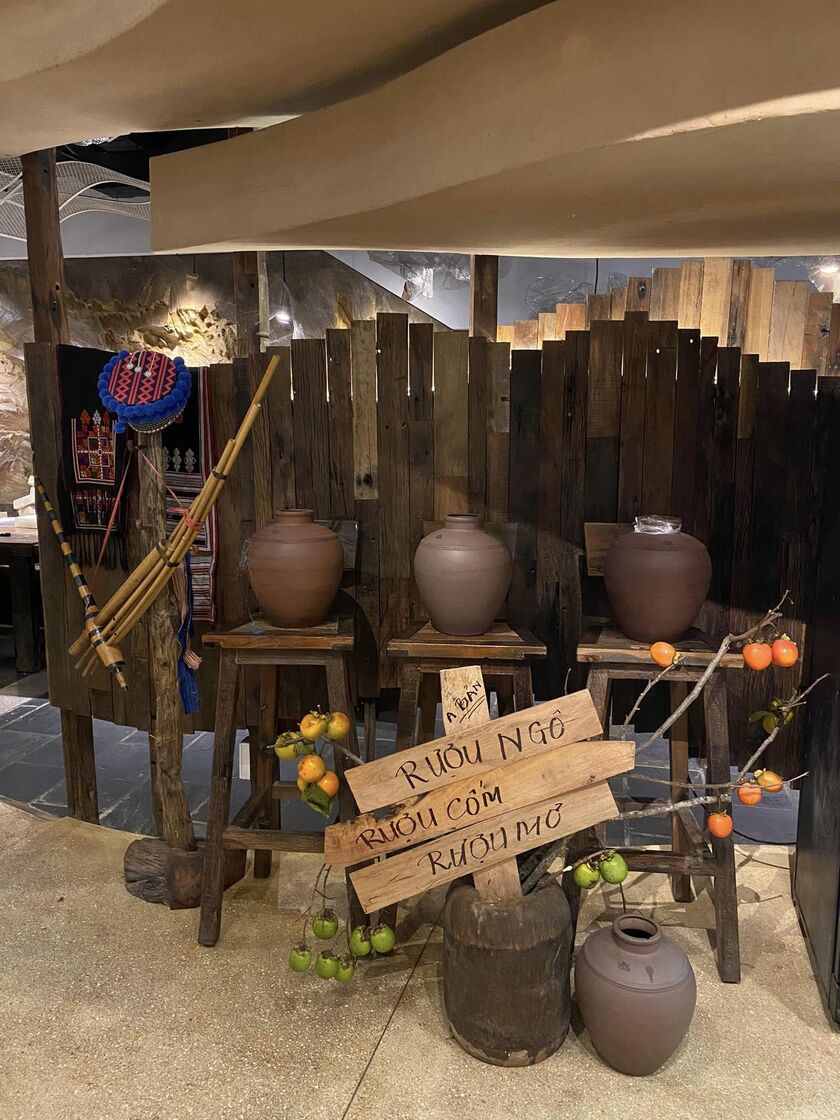
The culinary culture of the local people is incredibly rich and diverse, not only unique in its dishes but also in its beverages, which are prepared in a very appealing way.
Bringing Vietnamese cuisine to the world stage.
Currently, A Ban has become a favorite destination for many diners in Hanoi and abroad. Even more remarkably, A Ban has become one of the restaurants selected by Michelin. Sharing her feelings about this special event, Ms. Duyen proudly said: “This is considered a great honor and recognition for the founding team and A Ban restaurant. This is not only an opportunity to be known by many international customers, but also an acknowledgment of what we are striving to do and bring to diners the best experiences. Along with that, it's also a matter of how to maintain stability and even improve further to live up to this recognition.”
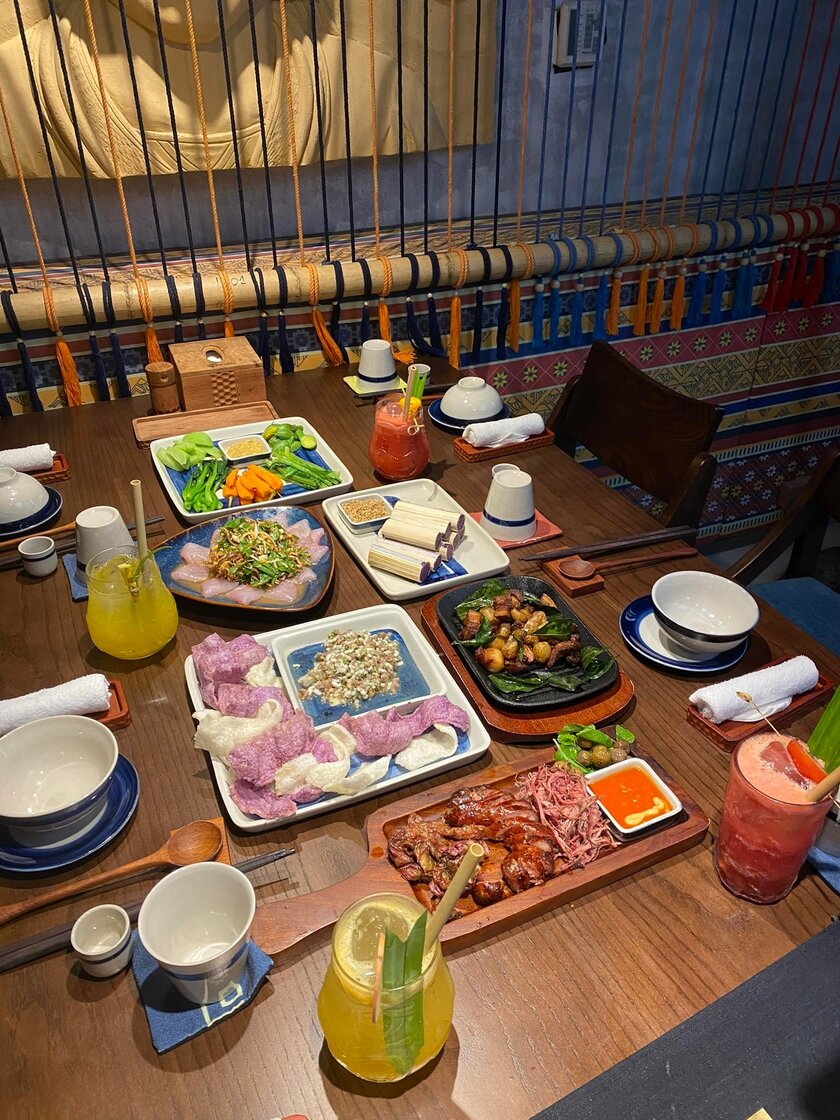
A Bản has become one of the restaurants selected by Michelin.
Sharing her future plans, Ms. Huyen added: "By 2025, we hope to have an A Ban restaurant in Europe where Vietnamese cuisine will become a favorite among Europeans and people around the world."