VI
VI


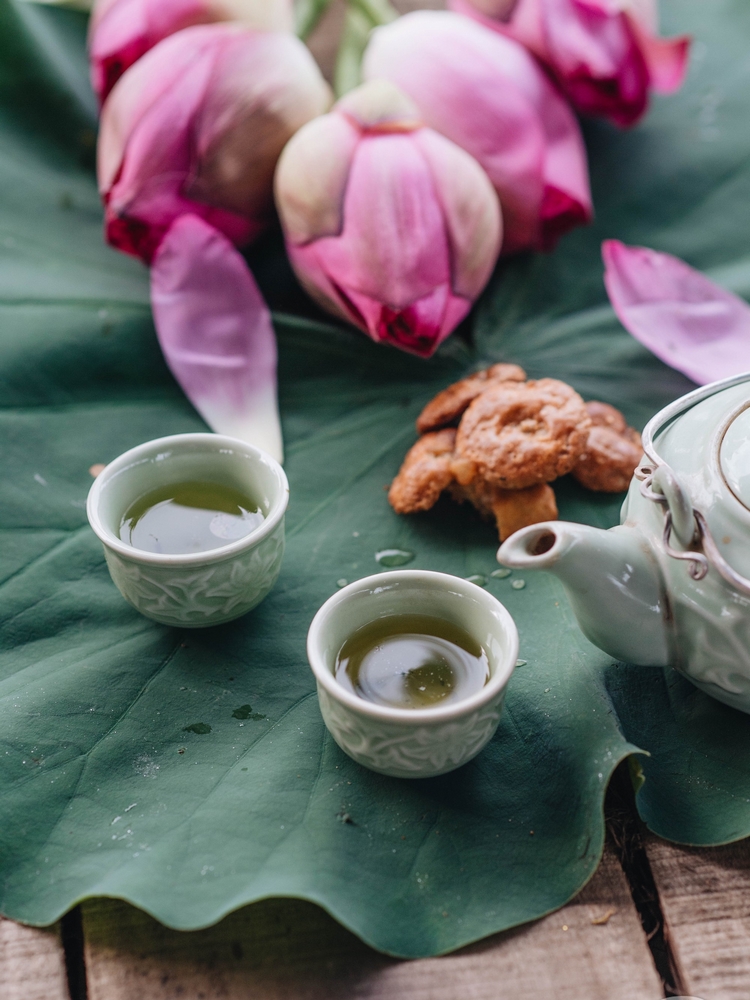

Lotus seed and longan tea
If you're a fan of Vietnamese desserts, then lotus seed and longan sweet soup is a summer treat you shouldn't miss. This snack is considered the essence of Vietnamese cuisine. Made from lotus seeds, it has calming and cooling properties, making it a favorite summer treat. Depending on preferences and regional characteristics, each place has its own way of preparing it, such as lotus seed and aloe vera sweet soup, lotus seed and purple sweet potato sweet soup, lotus seed and snow fungus sweet soup, lotus seed and red bean sweet soup... but the most delicious and popular is probably lotus seed and longan sweet soup.
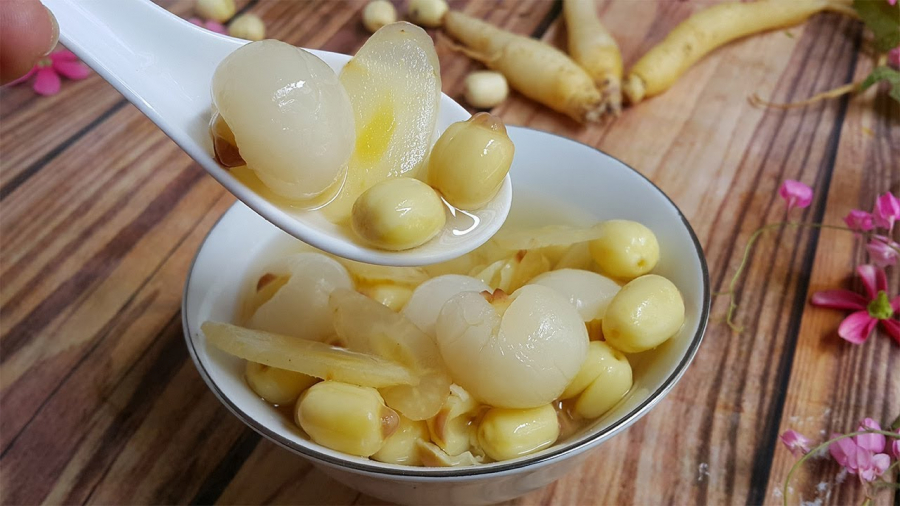
To make this dish, fresh lotus seeds must be peeled, the cores removed, and then cooked over low heat until soft. After boiling the sugar syrup, add the lotus seeds and continue cooking over low heat until they absorb the flavor. Then, carefully stuff the lotus seeds into the pitted longan pulp, reheat the lotus seed syrup, and add them to the pot. It's that simple, so lotus seed dessert can be easily made at home.
In Hanoi, to enjoy this lotus seed dessert in its authentic form, you can visit some dessert shops on Hang Can and To Hien Thanh streets. If you have the opportunity to travel to Hue, you should also try the lotus seed dessert at Tinh Tam Lake, located near the Imperial Citadel.
Lotus jam
Another sweet treat made from lotus seeds is lotus seed jam. You don't need to wait until summer to enjoy lotus seed jam; it's a popular snack, especially during Tet (Vietnamese New Year), made from dried lotus seeds. The process of making lotus seed jam is quite elaborate. Besides soaking and boiling, the dried lotus seeds need to be simmered until tender but still intact, not broken. Then, they are soaked in cold water and drained. Afterward, the lotus seeds are marinated with sugar in a 1:1 ratio until the sugar dissolves completely. The sugar syrup is then strained and simmered over low heat until thickened. Finally, the lotus seeds are added, stirring constantly until a white coating of sugar forms around them.
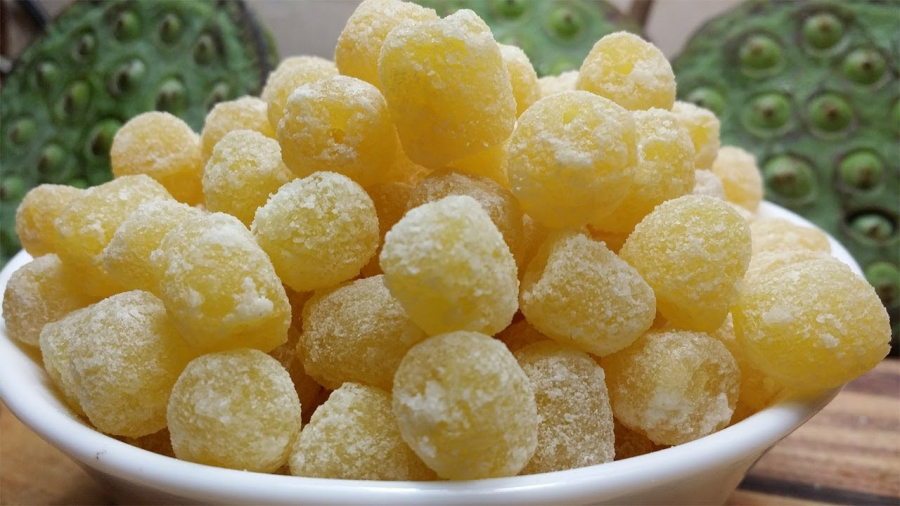
Lotus seed jam is considered one of Hanoi's specialties, so many visitors from the South often stop by Hang Duong and Hang Dieu streets to buy it as a gift. Not only delicious, each lotus seed is like a white pearl, embodying the essence of Hanoi's cuisine. Behind the sweet coating of sugar lies the refreshing, nutty flavor of the lotus seed; sipping on it with fragrant tea makes one fall even more in love with Hanoi's summer.

Steamed rice wrapped in lotus leaves
Steamed rice wrapped in lotus leaves is a dish that can be considered "perfect in both appearance and taste," thanks to its beautiful presentation and unique, delicious flavor. With its exterior resembling a blooming lotus flower and its fragrant rice inside, it's truly an irresistible dish for tourists visiting vegetarian restaurants in the ancient city of Hue.
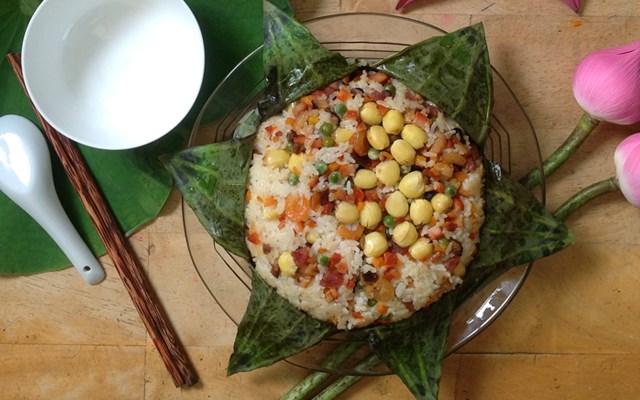
To make a delicious and visually appealing "lotus flower," the "stamen" must contain all the necessary ingredients: rice, lotus seeds, carrots, shiitake mushrooms, radishes, tofu, etc. After preparation and seasoning, everything is wrapped in lotus leaves and steamed to preserve its natural aroma and color.
When enjoying this dish, diners use a sharp knife to make incisions along the midrib of the lotus leaf, creating an attractive, rounded shape and releasing its fragrant aroma. The chewy texture of the rice, the sweet and nutty flavor of the nuts and vegetables, all infused with the scent of lotus, will leave a lasting impression on anyone who tries it. Perhaps only when summer arrives and the lotus blossoms can visitors to Hue truly enjoy this elegant yet elaborate dish.
Lotus root salad
Lotus root salad is a very familiar Vietnamese dish, perfect for summer thanks to its refreshing sweet and sour taste.
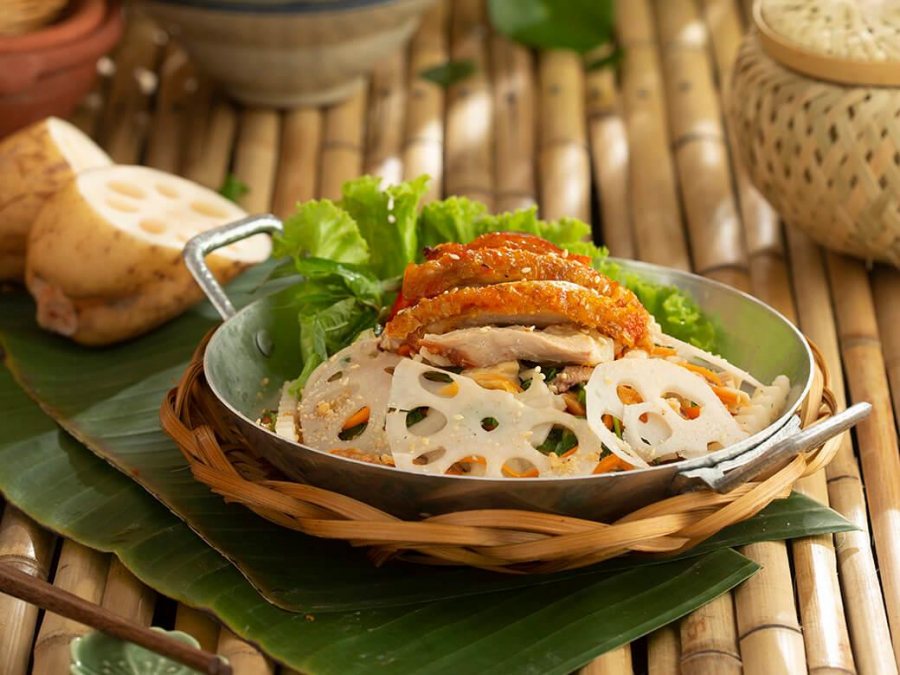
Depending on individual preferences, lotus root is combined with various ingredients, creating unique and delicious flavors for each dish, such as lotus root salad with shrimp and pork or lotus root salad with pig's ears... The secret to this dish lies in the dressing made from fish sauce, vinegar, lemon, chili, garlic, etc., adjusted to suit individual tastes. During lotus season, most restaurants serve lotus root salad to tourists. You can eat it with other stir-fried or grilled dishes to make it less monotonous and easier to eat.
Lotus tea
Lotus tea can be considered a specialty made from summer lotuses. To create a beverage imbued with the flavor of morning dew, lotus growers go through many meticulous and careful steps.
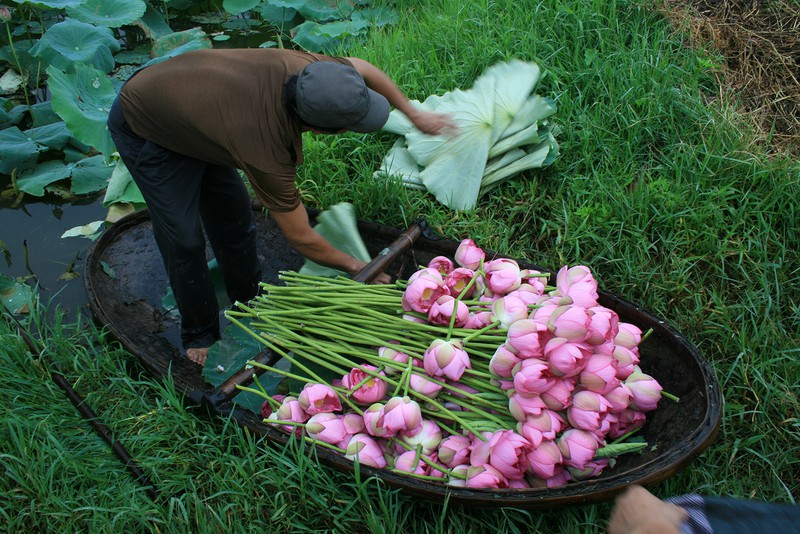
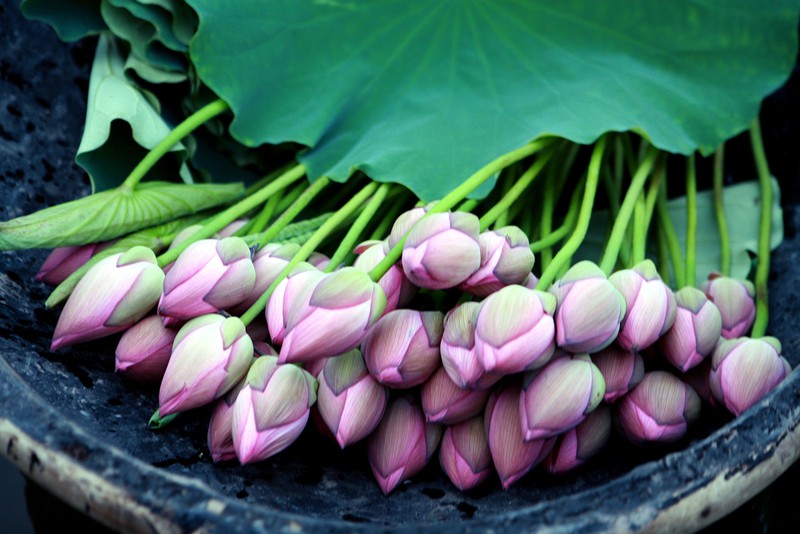
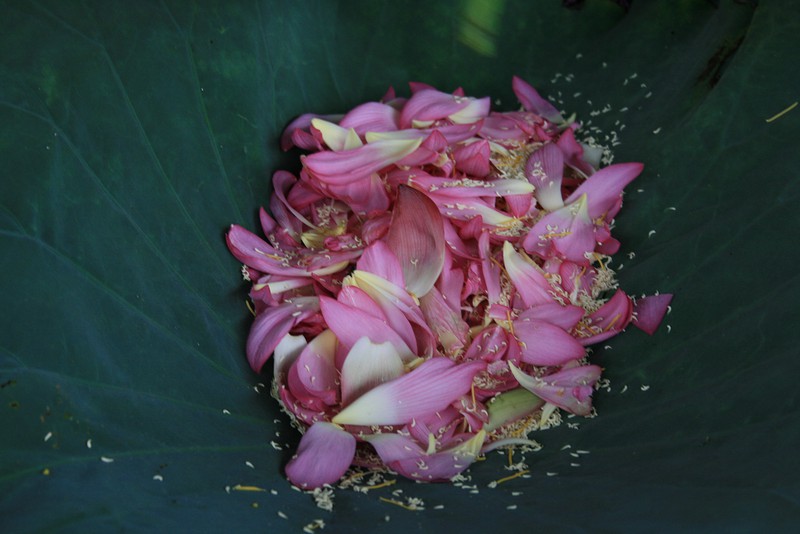
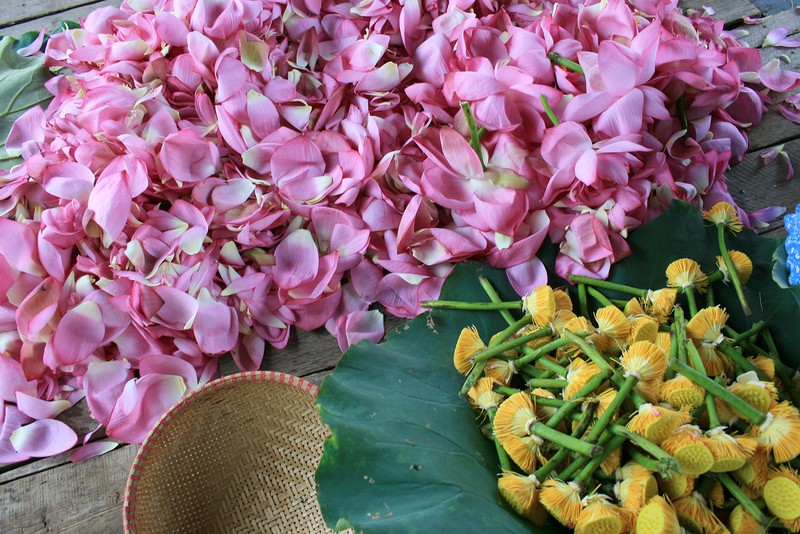
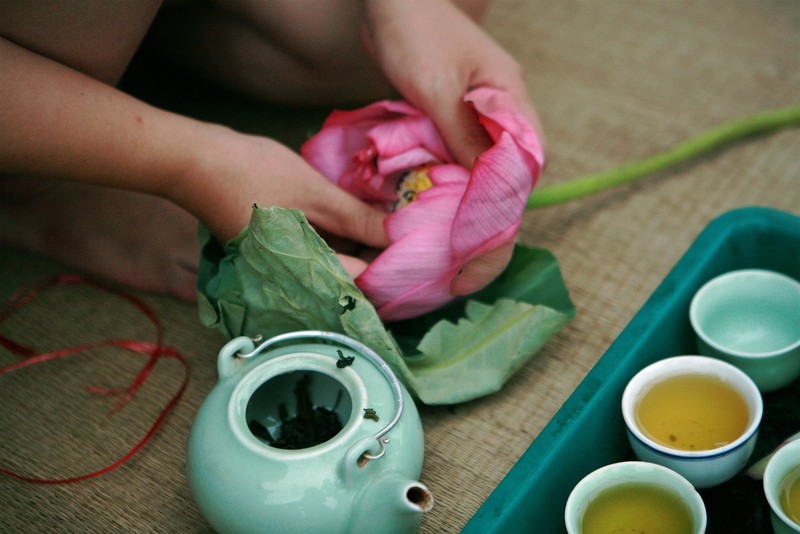
To infuse the tea, lotus flowers must be harvested before dawn while still covered in dew; only large, vibrant pink blossoms are selected. First, the white "rice grains" attached to the yellow stamens of the lotus are separated. At least 1,000 lotus flowers are needed to infuse one kilogram of tea. Layers of tea are alternated with layers of these "rice grains," followed by a layer of parchment paper. Each infusion is followed by drying, a process repeated 5-7 times. This process ensures the lotus fragrance permeates every fragrant tea leaf.
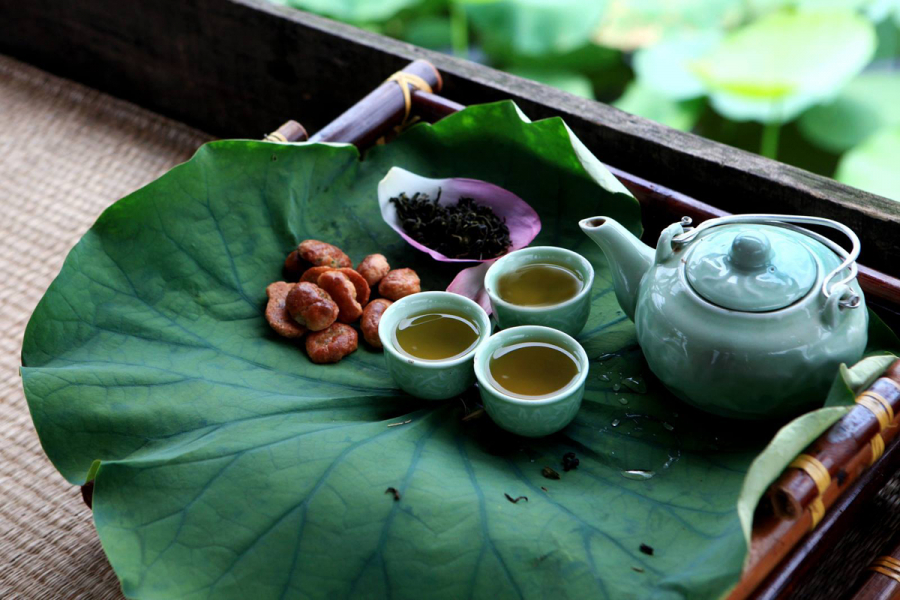
However, the way of enjoying lotus tea is the most exquisite and appealing aspect of this tea. Therefore, every summer, the lotus ponds along West Lake (Hanoi) are bustling with visitors who come to take photos, admire the lotuses, and enjoy tea while feeling the breeze. Each pot of lotus tea costs between 30,000 and 50,000 VND, depending on the type and the pond. The clear tea and the subtle lotus fragrance make the hot summer air feel much cooler.