VI
VI


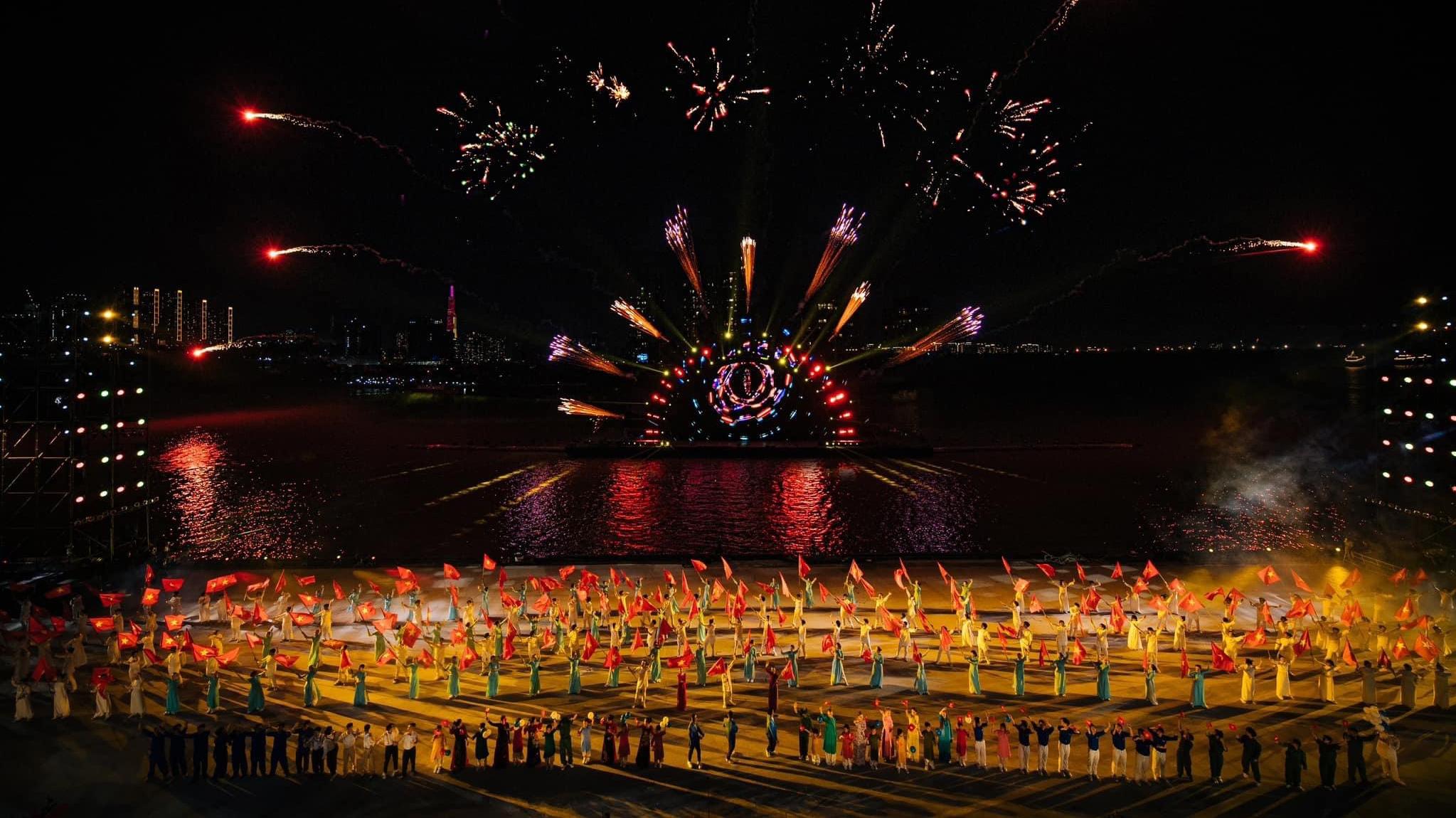
Have you heard the story of the river?
For millennia, the waves have told their story.
Saigon has never been this beautiful.
"A land of trade and friendship along the waterways"
They came by the river, lived by the river, and developed thanks to the river. From the past to the present and into the future, the aspiration for a city that embodies the spirit of "from the footsteps of migrants to a smart city" continues to flow in the veins of the people of this land.
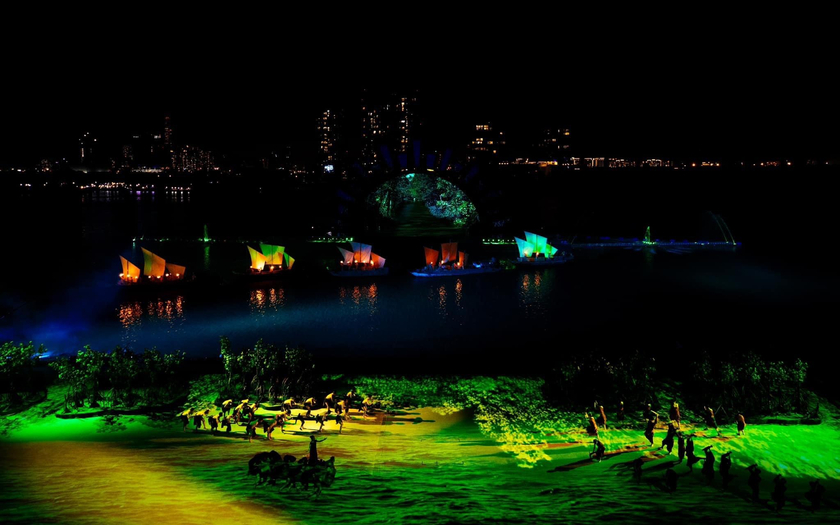
The river carries with it a diverse flow of cultures, which merge and transform into the cultural identity of Southern Vietnam.
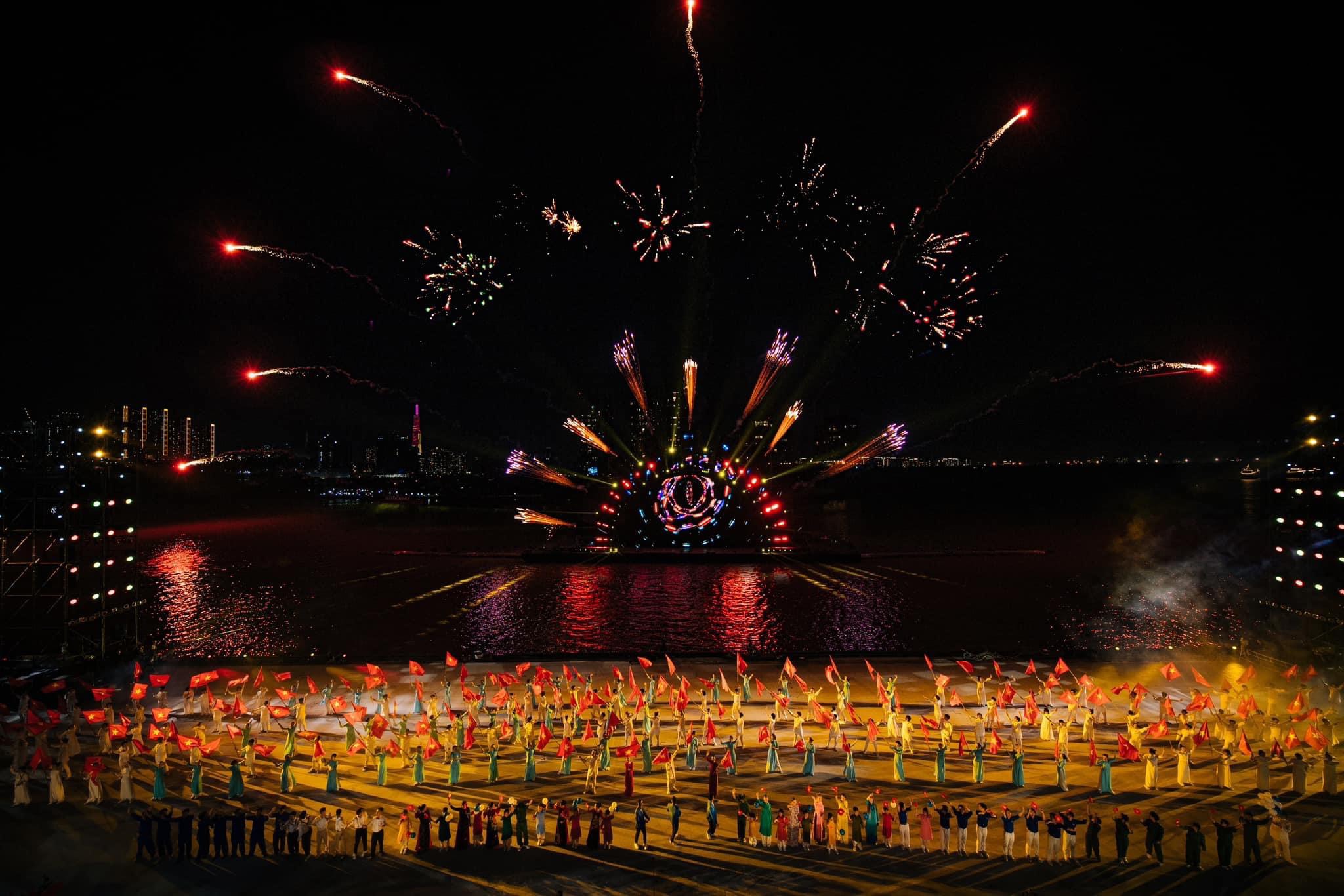
On the evening of August 6th, an art performance themed "The River Tells Stories" took place at Saigon Port (Nguyen Tat Thanh Street, District 4, Ho Chi Minh City). The program was part of the first Ho Chi Minh City River Festival in 2023, organized by the Ho Chi Minh City People's Committee.
Speaking at the event, Chairman of the Ho Chi Minh City People's Committee Phan Van Mai emphasized: "It can be said that rivers and canals not only contribute to shaping the form and appearance of Saigon - Gia Dinh - Ho Chi Minh City, but also carry a diverse flow of culture to merge and transform into the cultural identity of Southern Vietnam, forming the generous character and the aspiration to reach out to the wider world of the people of Ho Chi Minh City. Today, with new opportunities, the flow of history will continue to mark a transformation in the development strategy of the city by the river."
With that in mind, the art program "The River Tells Stories," held right at Saigon Port, beside the Saigon River, is like a symphony of nature and people of the land embraced by the river's graceful form; a tribute to the pioneers who settled and developed the land, and to the generations of inhabitants who came to live, work, and struggle to create and pass on the river's heritage to future generations.
WHAT STORY DOES THE RIVER TELL?
The five acts of the show (including land reclamation - city construction - boats on the docks - a thriving trading port - a vibrant city by the river) recreate the cultural and economic activities and the lifestyle of the people of Saigon - Cholon - Gia Dinh - Ho Chi Minh City, over the past 300 years.
CHAPTER 1: RECLAMATION OF LAND
From a desolate, untouched land
I've arrived in this strange land.
The bird's cry should be frightening.

The fish in the area had to be shocked.
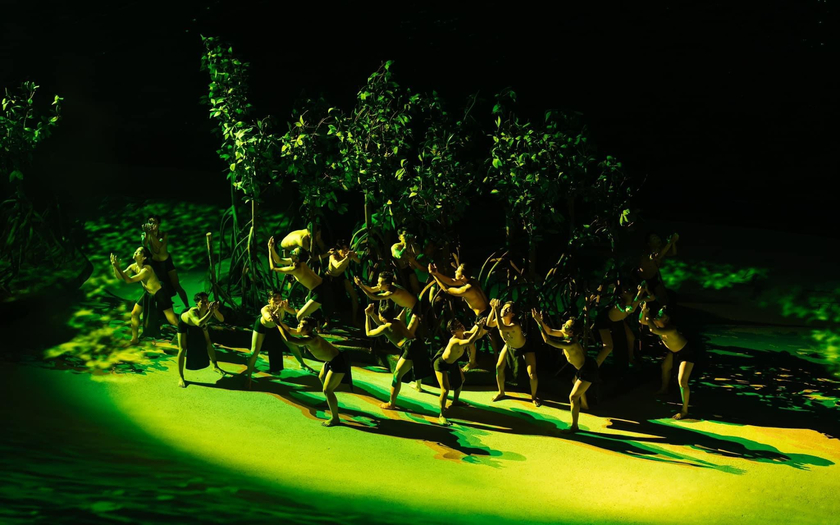

The show serves as a tribute to the pioneers who settled and developed this land.
In this new land, crisscrossed with rivers, canals, and islets – the source of a great river converging with historical sediments – life began to emerge, with nature, people, and countless species of birds and animals, in a vast, wild forest stretching for millennia. Migrants overcame all hardships and challenges to conquer nature, tame the land, reclaim and cultivate the land, and settle in their new homeland – fertile land – creating the rich rice granaries of the prosperous Southern region of Vietnam.
CHAPTER 2: BUILDING THE FORTRESS
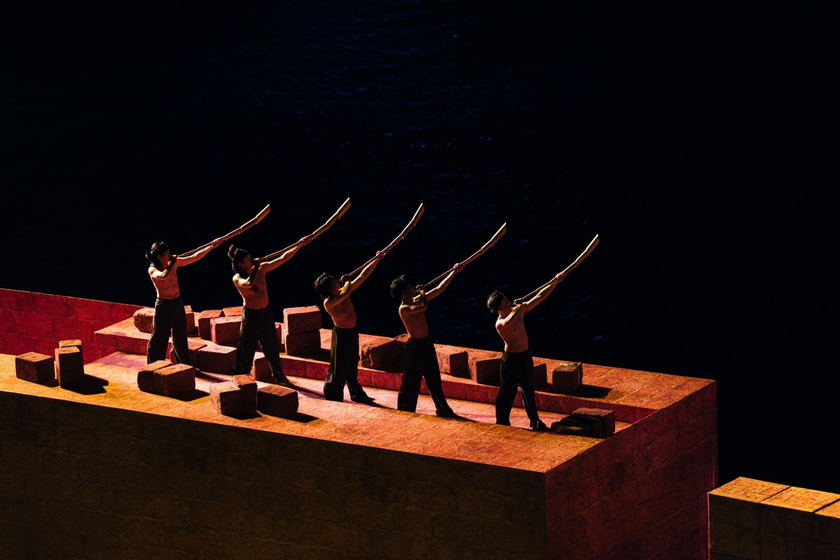
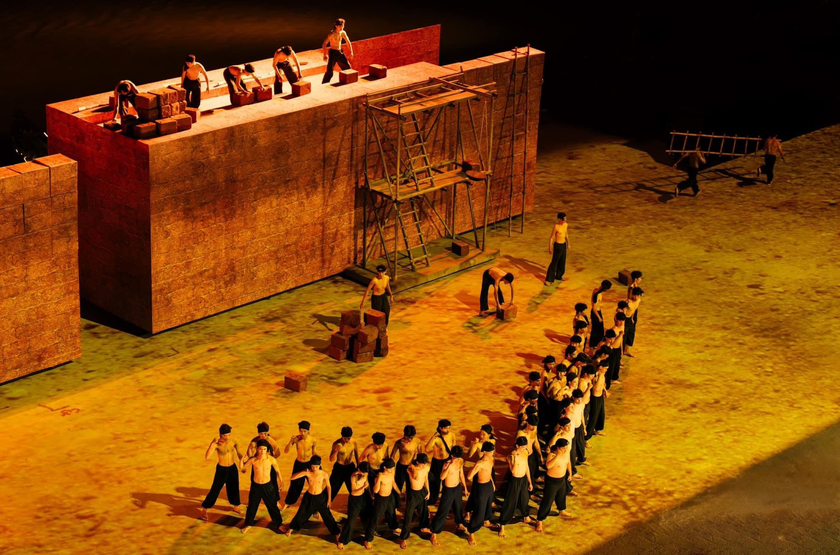
Gia Dinh Citadel (Quy Citadel) has a complex, impregnable octagonal architectural design.
In 1698, Lord Nguyen Phuc Du sent General Nguyen Huu Canh to survey and establish an administrative system in the Gia Dinh region. The strong ambition to expand the territory of the Nguyen lords created major turning points, giving birth to the Gia Dinh region, gathering a community of people from many different regions, recruiting migrants from all over, and laying the foundation for the prosperous development of the history of Dang Trong (Southern Vietnam).
In 1790, Gia Dinh became the capital of the Southern region of Vietnam. Lord Nguyen Anh mobilized over 30,000 laborers, primarily using laterite stone, to build the Gia Dinh citadel, also known as Quy Citadel. The citadel's strength, complexity, and impregnability are demonstrated through its octagonal architecture with a "citadel within a citadel, moat within a moat" structure, and it is considered the largest citadel built by the Nguyen lords in the Gia Dinh region.
CHAPTER 3: ON THE WHARF AND ON THE BOAT
"The Nha Be river flows and divides in two."
"Those who want to go to Gia Dinh or Dong Nai, go ahead."
This famous folk song, deeply rooted in the waterways of Southern Vietnam, has become ingrained in the consciousness of generations of people, transforming into the chants sung while rowing boats at the Nha Be river junction. These chants are like the rhythmic movements of rowing, a way for young men and women to express their feelings and affections on the river.
"The Nha Be River has mangrove trees."
At Vam Bao Nguoc, the waves crash violently.
Why didn't you ask or greet me when you saw me here?
Or do you have… somewhere I can help you out?”
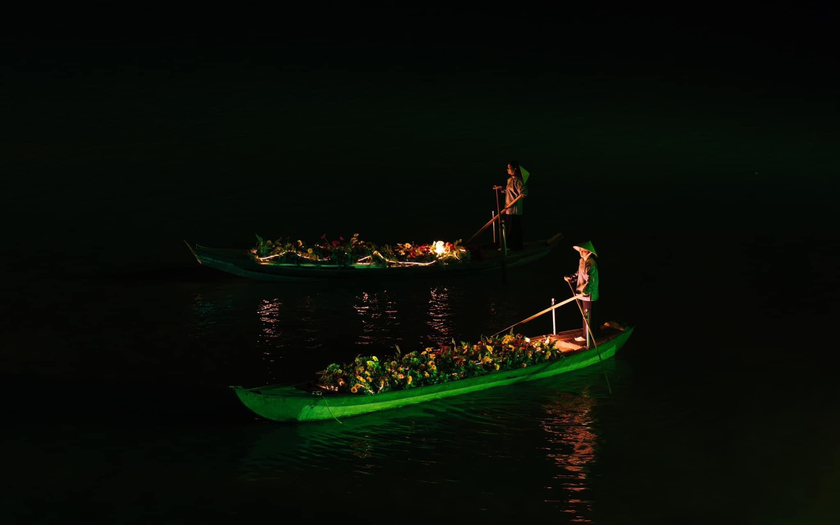
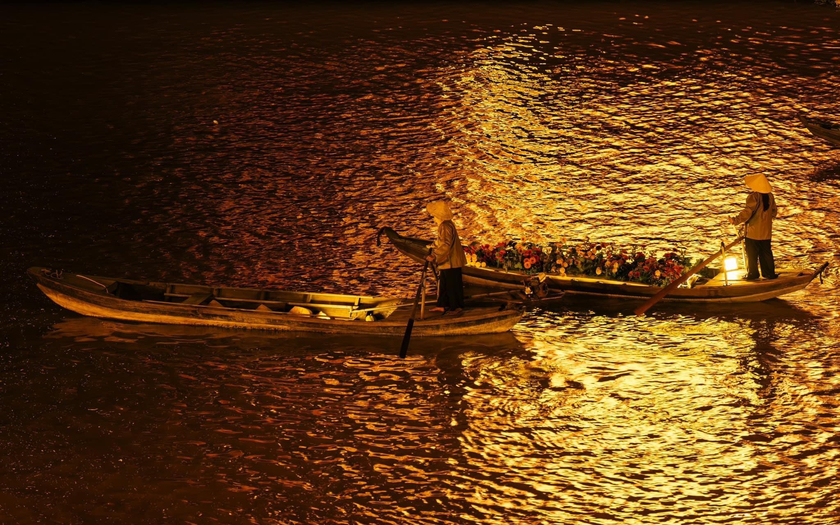
The central backdrop of the show is the Saigon River.
CHAPTER 4: THE PROSPEROUS PORT
Officially established in mid-1863, Saigon Port was built and equipped on a large scale, becoming a top-tier military port in terms of strategic location, ranking 12th among French military ports in terms of tonnage and the largest commercial port in Indochina during the French colonial period.
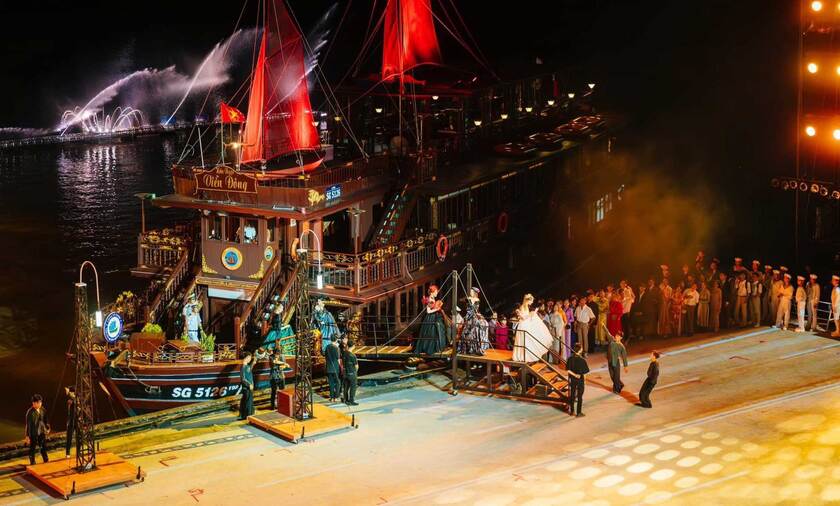
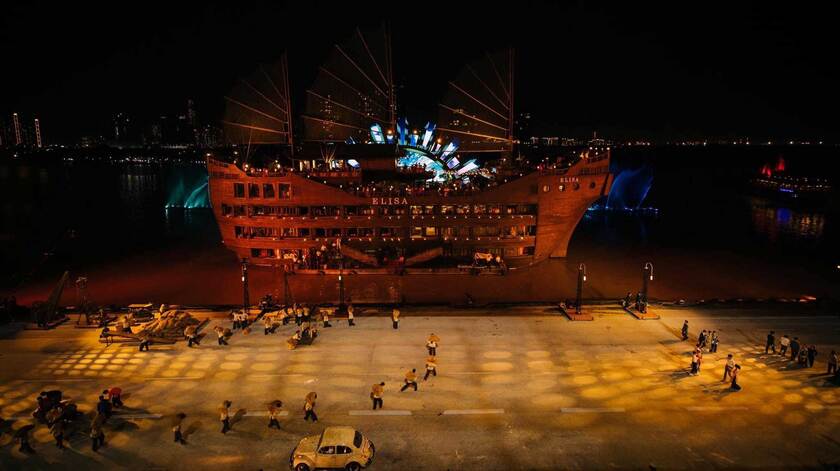
Saigon Port was a prominent gateway for tourism and trade at that time.
The waterway transportation system also developed significantly with the construction, dredging, and expansion of canals connecting Saigon – Cholon – the Mekong Delta and the surrounding ring canals, creating a rice-producing route and increasing the capacity to transport goods from various regions to Saigon and out to sea. Abundant rice, agricultural products, seafood, silk, and handicrafts from Southern Vietnam and the entire country were exported worldwide through the port of Saigon.
Saigon became a gateway for tourism by both sea and air, allowing foreign visitors to explore the Southern Indochina region, and was the leading trading port of the Far East at that time.
CHAPTER 5: THE GLORIOUS CITY BY THE RIVER
Saigon appears truly vibrant and lively in the night, in the shimmering lights of the towering buildings standing proudly amidst the bustling city, a "very Saigon" image with its crowded traffic, cheerful atmosphere, and many people passing by.
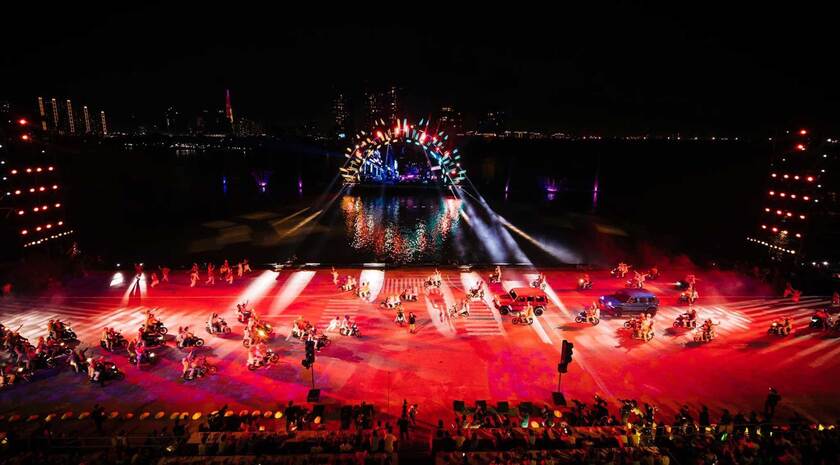
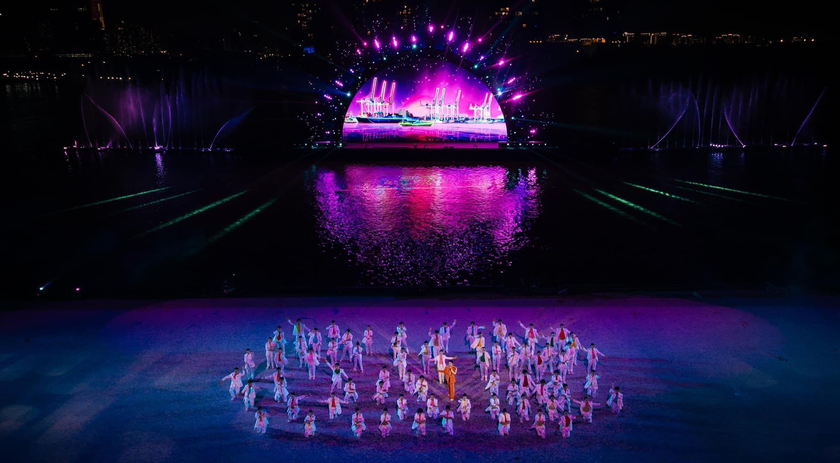
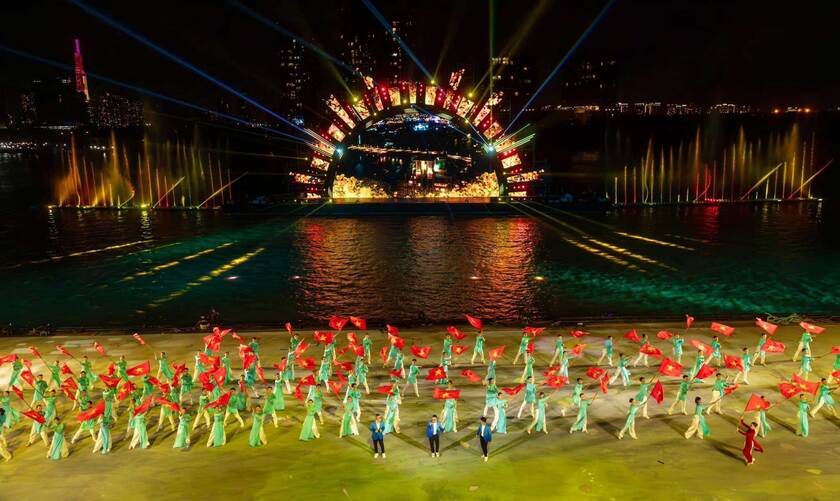
The performances were lively and featured themes about Ho Chi Minh City.
OVERWHELMED WITH EMOTIONS IN "THE RIVER THAT TELLS STORIES"
"The River Tells Stories" is a performance featuring art forms ranging from folk to contemporary, including music, dance, lighting, and film, rich in cultural and artistic colors, entertainment combined with modern performance technologies, taking place on a real river, a real port, with real boats, real people, a real setting, and real stories and the most genuine emotions elevated to art.

"The River Tells Stories" is being held for the first time in Ho Chi Minh City.
Having seen many live performance shows both domestically and internationally, "The River Tells Stories" left a particularly strong impression on Le Phat Dat (Travel Blogger Le Pa Da): "The River Tells Stories is not just an ordinary live performance show, but a historical narrative recreating scenes from over 300 years. I was truly amazed by the show's grand scale. It's undeniably on par with shows in other countries in the region."
The live performance featured over 700 actors and residents of Ho Chi Minh City, as well as people from traditional craft villages in the Mekong Delta. In addition, 30 restaurants, yachts, sailboats, canoes, wooden boats, river buses, and speedboats operating tourism services in the city also participated in the parade.
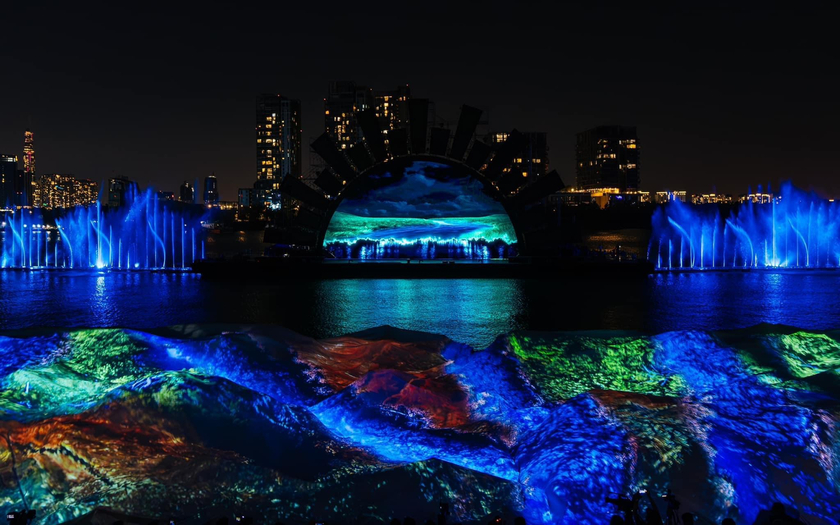
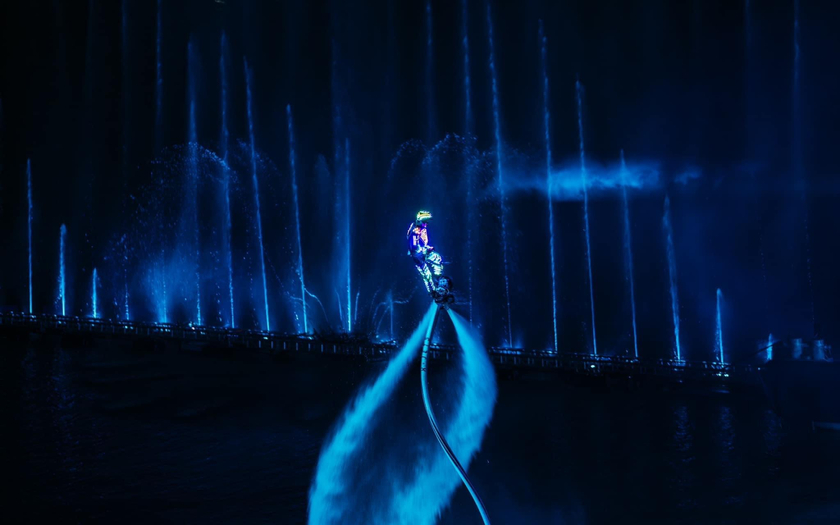
The program was meticulously produced and left a lasting impression on the audience.
The show utilizes 3D technology, mapping the entire floor of the onshore setting; a water fountain system programmed to the music; a spectacular flyboard performance, combined with a drone show and fireworks in the sky, along with lights from dozens of large boats on the river.
The entire stage of the live performance on the river is arranged in layers, with the foreground being the stage on the shore, the middle ground being the space for boats to move, and the background being the stage on the river. All of this recreates the cultural space of each era, delivering unforgettable and impressive emotions that touch the hearts of the audience.
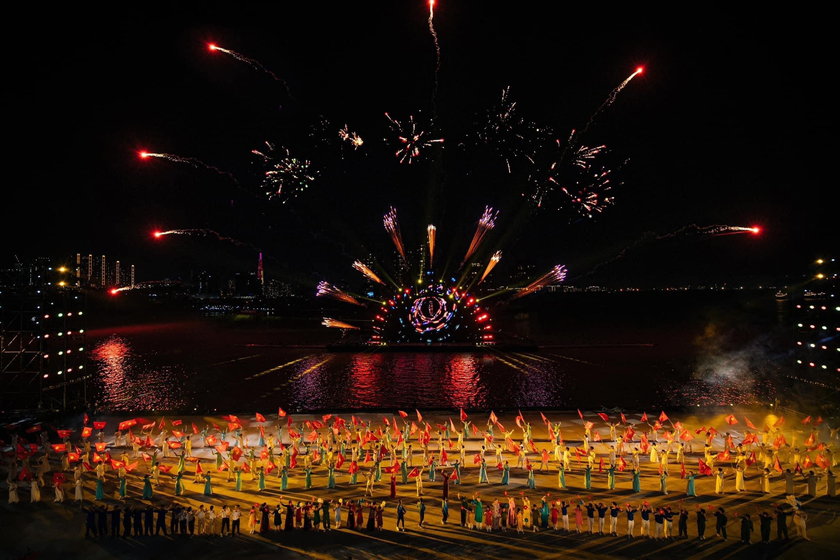
"Having lived and worked in Ho Chi Minh City for over 10 years, I've always felt grateful and fortunate. This show clearly demonstrates the transformation and integration of the land I've been attached to, making me even more proud and fond of this place. I hope we will see even more spectacular River Festivals in the coming years," Le Phat Dat shared.