The southwestern United States and the hoodoo forests of Bryce Canyon
23/09/2019
In my twenties, I never dreamed the American Dream because all I pictured in my mind was a country of boring skyscrapers, crowded streets, and strange people. But one fine day, fate intervened and work led me here. Everything about America came flooding before me, telling me to stop imposing my preconceived notions on a land I had never set foot in before.
Wild West
Indeed, America wasn't quite what I had imagined. The congested streets I'd pictured were replaced by wide, straight avenues. American culture was also somewhat different from European, but most of the people I met were kind. The skyscrapers weren't suffocating either. And compared to the expansive natural landscape, they were like small islands in a vast ocean.
From the first glance, the lush green hues of towering mountains, deep forests, rolling plains, and vibrant deserts intertwined instantly awakened an adventurous spirit within me. I told myself that if there was a place in the world perfect for endless journeys, it was probably this country. At that very moment, I knew I would return someday.
And I did return. Almost immediately. I chose Grand Circle in the southwestern United States for a three-week road trip. Back then, I had never traveled far, just wandering between a few bustling cities and quiet villages. So that road trip was the starting point, paving the way for my journeys that would follow.
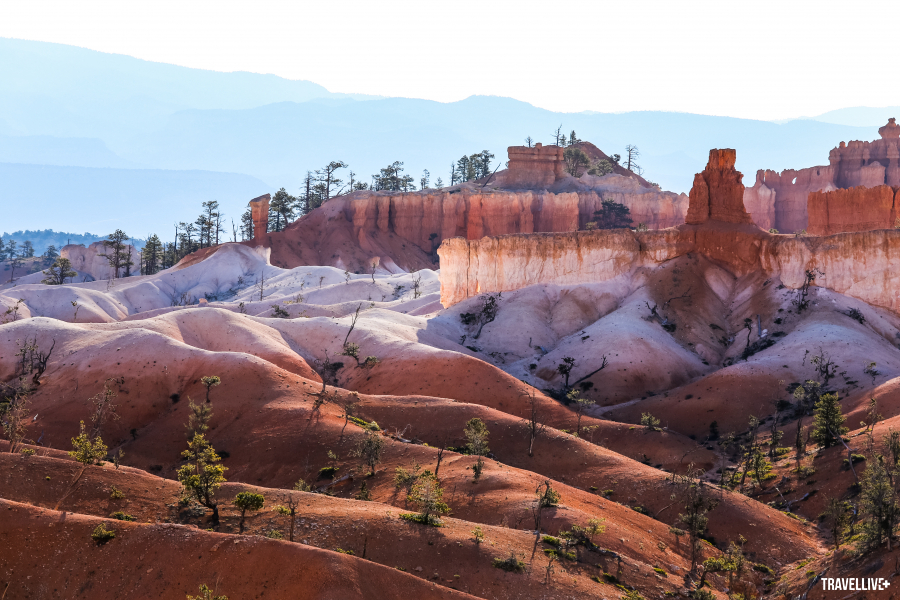
The desert region is vast, arid, and desolate.
Through American cowboy movies, the phrase "Wild West" has become familiar to generations. But only when I actually set foot here did I truly feel the desolation and loneliness of this land. It's a vast, arid, and deserted desert, a stark contrast to the fertile plains to the east. Across millions of square miles, large cities are scattered here and there, interspersed with sparsely populated villages, each with only a few dozen to a few hundred wooden houses. When night falls, the roads connecting these small villages are shrouded in darkness. At that time, you are alone, facing the cold night, with the distant and near echoes of nocturnal animals and a sky sparkling with stars like something out of a dream.
Sunrise at Bryce Canyon
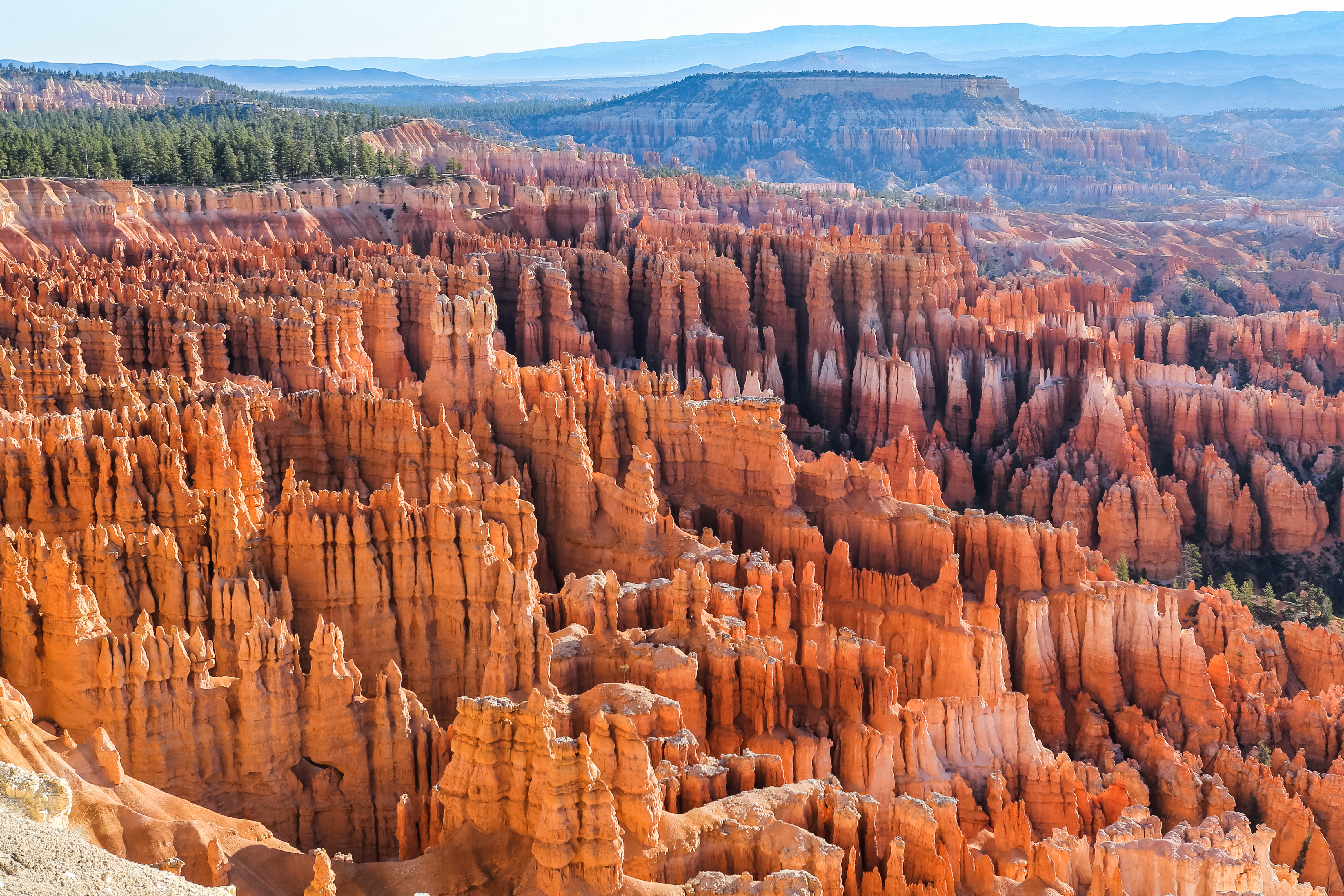
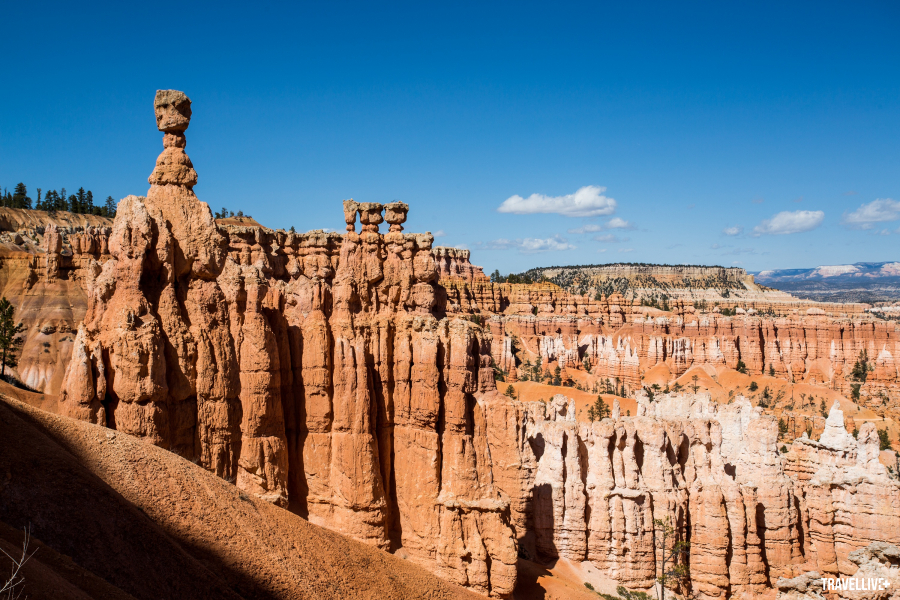
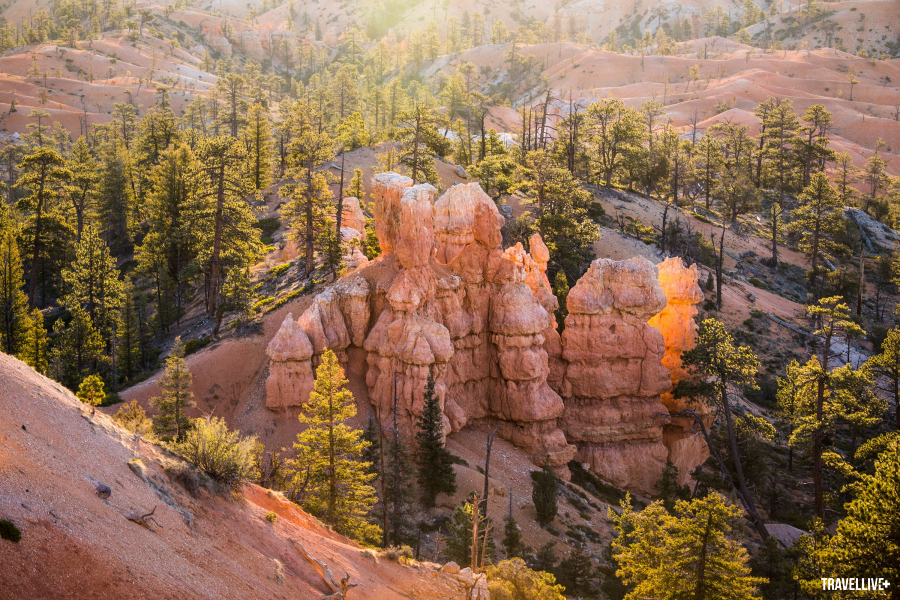
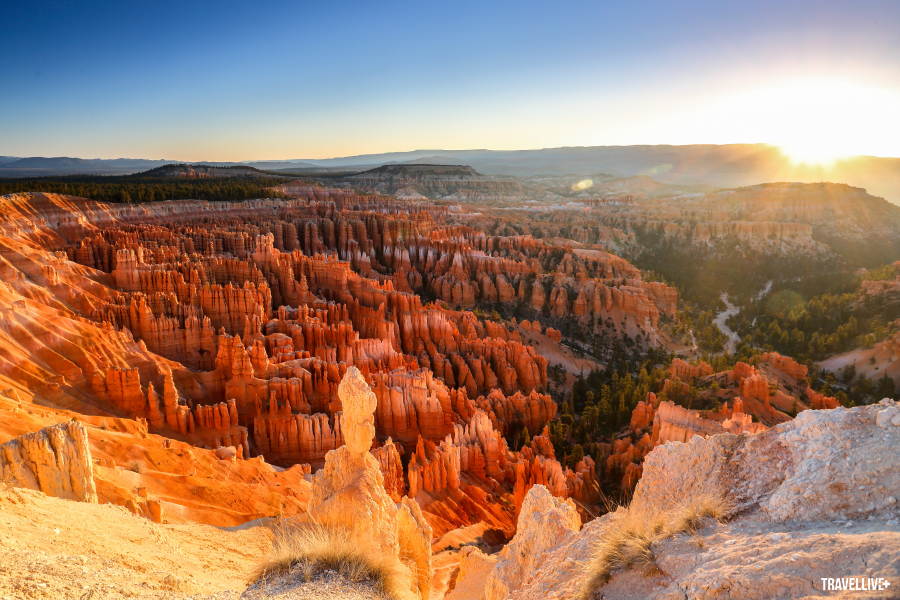
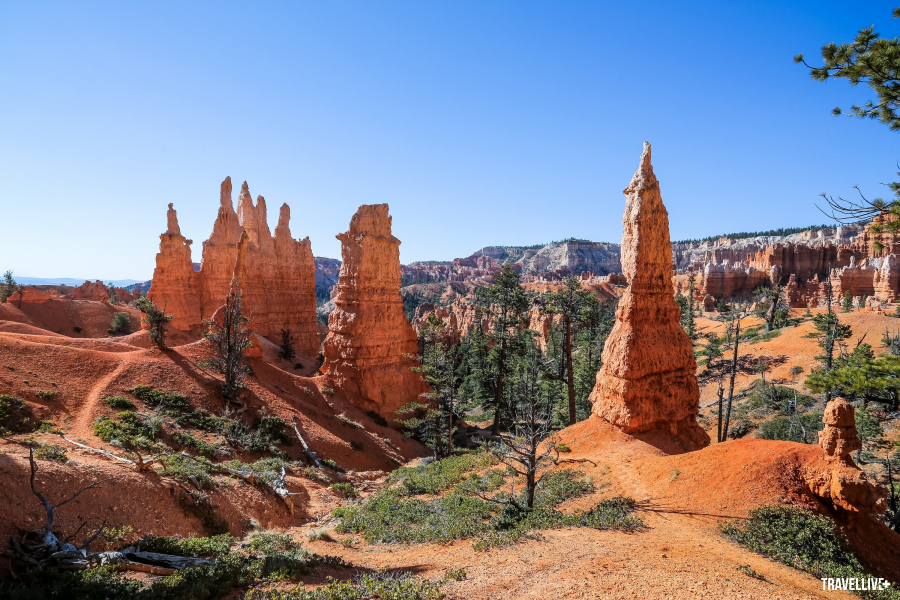
Bryce Canyon was located in the middle of my three-week journey through the Western desert. Located in Utah, Bryce Canyon covers an area of 145 square kilometers and is one of the most beautiful national parks in the United States, with a landscape that stands out from the surrounding desert. The vibrant orange rock formations, often called hoodoos, are the result of millions of years of water freezing on the surface of the rock layers, creating cracks. Rainwater seeped through these cracks and, over the years, eroded the rock into columns tens of meters high. These closely spaced columns create the unmistakable beauty of one of America's most famous national parks.
These vibrant orange rock formations are often called hoodoos.
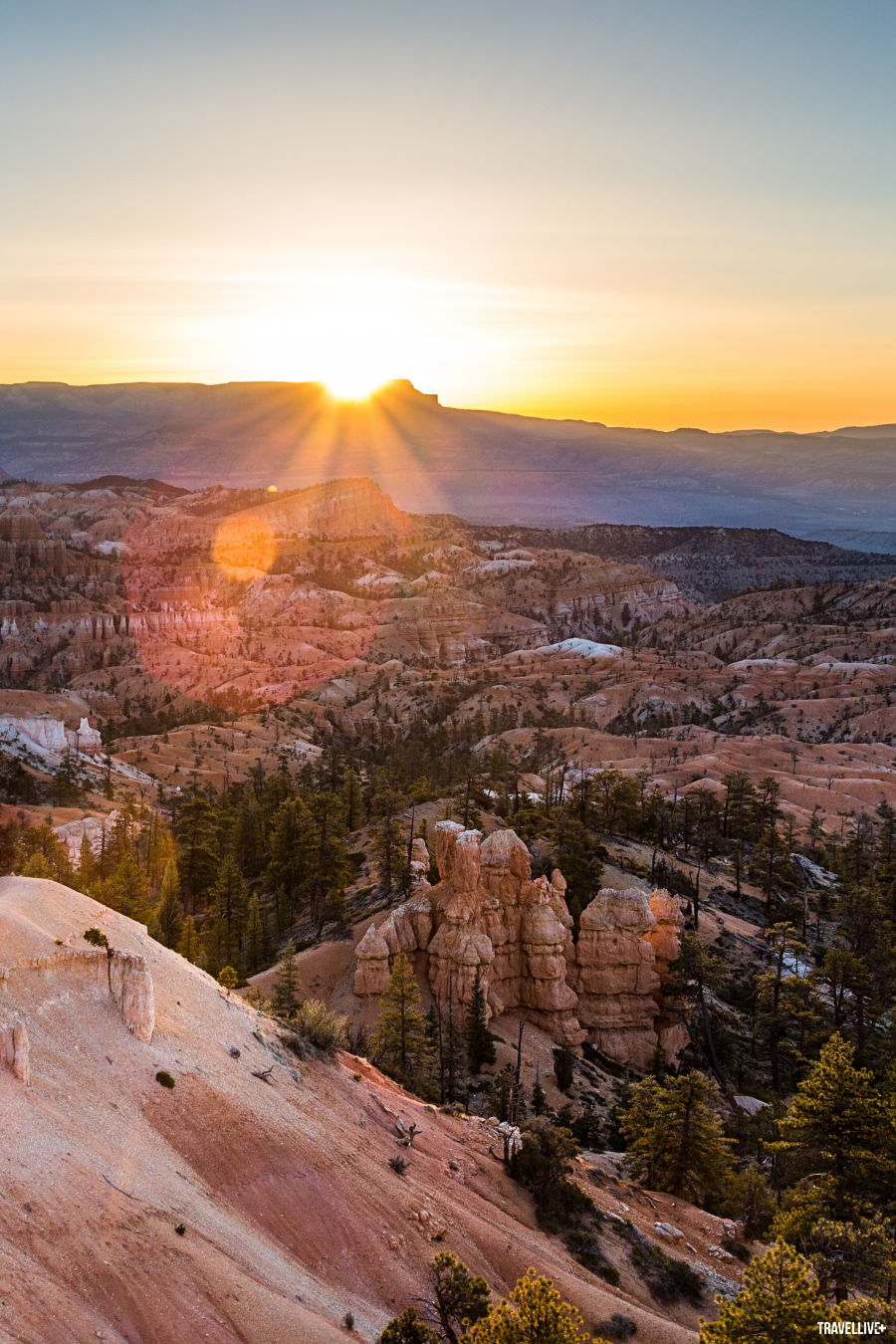
I still remember the moment the sun rose, its rays filtering through the vibrant red rock formations—it was truly magnificent.
Hike down to Bryce Canyon
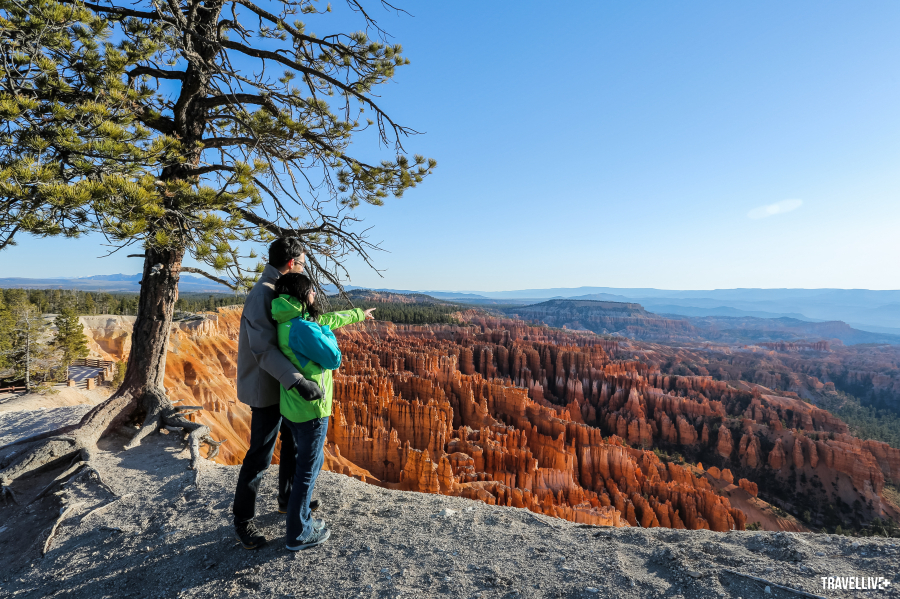
Contrary to its name "Canyon," Bryce Canyon is not a canyon but a series of massive natural viewing platforms located on the eastern edge of the Paunsaugunt Plateau in Utah. A paved road runs along the highest slope of Bryce Canyon, at an elevation of 2,400 to 2,700 meters. Right along this road are a series of stunning viewpoints, situated near tourist parking areas. From these viewpoints, as the sun rises in the east, one can enjoy the sight of the hoodoos glowing in a golden-orange hue, the cold morning light piercing through the forest of rock formations.
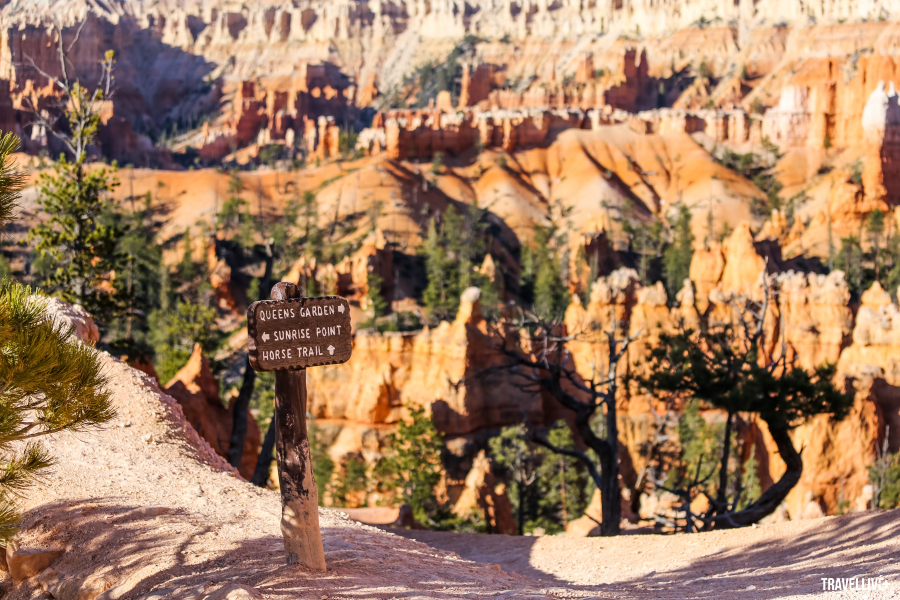
The viewpoints are clearly marked on the map, and these are usually the starting and ending points of the short hiking trails down into the valley. The hikes in Bryce Canyon are not too long and are easy to complete. Most only take a few hours to half a day, making them suitable for both young people and families with small children.
There are many beautiful viewpoints along the way.
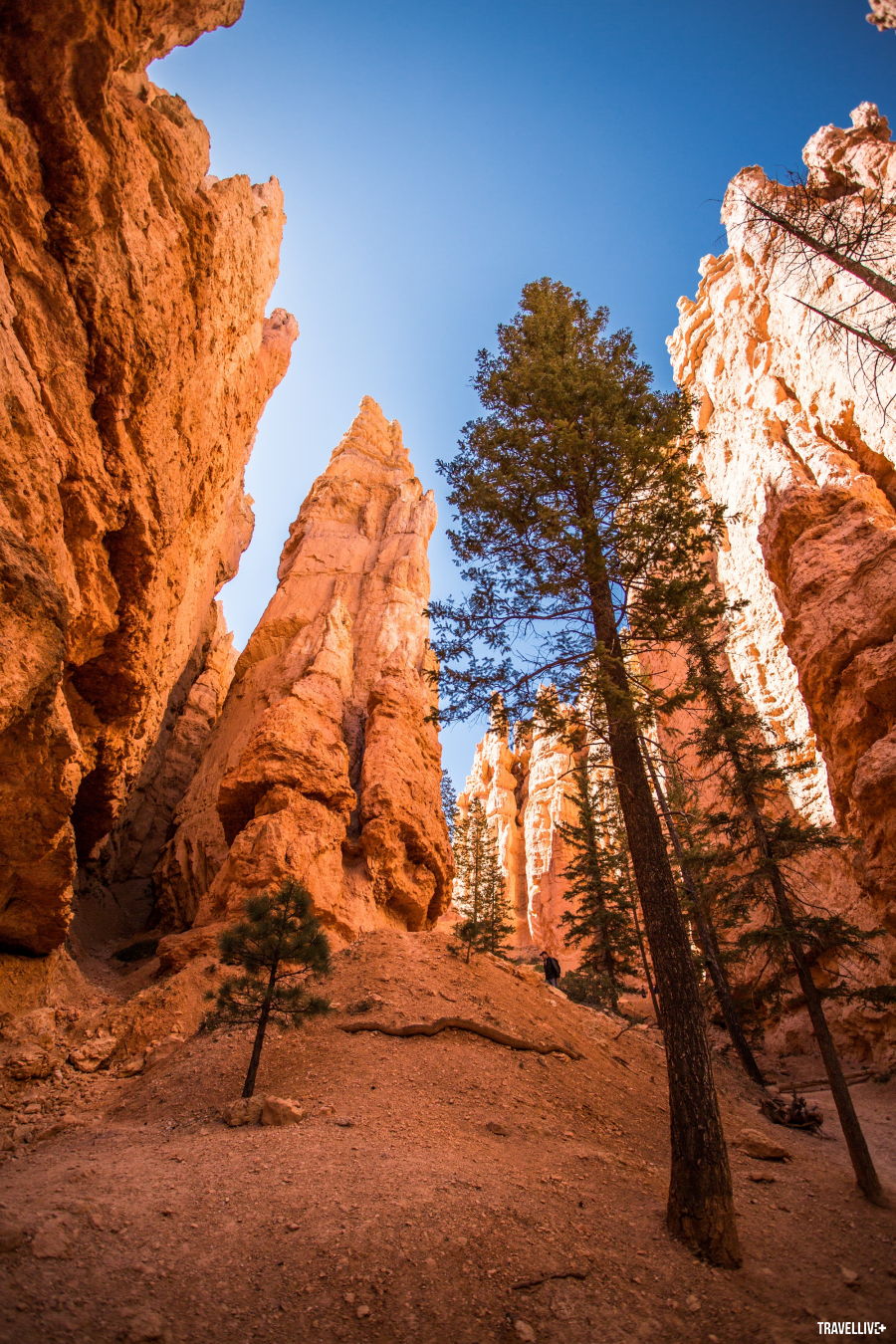
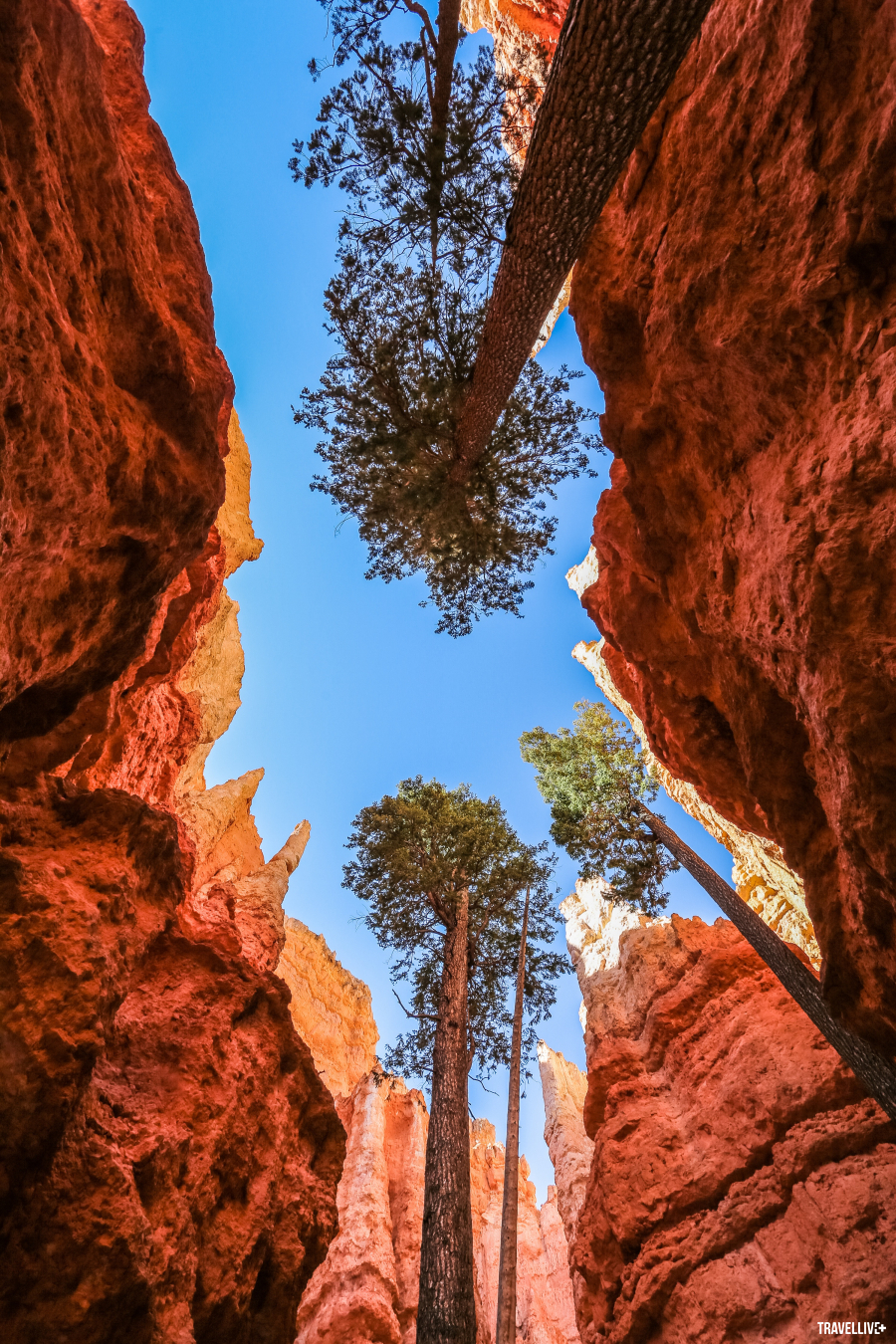
The deeper we went, into the forest of columnar rock formations, the more captivating Bryce Canyon became. The atmosphere here was incredibly quiet and peaceful. At times, I wondered if, by simply pausing and listening, I could discern the whispers of the ancients from their legends.
Standing in the desolate desert of Bryce Canyon, watching the first rays of sunlight peek over the green mountain range on the horizon, I felt incredibly small. The vastness of nature transformed me day by day. Overcoming my initial anxieties—fear of the deserted roads, the darkness, even the nocturnal predators—I gradually matured. I reveled in the sunrises and sunsets, in the ever-changing, majestic landscapes. The space was immense and exhilarating. This land helped me realize my American dream, the dream of freedom and adventure on long, open roads.
Suggestions for a day in Bryce Canyon
1. Watch the sunrise
As mentioned above, you definitely shouldn't miss the sunrise at Bryce Canyon. It's the most beautiful time of day here. Of all 13 viewpoints along Route 63 running through Bryce Canyon, Sunrise, Sunset, or Inspiration Point will offer you the most spectacular sunrise. From Sunset Point, you can see Sunrise Point and Queen's Garden Trail to the left; Navajo Loop Trail and Silent City to the right; and further in the distance, Inspiration Point and Bryce Point.
Sunrise at Bryce Canyon is the most beautiful time of day.
2. Hiking
After watching the sunrise at Sunset Point, you should try a short hike to get closer to the hoodoos and fully appreciate their beauty. Hiking maps of Bryce Canyon are available for free at the tourist office within the national park.
Among Bryce's hiking trails, the Queen's Garden trail (over 2 km) and the Navajo Loop trail (3.5 km) are the easiest. If you have more time, you can combine both trails into a single loop, covering a distance of 4.5 km and taking approximately 2.5 to 3 hours.
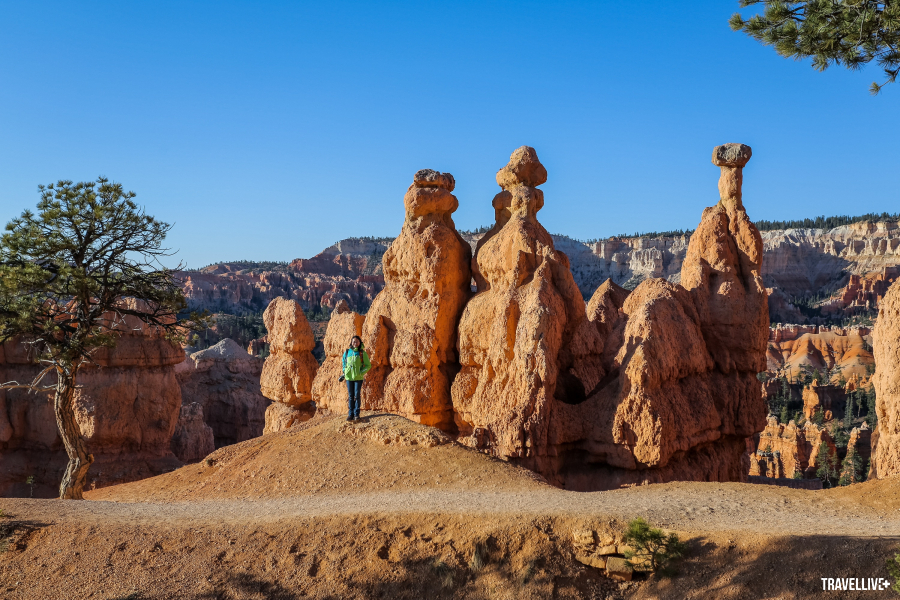
If you combine the Queen's Garden Trail and the Navajo Loop Trail, you can start from either Sunrise Point or Sunset Point. However, in my opinion, the route starting from Sunrise Point is easier. The hoodoos of Bryce Canyon are interconnected, forming winding paths like a jungle. Perhaps that's why Ebenezer Bryce (who named Bryce Canyon after himself) said, "It would be a terrible misfortune to lose your cow here." Hiking in the desert is very hot and dry, so don't forget to bring plenty of water and some food.
You should try a short hike to get closer to the hoodoos.
3. Drive along Panoramic Road
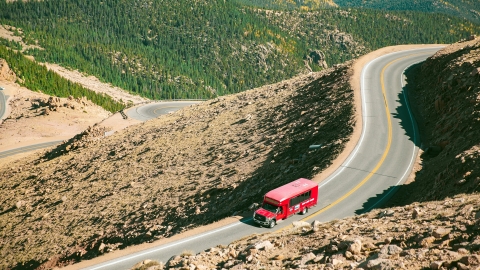
It would be a shame to visit Bryce Canyon without exploring all the viewpoints, especially since they're conveniently located along the main road and easily accessible by car. The 25km stretch from Fairyland Point to Yovimpa Point is stunning and shouldn't be missed. The viewpoints are all on the left side of the road when entering from the gate, so it's much more convenient to drive straight to Yovimpa Point and then stop to admire the views on the way back.
The viewpoints at Bryce Canyon are located right on the main road, and are easily accessible by car.
Additional information
Time:The Grand Circle has mountainous and desert terrain, and the weather is quite harsh. The best times to go on a road trip are spring (March to May) and autumn (September to November).
Entrance fees: National parks and preserves, including Bryce Canyon, have fixed entrance fees ranging from $5 to $10. This fee may be charged per person or for everyone in the vehicle. If your itinerary includes visiting 5 to 7 national parks, preserves, or sites, you should consider purchasing the American The Beautiful Pass, which costs $80, is valid for one year from the date of purchase, and takes effect immediately upon payment. This pass is valid in all areas under US government administration (excluding state or Native American jurisdictions) and covers one vehicle and seven people.
Estimated cost:
- Round-trip airfare from Vietnam: 800 - 1,000 USD/ticket
- Hotel: 50 - 100 USD/day
- Food: 10 - 20 USD/person/meal
- Self-drive rental of a 5-seater car: 40 - 50 USD/day
- The total cost is approximately $5,600 for two people for a three-week trip.

 VI
VI