VI
VI


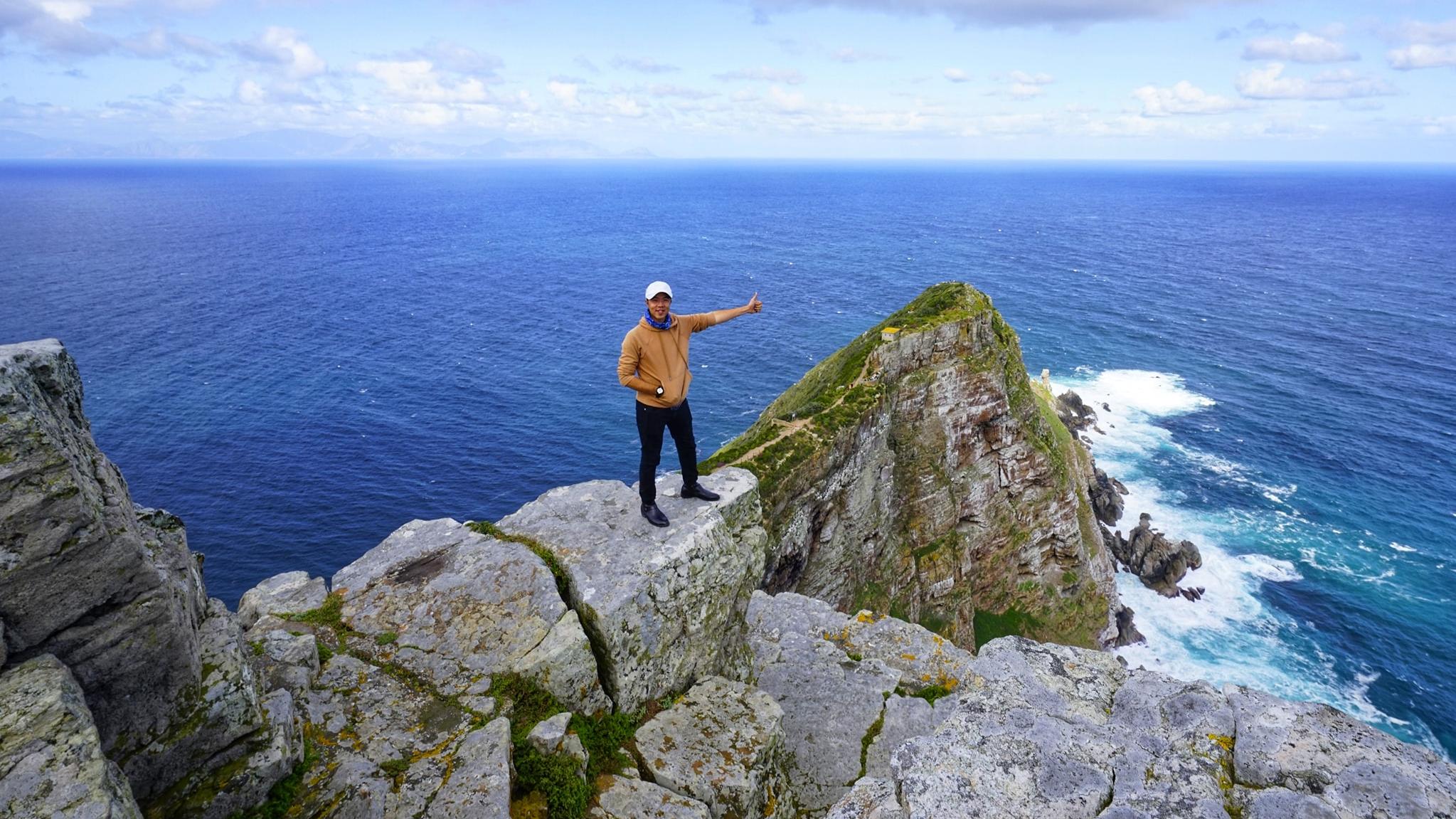
from mysterious ancient stories...
The Cape of Good Hope, located south of the Cape Town peninsula, is considered the dividing point between the Indian Ocean and the Atlantic Ocean. Many people believe it to be the southernmost point of Africa, but this is a major misconception. The southernmost point is Agulhas, located about 150 km away.
In 1488, Captain Dias (Portugal) was the first to pass the Cape of Good Hope during a near-fatal storm, so he named the place the Cape of Storms. However, King John II later renamed it the Cape of Good Hope to express his belief that it would open up a maritime route to the east.
In 1962, the Dutch ship captained by Van Der Decken sank and disappeared without a trace off the Cape of Good Hope. Since then, every time a storm arises, people "see" the ghostly apparition of the ship. Stories began to circulate that the ship was cursed, forcing it to drift aimlessly at sea, unable to reach shore. The famous film "Pirates of the Caribbean" starring Johnny Depp used the Cape of Good Hope as a filming location and based its plot on the legend of the shipwreck's curse, in which the sailors were only allowed to go ashore for one day every ten years.
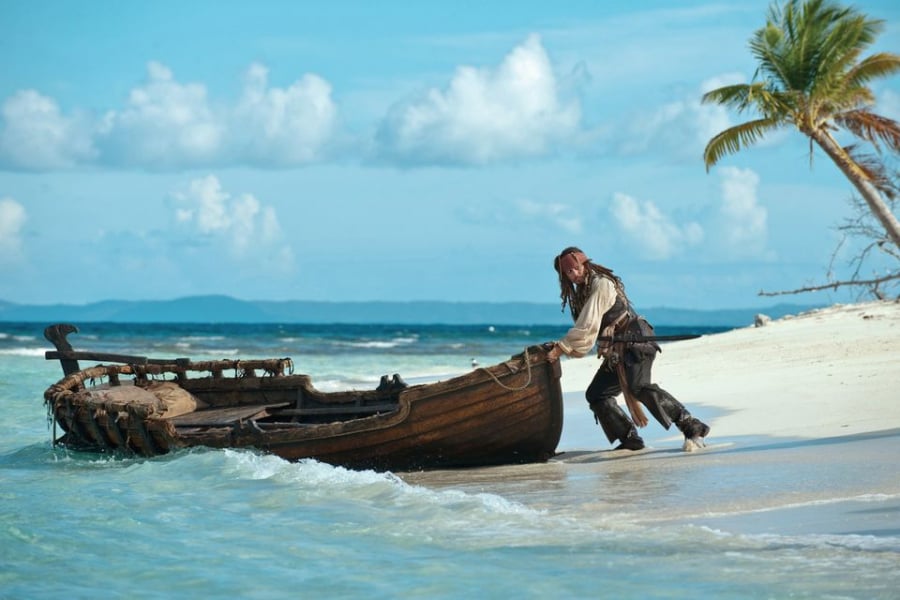
Johnny Depp in the movie "Pirates of the Caribbean"
...to the wonders of the ocean we see today.
During his recent trip to South Africa, travel blogger Quy Coc Tu visited the Cape of Good Hope, which he described as a "truly long and arduous" journey.

The travel blogger shared that the first "hardship" was the long flights to Cape Town. From Saigon, he flew through Thailand, then to Addis Ababa (Ethiopia), then to Johannesburg (South Africa), and from there on to Cape Town. Upon arriving in Cape Town, the next "hardship" was the bad weather, heavy rain and fog, coupled with a busy schedule that forced him to postpone his trip to the Cape of Good Hope. Ultimately, once he finally arrived at the Cape of Good Hope, the final "hardship" was... the crowds. Too many tourists were queuing to visit the Cape of Good Hope.
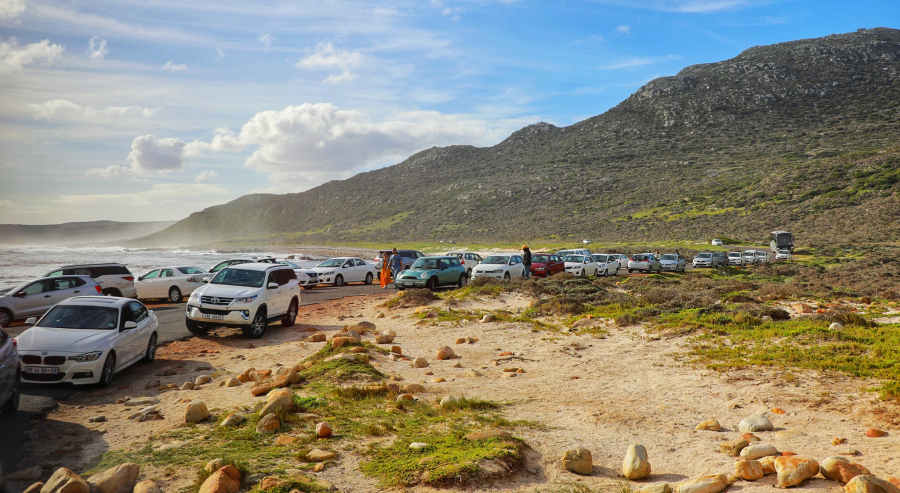
A long line of cars waiting...
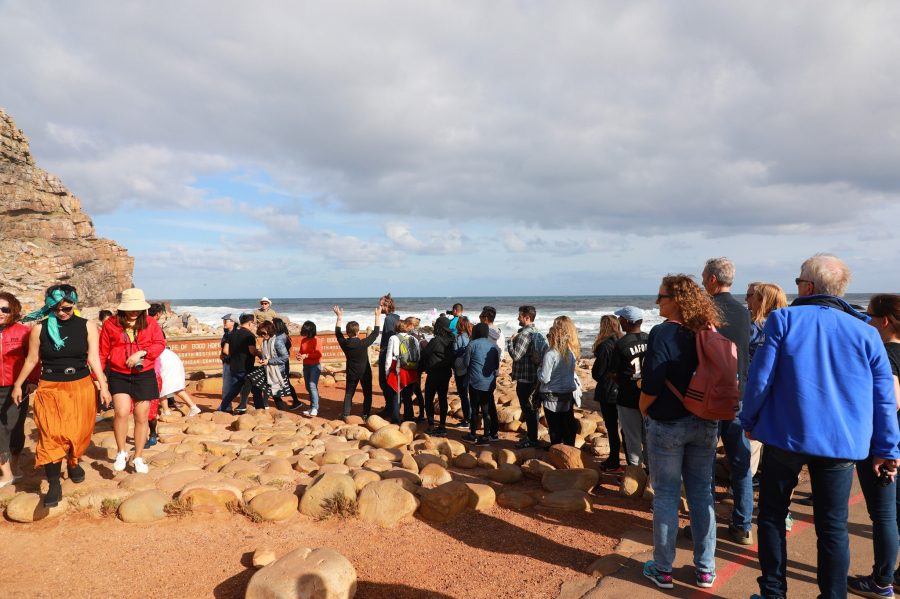
...to long lines of people
Long lines of cars and people queue up hoping to capture a once-in-a-lifetime photo next to the landmark marking the Cape of Good Hope. But Quỷ Cốc Tử asserts that all the "hardship" is entirely worthwhile. The Cape of Good Hope is not just a rocky headland, but a vast, beautiful, and majestic conservation area with flower fields stretching for tens of kilometers.
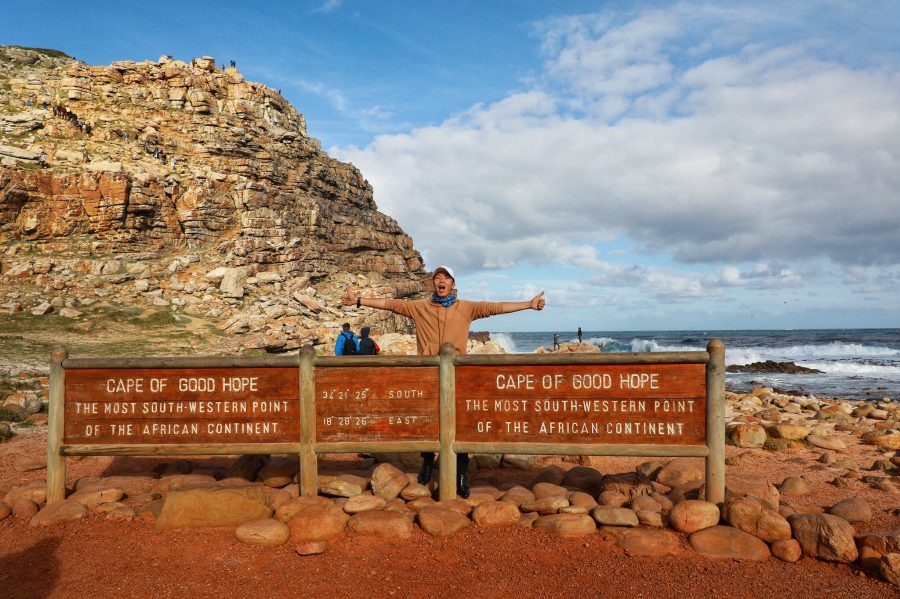
Photo spot at Cape of Good Hope

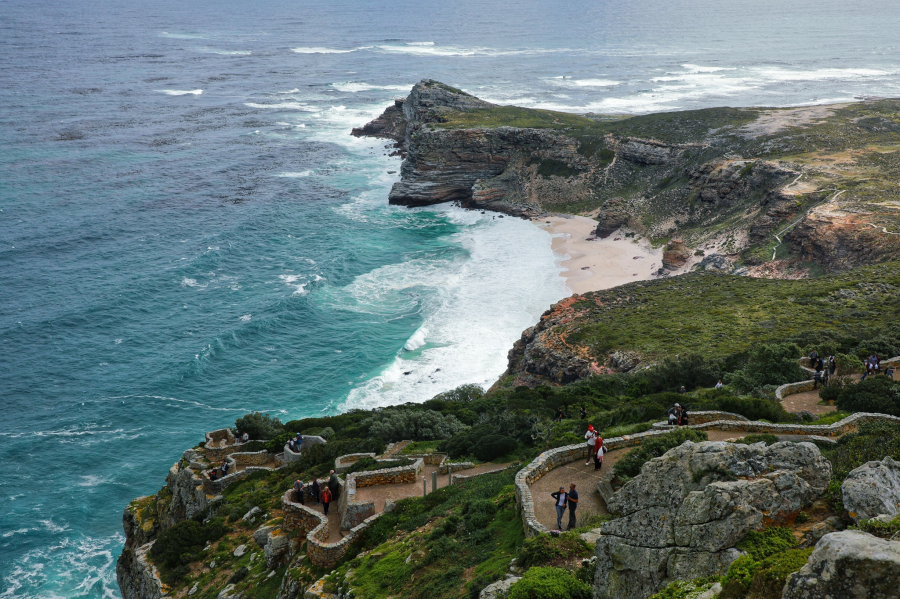
You need at least half a day here if you want to explore. The best time is in the afternoon when the golden sunlight falls on the sea and rocky cliffs, making the space even more mysterious and ancient. The feeling of standing at the headland and looking out at the boundless ocean gives you the sensation of touching the edge of the world.
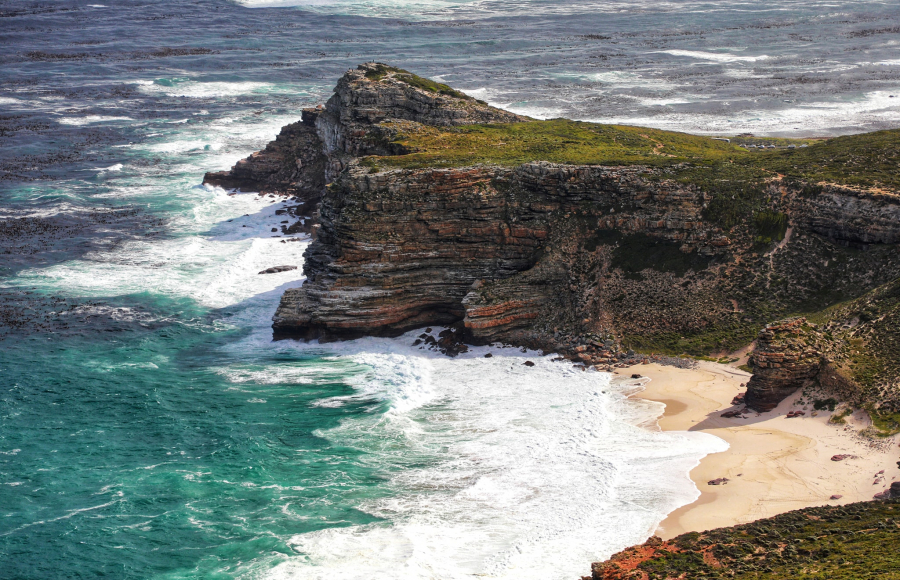
Photo: Ngo Tran Hai An
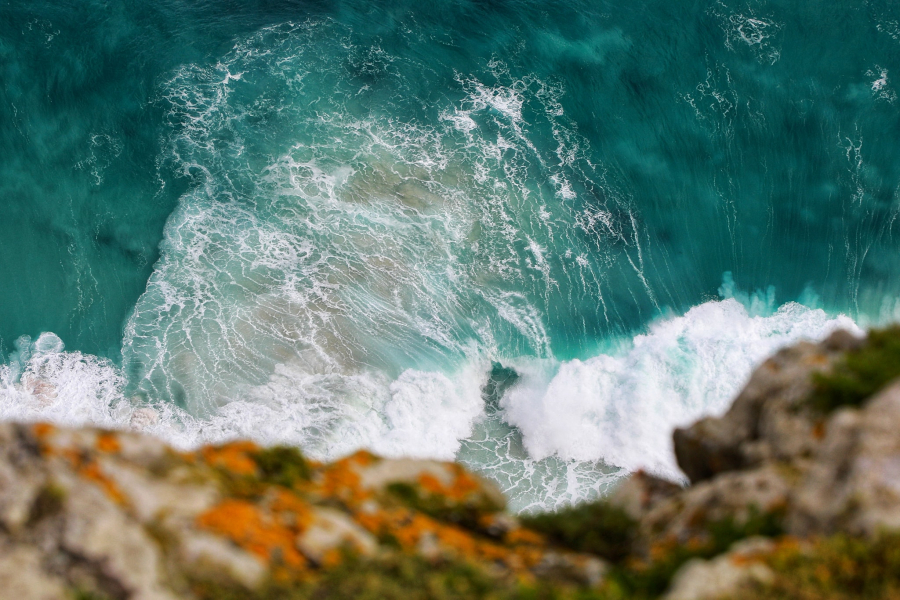
Photo: Ngo Tran Hai An
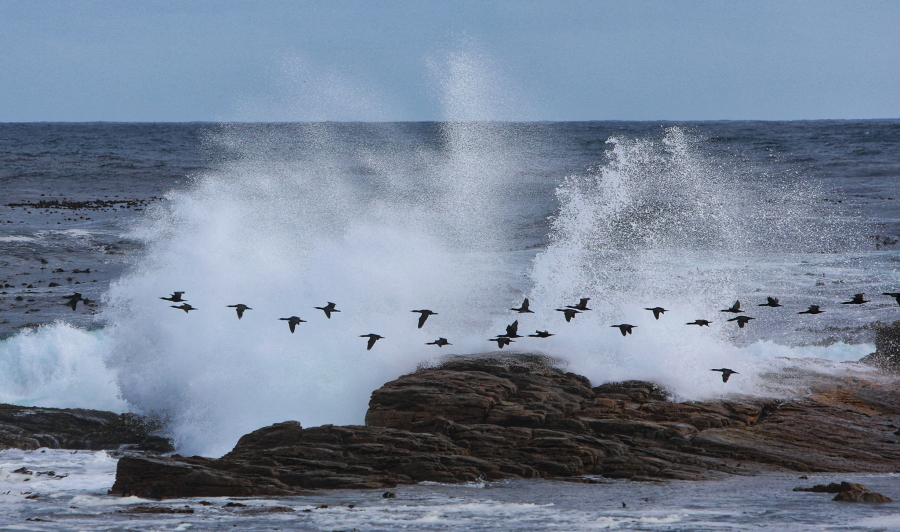
Photo: Ngo Tran Hai An
The must-see attractions include climbing the New Cape Point lighthouse, from where you can observe the entire Cape of Good Hope with its magnificent view of deep blue waves, meters high, crashing against the rocky shore. Quỷ Cốc Tử also shared some unmissable photo spots: at Cape Point, before following the path along the cliff to the Cape of Good Hope, there's a sign that everyone wants to take a souvenir photo with. The scenery along the road to the Cape and the cliffs at the Cape are also stunning, with thousands of birds flying back around 5 PM. Around the Cape, there are also carpets of wildflowers, yellow moss, and green moss, offering fascinating discoveries...
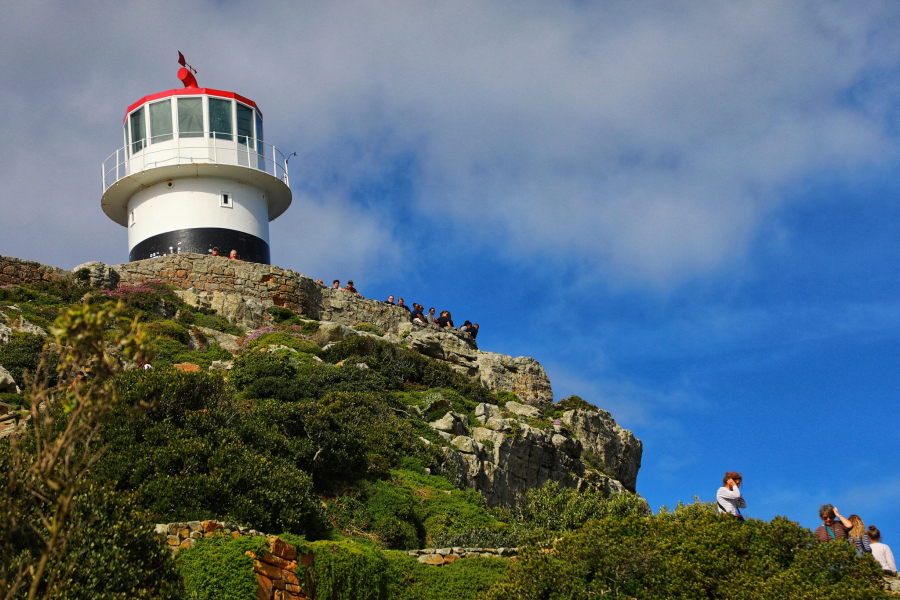
New Cape Point Lighthouse
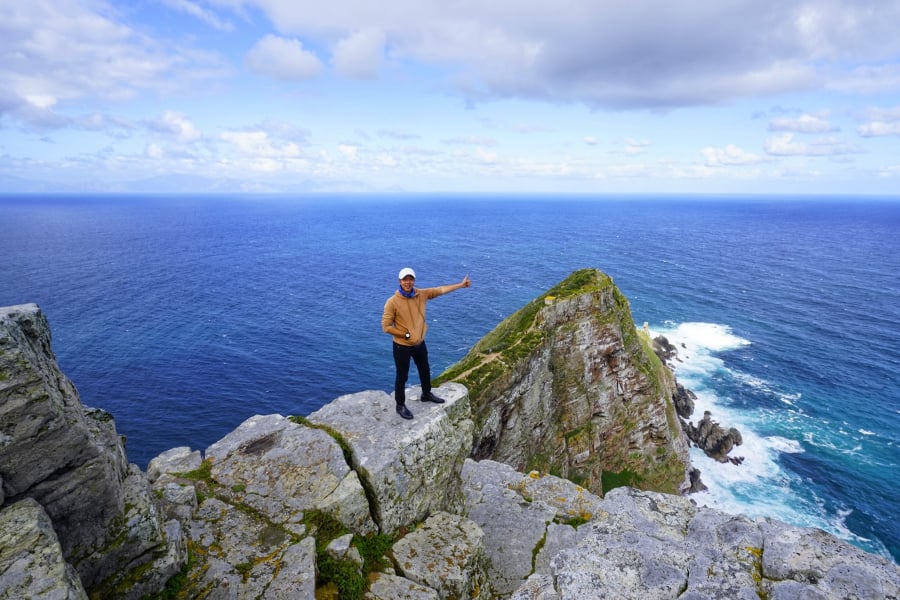
Point
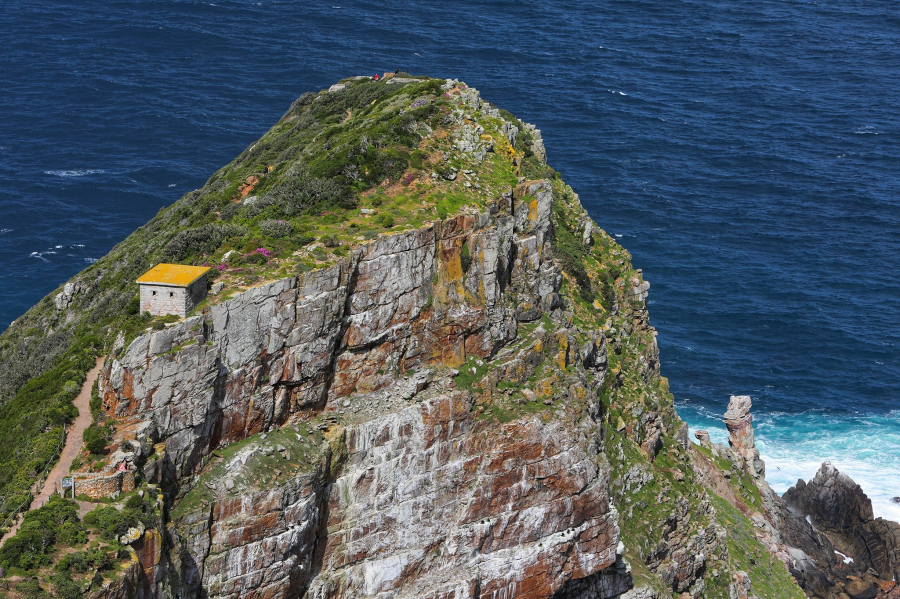
Photo: Ngo Tran Hai An
During this trip to South Africa, travel blogger Quy Coc Tu also had the lucky opportunity to "hunt" for the Big Five in Simba, or admire close-up moments with seals, penguins, and many seabirds in Cape Town.