VI
VI


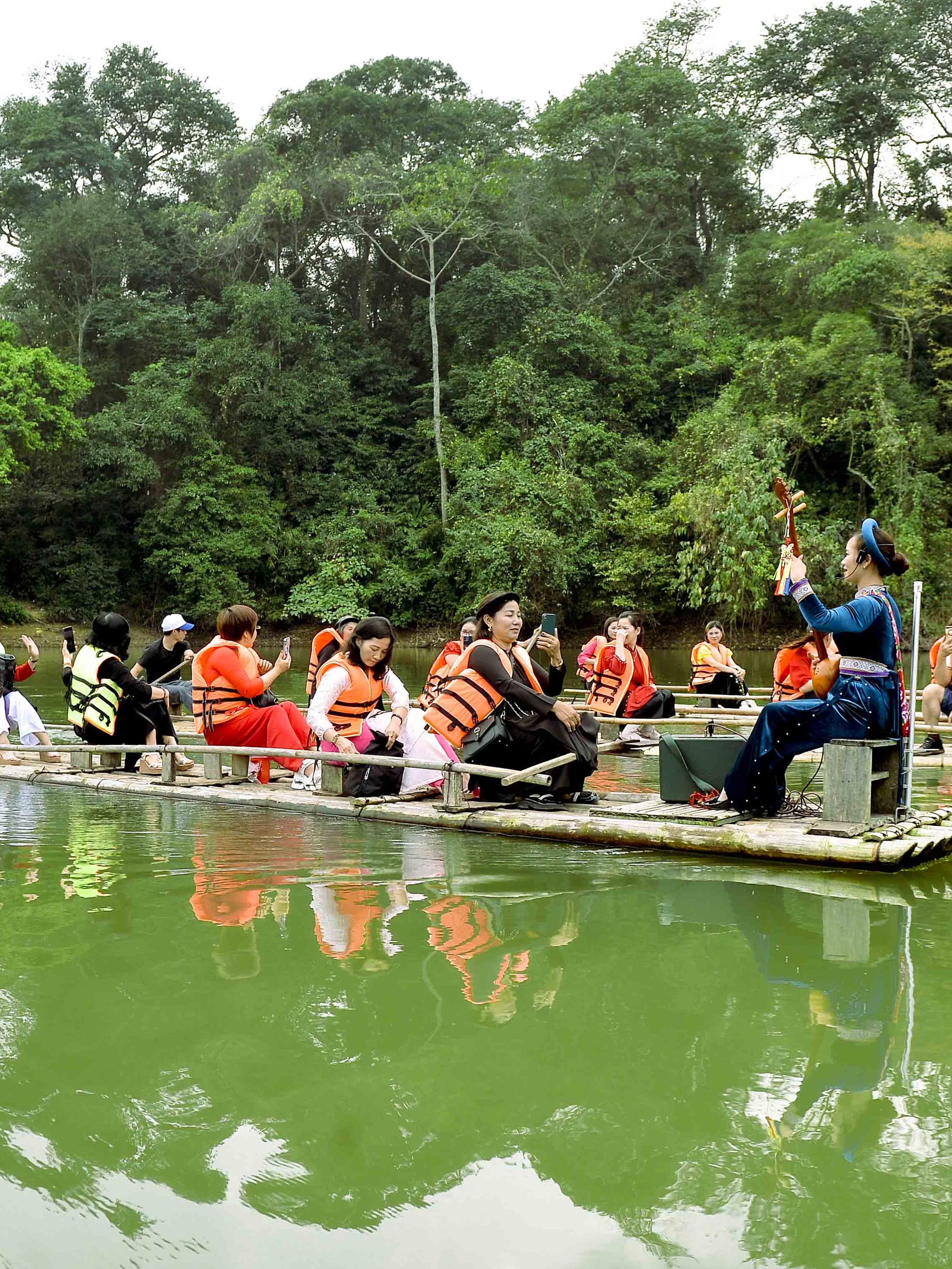
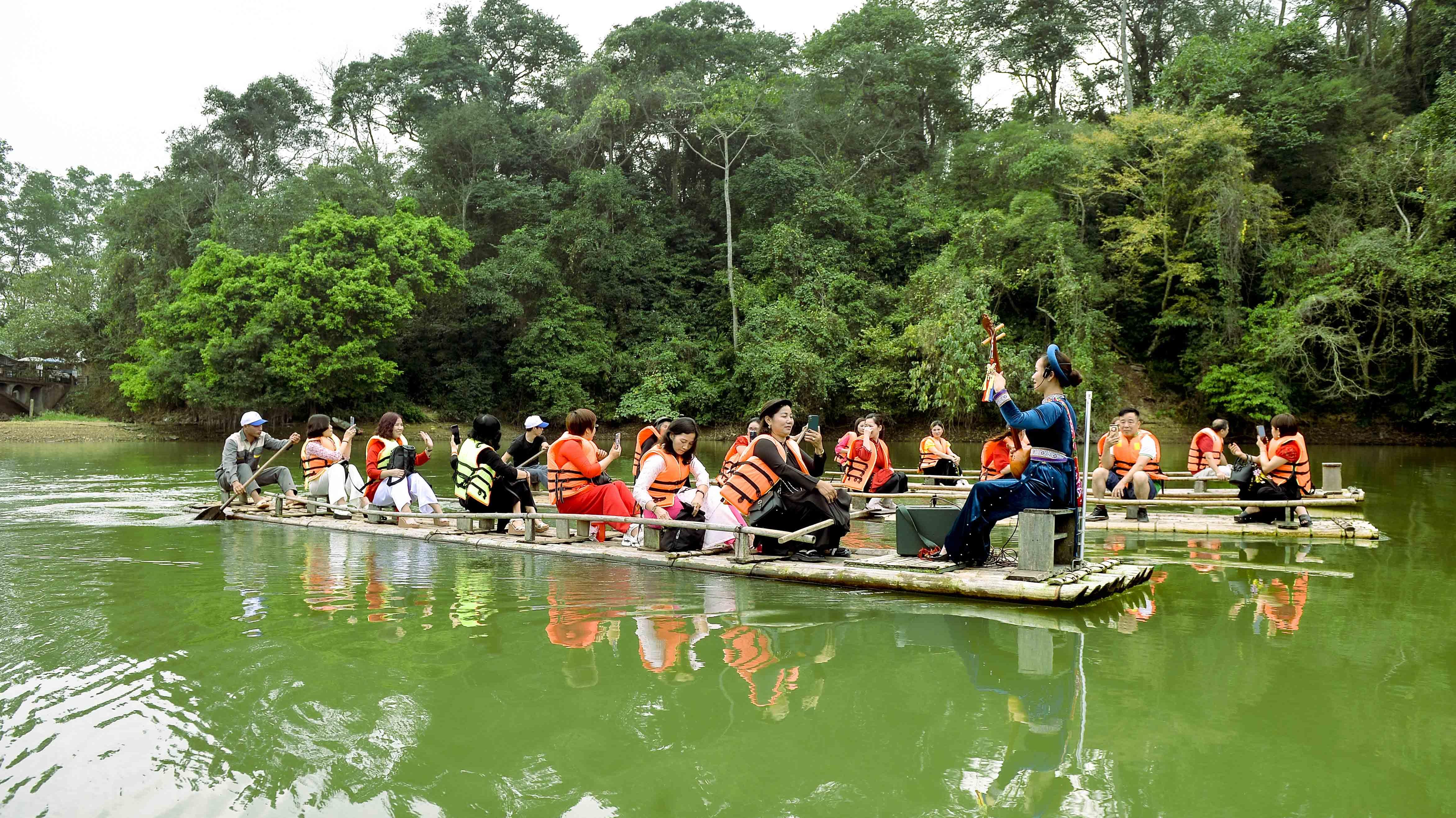
My first opportunity to enjoy Then singing on Na Nua Lake was unexpectedly wonderful. Sitting on a bamboo raft gently floating on the emerald green water, listening to the melodious sound of the Tinh lute blending with the rich, resonant Then singing, truly made me feel like I was transported to another world – a space where past and present intertwine, where humanity and nature become one.
The trip began at the Tan Trao National Special Historical Site – a place associated with important milestones of the Vietnamese revolution. Standing in the heart of this land once known as the "Capital of Resistance," I couldn't help but be moved as I imagined the heroic days of our nation. But it's not just history; Tuyen Quang also captivated me with its pristine natural beauty and unique traditional culture.
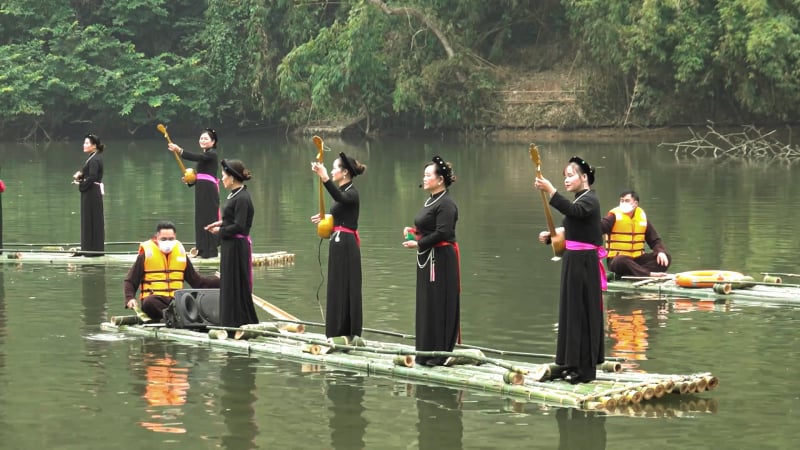
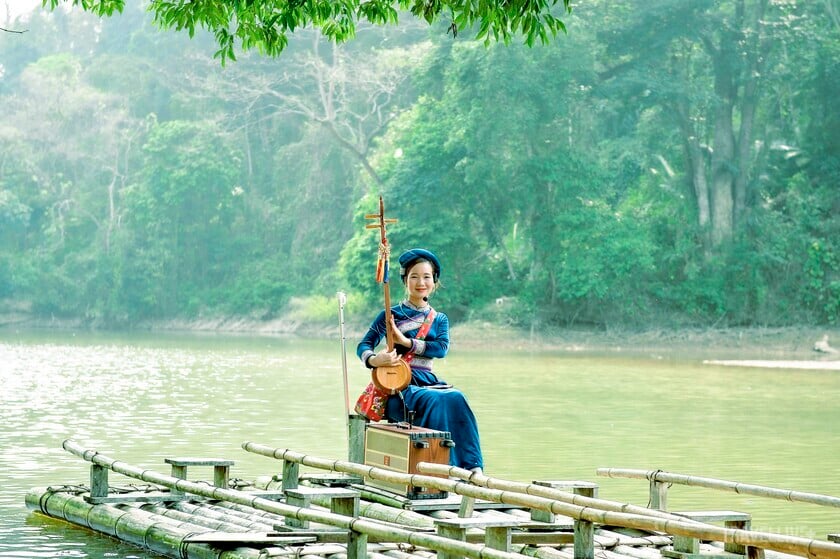
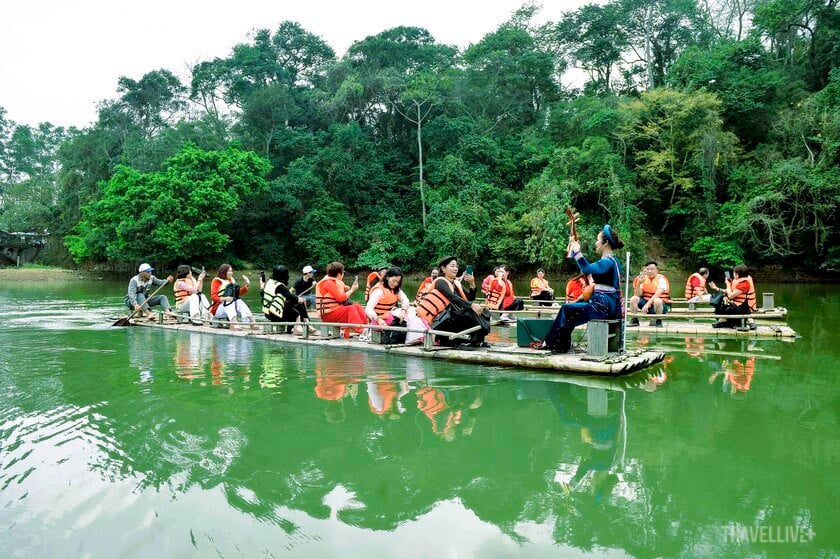
Then singing on Na Nua Lake
Artist Dam Thanh Hien shared: “Then is a popular form of religious chanting in the spiritual life of the Tay people, with lyrics containing many mystical elements. In the past, Then was often sung in rituals to pray for peace, to find the souls of the sick, to pray for children, health, a bountiful harvest, or to wish for peace and happiness in the village. Today, the content of Then has expanded, reflecting many aspects of modern life.”
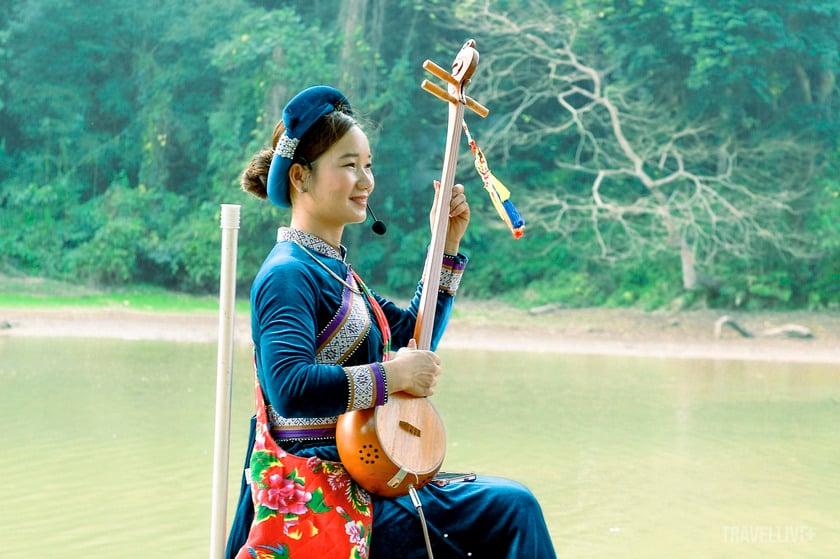
Then singing artist - Dam Thanh Hien
In 2019, Then singing was officially recognized by UNESCO as a representative intangible cultural heritage of humanity, affirming the immense value of this art form in the treasure trove of Vietnamese culture.
To date, in addition to its important historical sites, Tuyen Quang is also known for its rich folk culture, especially the Then singing art – an intangible cultural heritage of humanity recognized by UNESCO. Tuyen Quang has been implementing many activities to promote Then singing art, combined with eco-tourism and experiential tourism. A unique highlight is the "Then Singing on Na Nua Lake" program – an activity deeply rooted in ethnic identity, allowing visitors not only to enjoy the art but also to immerse themselves in the poetic natural landscape of this region. For only 50,000 VND, visitors can experience a ride on a bamboo raft, and for 80,000 VND, they can also enjoy Then singing performed by local artisans.

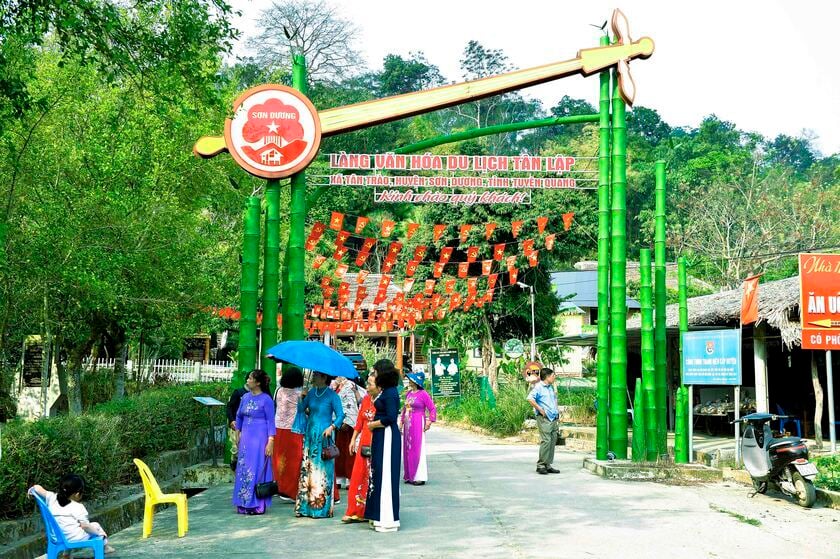
Tan Lap Cultural and Tourism Village, Tan Trao
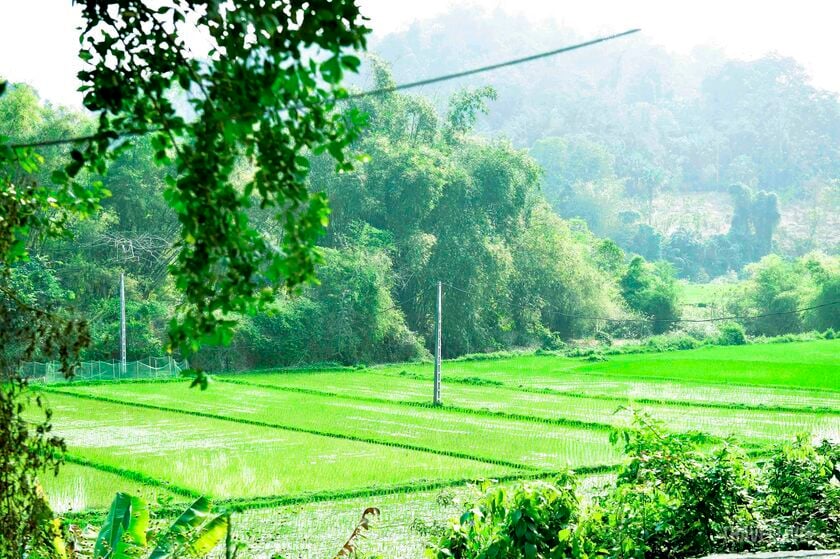
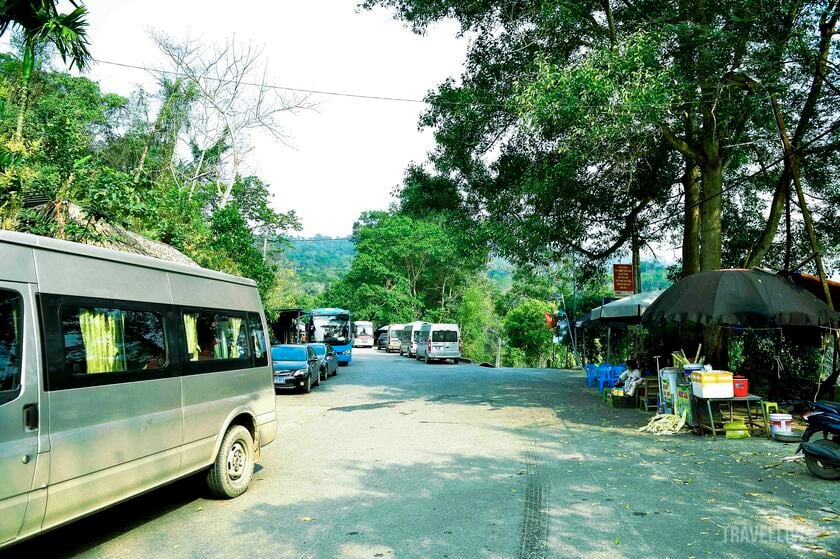
After visiting several historical sites, I headed to Na Nua Lake pier to begin my adventure. Bamboo rafts were ready to welcome guests. The guide explained that each raft could carry a maximum of five people, and all passengers were provided with life jackets for safety. Sitting on a bamboo raft for the first time, I felt a little nervous, but that feeling quickly dissipated as the raft gently left the pier, gliding smoothly across the water.
As the raft moved further into the river, the artist, dressed in traditional attire, was ready with his Tinh instrument in hand. The narrator introduced Then singing as a distinctive art form of the Tay, Nung, and Thai people, not merely a form of singing but also carrying profound spiritual significance. In the past, Then singing was often performed in rituals for peace, a bountiful harvest, or journeys to the heavens to seek blessings and ward off evil spirits.
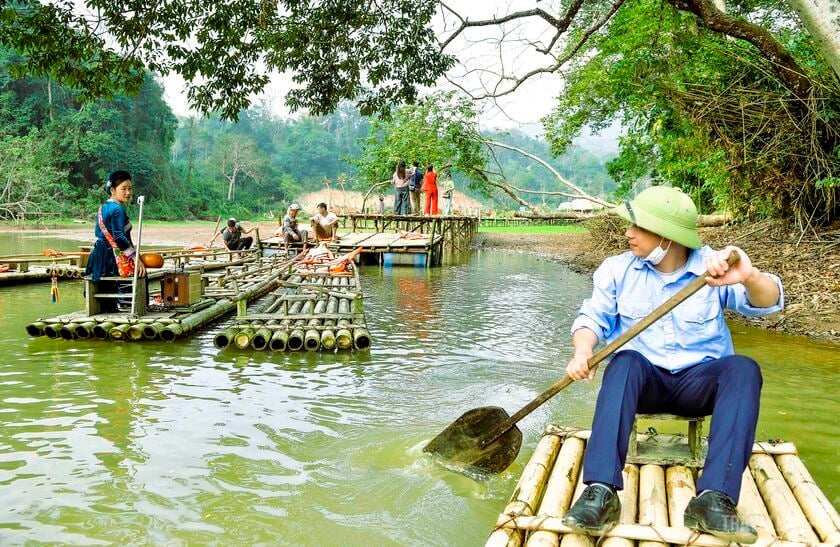
The sound of the Tinh lute resonated through the river and forest, blending with the surrounding landscape to create a sound that was both melodious and mysterious. I relaxed, breathing deeply, letting myself drift along with the smooth, emotionally rich Then songs sung by the artisans. What's special is that visitors can not only listen but also interact directly, even trying their hand at singing or playing the Tinh lute under the guidance of the artisans.
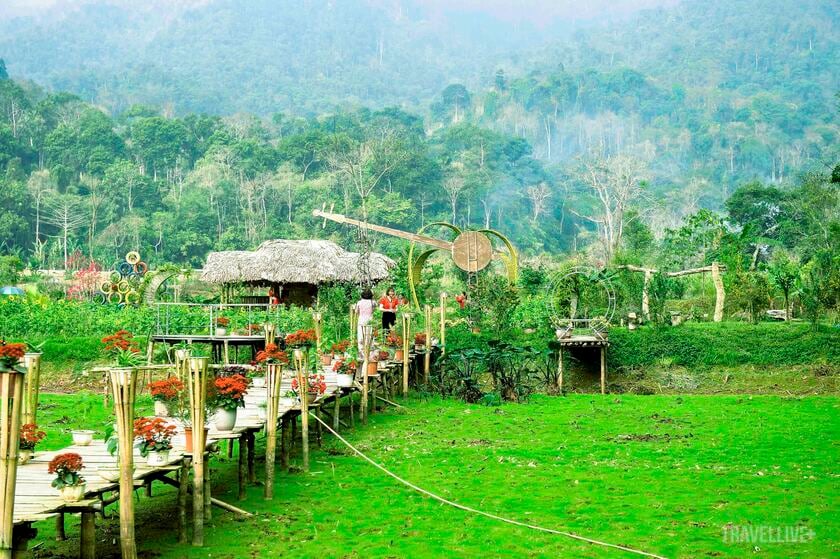
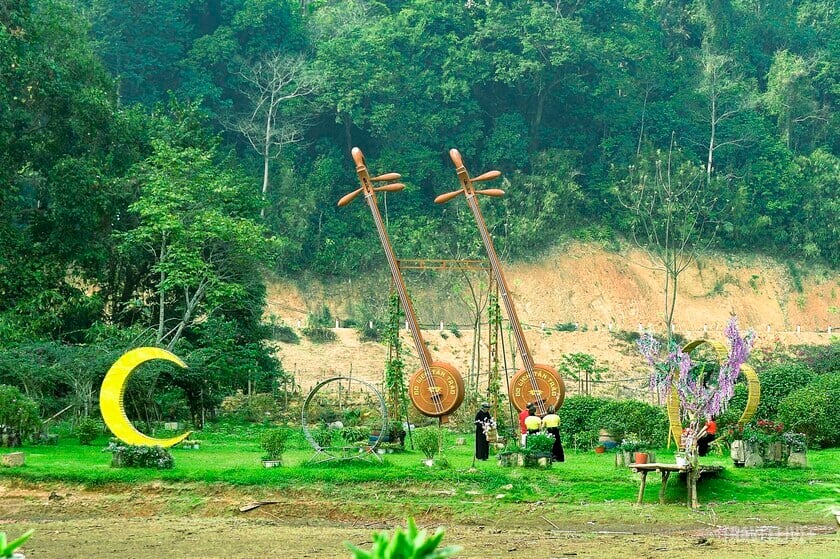
The final destination of the river journey is a small island, which is being developed into an eco-tourism and cultural resort. The guide explained that the area will not be urbanized but will retain its pristine natural beauty, using only natural materials such as bamboo, wood, and palm leaves for construction.
On the island, visitors can try activities such as paddling bamboo rafts, practicing Then singing, or wearing traditional Tay ethnic costumes. I especially enjoyed the moment of paddling the raft myself, feeling the cool water flowing through my fingers, and admiring the scenery from a completely new perspective.
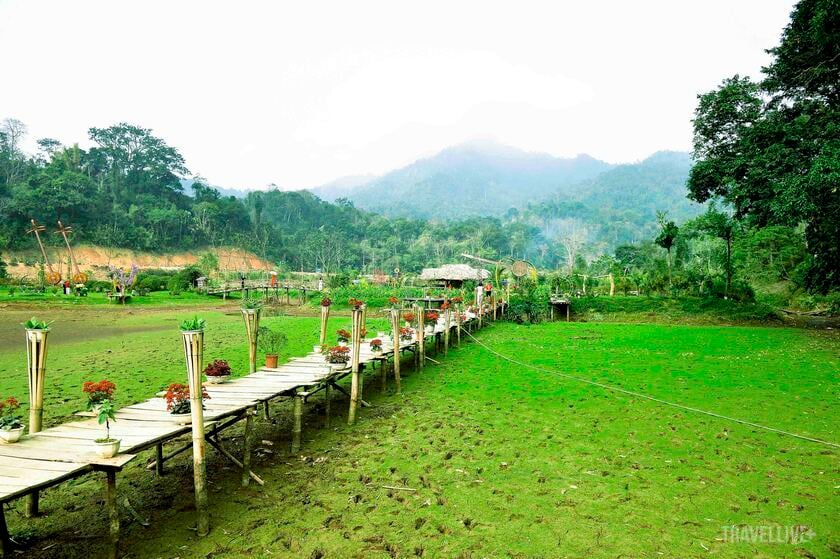
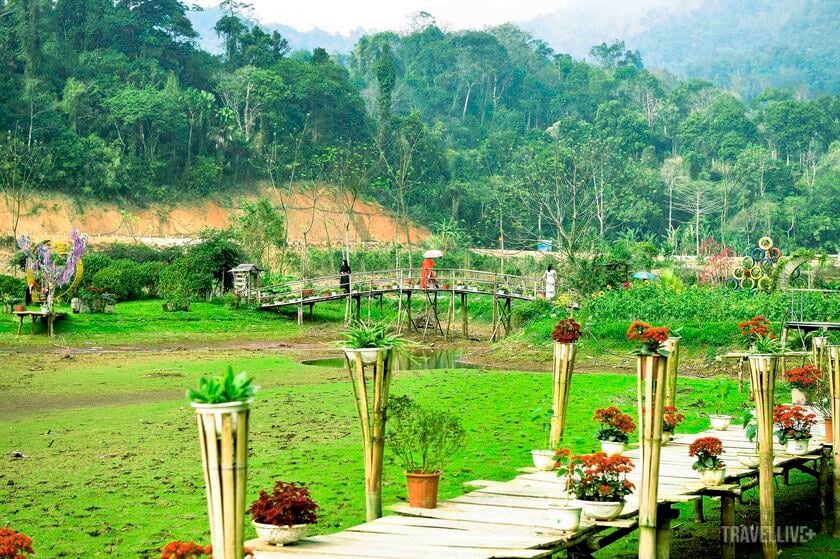
Ecological zone at the end of the lake
We returned to the dock after a memorable experience. But the echoes of the Then songs still resonated in my mind. It's not just an art form, but the soul of an entire land, a connection between people and nature, between the past and the present.
The Then singing program on Na Nua Lake is not only an initiative to preserve and promote the value of the national cultural heritage but also opens up opportunities for sustainable tourism development in Tuyen Quang. Combining folk art with ecotourism experiences will help visitors gain a deeper understanding of local culture, while also creating economic impetus for local people. In the future, with the completion of the tourist island at the end of Na Nua Lake, Tan Trao - Tuyen Quang promises to become an unmissable destination for those who love exploring culture and nature.