VI
VI


Moving Kitchen is Taiwan's first high-end culinary train, launched at Taipei's Nangang Railway Station in March 2022. It's part of The Future railway sightseeing program, developed by the Taiwan Railway Administration (TRA) since November 2020. Immediately, the diverse cuisine, creativity, and aesthetic style of the train garnered significant attention from locals and tourists alike.
It all started with an open letter.
Johnny Chiu, founder of JC Architecture, was responsible for redesigning the entire Future train, including the dining cars catering to discerning diners. Looking at its new, sophisticated black and orange color scheme, it's hard to believe that when it first launched in 2019, domestic media called it an "aesthetic disaster."
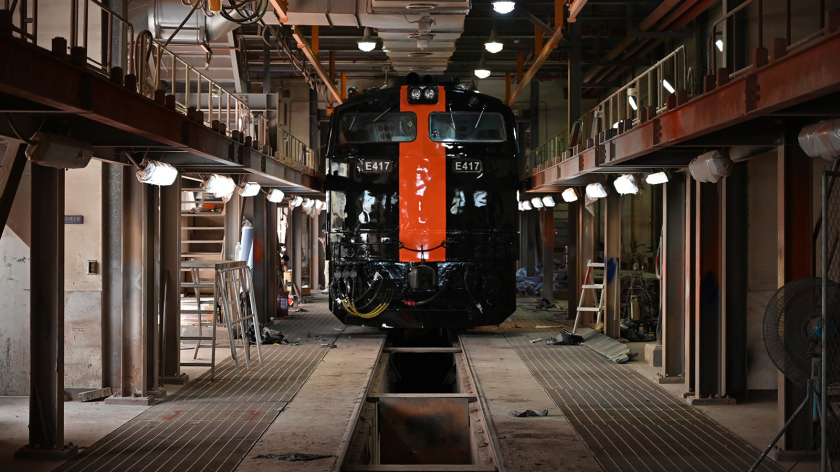
The locomotive's front end, after being redesigned, features a luxurious black and dark orange paint scheme - Photo: Lee Kuo-Min JC Architecture
At that time, after the Taiwan Railway Administration (TRA) – the government agency in charge of the railway industry – released the first photos of the Future train, the whole country was taken aback.
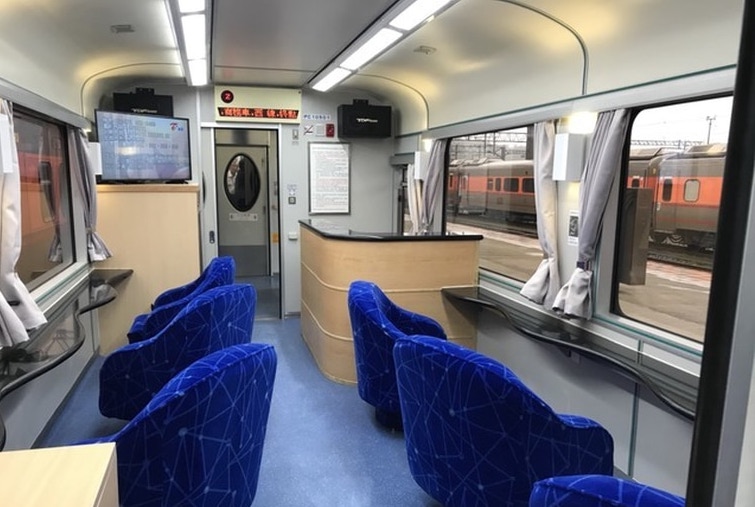
"The bar in the kitchen was a dull white, like it was made of plastic, looking no different from a hospital reception desk. The trash cans were the kind you'd find on the street. The walls were covered in gaudy, flamboyant flowers. Everyone was going crazy. Photos of the train were shared all over social media," Johnny Chiu recalled.
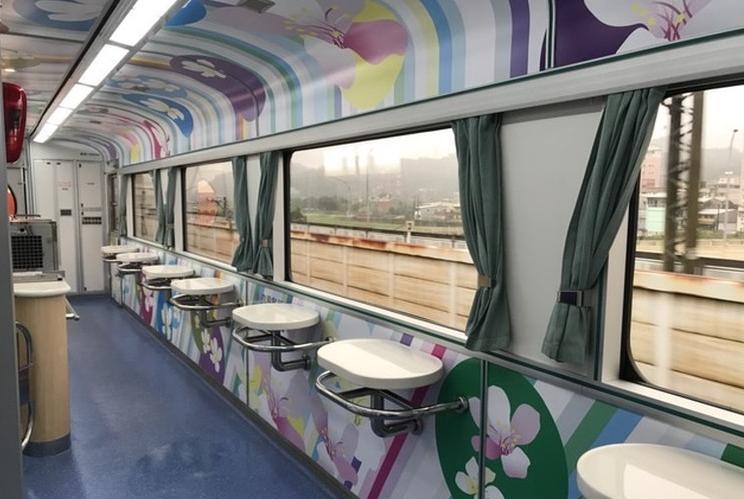
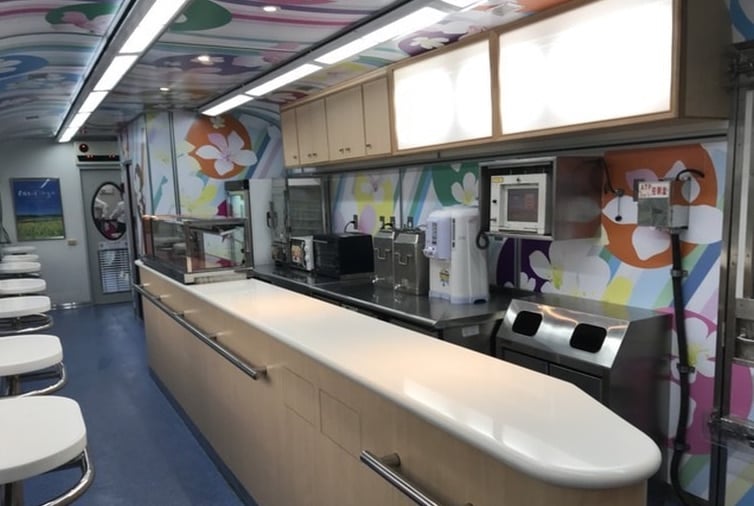
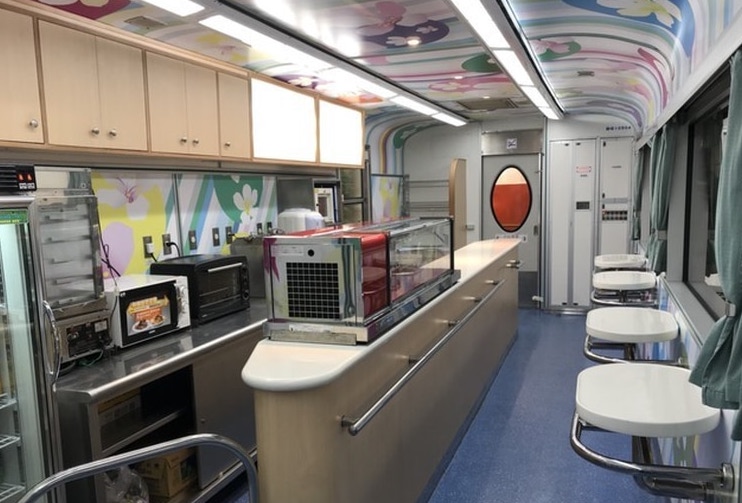
"In Taiwan, traveling by train is an important part of our lives," he shared. "Whether it's heading to military service, returning home for the Lunar New Year, meeting a significant other, or visiting grandparents, most people travel by train. It's deeply ingrained in everyone's memory."
Feeling saddened that such a meaningful image of the Taiwanese people was designed in such an undignified way, Johnny Chiu wrote an open letter expressing his opinion that this was an opportunity for the railway industry to modernize, and hoped someone would convey his message to TRA.
Surprisingly, a TRA representative publicly admitted their shortcomings to the media: "We know how to build ships, construct, and repair trains. But we know absolutely nothing about design or aesthetics."
TRA then responded to the criticism by assembling a creative team to find solutions to make the ship more aesthetically pleasing. One member of the team read Johnny Chiu's open letter and contacted him.
"I received an email that said this:Johnny, that's great. We're thrilled to see your positive feedback. Please share your ideas with us within the next two weeks." - Johnny recounted.
After two weeks of sleepless nights and work sessions fueled by whiskey to clear their minds, Johnny and his team finally completed a transformation plan to submit to TRA. They were then given full authority to work on the project.
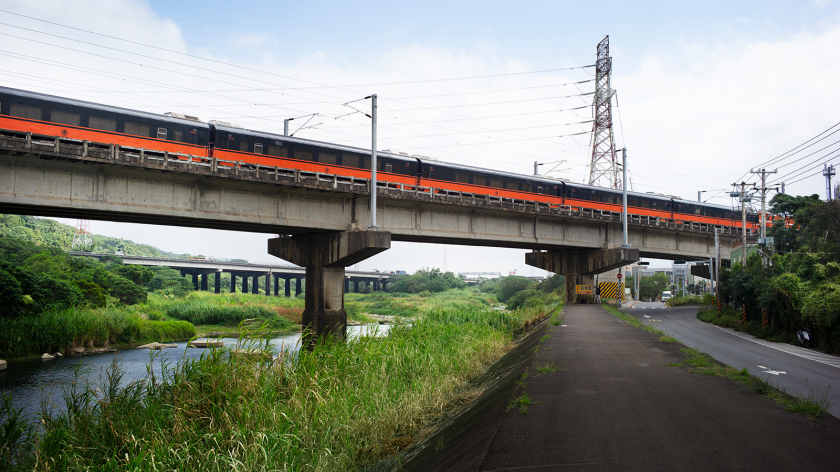
Photo: Lee Kuo-Min JC Architecture
The Future 2.0: Taiwan's first high-end culinary train.
The Future was actually refurbished from an old diesel locomotive from the 1970s. Therefore, there were many structural issues, problems with the wiring, and quality of the interior. Johnny Chiu's JC Architecture company had to replace everything inside and repaint the entire train.

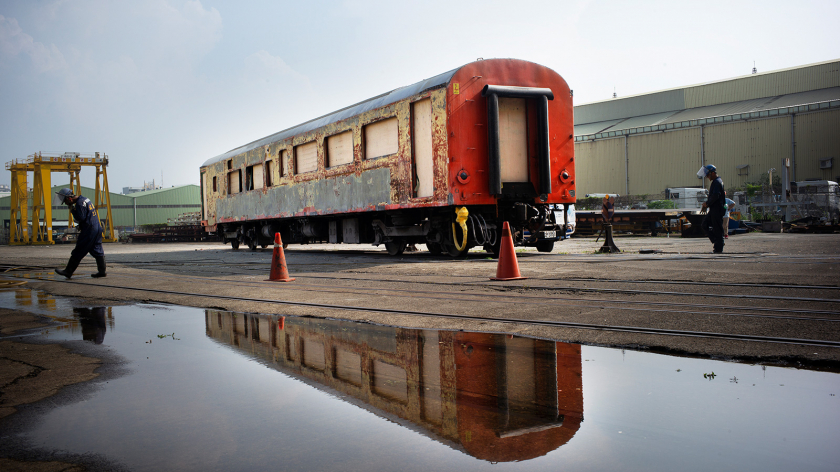
An old diesel locomotive from the 1970s before being refurbished by architect Johnny Chiu and his colleagues.
After seven months of refurbishment, the more than 50-year-old train finally received a completely new look. The Future was reintroduced to the public at the end of 2019 and received continuous praise from domestic media. Then in 2020, the Future train won the Best Transportation Design award in Japan in an international competition.
Building on its success, TRA continues to release The Future's second installment: Moving Kitchen.Mobile kitchen), a culinary ship model specializing in serving high-end, luxurious dishes for discerning diners.
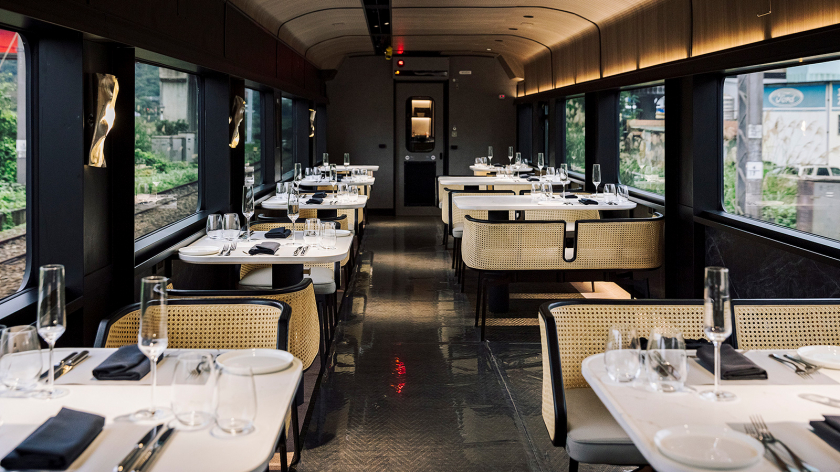
Inside the Moving Kitchen, Taiwan's most beautiful train - Photo: Lion Travel
Gourmet trains, or dining trains, are a relatively new type of tourist train in Asia, offering passengers the experience of dining on board during a short round trip. Unlike regular trains, the main purpose of gourmet trains is to allow diners to leisurely enjoy their meals while taking in the scenery outside the window as the train travels.
Victor Cheng, a senior director at Lion Travel, the company responsible for booking train tickets, said: "Food trains are a familiar concept in Japan and Europe. This model has never existed in Taiwan before. But Taiwanese people love trains and they love food too. So it makes sense to combine the two."
As The Future's sole travel distributor and the largest travel company in Taiwan, Lion Travel spent over a year working with JC Architecture and TRA before launching Moving Kitchen in March of this year.
Victor shared: "To perfect this high-end culinary train, we first had to address the lack of electricity and cooking water. Fresh water and ingredients will be resupplied when the train stops at intermediate points along the journey."
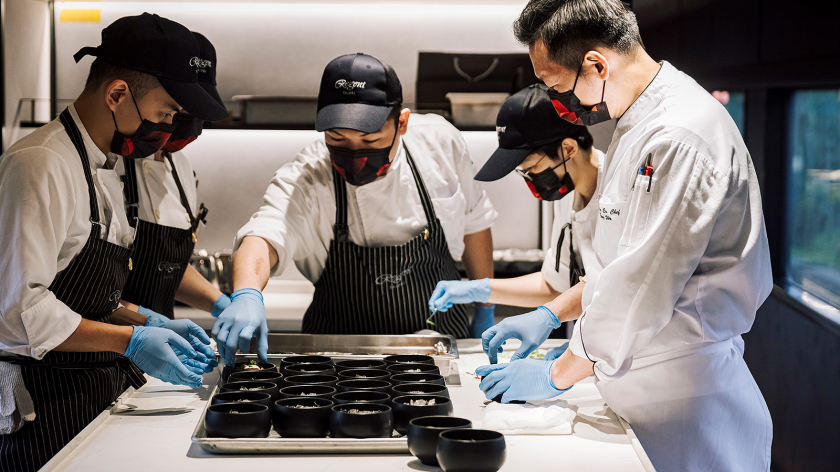
Chefs prepare dishes in a "Mobile Kitchen" - Photo: Lion Travel
"Next came the challenge of building a high-end restaurant on a moving train. The waitstaff underwent extensive training to ensure they could maintain their composure and composure despite the constant swaying of the train. The timing of serving each dish also had to be precise."
For example, the first course on a two-day culinary tour on board is abalone. This dish will be introduced to diners when the ship arrives at Turtle Island, a famous mollusk destination in Taiwan.
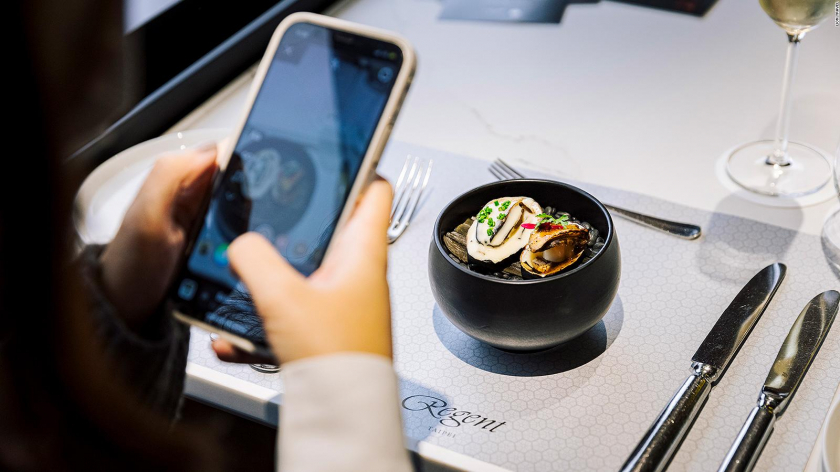
Abalone is served when the boat arrives at Turtle Island.
"The second course was a seafood salad served on a sea-blue plate, brought out as the ship passed by the deep blue scenery of the east coast."
The dishes that followed included: hot spring greens (the kind irrigated with local hot spring water), duck, and purple sweet potatoes.
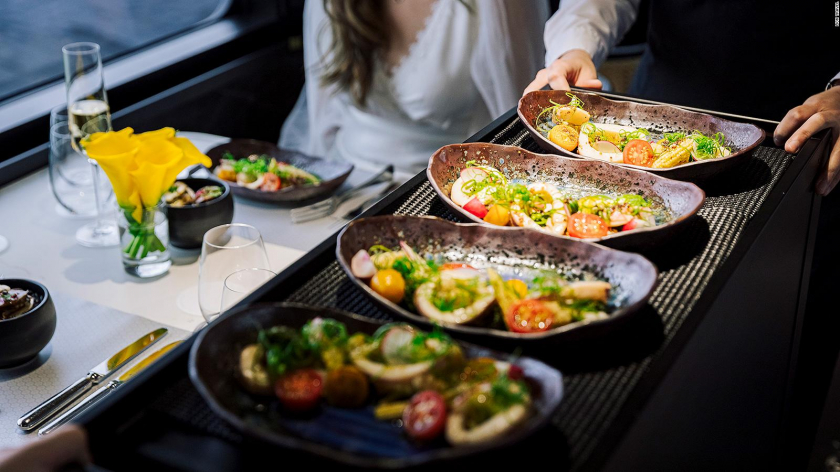
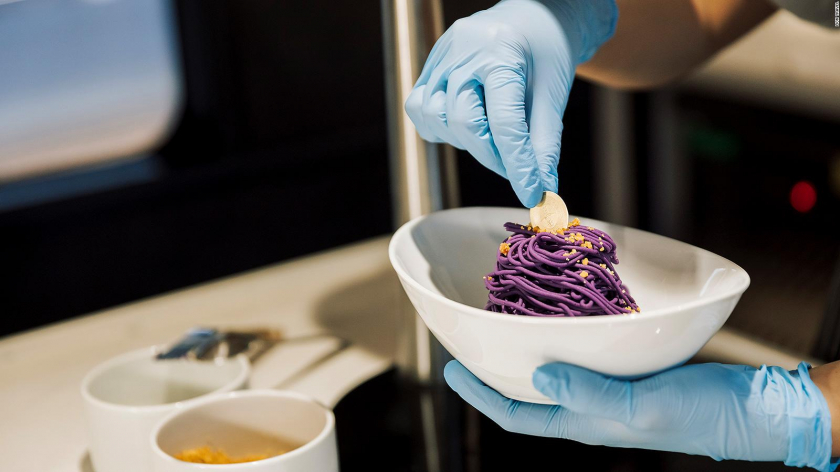
"And because Moving Kitchen is a cruise train, we don't need to rush from station to station according to a schedule. The train can slow down when passing through the most beautiful routes, and pause while diners enjoy their meals amidst unforgettable scenery," Victor shared about the special train journey.
A "sensational" journey into the world of cuisine.
Stepping aboard the Moving Kitchen, guests not only get to enjoy fine dining but also have the opportunity to experience many meaningful sightseeing activities, such as visiting a local rice farm and fishing port, to learn about the food they are served on board.
"So, this isn't just about a few good meals on a train. Moving Kitchen is a combination of food, scenery, and local tourism as a holistic journey," says Victor Cheng.
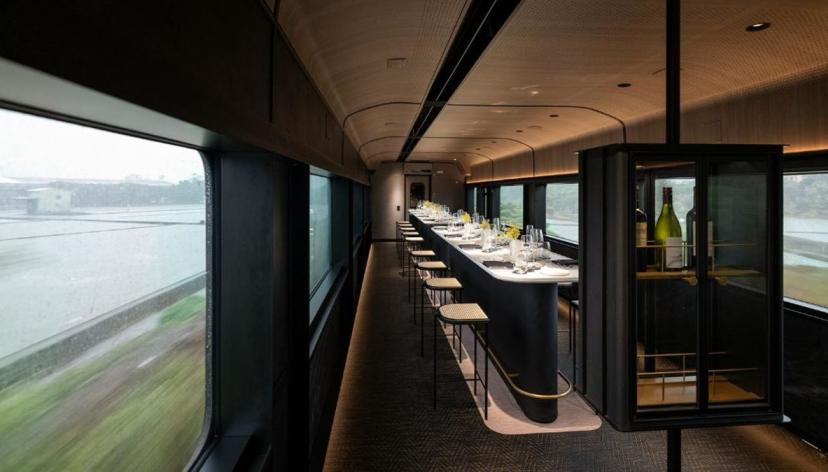
Moving Kitchen took nearly a year to design and complete. Now, this train is truly a high-end mobile restaurant.
The Moving Kitchen train has been upgraded with two new dining cars, adding 54 seats, a bar, and a brand-new kitchen. The floor is paved with marble transported from Hualien County. Some of the interior furnishings are even handcrafted from rattan by indigenous tribes in southern Taiwan. This detail inspired Johnny Chiu to design a special rattan chair for the Moving Kitchen train. The chair features armrests angled at 45 degrees, allowing passengers to recline comfortably while maintaining a secure feeling on the train.
The lighting in the carriages is also specially designed, making the dishes look more appetizing and especially perfect for Instagram-worthy photos. There are always phone holders and menus on the tables. The wall lamps can also be adjusted to any shape using lampshades made of thin foil.
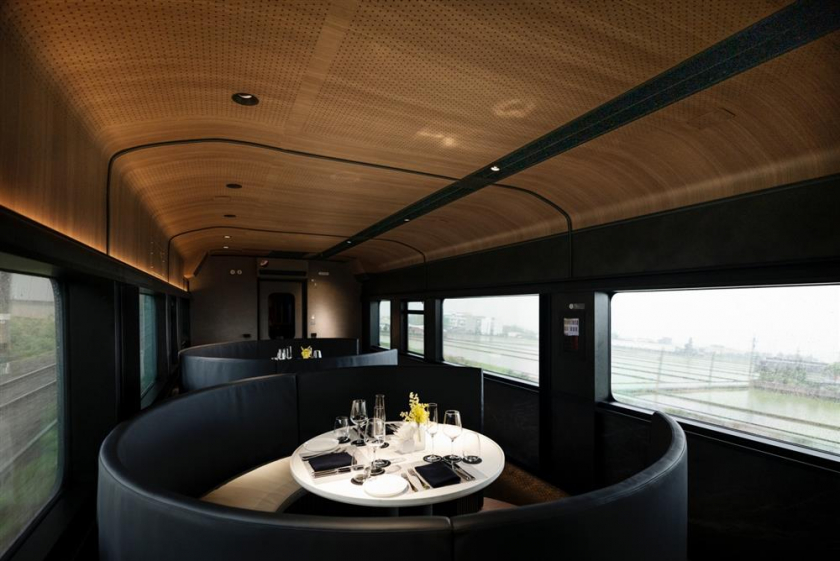

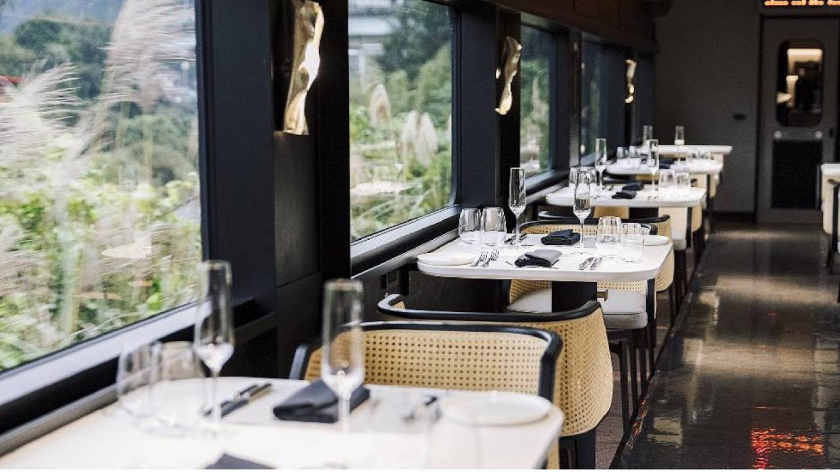
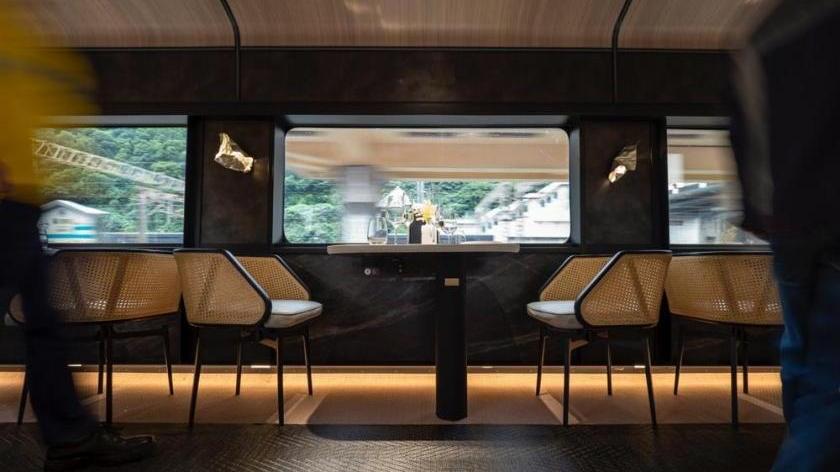
Thanks to the spectacular transformation of The Future and its innovative tourism model, Moving Kitchen has become a highly sought-after train ride in Taiwan: despite only launching on March 30, 2022, tickets for the train are already sold out until the end of September.
“On the first train journey, we mandated black and orange attire to match the train's colors. I noticed that many passengers were dressed very nicely and kept taking pictures on the train. We were all very happy and touched by the tremendous support we received from everyone,” Victor Cheng recalled.
"When TRA learned that the overgrown trees were obstructing the sea view at the train station, they had people weed and trim the trees along the entire route. I am very proud of that, and of this railway project as a whole, because it is special in a very Taiwanese way," said Victor Cheng. "I also think that there are many other historical and cultural aspects that we can explore and develop in new directions like this. If the Railway Bureau can do it, then agencies in other fields can do it too."
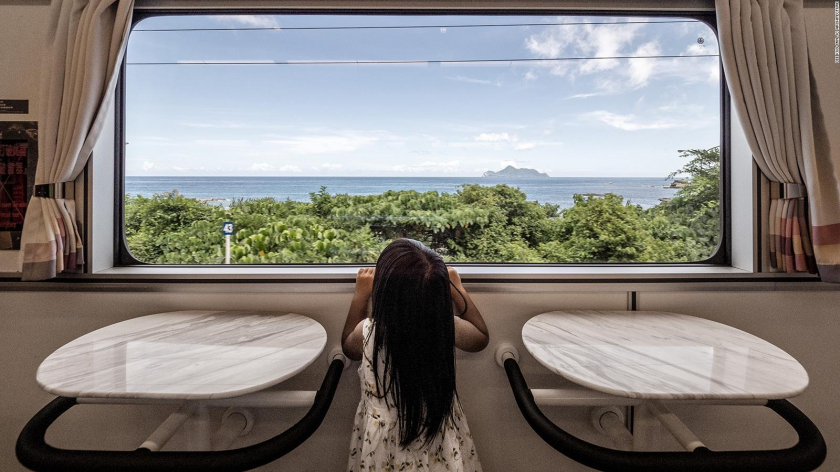
Photo: Lee Kuo-Min JC Architecture
Additional information
Currently, Moving Kitchen offers one- or two-day food tours. Visitors will stay overnight at a hotel near the final stop.
Each month, six trips are organized on the Moving Kitchen train and six tours on The Future train, each with a seasonal theme and lasting from one to four days. The Future train has four business class carriages, each with 33 seats.
See more information and book tickets atThis.