VI
VI


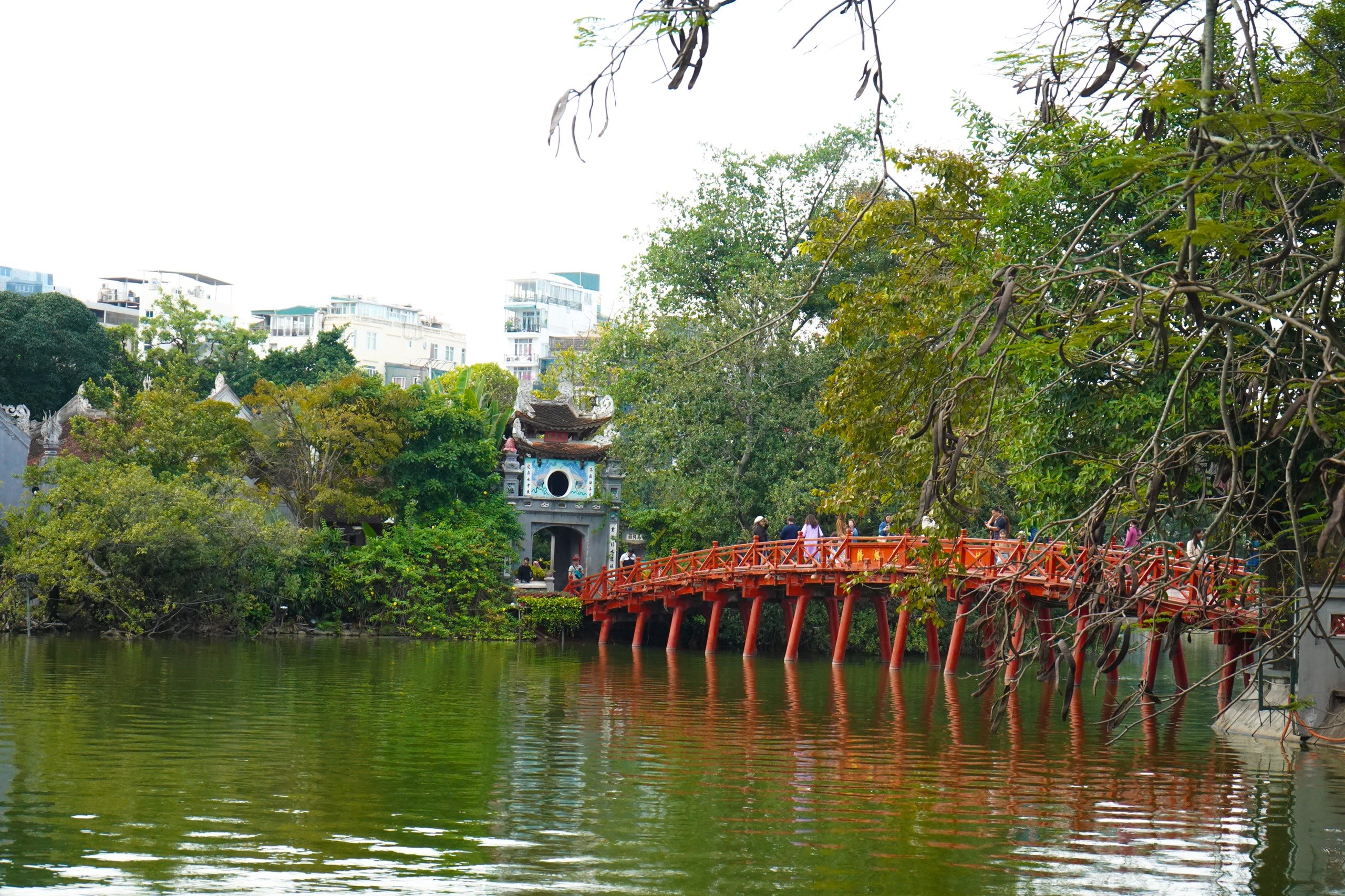
Strolling around Ho Guom Lake in the early morning, with mist still lingering on the water's surface, a distant red hue curves like a silken ribbon. The The Huc Bridge, connecting the lake's shore to the opposite side of Ngoc Island, where Ngoc Son Temple is located, has long been considered a cultural symbol of Hanoi.
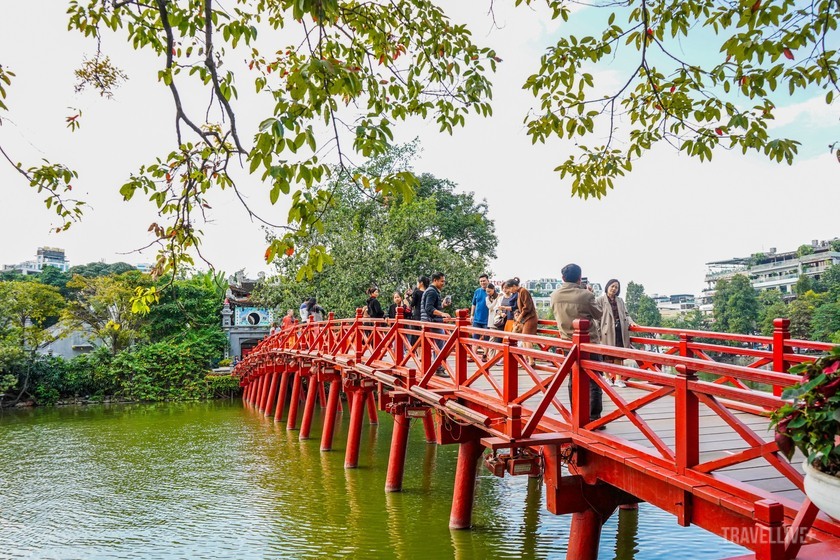
The red The Huc Bridge stands out against the clear blue lake.
Discover the architecture of Ngoc Son Temple.
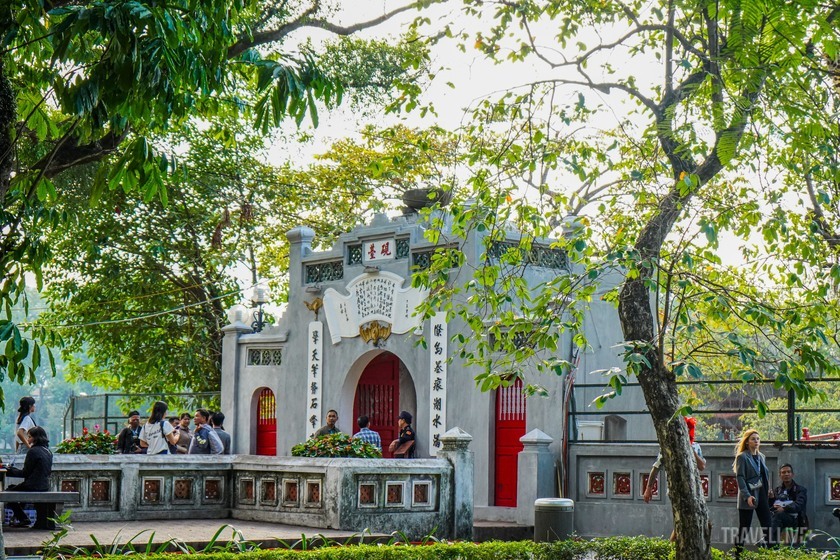
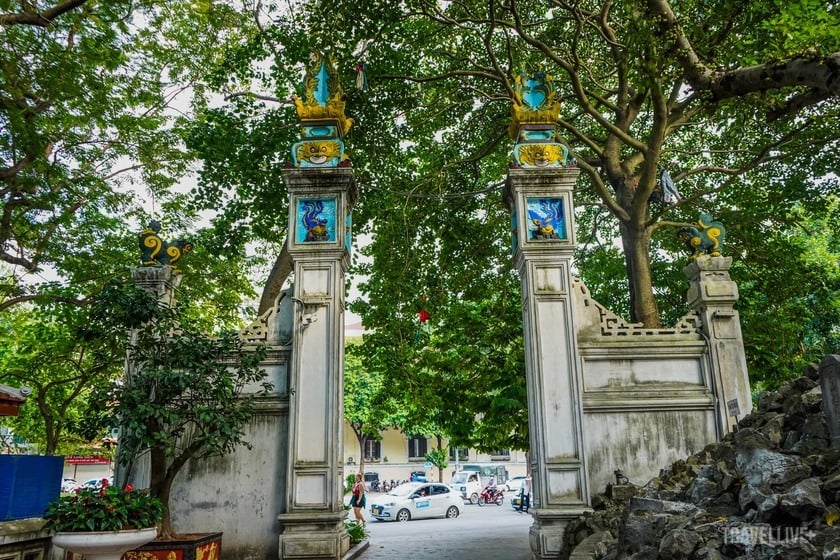
Amidst the hustle and bustle of urban life, Ngoc Son Temple stands silently and peacefully, seemingly isolated from the outside world. Stepping through the temple gates, everyone seems to carry with them curiosity and reverence as they enter a world they have heard and read about through stories that have shaped Vietnamese history and culture. Regardless of the season, this place is always bustling with visitors from all over the world who come to visit and worship.
Ngoc Son Temple, built in the 19th century, is an outstanding architectural masterpiece representing the traditional beauty of national culture. It is a place where three religions—Taoism, Buddhism, and Confucianism—intersect, evident not only in the worship rituals but also clearly reflected in the temple's architecture, from the couplets and horizontal plaques to other decorative elements.
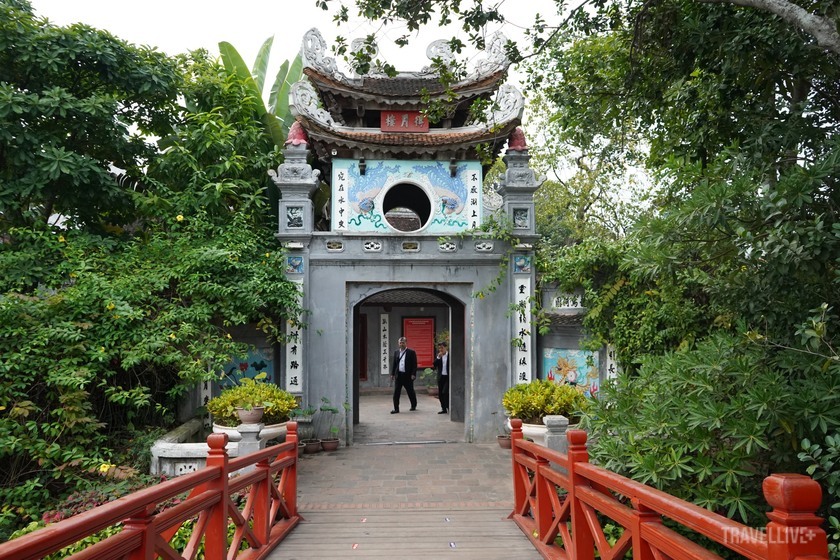
Ngoc Son Temple is a famous cultural and spiritual symbol of Hanoi.
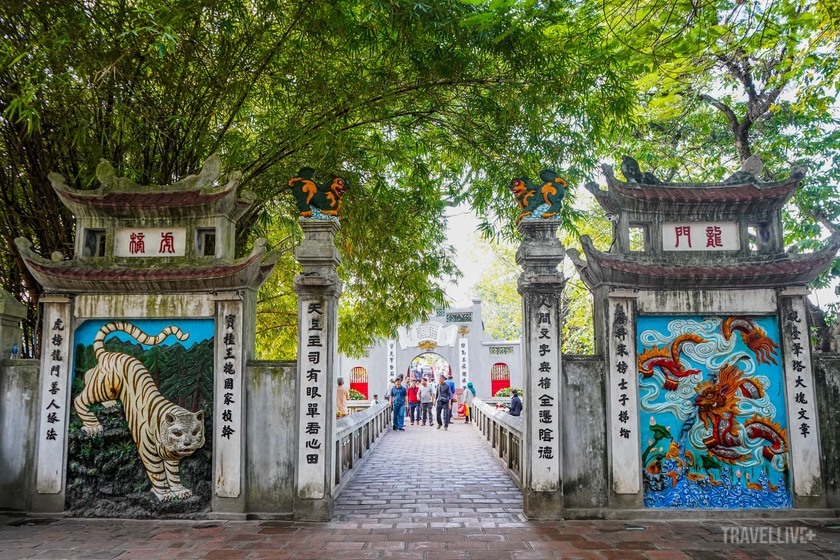
The central gate is bordered by two pillars, each adorned with bas-reliefs depicting the Dragon Gate and the Tiger Tablet. These are symbols of academic achievement according to Confucianism. In Eastern philosophy, the Dragon Gate symbolizes success in examinations, with the legend of the carp leaping over the Dragon Gate and transforming into a dragon. The Tiger Tablet, on the other hand, is a list of those who passed the doctoral examinations, considered the dragons and tigers of the literary world.
Ngoc Son Temple is divided into three main parts: the three-pavilion structure in the front (the wave-blocking pavilion), the main shrine in the middle, and the sanctuary at the back. The main shrine is the space for worshipping the God of Literature and other deities; the Taoist influence is particularly evident in this area.
The inner sanctuary is the area dedicated to the worship of General Tran Hung Dao. The statue of Saint Tran Hung Dao is placed on the central altar; on one side is the Buddhist altar with statues of Bodhisattva Avalokiteshvara and the young boy Thien Tai Dong Tu (the boy appears in Buddhism, Taoism, and folklore, as a young attendant of Bodhisattva Avalokiteshvara); the other side is dedicated to the altars of the Mountain God and the Earth God, the principal deities who govern the forests, mountains, and land.
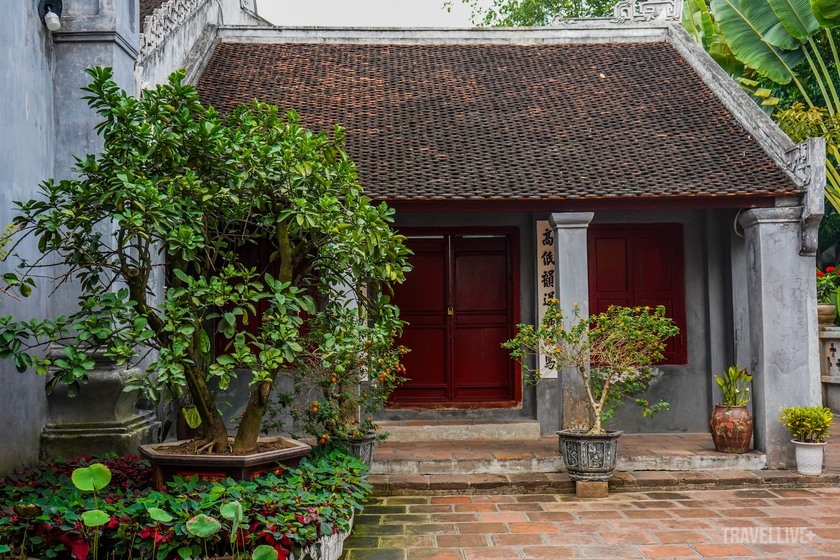
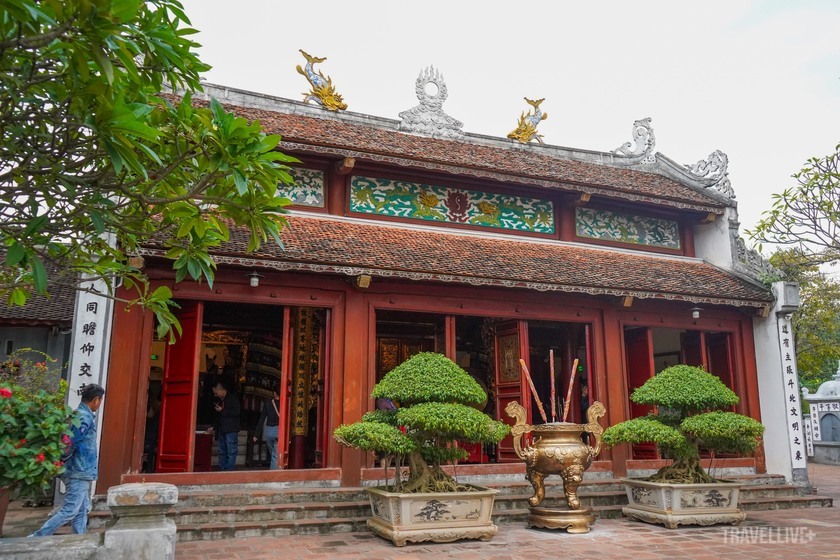
The shrine is imbued with spiritual and traditional elements.
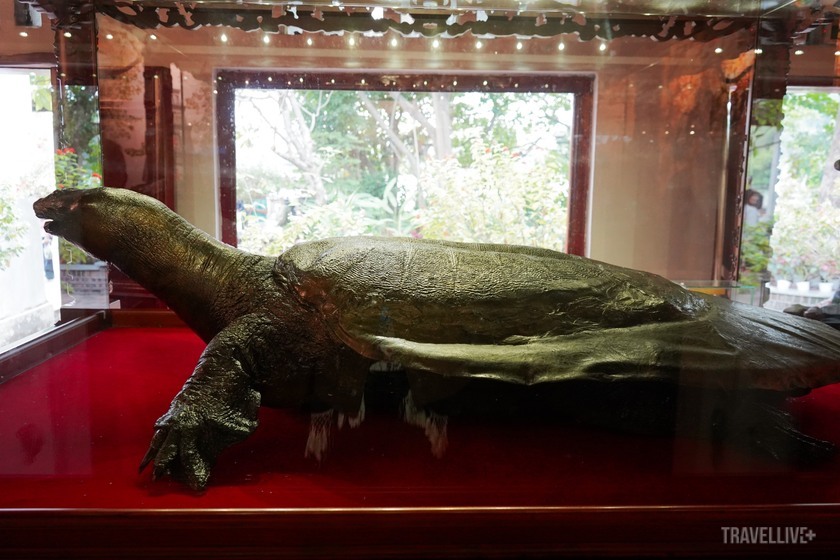
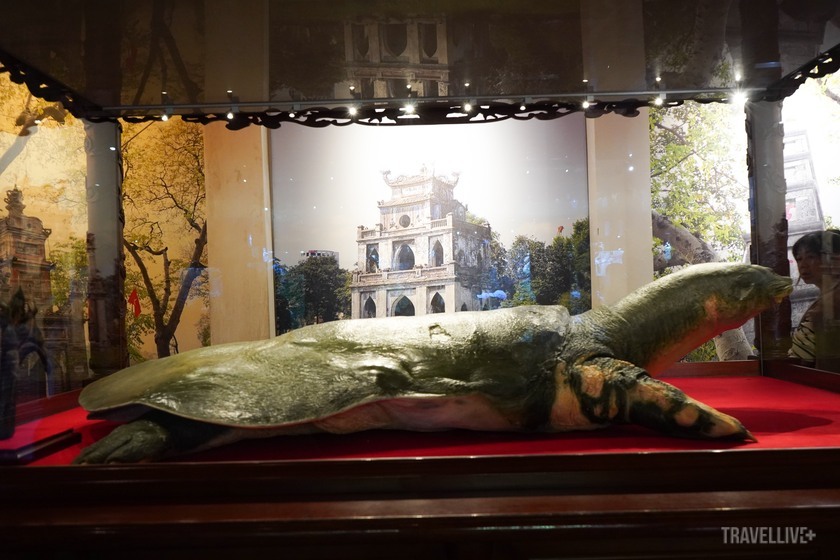
Visiting Ngoc Son Temple on Ngoc Son Island, tourists always stop by the exhibition room displaying rare turtle specimens. For every Hanoi resident, the Hoan Kiem Lake turtle is like a "treasure," closely linked to Hanoi's culture for generations. Currently, the exhibition room houses two turtle specimens. One, which died in 1967, weighed 250kg, measured 2.1m long and 1.2m wide, and was preserved using stuffing and chemical impregnation. The second specimen belongs to a turtle that died on January 19, 2016, weighing 169kg, with a shell measuring 1.85m long and 1.08m wide, and was preserved using plastination technology from the Federal Republic of Germany.
These rare specimens not only provide visual value for all visitors to admire and serve scientific research purposes, but also provide a vivid example for children to see the legendary turtle.

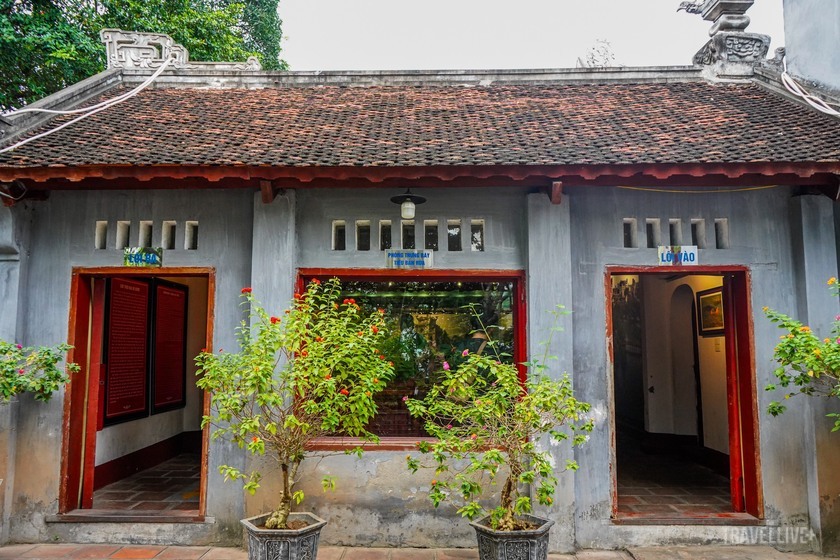
A museum displaying specimens of turtles.
The The Huc Bridge - a landmark of Hoan Kiem Lake.
To talk about Ngoc Son Temple without mentioning The Huc Bridge would be a huge oversight. In 1865, Nguyen Van Sieu, a poet and 19th-century Vietnamese cultural researcher, directed the construction and renovation of Ngoc Son Temple, transforming it into a cultural symbol of "Northern scholars." He also built several other structures, most notably The Huc Bridge, connecting the temple to the riverbank.
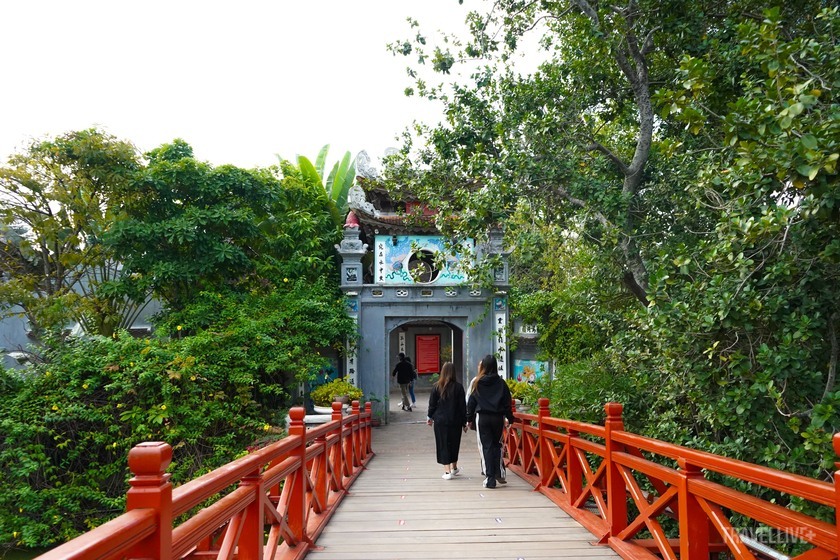
The The Huc Bridge is the only access route to Ngoc Son Temple and is also a very popular photo spot in Hanoi.
The The Huc Bridge, meaning "concentrated radiance" or "place where the early morning sunlight rests," had 15 spans and 32 round wooden pillars arranged in 16 pairs. The bridge deck was paved with planks, the railings were painted dark red, and the words "The Huc" were gilded. After the bridge collapsed in 1952, Hanoi Mayor Tham Hoang Tin demolished the old bridge and rebuilt it according to the design of architect Nguyen Ngoc Diem. The bridge retained its arched shape, but with a greater curvature, and continued to use wood for the bridge deck and railings. Although the transverse and longitudinal beams were cast in concrete, the bridge deck and railings remained made of wood.
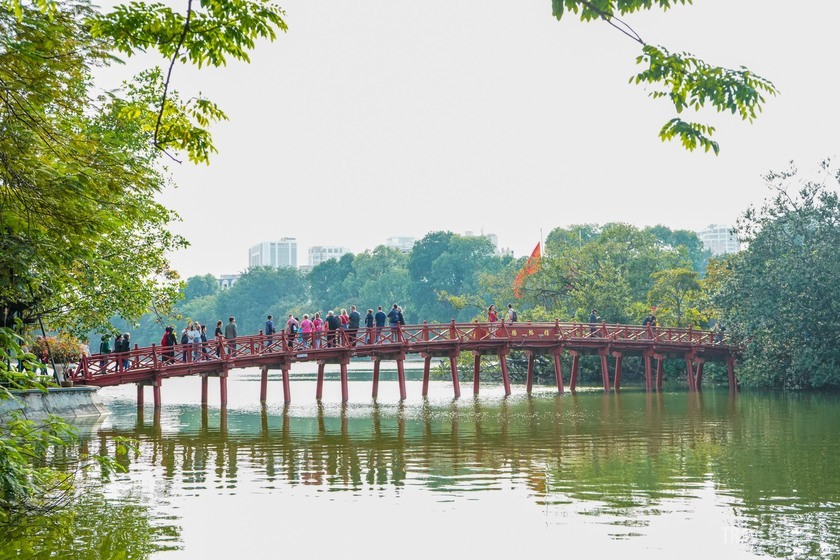
The The Huc Bridge means "concentrated radiance" or "place where the early morning sunlight rests".
Today, the The Huc Bridge is still regarded by the people of Hanoi as a symbol of the sun, life, and happiness, not only because of its vibrant red color but also because it faces east, towards the rising sun, to receive the bright energy of a new day. The complex of Ngoc Son Temple and The Huc Bridge is considered an attractive tourist destination, a tranquil and serene space filled with incense smoke in the heart of Hanoi.
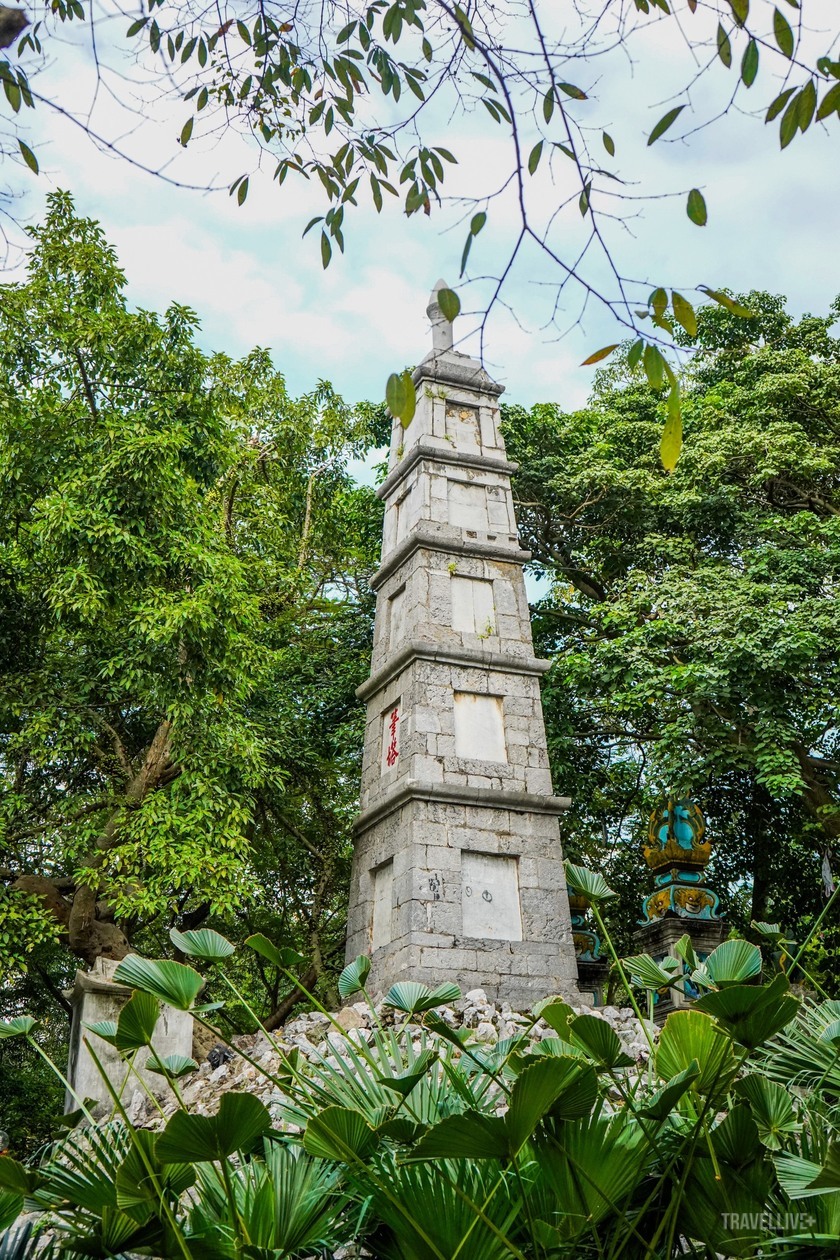
The square stone tower has 5 floors, is 9 meters high, and has three large Chinese characters embossed on its body: "Left over the clear sky," symbolizing the nation's civilization.
Near Ngoc Son Temple, the Pen Tower, inscribed with the three characters "Ta Thanh Thien" - meaning "writing on the blue sky," was built by the scholar Nguyen Van Sieu. From there, the The Huc Bridge leads to Ngoc Island and then to Ngoc Son Temple, like a crimson silk ribbon draped over the calm blue water.
Visiting Ngoc Son Temple, tourists will feel the tranquil and peaceful atmosphere in the heart of the bustling city. This place is not only a spiritual site for offering incense, but also a space for relaxation and exploring the unique culture of the capital. Taking a stroll around the temple, admiring the lush green trees that embrace this ancient structure, and listening to the tour guide recount the legends of our ancestors, one can deeply appreciate why this small temple, nestled peacefully in the middle of a lake, has become a symbol of the ancient capital, holding so many precious values. It holds ancient stories and legends, and also embodies the hope for a better future.
Tourists wishing to visit Hanoi can book in advance.airline ticketsandhotelIn addition, to make your exploration of the capital more unique, you can participate in...Hanoi Old Quarter Cyclo TourandQuintessence of Northern Vietnam show.
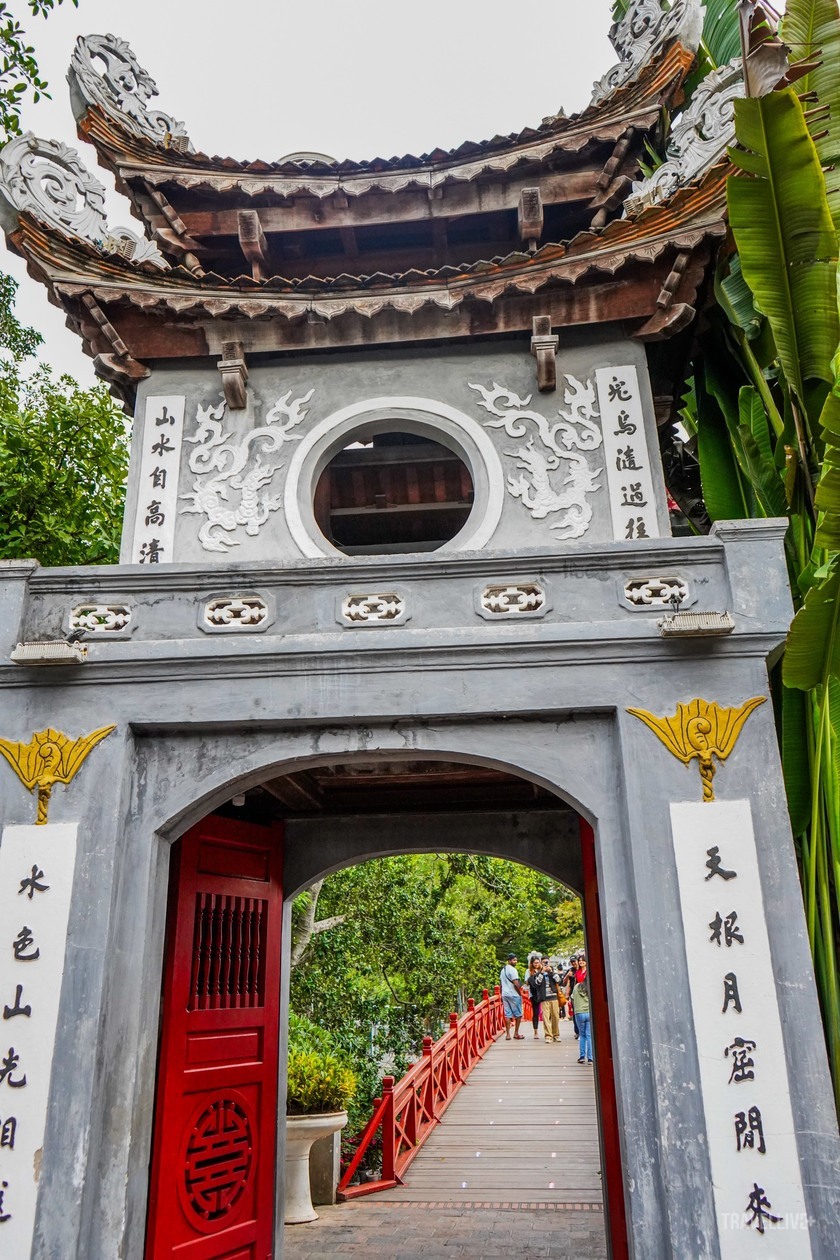
It seems as though time can "freeze" here, separating it from the hustle and bustle of life on either side of the river.
Hanoi is gradually transforming with the rapid development of modern skyscrapers springing up everywhere. But somewhere within it all, there remains a Hanoi that diligently preserves ancient architecture and the cultural essence of the nation, so that every Vietnamese person, standing amidst the capital's landscape, still yearns for the melodies of folk songs and proverbs:
"Let's go see the scenery of Sword Lake."
See The Huc Bridge, see Ngoc Son Pagoda
The Inkstone Monument and the Pen Tower are still standing.
Who built this nation?
(Folk song)
Traveloka is offering discounts of up to 50% on Tet holiday flights, hotels, attractions, and tours when booking between November 28, 2023, and February 25, 2024. See details.here.