VI
VI


The pristine forests on the island of Borneo, about 1,200 km from the Indonesian capital Jakarta, are more familiar to animals than humans. However, the unspoiled landscape of this area is being considered by the Indonesian government as an attractive alternative to the current Jakarta – predicted to be the world's fastest-sinking megacity, according to the Washington Post. Plans to relocate the capital from Jakarta have been discussed for years in Indonesia, the world's largest island nation.
Jakarta, the capital of Indonesia, has long been the country's economic, political, and cultural center. The city has witnessed rapid growth since Indonesia gained independence in 1945. However, this rapid development has also brought serious consequences. Jakarta is facing severe land subsidence, causing many areas to sink below sea level. Experts warn that without timely intervention, a significant portion of the city will disappear underwater within the next few decades.
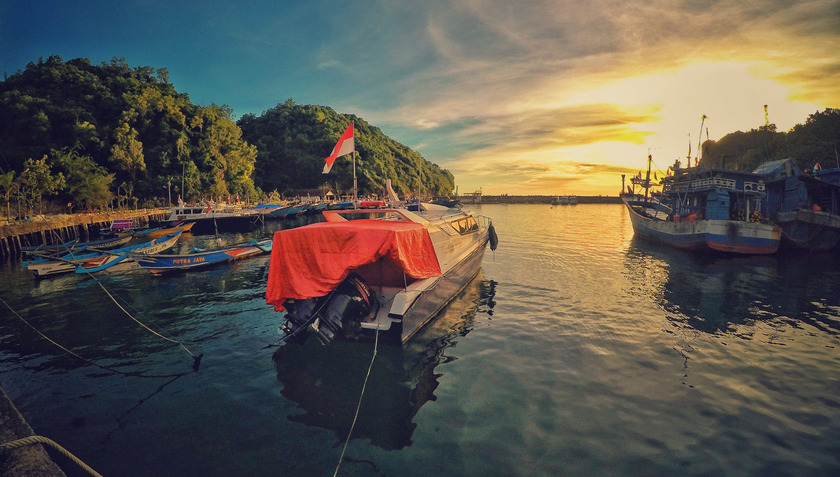
Indonesia, Southeast Asia's leading economic power, is making a bold decision: relocating its capital.
A 2021 study by the Indonesian Agency for Technology Assessment and Application indicated that Jakarta is sinking at an average rate of about 6cm per year, making it one of the fastest-sinking cities on Earth.
Heri Andreas, an Earth scientist at the Bandung Institute of Technology, told AFP: “Building seawalls is unavoidable because floods have already occurred, but over time the seawalls will sink and floods will happen again. The best solution to control land subsidence is to control groundwater extraction.”

In 2022, Indonesia passed legislation to fund and implement a plan to relocate its capital. The committee in charge of planning the new capital stated that the relocation plan was urgent due to significant pressure from “factors such as traffic congestion, environmental pollution, and high population density” in Jakarta and Java.
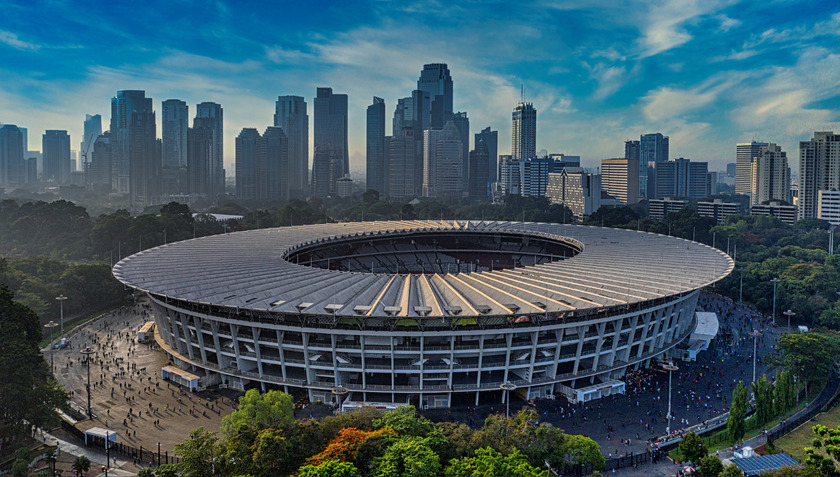
Jakarta, the capital of Indonesia, has long been the economic, political, and cultural center of the country.
According to the management's plan, within the next two decades, Nusantara will become a new megacity with an estimated 1.9 million residents. To prepare for that future, approximately 47 apartment buildings are under construction, 12 of which were completed and inaugurated last month. In addition, the Indonesian government also plans to relocate 20,000 civil servants from Jakarta to Nusantara. The first group of 12,000 employees from 38 ministries will relocate by the end of December this year.
In the Nusantara Capital Management Board's "2023 Achievement Report," President Jokowi emphasized that the new capital is part of Indonesia's "grand strategy" Golden Vision 2045, aiming to transform Indonesia into a developed nation by 2045, coinciding with the 100th anniversary of its independence.
Nusantara, Indonesia's future capital, is envisioned as a green, modern, and sustainable city. The city's development plan aims to create an ideal living environment, with a well-developed public transportation system, vast green spaces, and smart buildings. However, building a new city on such a large area requires the clearing of primary forests, sparking controversy over its environmental impact. Environmentalists fear that Nusantara will repeat Jakarta's mistakes and become a new "concrete monster."
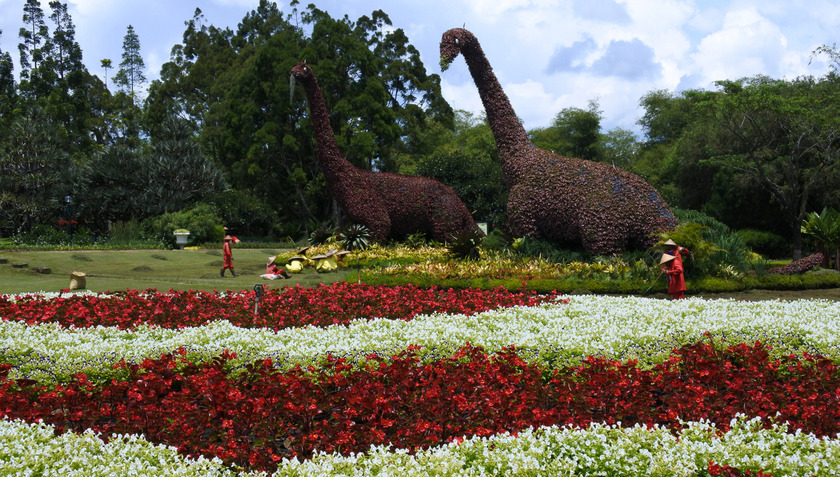
The new capital is located about 1,200 km from Jakarta (Indonesia), an environment more familiar to animals than to humans.
Indonesia also has other ambitious goals. By 2035, Nusantara aims to achieve a 0% poverty rate. According to the World Bank, in 2022, nearly one in ten Indonesians lived in poverty. By 2045, the city also aims to achieve net-zero emissions.
Besides Indonesia, several other countries have also built new capitals in the past century. In 1960, Brazil inaugurated its capital, Brasília – a city with modern architecture – built on a wild plateau.
More recently, Egypt began constructing a new capital to replace Cairo. Facing problems with urban density, pollution, and traffic congestion, the country will build the new capital – now known as the New Administrative Capital – east of Cairo.