VI
VI


If you watched the opening ceremony of the recent World Cup in Brazil, you would easily notice how skillfully the host country incorporated images of beautiful nature, the charm of its people, and a rich culture. Among these, samba is a must-mention.
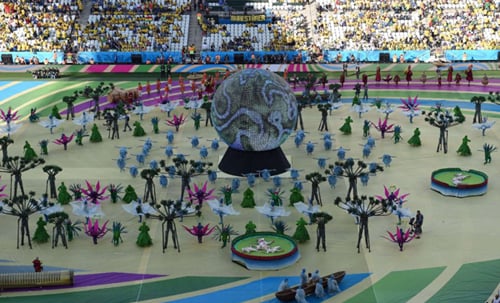
The opening ceremony of the 2014 World Cup was colorful, featuring samba dances. Photo: ngoisao
Samba is a fusion of traditional dances from Angola, Congo, and Brazil, incorporating the spinning movements of the 16th-century Lundu dance, originally performed by enslaved laborers in Portugal. Later, it incorporated steps from other dances used in traditional festivals on Copacabana beach (Rio de Janeiro). By 1885, samba was described as a graceful Brazilian dance under the names Zemba Queca and Mesemba.
Samba, over time, was combined with another Brazilian dance called Maxixe and was named after a type of prickly pear cactus fruit. It wasn't until much later that the name samba became popular. However, many believe the name originated from "Zambo," meaning the offspring of Black people.

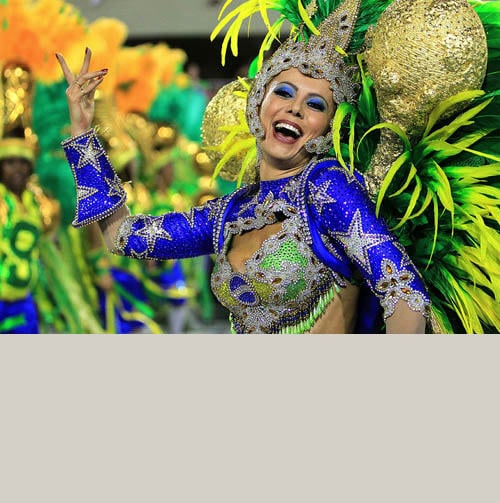
Samba has many different dance steps, but the most popular include Samba Walks, Samba Rolls, Promenade Runs, Volta, and Botafogo. Of these, Samba Walks and Samba Rolls are two of the most visually appealing and popular steps. Dancers participating in this dance often wear eye-catching, vibrant costumes, sometimes with playful designs.
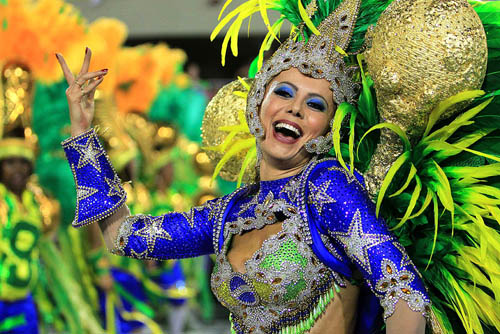
The beauty of the radiant faces of the samba dancers. Photo: stunningplaces
Samba dancing is a harmonious combination of movements from the dancer's entire body. Therefore, when watching them perform samba, viewers can easily feel the grace and charm. However, samba is not a dance meant to showcase the dancers' physical beauty, as many people believe. Besides the eye-catching costumes and healthy bodies, each performance is an opportunity for the dancers to introduce to the audience their knowledge and love for samba. That is the true beauty of this dance, a beauty stemming from the proud demeanor of the dancer.
In Brazil, tourists can witness samba dancing everywhere, from slums to bustling streets. However, if you want to immerse yourself in a vibrant festival, the advice is to attend the major festivals held around February each year throughout Brazil. The most exciting is undoubtedly the Carnival in Rio de Janeiro, where many talented samba dancers gather to compete with spectacular and grand performances.
Traditionally, the Carnival begins with the handing of the key to the city to Emperor Momo, a fictional character who then leads the dancers into the Samba dance hall and greets the audience. At that moment, trumpets and drums resound everywhere, accompanying the parade of dancers. Many visitors to the festival are delighted to immerse themselves in a vibrant and lively atmosphere. The highlight of the festival takes place on Sunday night and Monday morning at the Sambadrome stadium, with a competition to select six samba dance teams representing different styles, which will then be honored and awarded prizes.
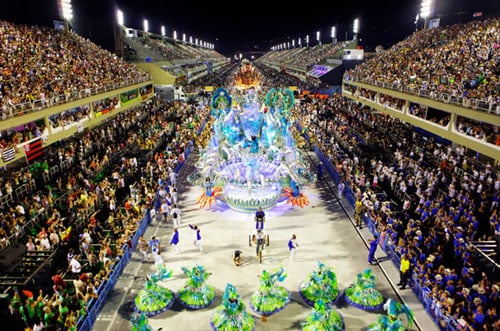
Carni FestivalA spectacular and vibrant festival in Rio de Janeiro. Photo: localnomad
Many festivals featuring samba dancing will undoubtedly continue to be held during the time when exciting football matches are taking place in Brazil. The vibrant street dances and the electrifying atmosphere in the stands will make for an unforgettable holiday for visitors.