VI
VI


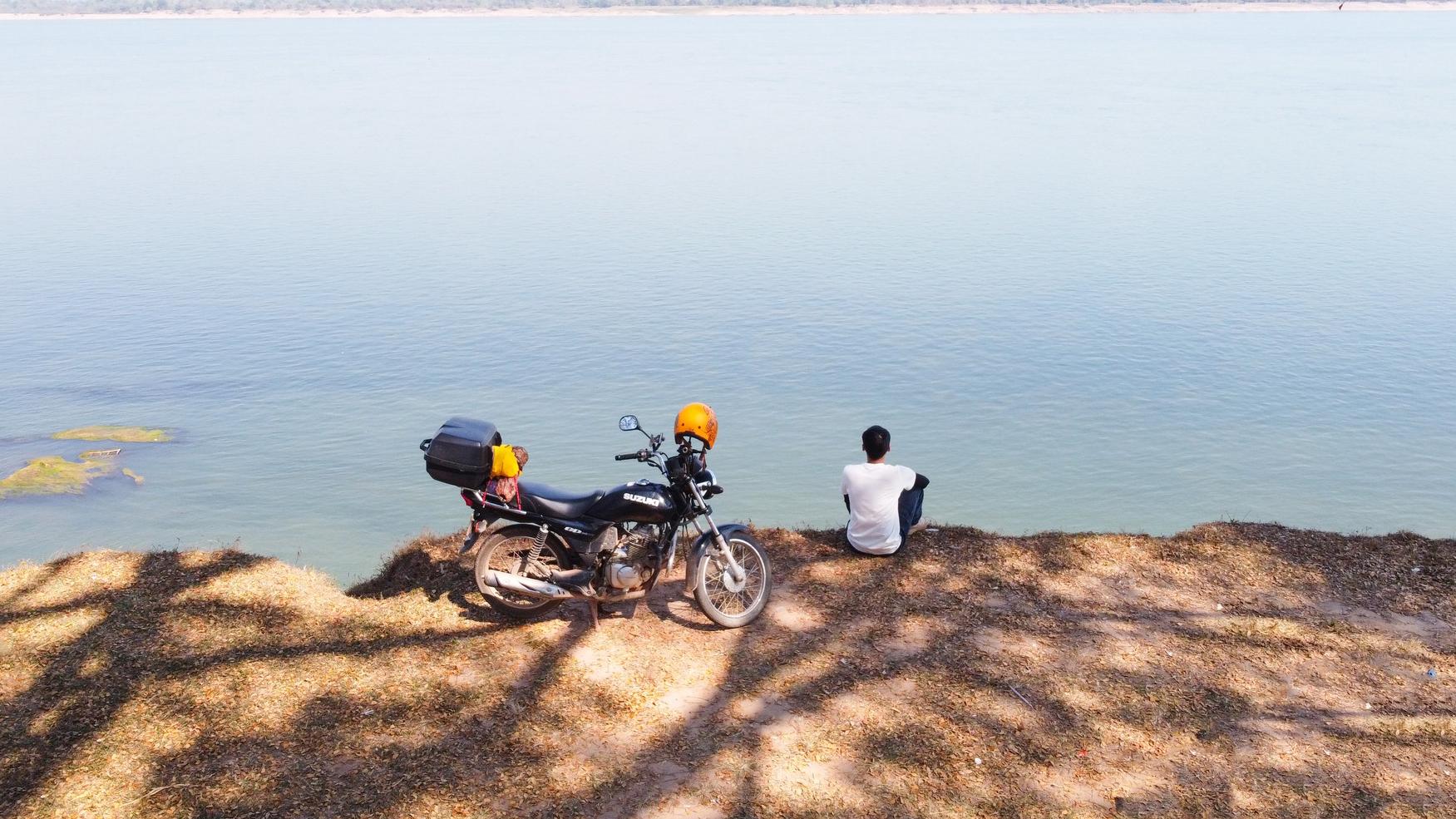
"Because I traveled quite a lot by motorbike, the fuel costs were quite high. Gasoline prices in Laos are almost 1.4 times more expensive than in Vietnam, plus the cost of entrance fees to tourist attractions and food, so on average I spent 1 million VND per day," Chu Quang Cau shared with Travellive about his trip.
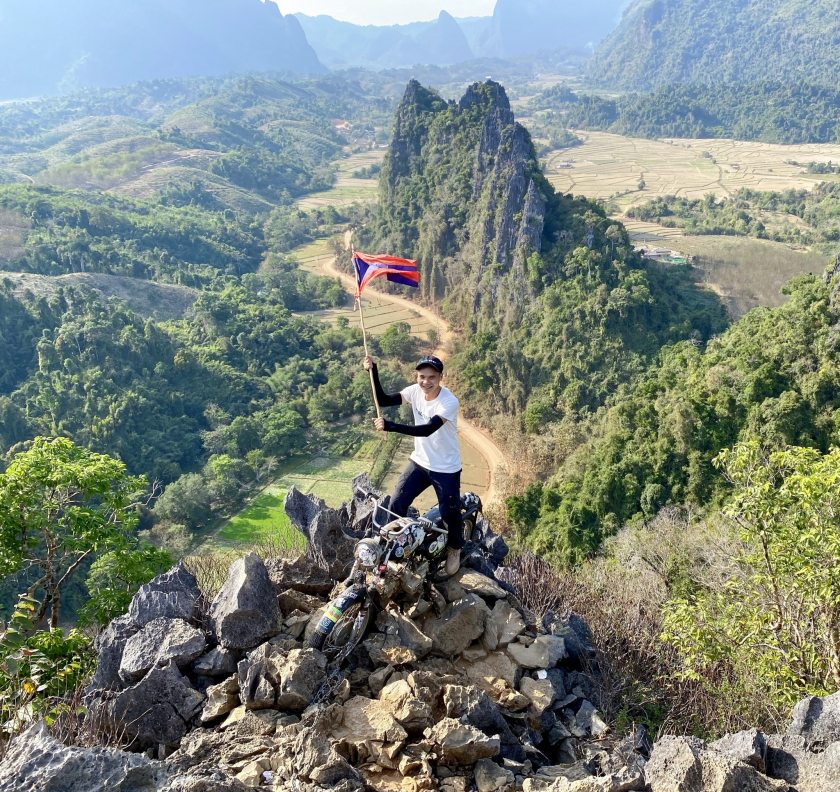
Chu Quang Cau's motorbike adventure exploring Laos lasted 8 days and cost 8 million VND.
Quang Cau's journey took him from Northern Laos to Southern Laos, passing through Sam Neua, Luang Prabang, Vang Vieng, Vientiane, Kaysone Phomvihane, and stopping in Pakxe, Champasak province. Afterward, he returned to Vietnam via the Bo Y border crossing in Kon Tum. The three most common ways to reach Laos are by plane, bus, or by motorbike.
The first place you shouldn't miss when visiting Laos is Luang Prabang. As the former capital of Laos, you can explore its historical buildings and cultural heritage. In Luang Prabang, must-see attractions include Wat Xieng Thong (an ancient temple over 500 years old), Mount Phousi, Kuang Si Falls, and a scenic boat trip on the Mekong River.
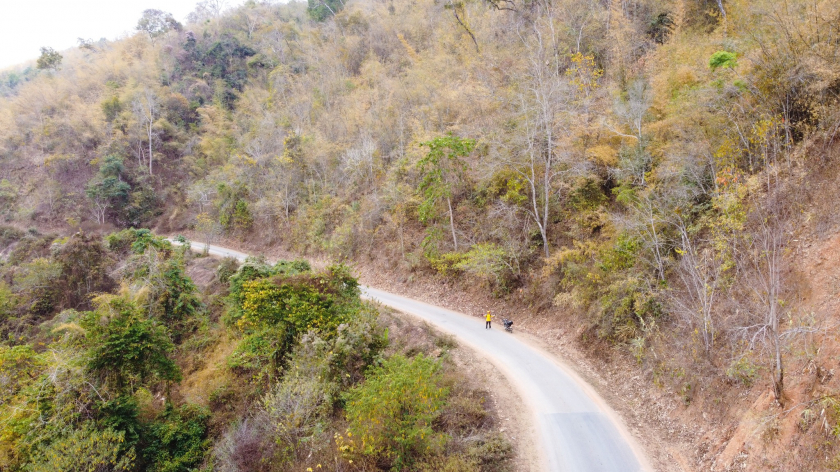
The route from Sam Neua to Sam Soun Beach
Next is Vang Vieng, a place suitable for those who like to explore and experience thrilling activities such as off-road racing, mountain climbing, cave exploration, kayaking, hot air ballooning, paragliding, etc.
Another must-see when visiting Vientiane is That Luang, the gold-plated pagoda that is a symbol of Laos. Tourists can also visit the Patuxai Arch, and the Vientiane Night Market (the largest night market in Laos). Additionally, many people take a bus from Vientiane to Thailand for a day trip.
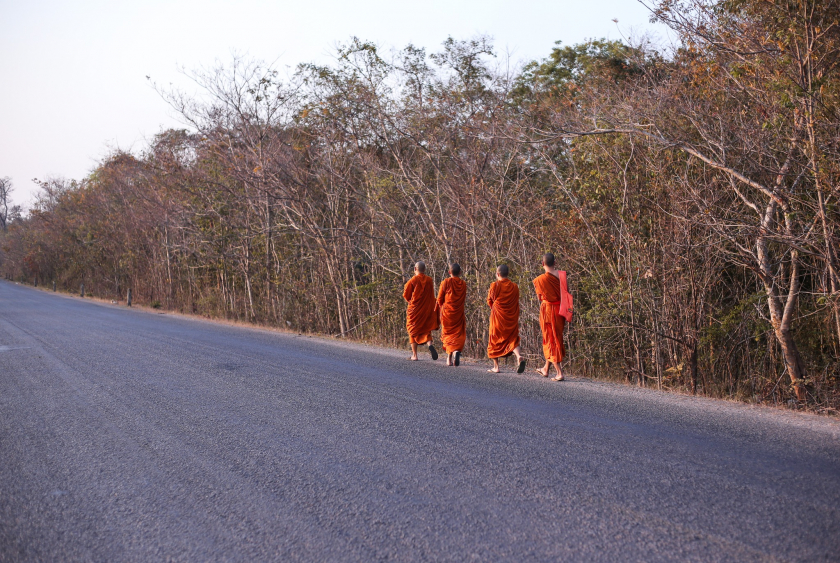
The monks are going on alms rounds at Xeno.
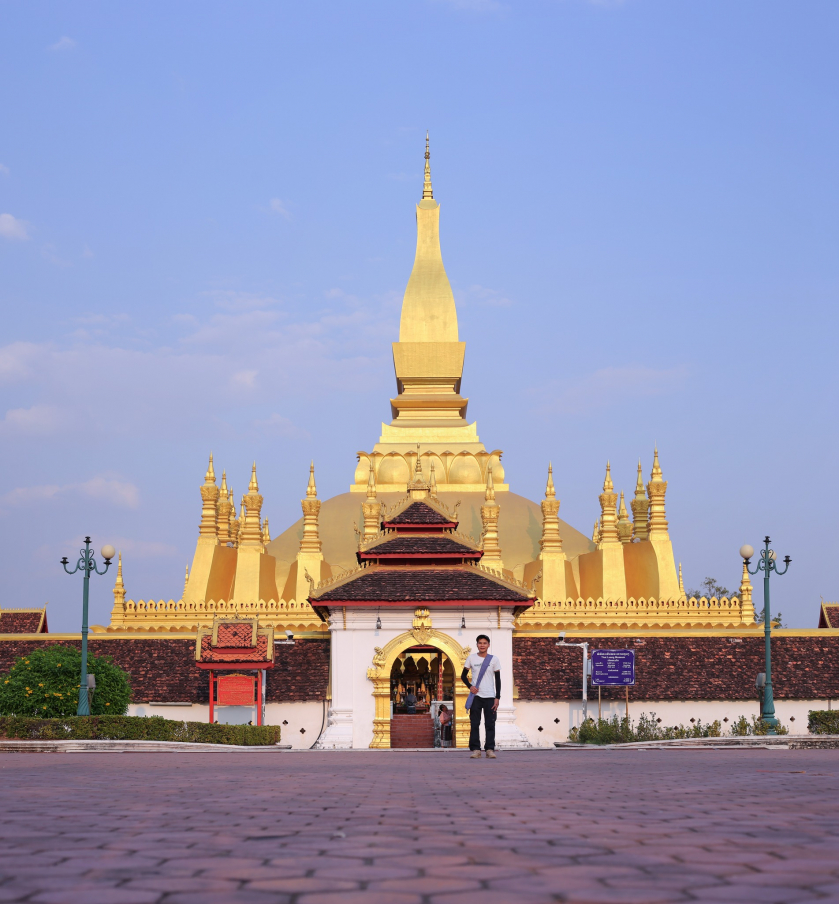
The majority of Laotians are Buddhist, so there are many temples. All the buildings and architecture in Laos reflect Buddhist influences. The photo shows Quang Cau checking in at That Luang Temple.
Besides the interesting things at the destinations, Quang Cau also encountered many difficulties on his journey exploring Laos by motorbike.
“Perhaps the biggest difficulty I faced was language, as I didn't know Lao. Many Lao people don't speak English, but luckily I had the help of a Lao language app. The most memorable experience was probably driving on the Pak Xeng – Sam Soun road (the road from Sam Soun to Luang Prabang). I followed Google Maps, but it was actually a continuous dirt road winding over hilltops, stretching for 75 km. The road was mostly dirt and dust, visibility was poor, and accidents were very likely if you weren't a skilled driver. Honestly, I've never driven on a road that was both so long and so bad,” Quang Cau recounted.
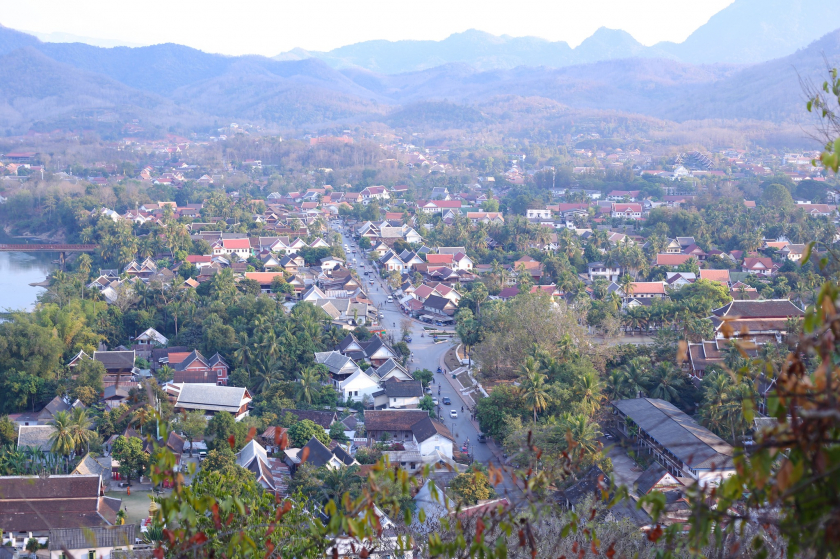
Luang Prabang viewed from the top of Phousi Hill.
The journey from Luang Prabang to Vang Vieng also left a lasting impression on him, especially with its treacherous mountain pass, one of the most dangerous in Laos. The Kasi Pass doesn't have as many sharp turns as the passes in Northwest Vietnam. Although traffic isn't heavy, Quang Cau's motorbike is constantly overloaded due to the continuous 12-degree slopes. At the top of the pass, there's a rest stop where you can admire the pass from above; it's very similar to the Khau Pha Pass in Yen Bai.
Traveling solo by motorbike has given Quang Cau many memorable experiences as he sets foot in new lands. He said that in northern Laos, the forests are currently shedding their leaves, and the natural scenery reminds him of autumn in Europe. In the south, there are many barren hills and the landscape is more desolate. The terrain of Laos is mainly mountainous, gradually becoming flatter towards the south.
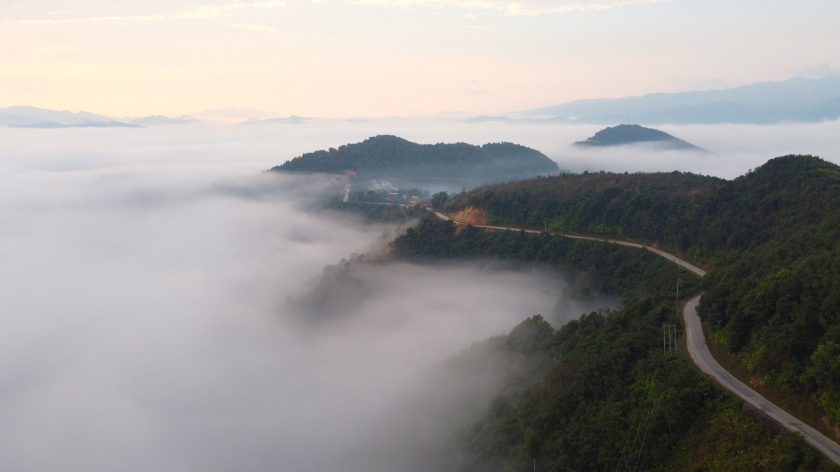
Sea of clouds on the road from Sam Neua to Luang Prabang
Although traveling in Laos is relatively simple compared to other countries, Chu Quang Cau also offers some tips and tricks for tourists planning a trip to this land of a million elephants.
Procedures for entering and exiting Laos for people and motorcycles:

The procedures for bringing motorbikes and entering/exiting the country in both Laos and Vietnam are simple. Mr. Quang Cau traveled to Laos through the Na Meo border gate in Thanh Hoa. For his motorbike, he obtained temporary export documents and had them stamped, costing 50,000 VND. For himself, he only needed to present his passport and state the reason for exiting the country as tourism. The entire process for both the person and the motorbike took about 10 minutes.
Upon entering Laos, border police take a photo, stamp the passport, and sign a confirmation for customs clearance, costing 50,000 Kip. Lao customs will issue a travel permit containing vehicle information, ensuring the vehicle is legally permitted to pass through all border crossings upon return to Vietnam, costing 100,000 Kip. The immigration process takes approximately 20 minutes.
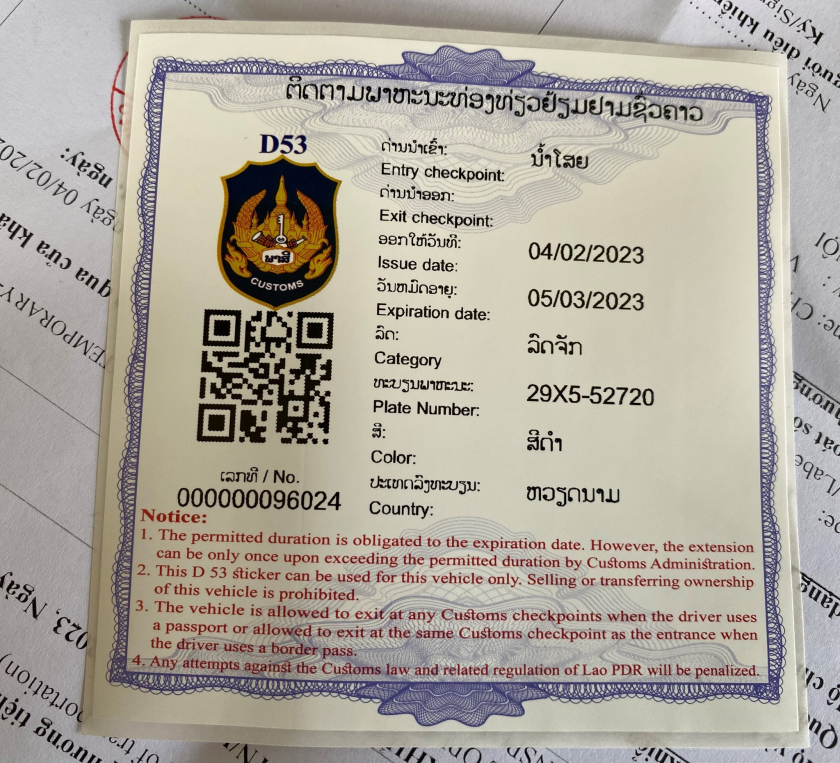
This is a Lao customs clearance permit for Mr. Quang Cau's motorbike. If you're bringing a vehicle across the border, tourists should definitely have this document.
When transporting vehicles through Laos, Mr. Cau noted that the vehicle and its registration papers must be in his name. It's important to keep the vehicle's travel permit throughout the trip to present it when checked by Lao traffic police and during border crossing procedures to return to Vietnam.
Money:If you're going for a few days, you can exchange Lao currency at the border crossing, but if you're going for a longer period, it's better to use a Visa card so you can withdraw cash as needed. Laos only uses the Kip currency, so you should exchange money before crossing the border for procedures, or you can exchange directly with customs officials in Laos as the exchange rate is quite good. Currently, 1 Lao Kip = 1.4 Vietnamese Dong.
The Lao currency is depreciating significantly against the Vietnamese currency, so exchanging money will benefit the Vietnamese currency, making the trip cheaper than before.
Traffic:The roads in Laos aren't as beautiful as in Vietnam, but they're manageable and you can drive quite fast. This is because the locals are very conscientious about traffic, always yielding to each other and observing before doing anything, so it's very safe.
In Laos, honking is very rare. Quang Cau only honked three times on the stretch of road from Sam Neua to Luang Prabang because he needed to honk on the mountain pass, especially on the hairpin bends, for safety. Normally, honking isn't necessary. When you want to overtake, just signal, and other vehicles will yield, even heavily loaded trucks on narrow roads. Sometimes they'll even stop completely and pull over to the side of the road to let you pass if the road is too narrow. That would be very rare in Vietnam.
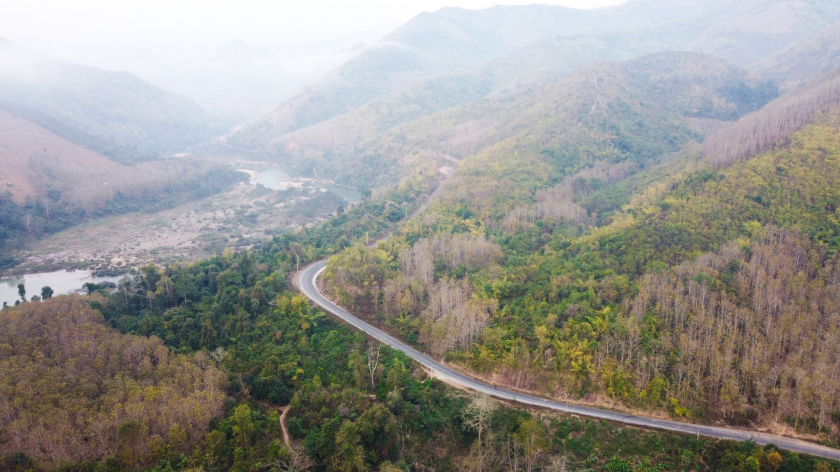
Traffic in Laos is very safe, so you can ride a motorbike without any worries. Note that you should refrain from honking except in emergencies, as Laotians don't like loud horns.
Human:What impressed Quang Cau the most about his trip to Laos was the people. Everyone was friendly and always willing to help others, and the Laotians especially cherished Vietnamese people. Laotians are honest and always gentle with each other, even in the market where there's competition, rather than being aggressive or quarrelsome. Except for the large cities with many tourists, Laotian people usually close their shops quite early, around 6-7 pm, to rest.
Cuisine:Laos has many delicious dishes. Laotians eat a lot of sticky rice; it's eaten just like the regular rice we eat every day. Mr. Quang Cau ordered rice several times but always received sticky rice. Also, Laotians eat very spicy food, so tourists should remember to ask them to use less chili in their dishes.
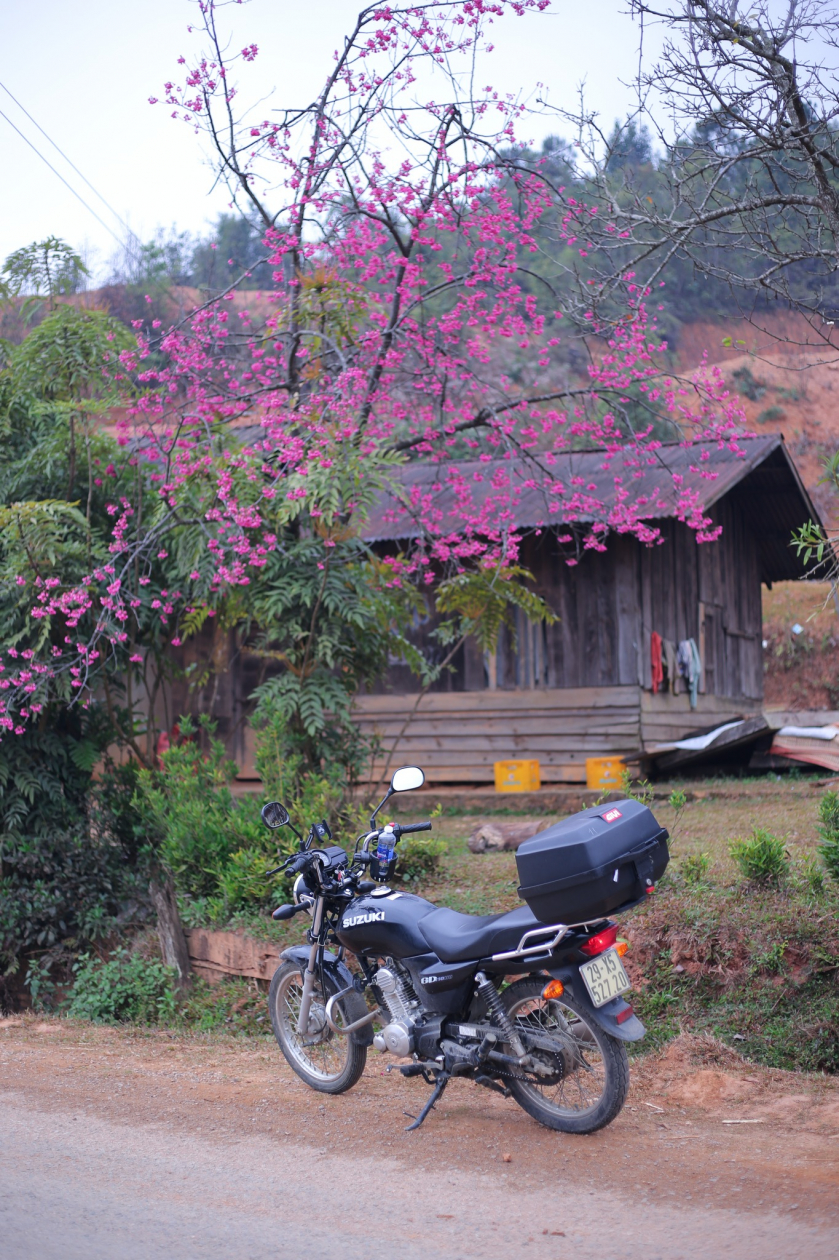
Cherry blossoms can be found everywhere along the road from Sam Neua to Luang Prabang.
Language:Very few Laotians know English, even in tourist areas. Quang Cau was fortunate to discover the "Lao" app – very useful for tourists in Laos who don't speak Lao and have limited English. Importantly, many Laotians also speak Vietnamese, so tourists can feel free to speak; if they don't understand, they can use the Lao language app to communicate.
Culture:The Lao people are predominantly Buddhist, so there are many temples. All the buildings and architecture in Laos reflect Buddhist influences.
"I can feel the great affection that the Laotians have for the Vietnamese. They always treat me well when they know I'm Vietnamese, so even when traveling, let's try to preserve that positive image in the eyes of the Laotians," Chu Quang Cau added.
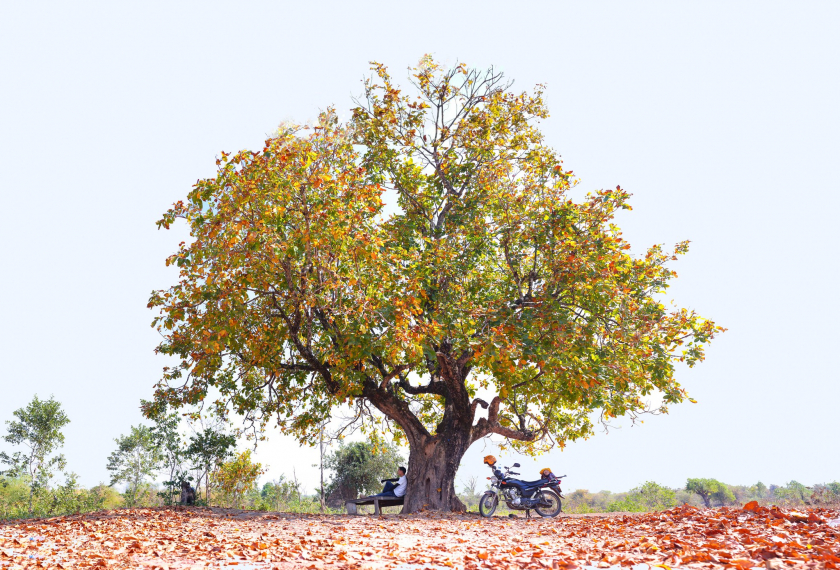
Traveling throughout Laos, Chu Quang Cau was impressed by the natural scenery and the hospitality of the people.
Chu Quang Cau's 8-day motorbike trip itinerary exploring Laos:
Day 1: Hanoi – Sam Neua (380 km)
Day 2: Sam Neua – Luang Prabang (450 km)
Day 3: Luang Prabang
Day 4: Luang Prabang - Vang Vieng (190 km)
Day 5: Vang Vieng - Vientiane (150 km)
Day 6: Vientiane – Kaysone Phomvihane (480 km)
Day 7: Kaysone Phomvihane – Pakxe, Champasak Province (330km)
Day 8. Pakxe – Ayun Pa (530 km)