VI
VI


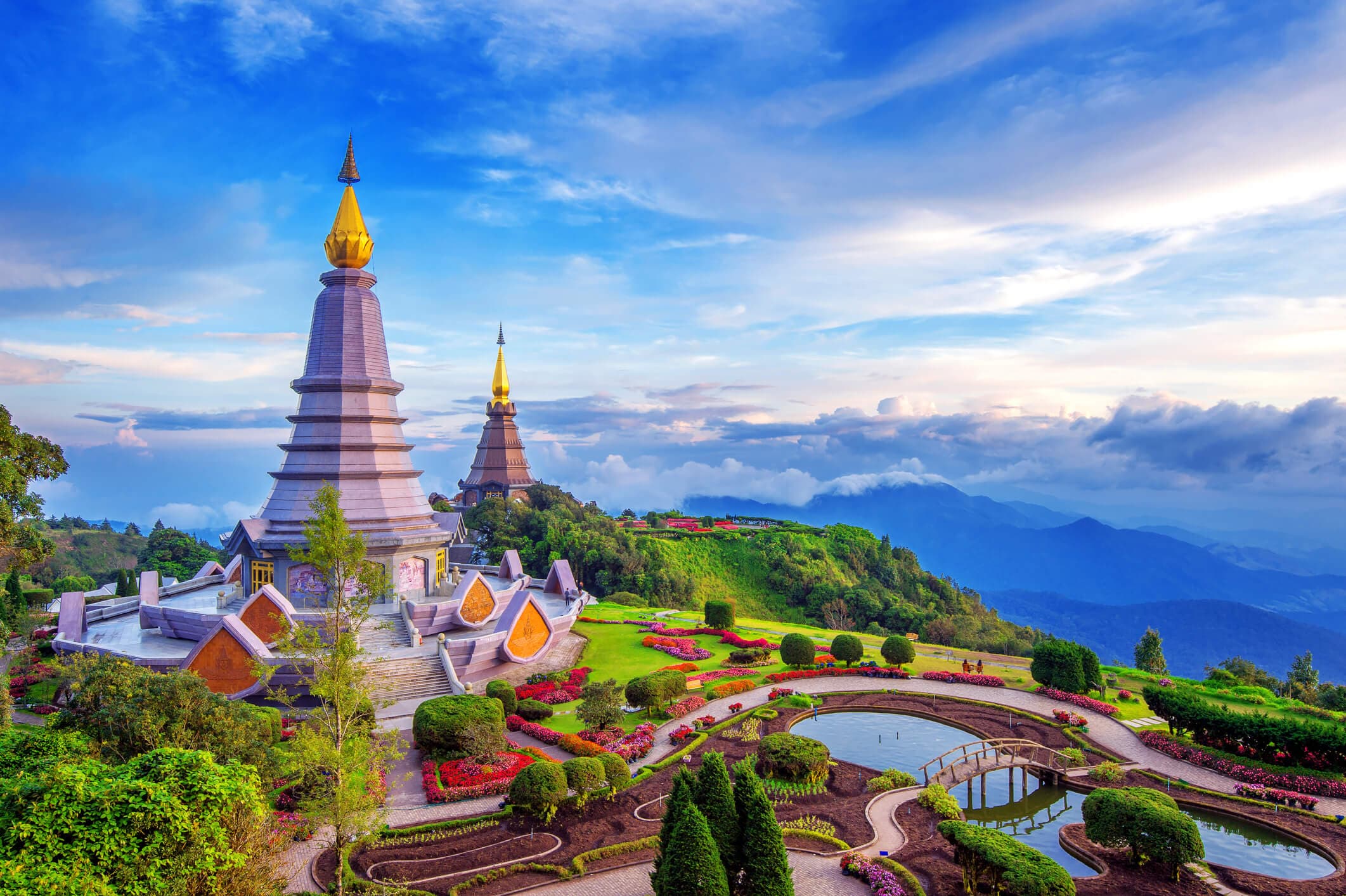
According to SCMP, in conjunction with a series of cultural and entertainment events, the country's tourism industry also has new plans to waive visa requirements for tourists from European countries, as this is intended to encourage tourists to stay longer and spend more.
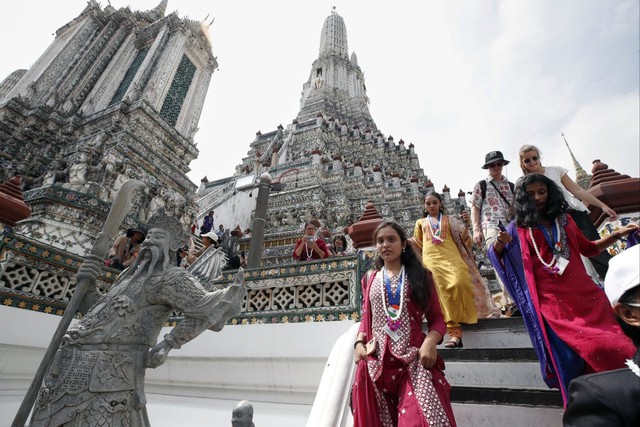
Indian tourists visit Wat Arun temple in Bangkok. The Thai government has approved visa exemptions for tourists from India and Taiwan (China) for stays of up to 30 days to boost the tourism industry. The country is now considering waiving visa requirements for European countries other than Russia. Photo: EPA
"Thailand, a Southeast Asian country known for its vibrant nightlife, beautiful beaches and national parks, is now planning to allow European tourists to stay for up to 90 days," said Prommin Lertsuridej, a senior aide to Thai Prime Minister Srettha Thavisin, last weekend.
Mr. Prommin Lertsuridej also highlighted plans to organize around 3,000 events such as concerts, marathons, and other cultural festivals next year to attract tourists.
Since taking office in August, Prime Minister Srettha has identified tourism as key to boosting Thailand's economic growth. Thai Prime Minister Srettha Thavisin also stated that tourism will bring "quick wins" to Thailand's economic growth program.
Thailand is temporarily waiving visa requirements for tourists from Russia, China, Kazakhstan, India, and Taiwan (China), while also urging airlines to add more routes and streamline airport operations to reduce waiting times for travelers.
Thailand also plans to allow nightlife venues in certain areas of Bangkok, Phuket, Chiang Mai, and Chonburi to extend their operating hours until 4 a.m. starting in December.

Experts believe that, although Thailand has lifted most restrictions on tourists during the Covid-19 pandemic, the average spending per tourist has decreased compared to pre-Covid-19 levels and has not met expectations.
In 2019, Thailand saw a record number of foreign visitors, approximately 40 million, generating revenue of 1.91 trillion baht (US$54.5 billion). According to official figures, each tourist spent an average of 47,895 baht per trip that year, lasting an average of 9 days.
Enhance activities to attract international tourists.
As of November 12th this year, Thailand has welcomed 23.2 million international tourists and generated 981.7 billion baht in revenue from foreign visitors. This means that the spending capacity of international tourists is currently about 12% lower than the standard spending per trip in 2019.
The Tourism Authority of Thailand has set a target of bringing outbound tourism revenue back to pre-Covid-19 levels, aiming for at least 2 trillion baht by 2024.
Last week, Thai Prime Minister Srettha Thavisin announced the Winter Festival activities, which will include the Loy Krathong festival, a marathon, New Year celebrations, and other cultural events. These events are designed to showcase Thai culture and attract tourists during the peak season, from November to January. Approximately 3,000 events and cultural festivals are expected to be held next year to attract visitors.
Typically, the Loy Krathong festival is held on the night of the 15th of the 12th lunar month in the Thai calendar, which usually falls in November of the Gregorian calendar each year, this year on November 27th.
This is one of the biggest festivals most anticipated by Thai people and tourists alike. In Thai, the word "Loy" means to float, and "Krathong" means floating lanterns on the water. The Loy Krathong festival is celebrated in all provinces and cities in Thailand with different events, activities, and lantern-making methods to highlight the unique characteristics of each locality.
Participating in the Loy Krathong festival offers tourists unique travel experiences, allowing them to recharge both physically and mentally, thereby restoring balance between work and leisure.
"We will design more attractions and promotional programs to encourage tourists to stay longer. And with longer stays, there will be more events to keep tourists engaged, especially emphasizing a vibrant nightlife scene with a variety of entertainment activities. This is how we plan to get tourists to spend more," emphasized Prommin, Secretary-General to Thai Prime Minister Srettha Thavisin.