VI
VI


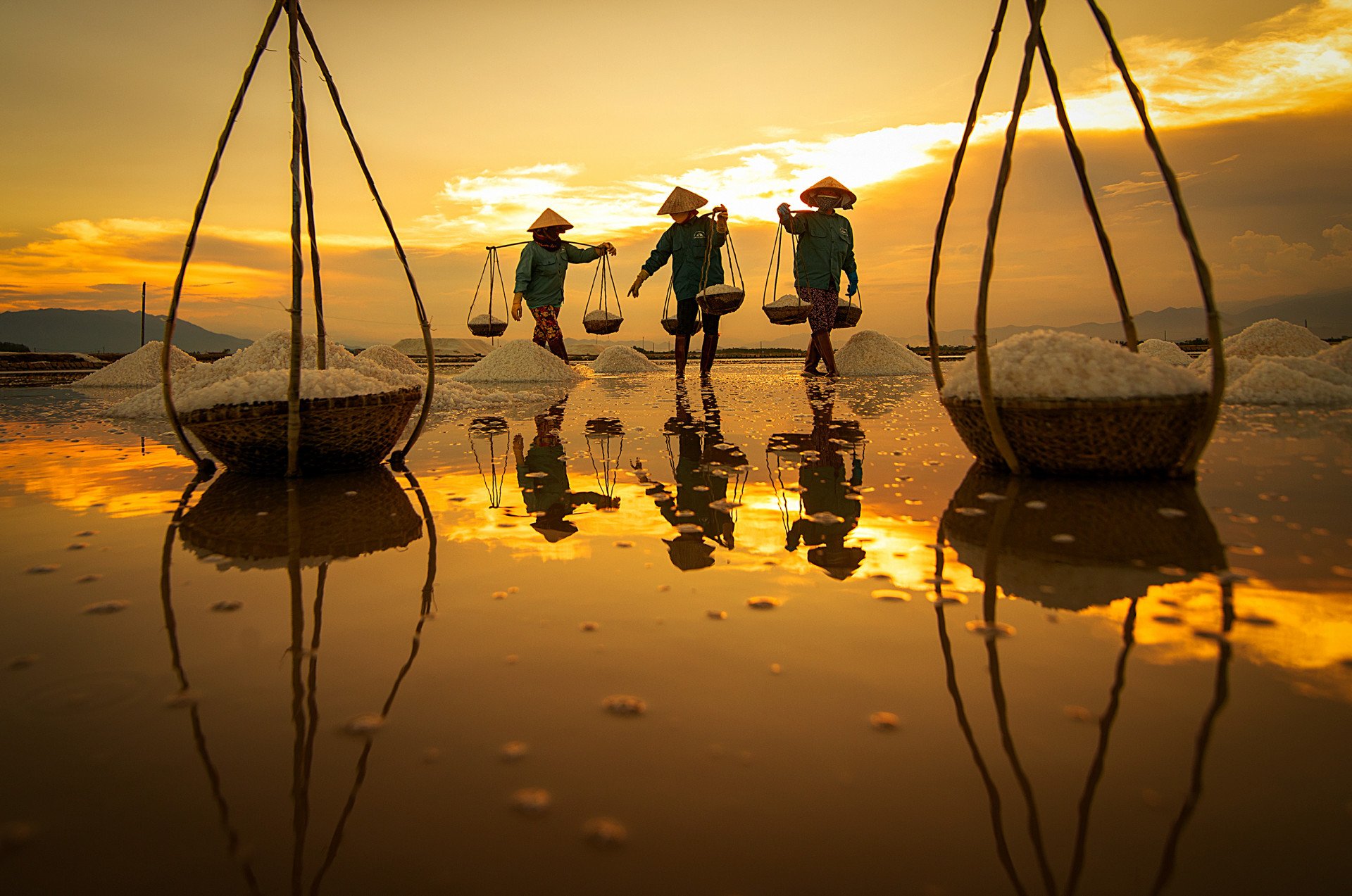
Nestled in the embrace of the sea and rivers, Hon Khoi, also known as Hon Khoi Peninsula, has long been a familiar destination on the Vietnamese tourism map. Possessing a rustic and simple beauty, Hon Khoi captivates visitors with its vast stretches of pristine white salt fields, like giant white silk ribbons adding to the vibrant natural landscape.
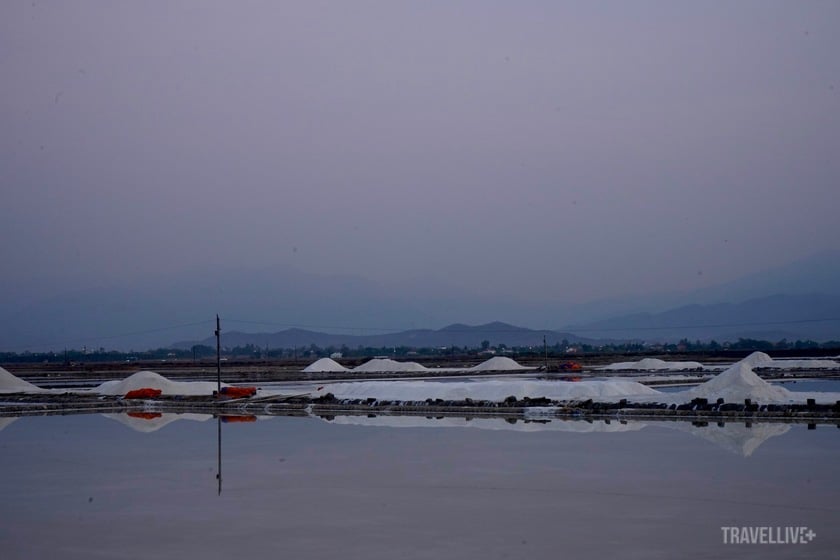
The salt fields were silent in the early morning.

Hon Khoi - a vast "white land" that has existed for centuries.
The history of Hon Khoi can be traced back to the 18th century, when it was known as Phuoc Ha Ngoai, belonging to Van Ninh district. After many historical ups and downs, in 1930, Hon Khoi was officially merged into Ninh Hoa district, Khanh Hoa province. Currently, Hon Khoi comprises four communes: Ninh Hai, Ninh Diem, Ninh Thuy, and Ninh Phuoc.
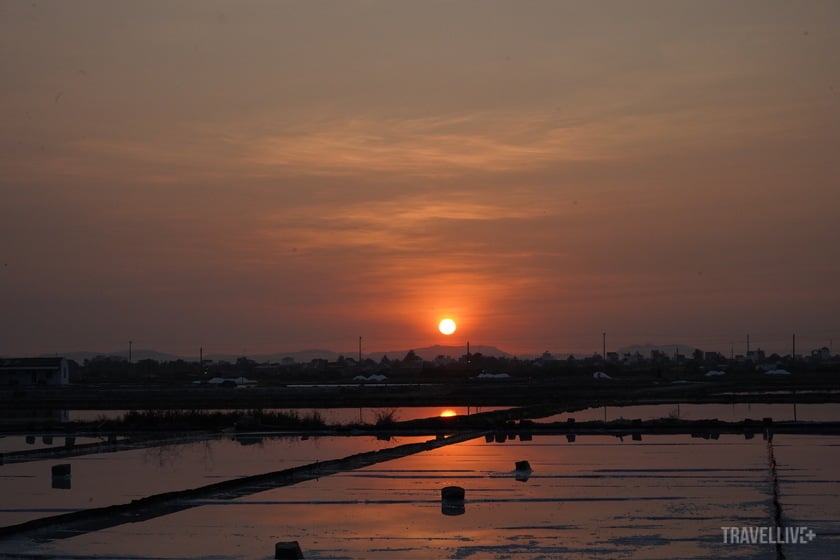
As dawn breaks, a new day begins on the salt fields.
Mr. Le Huu Luong (Deputy Director of Hon Khoi Export Salt Enterprise) said: "The place names here are derived from Thuy Diem Hai - 'Thuy' and 'Hai' mean water, and 'Diem' indicates that this is the center of salt production. During the French colonial period, people chose the Hon Khoi area for production, and merchant ships transported salt to France or neighboring countries. In the old days, when the French first arrived, Hon Khoi was still a desolate area. They built a system of canals and branches in a herringbone pattern to bring water in for salt production. The salt fields here are built in a terraced style to reduce fuel consumption for pumping water. In addition to salt fields with suitable soil that absorbs heat from sunlight to create salt crystals, later on, people also developed salt production using tarpaulin liners."
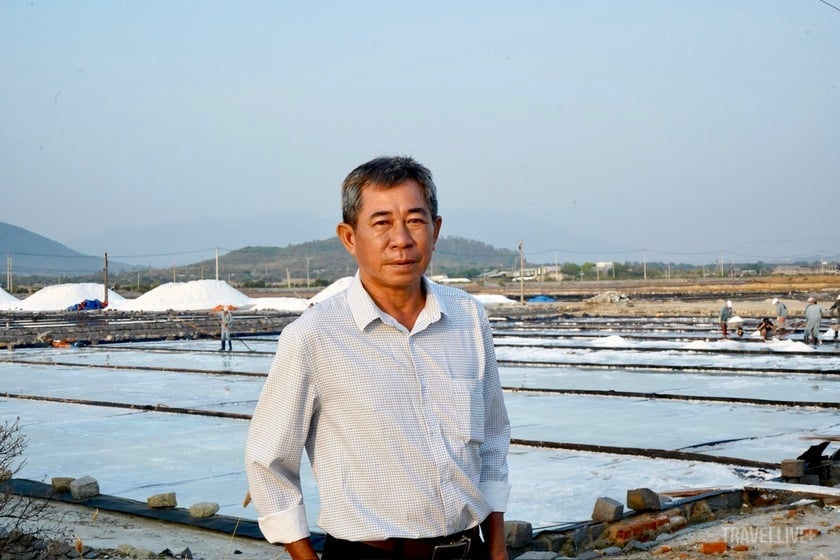
Mr. Le Huu Luong stands beside the Hon Khoi salt fields.
Famous for its traditional salt-making industry, Hon Khoi boasts a total salt production area of up to 650 hectares, of which Ninh Diem accounts for 400 hectares. The pristine white salt fields, stretching endlessly under the brilliant sun, symbolize the perseverance, hard work, and enthusiastic labor spirit of the local people.

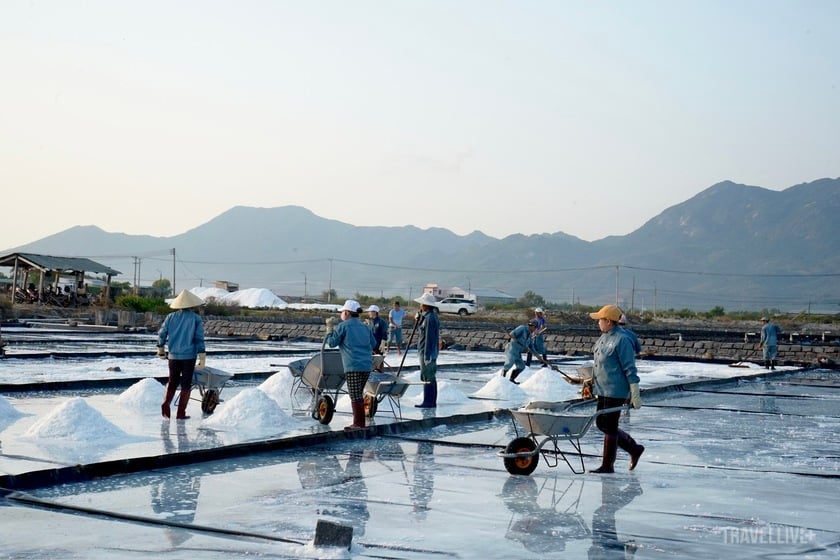
Salt farmers are busy heading to the fields.
A song of labor in the salt fields
Salt production in Hon Khoi begins very early in the morning, at the first rays of sunlight. Salt farmers diligently rake and dry the salt under the intense sun. Their sweat soaks into each grain of salt, mingling with the salty taste of the sea.
Salt production in Hon Khoi has a long history and is an indispensable part of the local people's cultural life. The salt production process here is simple but requires perseverance and hard work from the salt farmers. The salt-making season usually runs from January to July each year. Under the scorching sun, the salt farmers diligently rake, dry, and transport the salt using rudimentary tools. Despite the hard work, they always wear genuine, simple smiles.
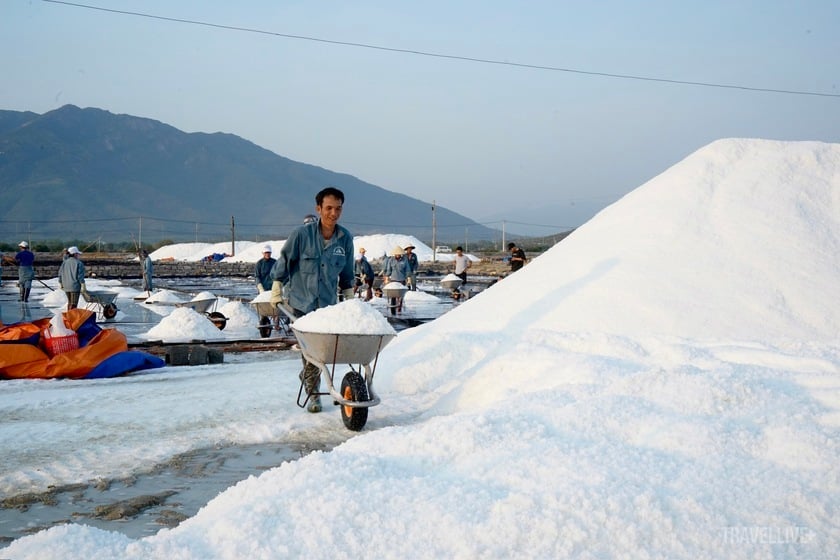
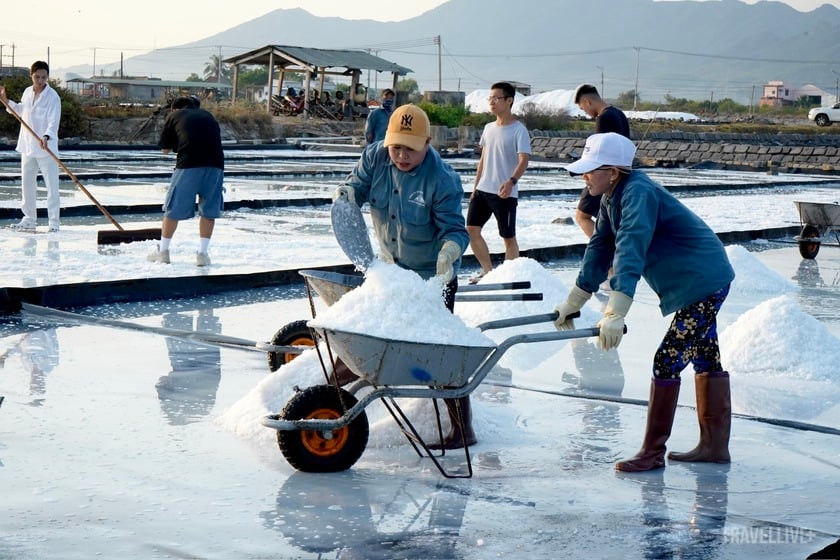
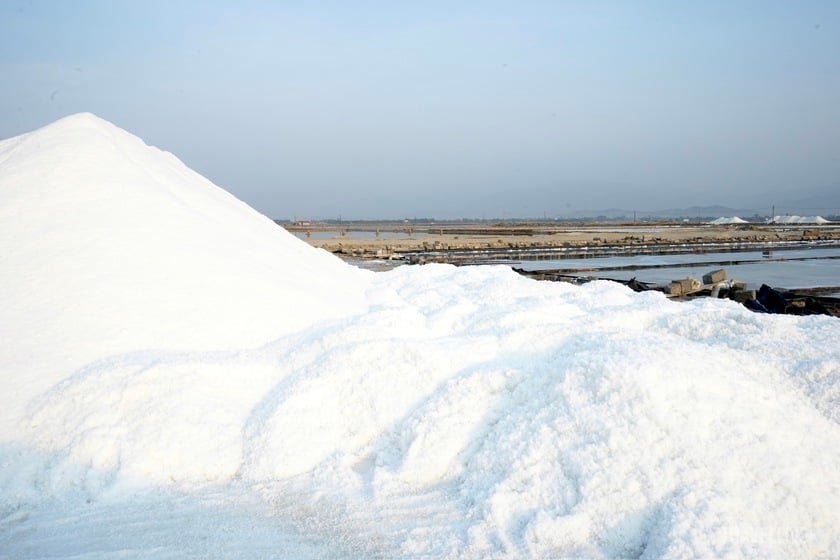
The pristine white "snow mountains" are the culmination of the earth, the sky, and countless drops of sweat.
Ms. Ngoc (a salt farmer from Hon Khoi) shared: "We have been involved in salt production from generation to generation, preserving and developing our family's long-standing tradition. Salt production not only provides income for the people but also contributes to salt production in Khanh Hoa province. Hon Khoi salt is known for its superior quality and is favored by both domestic and international markets."
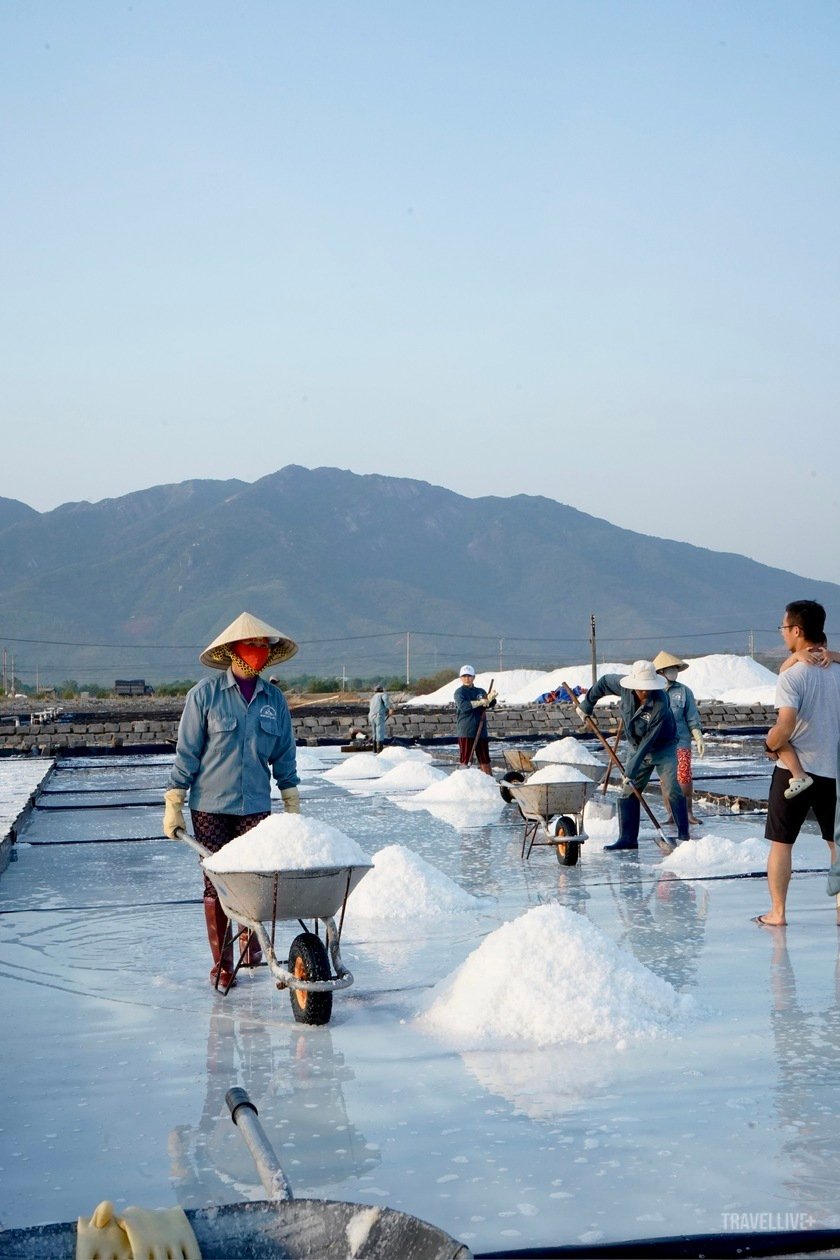
The salt makers are mostly local women, using simple tools such as a basket, a couple of lampposts, a pushcart, and a rudimentary rake.
The lives of salt farmers in Hon Khoi are intertwined with the rhythms of the salt season. During the dry season, they are busy drying and storing salt. During the rainy season, they take advantage of the time to repair embankments and dredge canals to prepare for the new salt season. Despite the hardships, they remain optimistic and cheerful, because they know that the pristine white salt crystals are the result of their hard work and the main source of income for their families.
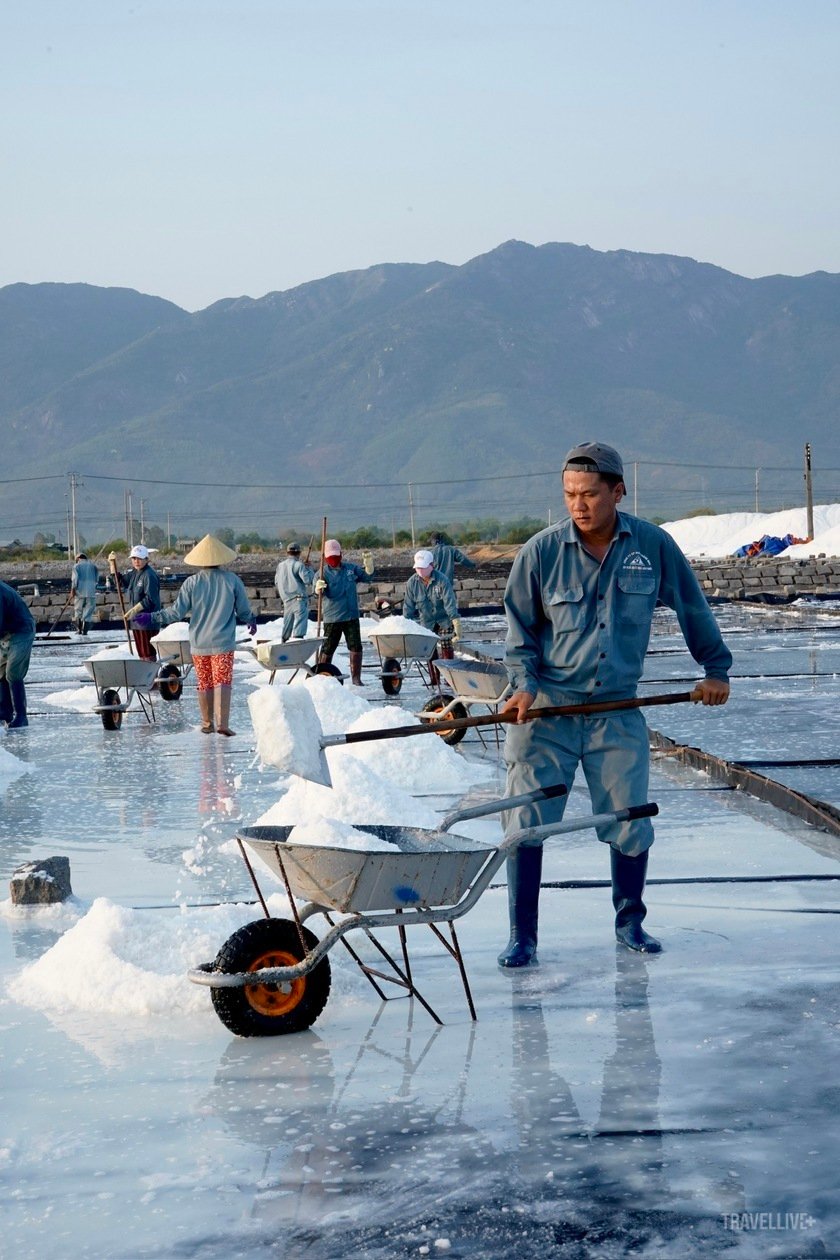
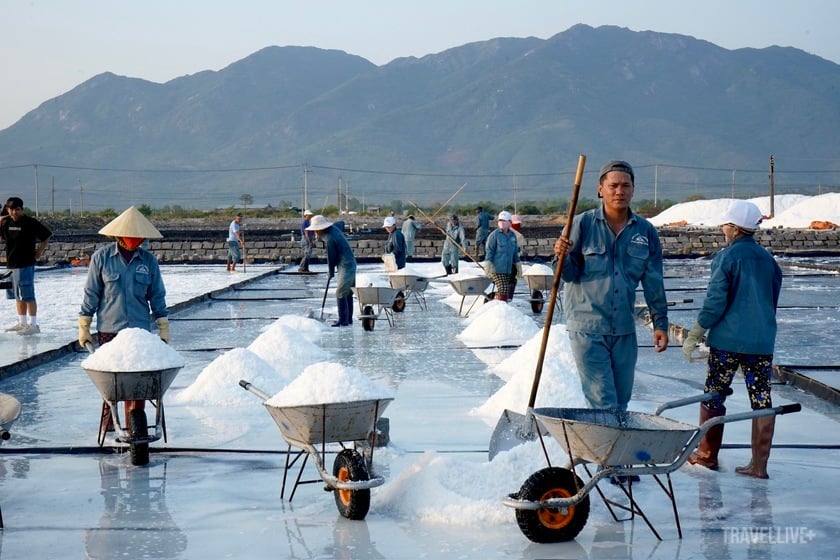
Because of the intense heat, people usually go to work very early and try to finish their tasks as quickly as possible to avoid the scorching weather.
More than just a tourist destination, Hon Khoi is also a place that preserves unique cultural values, a vibrant portrayal of the simple life of the fishing village people. Visiting Hon Khoi, tourists not only have the opportunity to admire the beauty of the peaceful countryside but also to experience interesting activities such as raking and drying salt, or to immerse themselves in the bustling work of the salt farmers.