VI
VI


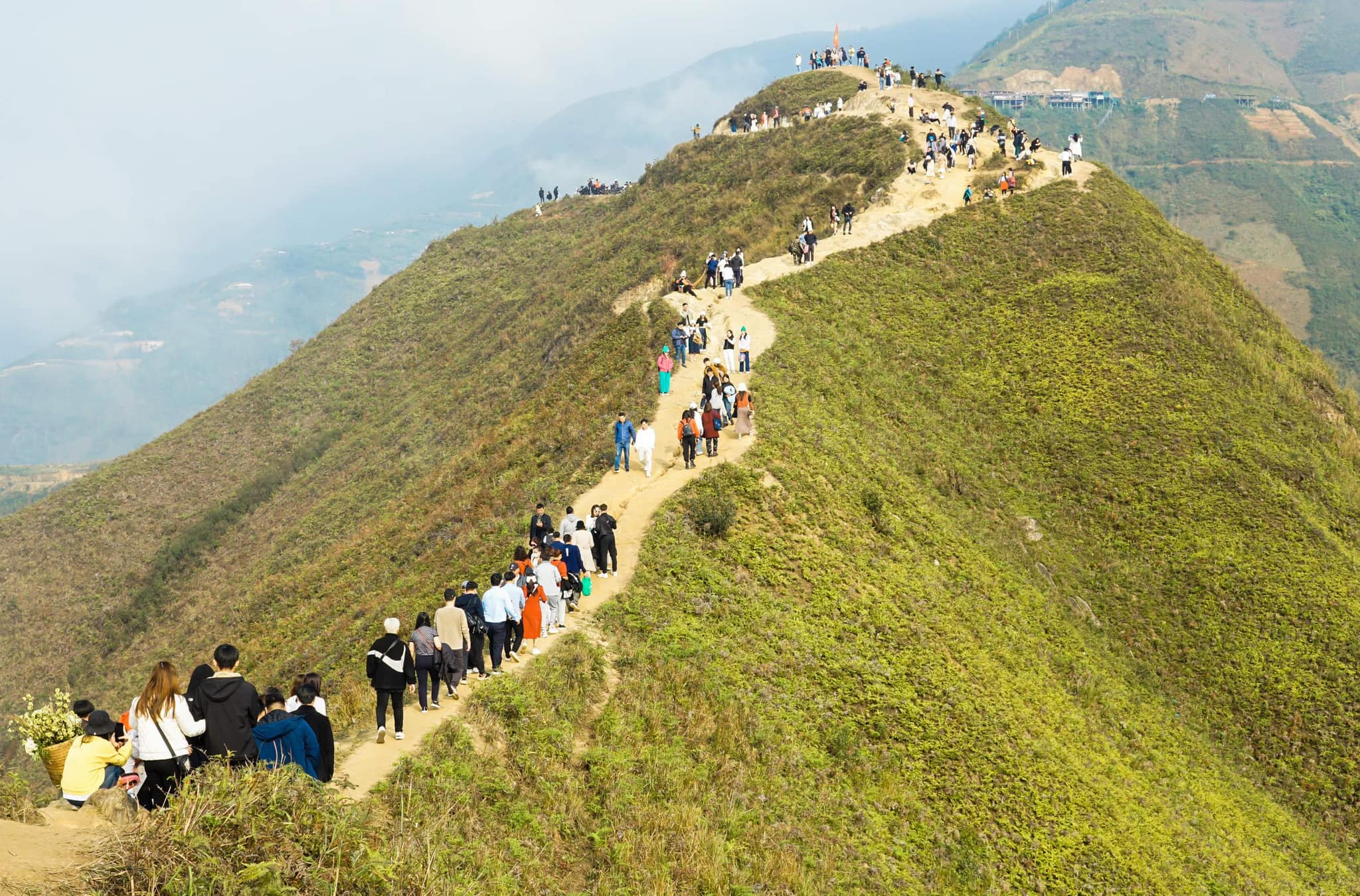
"Dinosaur's Backbone" is the affectionate name given by backpackers to several famous tourist destinations in Northern Vietnam, places that hold a strong attraction for those who love adventure and exploration.
The path along the "dinosaur's spine" is usually very narrow, only wide enough for one person to walk. On either side are bottomless, abyssal ravines that send shivers down anyone's spine when looking down. However, it is precisely this danger and challenge that attracts tourists who enjoy extreme experiences.

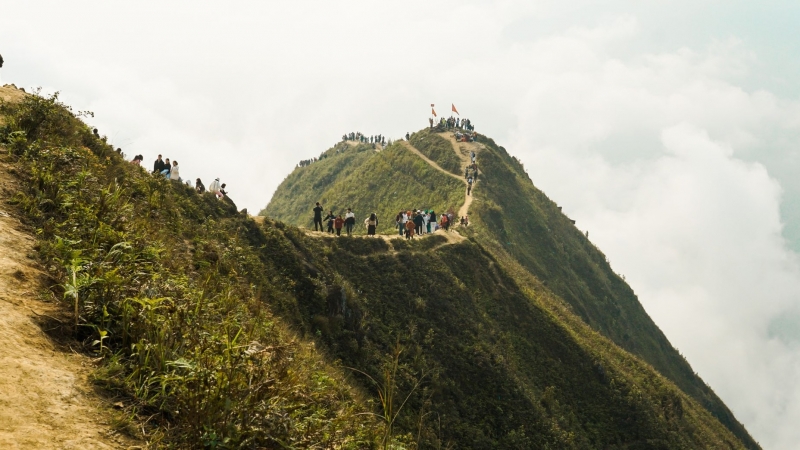
Conquering the "Dinosaur's Backbone" is a challenging yet unforgettable journey. After overcoming steep and treacherous paths, visitors will be rewarded with breathtakingly majestic natural scenery. The swirling sea of clouds, the rustling green mountains, and the vast sky will make visitors feel as if they have wandered into a celestial paradise.
The "Dinosaur's Backbone" is not for the faint of heart or those lacking courage. However, if you are an adventurous and exploratory person, then this is definitely an experience you cannot miss. Challenge yourself and conquer the "Dinosaur's Backbone" trails to fully appreciate the majestic beauty of Vietnam's nature.
"The Dinosaur's Backbone" in Ta Xua, Son La
Ta Xua is a mountain located on the border between Son La and Yen Bai provinces, a popular destination for those who love exploring Northern Vietnam. From Bac Yen town (Son La province), you will travel about 15 km to reach the "dinosaur's spine" at the summit of Ta Xua. The road to the summit is quite challenging, requiring a skilled driver.
Upon reaching the summit, you'll find a small path winding along the mountain peak, over 2,800 meters high. Steep slopes line both sides. The path's shape resembles the back of a dinosaur. The end of the trail is a resting place where visitors can admire the vast natural landscape of the mountains, forests, and cloudy sky.
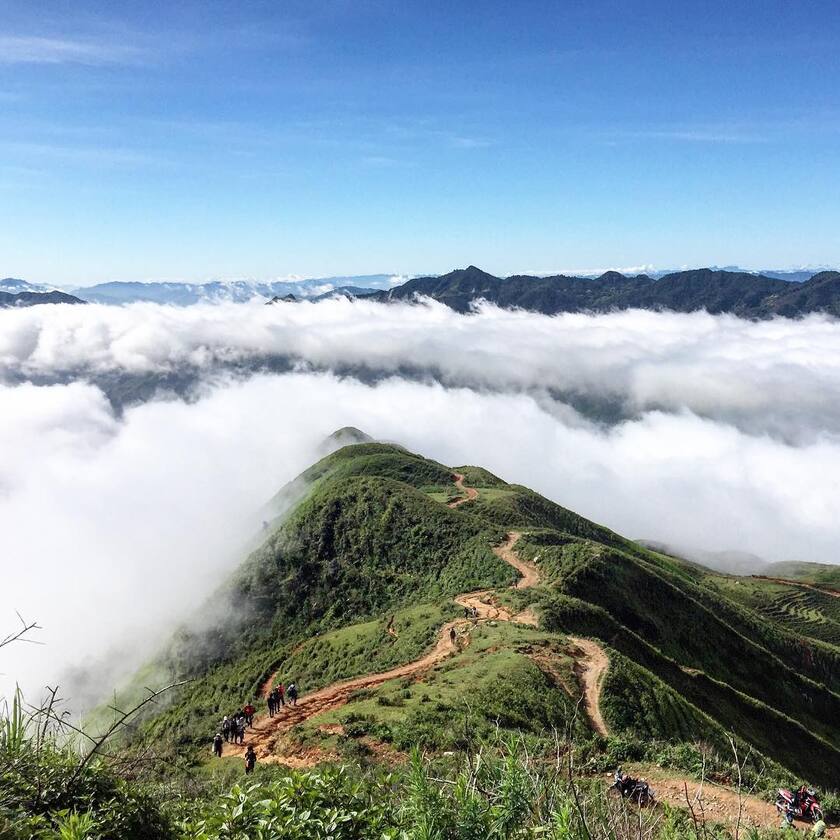
Riding the dinosaur spine to chase clouds in Ta Xua.
Nestled in the primeval forest, Ta Xua Mountain is formed by three peaks, a majestic wonder. The highest peak reaches 2,850 meters – where the Vietnamese flag pole currently stands. The second peak still bears traces of the old flagpole, a structure built during the French colonial period. The third peak, 2,865 meters high and located in the middle, is known as the "dinosaur's spine," with a long line running along its summit, resembling the back of a prehistoric dinosaur.
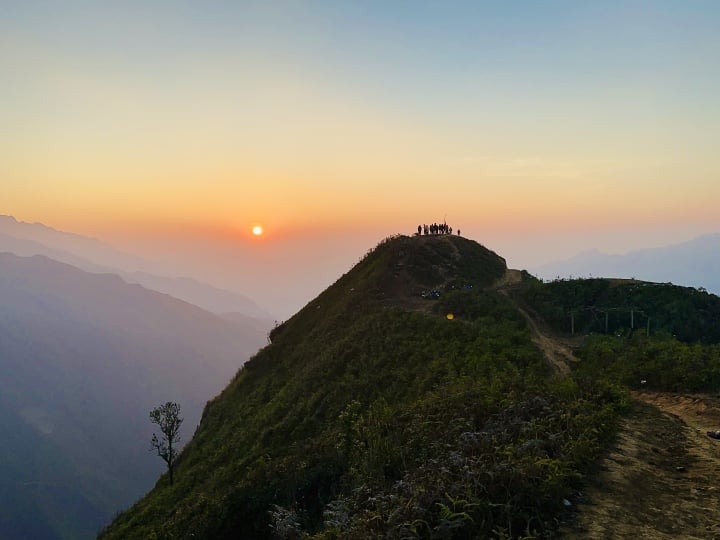
Sea of clouds swirls over Ta Xua peak.
The Ta Xua mountain ridge hangs precariously between the sky and the earth, and the path to the summit is only about 1 meter wide with deep ravines on either side. However, the magnificent natural scenery when standing on the summit of Ta Xua is truly a worthy reward for the arduous effort that tourists have put in.

To reach Ta Xua, the "dinosaur's spine," visitors need to head to the center of Bac Yen town. The road to the summit of Ta Xua is arduous and treacherous, with steep slopes and rugged, rocky hills. In this exploration journey, detailed planning, research on the route and weather are essential for a successful cloud-hunting trip and easy travel.
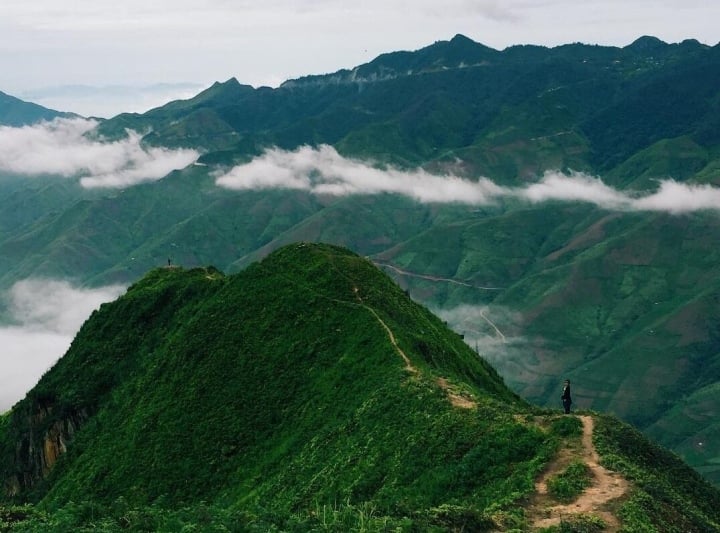
It's no exaggeration to say that the picturesque scenery on top of Ta Xua mountain will easily captivate anyone.
The best time to go cloud hunting in Ta Xua is considered to be from November to March of the following year, after the rainy season has ended. During this period, the chances of successfully seeing clouds are very high. Additionally, in the winter and spring, flowers such as apricot blossoms, plum blossoms, and mustard flowers begin to bloom on the mountain slopes, creating a beautiful and captivating natural landscape.
"The Dinosaur's Backbone" in Binh Lieu, Quang Ninh
Besides its romantic beaches, Quang Ninh also boasts magnificent mountain ranges and forests. Among them, Binh Lieu is a special spot, with a road winding through the high hills. This section of road is dubbed the "Vietnamese version of the Great Wall of China." From Binh Lieu town, you only need to travel about 13 km to get there, and it's quite convenient to travel by motorbike.
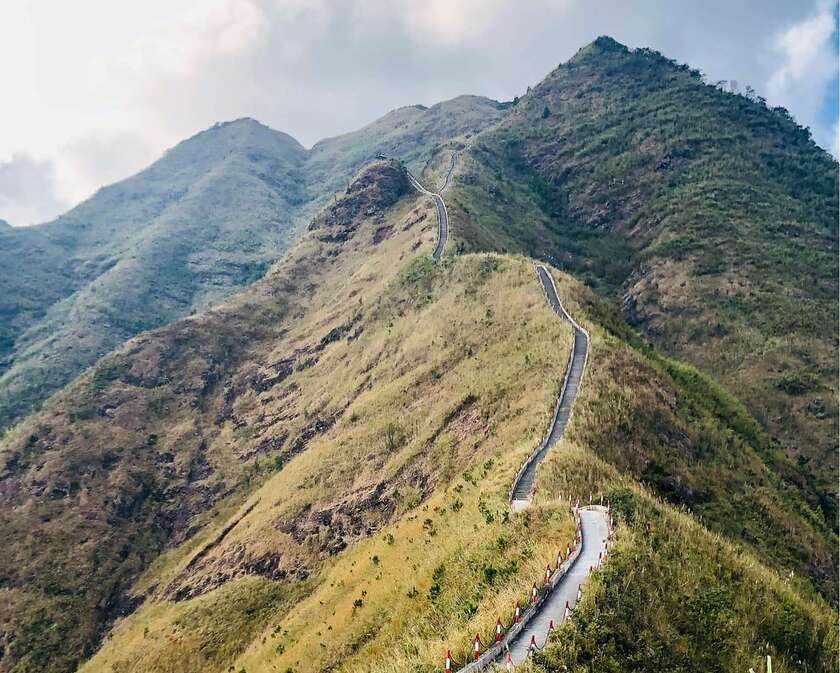
The Dinosaur's Backbone is perched precariously in the open air, with a narrow path leading up the mountain, only about 1 meter wide, just enough for a single motorbike wheel to pass.
Binh Lieu, a district located in the mountainous border region of Quang Ninh province, is more than 100 km northeast of Ha Long city. In recent years, Binh Lieu has become an ideal destination for those who want to explore and experience its pristine, rich natural landscapes and cool climate year-round. Especially in October and November, the vast fields of reeds on the "dinosaur's spine" of Binh Lieu attract even more tourists.
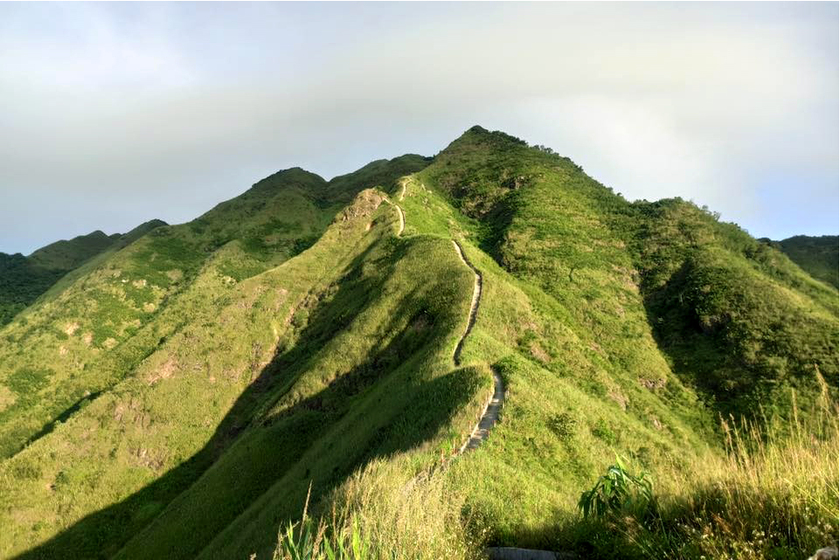
Many tourists even liken this dinosaur spine to the "Great Wall of Vietnam".
The Binh Lieu Dinosaur Ridge is located in the Dong Trieu – Mong Cai arc, with milestone 1035 marking the border between Vietnam and China. Previously, like the Ta Xua "Dinosaur Ridge," the Binh Lieu "Dinosaur Ridge" was just a small road with dangerous bends. But now, a part of this road has been paved with concrete, ensuring safety for tourists visiting the area.
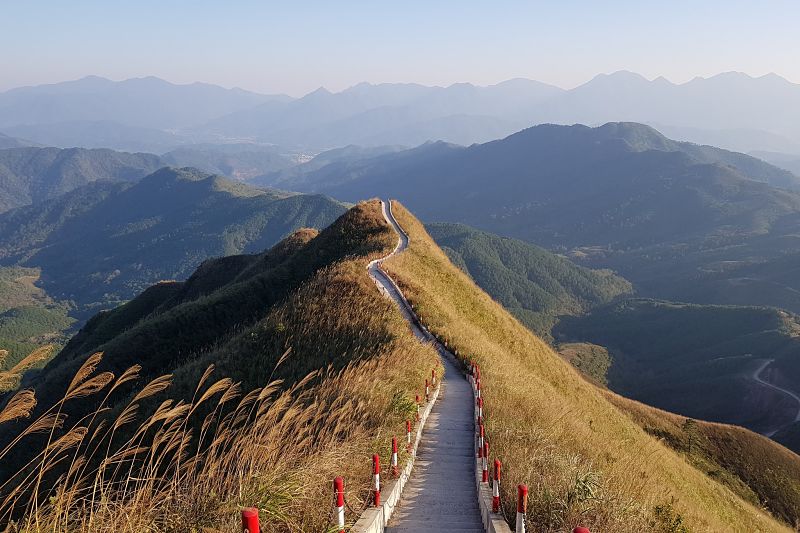
From the top of the landmark, it's easy to "shrink" Binh Lieu into the view.
October and November are considered the ideal months to conquer the "dinosaur spine" of Binh Lieu. You'll have the chance to stroll through fields of white reeds, set against the backdrop of majestic and pristine mountains. Milestone 1035 is a popular check-in spot for many young people visiting the area.
The length, slope, and height of the Binh Lieu mountain range all possess a majestic beauty amidst the pristine forest and mountain landscape of Quang Ninh province. Especially in autumn and winter, the reeds bloom white, covering the entire area and creating an irresistible, breathtaking beauty along the road.

Binh Lieu appears as a beautiful, colorful painting, with a harmonious combination of green mountains and hills.
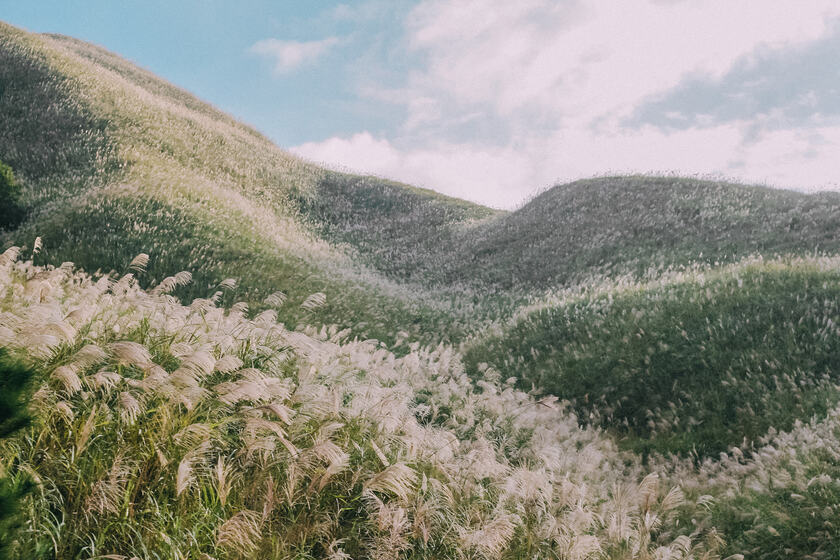
Just reach out your hand, and you can embrace an entire expanse of pristine white hills and mountains.
Visiting Binh Lieu in the last months of the year, in addition to admiring the pristine white reed fields and trekking the majestic "dinosaur's spine," tourists can also explore many ideal destinations such as: ancient villages dubbed like "Hoi An Old Town" with many beautiful landscapes; Cao Xiem peak, with an altitude of 1,429m, considered the "roof" of Quang Ninh; or visiting Khe Van waterfall.
"Dinosaur's Backbone" in Mau Son, Lang Son
Although less frequently mentioned compared to the two "dinosaur spines" in Ta Xua and Binh Lieu, Mau Son's "dinosaur spine" still shines with its simple, gentle beauty amidst the northeastern landscape.
For those unfamiliar with this terrain, it may take a considerable amount of time. But once you finally arrive, you'll enjoy the fresh air and immerse yourself in the idyllic natural beauty, with lush green meadows and a peaceful village nestled in the pristine forest.
The "Dinosaur's Backbone" of Mau Son is actually a winding trail located on the summit of Cha Mountain, in Mau Son commune, Loc Binh district, Lang Son province. Along this trail are vast fields of sugarcane, a vibrant green color, which tourists can easily admire or take photos of on the rocky outcrops along the way.
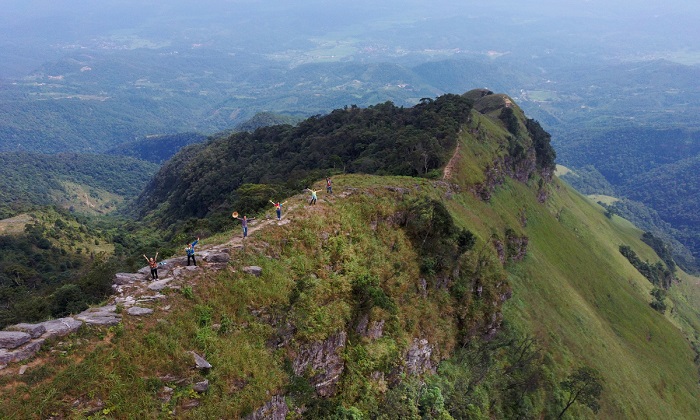
Mau Son is also associated with a legend about a beautiful love story with a tragic ending.
The climb to the "backbone" takes about three hours. The path to the "backbone" isn't too difficult, but it requires good health and stamina. Upon reaching the "backbone," you'll face a 300-meter stretch of uneven, winding, and rather dangerous terrain. Further in the distance, you'll see a mix of large and small mountains, lush green valleys, and peaceful villages of the local inhabitants.
The best time to explore Mau Son's "dinosaur spine" is in September and October. In addition, visitors can also visit places like Phat Chi Mountain, Long Dau Stream, and the ancient sacred site when coming to Mau Son.