VI
VI


Established in 1927, Plei Op Cultural Tourism Village in Hoa Lu Ward, Pleiku City, Gia Lai Province, currently has over 100 households with more than 500 residents. Conveniently located in the heart of the city, Plei Op is an ideal destination for tourists seeking a unique J'rai cultural experience – an integral part of the traditional cultural heritage of the Central Highlands.

Plei Op, also known as Op village, was established in 1927, making it nearly 100 years old. It has a natural area of 182 hectares and is located in the heart of Pleiku city.
Visiting the peaceful village nestled in the mountains, and meeting the kind and simple locals, we were also told: "Plei means village in the J'rai language, Plei Op means Op village, a village of the J'rai people. All the residents in the village are still J'rai, unmixed with other ethnic groups. Therefore, everything, from customs and traditions to culture and daily life, remains distinctly J'rai."
What's remarkable is that, despite being located almost in the center of Pleiku City, Plei Op hasn't lost its traditional culture or been affected by urbanization. It's one of seven traditional villages in the Central Highlands selected by the government for preservation. Walking through Op village, visitors will experience a characteristic peaceful atmosphere, completely different from the hustle and bustle of the city. The dominant sounds here are the rustling of the forest, the flapping of birds' wings, and the clear laughter of the village children. It's rare to hear a motorbike passing by.
Despite being located almost in the heart of the city, Plei Op has not lost its traditional culture or been affected by urbanization.
Although located within the city of Pleiku, Plei Op is surrounded by the Ia Lam valley and the two streams, Ia Nin and Ia Nak, which flow day and night. Thanks to these two streams, the air here is always cool, and the soil is fertile, allowing for lush fruit trees and crops.
Looking down from Pleiku city towards Op village, visitors will see a unique landscape: a deep, vast basin. According to Siu Chel, the village elder, this is the crater of an extinct volcano that erupted millions of years ago. Within this basin lies a special architectural complex including communal houses, stilt houses, and burial mounds.

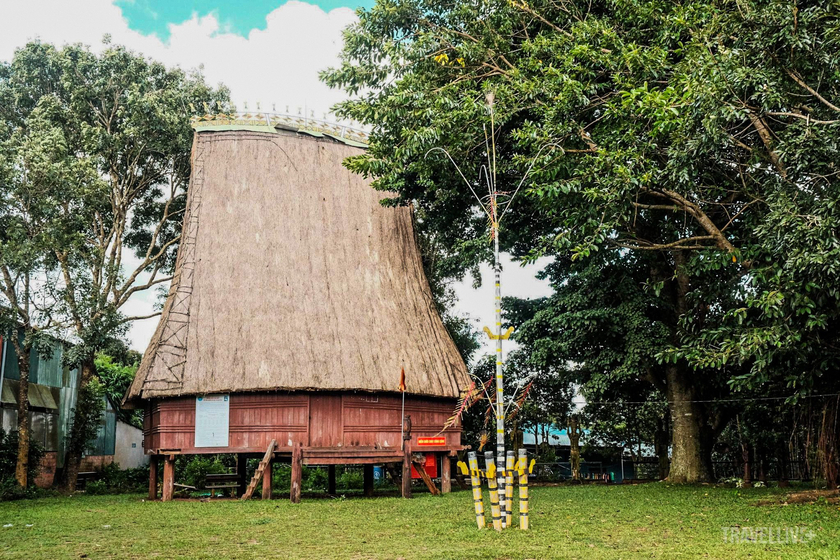
Although it's a village within the city, Plei Op still has traditional communal houses.
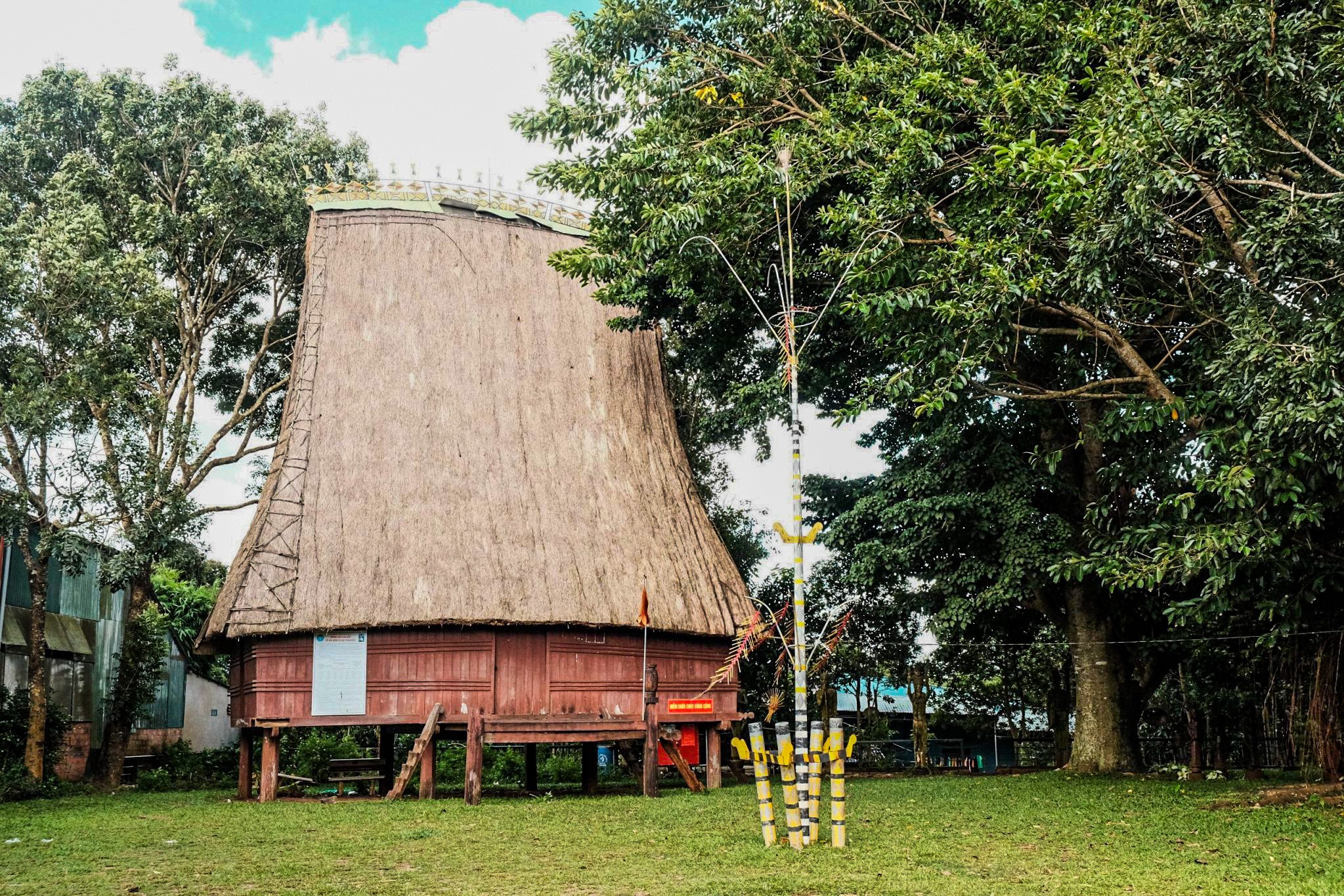
Standing out in the village landscape is the J'rai communal house with its soaring curved roof and a prominent ceremonial pole in front. Considered the "heart" of the village, the communal house embodies the soul and cultural symbol of the community. Built tall like an axe blade, it is constructed entirely from traditional wood and bamboo. The entire village gathers around this house, and all important cultural, spiritual, and festive activities take place within its grounds.
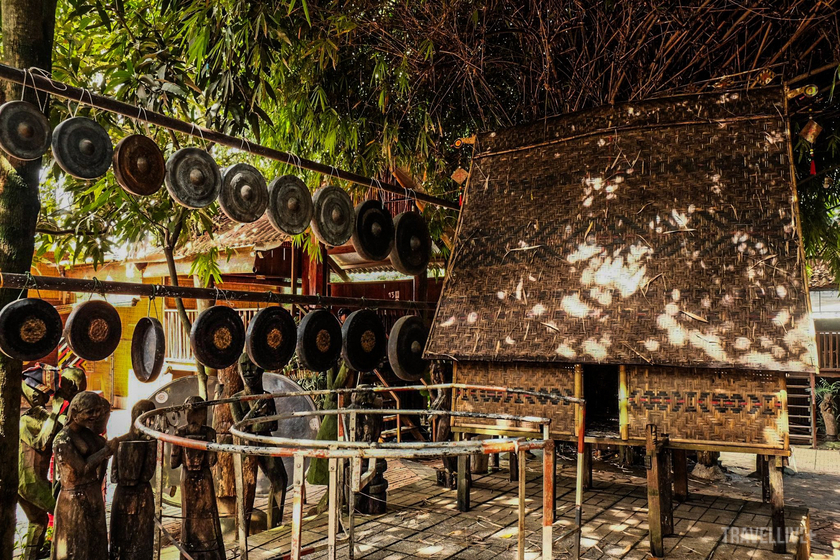
Around the communal house, you will find an exhibition area with 54 carved wooden statues depicting the daily life of the J'rai and Bahnar people. These statues portray all aspects of life, from performing gong and drum music and traditional dances, to farming, hunting, and drinking rice wine...
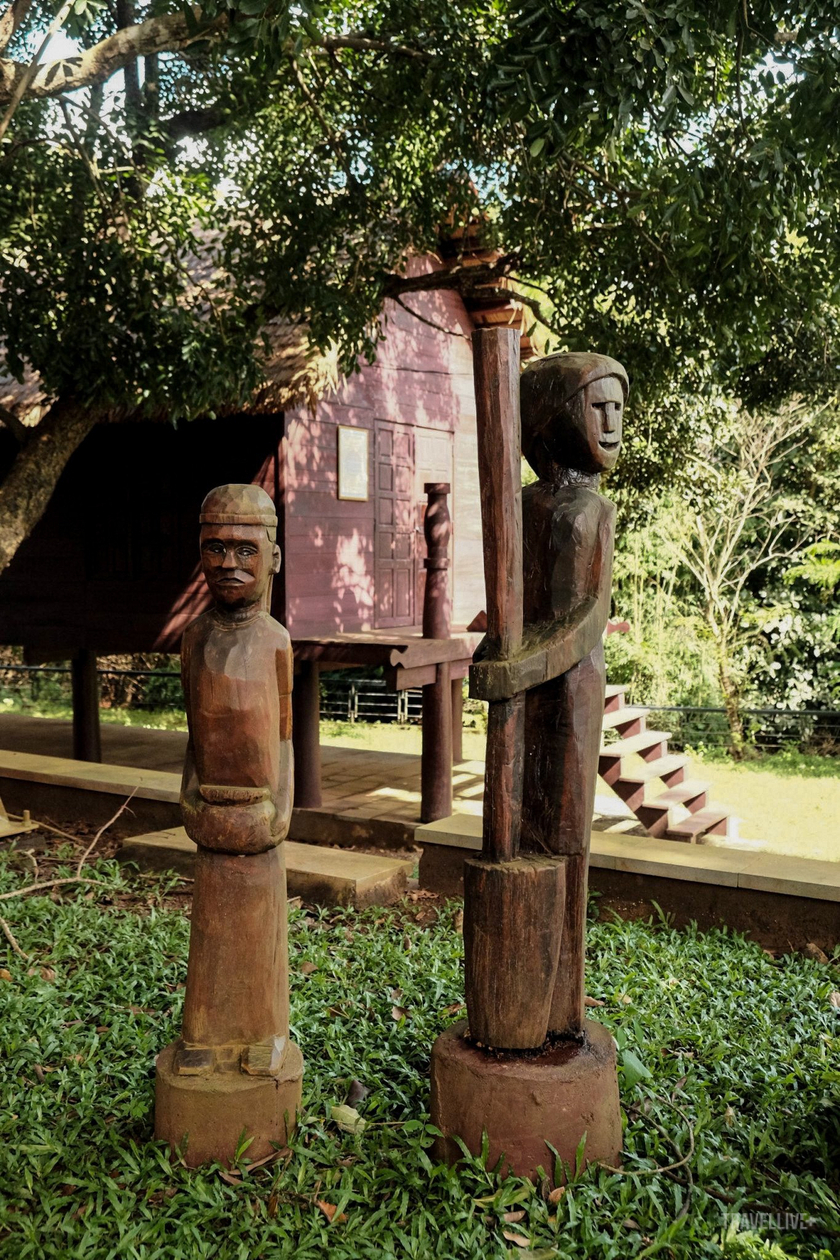
Wood carvings are a distinctive cultural feature of the J'rai people...
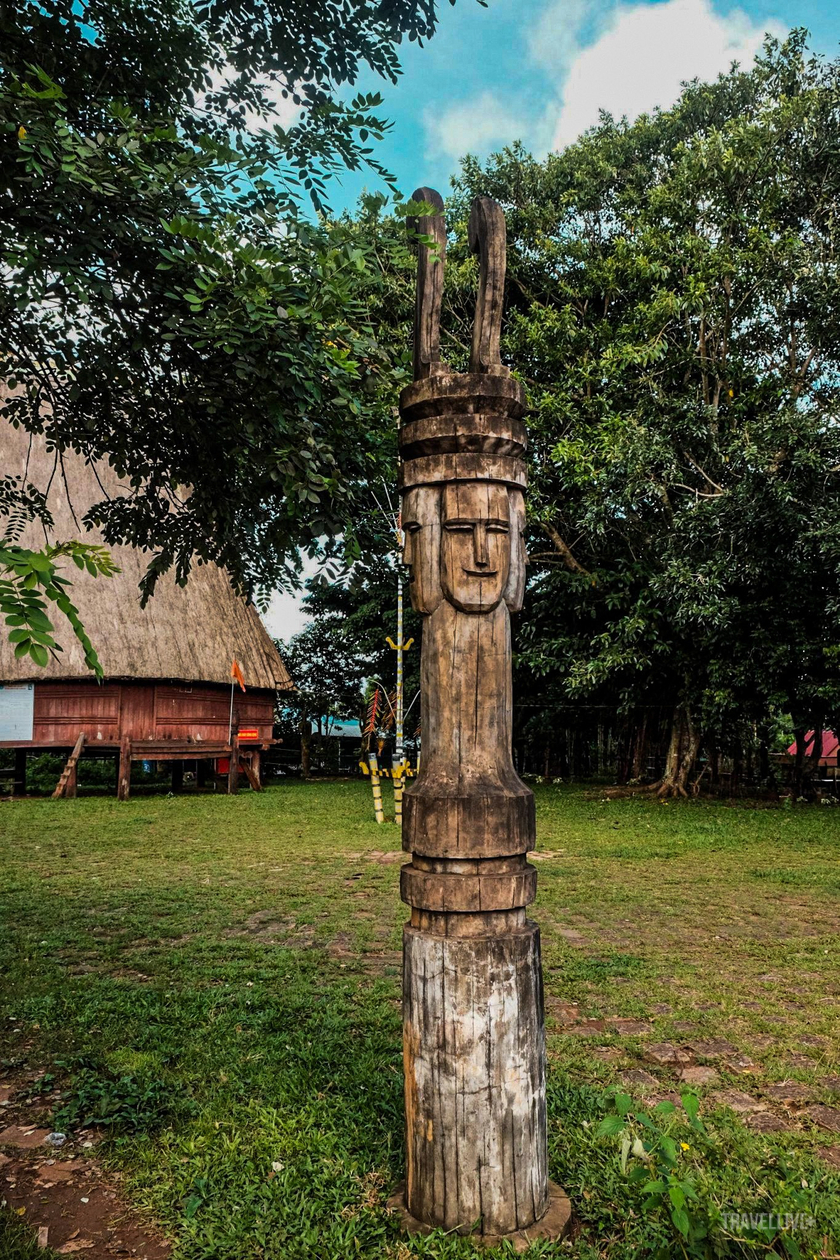
With various shapes, they reflect the life of the villagers here.
What is unique is that carved wooden statues appear not only in important places like tombs and communal houses, but also in ordinary houses. This creates diversity in the shapes and expressions of the statues. Wooden statues in communal houses, longhouses, and houses often have cheerful and excited expressions, while statues in tombs often have sad forms, with expressions such as resting their chins on their hands, holding their heads, or crossing their arms. This is a unique form of sculptural art, reflecting an important part of the traditional culture of the people of the Central Highlands.
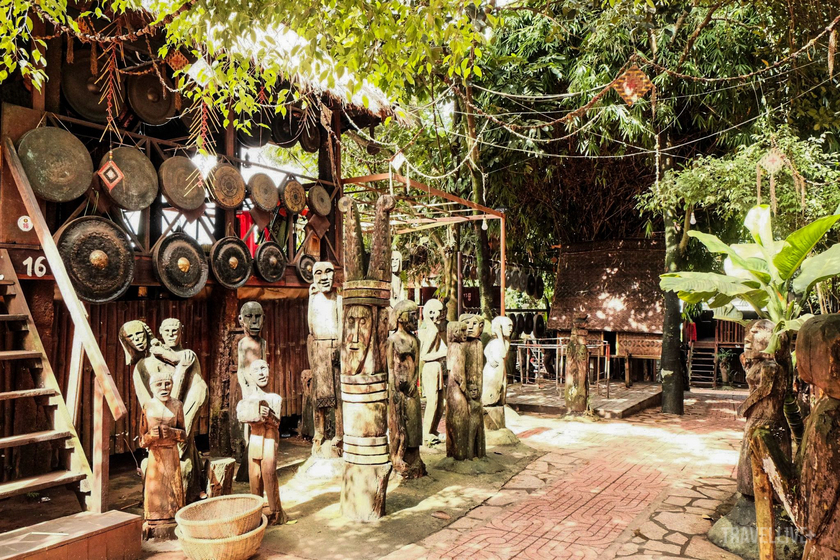
You can find wood carvings everywhere.
For tourists, Plei Op is not only an interesting tourist destination but also a unique opportunity to experience local culture. Here, you can enjoy colorful stories and performances by the village elder Puih Sir. In addition, you can participate in traditional crafts that the locals still maintain, such as blacksmithing, weaving, brocade making, statue carving, and making traditional musical instruments.
In addition to these experiences, if you're lucky enough to visit the village at the right time, you can participate in vibrant traditional festivals such as Pơthi (the horse-abandoning ceremony) or the new rice harvest festival. Especially, visitors have the chance to enjoy a performance from the village's gong ensemble, with over 20 artisans, 12 gongs, 20 cymbals, and 1 drum, showcasing the diversity and enduring vitality of the local culture.
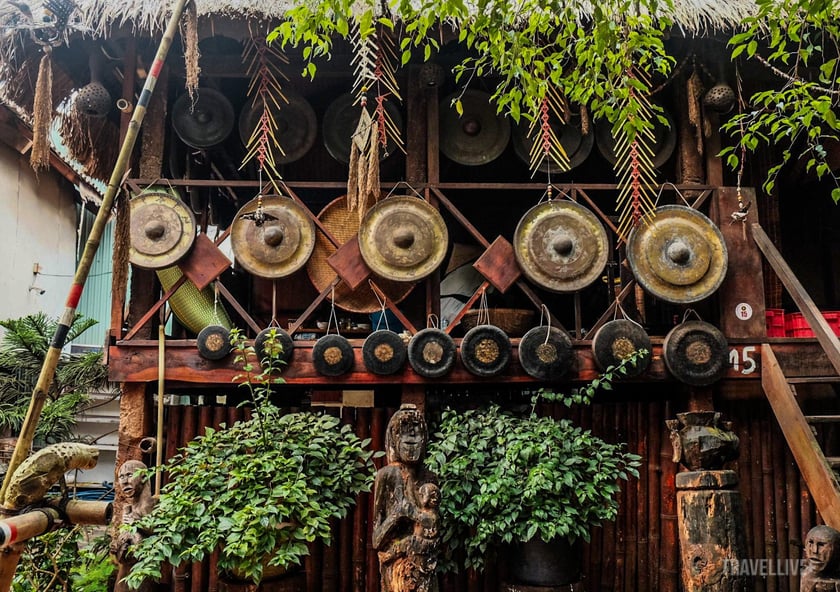
The gong culture is still preserved and maintained here.
But it's not just traditional culture that makes Plei Op a unique Cultural and Tourist Village. Cuisine is also a special attraction for visitors. Currently, Op Village has three restaurants specializing in Central Highlands mountain cuisine.
One of the most famous dishes here is grilled chicken with bamboo rice. The unique way of grilling the chicken involves placing it far from the fire, allowing it to cook slowly, creating a unique and distinctive flavor. The chicken is carefully selected, marinated with honey, minced garlic, sesame oil, salt, and black pepper, and then grilled on a bamboo pole. The chicken doesn't come into direct contact with the fire but is grilled around a large pile of charcoal, allowing the chicken fat to soak into the pole, creating a uniquely delicious and irresistible flavor.
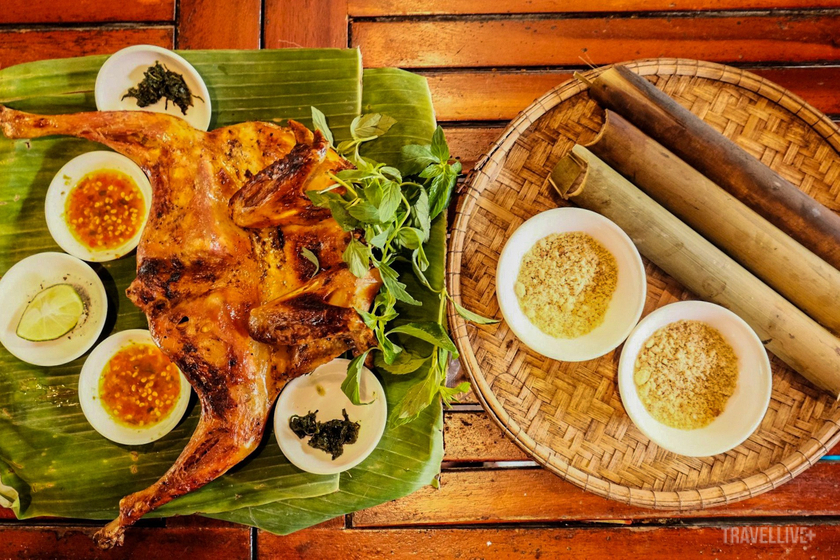
Unlike grilled chicken with bamboo rice in other places, the chicken here is fragrant and flavorful, combined with a dipping sauce and wild herbs to create an unforgettable taste.