VI
VI


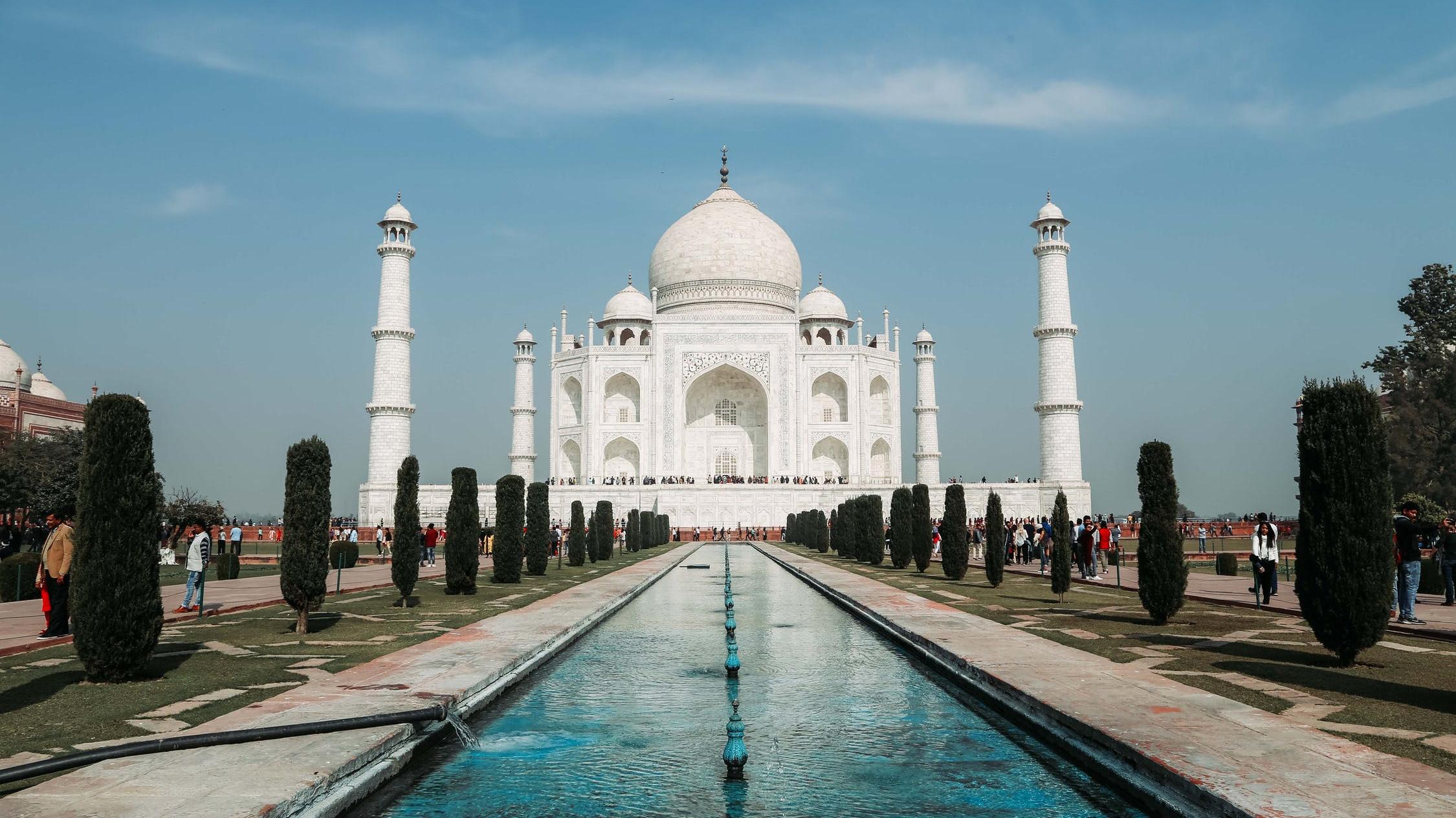
On June 14th, the Indian government announced the reopening of the Taj Mahal in Agra this week. Two months prior, the famous site had been closed due to the complex Covid-19 pandemic situation in the country.
To ensure safety during the pandemic, authorities have confirmed that strict regulations will be imposed on visitors. Accordingly, visitors must disinfect their shoes before entering the Taj Mahal and are not allowed to touch the marble mausoleum.

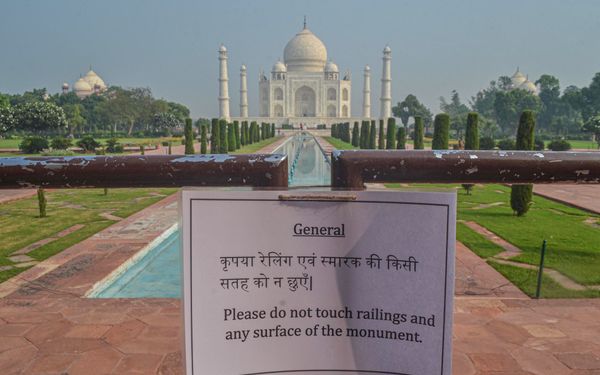
The sign prohibits touching the marble surfaces inside the tomb.
The Taj Mahal is one of the most famous tourist destinations in India, attracting 7 million visitors annually. Due to the Covid-19 pandemic, the temple has been closed and has stopped receiving tourists.

Tourists take photos with the Taj Mahal.
The number of new cases and deaths from Covid-19 in this country of 1.3 billion people surged to record highs in April and May, forcing authorities to impose lockdowns to control the outbreak.
The pandemic situation in India has improved in several major cities over the past few weeks, including the capital New Delhi and Mumbai. Some containment measures have been eased there.
TĀJ MAHAL
The Mahal (Urdu: تاج محل, Hindi: ताज महल) is a mausoleum located in Agra, India. It was commissioned by the Mughal Emperor Shāh Jahān to commemorate his wife, Mumtaz Mahal, upon her death. Construction began in 1631 and was completed in 1653.
The Taj Mahal is considered the finest example of Mughal architecture, a style that synthesizes elements of Persian, Turkish, Indian, and Islamic architectural styles. In 1983, the Taj Mahal was designated a UNESCO World Heritage Site.