VI
VI


Visiting temples to pray for love is also a beautiful traditional cultural practice of the Vietnamese people. Since ancient times, going to temples, shrines, and pagodas to pray for love has become an indispensable part of the spiritual life of the people.

Particularly in major cities like Hanoi and Ho Chi Minh City, this trend has become more popular than ever. Young people not only go to temples to pray for themselves but also to learn about culture and history and experience a serene and peaceful atmosphere.
So, let's explore the sacred temples in Hanoi where you can pray for love and a happy relationship.
Tran Quoc Pagoda
Tran Quoc Pagoda, a precious gem in the heart of Hanoi, is not only a spiritual destination but also a historical witness with a history of nearly 1500 years, built during the Ly-Tran dynasties. This pagoda is not only a sacred place for Buddhists to find peace, but also a unique architectural symbol, harmoniously combining ancient Eastern features with the strict rules of Buddhism.
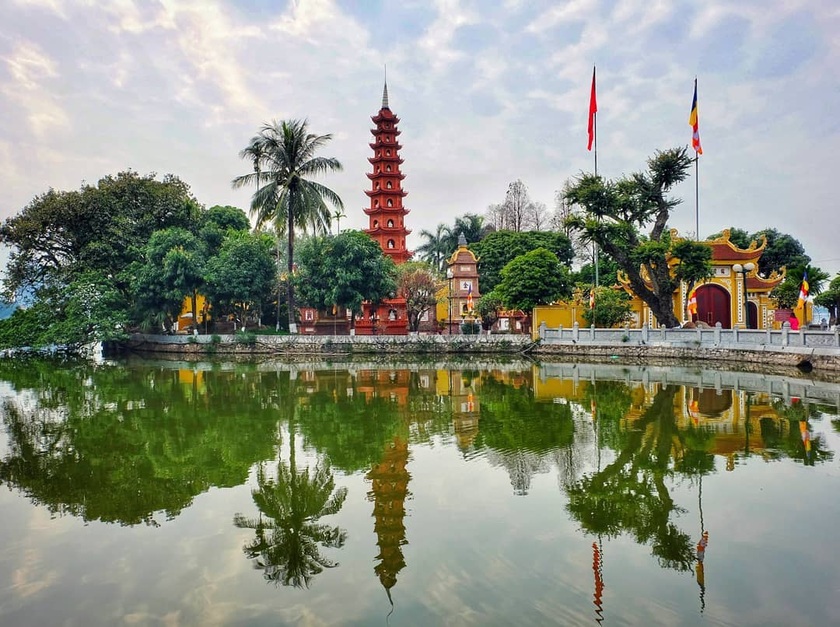
Tran Quoc Pagoda - a sacred thousand-year-old temple in Hanoi.
Stepping into Tran Quoc Pagoda, one is amazed by its vast space, with multiple layers of buildings arranged in the shape of the Chinese character "Công," creating a harmonious and balanced architectural whole. The three main buildings of the pagoda—the front hall, the incense burning house, and the main sanctuary—are subtly connected, forming a unified whole that reflects the solemnity and reverence of this sacred place.
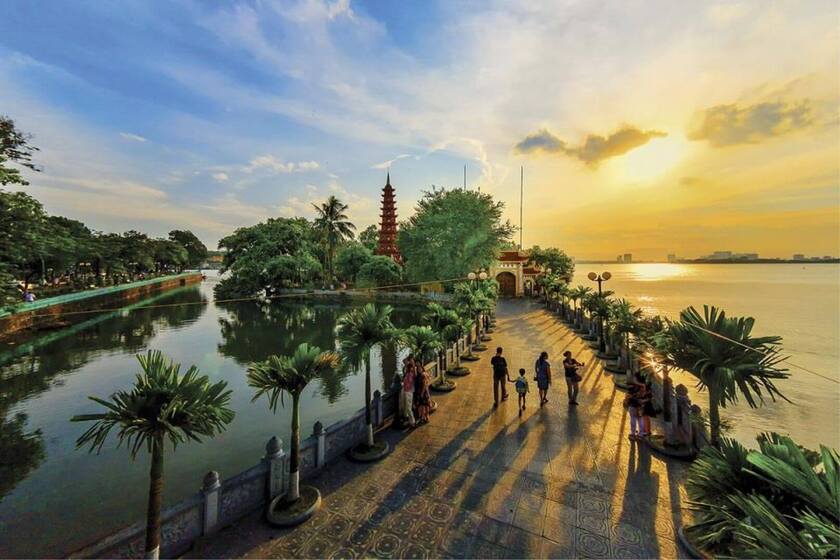
A major spiritual and cultural symbol of Hanoi.
It can be said that Tran Quoc Pagoda is one of the most unique pagodas in Hanoi, thanks to its extremely special geographical location. The pagoda is built on an island in the eastern part of West Lake, Tay Ho District, Hanoi. It has been a significant site in the religious culture of Hanoi people from ancient times to the present day. Therefore, it's not surprising that it's also a place where young people often come to pray for a good marriage, especially during the Lunar New Year.
Ha Pagoda
In the heart of Hanoi, the thousand-year-old capital of Vietnam, lies an ancient and majestic temple, not only a place where people come to pray for peace and well-being for their families and loved ones, but also known as a highly sacred "holy land" for seeking love and marriage. That is Ha Pagoda.
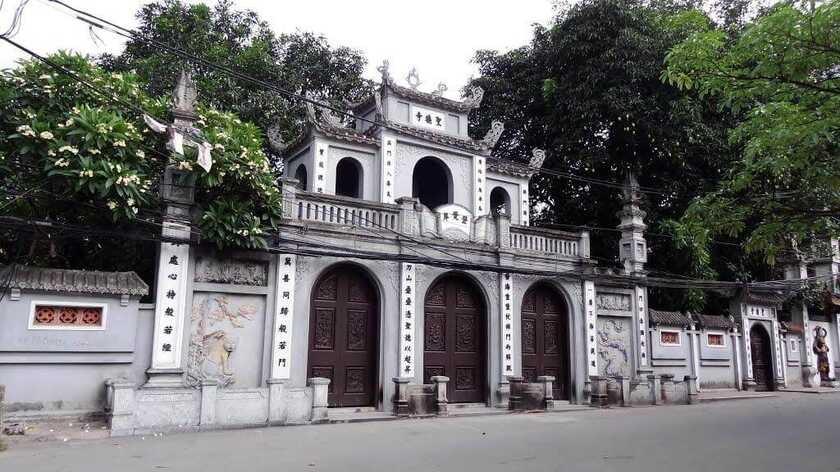
Ha Pagoda - the most auspicious pagoda for praying for love in Hanoi.
The question "Where is Ha Pagoda located for praying for love?" is always a concern for many tourists, especially young people. This is because Ha Pagoda is not only famous for its long history and unique architecture, but also for stories of its miraculous powers in granting wishes for love.

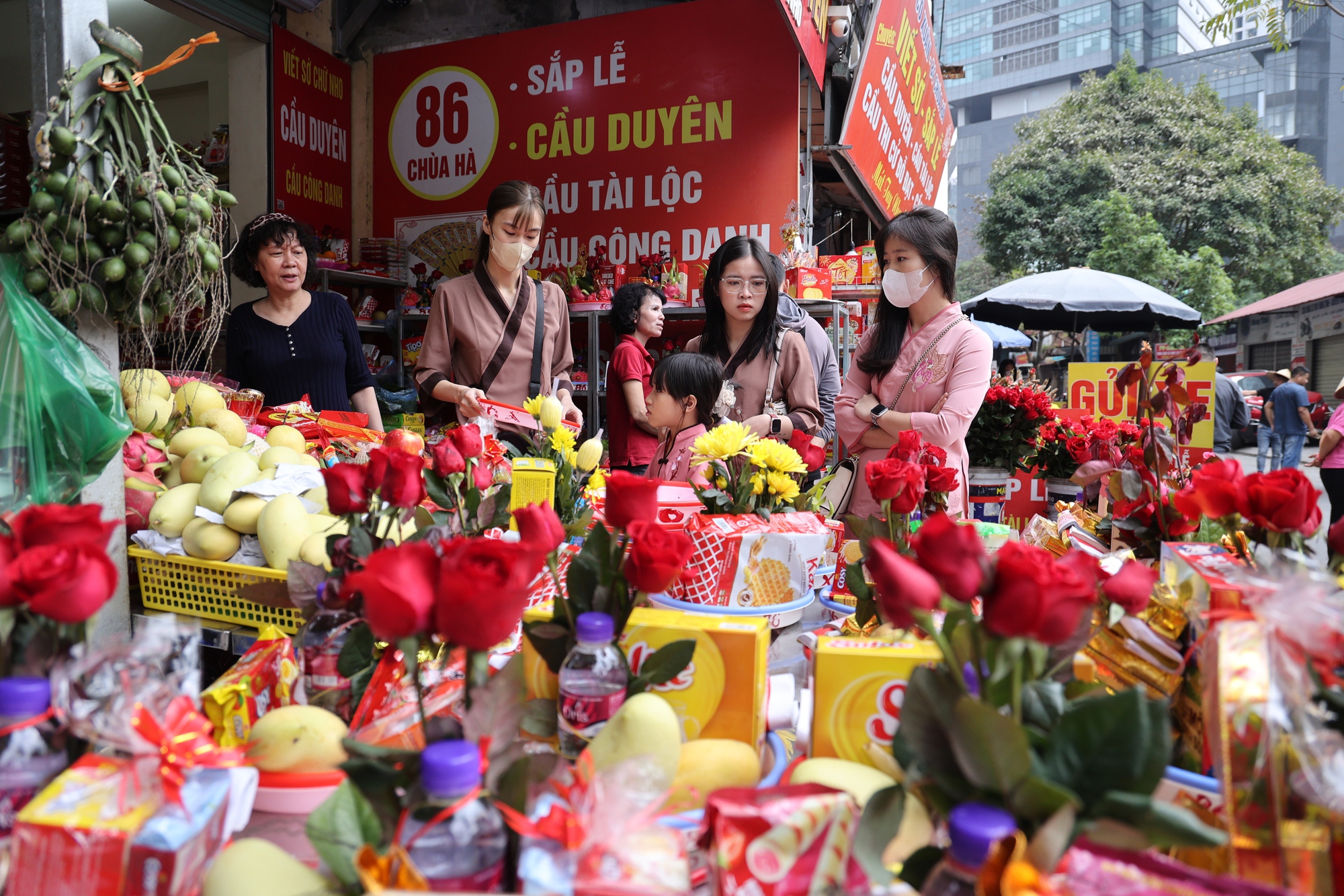
Ha Pagoda, also known as Thanh Duc Temple, is located at 86 Chua Ha Street, Dich Vong Ward, Cau Giay District, Hanoi. The pagoda sits on a small street named Chua Ha, nestled amidst the bustling streets of the capital. It is believed that Ha Pagoda has the ability to connect kindred spirits, helping single people find their soulmate and strengthening the bond between couples.
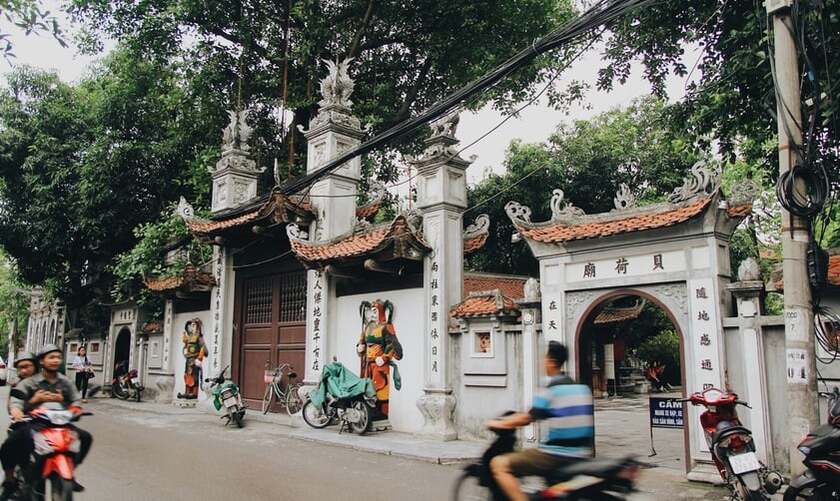
The image of Ha Pagoda is associated with many stories related to praying for love and is believed to be a place that "opens the way" for couples to come together.
This place attracts many young people, especially on the 1st and 15th of each month. Young men and women from Hanoi eagerly buy offerings to pray for love at Ha Pagoda, hoping for a smooth love life and to find their soulmate. Or, more simply, they just want to find a peaceful and tranquil place to heal their souls after months of tiring work and study.
It is rumored that when people go to temples in Hanoi to pray for love, couples who come to Ha Pagoda to pray for love will become even closer and have a long-lasting happy relationship. Those who are single and come here will find their love life flourish and meet their desired life partner.
My Chau Temple - Co Loa
In exploring the historical landmarks of Hanoi, many have undoubtedly heard of My Chau Temple – a small shrine located within the Co Loa Citadel complex. The Co Loa Citadel, with a history spanning over 2000 years, is one of Vietnam's most important national historical sites. And My Chau Temple, though only a small part of that complex, holds a deeply moving and mysterious story.
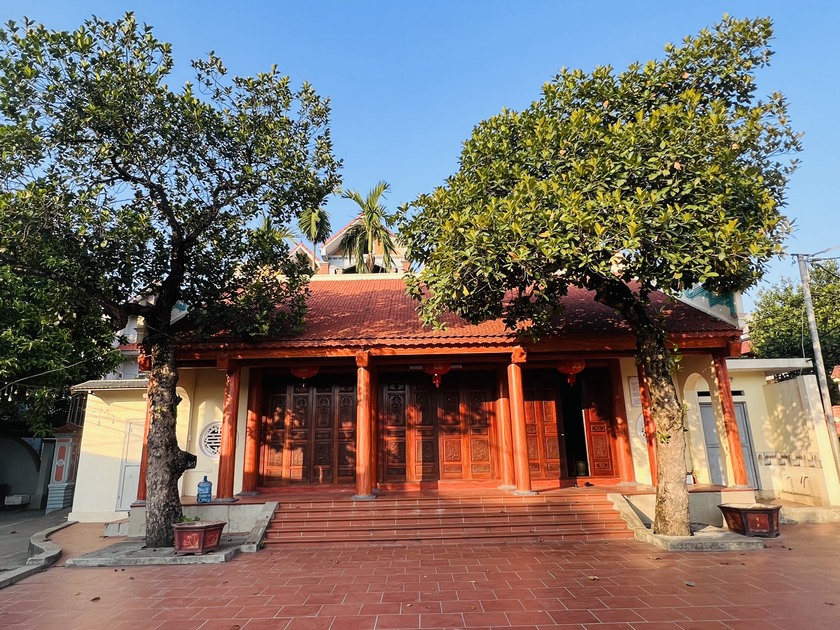
My Chau Shrine, also known as Ba Chua Shrine or My Chau Temple, is located west of the Ngu Trieu Di Quy communal house.
According to local accounts, long ago, some fishermen were fishing on the Hoang Giang River. One time, while pulling in their nets, they pulled up a headless stone statue, with legs crossed and hands resting on the knees. The statue depicted a woman. Initially, no one knew what it was, but when local officials saw it, they all believed it was Princess My Chau – the beautiful and talented but tragic daughter of King An Duong Vuong.
And that headless stone statue, according to the locals, is the fulfillment of the princess's vow from years ago. The statue is said to have floated down the Hoang Giang River back to Co Loa to "serve her father, the king." To commemorate and honor Princess My Chau, the people established the My Chau Shrine to worship her.
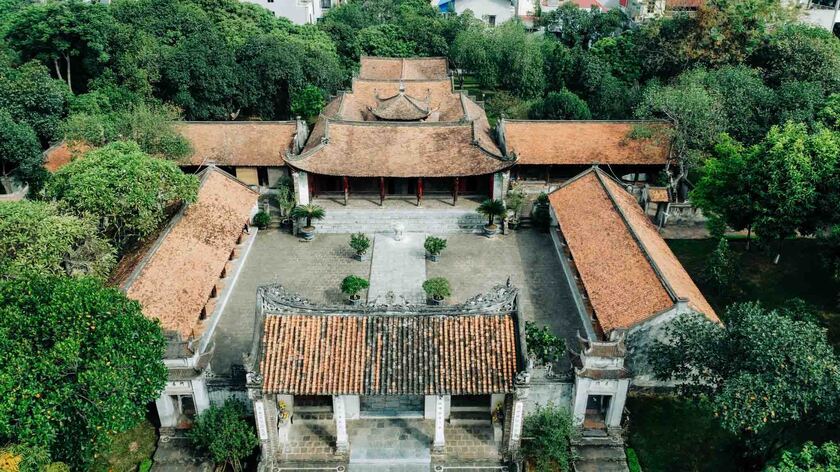
The inner chamber houses the altar dedicated to Princess My Chau. A throne is placed on top. The innermost chamber contains a stone statue. This is the "My Chau stone statue" mentioned in the legend.
What's special is that the statue is dressed as Princess My Chau did during her lifetime. The caretakers of the shrine are also carefully selected, requiring virtuous individuals with happy families and well-behaved children. This further enhances the sacredness and mystery of My Chau Shrine.
My Chau Shrine symbolizes the unwavering and faithful love between My Chau and Trong Thuy, a love story that has touched countless hearts throughout history. While the story behind My Chau Shrine and the love between My Chau and Trong Thuy remains unverified, it is indeed a highly sacred place for praying for love. Furthermore, it's a popular spot for young people to take photos and check in during the Lunar New Year.
Tay Ho Palace
Tay Ho Temple, located on a large peninsula in the middle of West Lake, was built in the 17th century. It is a temple dedicated to Princess Lieu Hanh, one of the Four Immortals according to Vietnamese folklore. She was an exceptionally talented woman, skilled in music, poetry, and possessed extraordinary character and virtue.
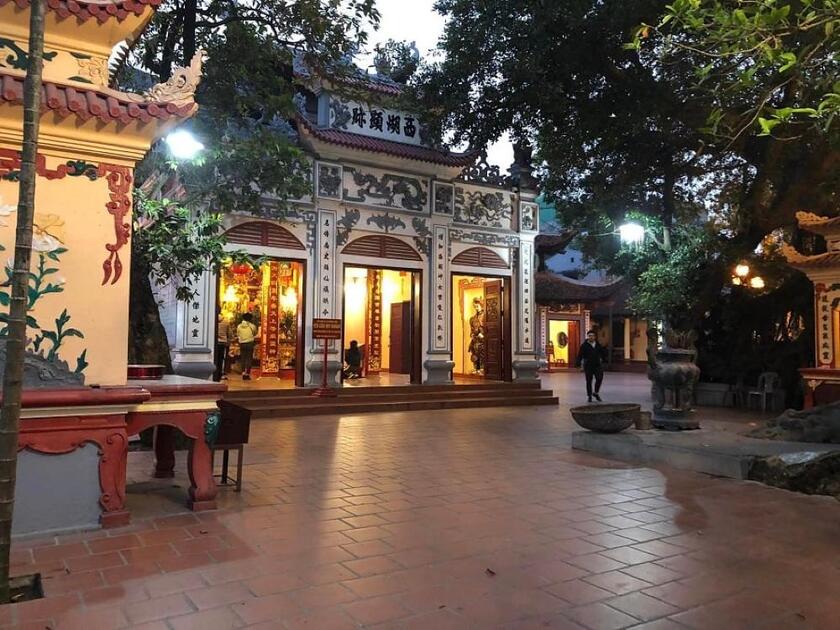
Tay Ho Temple is one of the most famous spiritual tourist destinations in Hanoi.
If you're new to Hanoi, you might think Tay Ho Temple is only famous for praying for business success, but you might not know that it's also a popular place to pray for love. In fact, besides praying for wealth, Tay Ho Temple attracts many devotees who come to pray for love and offer thanks when their relationships are fulfilled, especially during the Lunar New Year.
When visiting a temple to pray for love, you should prepare offerings to present at the main altars such as the Three Jewels altar, the altar of the Venerable Master, and the altar of the Holy Mother. The offerings at the Three Jewels altar don't need to be overly elaborate; simply place fruits, candles, incense, and a written prayer clearly stating your wishes. A small note: when placing offerings at this altar, avoid meat or gold coins, as this is a place of worship for Buddha.
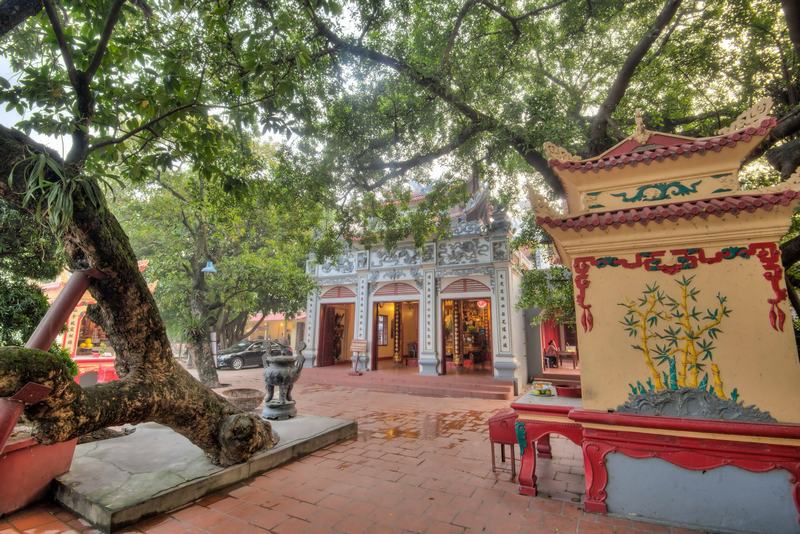
The interior of the palace is imbued with traditional Vietnamese folk designs, featuring sculptures of four dragons, four auspicious symbols, dragons and phoenixes, and white tigers, among others.
Similar to the Three Jewels altar, the offerings to the Venerable Master altar don't need to be overly elaborate. You can prepare the same offerings as the Three Jewels altar, but you can add gold coins, tea, and wine. For those seeking a partner, the offerings to the Holy Mother altar are the most important. You need to prepare gold coins, sweets, a written prayer, and, in addition, five red roses, betel nuts, and a small amount of money as an offering.
Visiting temples to pray for love is truly a unique cultural tradition of our people from ancient times. Hopefully, you will find beautiful love to experience a warm and joyful Valentine's Day.