VI
VI


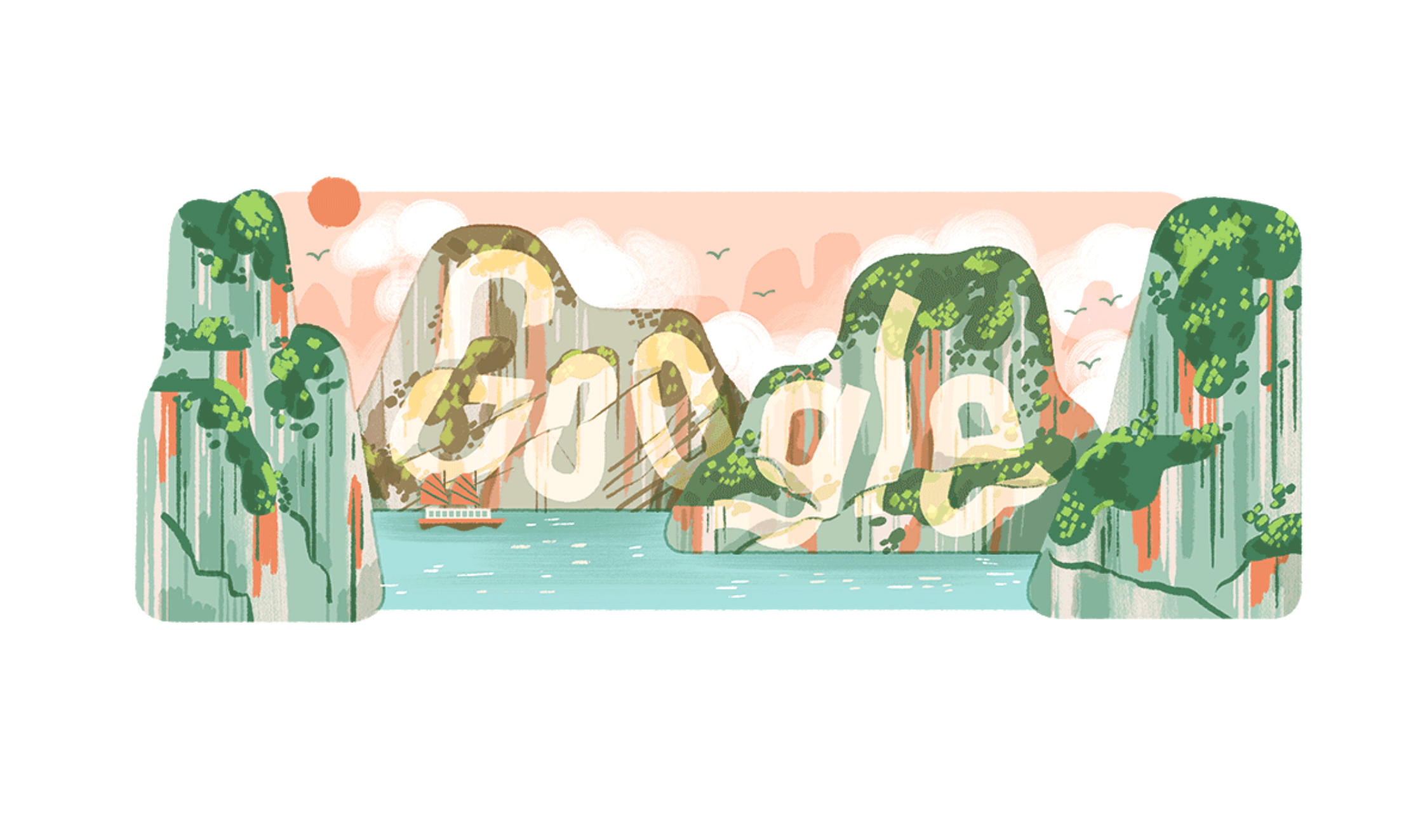

Ha Long Bay, located in Quang Ninh province, was recognized twice by UNESCO as a World Natural Heritage site in 1994 and 2000.
On September 16, 2023, this complex, along with the Cat Ba archipelago (Hai Phong), was once again recognized as a World Natural Heritage site. This is Vietnam's first dual World Natural Heritage site.
Regarding the significance of featuring Ha Long Bay in this doodle, Google stated that it aims to commemorate the 30th anniversary of Ha Long Bay being recognized as a World Natural Heritage site (2024).
Furthermore, December 17, 1994, marks the first time Ha Long Bay was recognized by UNESCO as a World Natural Heritage Site.

Besides its natural beauty, Ha Long Bay is also a highly attractive tourist destination for both domestic and international visitors, attracting millions of tourists each year and making a significant contribution to the local and Vietnamese economies.
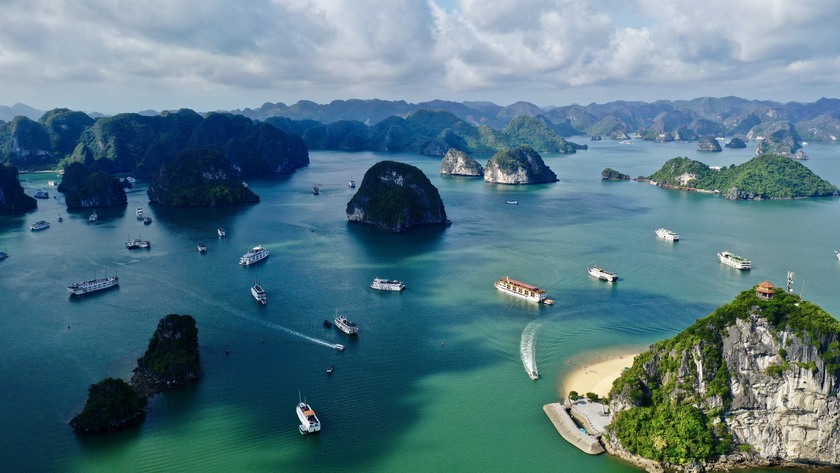
The breathtaking grandeur of Ha Long Bay (Source: Quang Ninh Newspaper)
There are islands and caves in Ha Long Bay that attract tourists with their beauty and mysterious legends, such as the Rooster and Hen Islet, Surprise Cave, and Soi Sim Island...
Ha Long Bay was recognized as a UNESCO World Heritage site because it features natural limestone islands formed over millions of years, covered with lush vegetation.
In 1994, UNESCO first listed Ha Long Bay as a World Natural Heritage site among 10 officially recognized World Cultural Heritage sites.
On November 11, 2011, Ha Long Bay was recognized by the New7wonders organization as one of the 7 natural wonders of the world, sharing the ranking with other famous landmarks such as: the Amazon rainforest (Brazil), Jeju Island (South Korea), Table Mountain (South Africa)...
Ha Long Bay is a small bay located on the western coast of the Gulf of Tonkin, encompassing the sea and islands belonging to Ha Long City, Cam Pha Town, and a part of Van Don Island District, Quang Ninh Province.
Ha Long Bay comprises 1,969 islands of varying sizes, of which 989 are named and 980 are unnamed, covering an area of 1,553 square kilometers.2It consists of a core zone and a buffer zone.
The world-recognized heritage area in Ha Long Bay covers an area of 434 square kilometers.2Shaped like a triangle with three vertices: Dau Go Island (to the west), Ba Ham Lake (to the south), and Cong Tay Island (to the east), it comprises 775 islands with numerous caves and beaches.
Ha Long Bay has been voted by many world rankings as a unique wonder with significant geological value.