VI
VI


Advised by:Backpacker's – Yutaka
January
Nui Son Ice and Snow

The Mau Son mountain range in Lang Son province, located in northern Vietnam, often attracts visitors with its beautiful snow and ice formations. In January, when temperatures drop, Mau Son can experience prolonged periods of snow and ice. These ice flowers draw large crowds to Mau Son. Lang Son city also attracts tourists with its many wholesale markets offering a wide variety of consumer goods, such as Dong Kinh Market, Dong Dang Market, and Ky Lua Market.
Da Lat (Lam Dong)

Da Lat is at its most beautiful during the flowering season. Visiting Da Lat in January, nature lovers will have the opportunity to experience wonderful days in the city of a thousand flowers. Countless species of flowers, in hundreds of colors and thousands of shades, bloom in the cool spring highland scenery. The coolness of Da Lat is sweet and gentle, completely different from the biting, bone-chilling cold at the same time in the North. Flowers bloom along the pathways, on the roadside, on the hedges, in the crevices of walls, and most lovely of all, a whole sky of cherry blossoms. Don't forget to visit Da Lat market, stop at the steps, sample the delicious and warm local food, and don't forget to visit Da Lat XQ Embroidery Museum, a unique destination not to be missed on your Da Lat exploration journey.
Sa Dec Flower Village (Dong Thap Province)

While the North experiences the harsh, freezing days of winter, in contrast, in the South, January – the beginning of spring – brings warm weather, with temperatures around 25 degrees Celsius, neither rain nor scorching sun. Sa Dec flower village shines with a myriad of colors. Chrysanthemums and apricot blossoms display their vibrant yellow hues. Japanese frangipani, miniature roses, and cacti radiate bright pink. Leaving the flower village, visitors can visit Kien An Palace and the ancient Huynh Thuy Le house, which commemorate a beautiful romantic love story from the tale "The Lover." Not far away is Tram Chim National Park. Gently paddling through the vast fields of purple water hyacinths covering the beautiful land of Tram Chim, flocks of white egrets, startled by the movement, simultaneously flap their wings and take flight in the breathtaking sunset. When in Dong Thap, don't forget to enjoy local specialties such as Cao Lan field rat, "Bat Kinh" snakehead fish, and take a stroll through Xeo Quyt on a charming little "Nam Quang" boat.
February
Sapa (Lao Cai) - Moc Chau (Son La)
From February to the end of March, peach and plum blossoms bloom profusely, creating a heavenly landscape in the Northwest mountainous regions, especially in the towns of Sapa and Moc Chau. From Hanoi to Sapa, tourists can choose to travel by sleeper bus or train, taking an overnight journey. Sapa's weather is usually below 10 degrees Celsius and occasionally rainy; tourists are advised to dress warmly to maintain body temperature and always carry an umbrella. This is the most beautiful time of year in Sapa, with its ethereal scenery shrouded in mist, the glimpses of peach blossoms, and the vibrant skirts of the Hmong girls captivating many romantic travelers. The Sunday market in Bac Ha is colorful and bustling, becoming even more lively as the Lunar New Year approaches.

The plum and peach blossoms in Moc Chau usually begin to bloom profusely about two weeks before the Lunar New Year, which is also when many people flock to Moc Chau to find a branch of peach blossoms to decorate their homes for Tet. Tourists visiting Moc Chau in February will be able to admire the vast forests of blooming peach and plum trees, regardless of the cold winter weather. Moc Chau is about 180km from Hanoi, accessible via National Highway 6. The Hmong people in Hang Kia, Pa Co, and Long Luong celebrate Tet with great enthusiasm, dressing up in new clothes to celebrate the holiday. Tourists can travel by car to Son La or, if they are adventurous, by motorbike to fully enjoy and experience the spring atmosphere along the way.
Huong Pagoda Festival (Ha Tay)

Huong Pagoda and Huong Tich Cave are famous scenic spots in Vietnam, located in Huong Son commune, My Duc district, about 70km from the center of Hanoi. Huong Pagoda is a complex of many caves and pagodas in an overall structure combining natural and man-made elements, including mountains, hills, caves, streams, forests, pagodas, and towers. Every year, when spring arrives and the apricot blossoms whiten the mountains and forests of Huong Son, millions of Buddhists and literati from all four corners of the country flock to the Huong Pagoda festival.
Ho Chi Minh City


This is the perfect time to explore the vibrant and bustling life of the young city known as the Pearl of the Far East. Visiting the city honored as Vietnam's festival city, you'll see the spring colors filling the streets, with countless flowers blooming everywhere. Main thoroughfares like Le Duan, Le Loi, Dong Khoi, and Nam Ky Khoi Nghia shimmer with millions of sparkling colored lights. Images of apricot blossoms, peach blossoms, the conical hat, and the traditional ao dai dress of Vietnamese women are celebrated through the light displays of the most skilled artisans. Nguyen Hue Flower Street captivates tens of thousands of visitors with its exquisite recreation of Vietnamese history, culture, and people through colorful flowers and traditional materials such as ceramics, straw, and bamboo. Strolling through the heart of District 1, through the old quarter of Le Cong Kieu, or admiring classical architectural landmarks like the City Theatre, the Central Post Office, and Ben Thanh Market, you'll get a glimpse of a bygone Saigon. But alongside that, the luxurious shopping malls will give you a sense of a modern, dynamic, and prosperous Ho Chi Minh City.
March
Central Highlands during coffee blossom season

In spring, trees sprout new leaves and blossoms, and the vast Central Highlands – home to the villages of the Ba Na, Ede, and Gia Rai people in Gia Lai, Kon Tum, Daklak, and Dak Nong – resound with the sounds of gongs and drums. In March, the entire village celebrates the new rice harvest festival. Tourists come to Buon Don for the exciting experience of riding elephants across the Serepok River and exploring tree houses. Visit Lak Lake at dawn to feel the pure breath of the new day amidst the mountains and forests. Dak Nong, with its Dray Nur and Dray Sap waterfalls, will overwhelm you with the majestic beauty of the Central Highlands. And don't forget to visit Bien Ho Lake in Pleiku, taking a gentle boat ride in the peaceful sunset before a restful night's sleep. After long journeys of exploration, visit the Kon Tum Wooden Church to immerse yourself in the mystical spiritual atmosphere of its unique wooden architecture, considered one of the most enchanting in Vietnam. March is the season when coffee blossoms bloom, covering the mountains and forests in white, a sweet invitation.


April
Kien Giang - The season when cranes return.


Every year, as the dry season in the South begins with warm sunshine, flocks of cranes appear in the skies of the Dong Thap Muoi region (Dong Thap province) and Kien Luong (Kien Giang province). Witnessing the "magical dance" of these 1.7-meter-tall birds with their wide wings and vibrant red heads in the beautiful sunrise is an endless source of inspiration for nature lovers. Tram Chim National Park is a paradise for countless bird species, home to approximately 232 species and tens of thousands of birds. At any time and in any place, you can see cranes perched on the melaleuca trees, soaring in the sky, and playing in the clear blue waters.
Here, you'll find many rare species such as the crested heron, the lotus heron, the stork, the spoonbill, etc., but the most exciting experience is "hunting" for photos of the red-crowned crane. Crane hunting requires a lot of effort; sometimes you have to lie in wait all day under the blazing sun, and sometimes you have to immerse yourself for hours in the cold water of the pond. But just one glimpse of cranes mating, dancing, and courting is more than enough. In addition, you can still have fascinating ecotourism experiences exploring over 7,000 hectares of this world's 2000th Ramsai site.
May
Hue, my love

The festival begins in the ancient capital of Hue in late April and early May, marking the start of a new tourist season. Hue is gentle in the early morning sun, with the purple ao dai (traditional Vietnamese dress) of a schoolgirl fluttering in the breeze on Trang Tien Bridge. Hue's heritage is profound and enduring, witnessing countless changes in the country. After strolling around the tombs, you can visit Lang Co to swim and enjoy delicious seafood on Tam Giang lagoon. This is the best time of year to visit Hue because from June onwards, Hue experiences intense heat, heavy rain, and very cold winters, making it unsuitable for visiting the tombs.
Long An lotus season

As the early summer sun begins to replace the warm spring weather, the Mekong Delta enters its lotus blooming season. Take a short trip to Long An to experience the peaceful and tranquil atmosphere of the South. Summer is also lotus season; ask a local to take you on a boat trip to explore. The small boat will weave through the large lotus leaves, venturing deep into the pond. The fragrant scent of lotuses wafts in the breeze, thousands of pure white and pink lotus blossoms bobbing on the water. Under the blue sky and white clouds, the vast expanse of water below, the wind blowing strongly, pluck the lotus seed pod, peel off the outer layer, and savor the sweet, white inner kernel—a truly delightful experience. While in Long An, remember to visit the Hundred-Pillar Ancient House, the Binh Ta Historical Site, and the Nguyen Huynh Duc Mausoleum to gain a deeper understanding of this region's history.
June, July, August – The blue sea beckons.
|
Phu Quoc


For both foreign and domestic tourists, Phu Quoc Island has long been associated with images of relaxing, leisurely vacations surrounded by vast expanses of water and boundless skies. Once you've set foot in this enchanting place, you can't miss Sao Beach, one of Phu Quoc's most famous beaches. Sao Beach is captivating with its endless stretch of sand nestled in the loving embrace of two gently sloping mountains. The sand here is pure white, not pale yellow like Nha Trang beach or dark yellow bordering on brown like Vung Tau beach. To admire the beauty of Phu Quoc's sunrise, explore Dinh Cau Cape; and for tranquility in the sunset, remember to visit Ham Ninh pier. Phu Quoc boasts countless beautiful sights to ensure your trip isn't boring, such as Bat Cave, Tranh Stream, Fairy Stream, Ham Ninh fishing village, and Coconut Tree Prison… After enjoying all the stunning scenery generously bestowed by Phu Quoc's nature, don't forget to savor the island's unique seafood specialties at Bai Sao restaurant. A lunch including boiled crab, grilled shrimp, grilled scallops, and a flavorful herring salad will stimulate the taste buds of even the most discerning diners.
Con Dao


Perhaps few beaches in Vietnam have managed to preserve their pristine, captivating beauty like Con Dao, despite being developed for tourism. If you truly want to immerse yourself in nature without being disturbed by the hustle and bustle of city life, then visit Bai Nhat. Its wild, unspoiled beauty will leave you stunned. White waves crash against the fine sand, and the sea is a deep blue, reflected in the vast sky. If you want to explore the wildlife, head to Hon Tai, or go trekking through the forest with many interesting options: So Ray, Ong Dung, Dam Tre... Con Dao has many small islands, so renting a speedboat for a tour around the islands is essential. Places you should visit include Hon Bay Canh, Hon Tre Lon, or simply take a tour around the island to get an overview of Con Dao's beauty. Leaving the beach behind, embark on a journey to conquer Mount Thanh Gia - the "roof of Con Dao". Standing on the summit, you can immerse yourself in the cool breeze and take in the panoramic view of this beautiful Pearl Island. Remember to treat yourself to some delicious local specialties such as conch, wax snails, grouper, sea worms, shrimp, squid, etc.

Nha Trang, the sea is calling!
Discover Van Phong Bay in Khanh Hoa during the beautiful summer months and fully appreciate the beauty of this bay, considered one of the most beautiful in the world. The white of the clouds, the green of the small islands, and the azure of the sea create a picturesque landscape. Nature has skillfully arranged the vast white sand dunes interspersed with high cliffs and rolling mountains, creating a space that is both charming and majestic. Strolling and enjoying breakfast in the pristine and beautiful Xuan Dung fishing village at dawn is a wonderful experience. Explore Dam Mon shellfish port and Van Thanh fishing village to further appreciate the bustling life and the simple, honest people of this place. Van Phong boasts many small beaches with different atmospheres, even though they are only a few kilometers apart. Hon Na beach is gentle and charming, Co Ong beach is sparkling and mystical, and Xuan Dung beach is lively and cheerful. After immersing yourself in the cool water, grab your snorkeling gear and begin exploring the coral kingdom. A magical marine paradise unfolds before your eyes, breathtakingly beautiful.
September
Hanoi in autumn

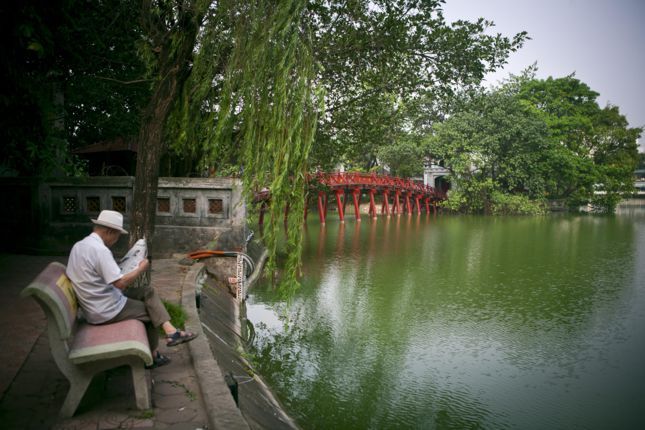
Nowhere else has a September as beautiful as Hanoi. When the sấu trees have finished bearing fruit and shed their leaves, when the last flowers of summer fade on the lotus ponds of West Lake, the rustling wind heralds the arrival of autumn. Hanoi is breathtakingly beautiful in September. The sun is less harsh, the autumn wind rustles, mist hangs low as night falls, and a gentle coolness touches the cheeks. Hanoi's autumn has been immortalized in poetry. The streets that captivated countless scholars—Phan Dinh Phung, Tran Phu, Hoang Dieu, Long Bien Bridge—are so poetic and romantic. In autumn, the fragrant scent of freshly roasted rice fills the alleyways, carried on the simple shoulders of mothers and sisters.


Southwestern Vietnam - Fruit Season

When the lotus petals fall in summer, it's time for a trip to the orchards, as the fruit trees of the Mekong Delta are in full bloom. Each province has its own unique specialties, offering a wide variety of choices to suit your preferences. In Binh Minh, Vinh Long, you'll find vast orchards of Nam Roi pomelos, with their subtly sweet and refreshing taste. The Lo Ren star apple from Chau Thanh, Tien Giang, is considered unrivaled in the global market. Splitting the fruit in half reveals a fragrant aroma emanating from the creamy white flesh. The Hoa Loc mangoes are bright yellow, with a vibrant yellow flesh and small seeds, a delightful aroma, and an incredibly sweet taste that will surely satisfy even the most discerning palates. And there are countless other wonderful fruit orchards waiting for you to discover and enjoy. Stroll through the shady orchards, savor the sweet fruits, enjoy the local specialties, and listen to the melodies of traditional Southern Vietnamese folk music to further appreciate the land and people of the South.
October
The Golden Season of Mu Cang Chai


Stretching along National Highway 32, from Van Chan to the remote Mu Cang Chai, the terraced rice fields of the Mong ethnic people are ready for harvest. This is also when a stunning golden color blankets the mountains and forests, marking the joyous season of new rice in every village. The Mong people cultivate rice on terraced fields that stretch halfway up the mountainside, harvested only once a year, creating a breathtaking golden carpet. When visiting Mu Cang Chai, don't forget to stop by Tu Le to enjoy a bowl of new rice, free-range chicken, and savor the sweet aroma of young rice flakes.
An Giang during the flood season

Discover An Giang when the water is lapping at the dikes, vast green rice fields stretching as far as the eye can see, rows of palm trees reaching towards the morning sun, and the faces of the locals always radiant with joy. Happy smiles shine and overflow with the rising water – the flood season. It would be a great oversight to explore the flood season without visiting Binh Thien Lake (village) in Quoc Thai commune, An Phu district, An Giang province, bordering Cambodia. Stroll along the small village paths leading to the sacred waterfront in front of the mosque, and observe the peaceful life unfolding by the lake. The image of Cham girls with their black scarves covering their faces adds to the mystique of the traditional culture of this land. Tra Su Melaleuca Forest is also a must-see when exploring An Giang. The boat glides through the carpet of green water hyacinths, the green of millions of melaleuca trees, and the azure blue of the vast sky, all blending together to create a peaceful and cool atmosphere. Above, thousands of birds chirp and sing together in a harmonious chorus, welcoming the new day. If you visit An Giang during the Dolta bull racing festival, you will experience the vibrant and lively atmosphere of the largest festival in the Southwest of Vietnam. An Giang also captivates tourists with its vast, towering palm forests, ancient temples with rich Khmer architecture, the sacred Ba Chua Xu festival at Sam Mountain, and above all, the warmth of its simple, honest people, their friendly, sincere smiles imbued with the spirit of the countryside, and the delicious, rustic dishes that leave a lasting impression on visitors from afar.

November – Winter begins
Ha Giang in the buckwheat flower season

The Hmong people in Sung La, Ha Giang, cultivate buckwheat and rapeseed on high hills, and corn and rice in the flat areas at the bottom of the valleys. Interspersed among the vibrant green of the corn and rice are the lilac purple of the buckwheat flowers, the golden yellow of the sunlight, and the deep green of the towering cypress trees. These flower fields transform the otherwise harsh and cold natural landscape into a breathtaking masterpiece. Located 300km from Hanoi, Ha Giang is attractive with famous destinations such as Yen Minh, Dong Van, Meo Vac, the northernmost point of Lung Cu, and Ma Pi Leng Pass…
Moc Chau in the season of wild sunflowers.

In winter, the entire valley, frozen in the cold, is adorned with flowers along every road. Bright orange wildflowers bloom like a welcoming arch along both sides of the road leading into town, alongside equally vibrant red poinsettias, and hidden behind rooftops are rose bushes laden with fruit. But the most beautiful are the undulating carpets of white rapeseed flowers on the hillsides, their subtly pungent fragrance filling the air. The delicious dishes on the table include fragrant stir-fried veal, piping hot chicken hotpot, or nậm pịa, a type of goat intestine – bitter and difficult to eat.
December
B'Lao mountain town (Bao Loc) – Lam Dong

Traveling along National Highway 60 from Da Lat to Bao Loc, you'll encounter countless coffee plantations laden with ripe, red berries, waiting to be harvested. The coffee harvest season coincides with the leaf-shedding season of rubber trees. The sky over Bao Loc is a vibrant blue, and the breeze is pleasantly cool. After passing through Bao Loc, don't forget to drive another ten kilometers to visit the roaring Damri Waterfall.

While Da Lat is already familiar to tourists for its cool winter weather, the mountain town of B'Lao (another name for Bao Loc city) is a new and exciting destination. The majestic Dambri waterfall echoes through the mountains, the gentle and charming Suoi Cat stream flows through the Bao Loc pass, the tranquil Bat Nha monastery, the distinctive Dang Dung pagoda with its unique architecture of the Chau Ma people, the vast, deep green pine forests, the vibrant yellow hills of wild sunflowers... and simply, a small, charming, and peaceful mountain town that leaves a lasting impression. Wrap yourself in a scarf and explore B'Lao in the early morning mist, strolling along the small, sleepy, deserted red dirt slopes. The atmosphere becomes even more enchanting, the cold gradually chilling your fingertips, take a deep breath to absorb the pure air of the Central Highlands mountains. In winter, the mountain town is enveloped in vast rivers of clouds, and lush green tea hills stretch across the hillsides. Come to B'Lao and sip a cup of coffee at Sonat to forget the worries and hustle of everyday life. Let the gentle coolness seep into your soul and find true peace and happiness.
Hoi An Old Town

It's impossible not to mention the famous ancient town of Hoi An. In the final days of the year, Hoi An shimmers in the colors of lanterns. Many tourists visit Hoi An to celebrate the New Year. The ancient town, serene and gentle during the day, bursts with color at night. The best way to enjoy Hoi An is by taking a bike ride, exploring every corner of the city, or cycling along the Thu Bon River to Cua Dai beach in the warm sunshine.