VI
VI


Colorful marbled meatballs
Moc Van Am is a dish where pork skin is used to make a gelatinous coating over the ingredients inside. In ancient times, this was a dish eaten on the first day of the Lunar New Year, symbolizing a wish for a prosperous, abundant, and complete new year, just like the beautifully presented moc.
First, mince the ground pork until very smooth, then mix it thoroughly with hot pork (freshly butchered meat) and fish sauce, pepper, wood ear mushrooms, and shiitake mushrooms. The cook gently applies a little lard to their palms and rolls the mixture into small balls, places them in a steamer, and steams them over vigorously boiling water.
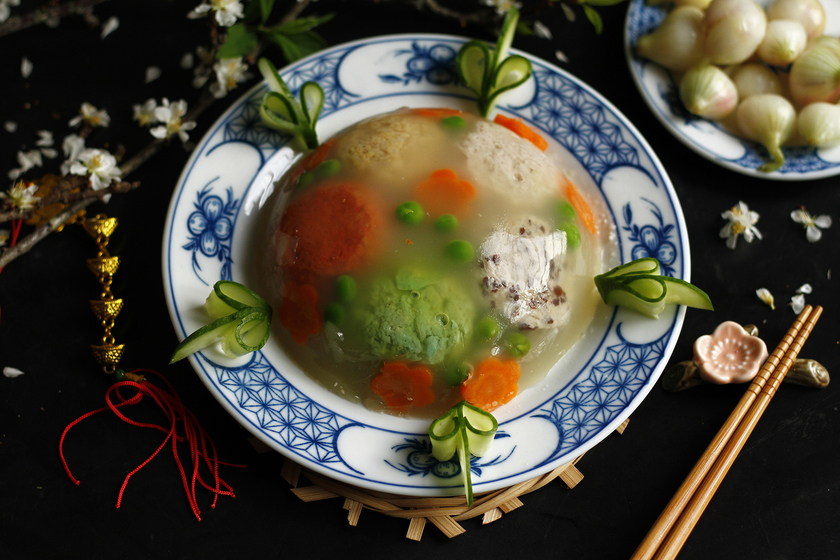
Moc Van Am is the Tet (Lunar New Year) version of jellied meat.
Next, the pork skin is thoroughly cleaned of hair, washed several times, and simmered until tender. The steamed meatballs are then added, allowed to cool, and inverted into a bowl. The pork skin resembles a cloud covering the meatballs, hence the dish's name, "cloudy meatballs." For many families today, this dish is not very common and is in danger of being lost.
Making fried spring rolls requires skillful hands.
Everyone knows what spring rolls are, but nowadays there are many variations depending on each family's taste. In the past, during times of scarcity, spring rolls often contained more vermicelli and vegetables than meat. But for the best taste, they always included minced pork shoulder, mung bean vermicelli, jicama or bean sprouts, shiitake mushrooms, wood ear mushrooms, carrots, and eggs to help the filling blend together. Spring rolls, seemingly simple, are actually a challenging dish for many home cooks.
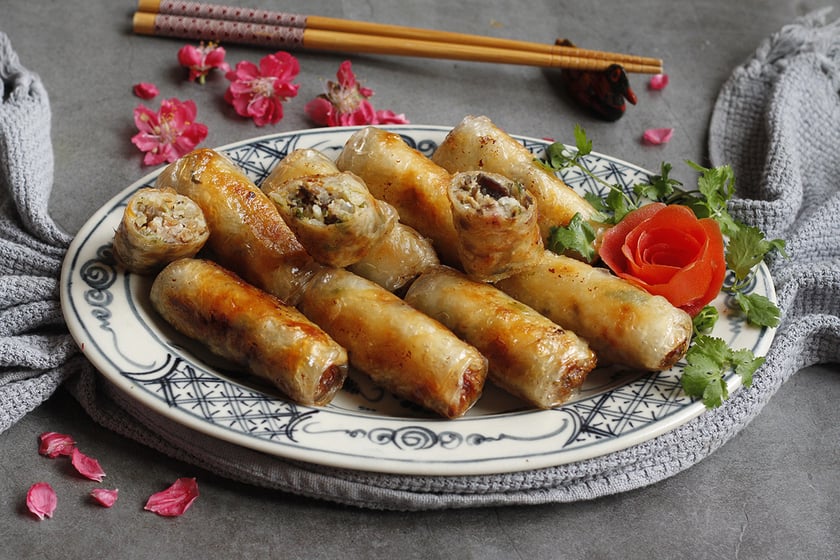
Crispy fried spring rolls are a culinary challenge for the daughter-in-law.
To make firm spring rolls with the rice paper wrapper intact, the filling must be mixed just right – moist and sticky. A dry filling will be crumbly, while a wet filling will cause the spring rolls to fall apart during frying. Spring rolls that lack a little fish sauce in the filling won't be as flavorful. Many families, tired of eating meat, often substitute crab filling.
Take a sheet of rice paper, sprinkle with a little cold water, and rub it to soften it. Then, quickly roll up a spoonful of filling and wrap it tightly. The ideal size for spring rolls is about the width of two finger joints and the same length. Too big or too small is considered improper. When frying spring rolls, using lard is almost mandatory for them to be fragrant and crispy. Once the lard is bubbling, quickly add the spring rolls so the wrapper heats up and becomes crispy. When the lard is hot, flip the spring rolls over. The daughters-in-law stand nearby, watching their mother-in-law fry each spring roll until golden brown, the filling cooked through but not dry, and the wrapper crispy but not burnt.

The fried spring rolls, served with a plate of herbs, fresh vegetables, and a bowl of sweet and sour garlic dipping sauce, make the Tet feast look beautiful and elegant.
Sticky rice with gac fruit is eaten for good luck at the beginning of the year.
Gac sticky rice is a dish that every family prepares for Tet (Vietnamese New Year) by making a large pot of it to offer to their ancestors and to eat as a good luck offering after the feast. Gac sticky rice has a vibrant red color, and each grain is plump and round, like a wish for good fortune in the new year.
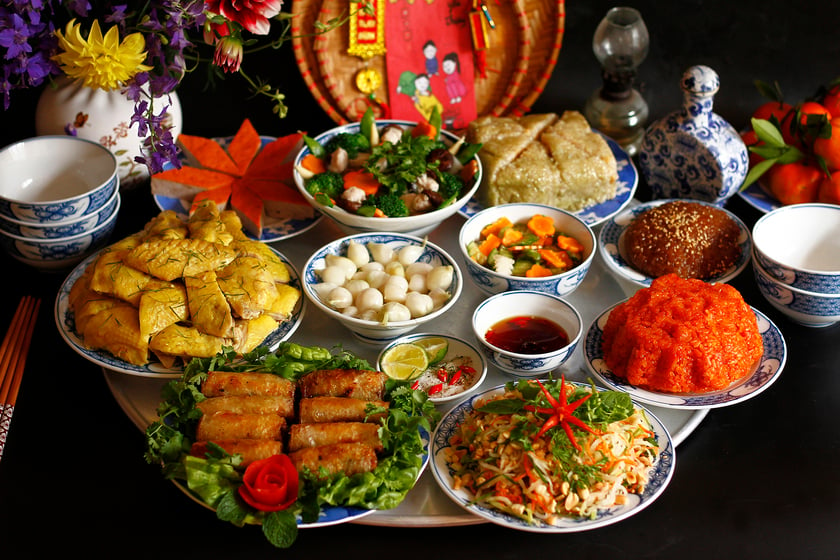
A lavish feast, with its abundance of food, would be incomplete without a plate of red sticky rice for good luck at the beginning of the year.
To make delicious sticky rice, the glutinous rice must be carefully selected grain by grain. Both glutinous rice of the "golden flower" variety and mountain glutinous rice are suitable. The rice is soaked overnight, and the pulp of the gac fruit is soaked and then mixed with glutinous rice wine to create a bowl of shimmering red liquid. The gac fruit is peeled, and all the outer skin is used, discarding only the shiny black core. This gac juice is mixed with the rice, a little salt, and when steaming, a bunch of pandan leaves tied with string is added to make the sticky rice incredibly fragrant.
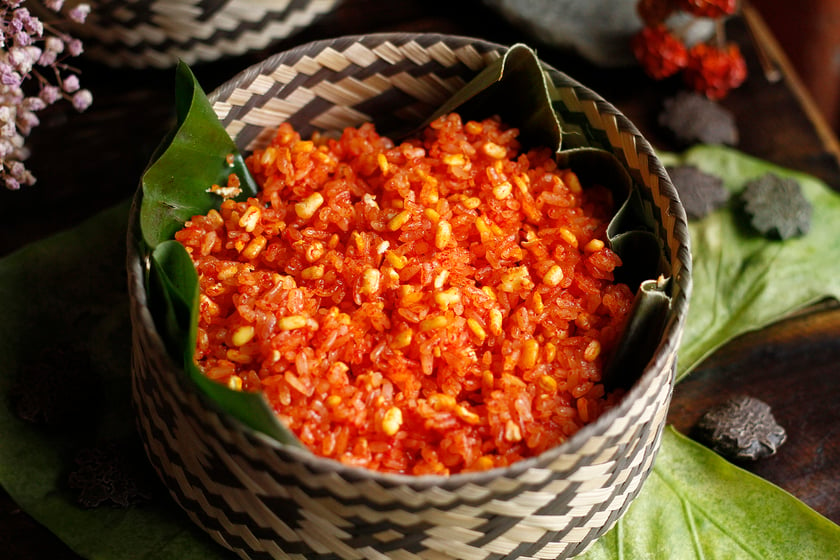
A plate of bright red gac fruit sticky rice is visually appealing.
Making delicious sticky rice is sometimes a matter of skill. Some people are just average cooks, but they always make delicious sticky rice. The sticky rice is steamed until cooked, fluffed up, and mixed with chicken fat to give each grain a glossy sheen. Gac fruit sticky rice is always molded to create an attractive and elegant shape. The sticky rice is cooked slightly salty and with chicken fat to be eaten with Vietnamese pork sausage for a balanced flavor. Many families who want a sweet version will mash mung beans and mold them with the sticky rice, and always mix the sticky rice with sugar, roasted sesame seeds, coconut milk, and shredded fresh coconut.
The way the fish is cooked is elaborate and refined.
Traditional Tet feasts, especially in Hanoi, were incomplete without a dish called "canh bong tha" (meatball soup). This old-fashioned soup was elaborate, containing many ingredients such as meatballs, tenderloin, quail eggs, shiitake mushrooms, dried shrimp, broccoli, cauliflower, carrots, ginger, minced pork, and peas…
Early in the morning, when the bone broth, chicken stock, and dried shrimp from the previous night are ready, the housewives take them off the heat and prepare to cook the soup. This chicken broth must be crystal clear, free of grease, and simmered over very low heat to prevent it from becoming cloudy. The dried shrimp, pork bones, and chicken stock give the soup a sweet flavor without the need for MSG or sugar.
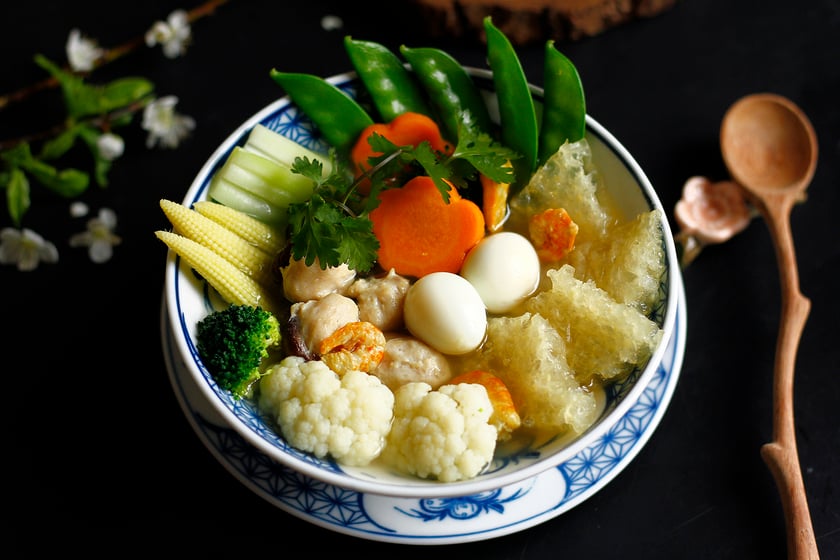
Canh bong, like moc van am, is rarely made in modern banquets because it is too elaborate and time-consuming.
The most meticulous part is preparing the pork skin. Young daughters-in-law or daughters usually take on this task. The pork skin is soaked until it swells, then rinsed with wine for fragrance, and then cut into diamond shapes or rolled into egg rolls, and marinated in chicken broth.
Boiled quail eggs fried until golden brown, fragrant roasted ginger, beautifully sliced carrots and cauliflower, soaked shiitake mushrooms trimmed into petals, and minced pork shaped into round balls. The broth is brought to a boil, and the above ingredients are quickly cooked until tender, then removed and placed in a bowl. A few sprigs of green onions and cilantro are added. The hot broth is then poured over the dish just before serving.
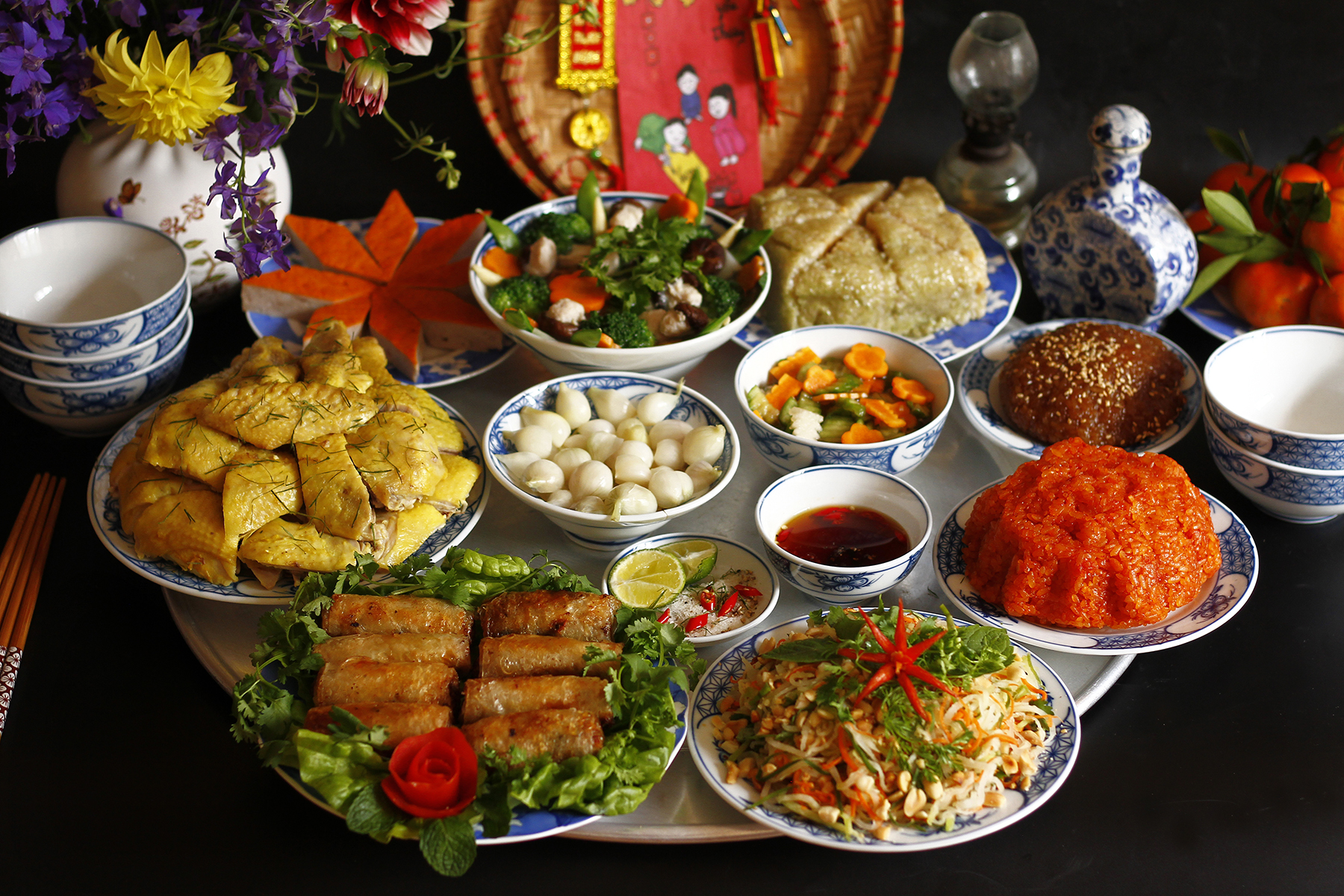
Above are some delicious and unforgettable Tet dishes that require skill and finesse from the cook. These dishes all play an important role in our country's Tet culinary culture and are traditions that need to be preserved. Travellive wishes our readers a new year filled with abundance, good fortune, and delicious meals, just like the festive feast during family reunions.