VI
VI


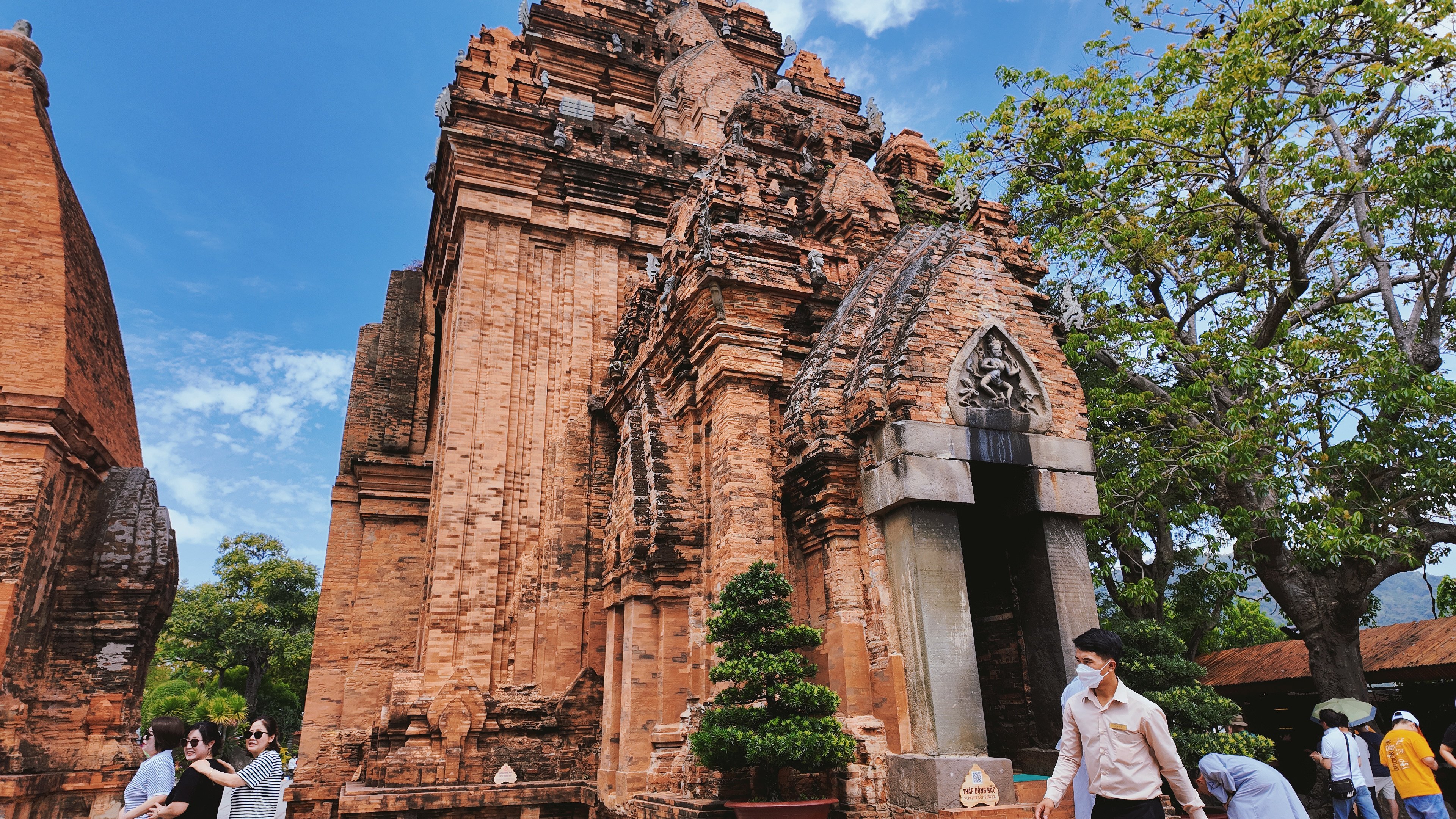
Perched majestically atop a small hill beside the picturesque Cai River estuary is the mysterious Cham architectural complex – the Ponagar Tower. Having weathered countless historical upheavals, this cultural heritage site retains its architectural and spiritual value, harboring unique historical and cultural stories of the ancient Cham people.
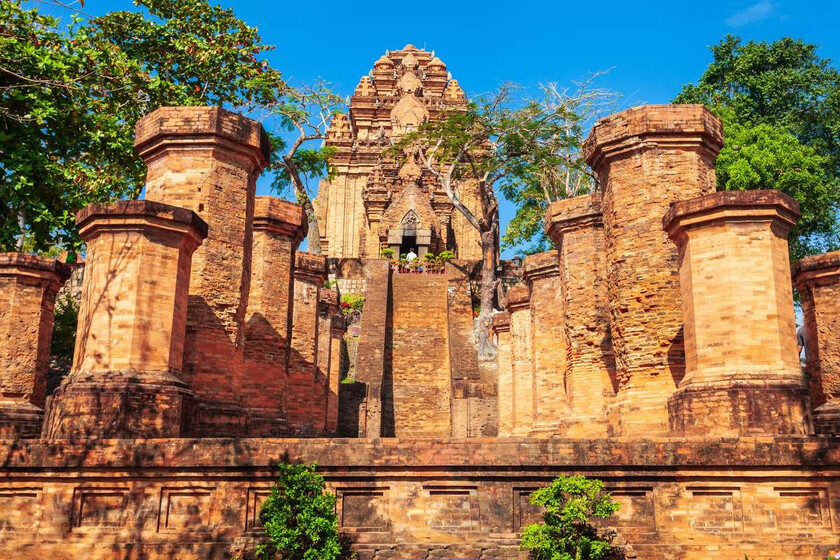
The Ponagar Tower is located on a small hill next to the Cai River.
Upon first arriving at the Ponagar Tower, visitors will be overwhelmed by its unique and impressive architectural beauty. The majestic towers, built from fired laterite stone with exquisite carving techniques, showcase the talent and creativity of the Champa people. Every decorative detail and pattern on the tower carries symbolic meaning for the deities, reflecting the spiritual life and beliefs of the ancient Champa people.
Duc Minh (29 years old, Hanoi) said: "Whenever I come to Nha Trang, besides swimming at the beach, I always visit the Ponagar Tower. No matter how many times I've been there, I never get tired of it. I admire the architecture, immerse myself in the sounds of the trumpets and the dances of the Cham dancers, and grow to love the culture and beliefs of the Cham people even more."
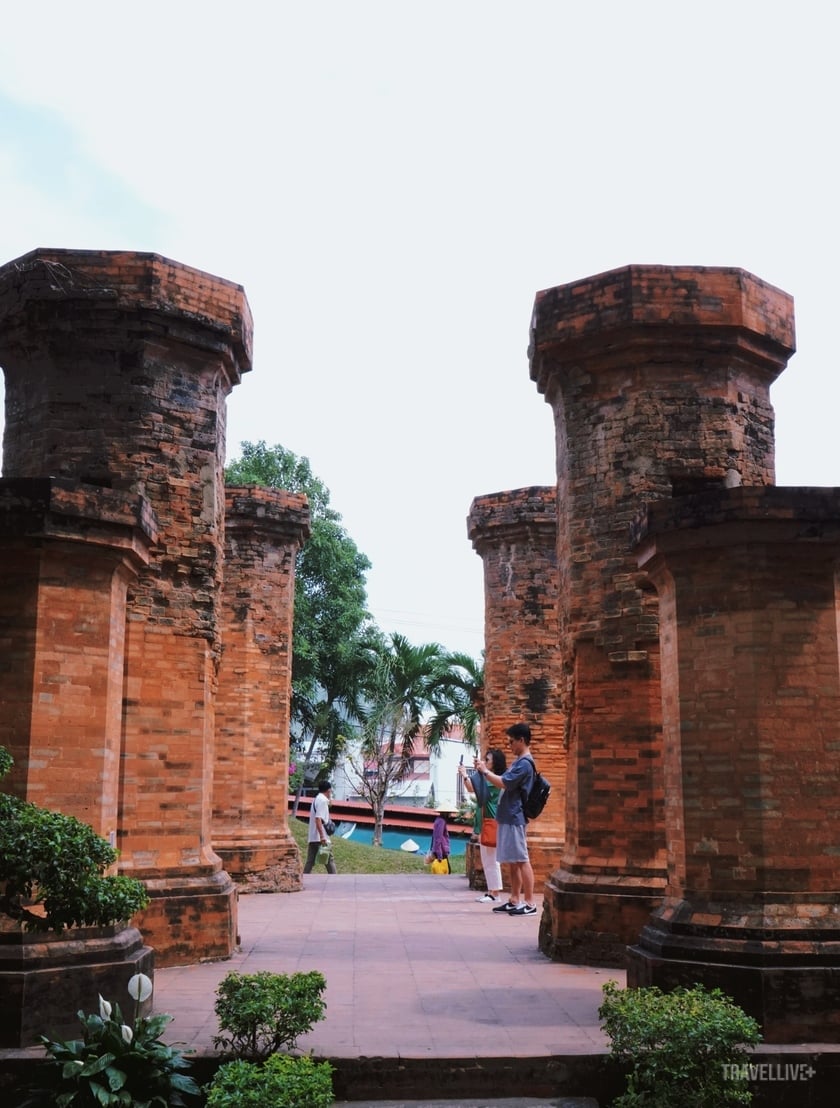
The Mandapa (vestibule) is the first stop when visiting the Ponagar Tower.
Unique Champa architecture
Built between the 8th and 13th centuries, during the flourishing period of Hinduism in Champa, the Ponagar Tower complex is the most intact Cham relic complex in Vietnam, comprising four towers built on a high hill overlooking the Cai River. It is dedicated to the goddess Thien Y Ana Po Nagar, the Mother Goddess revered by the Cham people.
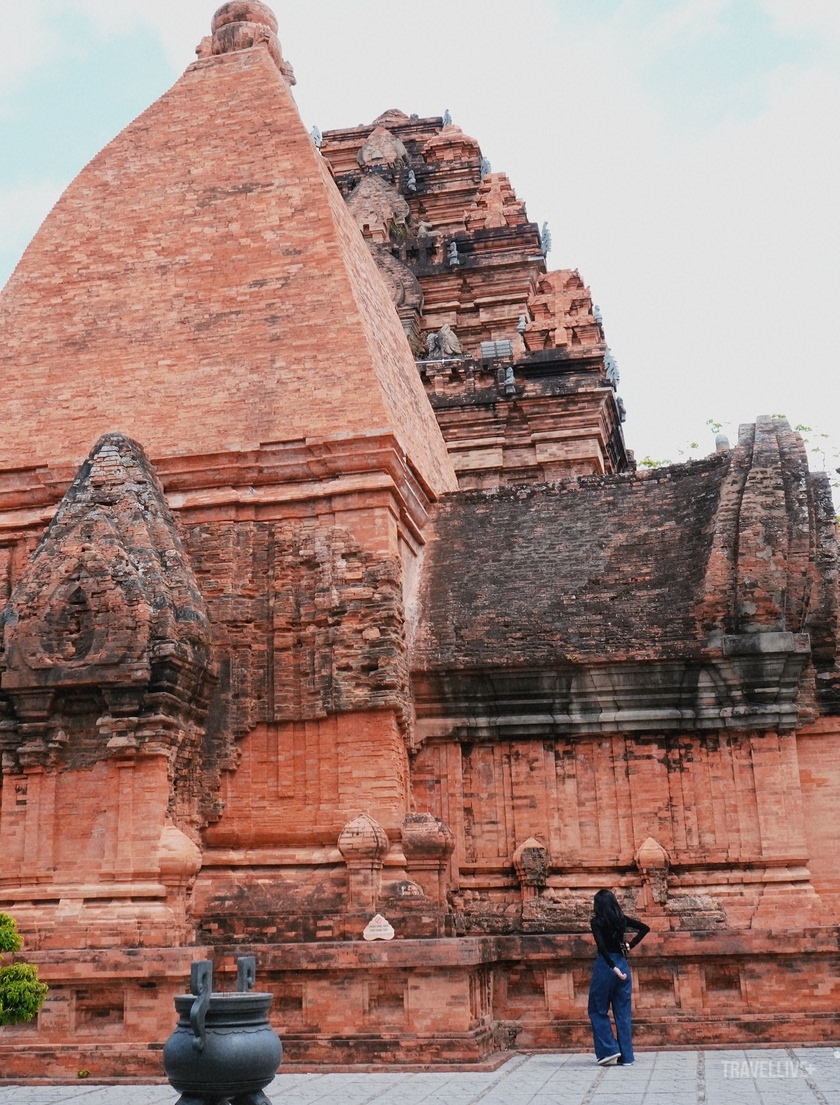
The tower's structure is quite sturdy despite having endured the ravages of time.
The tower complex consists of three levels, each with its own unique characteristics. The bottom level is where visitors can find traces of the tower gate and the stone steps leading up to the middle level – the Mandapa, where pilgrims rested and prepared offerings before presenting them to the goddess.

The most impressive highlight of the Ponagar Tower is its towering 23-meter-high structure at the top. Built with perfectly fitted fired bricks without any binding material, it showcases the unique construction techniques of the Cham people. The tower's interior is hollow from bottom to top, with its entrance facing east, symbolizing the welcoming of the first rays of dawn.
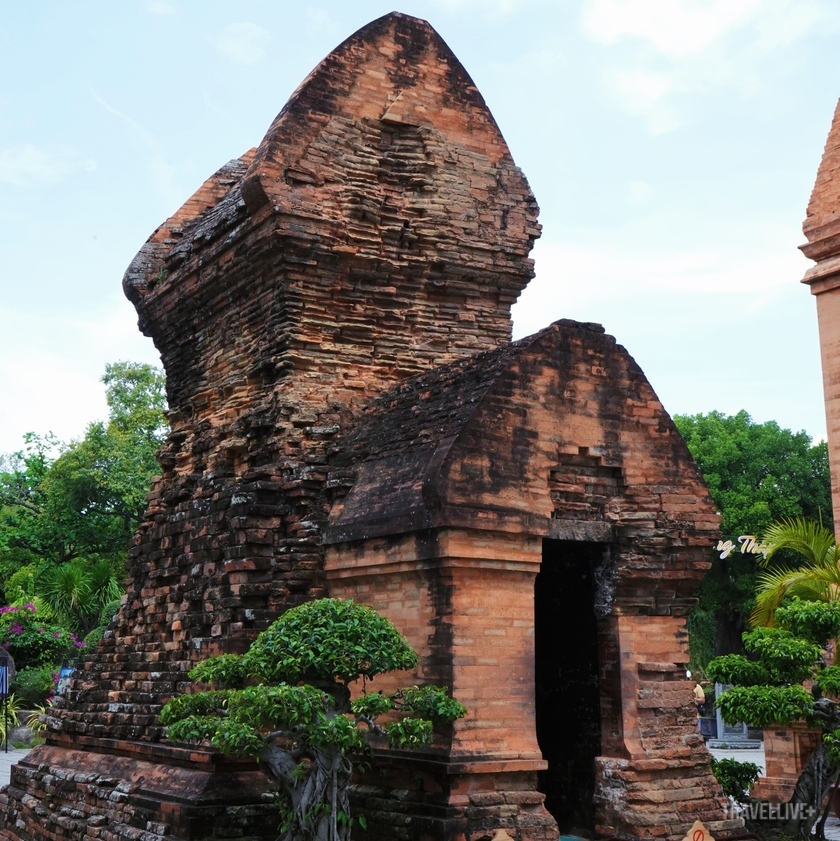
Each structure embodies the artistic essence of Champa culture.
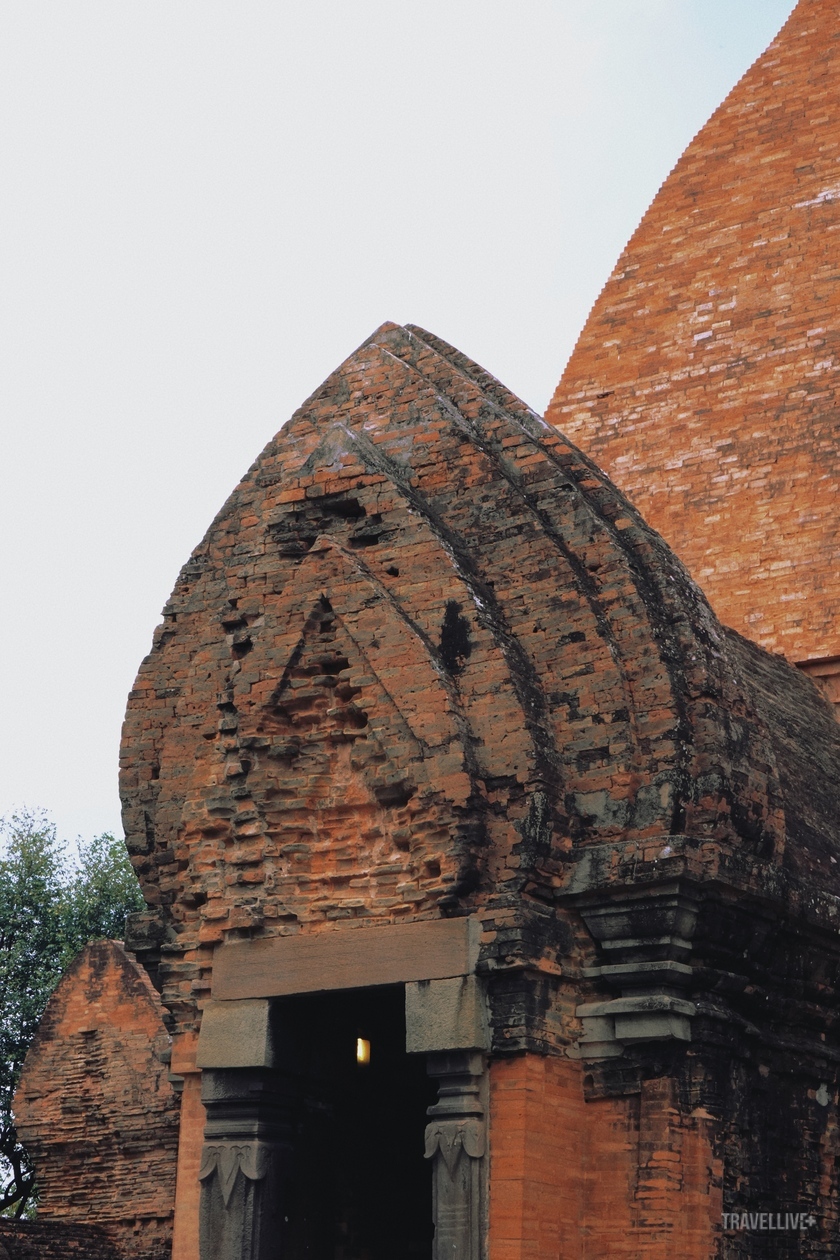
Each tower has four entrances facing east, west, south, and north, but currently only the east entrance is open for tourists to visit.
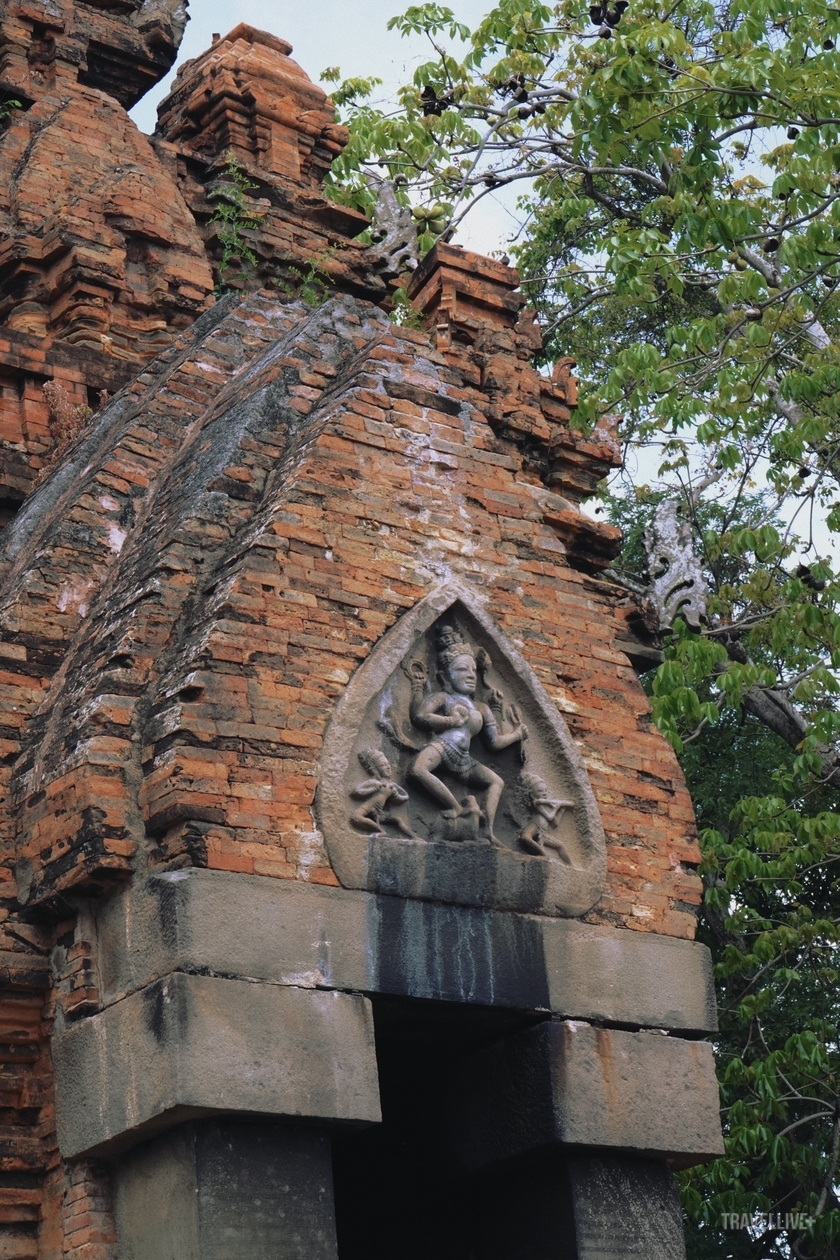
The towers are designed in an ancient style, carved with images of mythical creatures and deities, imbued with deep spiritual significance.
The exterior of the tower is decorated with numerous moldings, pillars, and intricate arched patterns, along with terracotta statues and reliefs depicting celestial nymphs, mythical creatures such as deer, golden geese, lions, and especially the goddesses Ponagar and Tenexa.
Standing out among the towers is the Ponagar Tower, with its four levels, symbolizing beauty, art, and creativity. Inside the tower is a majestic 2.6-meter-tall statue of the goddess Ponagar, carved from black granite, seated on a lotus-shaped pedestal, leaning against a large Bodhi leaf-shaped stone slab. "The statue of the goddess is considered a masterpiece of Cham sculpture, showcasing a harmonious combination of round and relief carving techniques, demonstrating the masterful sculpting skills of the Cham people," a tour guide explained.
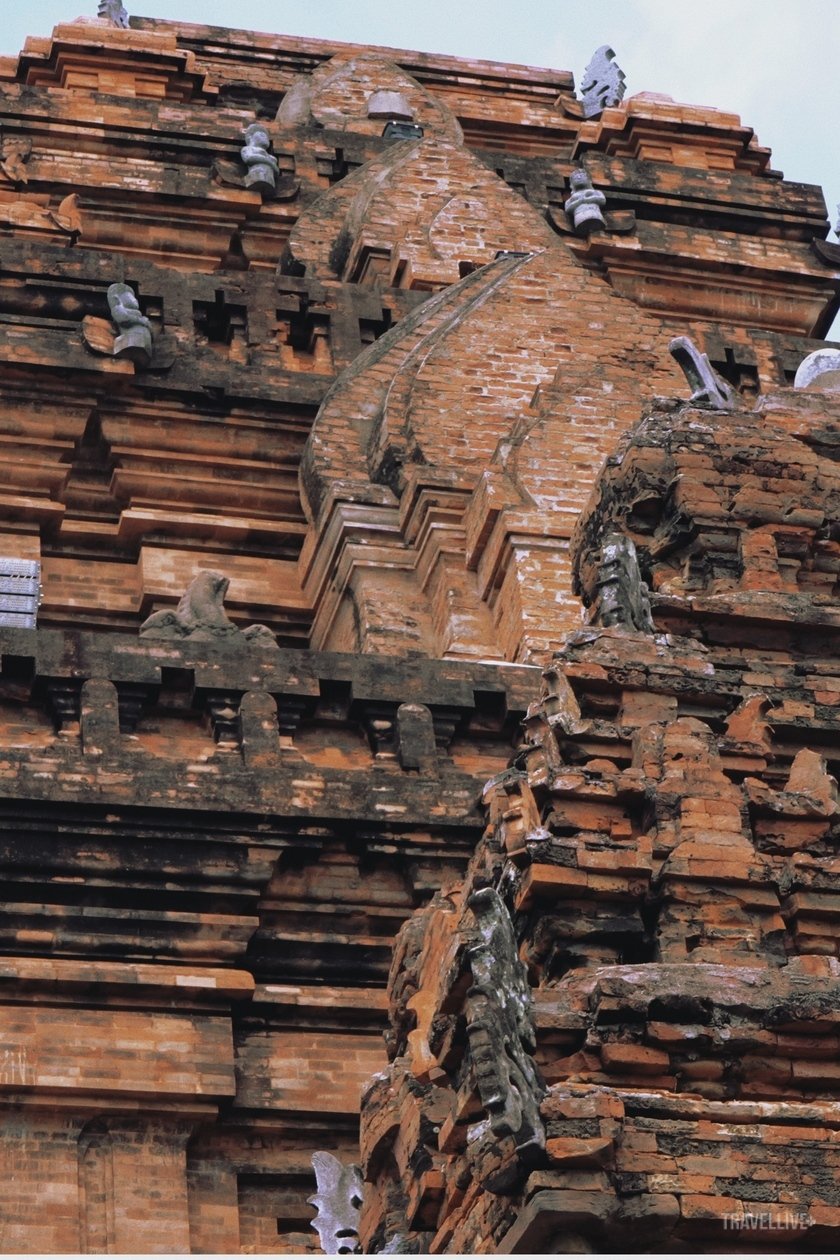
The towers were all constructed using bricks stacked very tightly together, with no visible binding material.
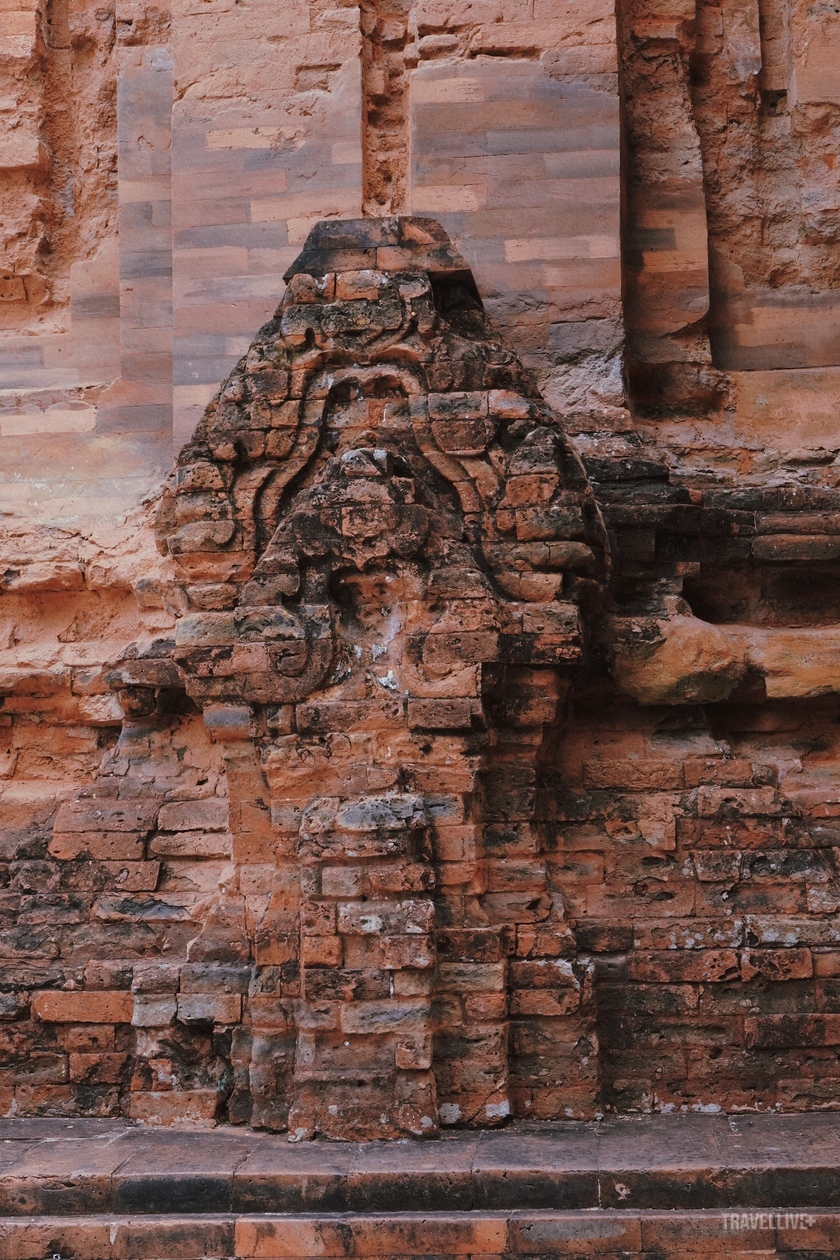
This is a unique and mysterious aspect that researchers have yet to uncover, making it even more appealing to tourists who enjoy curiosity and exploring archaeological sites.
Besides the Ponagar Tower, visitors can also explore other towers in the complex such as the Central Tower (Ông's Shrine), the Eastern Tower (Cố's Shrine), and the Northwest Tower (Cô's and Cậu's Shrines), each dedicated to different deities in Cham Pa beliefs.
Cham culture in the heart of the city.
Besides its historical and cultural value, the Ponagar Tower is also the venue for many unique festivals, the most prominent of which is the Ponagar Tower Festival, recognized as a National Intangible Cultural Heritage. The festival takes place annually in the third lunar month and attracts a large number of visitors from all over the country.
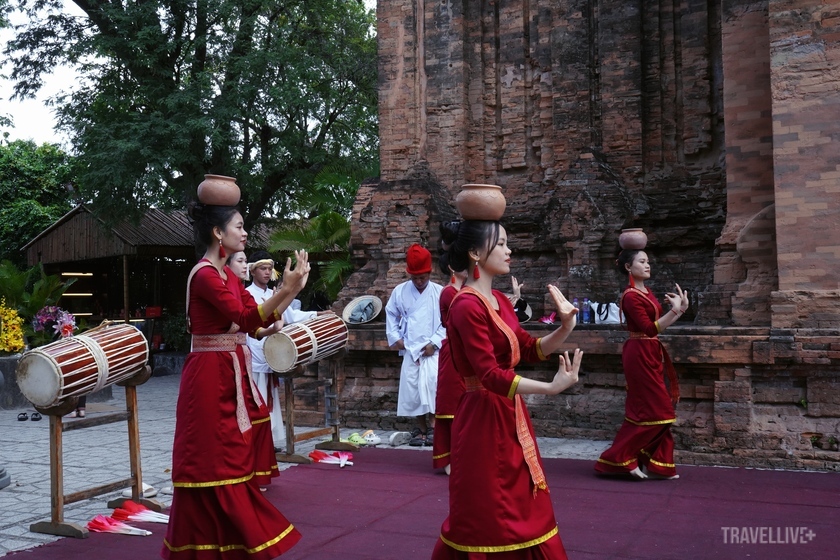
When visiting the Ponagar Tower, in addition to learning about its history, architecture, and spirituality, visitors also have the opportunity to enjoy the captivating Champa dances.
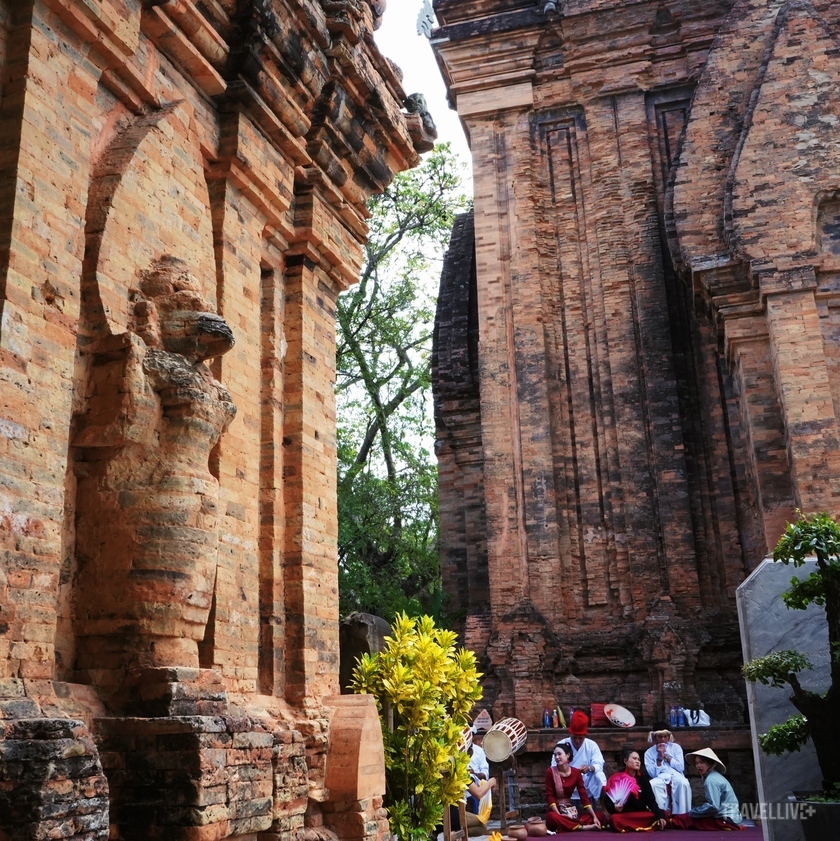
A moment of rest by the temple.
The festival is an occasion for people to remember and express gratitude for the contributions of the goddess Thien Y Ana Po Nagar, praying for national peace and prosperity, and favorable weather. Visitors to the festival will immerse themselves in the lively and vibrant atmosphere with traditional rituals such as: the ceremony of changing the robes of the Holy Mother, the prayer for national peace and prosperity, releasing lanterns on the Cai River, Cham dance, dances offering sacrifices to the Mother, theatrical performances, shadow puppetry, etc.
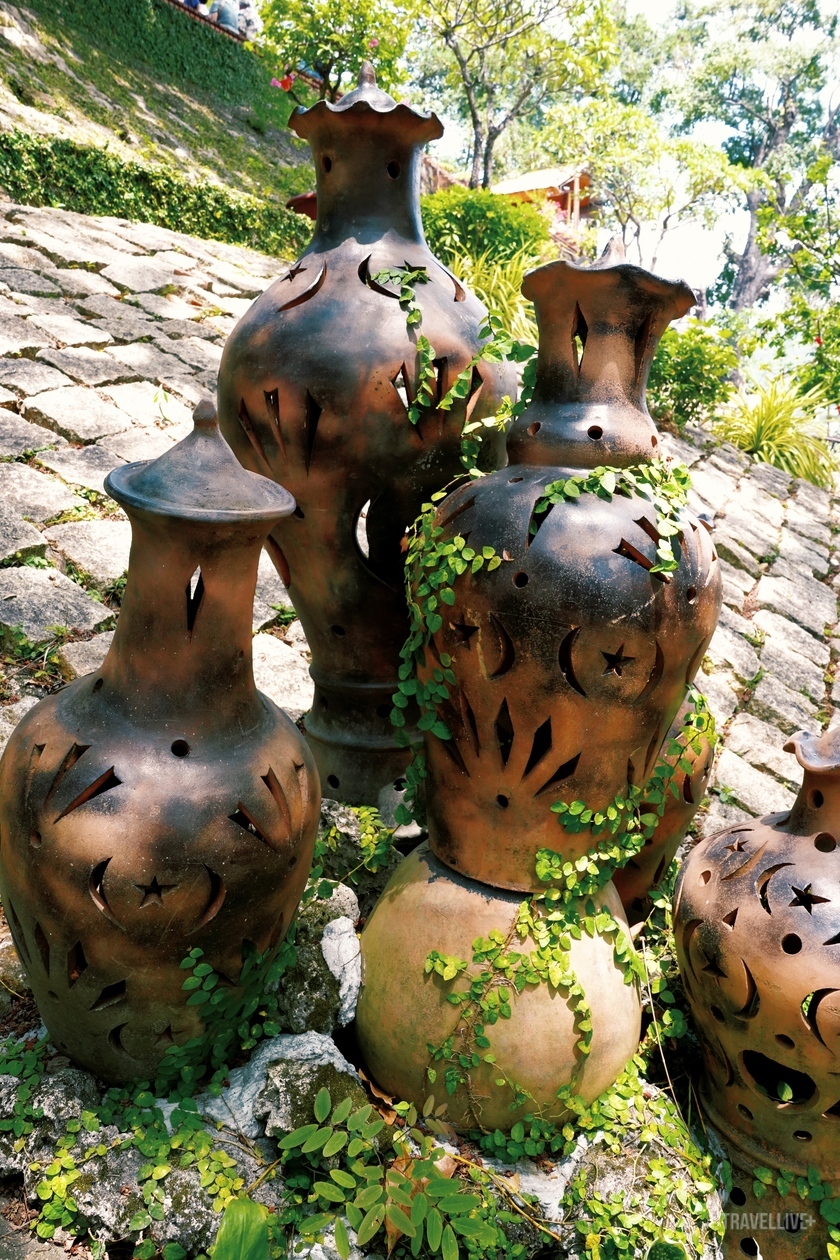
Cham pottery.
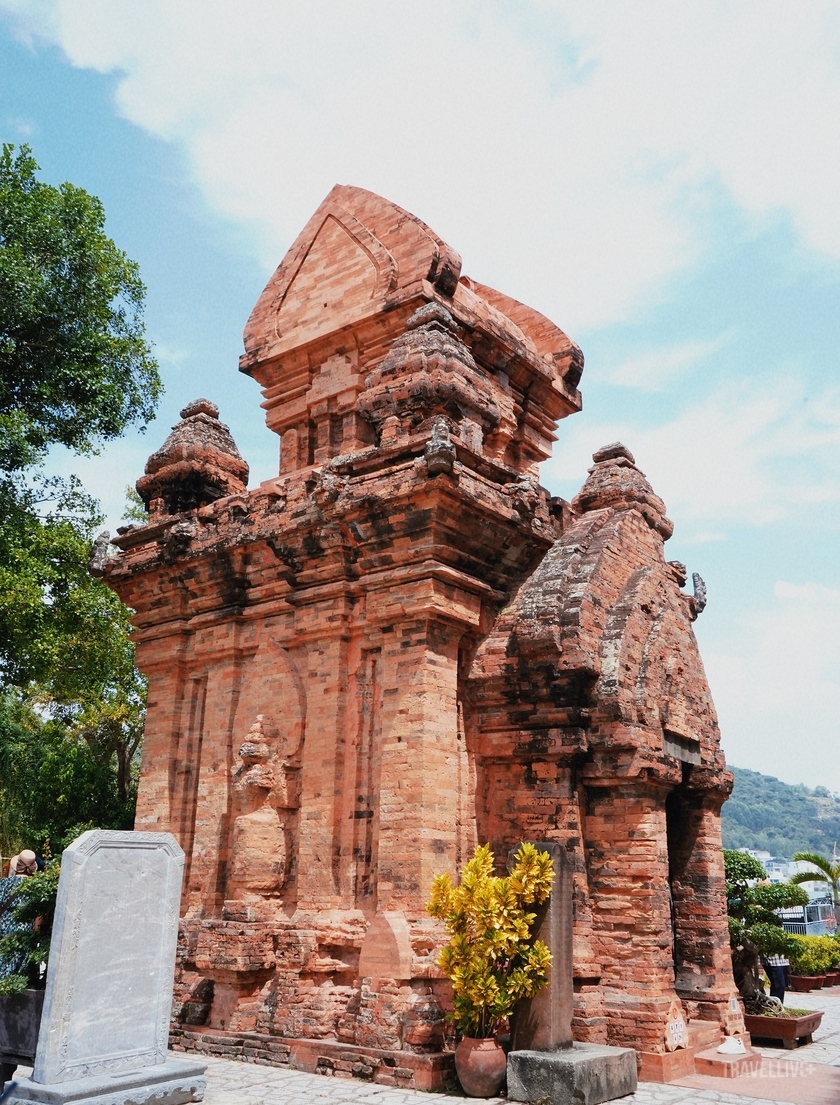
The echoes of the once-thriving Champa kingdom still linger.
Amidst the vibrant life of modern Nha Trang city, the Ponagar Tower stands as a peaceful oasis, preserving the traditional cultural values of the Cham people. Visiting the Ponagar Tower is not only an enjoyable tourist experience but also an opportunity for visitors to learn about the history, culture, and people of this region.