VI
VI


Each season in Europe has its own unique beauty. However, it is in autumn that one can fully appreciate the captivating charm of this land. Neither as cold as winter nor as hot as summer, autumn is the most beautiful time of year. It is considered the season of romance, as the maple leaves begin to change color, transforming from green to yellow. The weather in autumn is quite mild and pleasant, bringing with it the first cool breezes of the year, evoking a sense of wistful melancholy in every heart.
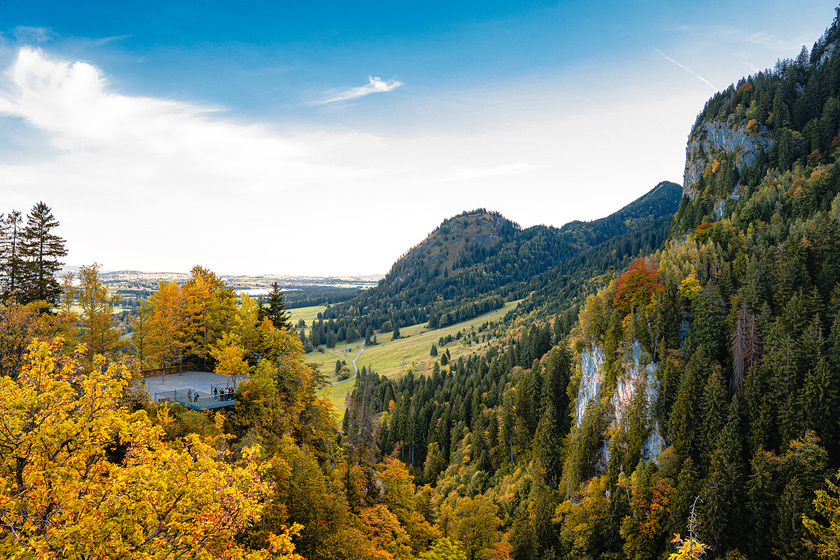
Neither as cold as winter nor as hot as summer, autumn is the most beautiful time of the year.
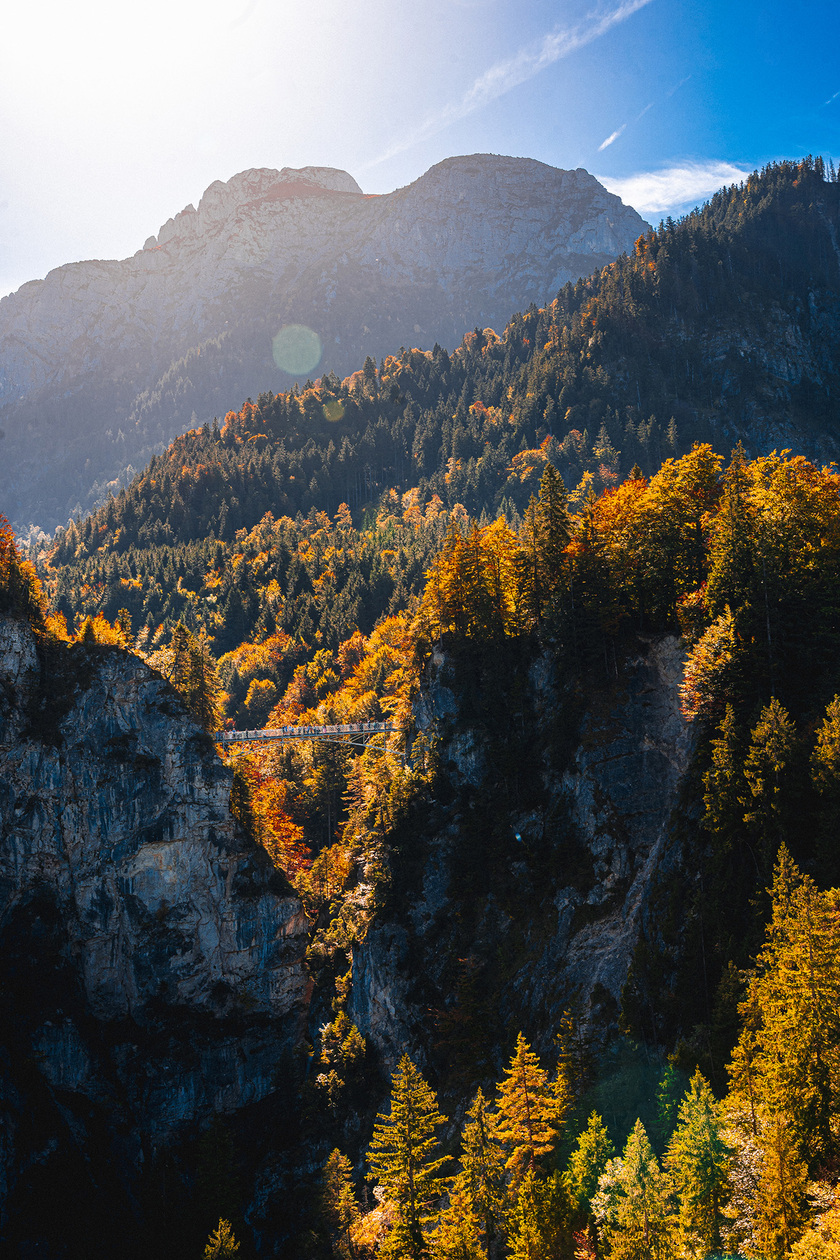
Autumn weather is quite mild and pleasant, bringing with it the first cool breezes of the year.
Having lived in Germany for nearly four years, Nguyen Trong Trung (born in 1994, from Thanh Hoa province) has developed a deep love for the beauty of Germany, especially when the country "dresses in a new coat" of vibrant golden hues. "I've been passionate about photography since university in Vietnam, and my connection with Germany has led me to be captivated by the beauty of Germany in particular, and Europe in general, especially in autumn," the photographer confided.
Visiting Germany in autumn, tourists will feel as if they are strolling through a dream in real life, especially in the peaceful and tranquil countryside. It seems that only in autumn do the plants and flowers fully display their inherent vibrant beauty. Autumn in Germany in particular, and Europe in general, has always been something that can captivate people without them even realizing it.
Autumn in Germany, and Europe in general, has always been something that captivates people, a feeling that has existed since time immemorial.
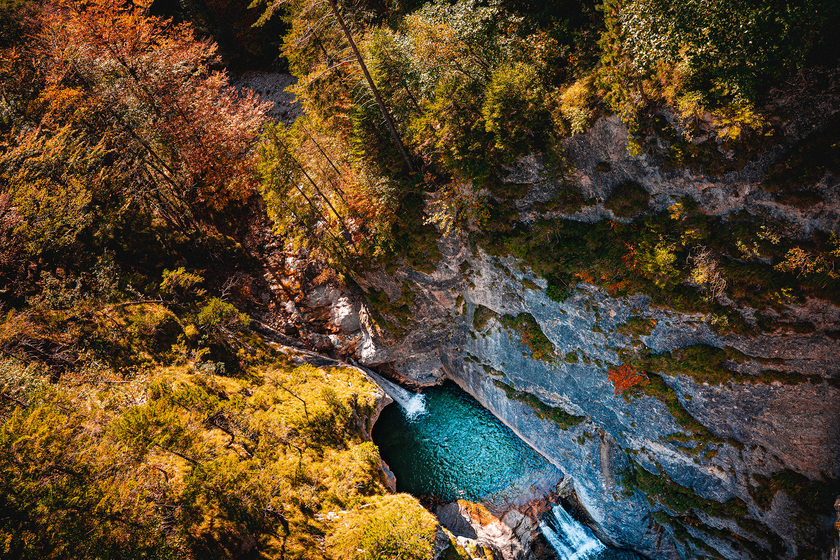
This is considered the season of romance when the maple leaves begin to change color, shifting from green to yellow.
Throughout the autumn, whenever he has the time, Trung wanders around "hunting" for the radiant golden hues of Germany. Every street, corner, and tree... is imbued with a romantic charm that impresses him. In particular, this young man in his 20s is passionate about capturing photos of ancient castle architecture during the autumn foliage season.
“I love castles, and Germany is a land of beautiful castles. I’ve been in Germany for almost four years, and every autumn I go hunting for photos of castles like Schloss Marienburg, Schloss Schwerin… This time it’s Neuschwanstein and Hohenschwangau,” Trung confided.

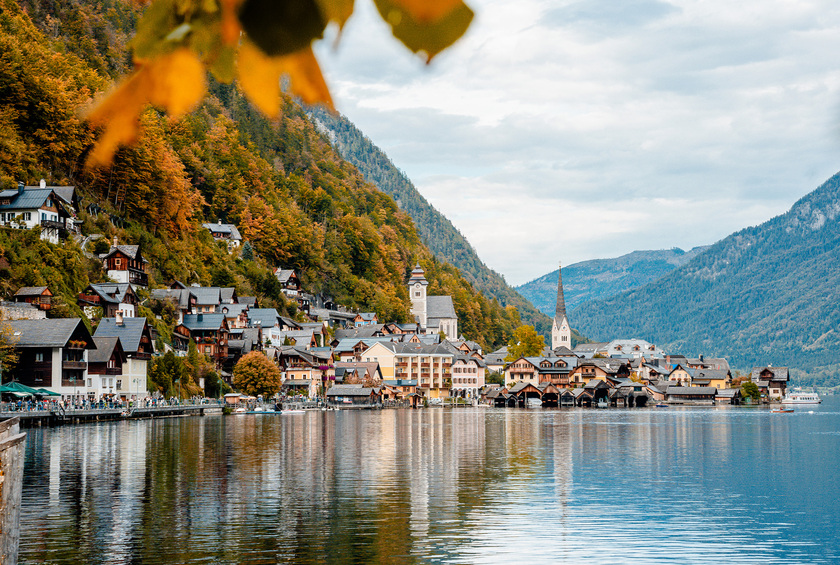
Throughout the autumn, whenever he has the time, Trung goes on expeditions to "hunt" for the radiant golden hues of Germany.

Every street, every corner, every row of trees… exuded a captivating romance that impressed him.
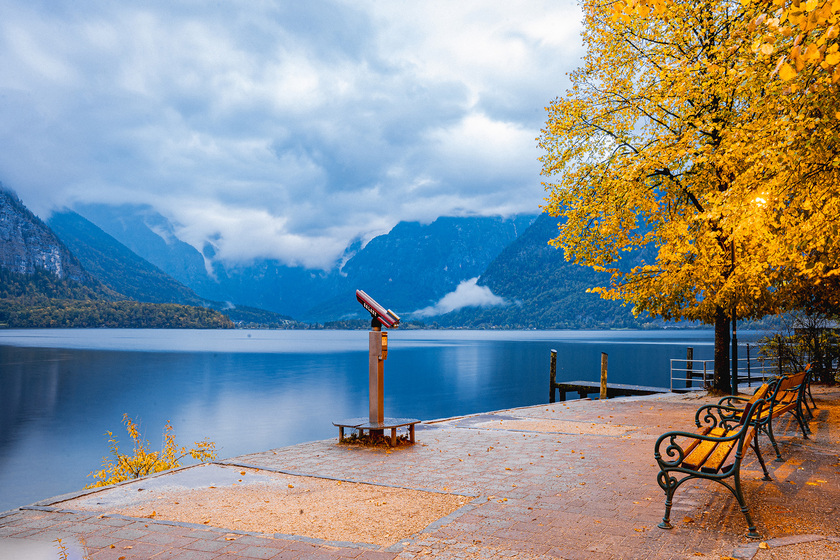
Visiting Germany in the autumn will give travelers the feeling of walking through a dream in real life.
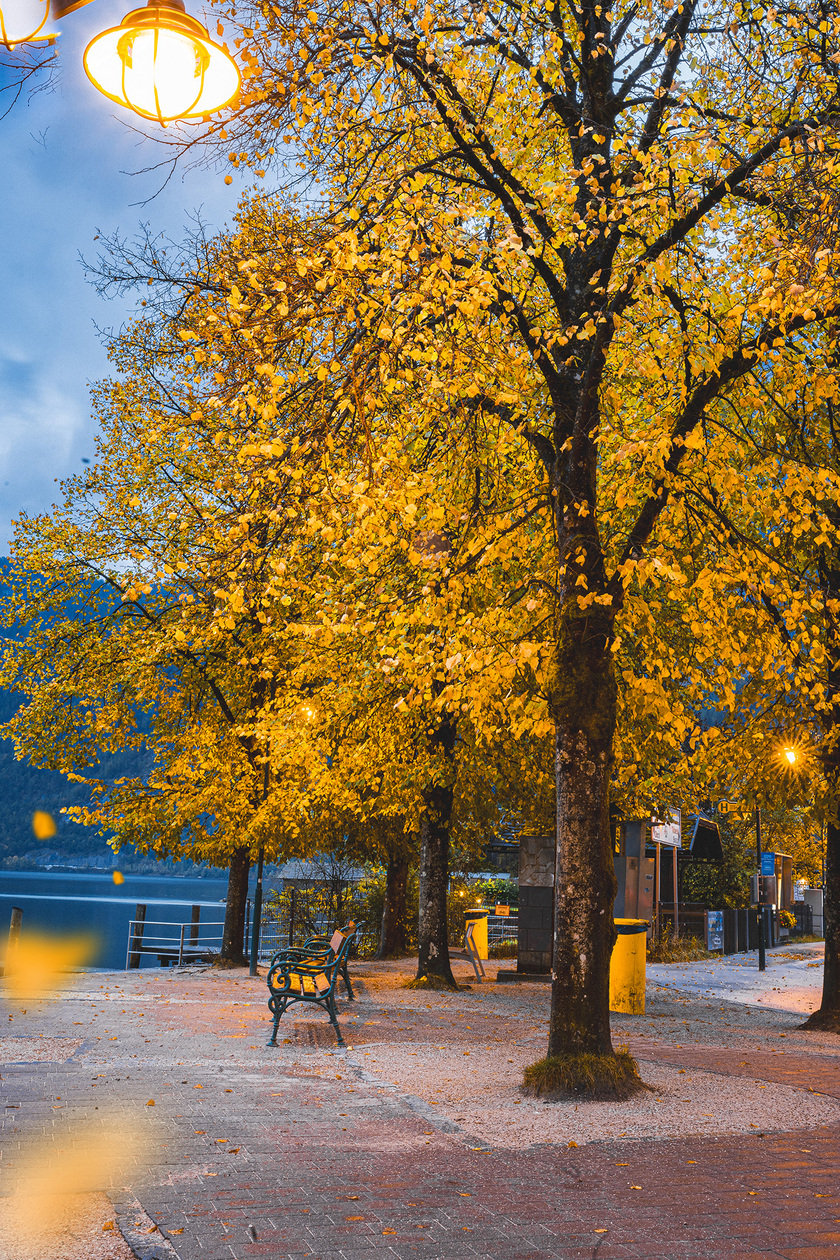
It seems that only in autumn do plants and flowers fully display their inherent vibrant beauty.
Neuschwanstein - the castle featured in the movie "Sleeping Beauty"
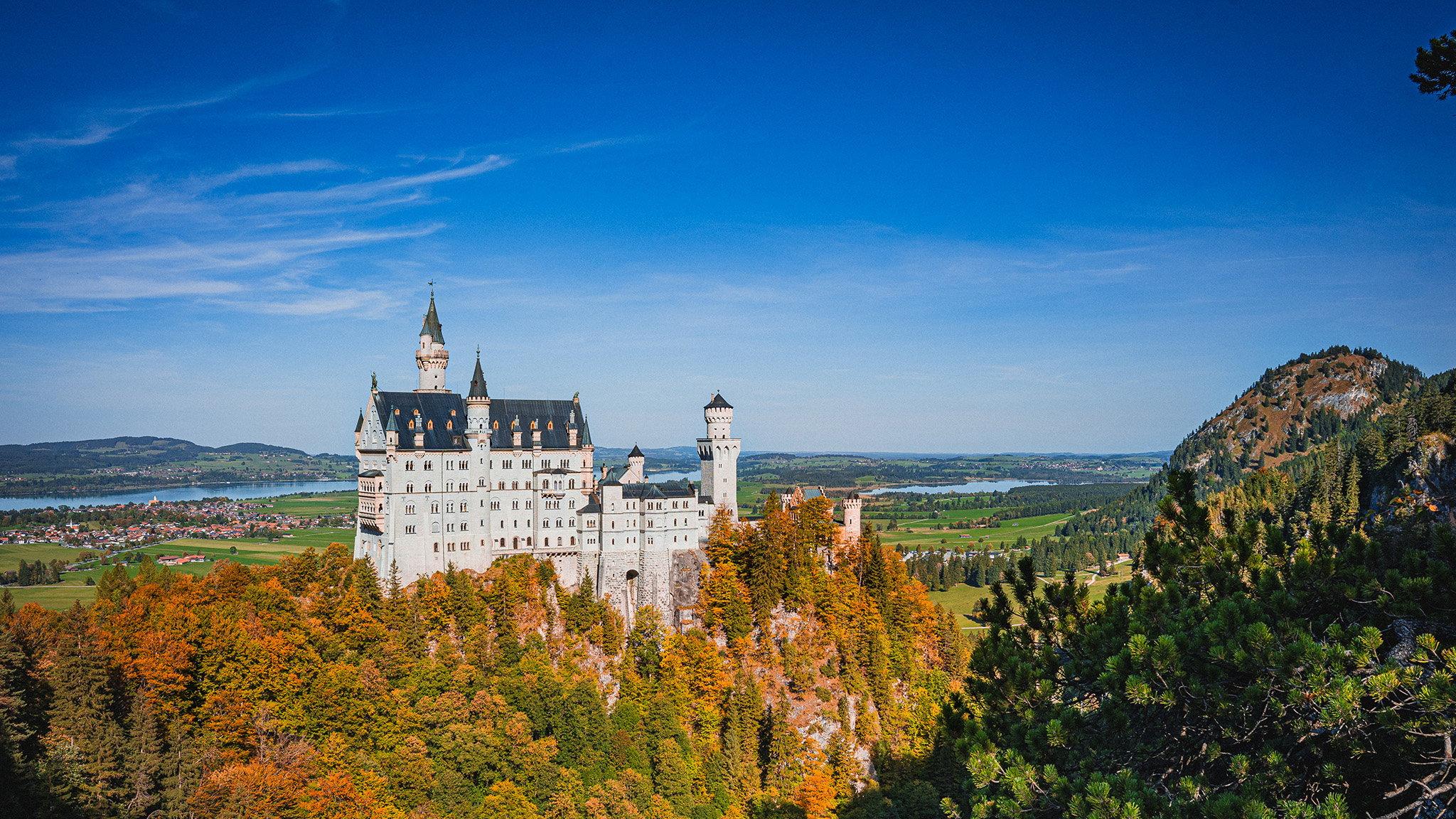
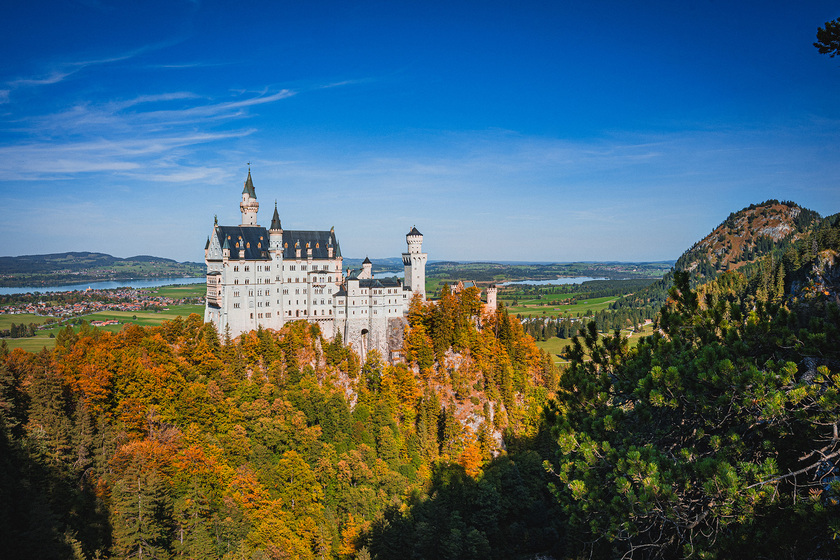
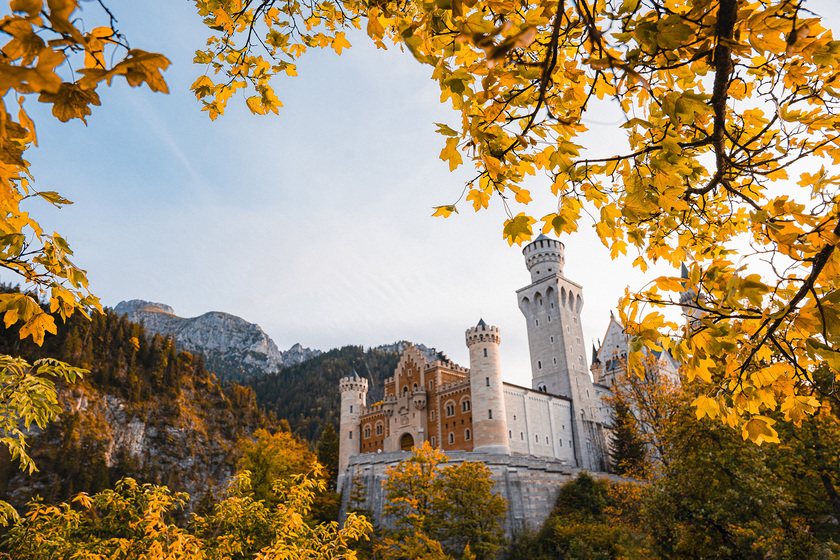
In late October, Trung didn't miss the opportunity to "capture" the moment of Neuschwanstein Castle in autumn. Nestled deep in the Bavarian Alps, Neuschwanstein Castle sits atop a picturesque hill. It's like a palace straight out of a fairy tale. As one of the most beautiful castles in Germany, Neuschwanstein was chosen as the "model" for Walt Disney's famous animated film "Sleeping Beauty".
Neuschwanstein is associated with King Ludwig II, and it was also the last castle he built. In 1869, he commissioned the construction of a lavish castle perched on a cliff. After being stripped of power, he quickly retreated into a world of illusions, immersing himself in royal life. However, the construction of King Ludwig II's opulent castle was halted by his sudden and mysterious death. Neuschwanstein Castle was finally completed in 1892.
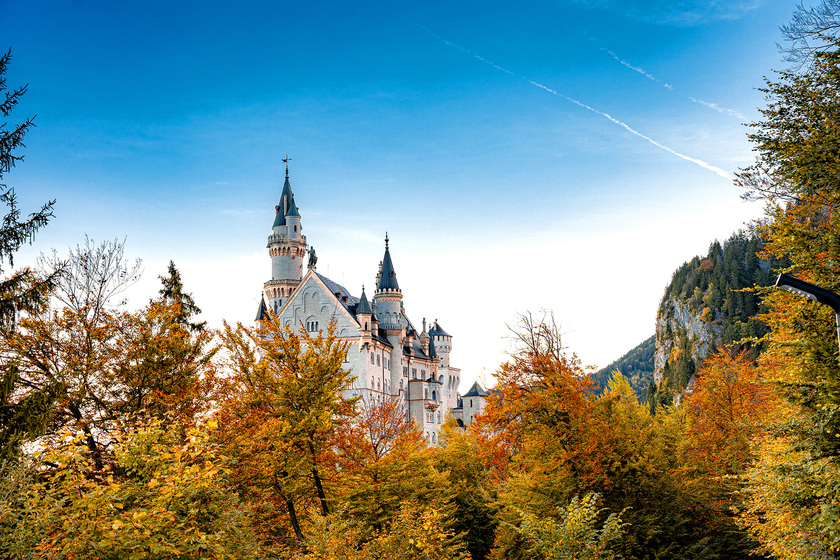
At the end of October, Trung didn't miss the opportunity to "capture" the moment when Neuschwanstein Castle was in autumn.
During his lifetime, King Ludwig II of Bavaria preferred to destroy the castle rather than allow commoners to visit, as this would diminish its inherent grandeur. However, just six weeks after his death, Neuschwanstein opened its doors to the public. Despite 17 years of construction, Ludwig II only lived and enjoyed his castle for a mere 172 days.
Ludwig II had no interest in politics; he was known as a romantic monarch with a great passion for literature and art. Neuschwanstein Castle was built with features characteristic of his personality. The castle is a prime example of 19th-century German Romantic architecture.
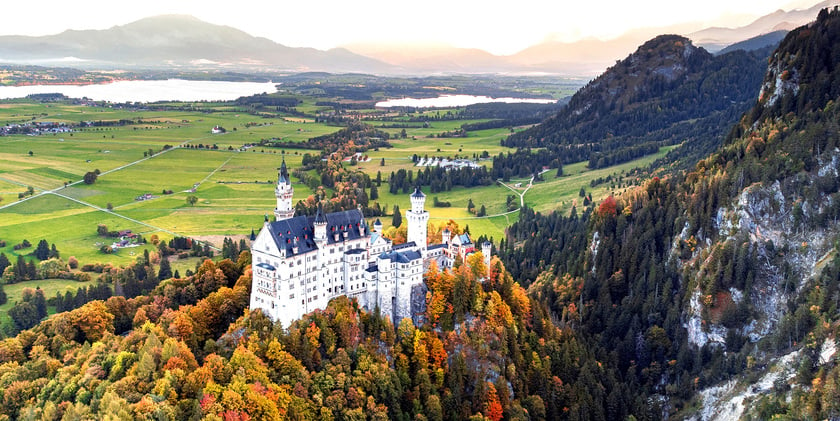
As one of the most beautiful castles in Germany, Neuschwanstein was chosen as the "model" for Walt Disney's design of the castle in the famous animated film "Sleeping Beauty".
Neuschwanstein Castle is a harmonious blend of medieval classical architecture and contemporary theatrical style. The castle is surrounded by walls constructed entirely of granite. The white of the stone, combined with the lush green of the surrounding mountains and forests, makes it even more striking. "From the outside, Neuschwanstein Castle looks quite small, built atop a high hill amidst a magnificent landscape of mountains and rivers. It looks like something out of a fairy tale," Trung said.

Neuschwanstein is a harmonious blend of medieval classical architecture and contemporary theatrical forms.
Hohenschwangau - a castle inspired by a German fairy tale.
During the trip, Trung also had the opportunity to capture a series of panoramic photos of Hohenschwangau Castle, right next to Neuschwanstein Castle. Before Hohenschwangau appeared, a fortress stood in this location. After the Napoleonic invasion, the building was reduced to ruins. Once, the King of Bavaria, Maximilian II, then still a prince, drove to this beautiful area. He approached the ruins of the fortress and was impressed by the stunning scenery. Afterwards, Maximilian II decided to buy the ruins and the surrounding area.
He ordered the restoration of the fortress's grounds and the construction of new ones so that the royal family could be closer to nature. Incidentally, the young monarch left behind more than one architectural masterpiece, most of which were inspired by German fairy tales.
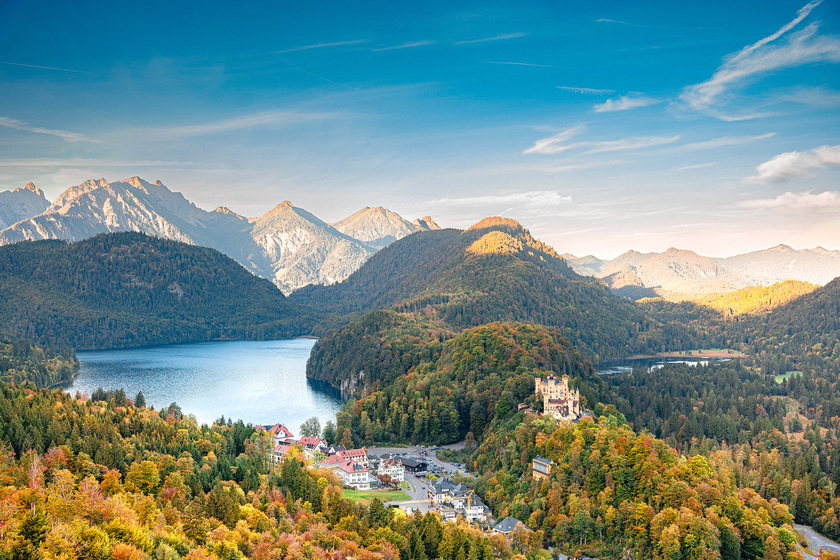
During the trip, Trung also had the opportunity to capture a collection of panoramic photos of Hohenschwangau Castle, located right next to Neuschwanstein Castle.
The name of Hohenschwangau Castle literally translates to "high land of swans." Images of swans can be found on the walls, and even many small interior decorative details resemble swans. Anyone who enters the castle grounds feels as if they are in a fairy tale that King Ludwig II loved so much as a child.
Looking at the beautiful castle today, it's hard to believe it once stood on the site of a gloomy fortress. The building's vibrant yellow color, blending seamlessly with the surrounding nature, truly makes it resemble a castle from a fairy tale.
The name of Hohenschwangau Castle literally translates to "high land of swans".