VI
VI


Adventure tourism in the heart of an ancient mine.
In a cramped mine shaft, six tourists, clad in protective gear and hard hats, huddled together in a space barely large enough to kneel. They followed their local guide, who had just lit a stick of dynamite with a disposable lighter, then calmly asked everyone to step back. “Almost there,” he said.
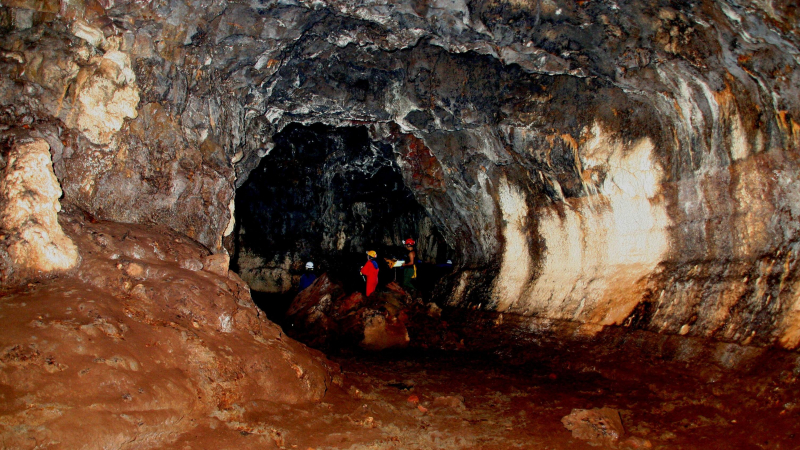
A few moments later, a massive explosion rang out, creating a powerful shockwave that whipped up a cloud of dust. The explosive stick had been purchased at the Potosí market that same day for just 13 Bolivianos (less than 50,000 VND). This is an experience many curious tourists choose to try when visiting this unique mining city.
“For miners, explosives are the most essential tool,” says Jhonny Condori, a mine instructor in Potosí. “If you don’t know how to use them, it’s very dangerous.” But for skilled miners, explosives help speed up the mining process.
The Potosí mine system, exploited for hundreds of years, stretches like a labyrinth through the Cerro Rico mountain – the massive "red mountain" bordering the city. Miners run along narrow tunnels, pushing carts loaded with rubble on worn tracks – a scene reminiscent of movies like "Indiana Jones" or the Mario Kart game.
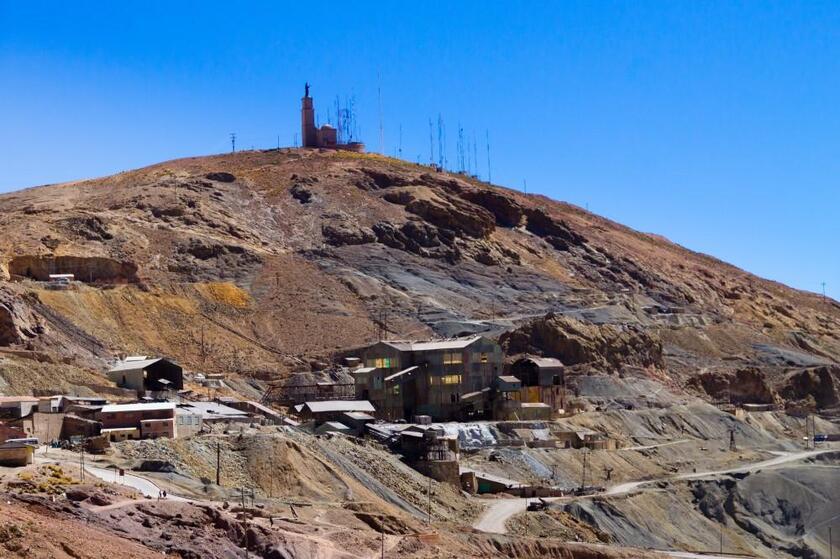
Cerro Rico, a mineral-rich mountain in the Andes Mountains, is located near the city of Potosí, Bolivia.
The price of wealth
Located more than 4,000 meters above sea level, Potosí is not only one of the highest cities in the world, but also a symbol of wealth during the Spanish colonial era. The red tiled roofs and whitewashed walls nestled among the narrow streets still bear the marks of that golden age.
Legend has it that in 1545, an indigenous Andean man named Diego Gualpa accidentally discovered a silver mine at Cerro Rico. News of this enormous treasure quickly spread. Just a few years later, Spanish colonists arrived and transformed the area into the empire's most important silver mining center.
“Potosí developed very rapidly, but it was a haunting development,” said Professor Kris Lane from Tulane University (USA), author of “Potosí: The Silver City That Changed the World.” “It was a lawless place, where forced labor was widespread.”
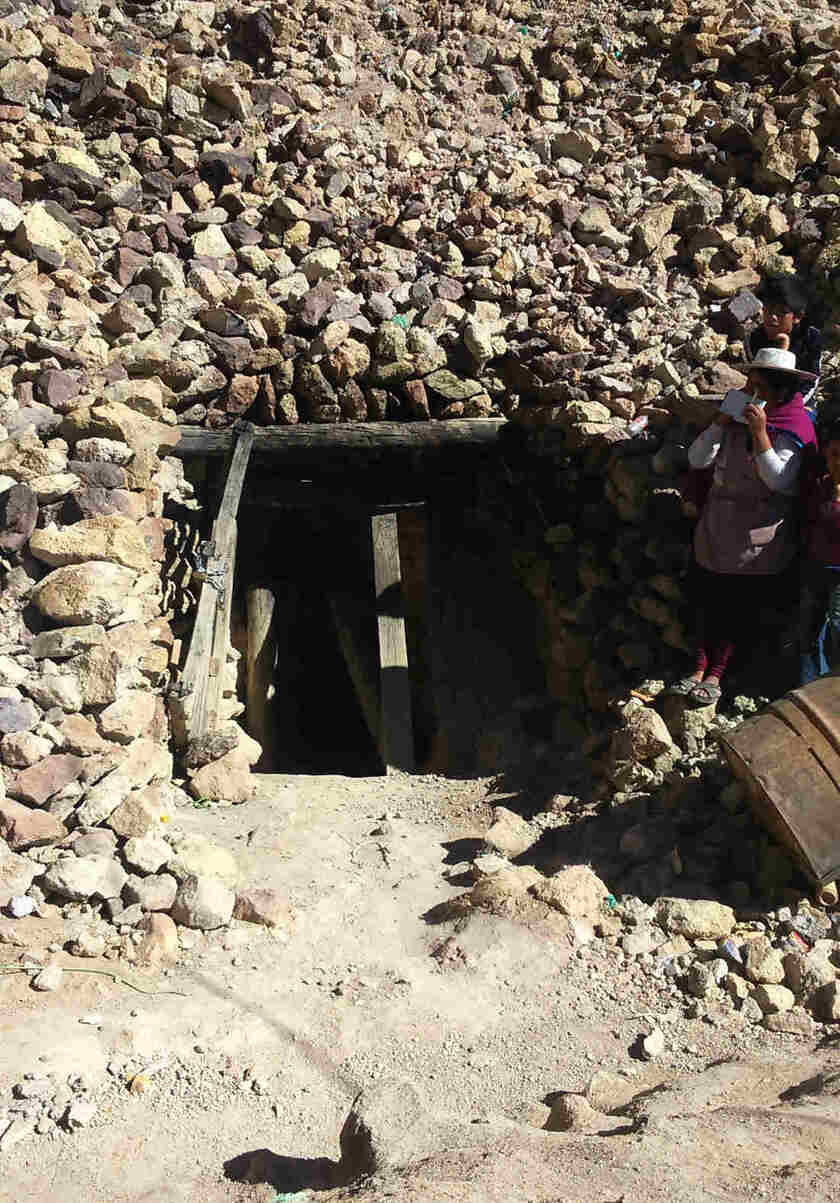
"It is a lawless place, where forced labor is widespread."
The forced labor system compelled the indigenous people to work under a near-slavery regime, supplying enormous amounts of silver to the Spanish monarchy. In addition, many wealthy merchants from all over flocked to Potosí, building infrastructure to exploit the vast silver mines.

But this development did not bring about better living conditions. As metallurgical techniques improved, mercury began to be used to refine silver – a toxic substance that seeped into the environment, causing the deaths of countless people. Cerro Rico thus acquired a new name: "The Man-Eating Mountain," a nickname still passed down among miners today.
By the end of the 16th century, Potosí's population had reached over 200,000, making it the fourth largest city in the then-Christian world. It is estimated that Potosí supplied up to 60% of the world's silver, sustaining the Spanish Empire and many other dynasties.
However, the silver veins gradually dried up. When Bolivia gained independence in 1825, most of the resources had already been exploited, leaving Potosí in ruins and poverty. Currently, mining still takes place in the city, but mainly for cheaper minerals like tin and zinc. In particular, the intricate network of tunnels makes Cerro Rico increasingly unstable, becoming one of the most dangerous periods in the city's mining history.
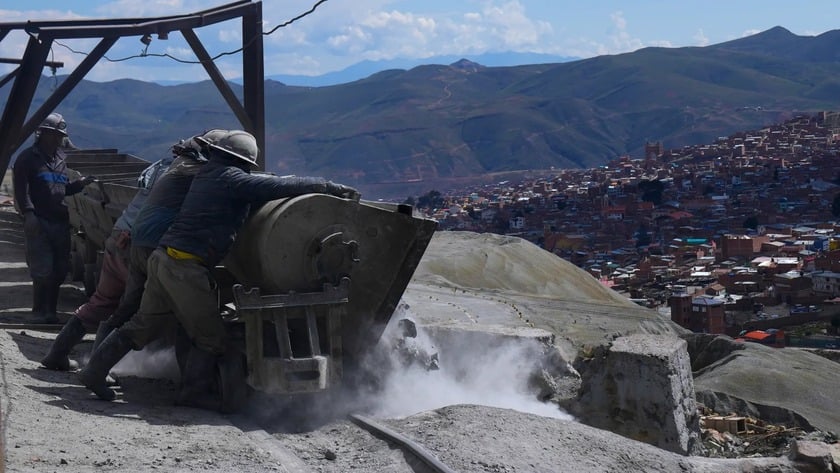
The miners worked in harsh conditions, spending their days extracting and transporting minerals in wheelbarrows along old, centuries-old railway tracks.
Underground beliefs
Each mine entrance at Potosí is "guarded" by a statue in the shape of a demon, called "El Tío" (the uncle). El Tío is usually painted red, wears a brightly colored ribbon, and has a large phallus – a symbol of fertility and good fortune.
"We are very polytheistic, believing in many different gods," Condori explained. Besides worshipping God—a belief introduced during the colonial era—the indigenous people still maintain their traditional beliefs with Pachamama, Mother Earth, the Inca goddess.
According to Professor Lane, El Tío can be seen as a "male god of the underworld," playing a role in protecting Pachamama from overexploitation. Meanwhile, guide Torrez Villapuma suggests that El Tío was originally created by colonists to scare off the native miners, but today has become a god who brings them good fortune.
At the mine entrances, people often make offerings to El Tío with coca leaves, cigarette butts, beer, and spirits. Tourists also participate in this ritual to pray for safety and to "strike it rich." Some locals even sacrifice llamas and smear their blood on the mine entrances as a way to appease El Tío's "bloodlust."
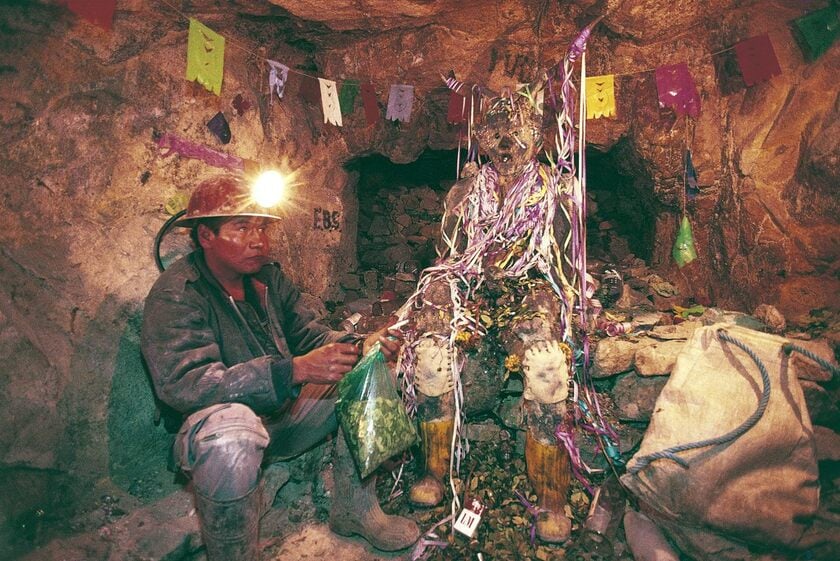
El Tio, the god who rules the underworld according to local beliefs. Miners offer the statue gifts such as tobacco, coca leaves, and alcohol.
Living on the brink of life and death
The average life expectancy of miners in Bolivia is believed to be only around 40 years. The main causes are workplace accidents and silicosis – a consequence of inhaling silica-containing rock dust over extended periods. “Essentially, it’s a finely ground form of glass,” Professor Lane describes.
However, out of pride, many miners choose not to wear masks. "In Bolivia, miners are considered the toughest people," he added.
Although the law stipulates a minimum working age of 14, in reality there are many legal loopholes that allow children to work earlier. Some reports have documented children as young as 6 working in mines.
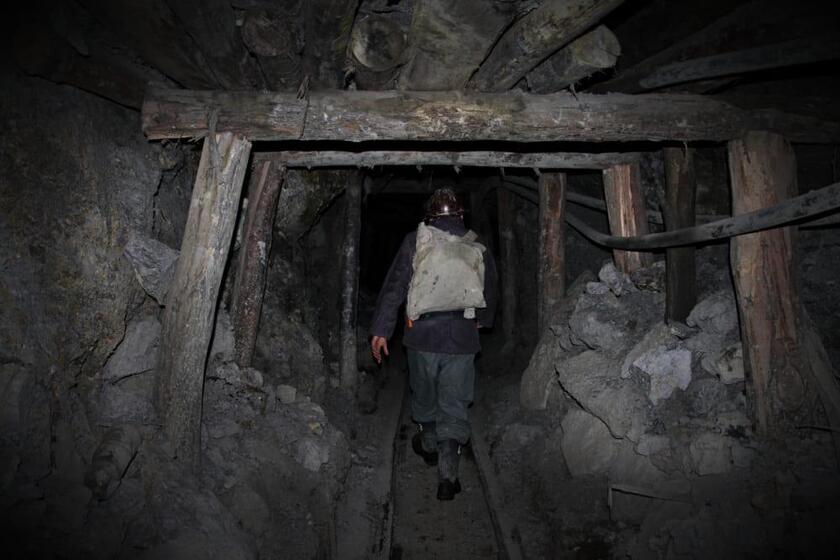
The average life expectancy for miners in Bolivia is believed to be only around 40 years.
However, amidst the harsh reality, cultural life in Potosí remained surprisingly vibrant. "In that seemingly terrifying environment, you'll find camaraderie, creativity... music, poetry, and even the light of culture," Lane said.
A prime example is the mining festival, which takes place from February to March each year. During this time, miners dress up, parade through the city, drink beer, and carry statues of El Tío. Local women – called Cholitas – wear elaborate dresses and dance to brass band music.
After the festival, tourists usually return to La Paz on a bumpy overnight bus, while the people of Potosí resume their perilous work – a life they have dedicated to the mountain that has claimed hundreds of thousands of lives over the centuries.