VI
VI


Huynh Lap expressed his passion for his second film project, aiming to bring traditional Vietnamese culture closer to Gen Z. "The Ancestral House" is a film that motivates him to take on the responsibility of spreading his knowledge about Vietnamese spiritual culture and ancestor worship.
The journey to bring the essence of Vietnam to the big screen.
"The Ancestral House" is a story revolving around the family of Gia Minh (Huynh Lap) and My Tien (Phuong My Chi), especially the character My Tien, a young girl who doesn't really care about ancestor worship and traditional customs.
The story unfolds as My Tien gains a deeper understanding of the value of commemorating her ancestors, leading her on a journey of changing perspectives, discovering, and preserving the precious customs of her people.
In the film "Ancestral House," Hai Thế's pancake shop is not just a business; it's also a symbol of family tradition, a place that preserves the beautiful cultural values of the Vietnamese people. Hai Thế's pancake shop is a family business passed down through generations of Gia Minh and Mỹ Tiên's family.
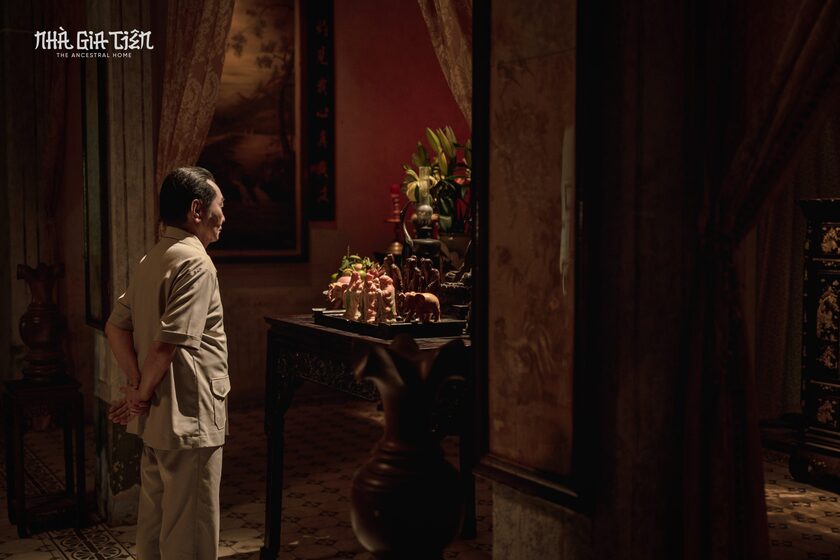
Through the scenes depicting ancestor worship rituals, the work conveys the love and gratitude each person has for their ancestors.
Huỳnh Lập was very pleased to choose bánh xèo (Vietnamese savory pancake) as the special "character" in his film. Bánh xèo is not only a familiar dish, close to the childhood memories of many, but it also carries a profound meaning of reunion and prosperity. The image of a family gathering around a hot pan of bánh xèo, enjoying the crispy pancakes together, has become a beautiful memory for many Vietnamese people.
In particular, Huynh Lap shared a touching story about his family's pancake-making business. The pancake-making trade helped his grandmother raise nine children, something he is extremely proud of and cherishes.
The art of making Vietnamese pancakes, the art of glass painting, and the customs of holding memorial services are all incorporated into Huynh Lap's films.
Furthermore, the extras are relatives of Huỳnh Lập, who make bánh xèo (Vietnamese savory pancakes) using a recipe passed down from his grandmother, adding to the film's authenticity. The film "Nhà Gia Tiên" also features a special scene depicting a close-up of the traditional bánh xèo-making process, performed by Huỳnh Lập and Phương Mỹ Chi themselves, thus introducing this dish to viewers in a detailed and engaging way.

In Vietnamese culture, the anniversary of a death is not just a simple ceremony, but also a beautiful cultural tradition with profound spiritual and emotional significance. It is an occasion for descendants to remember their deceased ancestors and express gratitude for the contributions of previous generations.
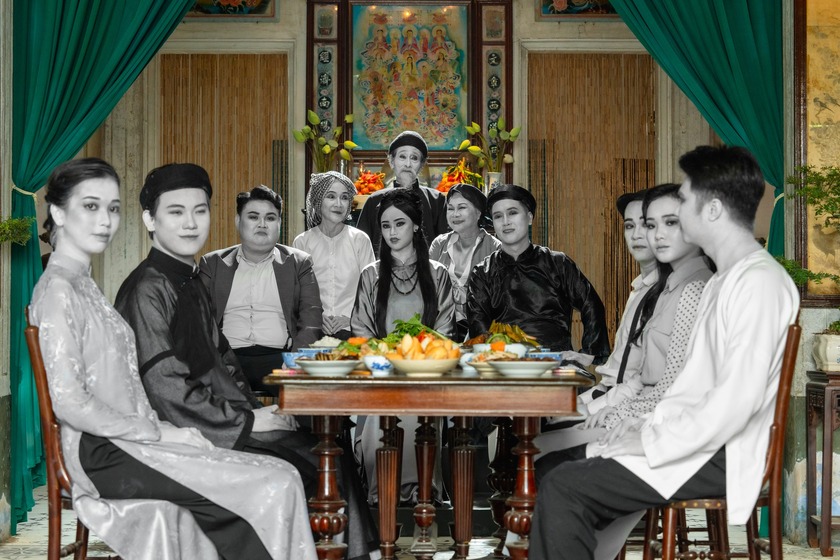
The film uses a traditional Vietnamese memorial service as a crucial plot point, escalating the conflict and revealing the film's main themes and messages.
Ancestor commemoration ceremonies are also an occasion for family members to gather, share stories about life and family. However, in modern life, with its busy pace and work pressure, many young people are sometimes no longer as enthusiastic about traditional rituals. Family gatherings on the anniversary of a death can sometimes become a burden, and traditional ceremonies may be disregarded.
The journey of the character My Tien in the film "Ancestral House" is like a "journey of rediscovery," from "indifference" to "understanding" the true meaning of ancestral commemoration. It's not just about remembering the deceased; it's also the "glue" that binds family members together, the "flame" that warms hearts.
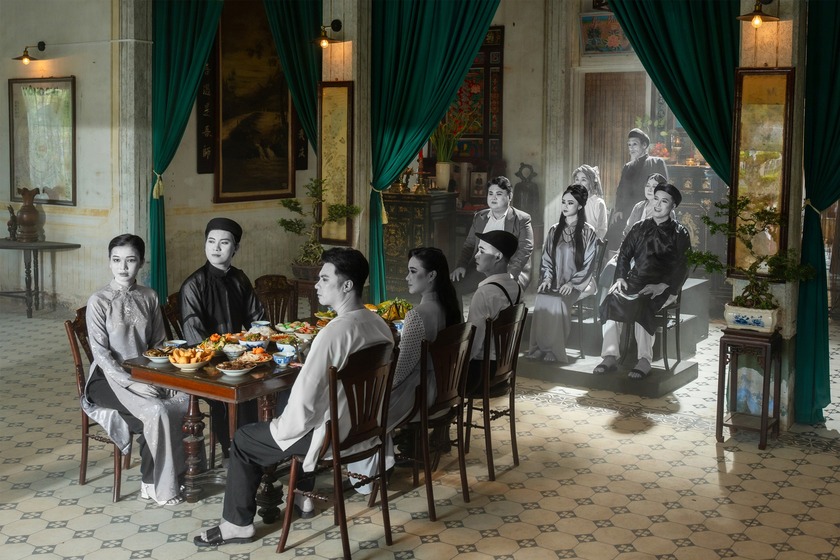
The director shared that the conflict during the memorial service in his film was meant to resolve misunderstandings and psychological conflicts between the family members.
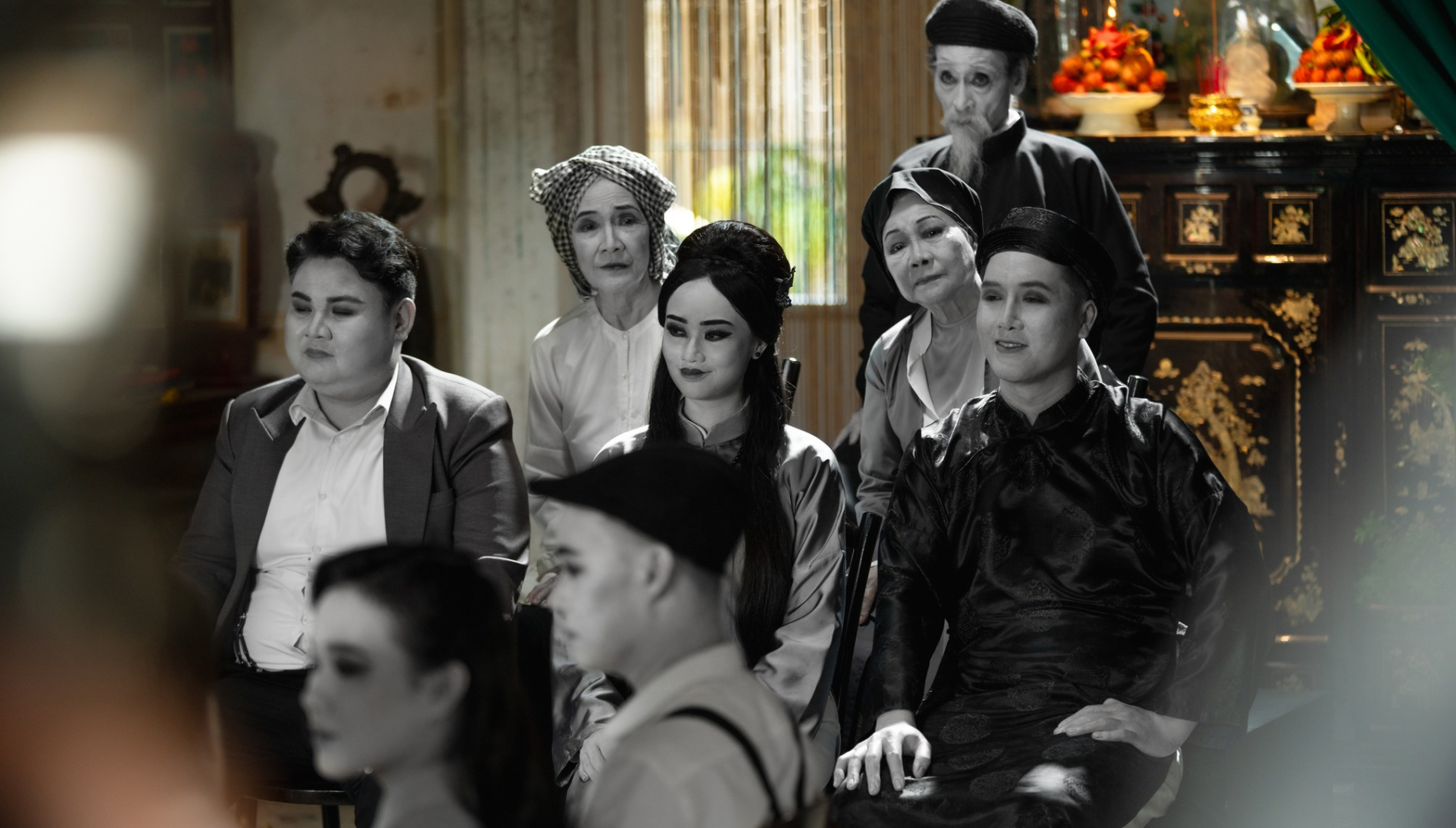
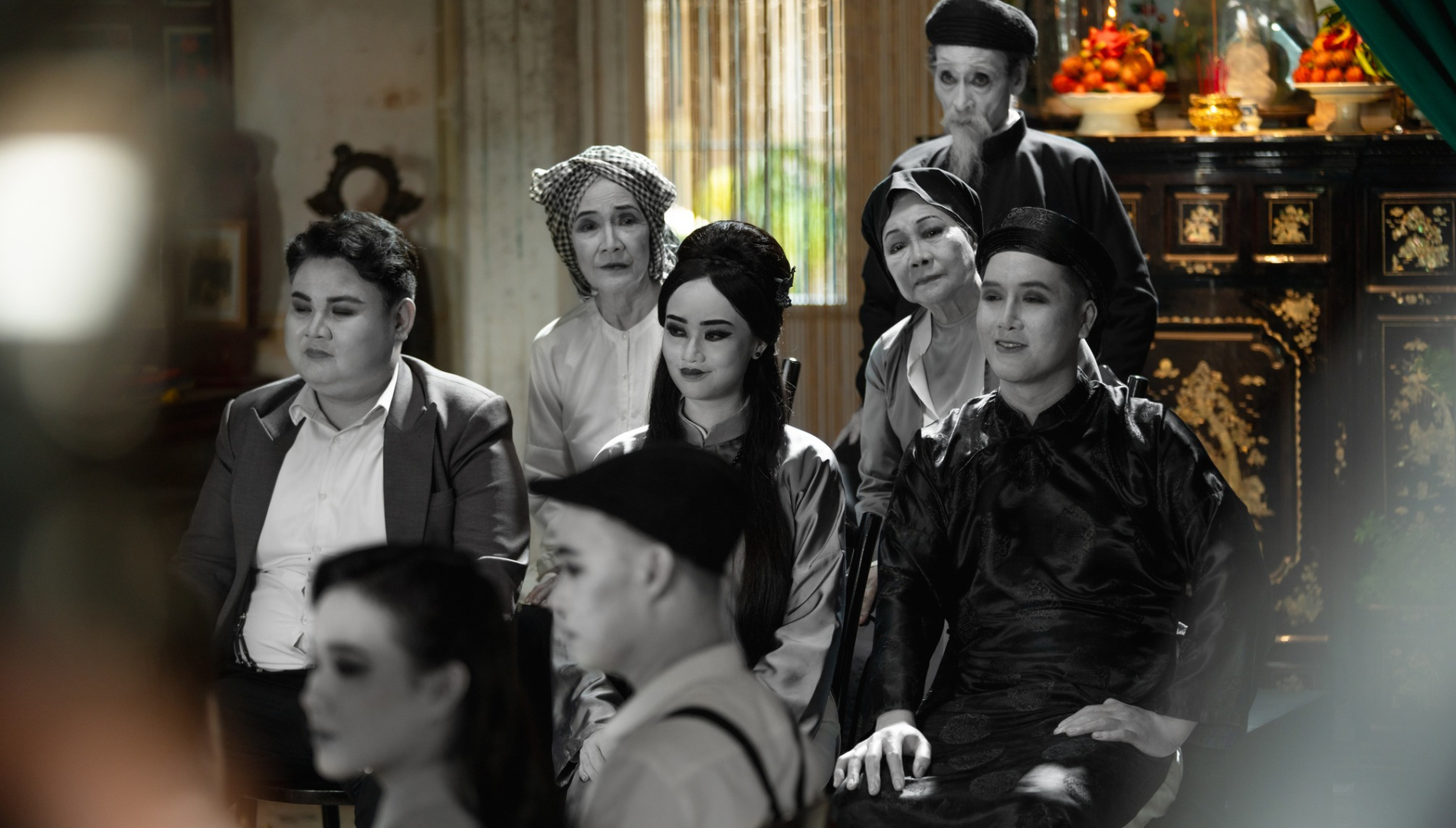
Huynh Lap revealed that for the memorial scene in "The Ancestral House," he decided to use black and white makeup for the entire cast playing the ancestors returning to celebrate the anniversary with their descendants. "If people have old photos of their grandparents at home, they'll see that the older the photos get, the more faded they become, until they're just black and white. I thought, why not express this with the characters of the ancestors? By having all the actors sit together in black and white makeup like that, I thought that if the audience could see the entire 'ancestral council' in black and white, it would create a surprising emotional impact. I hope it will be an impressive scene at the end of the film."
Reviving the art of stained glass painting, a tradition that is gradually fading away.
Glass painting, a unique art form of Vietnam, once enjoyed a period of flourishing development. From solemn devotional paintings in temples and shrines to vibrant decorative paintings in homes and palaces, glass painting became an indispensable part of Vietnamese cultural life.
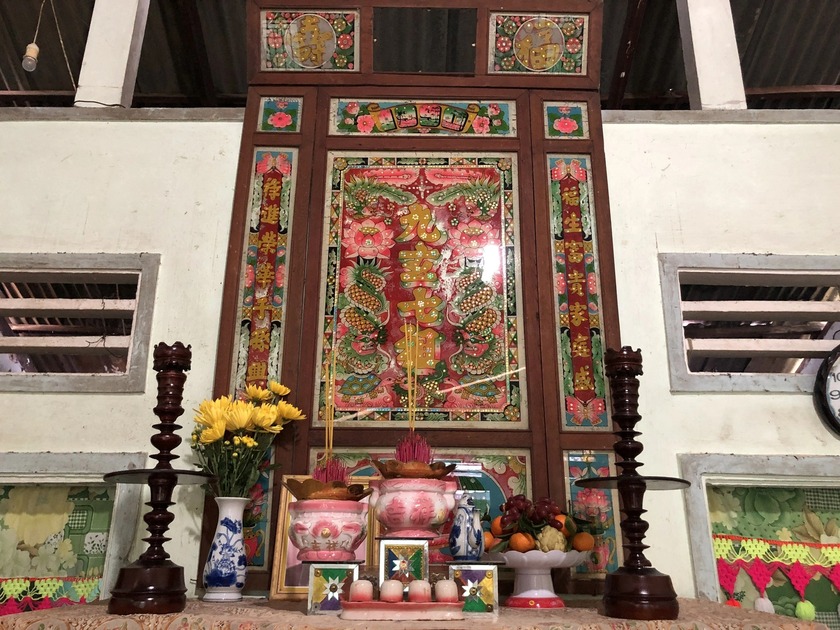
In the old days, entering any house in the Southern Vietnamese countryside, it wasn't difficult to find sets of glass paintings hanging elegantly on the facade.
The early 1990s can be considered the "golden age" of Vietnamese glass painting. Famous glass painting villages such as Ba Ve glass painting village (An Giang province) and Cho Lon glass painting village (Ho Chi Minh City) were extremely bustling. Talented artisans created beautiful glass paintings, which not only served decorative and religious needs but were also exported to many countries around the world.
Despite a period of flourishing development, handcrafted glass paintings are now gradually declining due to competition from other decorative art forms and modern printing technology. The emergence of printed and collage paintings with diverse designs and lower prices has made it difficult for handcrafted glass paintings to find a market.
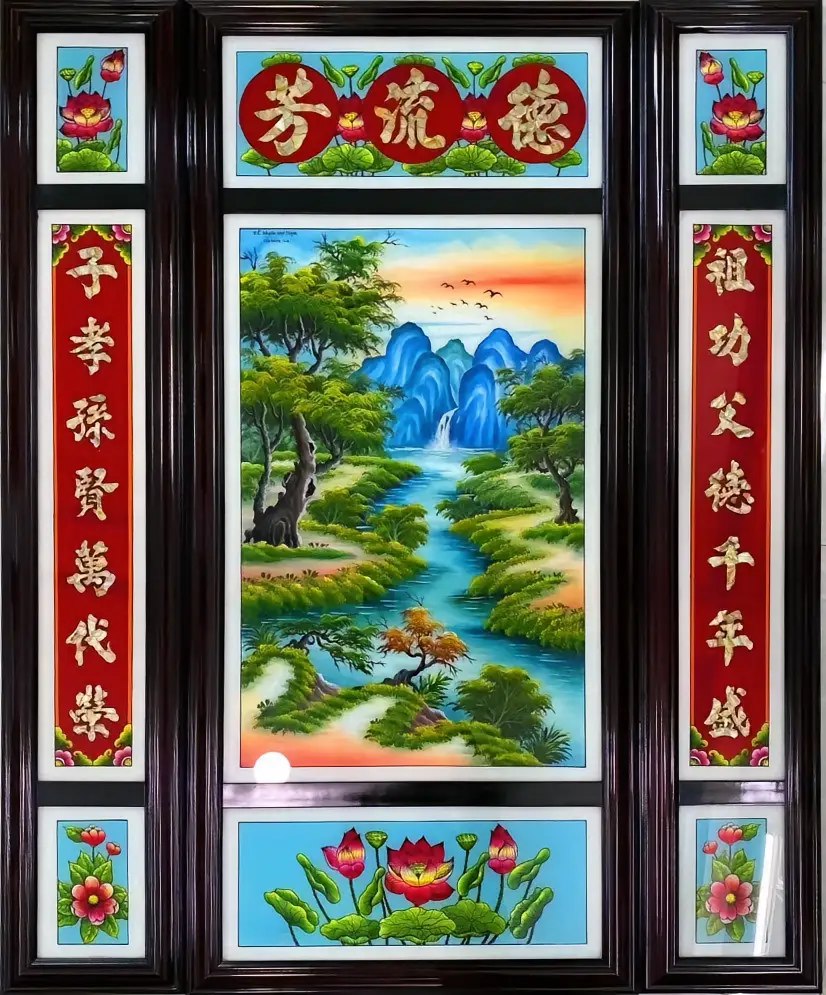
Glass paintings are not only works of art but also symbols of cultural and religious beliefs, closely associated with the lives of people in Southern Vietnam.
To authentically recreate the traditional hand-painted glass paintings of Southern Vietnam on screen, the "Ancestral House" team undertook a meticulous and dedicated journey. They traveled to Ba Ve glass painting village, one of the oldest cradles of this art form, hoping to collect and restore works that were gradually deteriorating or even at risk of being discarded.
This journey was not easy, because these antique glass paintings have often been weathered and damaged by time. However, with a love for their profession and a dedication to cultural heritage, the team persevered in searching for and selecting the remaining paintings, even if they were just fragments.
After collecting the precious paintings, the team began the restoration process. This work requires meticulousness, skill, and in-depth knowledge of glass painting. Each brushstroke and color is carefully restored so that the ancient paintings can "come to life" on screen, giving viewers the most authentic glimpse into the beauty of traditional Southern Vietnamese glass painting.
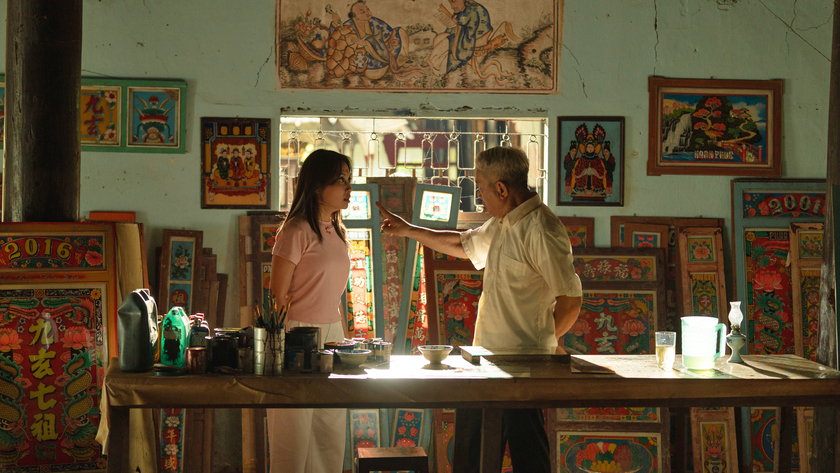
To bring this art form to the big screen, the film crew dedicated a great deal of effort.
Besides restoring ancient paintings, the "Ancestral House" crew also commissioned artisans to paint several glass paintings based on director Huynh Lap's ideas. These paintings were used throughout the filming process, contributing to the film's antique and distinctly Southern Vietnamese atmosphere.
The use of authentic glass paintings in "The Ancestral House" is not only an effort to recreate history and culture, but also a way for the production team to pay tribute to the artisans who contributed to creating this precious cultural heritage. At the same time, it is also an opportunity for the audience, especially the younger generation, to better understand the artistic and cultural value of Southern Vietnamese glass paintings, thereby raising awareness of preserving and promoting the nation's fine traditional values.
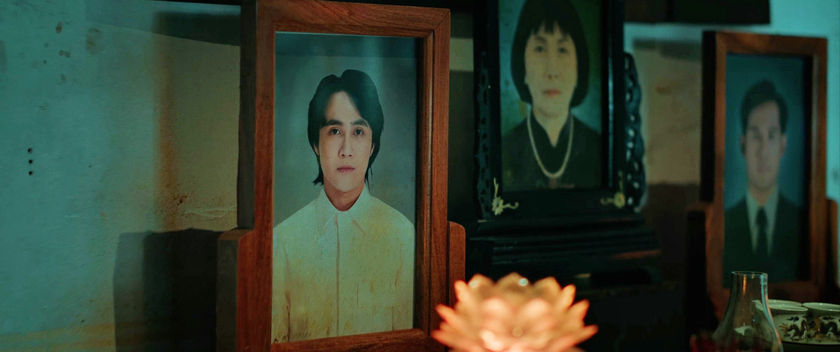
After spending time searching for suitable locations, Huynh Lap decided to incorporate glass painting as a symbol in his film.
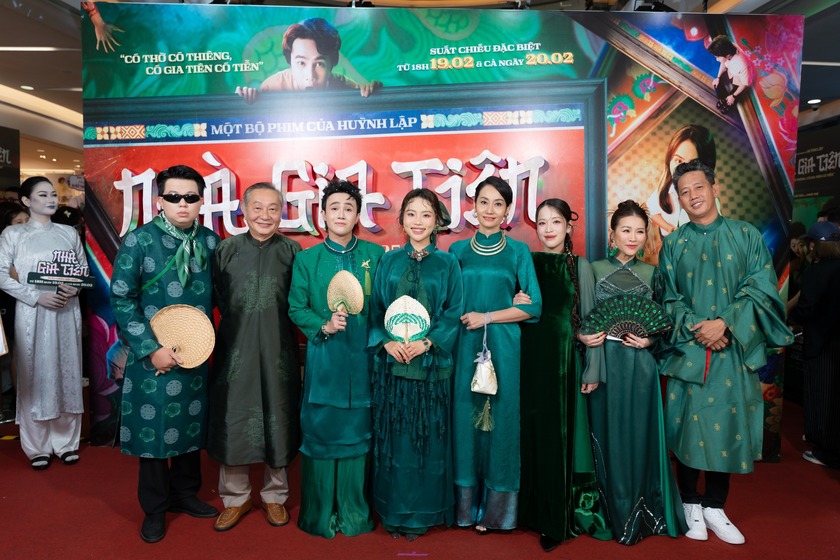
"The Ancestral House," directed by Huynh Lap, presents an emotionally charged family story, blending humor and unique spiritual elements. The film also features a cast of veteran actors such as Meritorious Artist Hanh Thuy, Artist Trung Dan, Meritorious Artist Huynh Dong, Artist Manh Dung, Meritorious Artist Thanh Dau, Artist Thanh Hien, along with many familiar faces like Puka, Phuong My Chi, Dao Anh Tuan…
The film "Ancestral House" will have special screenings starting on February 19th and will officially premiere in theaters nationwide from February 21st, 2025.