VI
VI


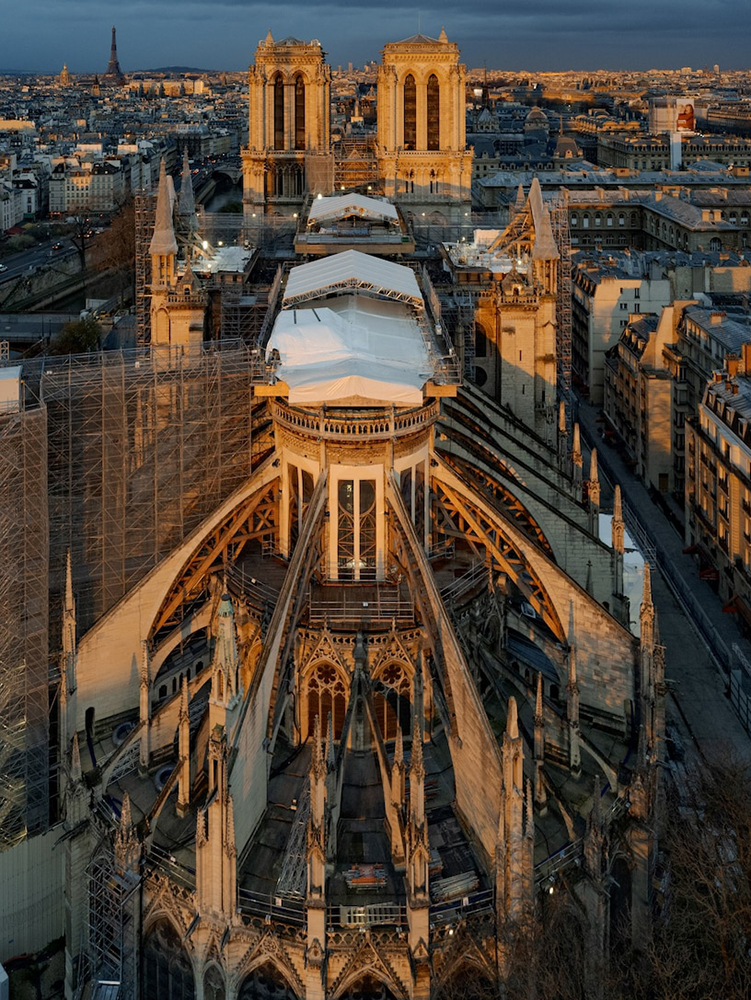
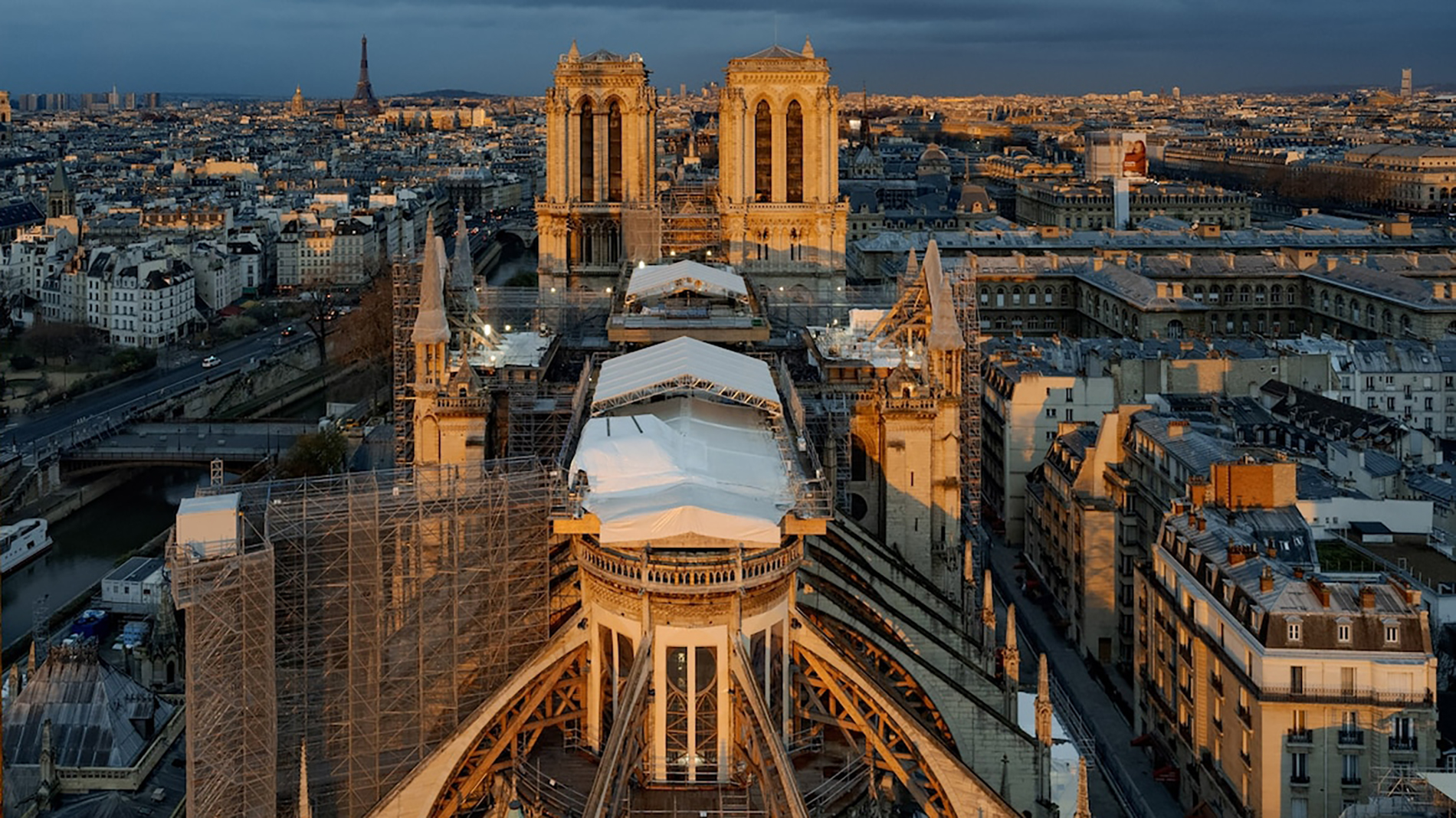
The memory of the devastating fire on the night of April 15, 2019, remains vivid in the minds of the French people; they seem to remember clearly where they were and what they were doing on that April night – when Notre Dame Cathedral was engulfed in raging flames.
At that moment, French President Emmanuel Macron was recording a national television speech at the Elysee Palace. He stopped his speech and ran to the cathedral. "Notre Dame is history, it is literature, it is an ideal, it is the most important thing in our lives," he said to the cameras, "The cathedral will be rebuilt, and we will do it together."
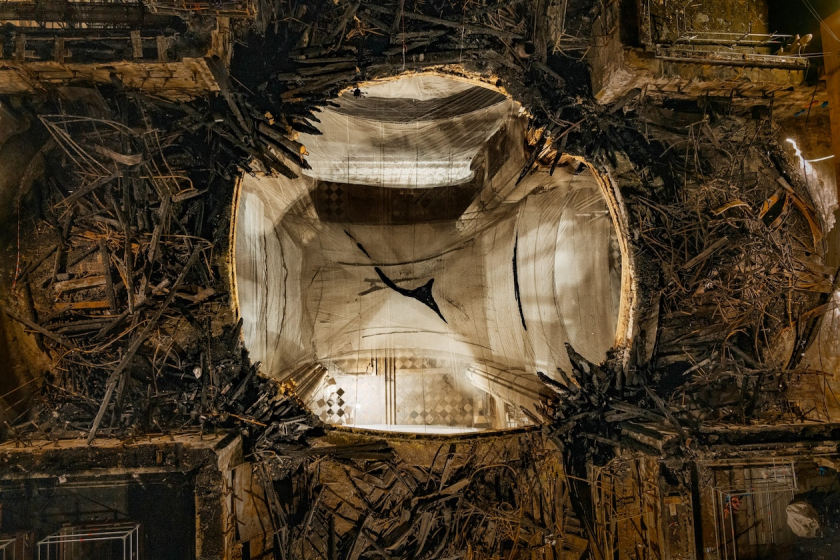
Viewed from above, the interior of the cathedral appears to be nothing but rubble. The tallest spire has fallen through the dome, crushing an altar and leaving a gaping hole in the center, surrounded by charred wooden planks.
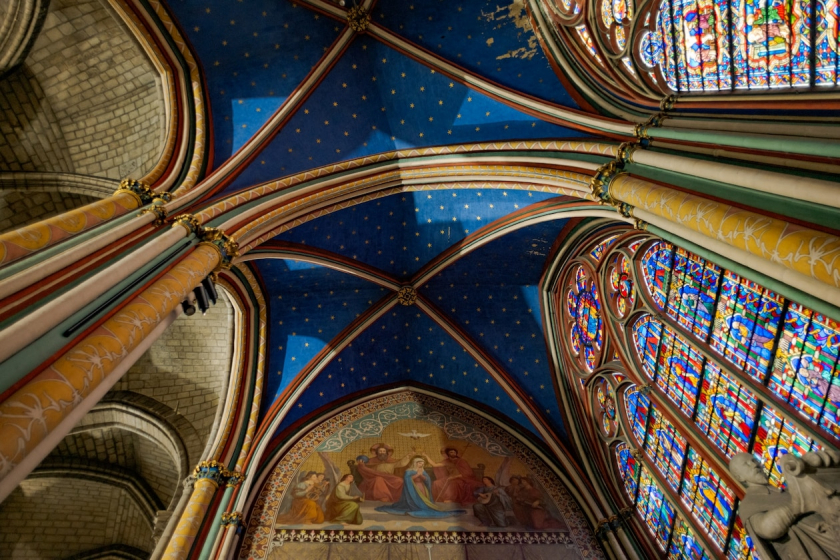
Despite the extensive damage, fortunately, no works of art of historical value were destroyed.
Difficulties in repair work
President Macron announced that Notre Dame Cathedral would be repaired in time for the 2024 Paris Summer Olympics; however, collecting the debris is no simple task. These are all legally protected monuments, and it will take time for experts to classify them.
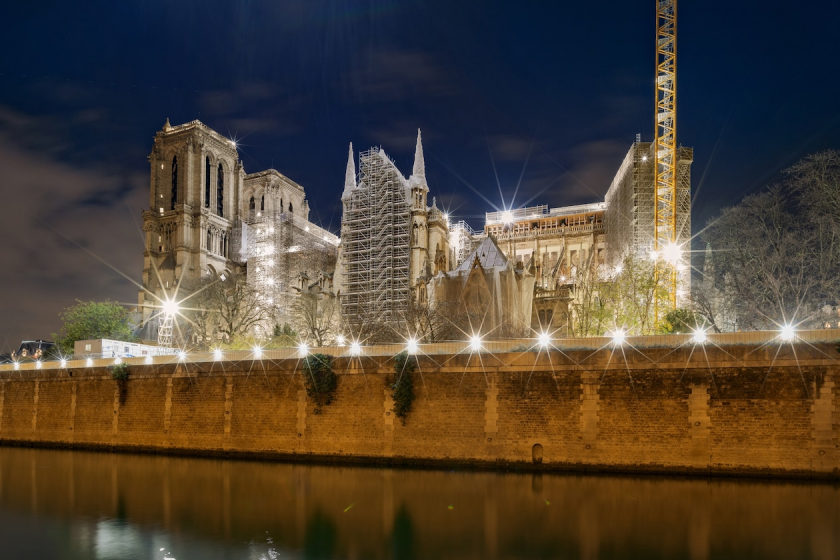
Because the tunnels were damaged and at risk of collapse, scientists had to use remotely controlled robots to collect the debris, a process that took two years to complete and transport to a warehouse near Charles de Gaulle Airport.
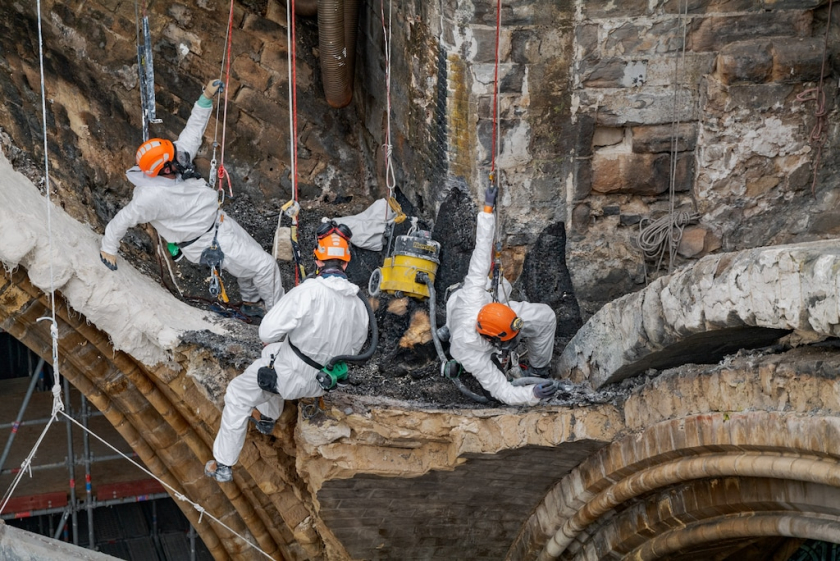
While wearing lead dust masks, technicians had to use mortar to fix the fallen stones on the dome. The fire had penetrated deep into the thick limestone walls at the top of the dome, peeling away the stone and creating numerous cracks inside.
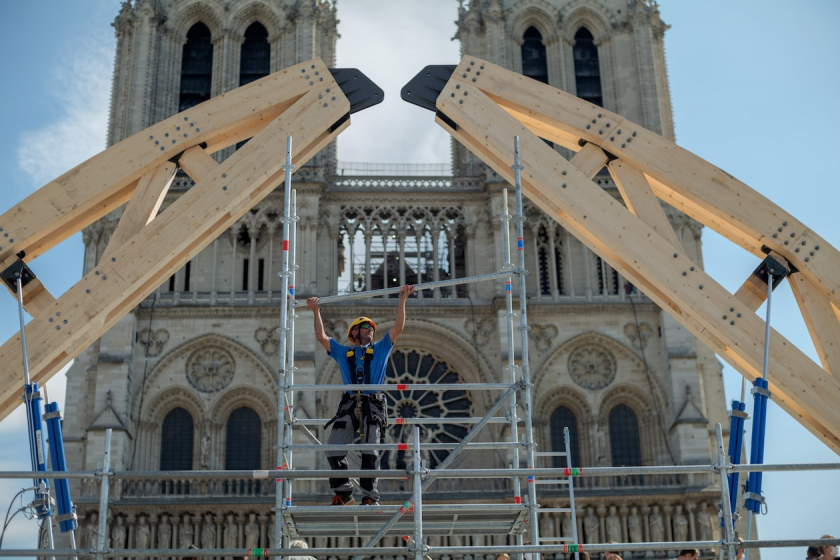
A worker is securing the scaffolding with the help of two wooden supports at the top.
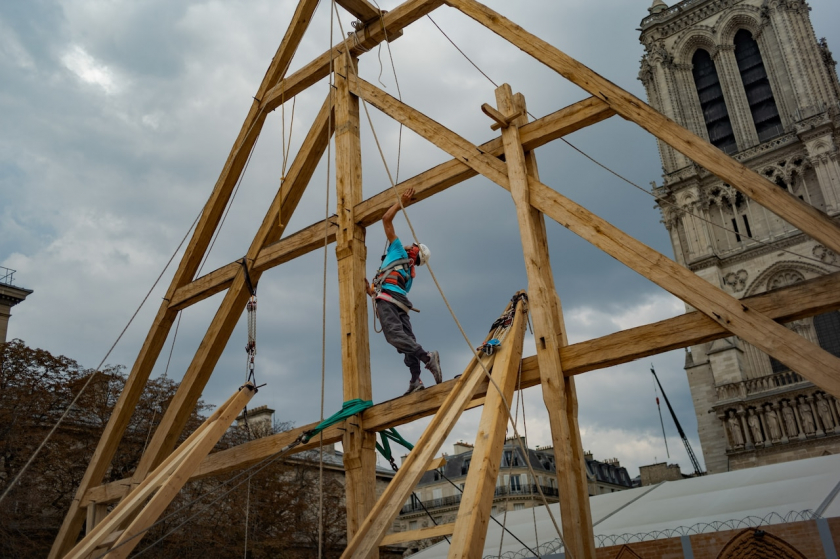
A carpenter is securing the roof trusses of Notre Dame Cathedral.

While Notre Dame Cathedral was being cleaned, the walls and vaults had to be secured to prevent sudden collapse. An engineering study found that without the lead roof and supporting wooden beams, which held them together, a gust of wind exceeding 90 km/h could easily topple the walls.
From 2019 to the summer of 2021, carpenters used wall cladding and other materials to construct the domes, fitting together multi-ton wooden bracing bars and adjusting the scaffolding beneath each one to fit. Meanwhile, technicians were tasked with dismantling the old steel pipes and scaffolding.
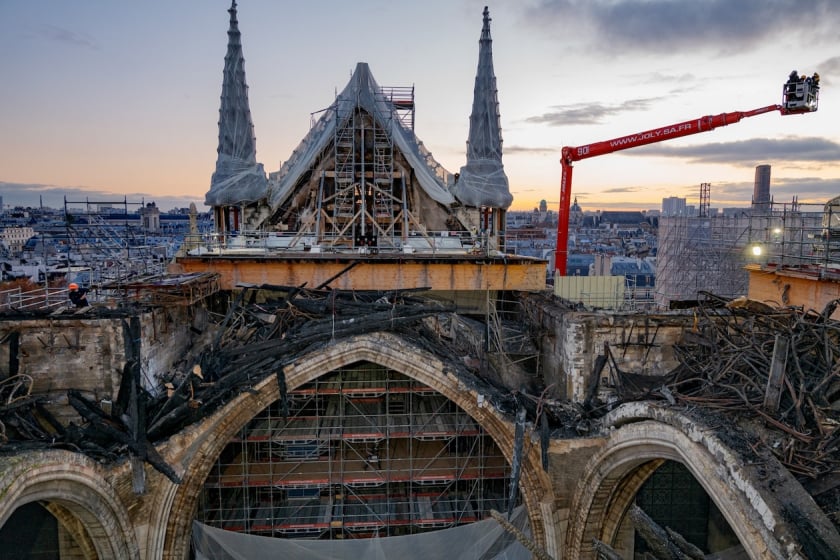
Workers are moving back and forth on the roof using hydraulic elevators.
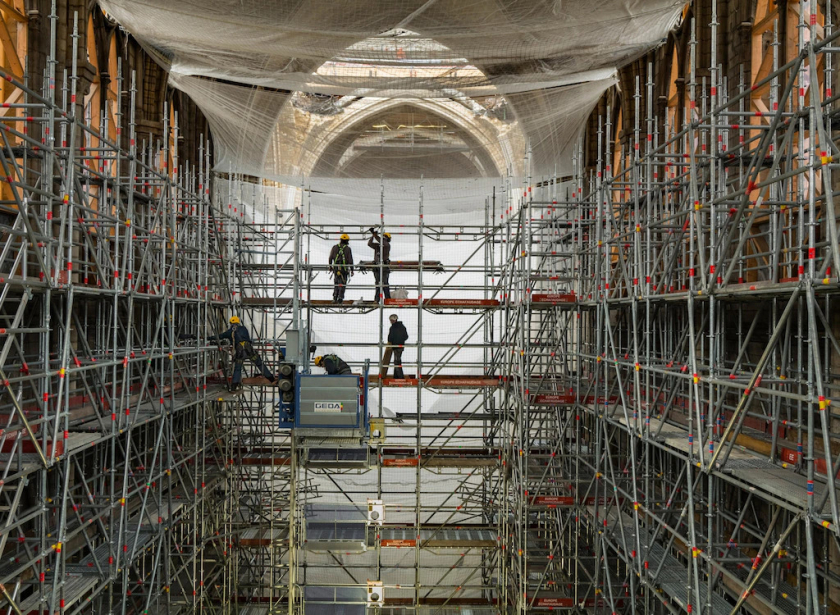
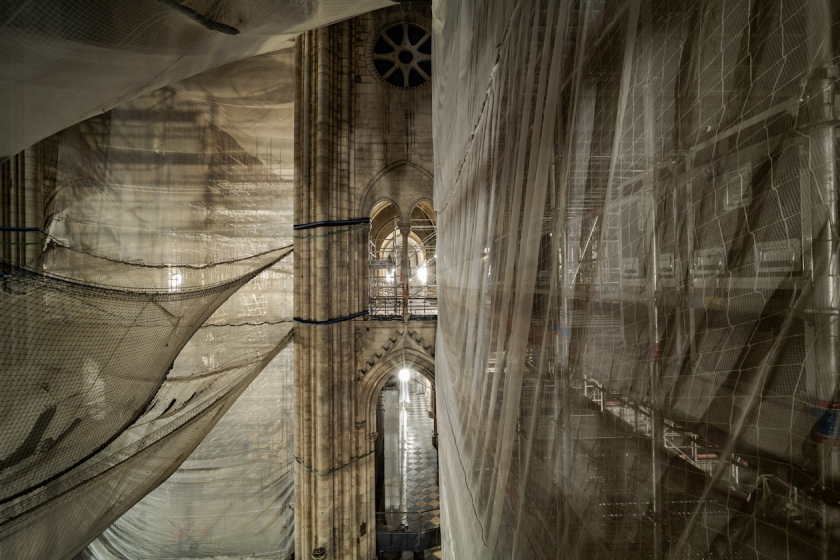
Unfortunately, the unexpected pandemic interrupted the church's repair process for an extended period, which is why the restoration work now needs to be accelerated to be completed by 2024.
A race against time
In the summer of 2020, the President and the French National Heritage Committee approved the restoration plan by Philippe Villeneuve, the architect in charge of the cathedral's restoration. According to the plan, Notre Dame Cathedral would be rebuilt to its original state, that is, the final state that architect Viollet-le-Duc restored in the mid-19th century.
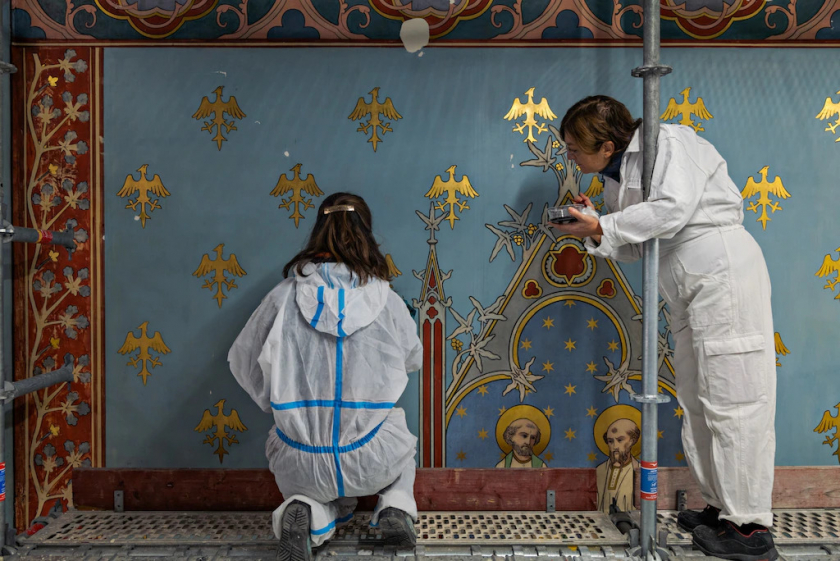
The interior of the church, including the chapels, paintings, statues, and stained glass windows, will be completely renovated.
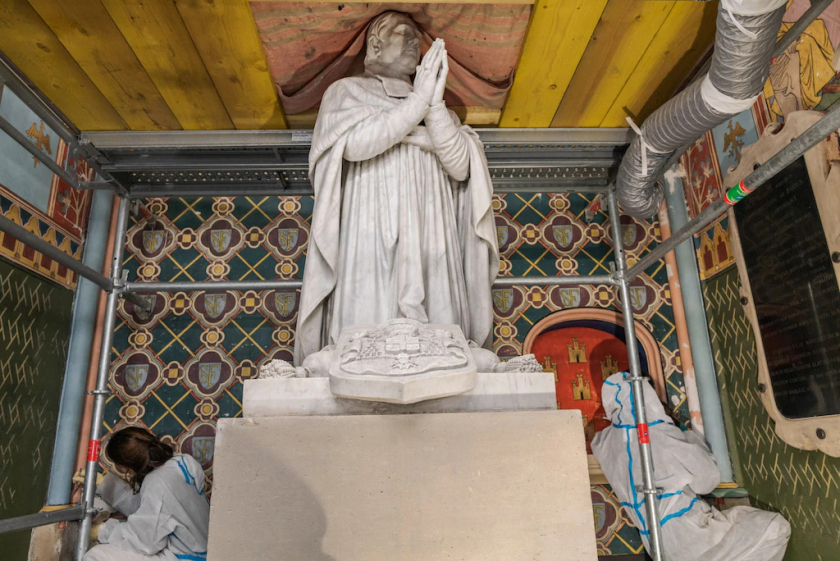
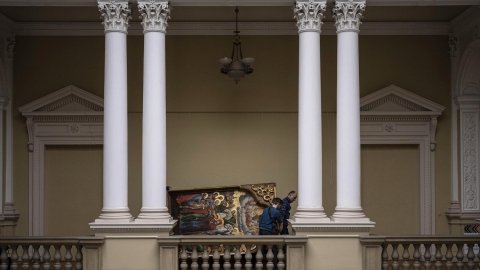
The once tranquil St. Ferdinand Chapel has been transformed into a bustling restoration workshop as experts are working to restore its 19th-century frescoes.
In February 2021, the scientific advisory board of the French Ministry of Health recommended banning the use of lead in the cathedral's new roofs and suggesting alternative solutions should be sought, as lead dust released into the air whenever it rains would negatively impact the health of residents in the area.
However, architect Villeneuve asserted that "lead is a crucial element in construction," stating that only lead could be used to create the spire and sculpt the roof of Notre Dame Cathedral. He added that rainwater collected on the roof would be carefully filtered, preventing lead dust from becoming airborne.
Villeneuve also decided to rebuild the wooden framework to make the tower look like it did before. When Viollet-le-Duc renovated the tower, he replaced the framework of the church's transepts entirely with something different from the medieval period, and Villeneuve would do the same now.
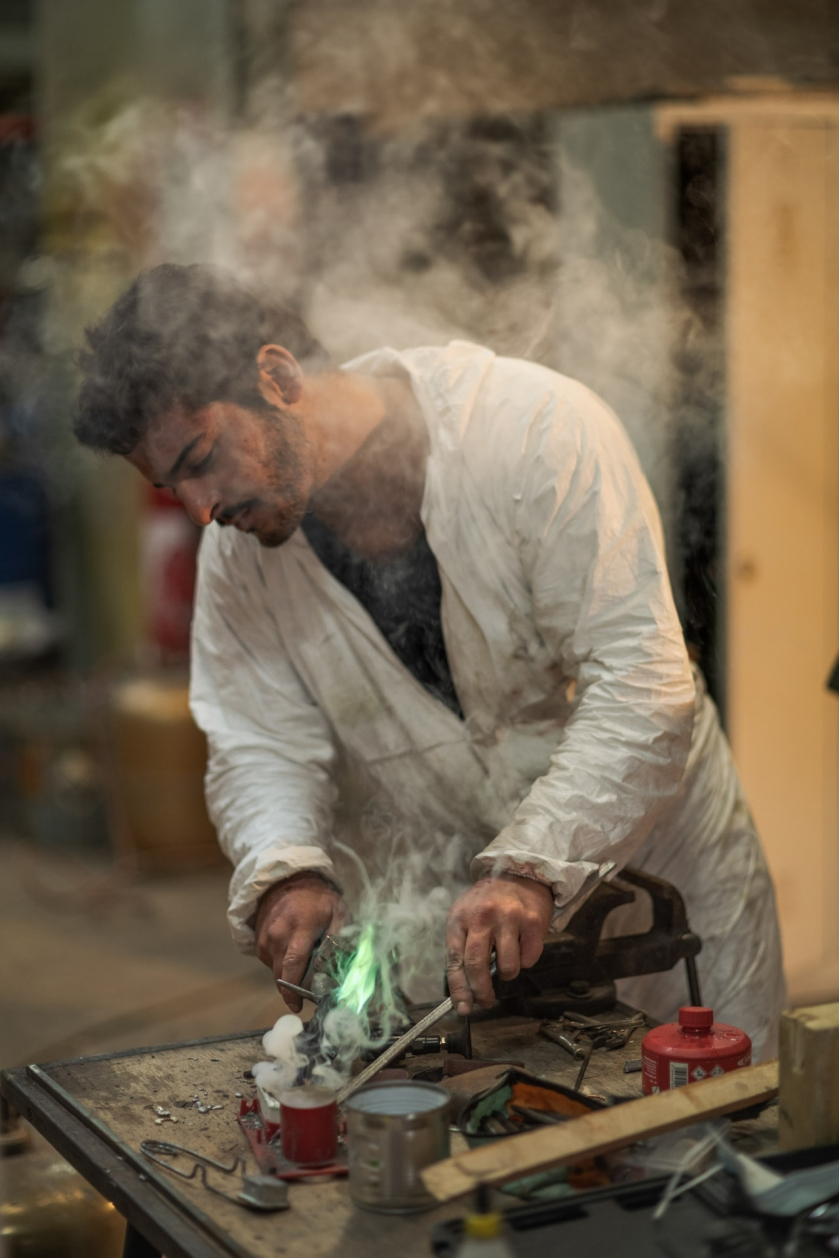
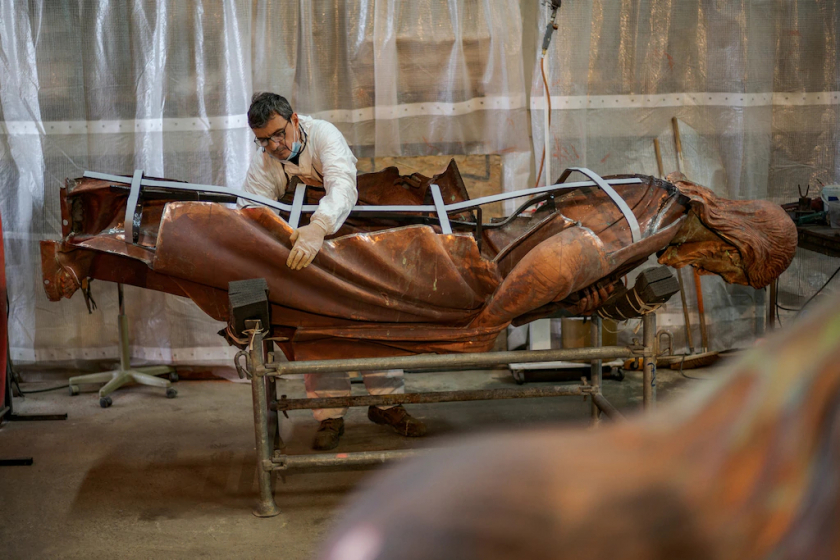
A technician is restoring a bronze statue of Saint Philip at the Socra Restoration Company.
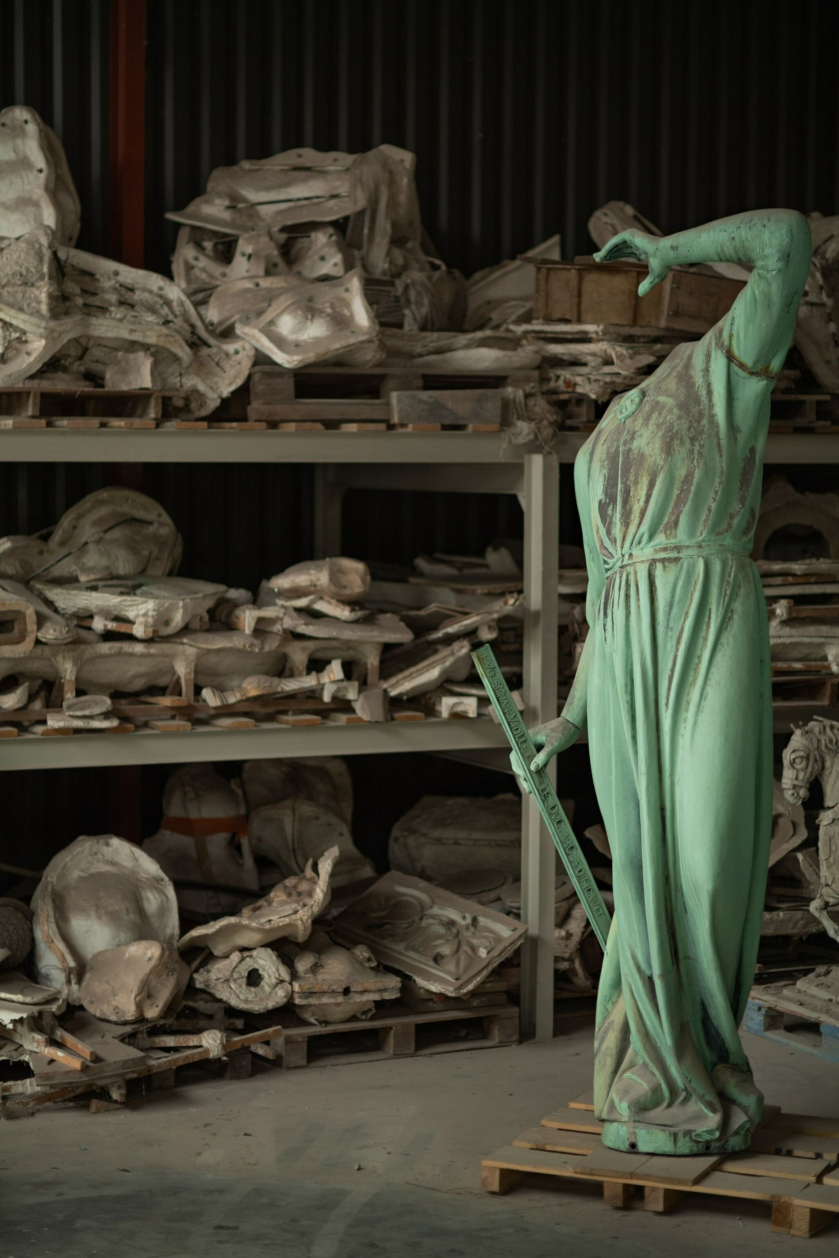
The statues of the Twelve Apostles were fortunately removed from the church roof four days before the fire.
Faced with a shortage of oak trees across France, forestry expert Philippe Gourmain, who is also the manager of France's forests, raced against time to gather the necessary timber – through donations starting from the moment the fires began.
Last winter, Gourmain collected donations of 1,200 oak trees from across the country. The largest and oldest trees, planted before the French Revolution, will serve as the foundation for the tower.
Although the pandemic has slowed down the restoration of the cathedral, along with difficulties related to sourcing oak and lead, in just over two years, Notre Dame Cathedral will be back to its former glory, bustling once again with workers, worshippers, and tourists from all over the world.
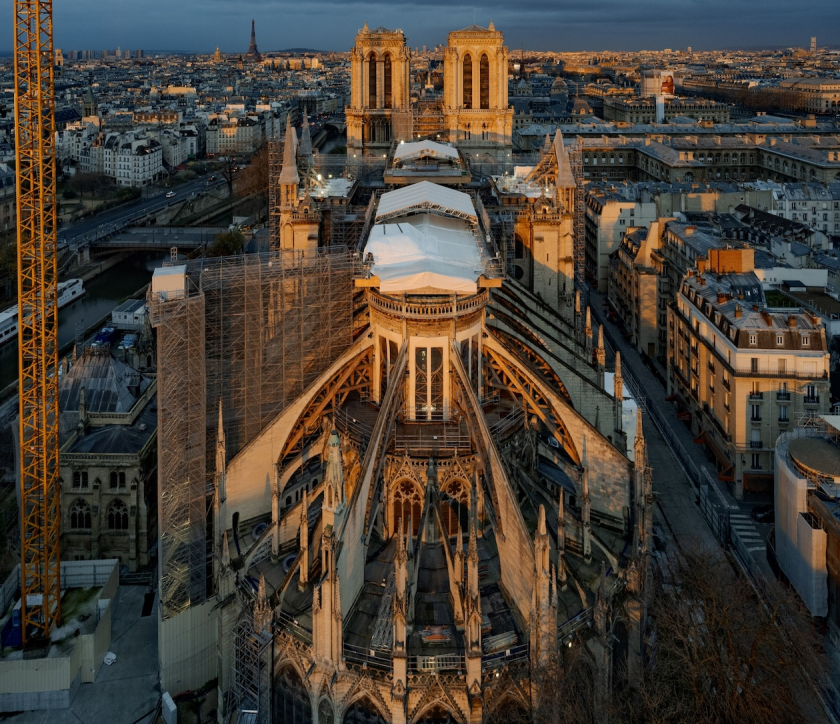
Day after day, the French people continue to watch and eagerly await the moment when Notre Dame Cathedral in Paris will be completely restored.
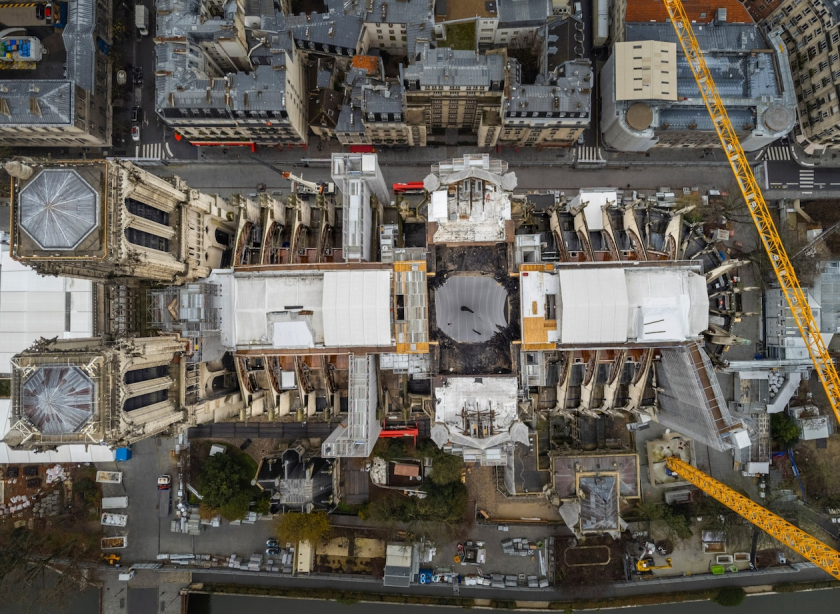
In 2024, if all goes according to plan, a drone will hover directly above the new spire of Notre Dame Cathedral, allowing the public to admire the magnificent architecture of the revived Viollet-le-Duc.