VI
VI


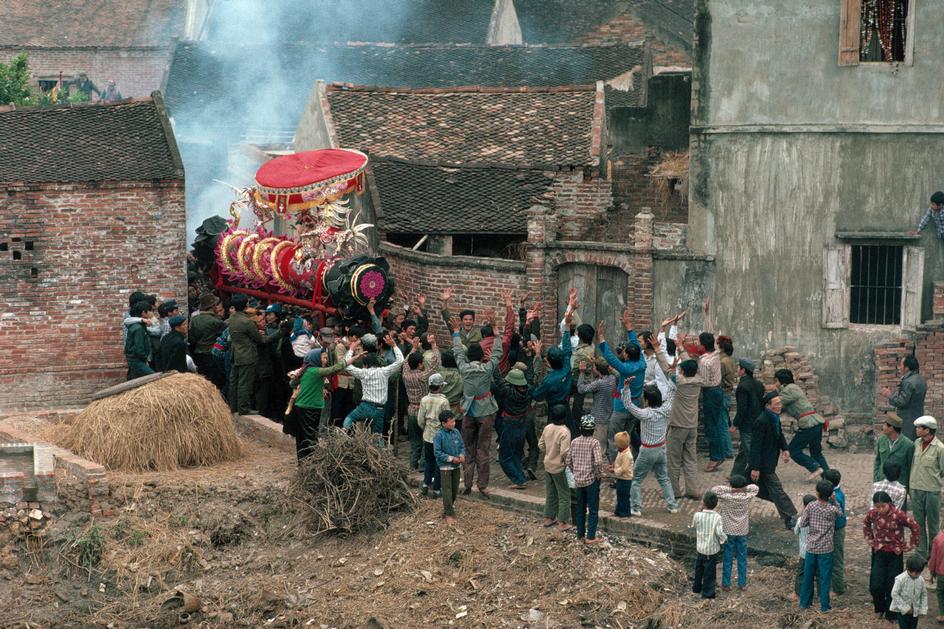
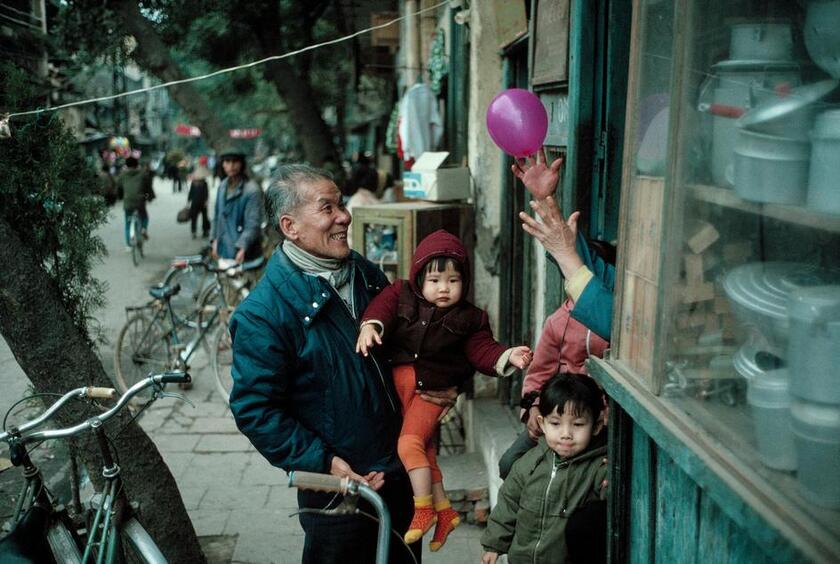
Lunar New Year, a festival brimming with traditional flavors, is an indescribable source of excitement for countless children. Their wide, sparkling eyes light up with immense joy at the thought of wearing brand-new clothes, receiving bright red lucky money envelopes, and playing with friends all day long. However, behind those innocent smiles lie the worries and busy lives of many families during the years when the country was still under a centrally planned economy.
Lunar New Year, a festival brimming with traditional flavors.
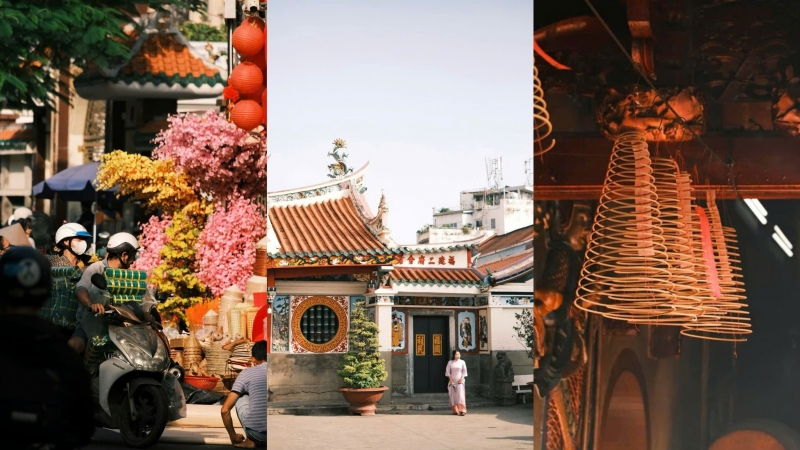
A story from a bygone era that can never be forgotten.
During Tet in 1975 and the years that followed, life was incredibly difficult. In peacetime, the trade network developed rapidly, and various types of ration coupons were introduced. Fuel shops, restaurants, butcher shops, flour mills, barbershops, etc., sprang up like mushrooms, but still couldn't meet essential needs.
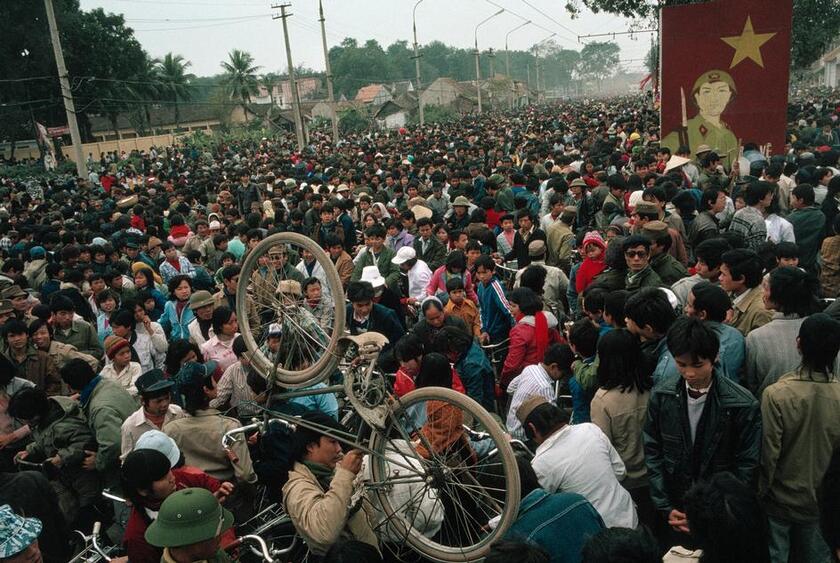
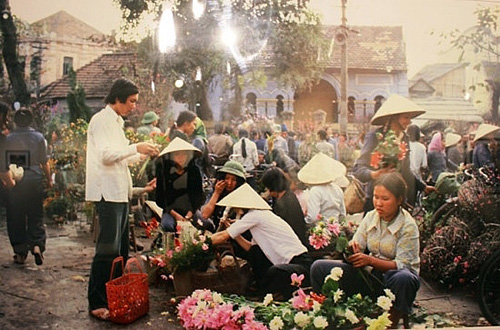
The Tet holiday during the subsidy era was poor but joyful. Those were the times when the countryside was peaceful, and the quiet streets were bustling with people celebrating Tet.
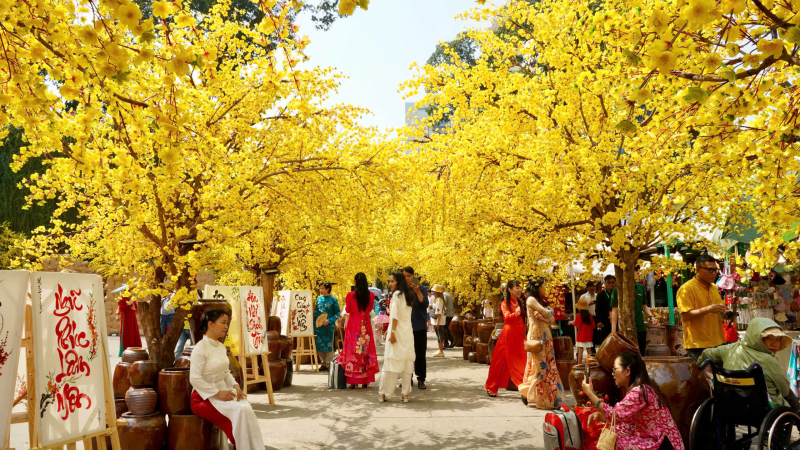
For Vietnamese people, Tet Nguyen Dan (Lunar New Year) is the most important holiday of the year. Every family tries to prepare for Tet as fully as possible, even if they have to eat simple meals like cornmeal and shrimp paste. The altar must have flowers, a bunch of bananas, banh chung (square sticky rice cake), and banh tet (cylindrical sticky rice cake). These are not just food items, but the very soul of Tet. Tet must also include plates of cakes, jams, and candies to offer guests. Branches of apricot and peach blossoms must be displayed in the house.
Despite hardship and scarcity, people still had to celebrate Tet (Lunar New Year). During the subsidy era, people struggled to make ends meet, but they still joked around, improvised songs, and had fun. Food had to be carefully planned to provide for "today, tomorrow, and... two days later."
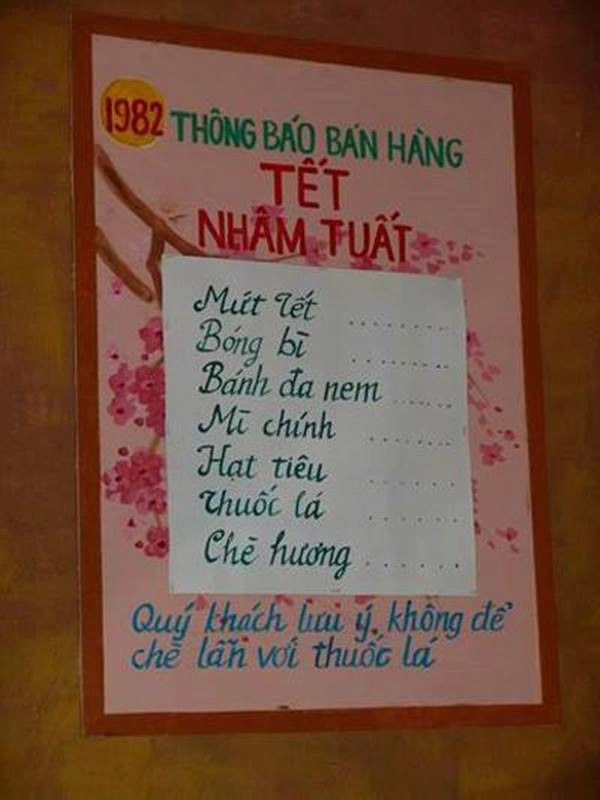
Traditional Tet (Lunar New Year) stalls
Hanoi residents recount that, no matter how busy their year-end work is at offices, factories, and enterprises, parents always make time to take their children shopping for Tet (Lunar New Year). Even if they have to wake up at dawn and stand in long lines under the scorching sun to buy a few kilograms of meat or rice, by afternoon, parents are busy taking their children to department stores or famous fabric streets like Hang Dao and Hang Ngang.
Throughout the year, children in Hanoi can dress simply, but on Tet (Lunar New Year), they absolutely must have a beautiful new outfit. Their joy comes not only from the new clothes but also from strolling through the streets with their parents, admiring the shimmering lanterns, and inhaling the aroma of sticky rice cakes (banh chung and banh day).

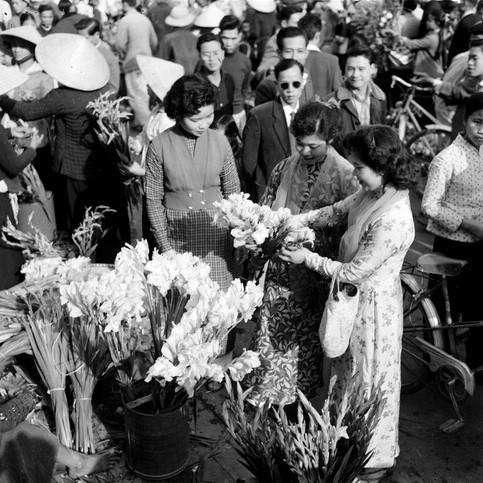
The term "subsidized economy" sounds strange and unfamiliar to young people of the 80s and 90s generations. For those born in the 60s and 70s and earlier, however, it's a truly beautiful memory.
At that time, when the country was still mired in post-war difficulties, meager salaries were barely enough to cover daily living expenses. Therefore, every time Tet (Lunar New Year) approached, worry would overwhelm every family. Preparing for Tet became a difficult task, requiring careful planning. Shopping, decorating the house, gifts for relatives – but "clever spending ensures satiety, clever saving ensures warmth." Besides the monthly ration coupons, each household also received a government allocation of sticky rice, mung beans, and pork for making banh chung (traditional Vietnamese rice cakes), plus a bag containing a few hundred grams of rice flour, vermicelli, spring roll wrappers, wood ear mushrooms, and pepper (the quantity varied depending on the size of the household).
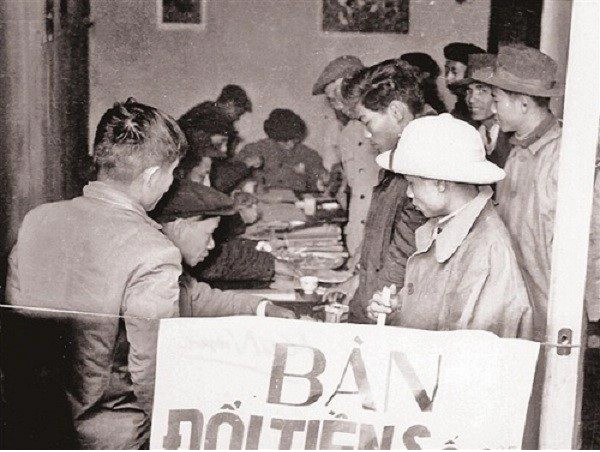
Especially during Tet (Vietnamese New Year), people had to buy goods according to the rationing system using coupons issued by the State.
There were many things that had to be bought during Tet (Vietnamese New Year): a Tet gift bag containing a few pieces of pork skin, dried bamboo shoots, vermicelli, spring roll wrappers, MSG, pepper, banana leaves... then a box of Hanoi jam, a packet of Ba Dinh tea, a bottle of Thanh Mai lemon wine, a packet of soft candy (which was very hard), and even a pack of Truc Bach firecrackers. You couldn't buy everything at once in one place. You had to queue to buy each item for ten days before Tet, when the state-run Tet stalls opened. Sometimes you had to wake up early to queue from 5 a.m., waiting until the doors opened so your mother could buy the goods, because children weren't allowed to carry money or ration coupons; if they lost them, the whole family wouldn't have a Tet celebration that year. Queuing was a busy time, but also a joy for the children of that era.
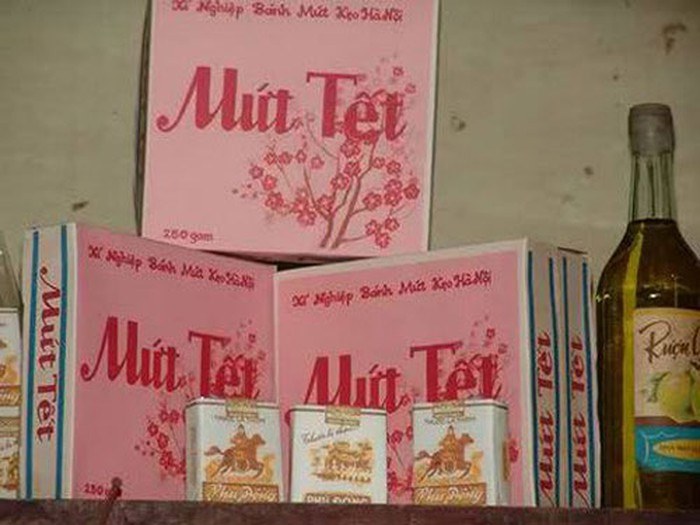
Just a small amount of mixed fruit preserves, packaged in a thin cardboard box, is enough to make everyone feel the Tet holiday approaching in every home.
Going back in time, preserving the spirit of Vietnamese Tet.
Despite the hardships and shortages, Tet (Lunar New Year) remains a major event of the year. From young to old, men and women alike eagerly await the arrival of Tet to enjoy delicious food. Even if they have to queue from early morning, jostling each other just to buy a box of mixed candied fruits, a few ounces of mung beans for making banh chung (traditional rice cakes), a few ounces of meat, some MSG, and dried bamboo shoots, that's enough to make everyone excited. Children look forward to having new clothes made, and to eating the candy and spiky biscuits that they only get to enjoy once a year.
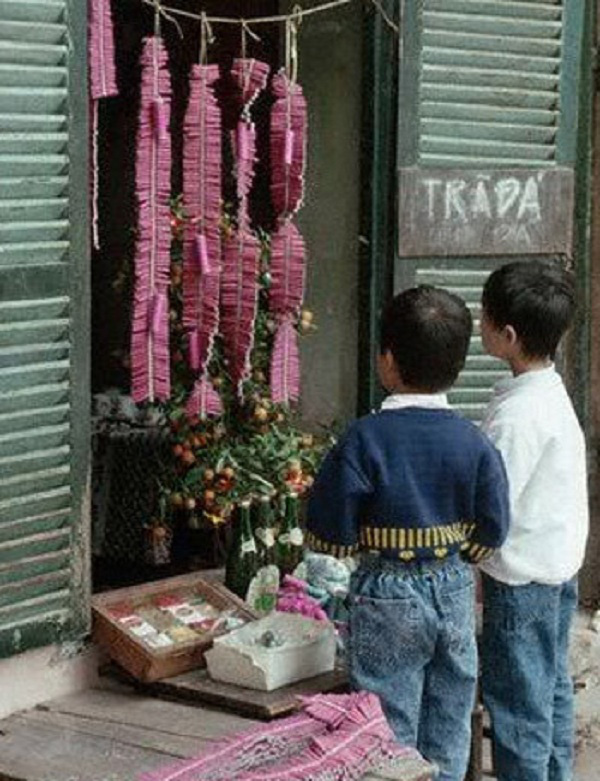
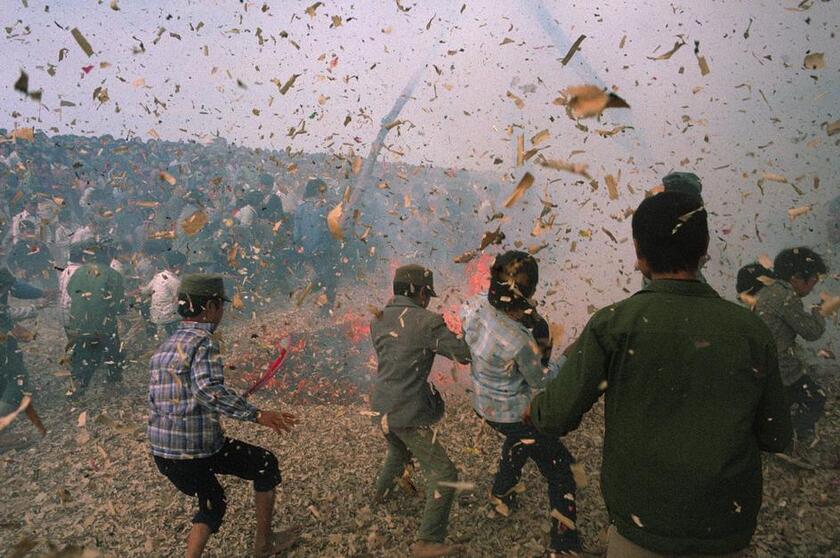
A traditional firework stall during Tet (Vietnamese New Year) symbolizes the arrival of spring, the passing of the old year, and the welcoming of a new one. These images will remain etched in the memories of many, as Vietnam has banned fireworks since 1995.
Some say that during the subsidy period, life was full of worries and hardships, but only the three days of Tet (Lunar New Year) brought prosperity. However, now that the past is behind us, many people suddenly feel a surge of nostalgia for the memories of a difficult time. Among the countless joyful events of the subsidy era, Tet was the most joyful of all.
Tet, the Lunar New Year, is the most important family reunion of the year. During Tet, every household is at its most complete and close-knit. Families try to have two communal meals: one on the evening of the thirtieth day of the lunar month and the other on the morning of the first day. The rest of the time is spent visiting relatives and friends, sometimes even neighbors. In the subsidy era, the population wasn't as large, and transportation was limited, so during Tet, the streets were usually quiet and the air was pleasant. Adults spoke very softly to each other, and we children had to do the same.
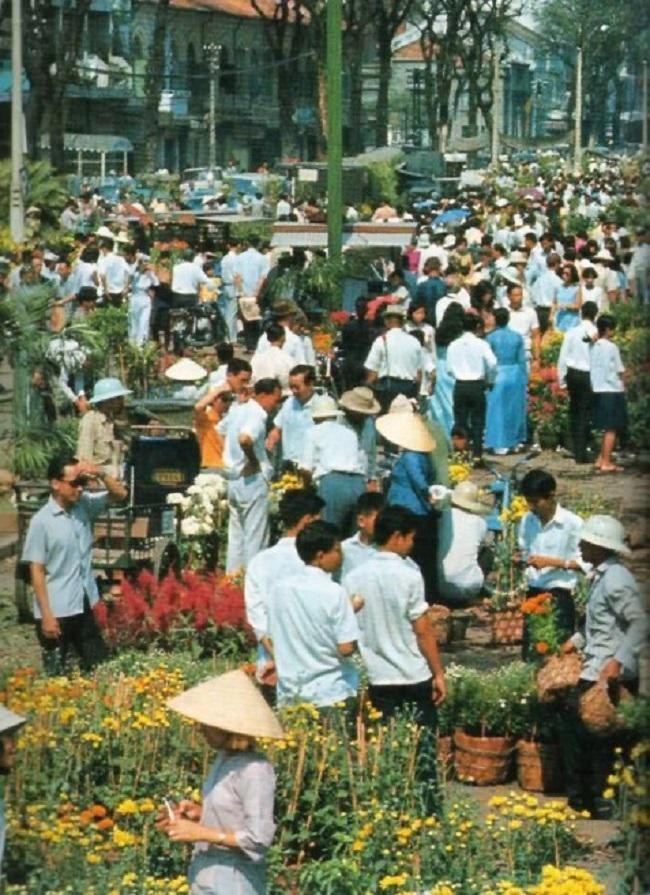
The country, with its myriad of flowers blooming in days gone by.
In those days, people mainly gave New Year's gifts to their children and grandchildren, and the elderly, with the amount of money being merely symbolic. Sometimes it was just a few firecrackers as a New Year's gift. During the wartime period of the subsidized economy, material things were scarce, but people valued spirit and always respected and showed consideration for each other, especially during Tet (Lunar New Year). Therefore, everyone looked forward to and remembered Tet when spring arrived.
1986 marked a historic milestone, signifying the end of the centrally planned economy and ushering in a new chapter for the country. For many people, especially those who grew up during this period, there was a sense of bewilderment. Decades living under a centrally planned economy, where every need from food, clothing, and housing to Tet (Lunar New Year) celebrations was provided by the state, had become an ingrained habit.
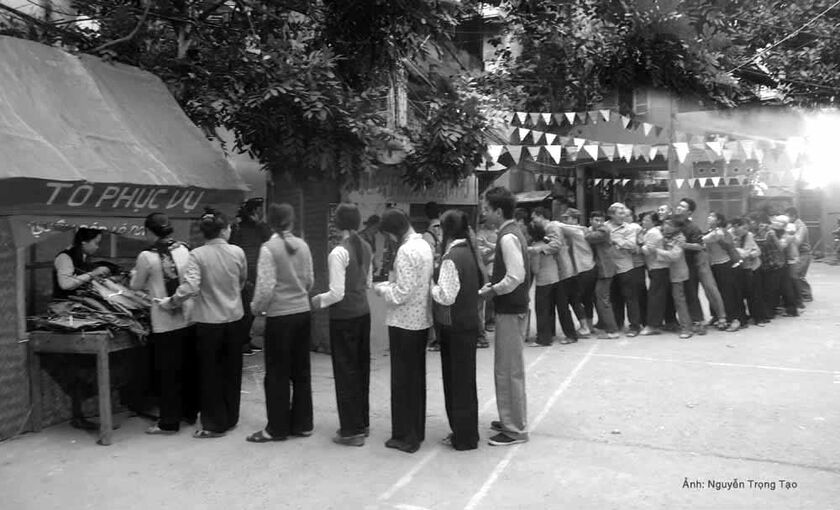
People will never forget the country that, even in difficult times, eagerly awaited the approaching Lunar New Year.
However, that initial instability quickly passed. Nowadays, if you mention the image of people queuing from midnight to buy Tet supplies during the old subsidy period, many people will find it quite humorous. The image of long lines of people queuing from midnight to buy a few kilograms of rice, a few hundred grams of meat, or the bustling afternoons at the market to find simple Tet decorations – these are not just familiar images, but also a whole sky of memories of a bygone era.
All those stories have become memories, filled with bittersweet emotions, joy, and regret.