VI
VI


1. Hanoi Cathedral
The Grand Cathedral (St. Joseph Cathedral), built between 1884 and 1887, bears the distinctive mark of classical Gothic architecture, majestic and magnificent in the heart of the capital. Over the centuries, the Grand Cathedral has remained a captivating destination, a place where people can experience a spiritual atmosphere and admire its stunning architecture. Hanoi's Grand Cathedral is a "historical witness" in the heart of the Old Quarter, having weathered the many ups and downs of the capital city.
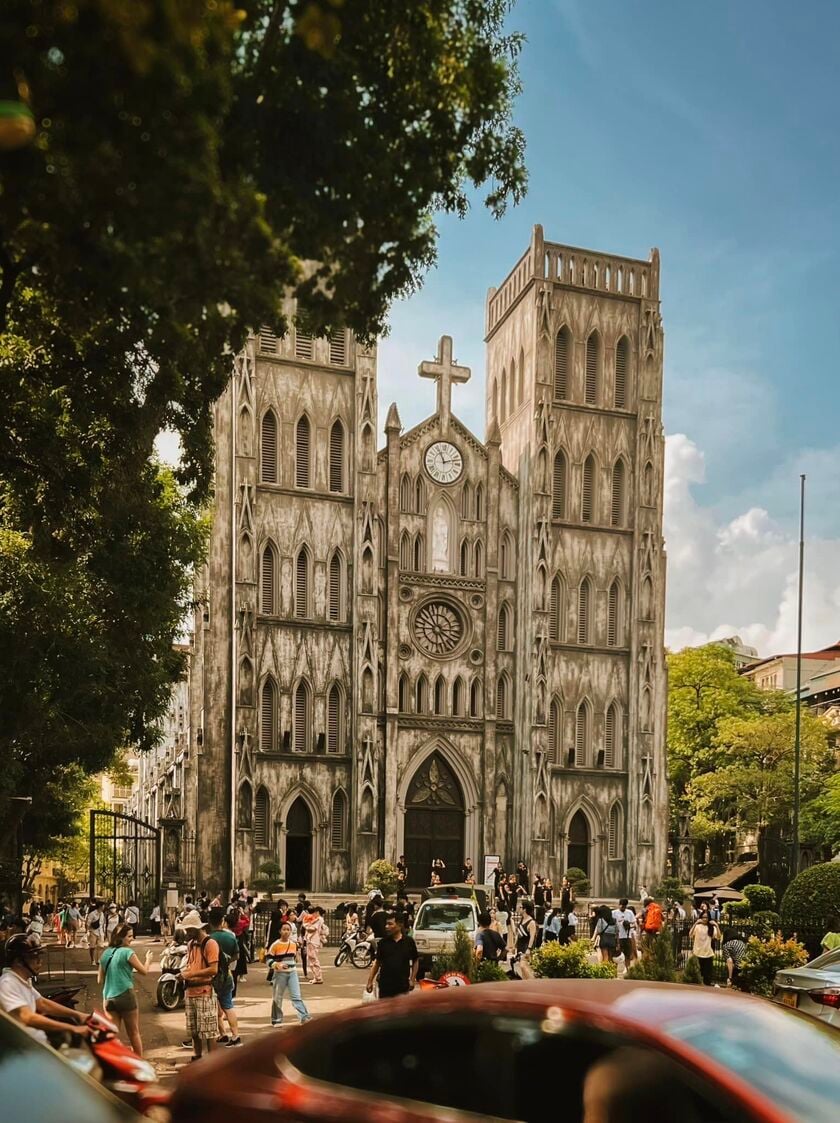
St. Joseph Cathedral, built between 1884 and 1887, bears the strong imprint of classical Gothic architecture. Photo: Nam Tran
The cathedral is 64.5 meters long, with a bell tower 31.5 meters high, supported by large stone pillars. The cathedral was built in an architectural style modeled after Notre Dame Cathedral in Paris, with symmetrical towers and axes. The main entrance and windows feature distinctive pointed arches with unique patterns. A highlight of the cathedral is the exquisitely crafted stone statue of the Virgin Mary holding the baby Jesus.
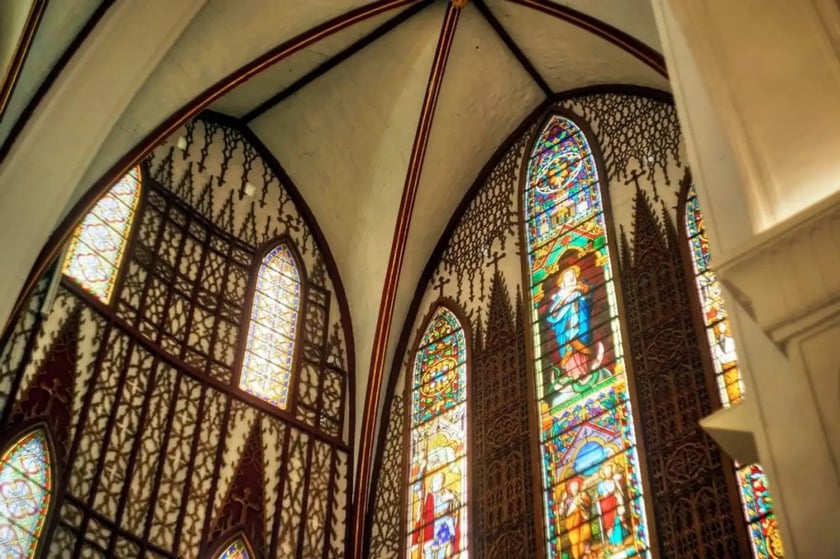
The intricate decorative details, along with the system of arches and windows that let in light, further enhance the beauty of the church.
Address: 40 Nha Chung Street, Hoan Kiem District, Hanoi
2. Ham Long Church
Ham Long Church is a Roman Catholic church belonging to the Archdiocese of Hanoi. The church boasts a unique Western architectural style, designed by the Vietnamese architect Doctor Than. The bell tower is located in the center of the church, and the columns and altar are decorated with rope motifs, similar to the style of the Franciscan robes.
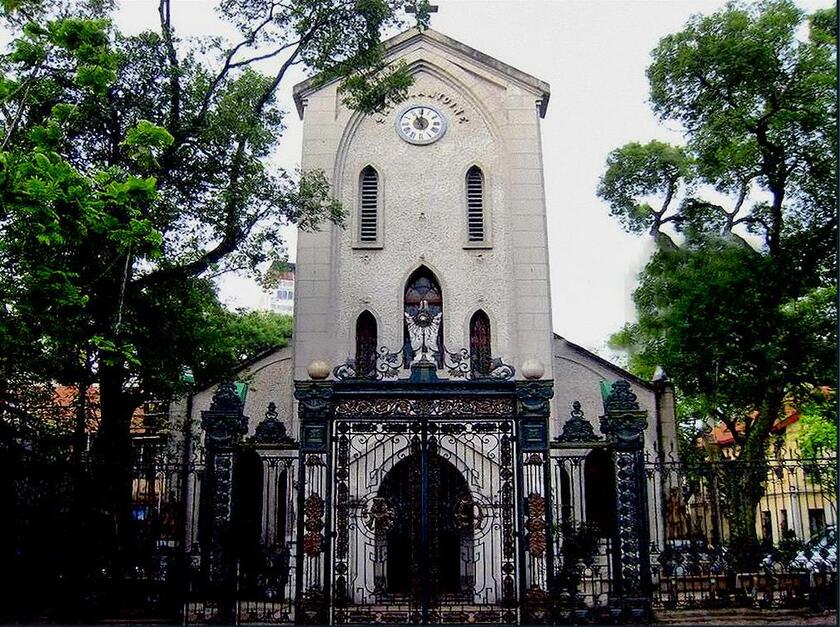
Ham Long Church.
Ham Long Church is not as grand and magnificent as the Grand Cathedral, but it offers a different kind of beauty with its simple architectural lines and building materials. The architect used traditional materials such as bamboo, straw, lime paste, and paper in the design of the vaulted ceilings, creating an acoustic effect. Thanks to this, sound systems are not needed during services, and the sound quality is still satisfactory.
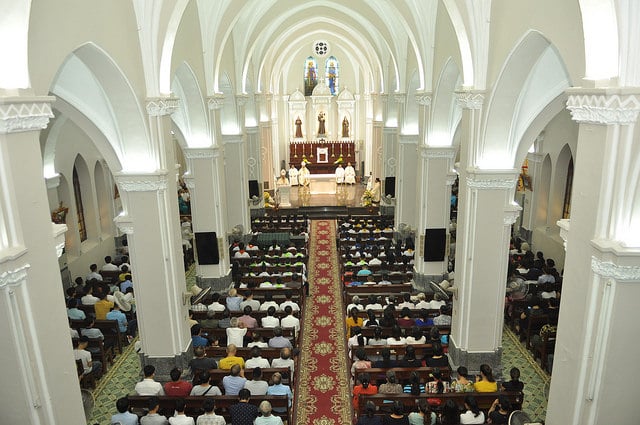
The interior is painted white, exuding an elegant and refined beauty.
Address: 21 Ham Long Street, Phan Chu Trinh Ward, Hoan Kiem District

3. Cua Bac Church
The Cửa Bắc Church, built between 1925 and 1930, is located on a plot of land stretching along Phan Đình Phùng Street and at the corner of Nguyễn Biểu Street, next to the northern gate of Thăng Long Citadel, hence it is also popularly known as the Cửa Bắc Church. The church has a striking yellow color and a blend of Asian and European architecture, making it a popular tourist attraction.
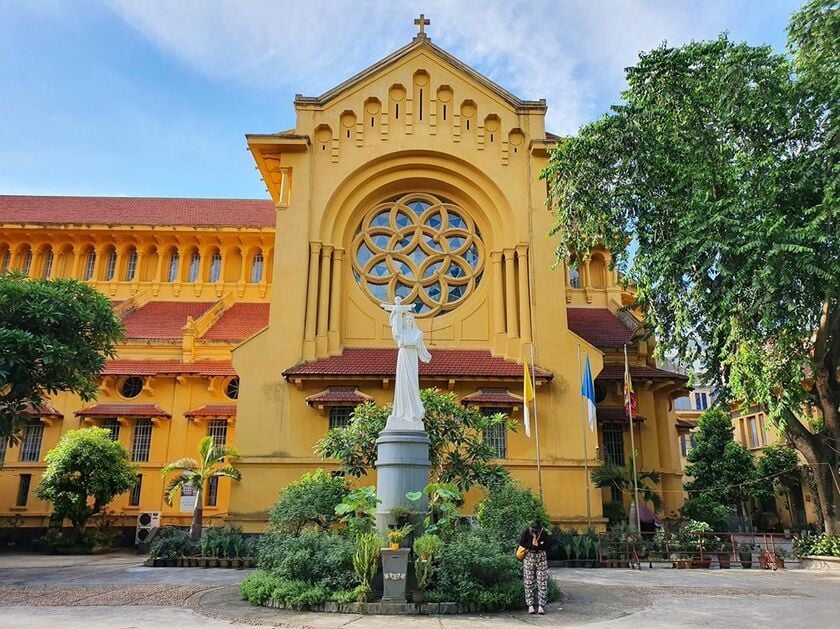
The church boasts unique architecture with its striking yellow color.
Architect Ernest Hébrard created an asymmetrical architectural space with a soaring bell tower on the main entrance, making the church unique compared to most symmetrical architectural works. The tiled roof system extends from the bell tower through the dome to the main and auxiliary spaces, reminiscent of traditional Vietnamese village temples and pagodas. Furthermore, windows and openings for light and ventilation are protected from sun and rain by Thai-style roofing, except for large decorative windows that are fitted with light-blocking glass.
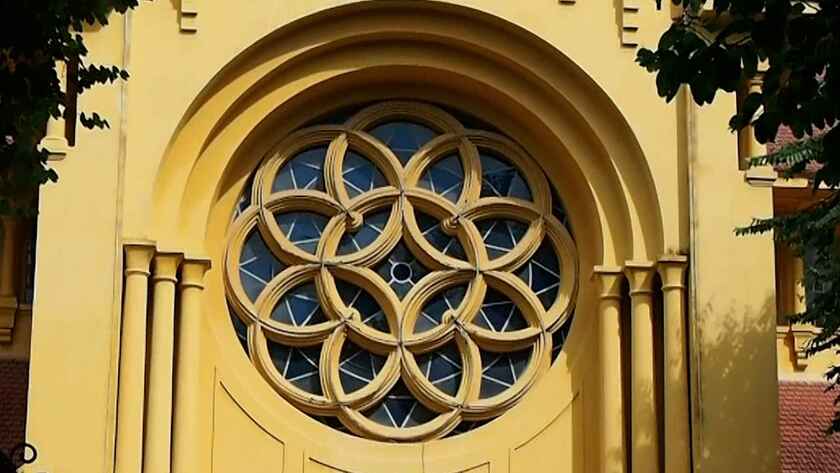
The church's architecture features graceful curves.
Address: 56 Phan Dinh Phung Street, Ba Dinh District, Hanoi
4. An Thai Church
An Thai Church is located in a small alley at 460 Thuy Khue Street, in the Ke Buoi area south of West Lake, hence also known as Ke Buoi. The church was built in the late 19th - early 20th century (approximately 1893-1907) in the Renaissance architectural style. It is one of the oldest and smallest churches in Hanoi, with an area of only about 100 square meters, surrounded on all sides by residential areas.
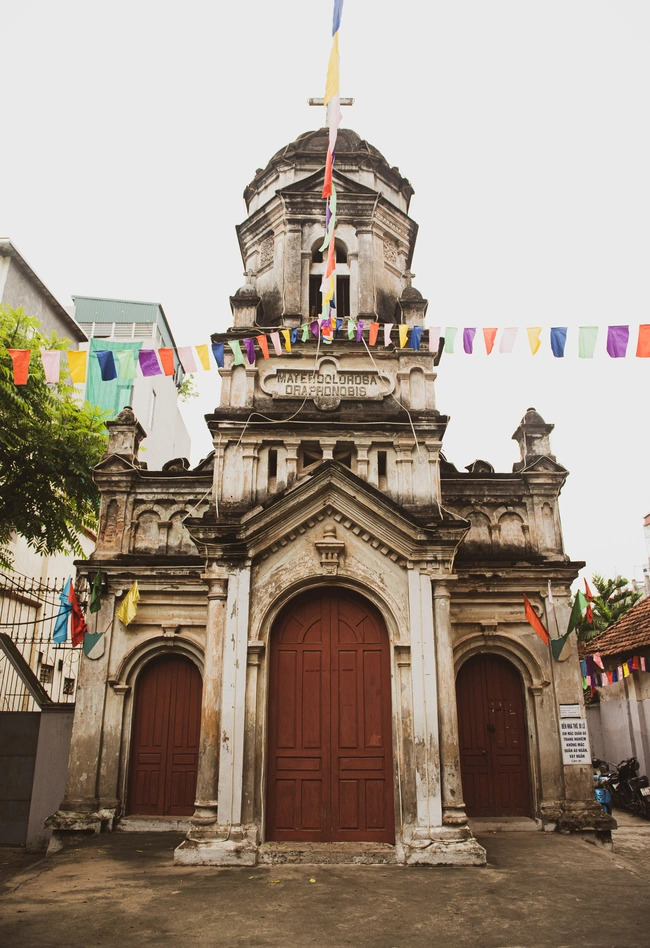
The church occupies an area of only 100 square meters, surrounded on all sides by residential areas.
Despite its small size, An Thai Church exudes an overall sense of solidity and solemnity. Over time, the moss and the changing colors of the exterior paint have further enhanced the church's ancient and mysterious beauty. The front of the church bears the Latin inscription "Mater Dolorosa ora pro nobis," meaning "Our Lady of Sorrows, pray for us." The church's sanctuary has a capacity of approximately 100 people. On special occasions, the number of parishioners can reach several hundred.
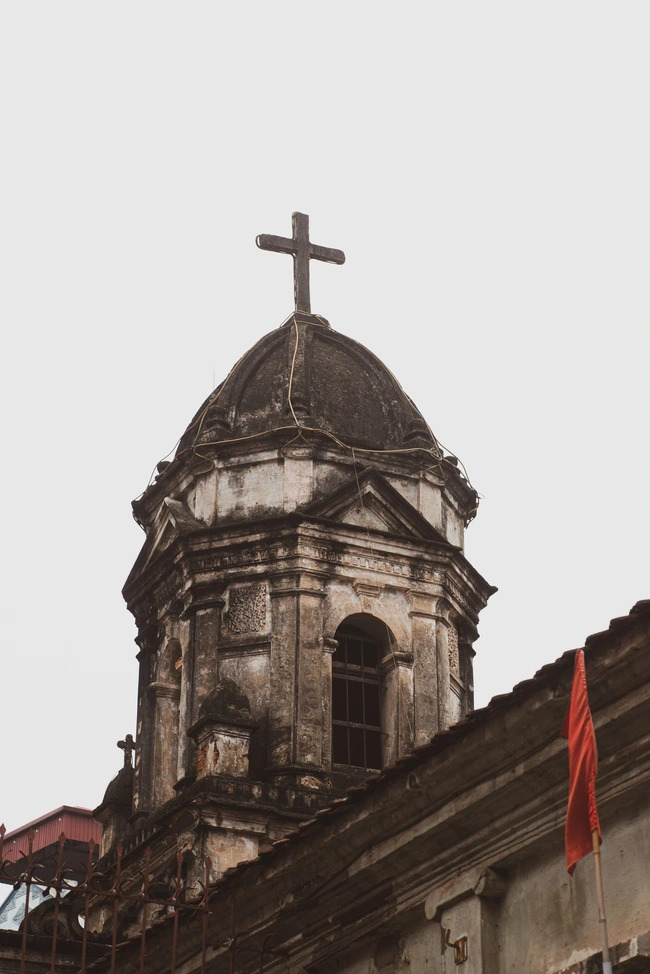
The church's ancient beauty.
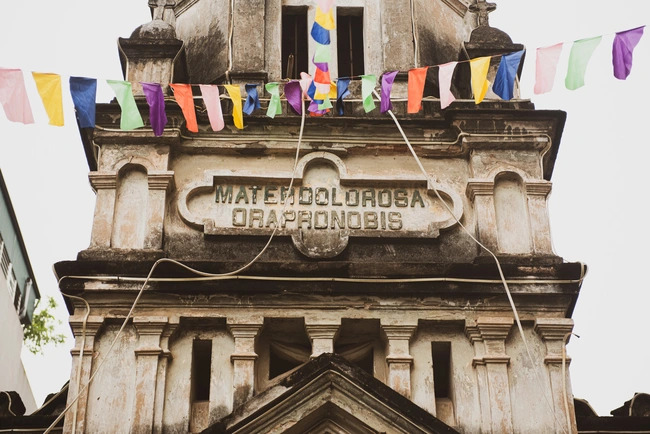
The front of the church bears the inscription "Mater Dolorosa ora pro nobis".
Address: Alley 460 Thuy Khue, Tay Ho District
5. Phung Khoang Church
Phung Khoang Church (Our Lady of the Rosary Church) is a Roman Catholic church belonging to the Archdiocese of Hanoi, Vietnam. Built in 1910, the church is designed in the Romanesque style. The church features a harmonious relationship between the rectory, the parish house, and the surrounding landscape.
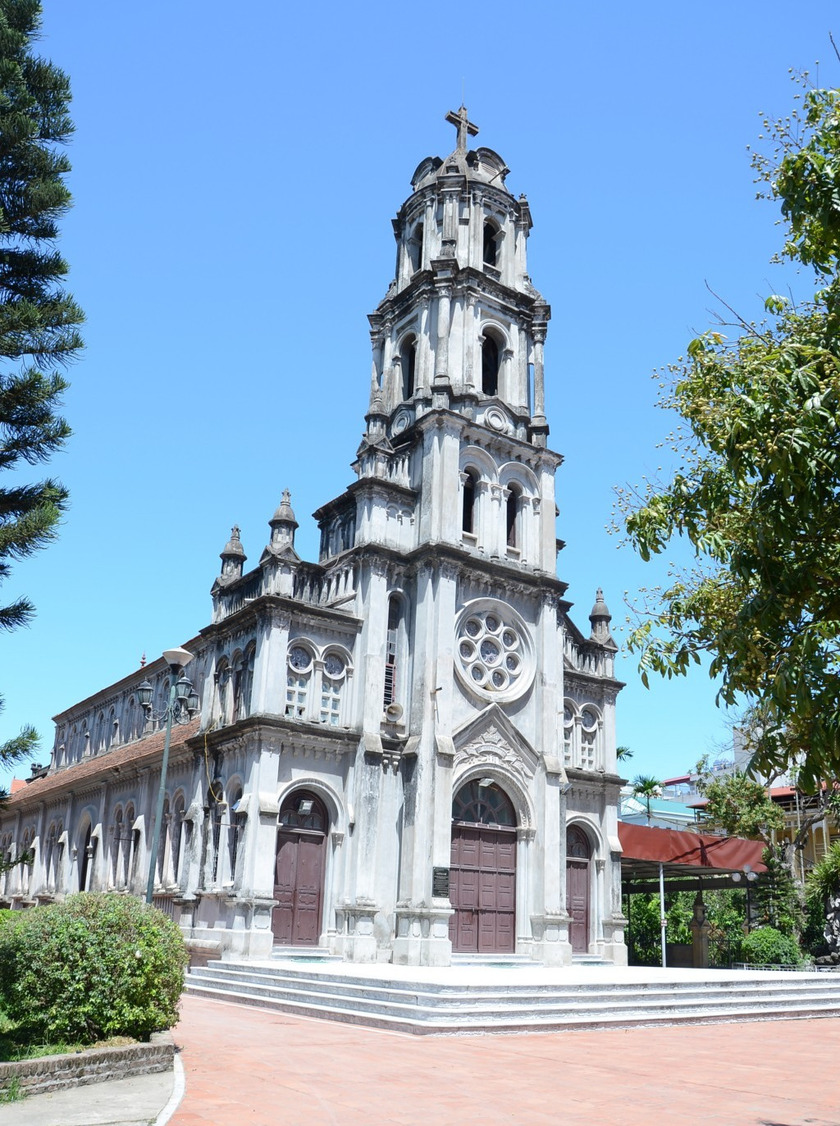
Phung Khoang Temple.
The stained-glass windows between the two roof levels of the church allow plenty of light to flood the interior. Previously, the church's interior walls were decorated with many raised patterns, but during a recent restoration, these patterns were scraped off, leaving the walls smooth as they are now.
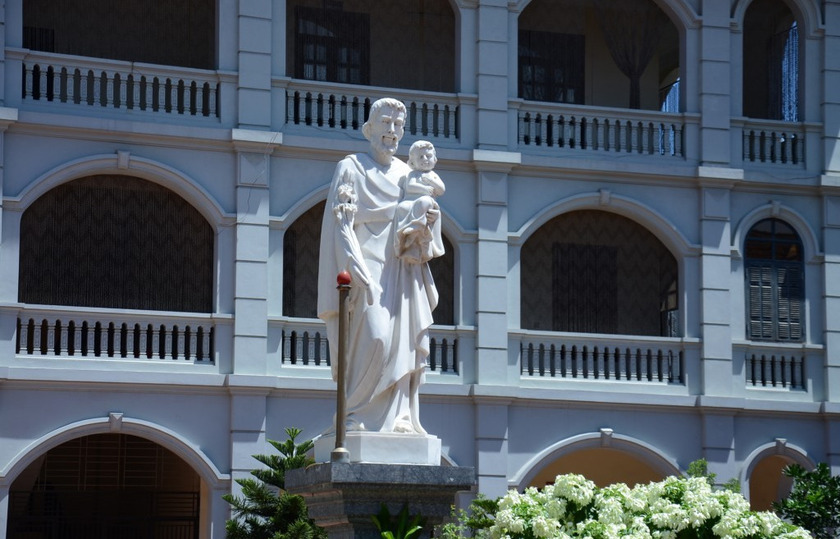
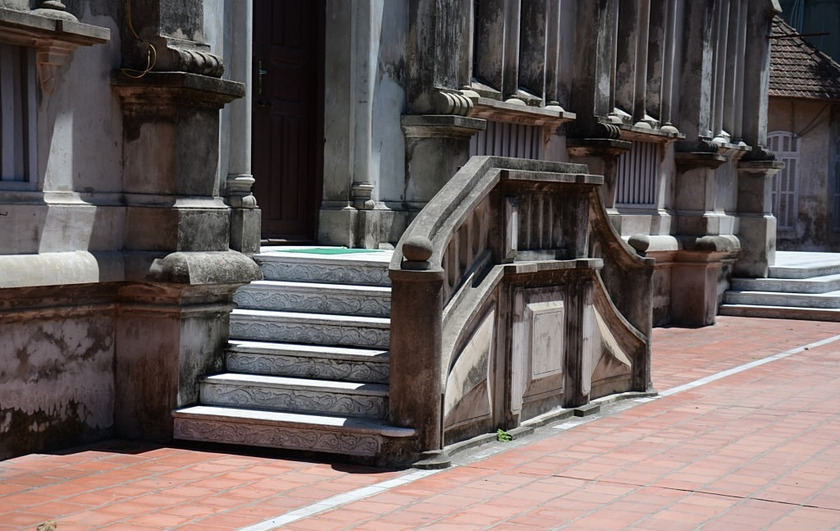
The church was built in 1910, in the Romanesque style.
Address: 161 Phung Khoang Street, Phung Khoang 1, Trung Van Ward, Tu Liem District