VI
VI


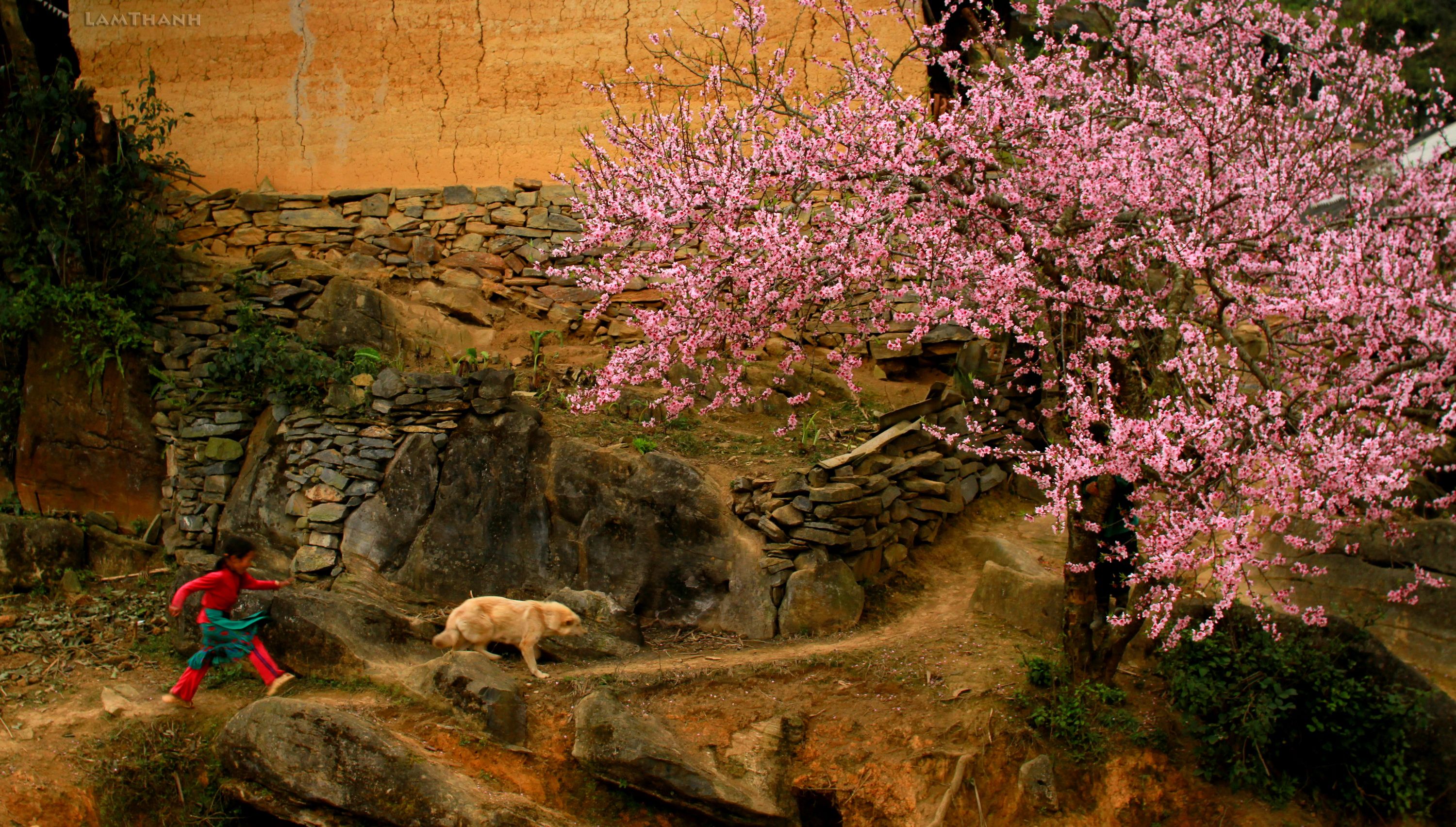
The Pu Péo people's tradition of singing competitions with roosters.
This is a peculiar New Year's custom of the Pu Péo ethnic group in Ha Giang province. On New Year's Eve, the Pu Péo people stay awake to watch over their rooster. When the rooster flaps its wings, preparing to crow, they light a firecracker and throw it into the coop, causing the other roosters inside to jump up and crow loudly.
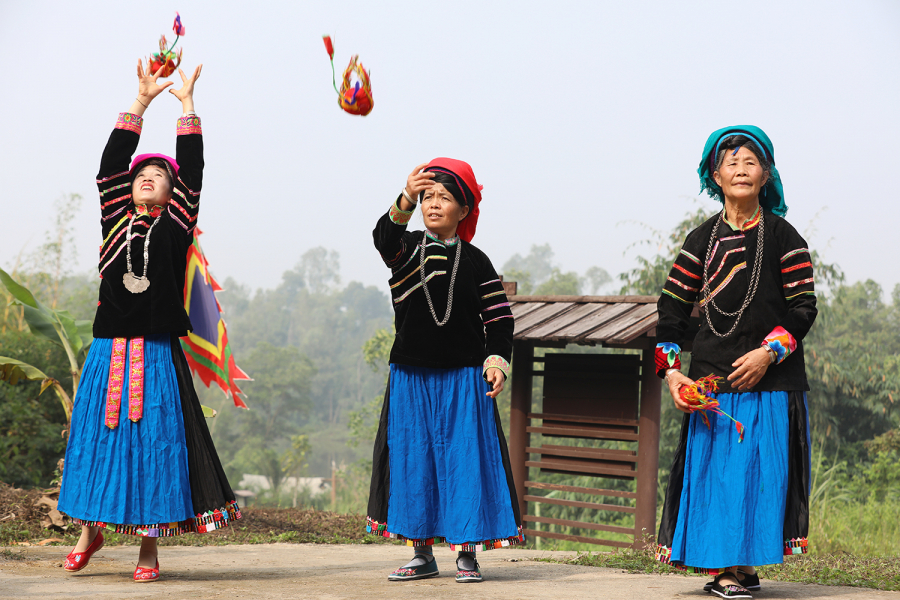
The Lunar New Year is also an occasion for the Pu Péo people to gather, socialize, and sing and dance.
When the roosters begin to crow, the Pu Péo people join in, singing loudly to the heavens. For the Pu Péo, the rooster's crow is a sign to awaken the sun, marking the beginning of a good new day. Therefore, whoever sings loudly and powerfully enough to drown out that sacred crowing will surely have much luck and happiness in the new year.
The custom of worshipping a bowl of plain water among the Pà Thẻn people.
On the ancestral altar of the Pà Thẻn people in Hà Giang, there is always a bowl of plain water. This bowl must contain clean water taken from the source of the clearest, cleanest stream in the village, and it must be kept tightly covered all year round. The homeowner is never allowed to let the water in the bowl dry up. Each year, the homeowner is only allowed to open the bowl twice: at the end of June to add more water, and on the 30th day of the Lunar New Year to replace the water.
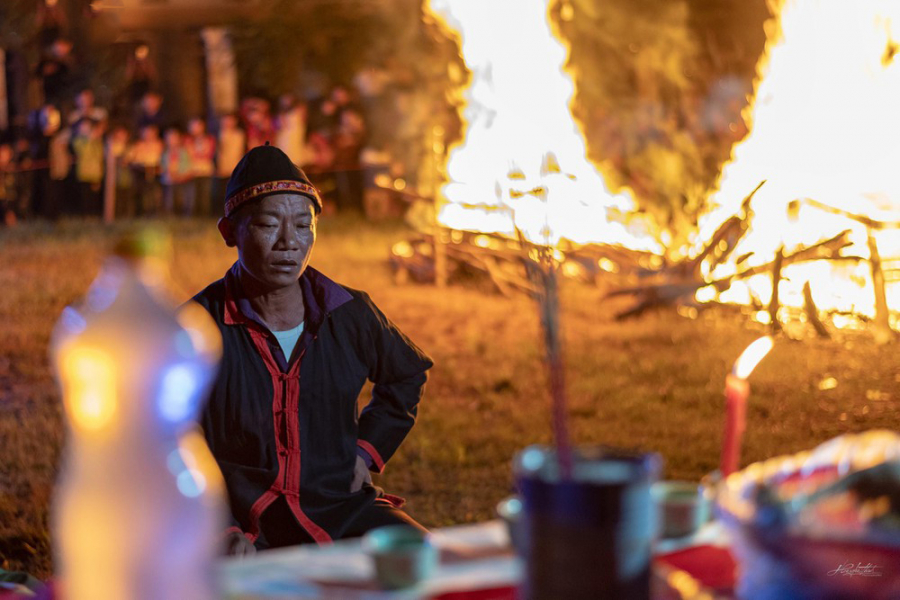
The Pả Thẻn shaman performs a ritual to pray for good fortune for all villages and hamlets.
Accordingly, on the night of the 30th of Tet (Lunar New Year's Eve), families in Pa Then will lock and seal all ventilation holes in their houses, then cook a pot of chicken porridge for the whole family to gather and celebrate Tet. After eating the porridge, the homeowner will take down the bowl of water that has been kept on the altar all year round to clean it and replace the water. This must be done discreetly because the Pa Then people believe that if outsiders see the sacred bowl of water being cleaned or having its water changed, the family will experience bad luck in the new year.
The Lolo people awaken their livestock to celebrate Tet.
For ethnic minority communities, livestock is an important part of the family economy. Therefore, the custom of waking up livestock to celebrate Tet (Lunar New Year) is an indispensable New Year tradition of the Lo Lo people.
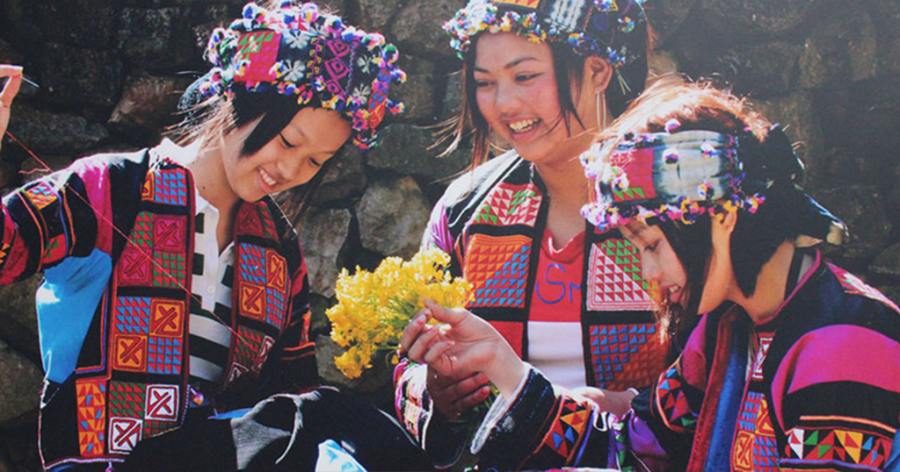
The Lo Lo ethnic group in Ha Giang
When the new year arrives, at the moment the first rooster crows in the village, the Lolo people will wake up all the livestock in the house to welcome the new year with the whole family. In addition, they will also perform a ritual at home to pray for a happy new year. Men will be offered a rooster, while women will be offered a hen.

The Ha Nhi people's custom of fortune-telling using the liver of a castrated pig.
Pigs are important livestock for ethnic minorities in the northern mountainous regions of Vietnam. Besides their economic value, these animals also hold significant meaning for some ethnic groups, such as the Ha Nhi people in Lai Chau.
According to the traditional customs of the Ha Nhi ethnic group, each family raises a male pig. On the first day of the new year, they castrate the pig, saving it for slaughter the following year to offer as a sacrifice to their ancestors. Pork is an indispensable dish on the New Year's feast table of the Ha Nhi people, regardless of whether the family is wealthy or poor.
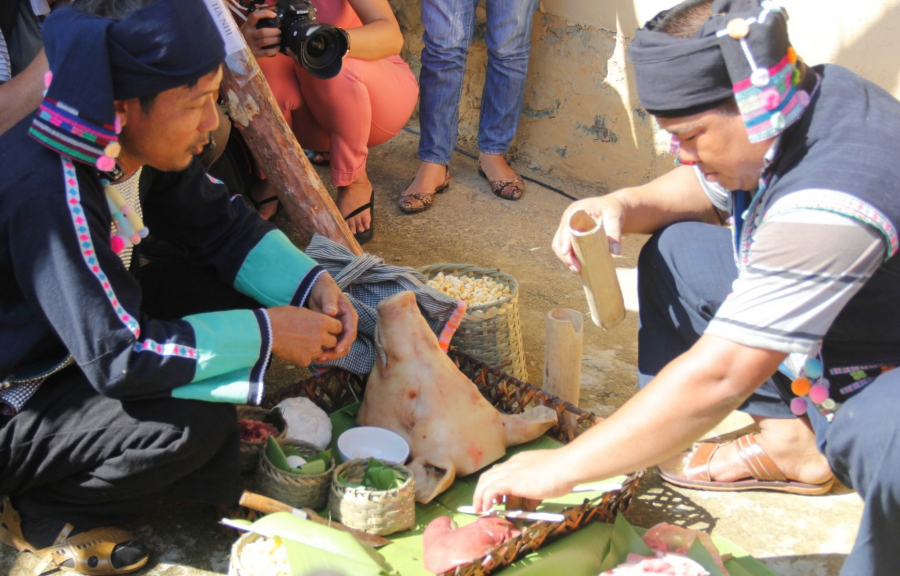
For the Ha Nhi people, slaughtering pigs is not simply an activity to prepare for the Lunar New Year celebration, but also a way to perform fortune-telling at the beginning of the year.
When slaughtering a pig for the New Year's feast, the Ha Nhi people pay special attention to the liver. If the pig's liver is intact, bright red in color, and the gallbladder is full, then that year will bring prosperity in livestock farming and business, favorable weather, and family happiness.
The Muong people's custom of calling the spirit of the buffalo back to celebrate Tet.
Considering the buffalo as the foundation of their livelihood, the Muong people never forget to include this important animal in their New Year celebrations. Several days before Tet, they usually prepare a wooden gong, and after midnight, they light torches to call the buffalo's spirit. Furthermore, the Muong people hang strings of rice cakes on their everyday farming tools such as plows, harrows, and carrying poles to invite these "close friends" to partake in the Tet festivities.
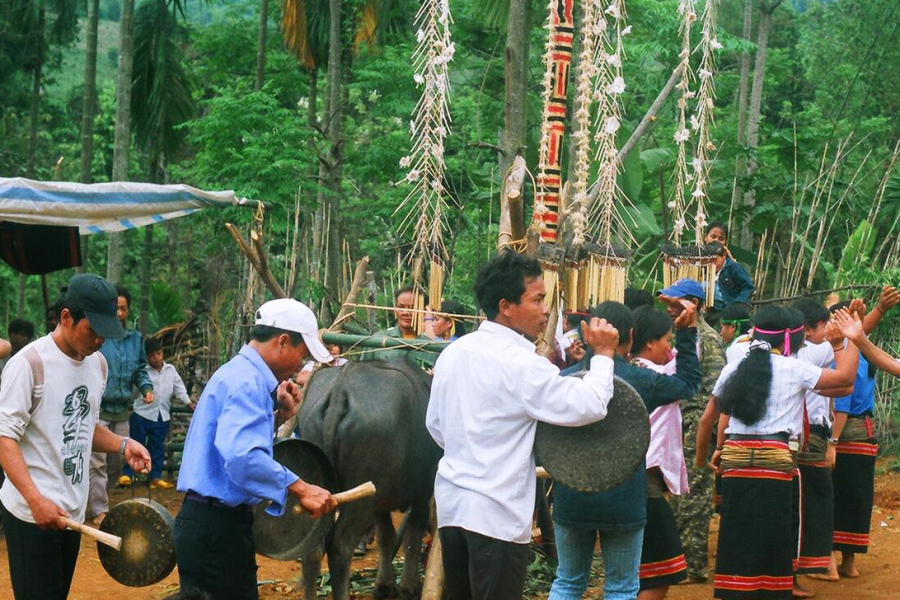
This unique New Year's custom of the Muong ethnic group has a very humane meaning, expressing people's gratitude to the loyal animals that have helped the family with farming throughout the year. The Muong people believe that after a year of hard work, both the buffalo and the plow deserve to rest.
Thais perform a spirit summoning ritual during the Lunar New Year.
An indispensable custom and a distinctive feature of Thai New Year is the ritual of summoning spirits. On the evening of the 29th or 30th of the lunar month, each family slaughters two chickens: one to offer to their ancestors, and the other to summon the spirits of the family members.
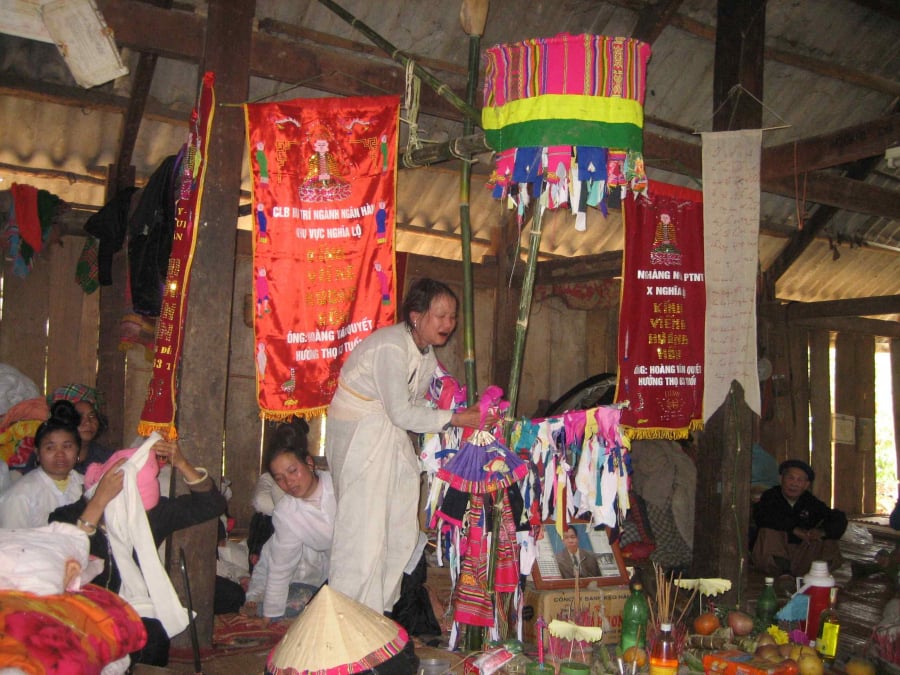
The Thai custom of inviting the deceased home for the Lunar New Year is quite elaborate.
The shaman will take the clothes of each family member, tie them tightly together at one end, and drape them over his shoulder. Holding a burning piece of wood, the shaman will take the clothes to the edge of the village and call out to the spirits. After calling out about two or three times, the shaman will return to the bottom of the stairs of the family's house and call out one more time. Finally, the shaman will tie a black thread around the wrist of each family member to ward off evil spirits.
The Hmong custom of butt-slapping
The Hmong people in the northern mountainous region have rich and colorful customs and traditions for the Lunar New Year. In the early days of the year, they hold festivals in large open areas, organizing games such as stick pushing, tug-of-war, flute dancing, and singing competitions.
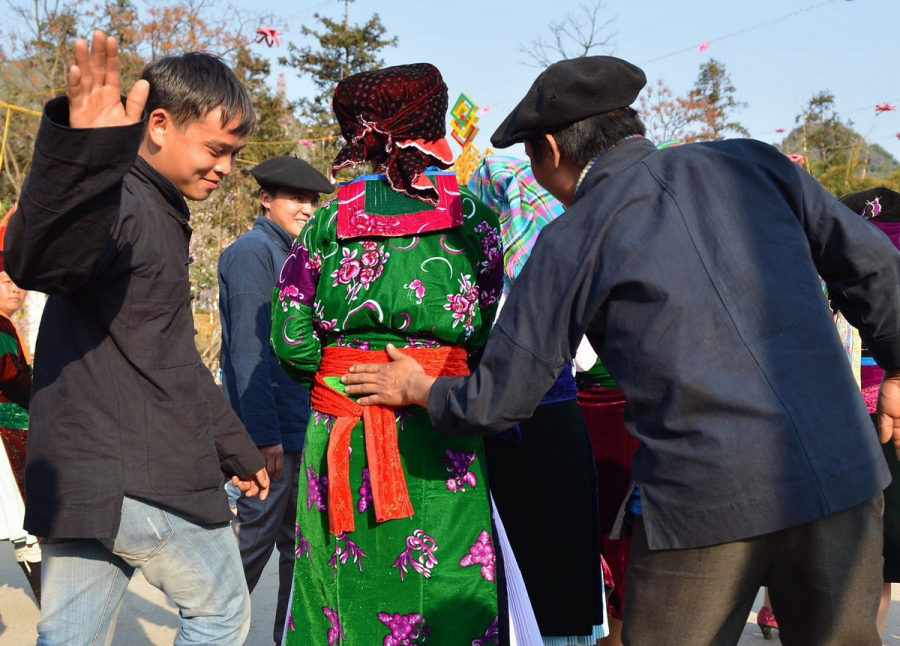
The beginning of the year is also a time for young men and women to date and find love. In a crowd, if a young man wants to express his feelings to a girl, he will approach her and pat her buttocks. If the girl agrees, she will pat the young man's buttocks in return. As a rather special "getting to know each other" ritual, according to custom, if a young man and woman fall in love, they will pat each other's buttocks nine times in front of everyone, after which they will officially become a couple, and may go to the mountains together to find a place to date and spend time together.
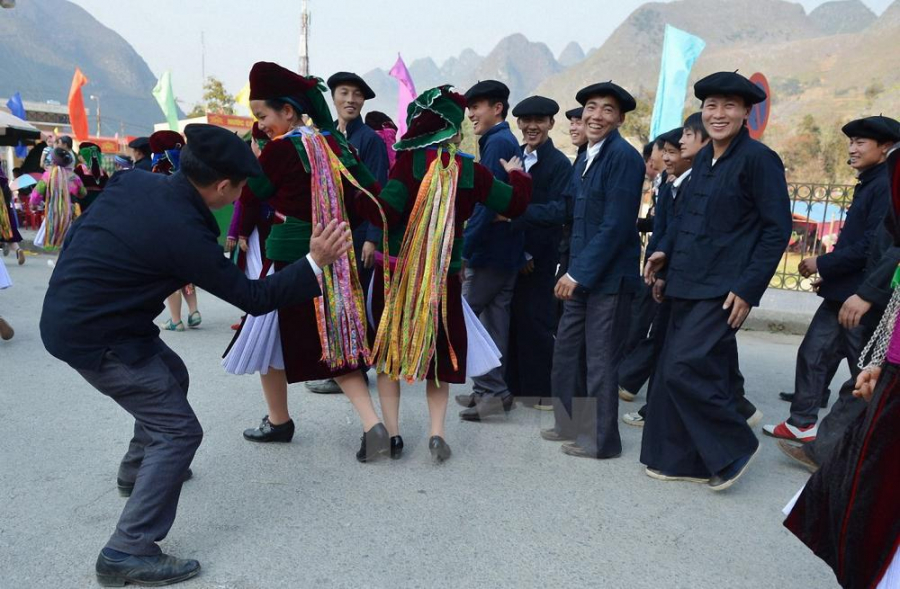
This is an indispensable custom at the Sai San spring festival, also known as Gau Tao, one of the most important festivals of the year for the Hmong people, held with the purpose of praying for blessings and finding love. This festival has been preserved intact from ancient times to the present day. Besides butt-slapping as a declaration of love, the Sai San festival also has many interesting activities such as throwing pao, playing the khene (a type of bamboo flute), and singing love songs.