VI
VI


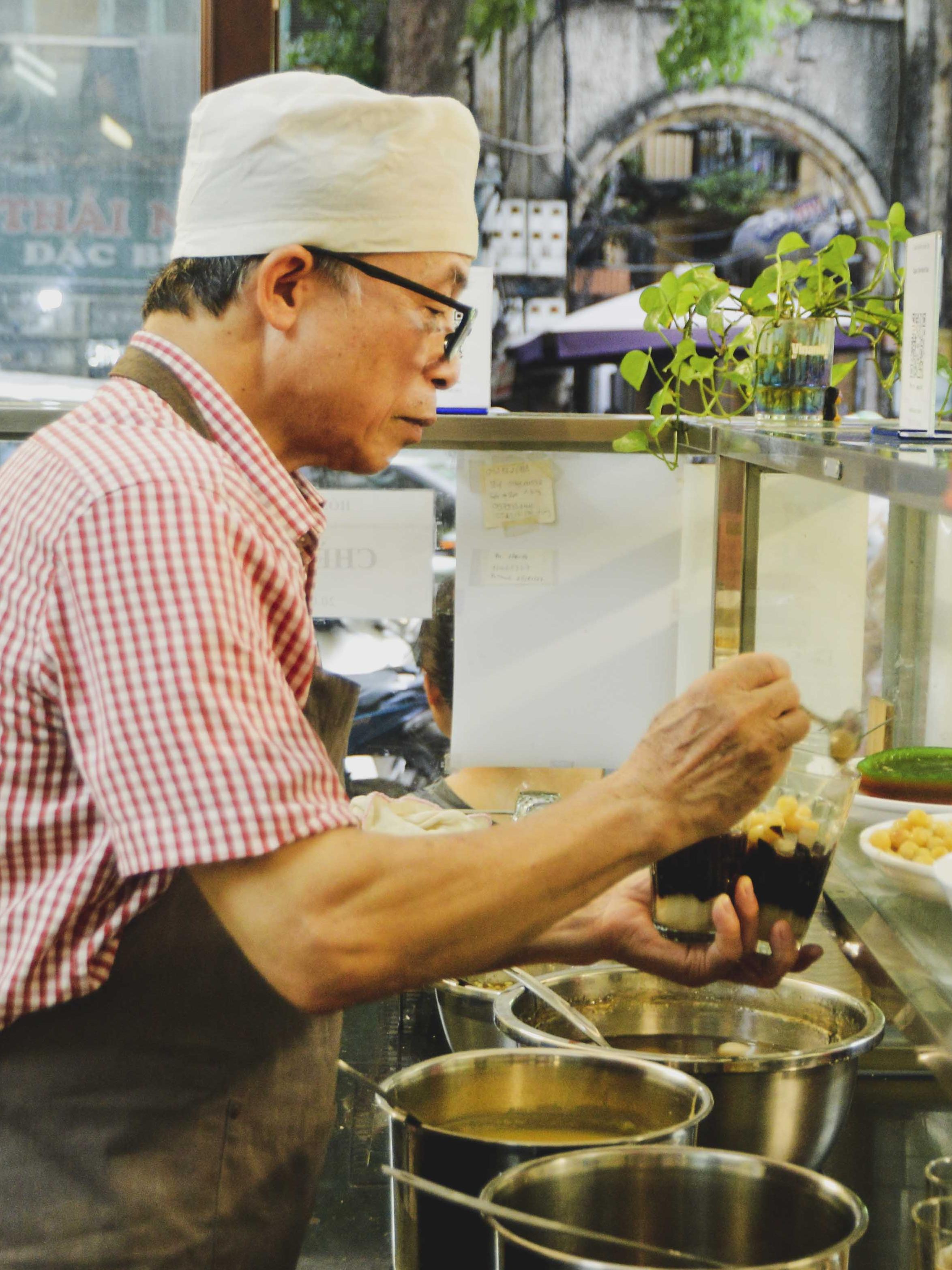
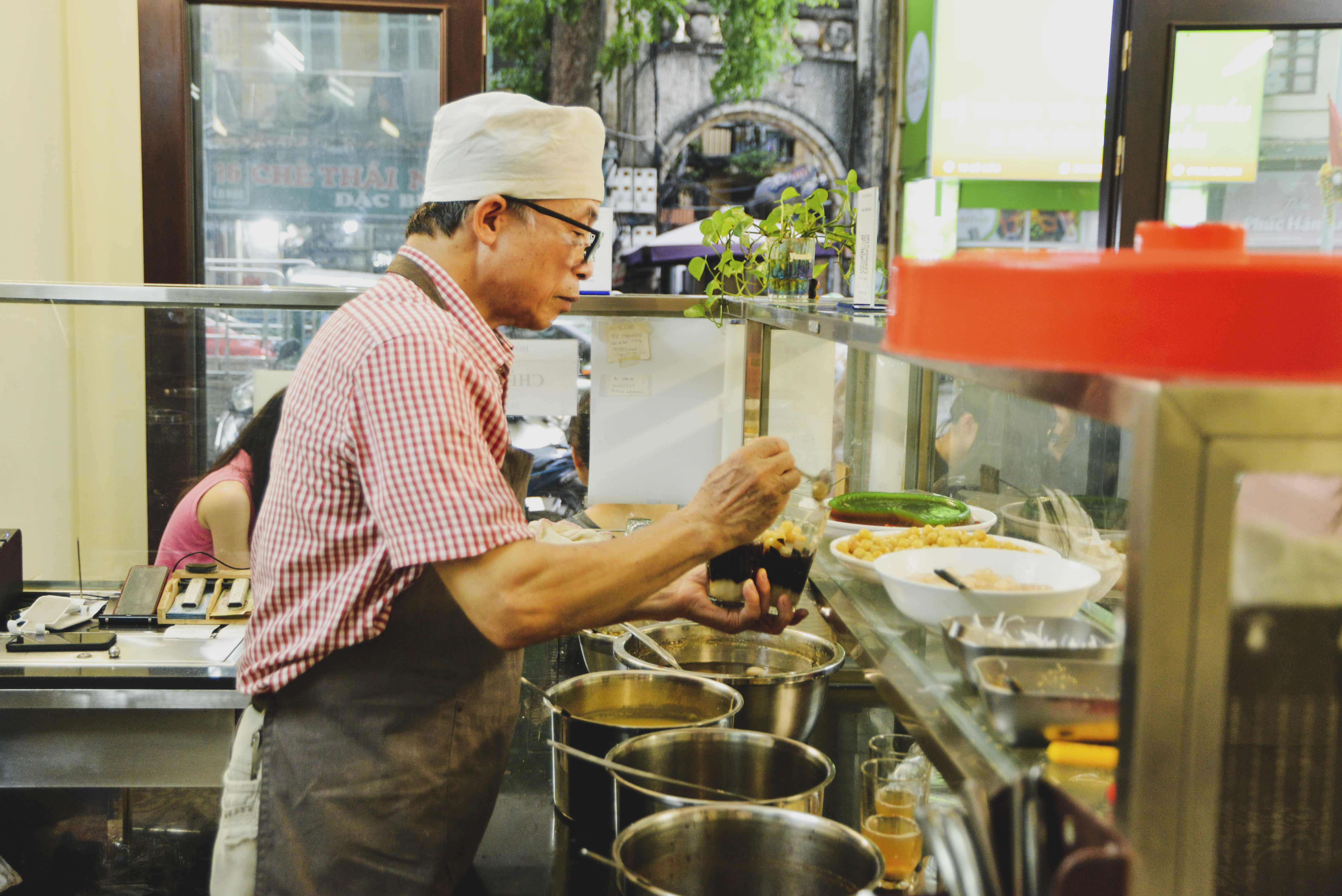
Preserving the sweet and savory essence of over 40 years of the Mười Sáu dessert shop.
Amidst the constant changes in Hanoi's streets, where modern bubble tea shops and elaborate Korean-Japanese desserts spring up like mushrooms, in a quiet corner on Lo Duc Street, a traditional tea shop remains steadfast, like a calm note in the modern culinary symphony.
The Sixteen Tea Shop – a name that sounds both familiar and old-fashioned – is a place where generations of Hanoians return to savor the sweet taste of their childhood, of old Hanoi with its unique and unmistakable charm.
Mr. Pham Xuan Thanh, the owner of the shop, shared: "My greatest wish is that future generations of my family will continue the tea shop to preserve the essence of Hanoi cuisine, and above all, to prevent traditional dishes from fading away over time."
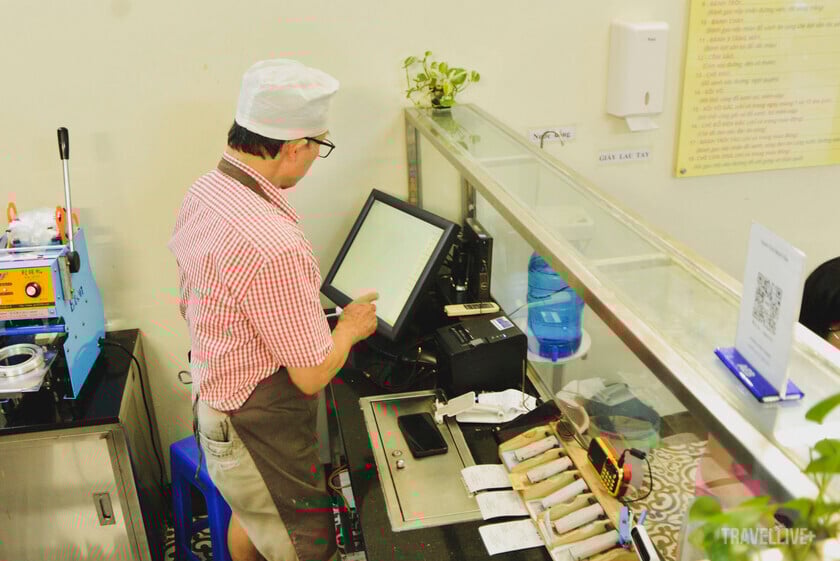
Mr. Xuan Thanh manages a small tea shop filled with many memories.
In 1978, the Mười Sáu dessert shop officially opened at 16 Ngô Thì Nhậm Street, starting with the skillful hands of an elderly woman from Hanoi – the mother of Mr. Phạm Xuân Thanh. In those years, desserts weren't a trendy dish or one with complicated recipes. They were simply bowls of sweet black bean dessert, nutty lotus seed dessert, or fluffy sticky rice, all made from purely Vietnamese ingredients, served as a dessert, offered to guests, or used as offerings during holidays and Tet (Vietnamese New Year).
Later, after his mother passed away, Mr. Thanh took over the restaurant, bringing with him the memories, recipes, and the "Hanoi spirit" that his mother had passed down. "As the second generation, I don't want to blend in modernity; it's purely traditional. Anything that belongs to tradition will always endure," Mr. Thanh shared.

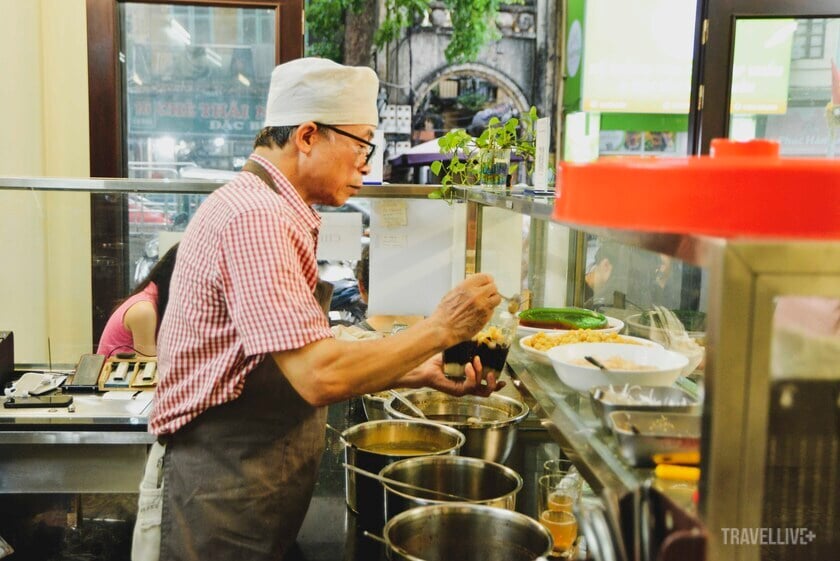
Owner of the Sixteen Tea Shop - Pham Xuan Thanh
The taste of time
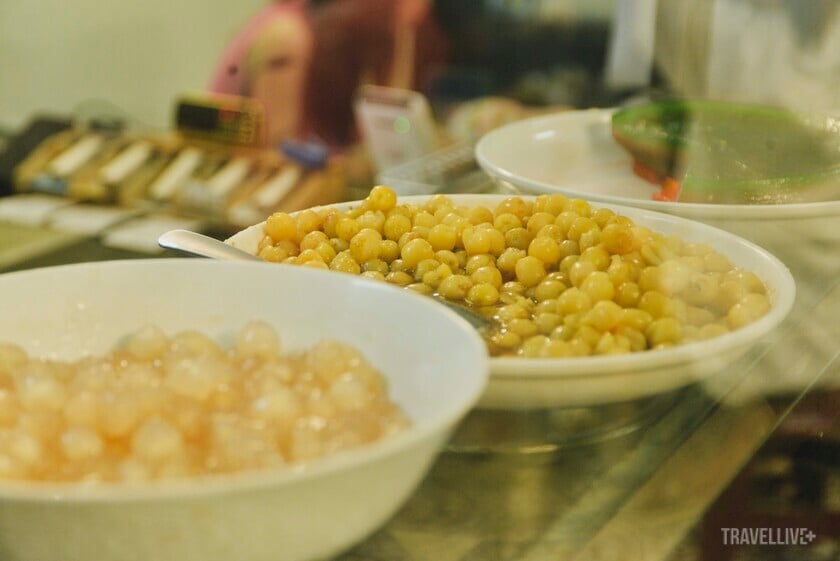
From a small house on Ngo Thi Nham Street, the shop moved to a more spacious and brighter location at 21A Lo Duc Street, but the flavors remain unchanged. The menu here isn't fancy or subject to seasonal changes to cater to trends, but consistently revolves around traditional desserts like black bean sweet soup, green bean sweet soup, lotus seed sweet soup, nine-layered cloud cake, sticky rice with mung beans, sticky rice with green rice flakes... For regular customers, each dish evokes a slice of memory.
The sweet soup at Mười Sáu is not overly sweet and contains no preservatives or artificial flavorings. Mr. Thanh meticulously selects his ingredients: the mung beans must be uniform and unbroken, the glutinous rice must be fragrant "golden flower" glutinous rice, and the lotus seeds must be mature lotus seeds with the cores carefully removed. "I choose the best ingredients, and the cooking technique remains the same; there's nothing special about it, just doing it correctly and consistently," he says simply.
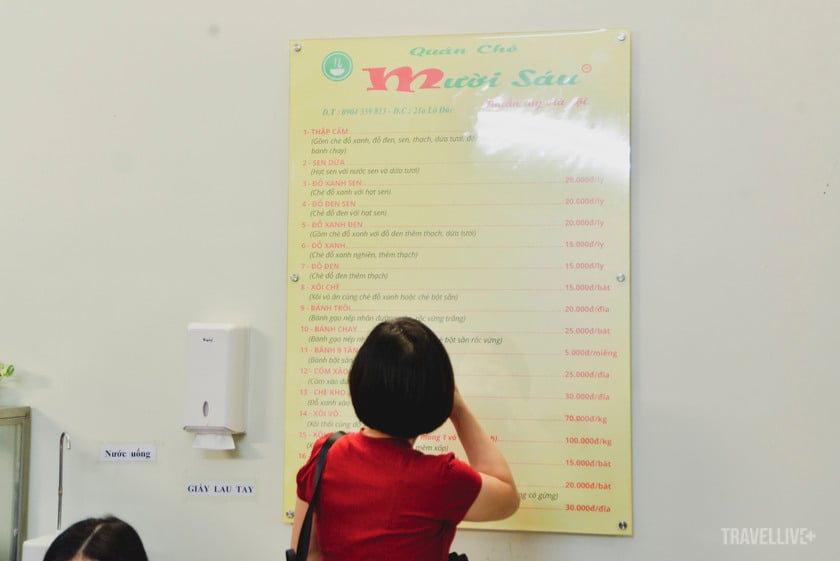
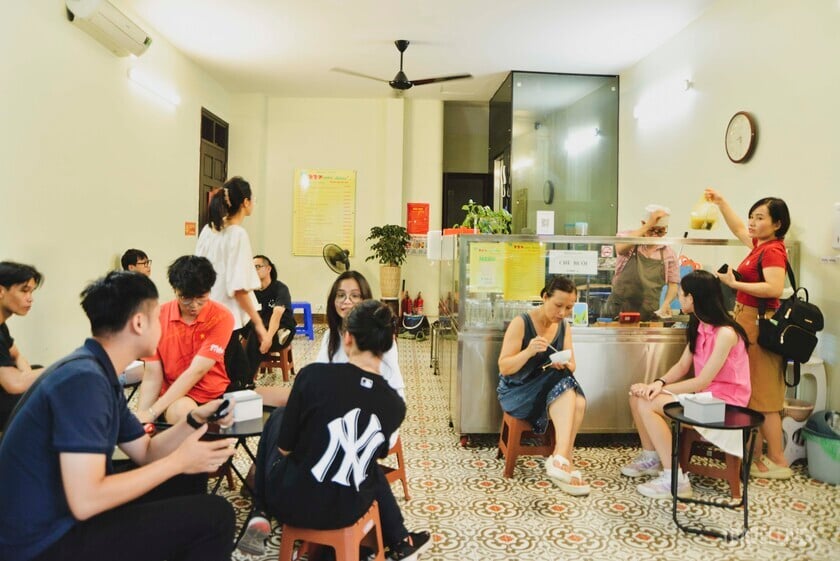
Visitors flocked in on hot summer days.
For him, a delicious sweet soup must be one that isn't overly "showy." A simple bowl of black bean sweet soup just needs to be soft but not mushy, with a smooth, naturally brown broth, a subtly sweet taste, and a refreshing feeling after eating. Similarly, lotus seed sweet soup must be cooked so that the lotus seeds remain intact, not broken, but still tender and subtly sweet when bitten into. No toppings, no added grass jelly, no variations like tapioca pearls, because "Hanoi wasn't like that in the old days, yet everyone loved it."
A space of memories
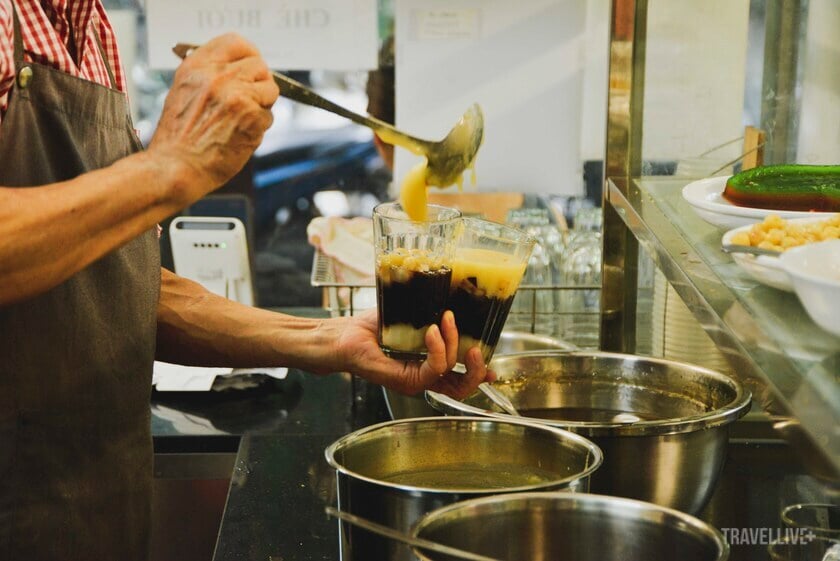
Despite moving to a new location, the atmosphere of Mười Sáu dessert shop remains familiar. The simple plastic tables and chairs, the handwritten menu hanging from the wall, and the friendly owner who serves and chats with customers – all create a warm, home-like ambiance. During peak hours, customers line up to buy takeout or sit huddled in a corner, enjoying a cool bowl of dessert under the sweltering summer sun; everyone is patient and doesn't complain.
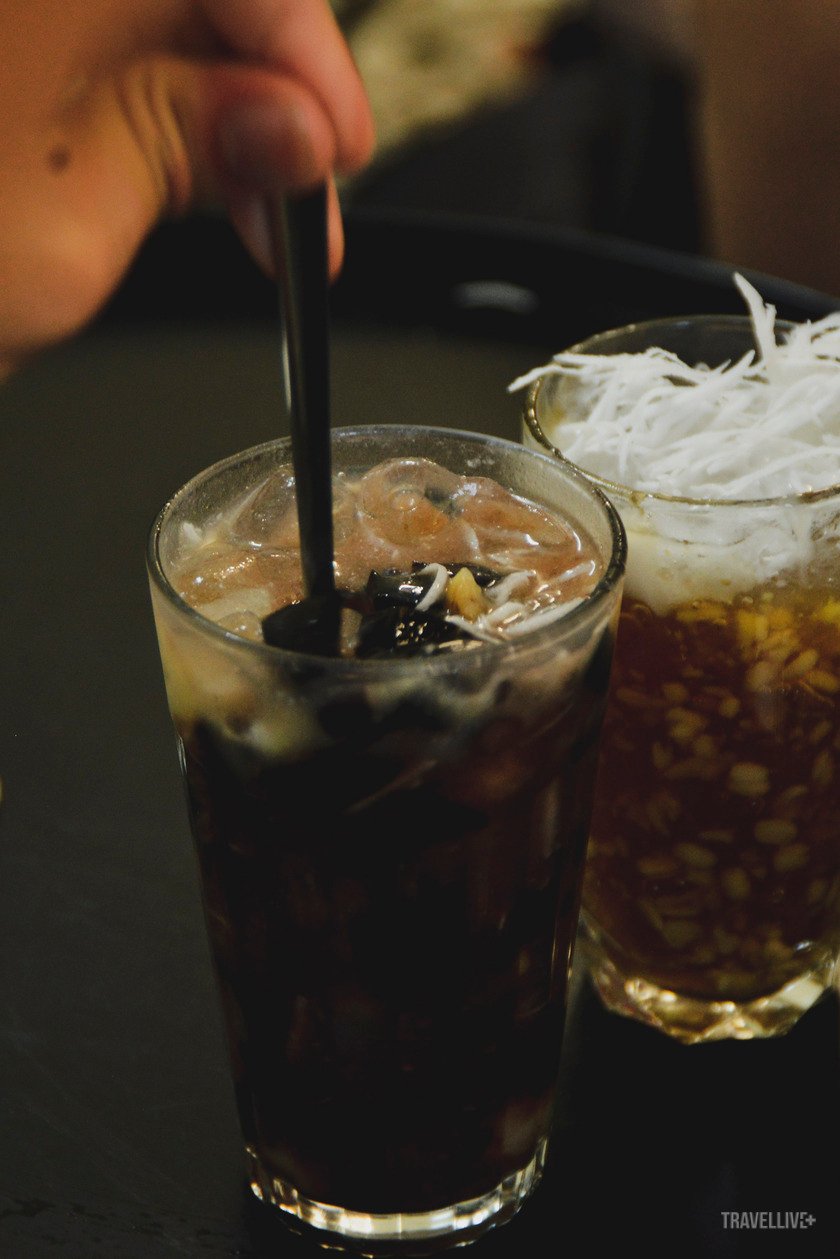
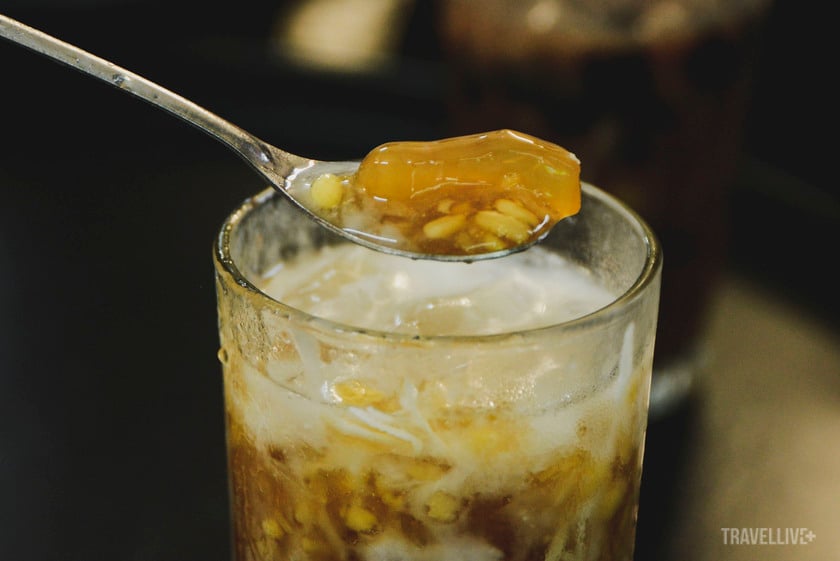
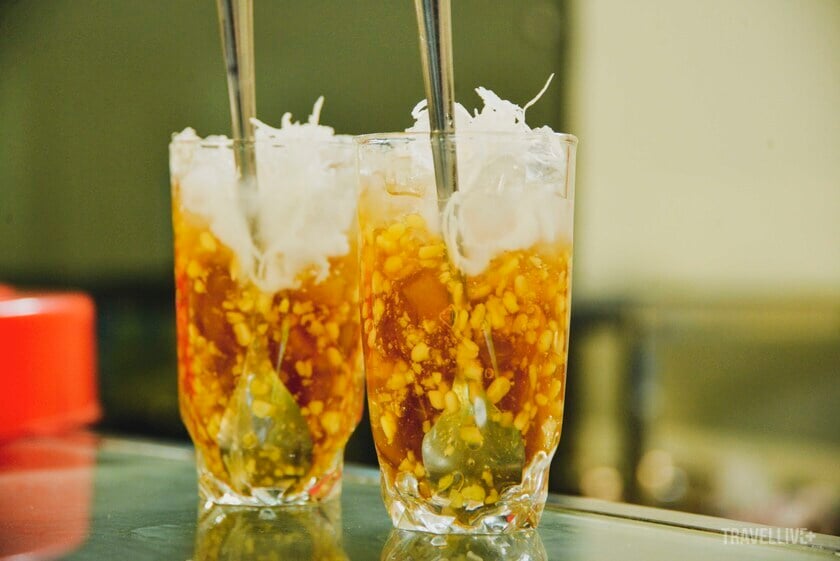
Pomelo dessert is cooked until smooth, creamy, and chewy.
In summer, the shop is busiest with its refreshing mung bean desserts served with crushed ice. In winter, customers seek out glutinous rice balls in sweet soup, sweet potato dessert, and hot desserts to ward off the biting cold of Hanoi's weather. Each season brings a different dessert, like a slice of the weather, and also a deeply ingrained aspect of the capital's culinary culture.
What makes people love Mười Sáu dessert shop is not only its subtly sweet flavor, but also the owner's dedication to preserving the craft. For over 40 years, Mr. Thanh has been involved in making desserts, personally preparing the ingredients every day with his wife and children, maintaining the traditional way of cooking. He doesn't chase trends, doesn't expand his chain, and doesn't add any new dishes. "Many people ask why I don't make coconut jelly dessert or tapioca pudding... but I don't want to. My family maintains tradition; we only sell the dishes that people in Hanoi used to eat," he said.
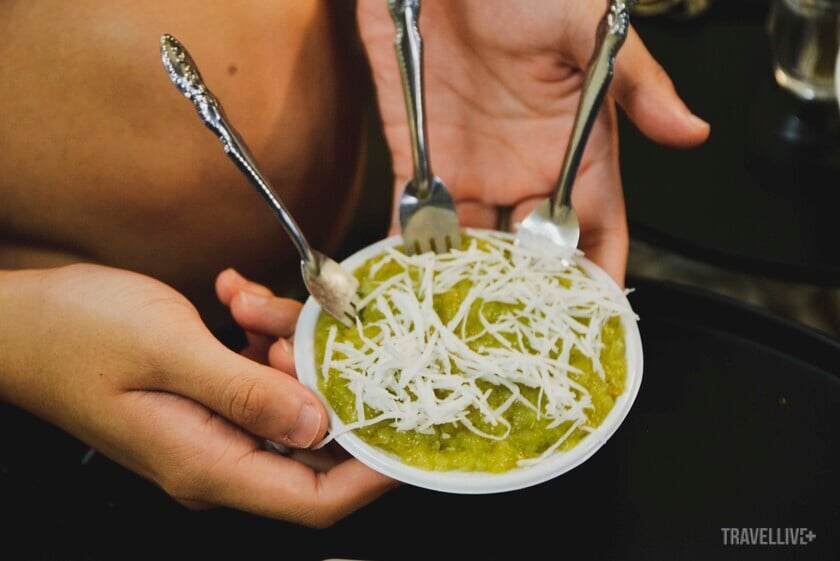
Sticky rice with young rice flakes, soft, chewy, and subtly sweet.
The prices of the sweet soups here are also very "affordable," ranging from 10,000 to 25,000 VND, suitable for students, workers, and even tourists. "Sweet soup is something deeply ingrained in the subconscious of Hanoians," Mr. Thanh said. And indeed, this simple dish is not just for satisfying the taste buds. It is a part of memories, a snack for children after school, a bowl of lotus seed sweet soup cooked by mothers on the first day of summer, a bowl of glutinous rice balls on windy nights during the monsoon season. Cuisine is not just about flavor, but also about culture and emotion.
Amidst the surging waves of modernization sweeping through Hanoi, the Sixteen Dessert Shop stands quietly as a lifeline for nostalgic souls. People come here not just to eat, but to touch a piece of old Hanoi, to hear stories from the elderly owner who has been making desserts for more than half her life, and to see that amidst the whirlwind of change, there are still things that remain undimmed by time.
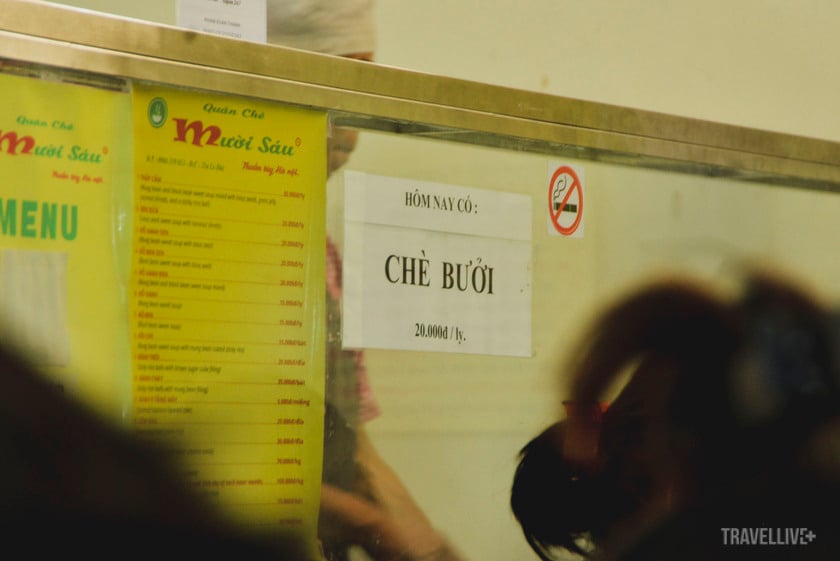
"We have pomelo tea today."
That little corner on Lo Duc Street has no flashy signs, no digital menus, and no noisy media. Yet every day, people line up, some take boxes home for their grandparents and parents, and foreigners curiously stop by to try a "Hanoi sweet treat." And when diners take their first bite, many are silenced. Because it's not just a spoonful of black bean sweet soup, but a piece of the soul of the old town, gently dissolving on their tongues.