VI
VI


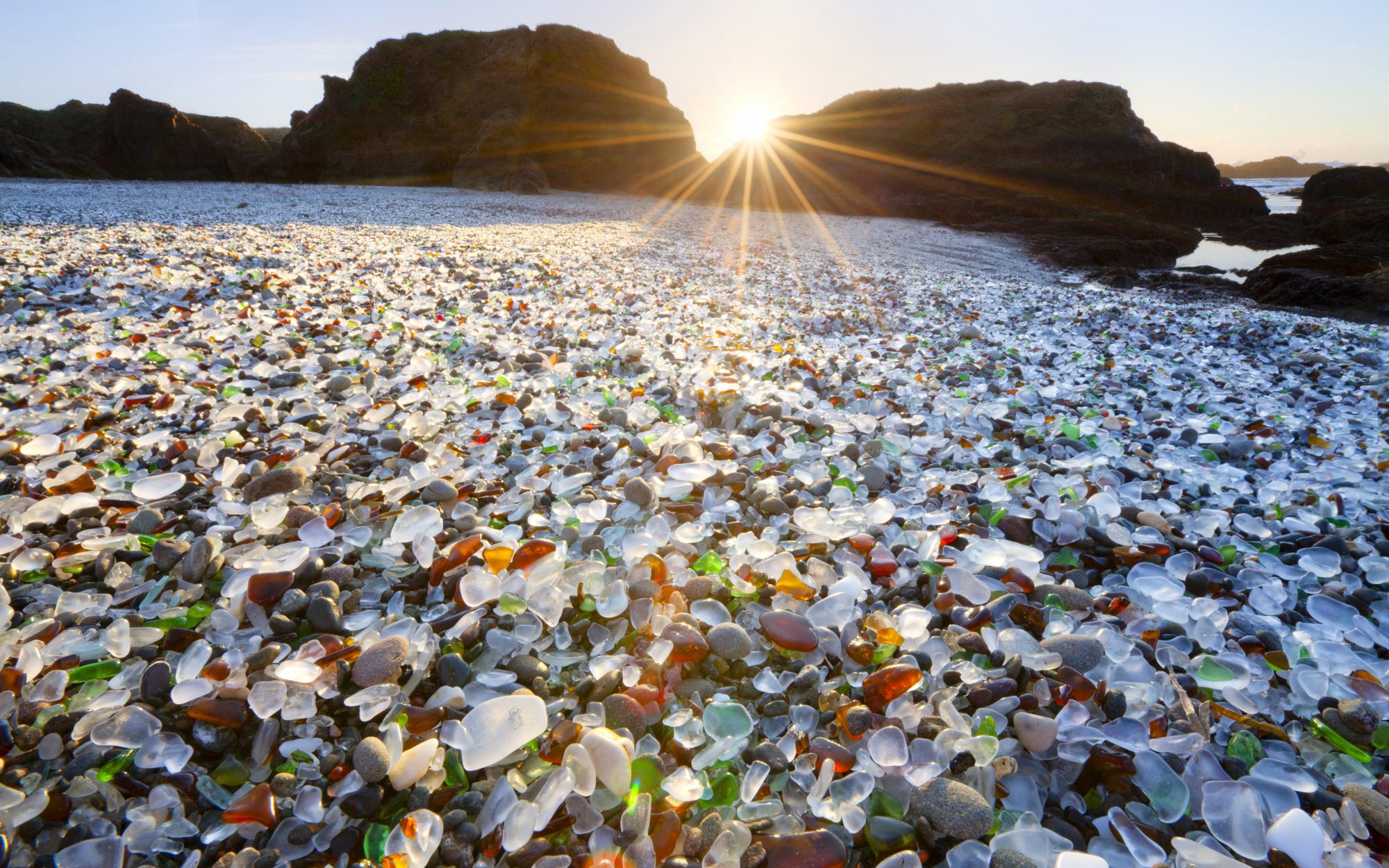
In the early 1900s, Fort Bragg, California, was home to a large landfill. People discarded broken bottles, tin cans, and even pieces of industrial machinery. But strangely, from this waste-filled area, Mother Nature transformed the California beach into a vibrant wonder: Glass Beach.
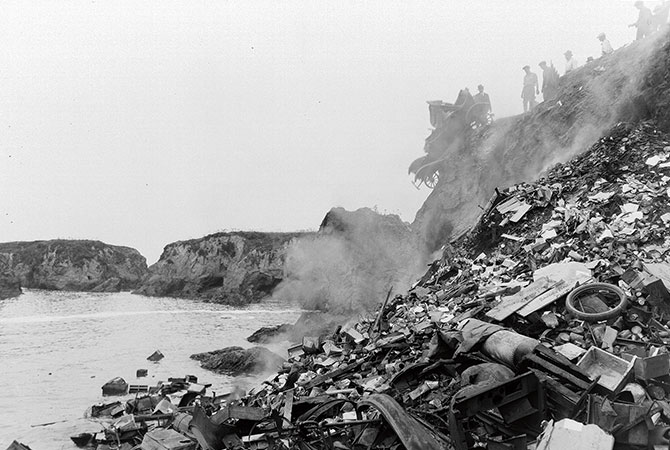
Fort Bragg Beach used to be a dumping ground for industrial waste.
This is a fantastic destination with thousands of colorful glass shards that attract many tourists, especially photographers eager to come here to admire this natural masterpiece.
In the late 1960s, a group of environmentalists and local officials realized that dumping garbage into the ocean wasn't a good idea. They decided to clean up the landfill at Fort Bragg and transform it into a beautiful beach in 1967. Later, residents of Fort Bragg, California, dealt with the accumulated waste by burning it to break down plastic and organic waste, while heavier objects like rocks, glass, bottles, and other debris remained on the beach.
Over time, the wind and the force of the waves have shattered the glass into small pieces and worn them down, making them smooth and polished in various colors and shapes, thus forming the glass beach. Colorful glass pebbles are scattered all over the beach, and visitors can walk barefoot on them without fear of injury.
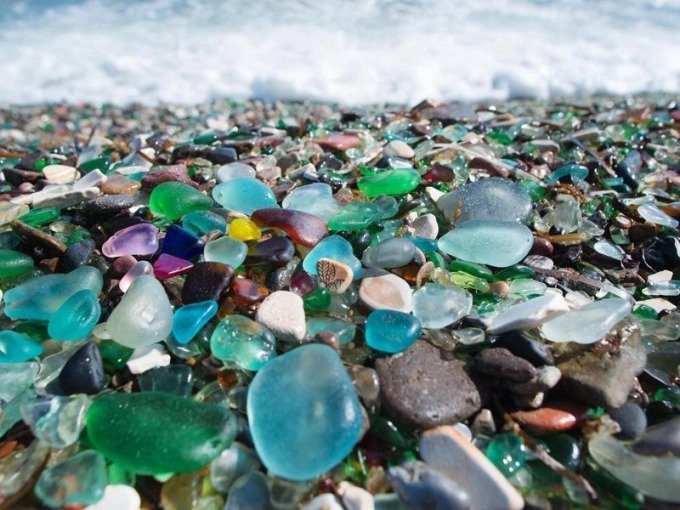
The colorful glass pebbles give you the feeling of being lost in a strange world. Photo: Rafinade
The Glass Beach is most beautiful when the sun is high in the sky or at sunrise and sunset, because at those times the light shines on the glass pebbles, making the entire beach sparkle like a multicolored rainbow.

This area is home to many species of aquatic animals, mollusks, and more. Because glass beaches are usually below sea level, if you want to observe the flora and fauna here, you should wait until the tide is low.
According to collectors at By The Sea Jewelry, most of the glass at Glass Beach is green, brown, and white, corresponding to items commonly discarded at sea, including beer and soda bottles. Occasionally, pieces of pottery or ceramics surface. Blue, pink, red, and lavender-colored glass are less common.
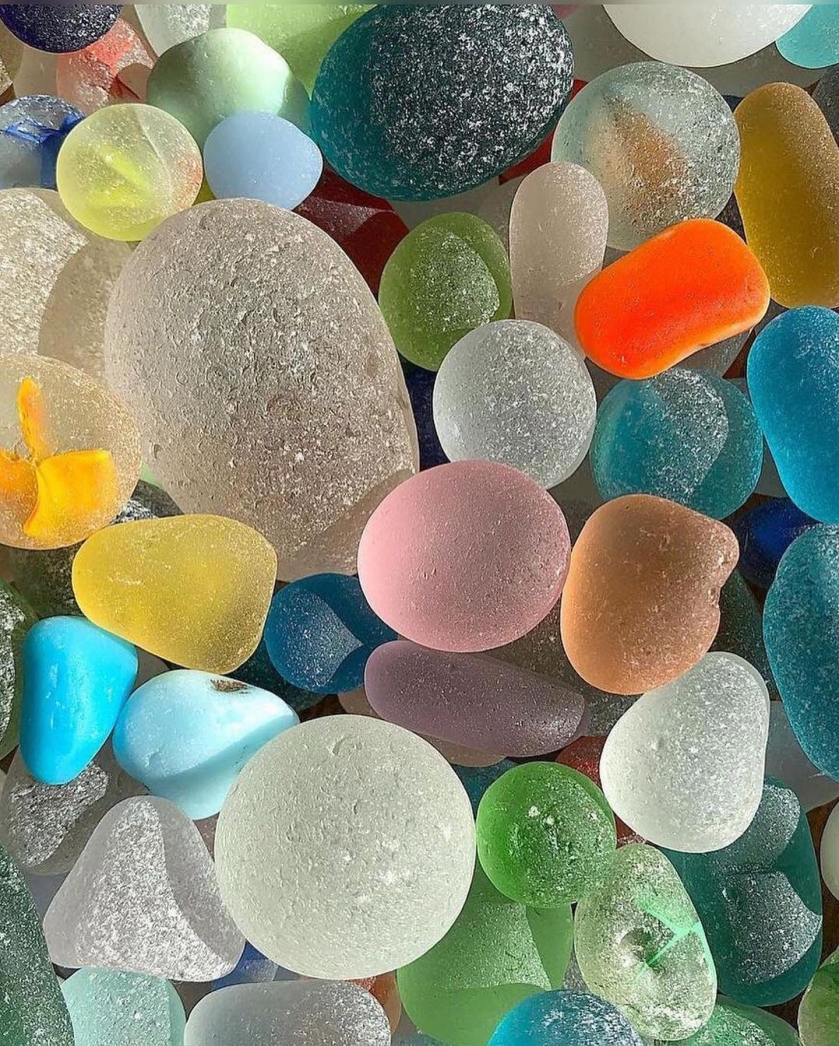
Accordingly, the blue glass could come from Noxzema bottles, Bromo Seltzer bottles, and some perfume or prescription medicine containers. The shades from pink to lemon yellow could come from perfume bottles or clear glass mixed with manganese during the cleaning process. When these chemicals oxidize, they create lavender and pink hues. Today, the glass beach is covered with faceted pebbles in shades of green, brown, black, red, and clear.
Every year, this glass beach welcomes up to 10,000 visitors from all over the world who come to admire and behold it. Not only can they gaze upon the shimmering, sparkling beach in countless colors, but they can also participate in many exciting activities, such as exploring the cliffs.
Over the years, many people have stolen these "sea-polished gemstones" for collecting, souvenirs, etc., leading to a gradual decrease in the number of these glass fragments along the coast of Fort Bragg.
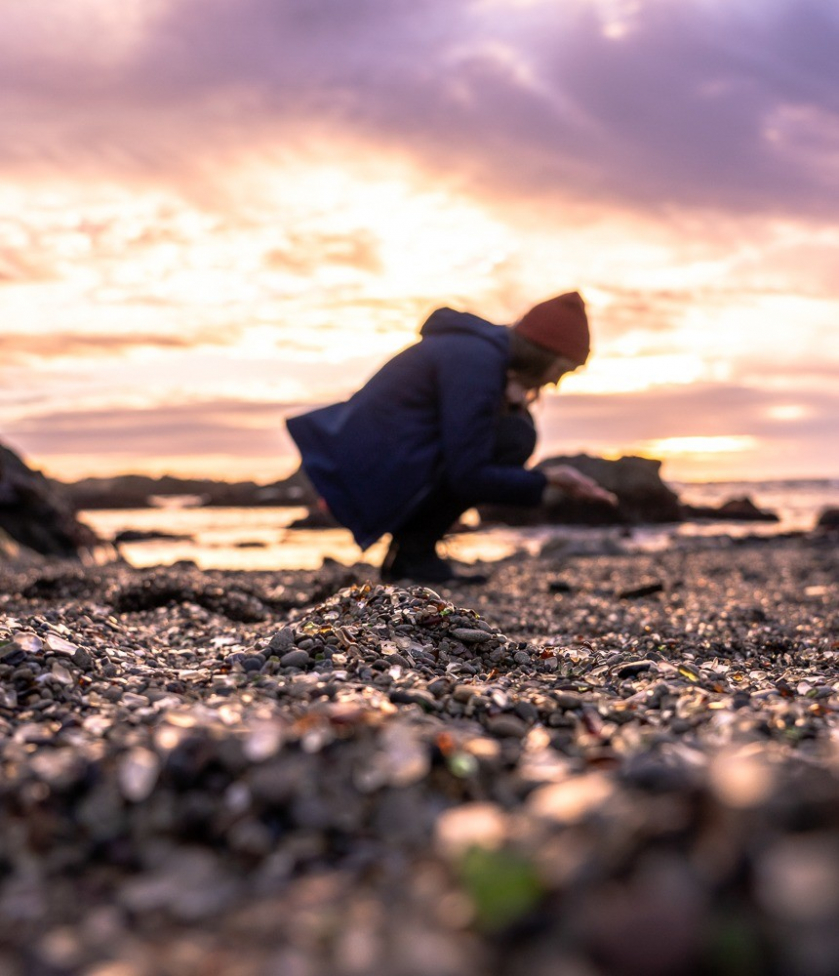
Tourists are fascinated by the stones at this glass beach. Photo: Be My Travel Muse
Since 2002, Glass Beach has been incorporated as part of MacKerricher State Park. Park officials remind and strictly prohibit visitors from taking any glass pieces off the beach, as removing any stones diminishes the area's unique appeal. However, many unscrupulous glass collectors still manage to grab a few souvenirs.
Although the volume of pebbles and polished glass fragments in the Glass Sea is dwindling, visitors can still spend an entire afternoon strolling along the beach and discovering millions of unique glass shards scattered throughout.
Getting to Glass Beach is incredibly easy. Just park for free at Glass Beach Drive, a few blocks west of West Elm Street off Highway 1, and walk in. Remember to wear comfortable shoes or sandals with good soles so you can climb between the rocks and reach the different sections of the glass beach.
Fort Bragg is an incredible example of how the natural world can recover from human mismanagement. Over time, the ocean has the power to transform trash into treasure.