VI
VI


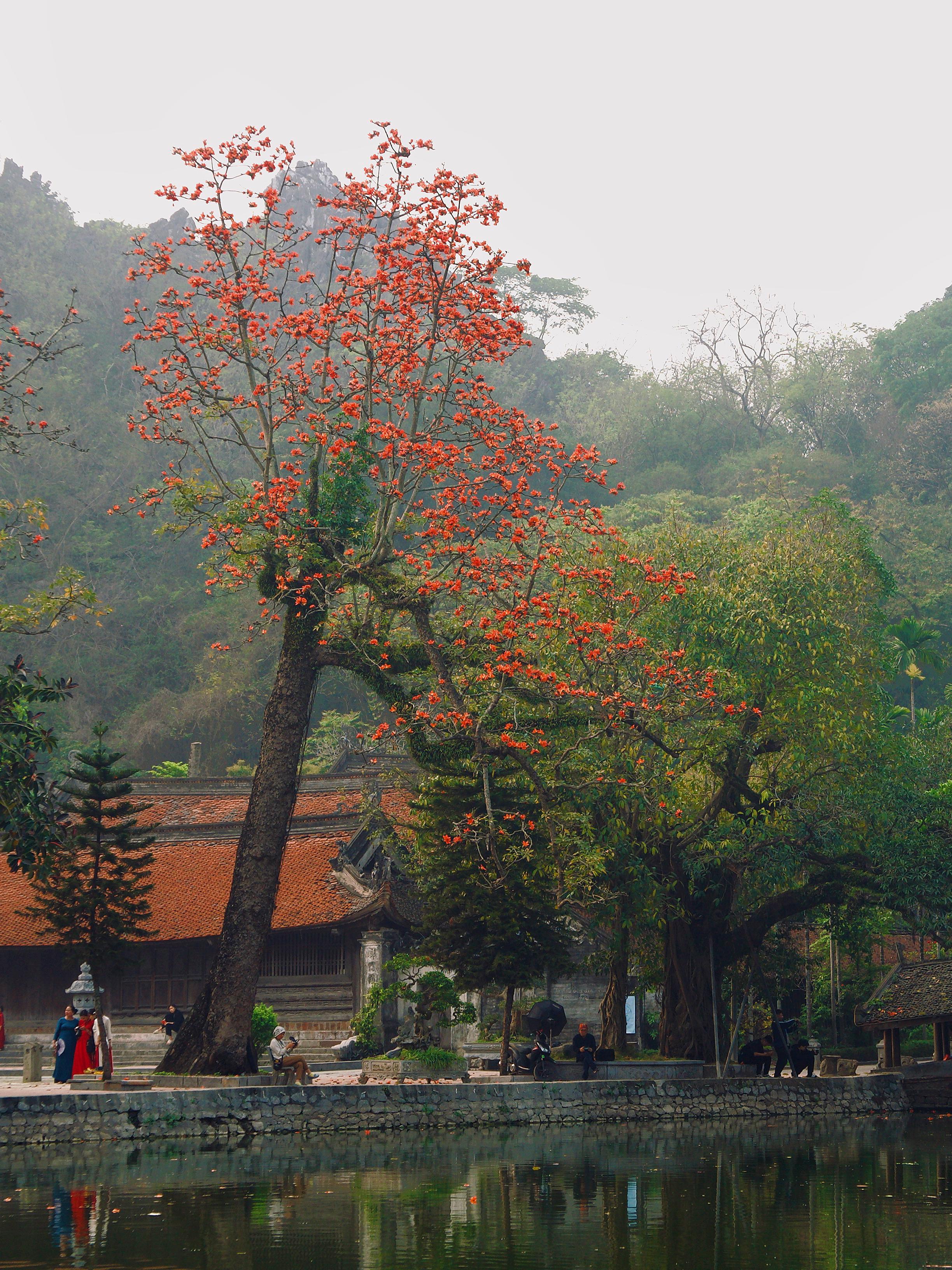
In March, after the spring rains have stopped, the kapok flowers begin to bloom, painting the sky and water a vibrant red. At Thầy Pagoda (Quốc Oai district, Hanoi), one of the oldest pagodas in Northern Vietnam, the kapok trees not only captivate photography enthusiasts but also create a sacred space, blending nature and spirituality.
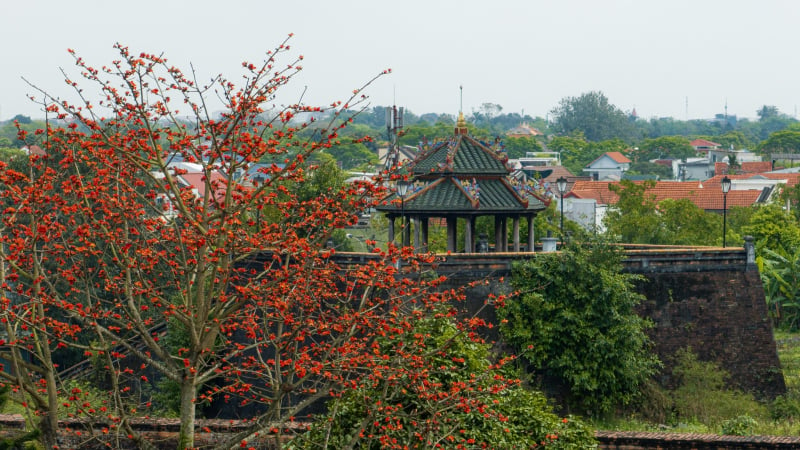
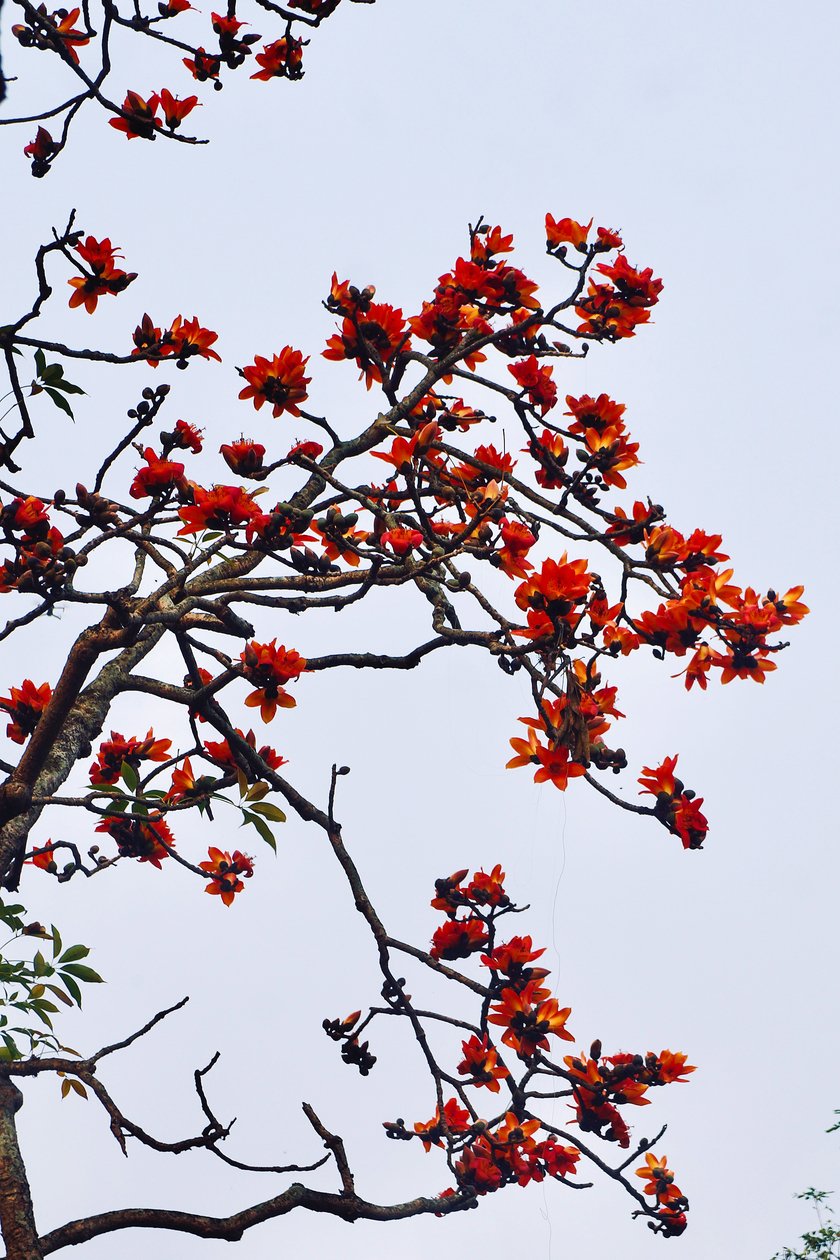
The crimson petals are like tiny flames in the sky.
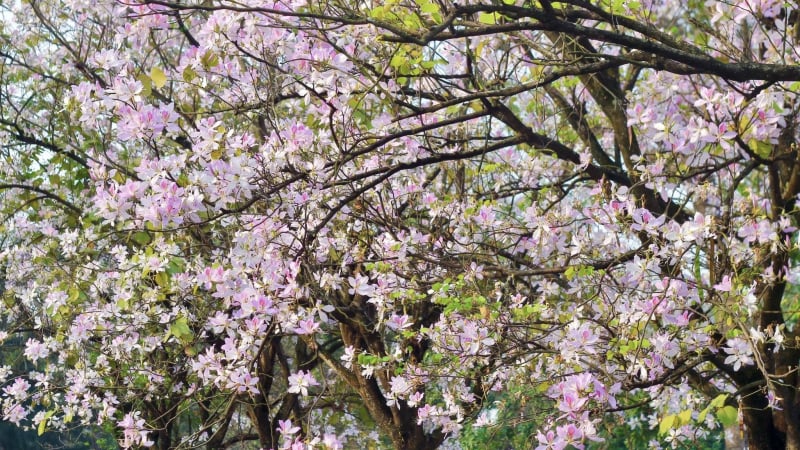
Le Tuan, a student passionate about nature photography, visited Thuy Pagoda one afternoon in March to capture the beauty of the kapok flower season. "The reason I came to Thuy Pagoda to photograph the kapok flowers is because I wanted to create a photo series of flowers blooming in March. I've already photographed the crape myrtle, the white bauhinia, and now the kapok flowers. I happened to see a video of the kapok tree at Thuy Pagoda on social media and immediately wanted to capture the beauty of the kapok flowers in such an ancient and sacred setting," Tuan shared.
Stepping into the temple grounds, the image of the kapok tree stands out as a vibrant highlight amidst the tranquil scenery of the Buddhist sanctuary. Tuan said, "What impressed me most was the kapok tree, which stood out above all others with its bright red blossoms illuminated by the afternoon sun—a scene that photography enthusiasts like me always long to capture." Indeed, the blooming kapok flowers not only beautify the landscape but also evoke nostalgia, a sense of peace, and a connection to the Northern Vietnamese countryside.
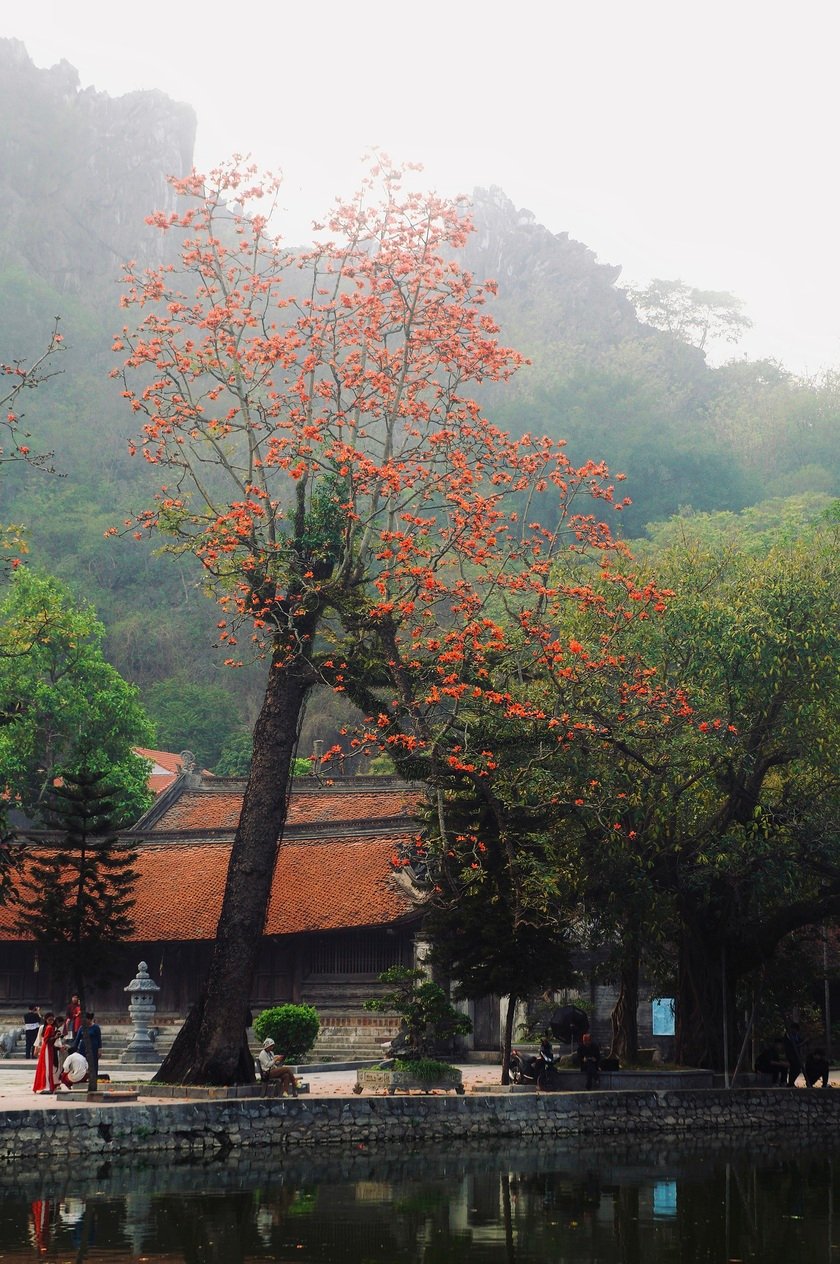
The blooming kapok flowers not only beautify the landscape but also evoke nostalgia, a sense of peace, and a connection to the Northern Vietnamese countryside.
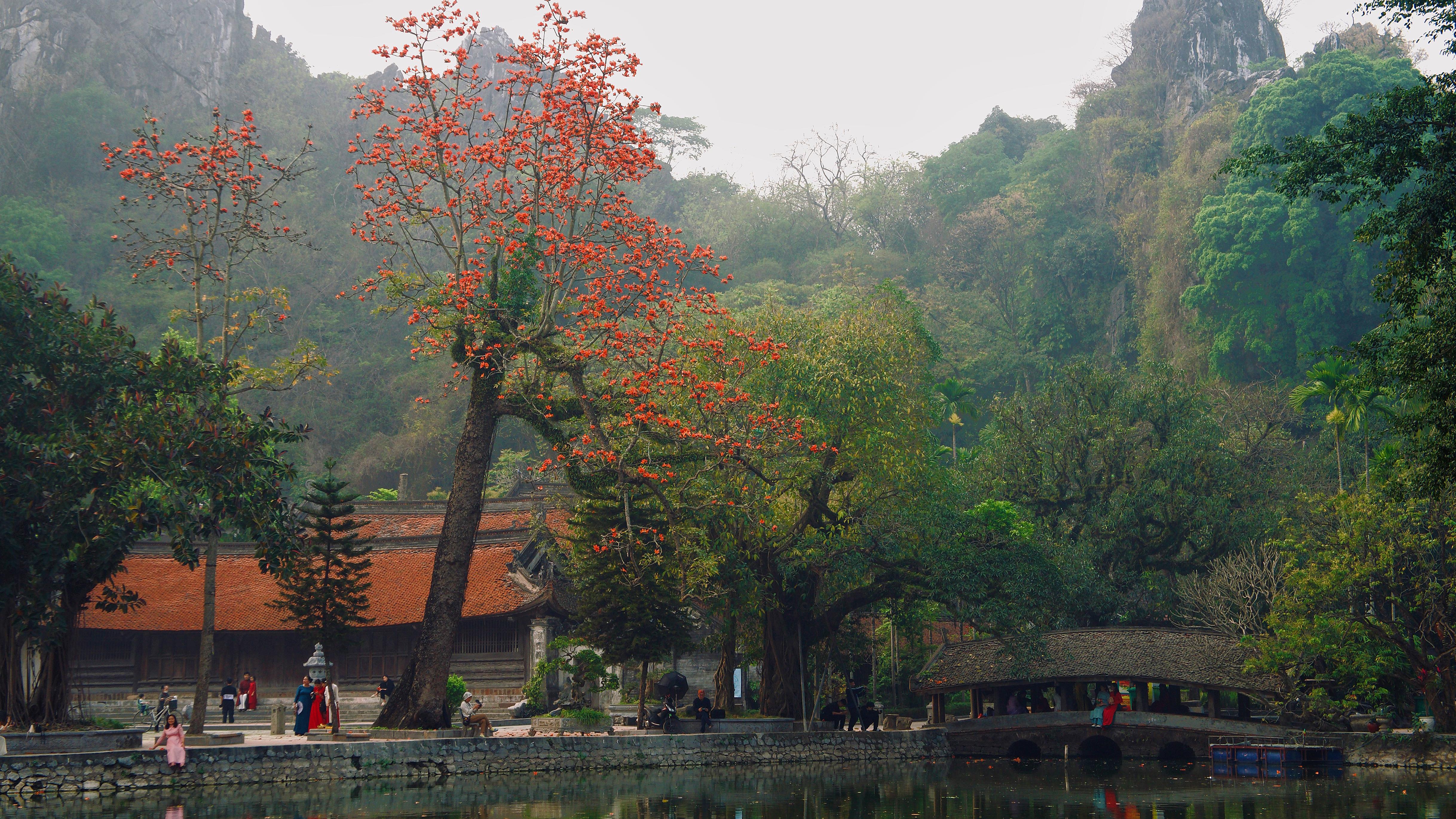
Thầy Pagoda, associated with Zen master Từ Đạo Hạnh, is famous for its unique architecture, including the Nhật Tiên and Nguyệt Tiên bridges spanning Long Trì Lake, along with ancient, moss-covered tiled roofs. The kapok trees planted in the pagoda grounds seem to have become an indispensable part of the landscape. "The trees are planted in the grounds of Thầy Pagoda, with the lake on one side, the mountains on the other, and the ancient tiled roofs beside them. A beautiful and meaningful scene," Tuấn commented.

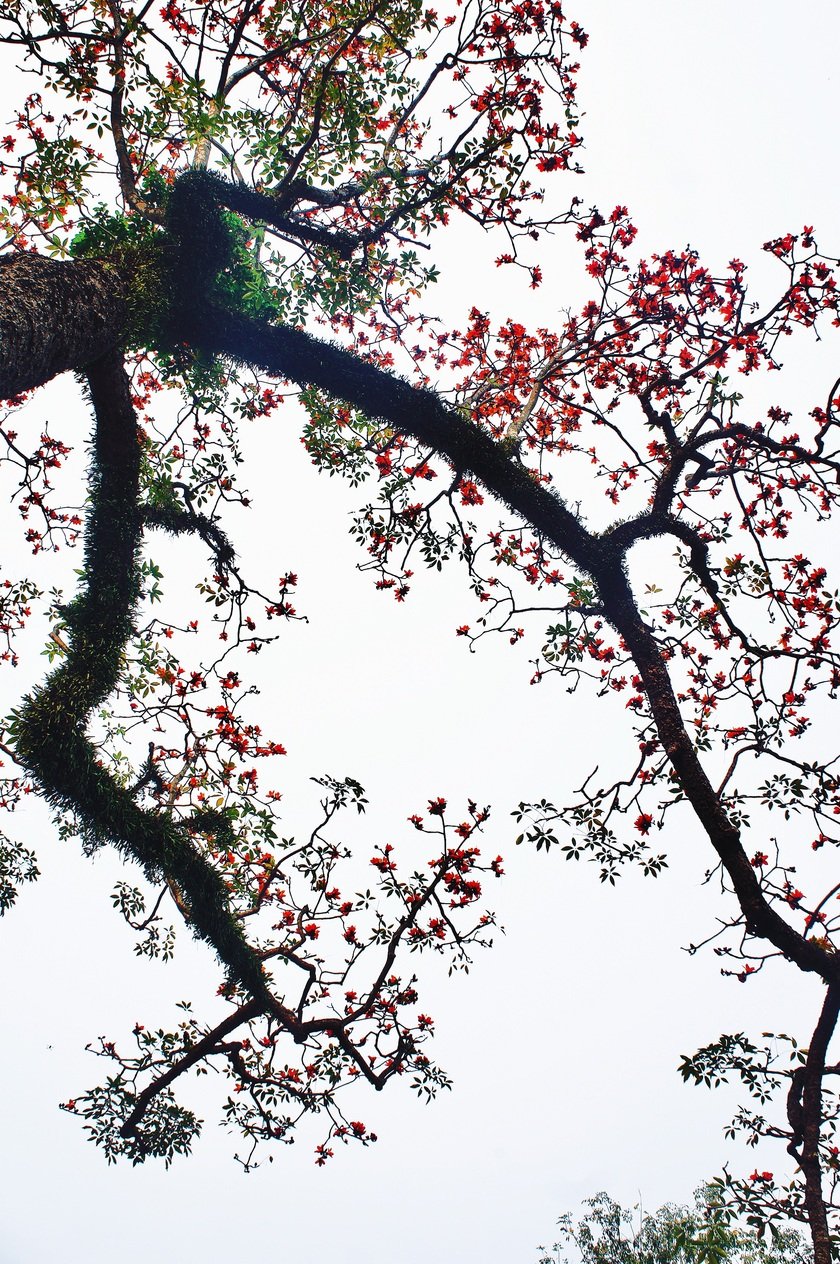
The branches of kapok flowers add an impressive touch to the ancient temple.
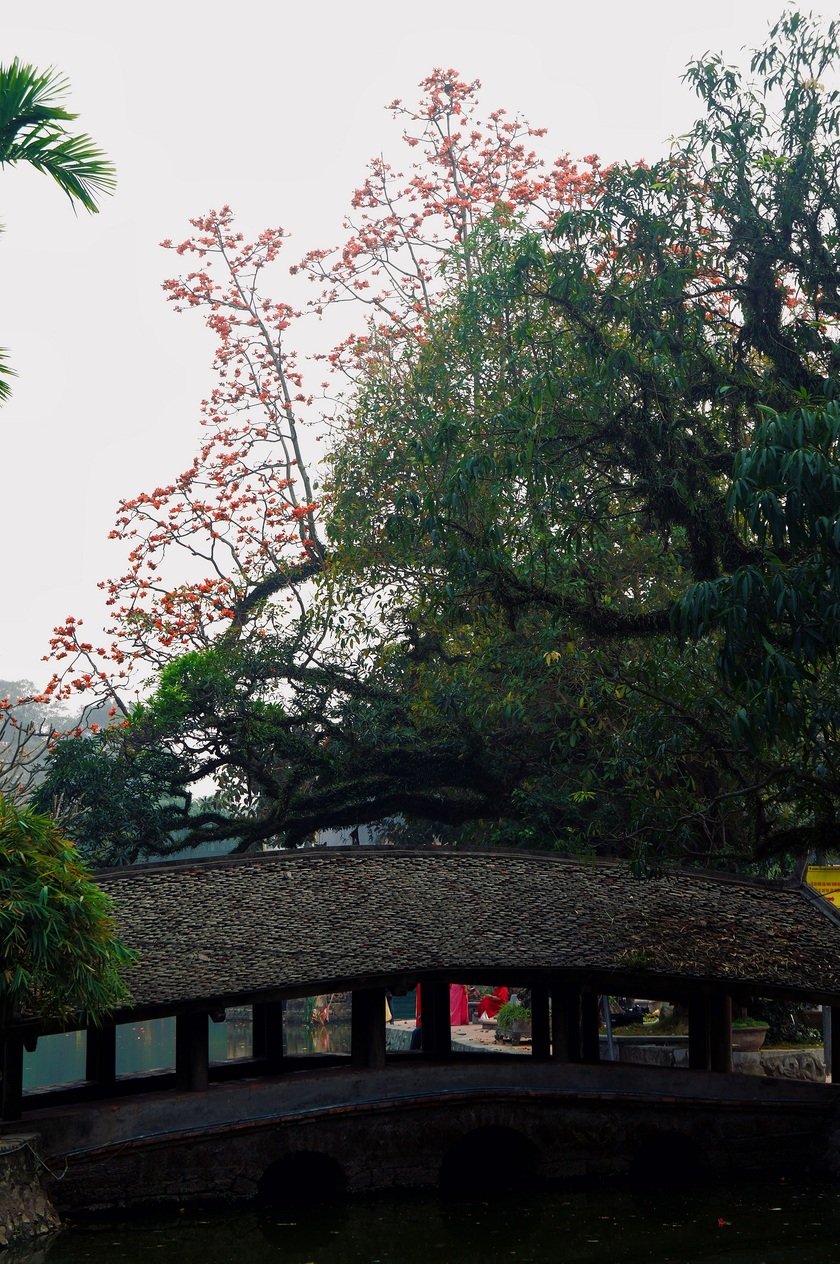
The Nhật Tiên Bridge reflects its image in the clear water, blending with the red blossoms of the kapok tree near Thầy Pagoda.
That afternoon, the sunlight slowly receded behind the mountains, painting the kapok flowers golden. Tuan couldn't hide his excitement at capturing the moment when nature harmonized with the spiritual atmosphere. "I feel so happy and joyful to be able to photograph the vibrant kapok flowers in the afternoon sun. With each passing minute, as the sun set behind the mountains, I ran around the lake to capture the most beautiful moments of the day," he expressed.
More than just a place to admire the flowers, Thầy Pagoda also offers a familiar cultural space for the local people. In the afternoons, people from the surrounding area come here to enjoy the cool breeze, exercise, drink tea and eat cakes, and admire the kapok trees in their most beautiful season of the year. It's a truly peaceful and serene scene. Amidst the hustle and bustle of city life, visiting Thầy Pagoda during the kapok flower season is a way to slow down, to feel the harmony between nature and the soul.
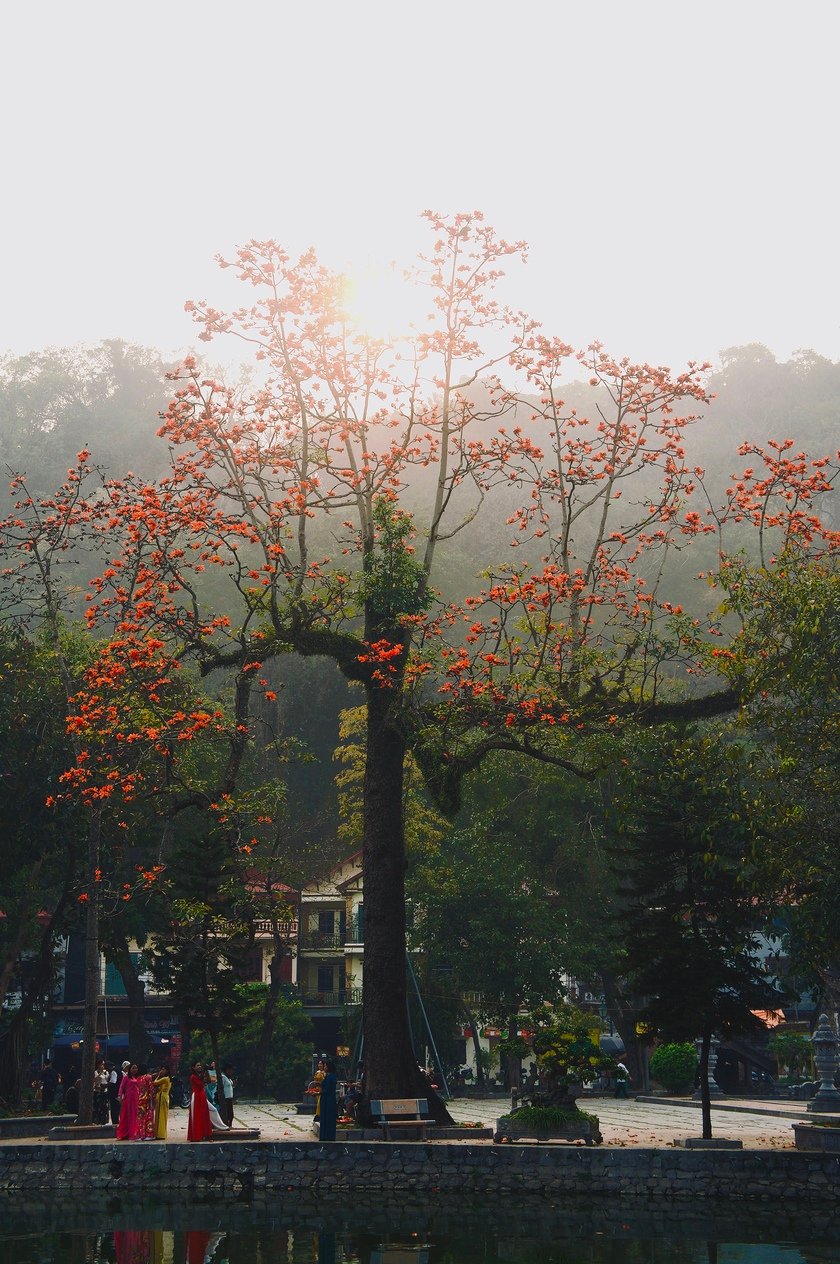
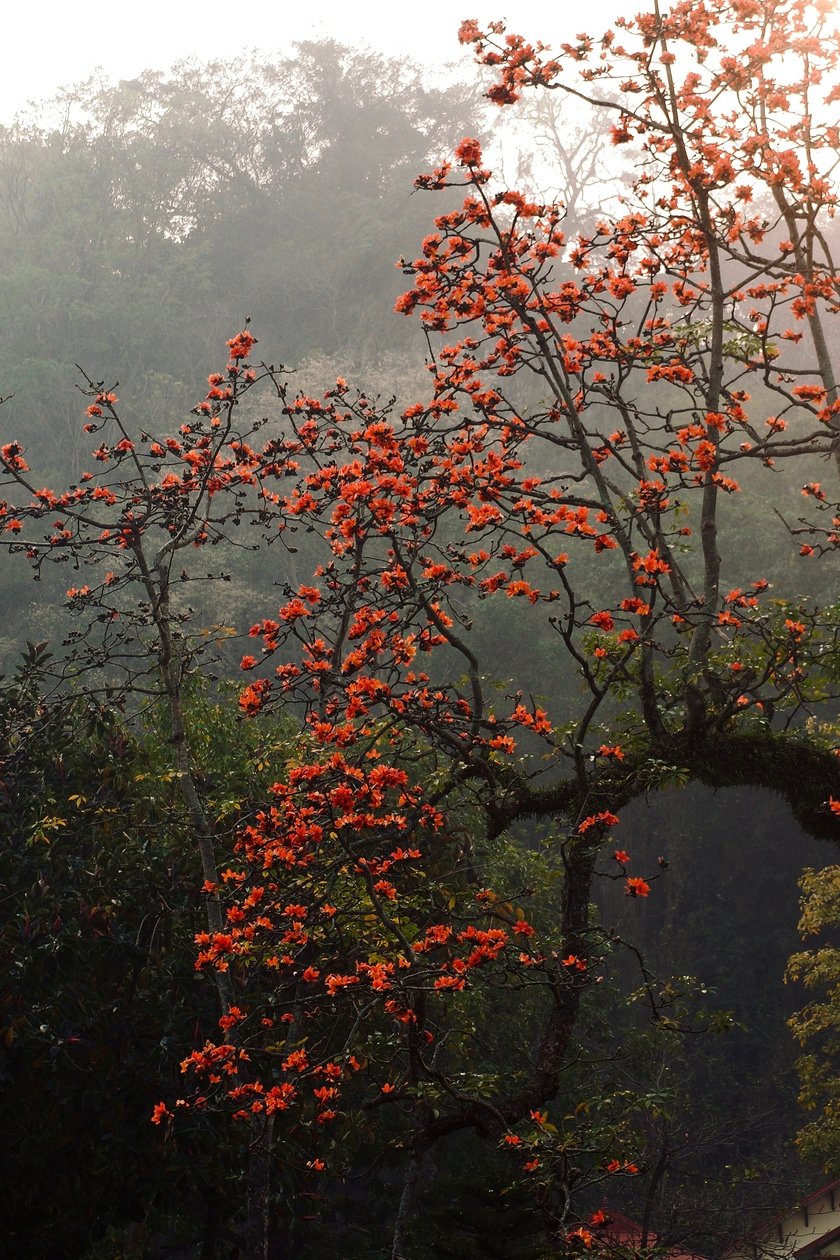
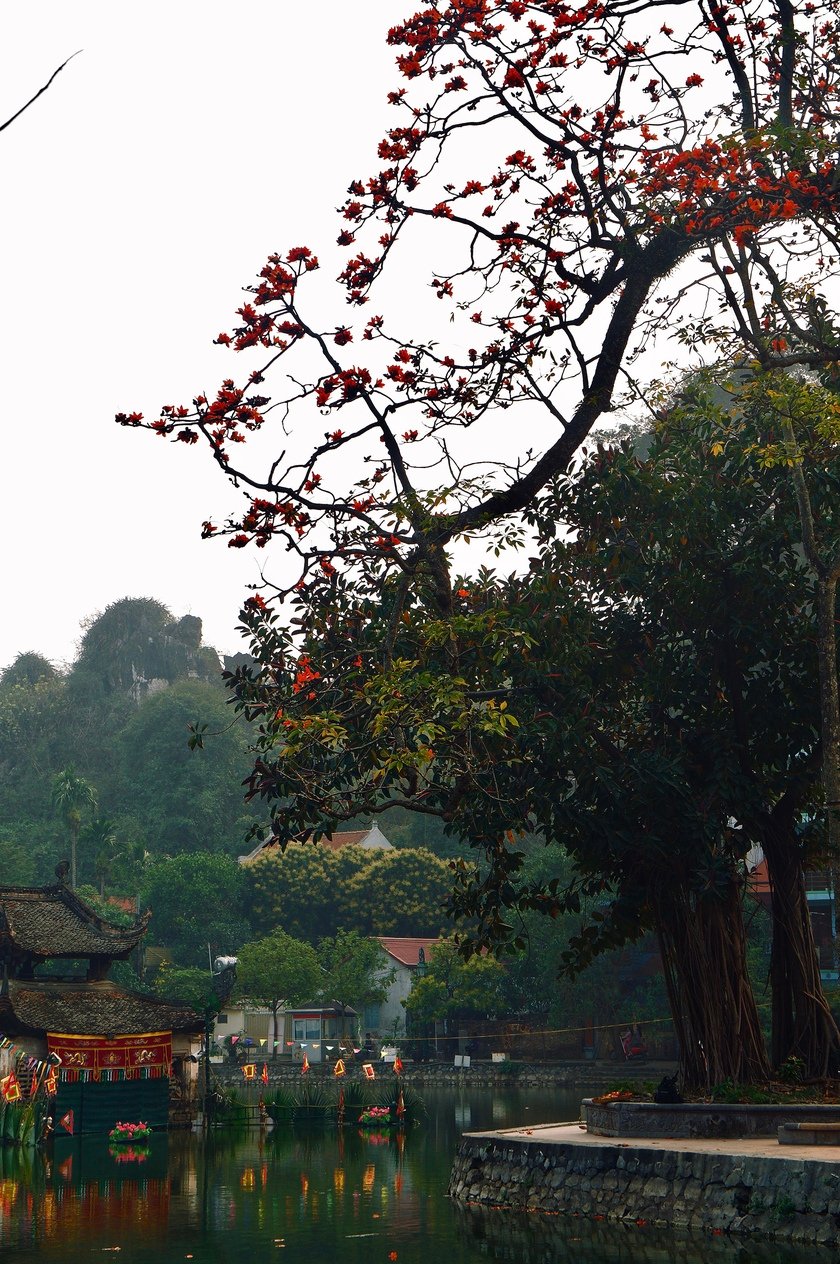
Amidst the hustle and bustle of city life, visiting Thầy Pagoda during the kapok flower season is a way to find peace, to feel the harmony between nature and the soul.
For Tuan, the beauty of the kapok flowers and the ancient atmosphere of Thầy Pagoda have a special connection. He shared: "The kapok flower represents life and rebirth, while Thầy Pagoda represents sacredness and culture. This combination creates a beautiful and meaningful scene. I feel like I'm connected to a part of the history and culture of this place."
Although the kapok flower season only lasts a few short weeks, it's the most beautiful time for tourists to visit Thầy Pagoda. "The vibrant red kapok flowers make the pagoda even more beautiful and lively. These beautiful scenes help Thầy Pagoda become more well-known to tourists. When I went, there were many people who came to admire and take pictures of the kapok flowers and Thầy Pagoda. This is truly an opportunity to promote cultural tourism development at this pagoda," Tuan said.
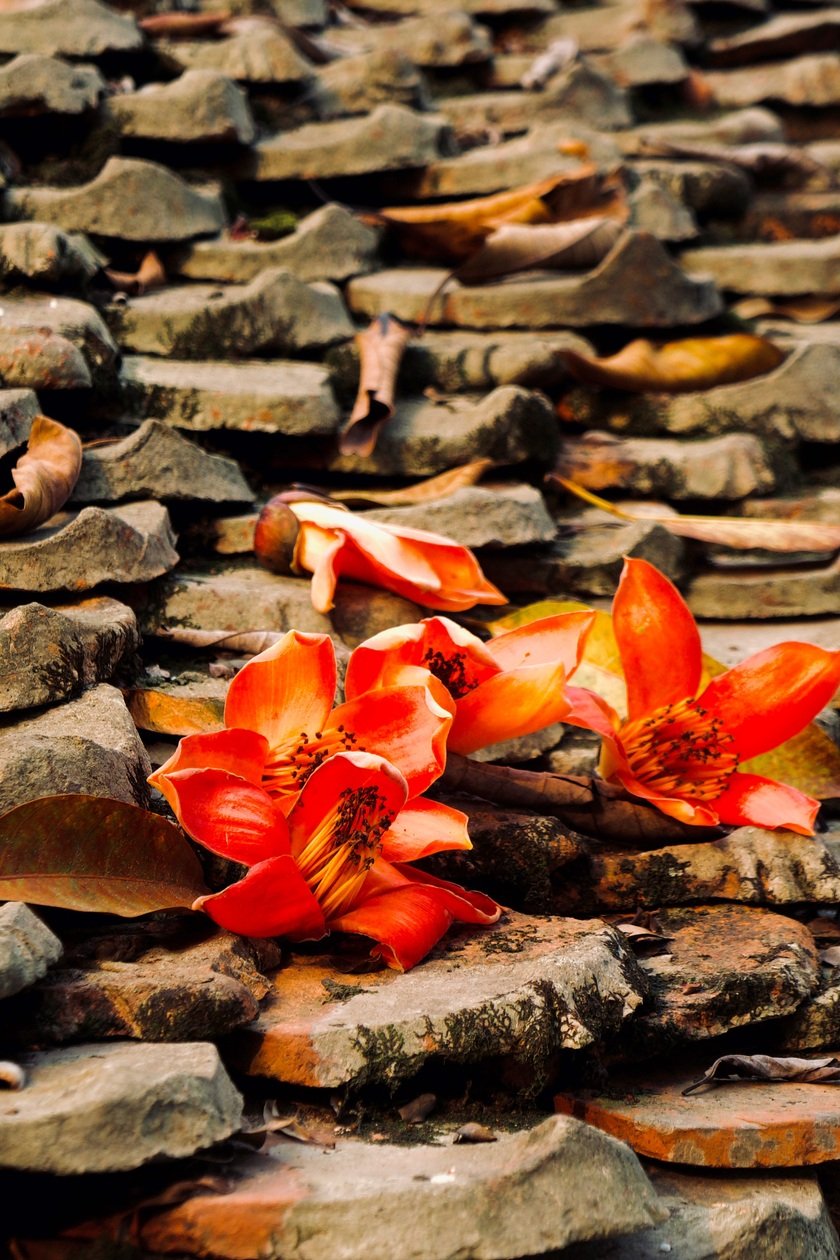
A close-up view of the fiery red kapok flowers, illuminating the serene atmosphere of Thầy Pagoda.
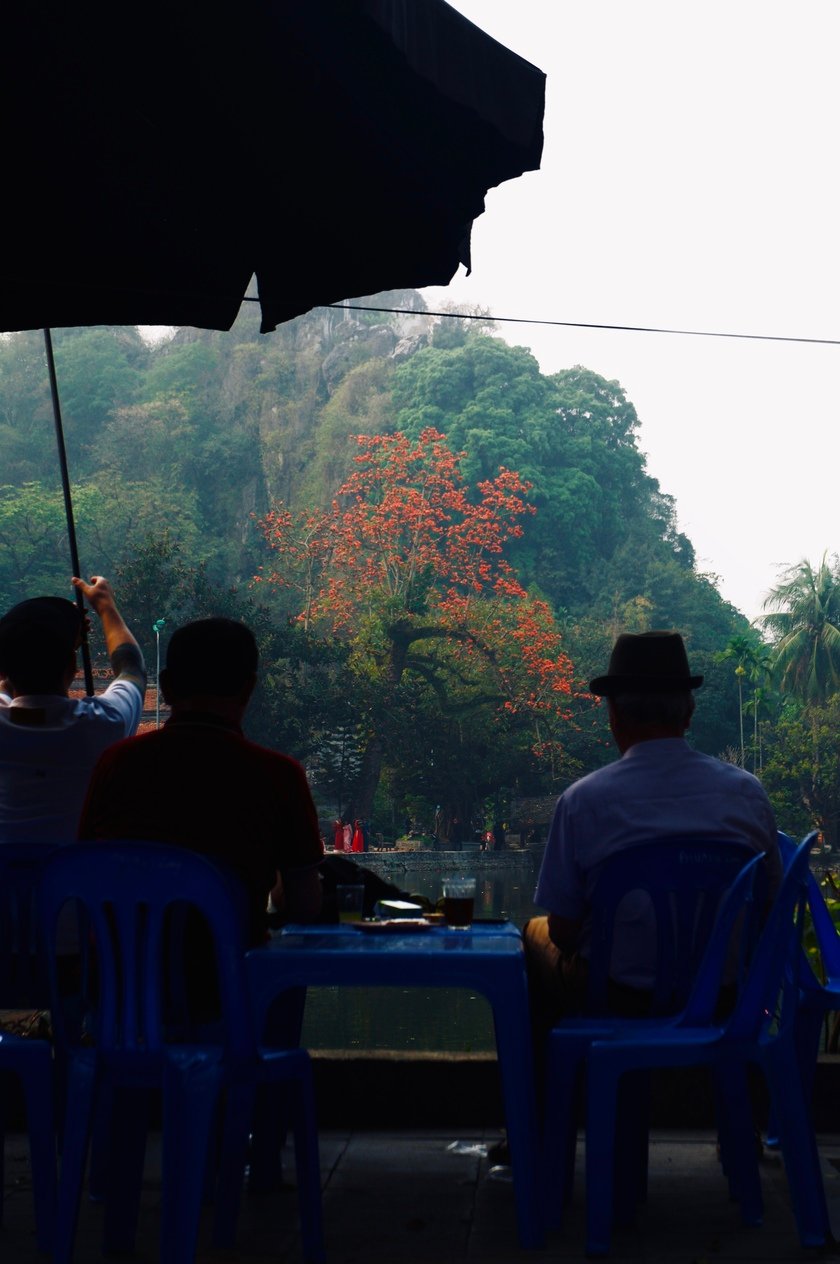
Beneath the centuries-old kapok tree, visitors quietly admire the scenery and find peace.
Perhaps, in mid-March, when the kapok flowers bloom, people come to Thầy Pagoda not only to admire the scenery or worship, but also to find a moment of peace for their souls. Amidst the vibrant red of the kapok flowers, the lake, the mountains, and the ancient pagoda roof, one's heart suddenly feels lighter and more peaceful. And perhaps, that is the most beautiful thing that the kapok flower season at Thầy Pagoda brings.